Coca-Cola, the renowned beverage giant, has long been committed to sustainability in their supply chain operations. With a global presence and a vast network of suppliers and distributors, the company recognizes the importance of minimizing their environmental impact and ensuring the long-term viability of their business. However the journey towards supply chain sustainability is long and complex for Coca -Cola. In this article, we will delve into the Coca-Cola supply chain sustainability journey so far, the company’s goals and achievements. Alongside this, we’ll also explore their initiatives to reduce carbon emissions, sustainable sourcing practices, waste management efforts, collaborations for supply chain sustainability, and – of course – the challenges they face in these areas. By the end, you will gain insight into the efforts made to date by Coca-Cola to achieve supply chain sustainability.
Firstly, let’s take a look at the importance of supply chain sustainability in the beverage industry in particular. We are living in a world where environmental concerns are ubiquitous. Correspondingly, supply chain sustainability has become a critical aspect of business operations, particularly in the beverage industry.
Companies like Coca-Cola have realized that sustainability is not just a moral obligation but also a strategic imperative. Above all, they recognise that by implementing sustainable practices throughout their supply chain, they can reduce costs, enhance brand reputation, and gain a competitive advantage. Sustainable sourcing of ingredients and packaging materials, reducing carbon emissions, and efficient waste management are key components of achieving supply chain sustainability. and this is no exception for Coca-Cola. The bottom line is that the beverage industry, with its vast consumption and production, has a significant opportunity to make a positive impact on the environment through sustainable practices.
Coca-Cola has set ambitious sustainability goals for their supply chain operations. Significantly, by 2024, they aim to achieve a 25% reduction in carbon emissions across their entire value chain compared to 2015 levels. Additionally, they strive to ensure that 100% of their packaging materials are recyclable or reusable by 2025. These goals reflect their commitment to reducing their environmental footprint and promoting a circular economy. Coca-Cola has made notable progress in their sustainability journey. They have already achieved their 2020 goal to reduce their relative carbon emissions by 25% against a 2010 baseline. But of course, there is plenty more work to be done here.
To reduce carbon emissions in their supply chain, Coca-Cola has implemented various initiatives. One notable effort is the optimization of transportation routes. By analyzing data and leveraging technology, they have succeeded in streamlining their distribution network, reducing the distance traveled and consequently lowering emissions. Alongside this, they have adopted alternative fuel vehicles, such as electric and hybrid trucks, to further minimize their carbon footprint. Last but not least, Coca-Cola has invested in renewable energy sources, such as wind and solar power, to power their manufacturing plants and facilities. These initiatives not only contribute to their sustainability goals but also showcase their commitment to combat climate change.
Conversely, some critics argue that Coca-Cola’s carbon reduction strategy has a limited scope, primarily focusing on direct operations such as manufacturing and bottling, while potentially neglecting the broader supply chain. Notably, agriculture and ingredient sourcing, which can significantly contribute to emissions, may not be adequately addressed in Coca-Cola’s plans.
Additionally, there has been a shift in how Coca-Cola approaches its emission reduction targets. Previously, the company aimed to reduce emissions per unit of product sold, a metric that could be misleading if overall production volumes increased, thereby potentially leading to an overall growth in emissions. More recently, Coca-Cola has adopted a science-based target that emphasises absolute emission reductions. However, this shift may be perceived by some as overdue. Lastly, there are concerns regarding the transparency of Coca-Cola’s emission calculations and the effectiveness of their methods in holding suppliers accountable for meeting emission reduction goals.
Coca-Cola appears to recognize the importance of sourcing ingredients and packaging materials sustainably. On the one hand, they have worked closely with their suppliers to ensure responsible agricultural practices, including the efficient use of water and protection of biodiversity. Additionally, they prioritize sourcing from local suppliers to reduce transportation distances and support local economies. In terms of packaging materials, Coca-Cola has also made progress in committing to increasing the use of recycled content in their bottles and cans. Additionally, they have introduced innovative packaging solutions, such as PlantBottle, which is made partially from renewable plant-based materials. These efforts not only minimize the environmental impact but also promote a circular economy by reducing waste.
On the other hand, Coca-Cola has faced criticism for pausing its reporting on the sustainable sourcing of ingredients in 2021, which hindered progress tracking and cast doubts on its commitment to sustainability. Despite resuming reporting in 2022, concerns remain. Moreover, Coca-Cola’s efforts in increasing the use of recycled PET (rPET) in their bottles have not shown significant progress, purportedly because it sorely lacks demand , casting doubt on their ability to meet the 2030 target of incorporating 50% rPET across all packaging.
Critics also argue that Coca-Cola’s focus on recycled content may divert attention from the more critical goal of reducing overall plastic usage, suggesting that more emphasis should be placed on reusable packaging and plastic reduction strategies. Simultaneously, the methods Coca-Cola employs to hold suppliers accountable for emission reduction goals are not clearly communicated. As such, these issues highlight the necessity for Coca-Cola to hasten their sustainability initiatives and improve transparency in their sustainable sourcing efforts.
Proper waste management and recycling are key pillars of Coca-Cola’s supply chain sustainability strategy. They have implemented comprehensive waste reduction programs in their manufacturing plants, aiming to minimize the generation of waste and increase recycling rates. Coca-Cola has also actively supported community recycling initiatives, partnering with local organizations and governments to promote recycling education and infrastructure development. By encouraging consumers to recycle their beverage containers through effective labeling and awareness campaigns, Coca-Cola is working towards creating a more sustainable and circular system.
On the contrary, concerns have been raised about several concerns regarding Coca-Cola’s waste management and recycling initiatives in recent years. Despite launching the ambitious “World Without Waste” initiative in 2018, with the goal of collecting a bottle or can for every one sold by 2030, Coca-Cola reported only a 61% collection rate in 2022, falling short of their target. There’s an argument that the company places too much emphasis on collecting plastic for recycling, rather than on reducing plastic usage from the outset.
Questions have also been raised about the effectiveness of Coca-Cola’s recycling efforts, particularly given the global lack of efficient plastic recycling infrastructure, which leads to collected plastic potentially ending up in landfills or the ocean. Additionally, there’s criticism that Coca-Cola shifts too much responsibility for recycling onto consumers, through confusing labeling and the lack of recycling facilities in many areas, which may undermine their collection goals. Despite these criticisms, it’s acknowledged that Coca-Cola has made some progress in improving the recyclability of their packaging and investing in collection infrastructure, yet there’s a clear call for a more robust approach that focuses on plastic reduction as much as on recycling efforts.
The good news is that Coca-Cola recognizes that achieving supply chain sustainability requires collaboration and partnerships. They actively engage with suppliers, customers, NGOs, and governments to drive sustainable practices throughout their value chain. Coca-Cola has been actively engaging in various collaborations and partnerships to enhance supply chain sustainability in recent years. They have a long-standing partnership with the World Wildlife Fund (WWF) aimed at improving environmental performance, including better water resource management and emissions reduction.
Additionally, in collaboration with the Ellen MacArthur Foundation and UN Environment, Coca-Cola supports the New Plastics Economy initiative, striving to eliminate plastic waste and promote recyclable packaging solutions. Likewise, a notable €600 million sustainability-linked supply chain finance programme with Rabobank encourages suppliers to lower emissions through renewable energy use and carbon footprint sharing. Meanwhile, Coca-Cola’s partnership with Ioniqa Technologies focuses on converting difficult-to-recycle plastic waste into high-quality, food-grade PET. By the same token, Coca-Cola Hellenic Bottling Company (CCHBC) works with suppliers on several sustainability initiatives, like developing eco-friendly cold drink equipment and boosting local beet sugar production. In essence, these efforts are part of Coca-Cola’s broader strategy to address sustainability challenges within its supply chain.
Despite the achievements highlighted in this article to date, Coca-Cola faces several key challenges in achieving supply chain sustainability, highlighting the complexity of managing sustainable practices across its broad supply chain. In summary. these include ensuring responsible water use, reducing reliance on fertilizers, and upholding fair labour practices in ingredient sourcing from agriculture, such as sugarcane and corn. As previously highlighted, a major concern is the company’s dependence on single-use plastic bottles, compounded by the limitations of current recycling infrastructures, which poses significant environmental challenges. Although progress is being made in this area, critics would argue there is not being done enough, and not quickly enough.
One thing that is simply undeniable is that accountability and transparency in supplier collaboration are crucial for promoting sustainable practices across the supply chain, necessitating clear communication and effective collaboration strategies. Accurate environmental impact measurement and transparent reporting standards are vital and consequently, the company must balance its focus between collecting and reducing plastic use to avoid detracting from essential reduction strategies. As such, achieving ambitious goals, such as incorporating significant recycled content and reaching high collection rates, remains a challenge. This means that Coca-Cola needs a comprehensive approach that includes collaborating with suppliers, investing in innovative and sustainable packaging solutions, clearly communicating its progress and challenges back up with robust data to avoid the pitfalls of greenwashing, and prioritising both plastic reduction and recycling efforts to address these sustainability challenges effectively. It’s a long journey ahead.
Ultimately, Coca-Cola’s commitment to sustainability within its supply chain reflects a concious acknowledgment of the environmental responsibilities incumbent upon global corporations in today’s eco-conscious world. The company’s journey towards a more sustainable supply chain illustrates a multifaceted approach, encompassing ambitious goals, strategic collaborations, and innovative initiatives aimed at reducing carbon emissions, enhancing sustainable sourcing, and improving waste management and recycling practices.
To clarify, despite notable progress in certain areas, Coca-Cola faces ongoing challenges. For instance, the need for more significant plastic reduction, increased transparency and accountability in supplier relations, and the achievement of its lofty recycling and emission reduction targets.
As a result, the complexity of these challenges necessitates a collaborative, transparent, and innovative approach, highlighting the importance of continuous improvement and adaptation. As a consequence, as Coca-Cola continues to navigate these challenges, its efforts and strategies will likely serve as a bellwether for the broader beverage industry’s capacity to reconcile business objectives with environmental stewardship. This means that the path towards sustainability is indeed long and winding, but it is paved with opportunities for meaningful impact and leadership in the global effort to ensure a healthier planet. Coca-Cola can expect all eyes to be on them as they continue to navigate the path ahead.
If you are keen to delve deeper into the intricacies of Coca-Cola supply chain sustainability practices and gain granular insights that could inform your own sustainability strategies, we invite you to reach out to us. At Permutable.ai, we understand the complexity and challenges of supply chain transparency. Our Supply Chain Monitor tool is designed to provide comprehensive analyses and actionable insights that can help businesses understand their supply chain network and vulnerabilities more clearly.
Found this article useful? Why not read more supply chain insights from us on:
Tesco’s supply chain network and strategic relationships
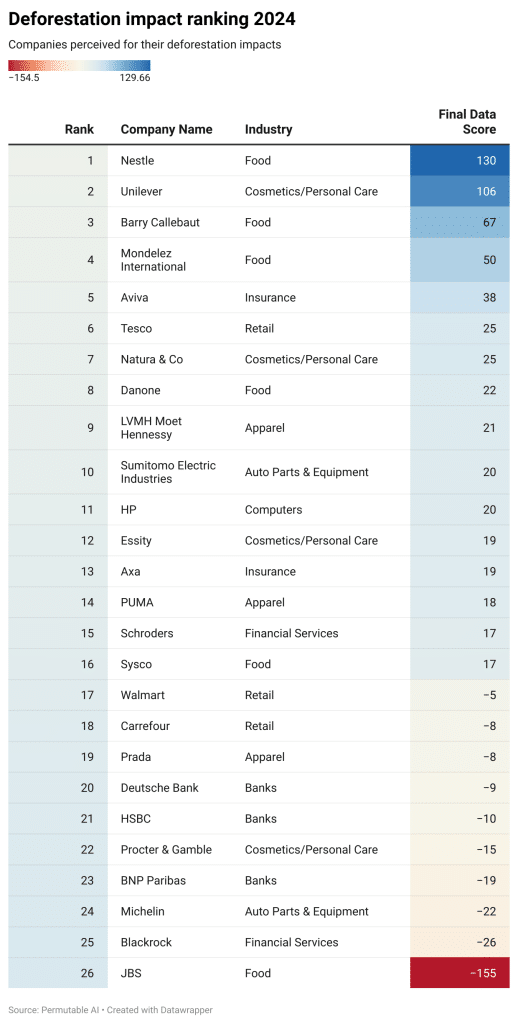
In an analysis released today to mark International Day of Forests, Permutable AI unveils its 2024 Best and Worst Companies For Deforestation Impact Ranking, spotlighting corporate deforestation practices.
Using state-of-the-art AI and sentiment analysis, Permutable AI has meticulously analysed over 500,000 articles from an average of 10,000 sources daily. This robust analysis aims to gauge public and market sentiment towards corporate practices related to deforestation.
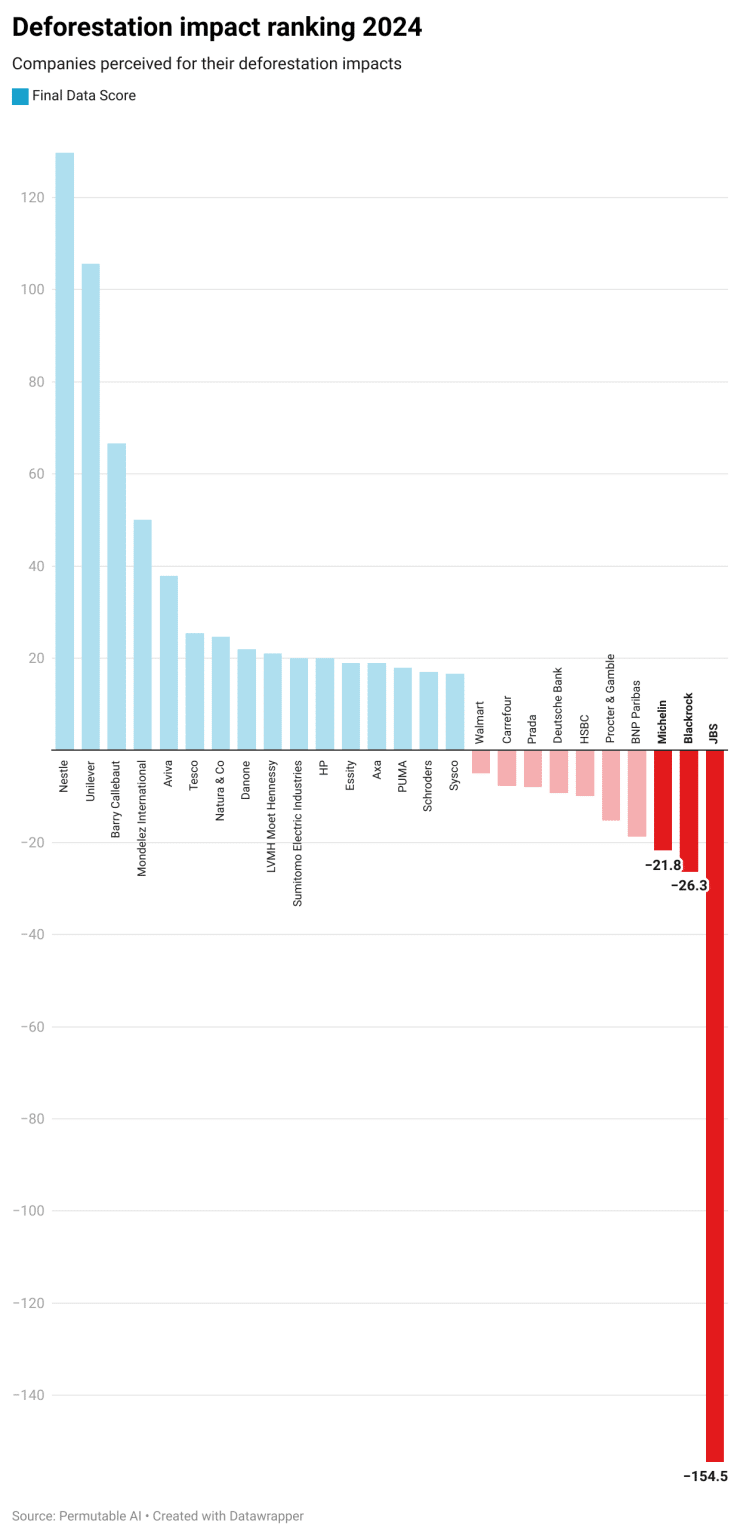
The ranking – which provides an update to the Deforestation Impact Ranking 2023 release– reveals that Nestle, Unilever, and Barry Callebaut lead with positive sentiment, showcasing the food and cosmetics/personal care industries’ efforts towards sustainable practices and reduced deforestation impact. These companies have been recognised for their commitment to ethical sourcing, sustainable agriculture, and proactive steps towards zero net deforestation, reflecting a growing trend of corporate responsibility and environmental stewardship.
The analysis criticizes JBS, Blackrock, and Michelin for their sustainability efforts, particularly regarding deforestation, urging these companies to bridge the gap between their environmental promises and real-world impacts. It calls for JBS to overhaul its supply chain practices linked to Amazon deforestation, for Blackrock to align its investments with its sustainability claims, and for Michelin to source natural rubber more responsibly.
“Our 2024 Deforestation Impact Ranking highlights the critical role of corporate actions in environmental conservation,” said Wilson Chan, CEO & Founder of Permutable AI. “As we approach International Day of Forests, it’s imperative to recognise the companies leading the way in sustainability and those that have significant room for improvement. Our analysis provides a unique lens through which the public, investors, and companies themselves can evaluate and enhance their environmental impact strategies.”
Permutable AI’s innovative approach to analyzing sentiment and public opinion opens new avenues for understanding the complex dynamics between corporate practices and environmental sustainability, encouraging positive change towards a more sustainable future.
Permutable AI’s analysis is rooted in a sophisticated methodology designed to capture a wide spectrum of sentiment towards companies, in this case specifically regarding deforestation impact. The dataset encompassed on average 500,000 articles scanned daily, ensuring a comprehensive and current representation of market sentiments.
Sentiment analysis was meticulously conducted on textual data from articles related to each company, assessing overall sentiment—positive, negative, and neutral—towards the company in the media. The methodology involved identifying and quantifying specific positive and negative data points within the articles, offering a nuanced view of public perception.
A final sentiment score, ranging from -100 to 100 was then allocated to reflect an aggregate evaluation of each company’s perceived deforestation impact. This scoring system is based on a balanced assessment, factoring in both positive and negative sentiments to provide a holistic view of each company’s market perception.
To ensure robust and reliable analysis of best and worst companies for deforestation, companies with significant market influence were selected based on a minimum market capitalisation threshold of £10 million, with a minimum data cap in force to ensure substantial data coverage, enhancing the accuracy of the sentiment analysis.
Chan emphasizes, “Our methodology for our Best and Worst Companies for Deforestation Impact Ranking is designed not merely to pinpoint areas for improvement but to stimulate a conversation that encourages companies towards adopting greener practices. By shedding light on these concerns, we aspire to foster a marketplace that is more transparent, informed, and committed to ethical environmental practices.”
For further insights and a deeper dive into our 2024 Deforestation Impact Ranking, we invite journalists, industry experts, and sustainability advocates to get in touch. Our comprehensive analysis, spanning over half a million articles and thousands of sources, offers an unparalleled view of corporate practices and their impact on our planet’s forests. If you’re looking to explore the data behind our rankings, seek detailed case studies, or wish to discuss the findings with our experts, please don’t hesitate to reach out.
Fill in the form below or reach out to us at enquiries@permutable.ai to request more detailed data, arrange interviews with our analysts, or discuss how these insights can inform your work.
– Software companies data security rankings
– Corporate behaviour rankings
– Company labour standards rankings
ESG scores have become integral in assessing the sustainability practices of companies across various industries. In the tech industry, where innovation and growth often come at the expense of the environment, ESG scores serve as a vital tool for measuring the impact of companies’ operations on the planet and society. NVIDIA, a leading technology company, has emerged as a game-changer with its remarkable ESG score. This article will delve into the significance of ESG scores in the tech industry and explore how the NVIDIA ESG score according to our latest data.
NVIDIA’s ESG score reflects its commitment to environmental conservation, social responsibility, and effective corporate governance. With an impressive score, NVIDIA has set itself apart as a sustainability leader in the tech industry. The company’s ESG initiatives encompass a wide range of areas, including reducing carbon emissions, promoting diversity and inclusion, and fostering transparent and ethical business practices.
NVIDIA’s ESG score serves as a testament to its dedication to sustainability and its proactive approach towards mitigating the negative impacts of its operations. By prioritizing ESG factors, NVIDIA has not only positioned itself as a responsible corporate citizen but has also gained a competitive advantage in the tech industry by appealing to environmentally and socially conscious consumers.
The calculation and evaluation of our NVIDIA ESG score involves a comprehensive analysis of various environmental, social, and governance factors using our ESG intelligence based on AI-driven news sentiment analysis.
In terms of the environmental aspect, our NVIDIA ESG score takes into account sentiment around its efforts towards achieving net zero emissions, minimizing waste generation, and promoting energy efficiency. The company’s commitment to renewable energy sources and sustainable supply chain practices also contributes to its high ESG score.
On the social front, our NVIDIA ESG score considers news sentiment around its initiatives to promote diversity, equity, and inclusion within its workforce and across its value chain. The company’s support for education and community development programs further enhances its social standing.
In the governance realm, our NVIDIA ESG score evaluates news sentiment on topics such as the effectiveness of its board structure, executive compensation practices, and transparency in financial reporting. Strong sentiment around corporate governance practices ensure accountability and responsible decision-making, leading to a higher ESG score.
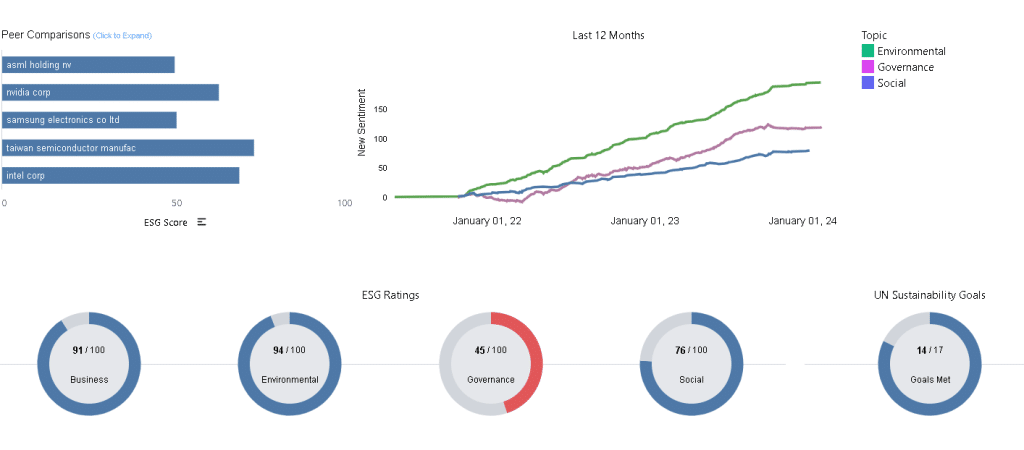
NVIDIA scores highly on environmental factors, with a score of 94 according to our data at time of writing. There are several reasons why NVIDIA scores highly on environmental factors. Let’s take a closer look below.
– Focus on energy-efficient GPUs: NVIDIA’s graphics processing units (GPUs) are renowned for their powerful performance while consuming less power compared to traditional CPUs. This efficiency translates to reduced energy consumption for data centers and other users, lowering their environmental footprint.
– Investing in energy-saving technologies: NVIDIA actively invests in research and development of new technologies that further improve the energy efficiency of their GPUs. This includes innovations like Ampere architecture, which boasts significant power reductions while maintaining high performance.
– Detailed sustainability reports: NVIDIA publishes comprehensive sustainability reports outlining their environmental goals, progress, and challenges. These reports are transparent and follow recognized frameworks like the Global Reporting Initiative (GRI), allowing for independent verification and evaluation.
– Participation in environmental initiatives: NVIDIA participates in various environmental to promote renewable energy adoption and accelerate progress towards climate goals. For example NVIDIA aims to purchase or generate enough renewable energy to match 100% of its global electricity usage by the end of 2025. They’re making progress, reducing emissions by 15% per employee since 2014. In addition, their ambitious Earth-2 Project aims to build a digital twin of the entire planet, simulating complex environmental interactions to predict climate change and its impacts.
– Product take-back program: NVIDIA offers a take-back program for used GPUs, ensuring responsible recycling and reuse of materials. This reduces electronic waste and promotes a circular economy approach in the industry.
– Investing in green manufacturing: NVIDIA invests in sustainable manufacturing practices at its facilities, including water conservation, waste reduction, and energy efficiency initiatives. These efforts further minimize their environmental impact.
It’s important to note that while NVIDIA scores highly on environmental factors, there are still areas for improvement. Some ongoing concerns include:
– Supply chain emissions: The production of GPUs and other electronics involves complex supply chains with indirect emissions. NVIDIA is working to address this by collaborating with suppliers to adopt more sustainable practices.
– Energy consumption of high-performance GPUs: Although efficient compared to CPUs, high-performance GPUs still consume significant amounts of energy. NVIDIA is working on further optimizations and encouraging responsible usage practices.
Overall, NVIDIA’s focus on energy-efficient products, transparent reporting, and commitment to environmental initiatives contribute to its strong performance in ESG rankings related to environmental factors. They continue to innovate and address remaining challenges, solidifying their position as a leader in sustainable technology practices.

PURCHASE DATASET
SEE ESG INTELLIGENCE
NVIDIA’s impressive ESG score has a profound impact on its stakeholders, including employees, customers, investors, and the communities it operates in. For employees, NVIDIA’s commitment to sustainability fosters a sense of pride and purpose, attracting top talent and increasing employee satisfaction. The company’s efforts towards diversity and inclusion also create a more inclusive and equitable workplace.
Customers are increasingly conscious of the environmental and social impact of the products they purchase. NVIDIA’s high ESG score assures customers that the company aligns with their values and that its products are developed sustainably. This enhances customer loyalty and helps NVIDIA maintain a competitive edge in the market.
Investors also consider ESG scores when making investment decisions. NVIDIA’s strong ESG performance demonstrates its long-term viability, stability, and responsible business practices. As a result, the company attracts socially responsible investors who prioritize sustainable investments.
Lastly, the communities where NVIDIA operates benefit from the company’s high ESG score. Through its various social initiatives, NVIDIA contributes to community development, education, and environmental conservation, making a positive difference in the lives of people in these areas.
NVIDIA is not the only tech company that has recognized the importance of ESG scores and its potential impact on sustainability practices. Several other tech giants have also taken significant strides in this regard.
One such example is Apple, which has consistently achieved high ESG scores due to its focus on renewable energy, responsible supply chain management, and reduced carbon footprint. As a result, Apple has become a sustainability leader in the tech industry, inspiring other companies to follow suit.
Another notable example is Google, which has excelled in the social aspect of ESG scoring. The company actively promotes diversity and inclusion, provides numerous employee benefits, and supports charitable initiatives. Google’s high ESG scores have not only improved its public image but have also influenced other companies to prioritize similar social initiatives.
These examples highlight the positive effects of high ESG scores on sustainability practices within the tech industry. By showcasing the achievements of companies like NVIDIA, Apple, and Google, the importance of ESG scores in driving positive change becomes evident.
What to make further comparisons? Why not explore our data on NVIDIA’s competitors below:
– Advanced Micro Devices (ARM) ESG score
ESG scores play a crucial role in investor decision-making, with more investors recognizing the value of sustainable investments. Traditionally, financial performance was the primary consideration for investors. However, as the awareness of environmental and social issues increased, investors began to prioritize companies that demonstrated responsible business practices.
ESG scores provide investors with a standardized framework to evaluate companies’ sustainability performance. By considering a company’s ESG score, investors can assess its ability to manage risks, adapt to changing regulations, and create long-term value. High ESG scores indicate that a company is well-positioned to address environmental and social challenges while maintaining strong financial performance.
Investors who prioritize ESG factors are more likely to invest in companies with high ESG scores. As a result, these companies can attract capital more easily, allowing them to invest in sustainable initiatives and further improve their ESG scores. This positive feedback loop encourages companies to prioritize sustainability, benefiting both investors and the environment.
ESG scores are expected to play an increasingly important role in the tech industry’s future. As the impacts of climate change become more evident and societal expectations evolve, tech companies will face growing pressure to demonstrate their commitment to sustainability. ESG scores will serve as a benchmark for companies, encouraging them to integrate sustainability into their core business strategies.
Moreover, regulatory bodies are recognizing the significance of ESG scores and are implementing measures to ensure companies disclose their ESG practices. This increased transparency will further emphasize the importance of ESG scores and push companies to improve their sustainability performance.
The tech industry, with its immense influence and resources, has the potential to drive significant positive change through sustainable practices. ESG scores will continue to be a critical tool in measuring and promoting sustainability within the industry, ultimately contributing to a more sustainable future.
Tech companies looking to improve their ESG scores can take several steps to enhance their sustainability performance. Companies should conduct thorough ESG assessments to identify areas for improvement and set clear goals. This involves evaluating the environmental impact of their operations, reviewing social initiatives, and strengthening governance practices.
It is also vital that tech companies integrate sustainability into their core business strategies. This includes incorporating environmental considerations into product development, establishing diversity and inclusion programs, and adopting sustainable supply chain practices. By making sustainability a priority, companies can improve their ESG scores and contribute to a more sustainable tech industry.
Tech companies should also ensure transparency and accurate reporting of their ESG practices. Independent verification of ESG data can enhance the credibility of the scores and mitigate concerns of greenwashing. By providing clear and reliable information, companies can build trust with stakeholders and demonstrate their commitment to sustainability.
Finally, collaboration and knowledge-sharing among tech companies can accelerate progress towards sustainability. By sharing best practices and collectively addressing challenges, companies can learn from each other and drive industry-wide change.
NVIDIA’s remarkable ESG score has positioned the company as a game-changer in the tech industry’s sustainability journey. With its commitment to environmental stewardship, social responsibility, effective governance and a proactive approach to managing ESG risks, NVIDIA has set a high standard for other tech companies to emulate.
ESG scores play a vital role in assessing the sustainability practices of tech companies and have a profound impact on stakeholders, including employees, customers, and investors. By prioritizing sustainability and demonstrating strong ESG performance, companies like NVIDIA can attract top talent, enhance customer loyalty, and secure long-term investments.
While ESG scoring systems face challenges and criticisms, they are expected to play an increasingly important role in the future of the tech industry. As regulatory bodies push for greater transparency and companies recognize the importance of sustainability, ESG scores will continue to drive positive change and contribute to a more sustainable future for the tech industry and beyond.
Are you looking for more granular data on NVIDIA’s ESG practices?
In today’s globalized world, understanding supply chain transparency is crucial for businesses seeking to combat greenwashing and truly embrace sustainable practices. This article delves into the impact of greenwashing on sustainable business, the importance of ethical sourcing and environmental responsibility, strategies for supply chain transparency, and collaborative efforts towards combatting greenwashing. Through case studies and discussions on the role of consumers, this article aims to shed light on the imperative of supply chain transparency in navigating sustainability.
Supply chain transparency refers to the visibility and traceability of products and processes throughout the entire supply chain. It encompasses the disclosure of information related to sourcing, manufacturing, and distribution, allowing stakeholders and consumers to make informed decisions about the products they support. Transparent supply chains enable businesses to identify and address environmental and ethical concerns, ultimately contributing to the advancement of sustainable practices. By understanding the intricacies of their supply chains, companies can proactively mitigate the risk of greenwashing and uphold their commitment to environmental and social responsibility.
Transparency in the supply chain also involves promoting open communication with suppliers, fostering relationships built on trust and accountability. Through clear and accessible reporting mechanisms, businesses can gain insights into their suppliers’ practices, ensuring alignment with sustainability goals. Additionally, understanding supply chain transparency enables companies to identify areas for improvement, implement corrective actions, and drive positive change across the entire supply network.
Greenwashing, a deceptive practice where companies convey a false impression of their environmental efforts, poses a significant threat to sustainable business. It undermines the credibility of genuine sustainability initiatives and misleads consumers who strive to make ethical purchasing decisions. The prevalence of greenwashing not only erodes consumer trust but also hinders the progress of authentic sustainability efforts. As a result, businesses must prioritize supply chain transparency to combat greenwashing and uphold their commitment to environmental stewardship.
Moreover, the impact of greenwashing extends beyond consumer perceptions, influencing regulatory compliance and stakeholder relationships. Companies found guilty of greenwashing face legal and reputational risks, potentially leading to financial repercussions and loss of market share. By understanding the detrimental effects of greenwashing, businesses can recognize the urgency of embracing transparent supply chains and genuine sustainable practices.
Ethical sourcing and environmental responsibility are integral components of supply chain transparency, shaping the foundation of sustainable business practices. Ethical sourcing entails the ethical treatment of workers, fair labor practices, and adherence to human rights standards throughout the supply chain. Similarly, environmental responsibility encompasses initiatives to minimize ecological impact, preserve natural resources, and reduce carbon emissions. By prioritizing ethical sourcing and environmental responsibility, businesses can establish a framework for sustainable operations, fostering positive social and environmental outcomes.
Furthermore, embracing ethical sourcing and environmental responsibility aligns with the growing demands of conscious consumers who seek products that reflect their values. As consumer awareness regarding ethical and environmental issues continues to rise, businesses that demonstrate a genuine commitment to these principles can gain a competitive edge and enhance brand loyalty. By integrating ethical sourcing and environmental responsibility into their supply chains, companies can not only mitigate the risk of greenwashing but also contribute to a more sustainable and equitable global economy.
Detecting greenwashing requires a comprehensive understanding of sustainable business practices, as well as the ability to scrutinize marketing claims and environmental assertions. Businesses can implement robust internal auditing processes, third-party certifications, and independent assessments to validate their sustainability claims and ensure transparency throughout their supply chains. By holding themselves accountable and actively seeking feedback from stakeholders, companies can demonstrate their commitment to combatting greenwashing and upholding the highest standards of corporate accountability.
Corporate accountability extends beyond the identification of greenwashing to encompass the proactive mitigation of environmental and ethical risks within the supply chain. By establishing clear codes of conduct, fostering transparency, and engaging in dialogue with suppliers, businesses can promote ethical behaviour and environmental stewardship throughout their supply networks. Through proactive measures and a commitment to corporate accountability, companies can safeguard their reputation, build trust with consumers, and contribute to the advancement of sustainable business practices.
Implementing supply chain transparency and sustainable practices requires a multifaceted approach that integrates ethical, environmental, and social considerations. Businesses can begin by conducting thorough assessments of their supply chains, identifying potential areas of improvement and risk mitigation. Establishing clear policies and guidelines for ethical sourcing, environmental responsibility, and transparency sets the groundwork for sustainable practices and fosters a culture of integrity within the organization.
Furthermore, collaboration with suppliers, industry partners, and stakeholders can facilitate the exchange of best practices and the alignment of sustainability goals. By engaging in open dialogue and sharing knowledge, businesses can drive collective efforts towards achieving greater supply chain transparency and advancing sustainable practices. Additionally, integrating sustainability metrics and key performance indicators (KPIs) into supply chain management systems enables companies to measure progress, track impact, and continually improve their sustainable initiatives.
The advancement of technology has presented businesses with an array of tools and solutions to enhance supply chain transparency and sustainability. From blockchain-enabled traceability platforms to data analytics and visualization tools, companies can leverage technology to gain real-time insights into their supply chains, identify potential risks, and monitor the environmental and social impact of their operations. Moreover, digital platforms and communication channels facilitate transparent collaboration with suppliers, enabling the exchange of information and the alignment of sustainability objectives.
In addition to technological solutions, the integration of sustainability management software and enterprise resource planning (ERP) systems can streamline the collection and analysis of sustainability data, empowering businesses to make informed decisions and drive continuous improvement. By embracing innovative tools and technologies, companies can elevate their supply chain transparency efforts, enhance sustainability performance, and meet the evolving expectations of stakeholders and consumers.
Several companies have demonstrated exemplary practices in supply chain transparency, setting a precedent for sustainable business operations. For instance, Patagonia, a renowned outdoor apparel brand, has established a comprehensive supply chain transparency program, providing detailed information about the factories and mills involved in the production of its garments. By openly sharing this information with consumers, Patagonia reinforces its commitment to ethical sourcing and environmental responsibility, fostering trust and loyalty among its customer base.
Another notable example is the collaboration between Nestlé and OpenSC, a blockchain platform that enables end-to-end traceability of food products. Through this partnership, Nestlé has enhanced supply chain transparency for its palm oil supply, allowing consumers to track the journey of the product from plantation to the final product. This initiative not only promotes transparency but also empowers consumers to make informed choices and hold companies accountable for their environmental and ethical practices.
Combatting greenwashing necessitates collective action and collaboration across industries, governments, and civil society. By joining forces, businesses can share best practices, advocate for regulatory frameworks that promote transparency, and work towards common sustainability goals. Collaborative initiatives, such as industry-wide sustainability standards, multi-stakeholder platforms, and partnerships for innovation, foster a culture of transparency and accountability, driving positive change across supply chains and market sectors.
Moreover, engaging in dialogue with non-governmental organizations (NGOs), sustainability advocates, and regulatory bodies enables businesses to stay abreast of emerging sustainability trends, address challenges, and contribute to the development of industry-wide solutions. By embracing collaborative efforts and leveraging collective expertise, companies can strengthen their supply chain transparency initiatives, build resilience against greenwashing, and contribute to the advancement of sustainable practices on a global scale.
Consumers play a pivotal role in driving the demand for supply chain transparency and sustainable practices. As awareness of environmental and ethical issues grows, consumers are increasingly seeking products that align with their values and support responsible businesses. By voicing their expectations for transparent supply chains and holding companies accountable for their sustainability claims, consumers exert influence on business practices and contribute to the promotion of genuine sustainability efforts.
Furthermore, consumer advocacy groups, social media activism, and ethical consumerism movements amplify the pressure on businesses to embrace supply chain transparency and uphold ethical and environmental standards. The collective voice of consumers serves as a catalyst for change, prompting businesses to prioritize sustainability, implement transparent supply chain practices, and engage in meaningful dialogue with their stakeholders. Ultimately, by empowering consumers with information and choices, businesses are motivated to embrace sustainable practices and combat greenwashing to meet evolving consumer expectations.
The imperative of supply chain transparency in combatting greenwashing cannot be overstated. Businesses must prioritize ethical sourcing, environmental responsibility, and corporate accountability to uphold genuine sustainability practices and regain consumer trust. By implementing strategies for supply chain transparency, leveraging tools and technologies, and engaging in collaborative efforts, companies can navigate sustainability with integrity and resilience.
Looking ahead, the future of sustainable business hinges on the continued advancement of supply chain transparency, driven by the collective efforts of businesses, consumers, and stakeholders. As the demand for ethical and sustainable products continues to rise, businesses that embrace transparent supply chains and genuine sustainability practices will thrive in a rapidly evolving market landscape. By fostering a culture of transparency, accountability, and innovation, companies can pave the way for a more sustainable future, where greenwashing is replaced by authentic and impactful sustainability initiatives.
Are you ready to revolutionize your supply chain and combat greenwashing? Discover how Permutable AI’s innovative supply chain monitoring and greenwashing detection framework can elevate your transparency efforts and drive genuine sustainability. Contact us to explore how we can tailor our expertise to meet your unique needs and contribute to a sustainable future or simply fill in the form below to speak to a specialist.
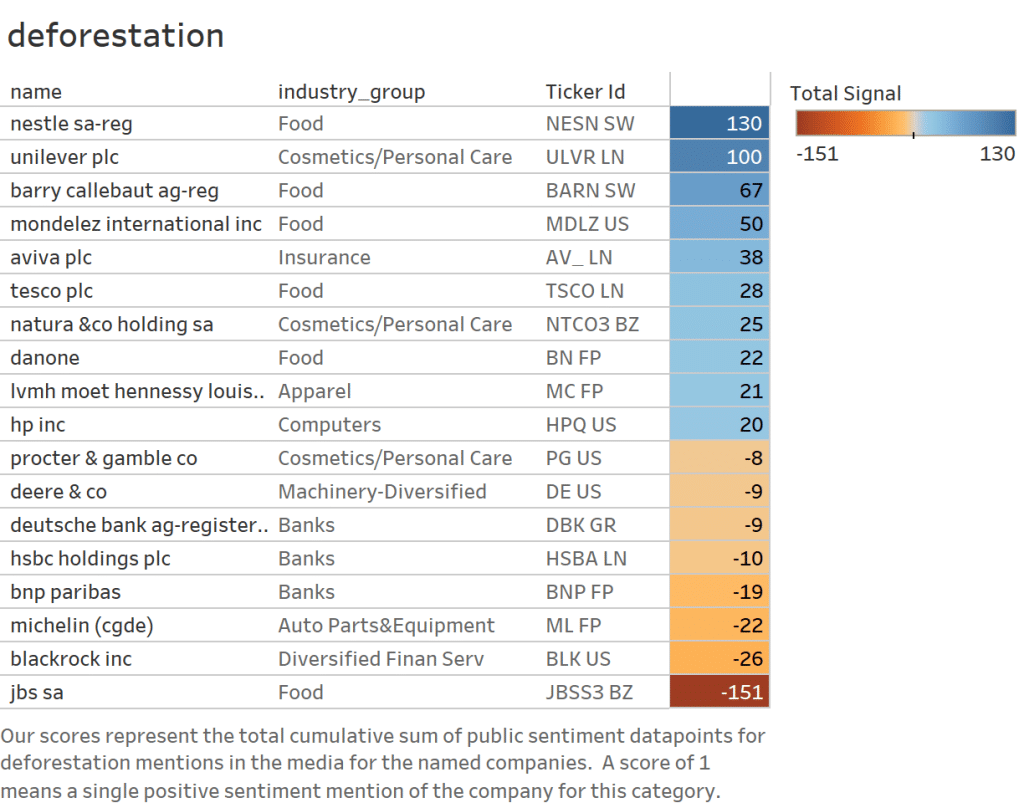
Permutable AI has recently unveiled its deforestation impact rankings. This comprehensive ranking system based on our sentiment analysis sheds light on the environmental practices of major corporations and their perceived impact on deforestation. The data serves as a valuable resource for investors, consumers, and stakeholders concerned about the ecological impact of major corporations.
Despite the fact that deforestation in Brazil’s Amazon fell 34% in the first half of 2023, the world is moving too slowly to meet pledges to end deforestation by 2030. Around 4.1m hectares of primary tropical rainforest was lost globally in 2022 – an increase of 10% from 2021 with Brazil, the Democratic Republic of the Congo (DRC) and Bolivia topping the table for tropical primary forest loss.
In our rankings, several companies stand out as being recognised for their efforts in mitigating deforestation. Nestlé, Barry Callebaut and Mondelez International in the food sector, Unilever in cosmetics/personal care, and Aviva in finance are positively perceived for their commitment to sustainable practices and have earned top positions in the rankings. These companies have made public commitments to sourcing deforestation-free palm oil, cocoa, and other commodities. Additionally, they have invested in traceability and certification processes, collaborating with farmers and other stakeholders to promote sustainable practices within their supply chains.
Conversely, the rankings highlight companies facing increased scrutiny for their perceived negative impact on deforestation. JBS in the food sector, BlackRock, BNP Paribas and HSBC in financial services and Michelin in auto parts and equipment are openly criticized for their role in deforestation. These companies have been linked to deforestation in the Brazilian Amazon, invested in companies involved in deforestation, consumed rubber often grown in deforested areas, and lent to companies associated with deforestation. Furthermore, these companies lack transparency and accountability regarding deforestation issues, putting them under pressure from investors, consumers, and NGOs to take action and address deforestation concerns.
Permutable AI’s rankings are based on comprehensive news sentiment analysis. The company’s commitment to transparency and data-driven insights aims to encourage positive change within the business landscape. By analysing news sentiment, Permutable AI provides an objective evaluation of companies’ perceived impact on deforestation, offering stakeholders valuable insights into corporate responsibility in the realm of environmental conservation.
Wilson Chan, CEO of Permutable AI, highlights the significance of these rankings, stating, “The release of these rankings underscores the importance of environmental considerations in evaluating corporate practices. We believe that transparency and awareness can drive positive change, and we encourage companies to reassess and enhance their sustainability efforts.”
Manuela Moollan, Sustainability Lead at Permutable AI, expressed the company’s commitment to providing actionable insights that empower responsible business practices. She stated, “At Permutable AI, we are committed to offering clear pictures of corporate responsibility. These rankings provide an opportunity for companies to further prioritise sustainability in their operations and investments.”
These deforestation impact rankings by Permutable AI offer a timely and essential tool for stakeholders looking to make informed decisions about the environmental practices of major corporations. By incorporating transparency, comprehensive analysis, and a commitment to positive ecological change, Permutable AI continues to lead in providing valuable insights for a sustainable business landscape. For more information please contact enquiries@permutable.ai.
– Software companies data security rankings
– Clean and affordable energy company rankings
– Corporate behaviour rankings
– Company labour standards rankings
Uber, the ride-sharing giant, has gained widespread attention not only for its innovative business model but how committed are they really to sustainability and social responsibility? In this article, we take a deep dive into the Uber ESG score according to our data, decoding what it really means and how it reflects the company’s efforts in these areas.
ESG (Environmental, Social, and Governance) is a measure used by investors and stakeholders to evaluate a company’s performance in these key areas. ESG scores have become increasingly important in recent years as consumers and investors demand greater transparency and accountability from businesses. These scores provide a snapshot of how well a company is managing its environmental impact, addressing social issues, and maintaining good governance practices.
When it comes to Uber, its ESG score is a reflection of the company’s commitment to sustainability and social responsibility. It serves as a benchmark for assessing its performance in these areas and provides insights into the initiatives and practices that Uber has implemented to make a positive impact on the world.
Uber’s ESG score is a comprehensive assessment of its performance in the areas of environmental impact, social initiatives, and governance practices. By examining each of these components, we can gain a better understanding of how Uber is addressing sustainability and social responsibility.
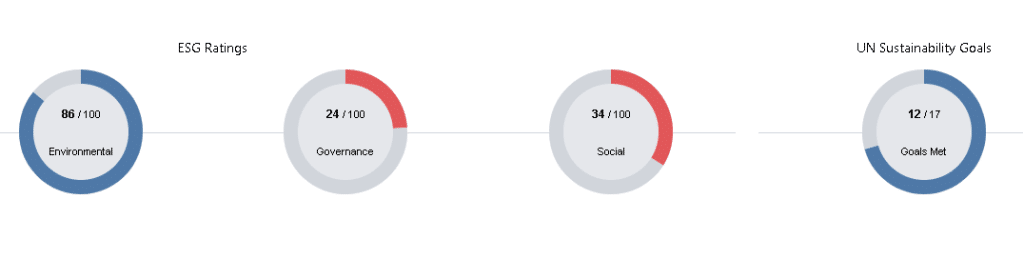
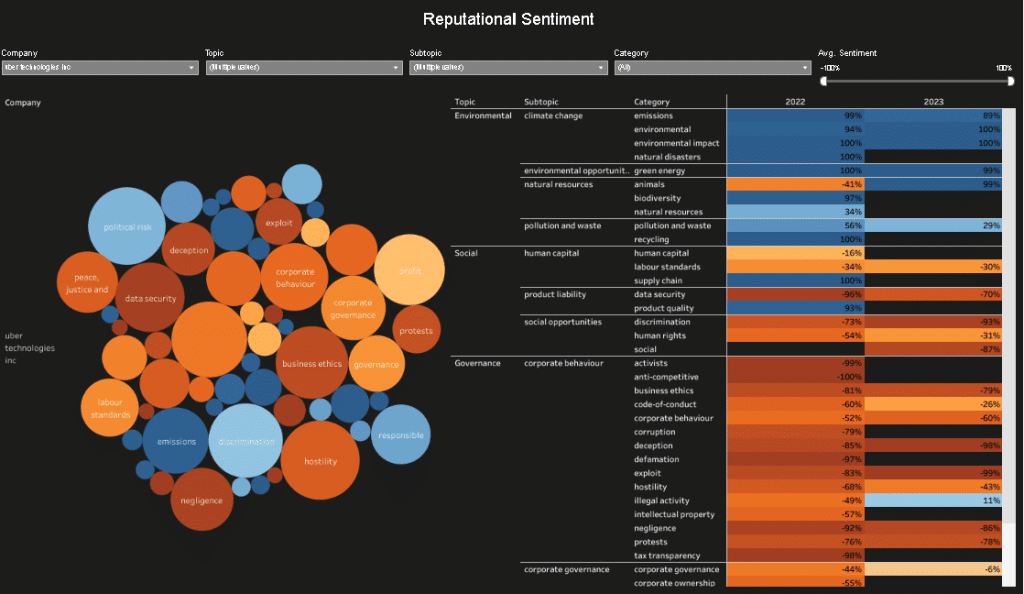
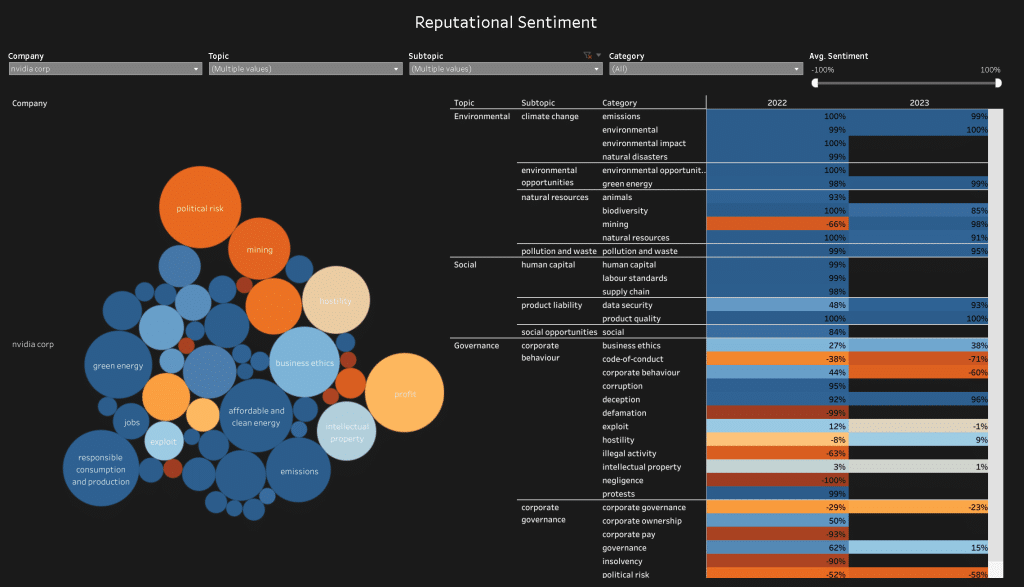
According to our data, Uber has a score of 86 at time of writing in this area. The company has made significant strides in reducing its environmental footprint driven by one of its key initiatives to transition to electric vehicles (EVs). Uber aims to have 100% of rides in the United States, Canada, and Europe be in EVs by 2030 and globally by 2040. This commitment to electrification not only helps reduce carbon emissions but also promotes the adoption of sustainable transportation options.
In addition to EVs, Uber has also invested in other environmentally friendly initiatives. It has partnered with public transit agencies to promote shared mobility and reduce congestion. Uber has also introduced initiatives like UberPOOL and Uber Bike to encourage the use of shared and sustainable transportation modes. These efforts demonstrate Uber’s commitment to minimizing its environmental impact and promoting sustainable practices.
The Uber ESG score in social factors, stands at a relatively low 34. This score is reflective of a multitude of factors that have come under scrutiny including:
Labour Disputes and Controversies: Uber has faced persistent criticism and legal challenges related to the treatment of its drivers. Drivers have raised concerns about low pay, the absence of employment benefits, and the perceived unfairness of deactivation practices. These issues have eroded Uber’s reputation and contributed to its low social score.
Driver Classification Issues: The company has been embroiled in lawsuits over its classification of drivers as independent contractors rather than employees. This classification has allowed Uber to avoid providing drivers with benefits such as minimum wage and overtime pay, further damaging its social standing.
Consumer Trust and Safety: A series of safety incidents and concerns about the background checks of drivers have also impacted Uber’s social score. Instances of harassment and safety lapses have led to a loss of trust among passengers and the wider public.
Corporate Culture: Uber’s corporate culture has faced criticism for being toxic and riddled with allegations of discrimination and sexual harassment. Such cultural issues have negatively affected the company’s social reputation and its ability to attract and retain talent.
Transparency and Accountability: Uber has been criticised for a perceived lack of transparency and accountability in its operations. These issues further undermine the company’s social responsibility and its efforts to address its societal impact.
Good governance is crucial for any company striving to maintain the highest standards of sustainability and social responsibility however the Uber ESG score in governance is low at 24 according to our data at time of writing. There are a number of reasons for this including:
Leadership Controversies: Uber has grappled with a series of leadership controversies and scandals, most notably in 2017 when the company’s CEO, Travis Kalanick, was compelled to resign. Allegations of sexual harassment, discrimination, and a lack of effective leadership undermined Uber’s corporate governance. The departure of its CEO was a pivotal moment in Uber’s governance challenges.
Lack of Transparency: Uber has been criticised for a perceived lack of transparency in its operations. Concerns have been raised about the company’s disclosure practices, including issues related to data privacy, which have impacted its governance rating.
Corporate Ethics: Allegations of unethical conduct and a toxic corporate culture have eroded trust in Uber’s governance. The company has faced accusations of prioritising aggressive growth over ethical and responsible business practices, which has contributed to its low governance score.
Regulatory Battles: Uber has been embroiled in regulatory battles in many regions, often stemming from its disruptive business model and labour classification issues. These battles have raised questions about Uber’s willingness to work within the regulatory framework and have negatively affected its governance standing.
Board Composition: Concerns about the composition of Uber’s board of directors and its independence have also played a role in the company’s low governance score. Questions have been raised about the board’s ability to effectively oversee the company’s actions and decisions.
While Uber has made significant progress in sustainability there is still plenty of work to be down within the remit of social responsibility and governance.
With that said, Uber can embark on a strategic journey to bolster its ESG score by focusing on key initiatives. Firstly, in the realm of environmental responsibility, Uber can expedite its transition to a greener fleet by accelerating its efforts to electrify vehicles and reduce carbon emissions. By achieving its goals in this domain, the company can demonstrate a tangible commitment to mitigating the environmental impacts of its operations, which would have a positive influence on its ESG rating.
Simultaneously, Uber can make significant strides in social responsibility by enhancing its relationships with drivers. Improving pay structures, benefits, and safety measures can foster a more positive working environment, while also bolstering the company’s reputation in the eyes of both drivers and passengers. Furthermore, implementing measures to combat discrimination and harassment and promoting diversity and inclusion can contribute to a healthier corporate culture. Lastly, Uber can make a substantial contribution to the communities it serves by actively engaging with local stakeholders, addressing community concerns, and supporting social initiatives, thereby strengthening its social credentials. Such strategic efforts will collectively contribute to an improved ESG score and position Uber as a socially and environmentally responsible corporate citizen.
As the ride-sharing industry continues to evolve, sustainability and social responsibility will play an increasingly significant role among players like Uber and their main competitor Lyft. Consumers are becoming more conscious of their choices, and they expect businesses to prioritize environmental and social considerations. This shift in consumer behaviour will likely drive industry-wide changes, pushing companies to adopt more sustainable practices and contribute positively to society.
Uber, with its focus on sustainability is well-positioned to thrive in this changing landscape but needs to the work in social and governance factors. By continually innovating and investing in initiatives that address environmental and social challenges, Uber can set the standard for the ride-sharing industry and inspire others to follow suit.
The Uber ESG score serves as a testament to the company’s commitment to sustainability and social responsibility. By decoding this score and examining its components, we have gained insights into Uber’s environmental initiatives, social impact, and governance practices. While there are areas where Uber can improve, its efforts to reduce carbon emissions and provide safer transportation options are commendable.
ESG scores play a vital role in driving positive change in businesses. They provide a framework for evaluating a company’s performance in key areas and encourage transparency and accountability. As consumers and investors continue to prioritize sustainability and social responsibility, ESG scores will become increasingly important in shaping the business landscape as well as corporate decision making.
If you’re eager to delve deeper into granular ESG data on Uber, don’t hesitate to get in touch with us. Simply drop us an email at enquiries@permutable.ai or complete the contact form below. We’re here to provide you with the insights you need to make informed decisions and drive positive change. Reach out today.