Breaking barriers: The role of AI in democratizing data and sustainability insights in 2024

In today’s rapidly changing world, sustainability has unquestionably become a top priority for businesses and investors alike. Despite what the naysayers like to peddle, there is no denying that ESG integration continues to gain significant traction as companies strive to align their operations with sustainable practices. Unfortunately, accessing and analyzing ESG data can be a complex and time-consuming task. This begs the question – how can  artificial intelligence play an important role in democratizing data and revolutionizing the way sustainability insights are generated? Let’s take a closer look in this article.

Understanding ESG integration and sustainability analytics

ESG integration involves incorporating environmental, social, and governance factors into investment and corporate decision-making processes. It enables investors to assess the long-term sustainability and impact of their investments and corporates to assess their impacts, looking beyond traditional financial metrics. 

However, the reality is that analyzing vast amounts of ESG data can be overwhelming and resource-intensive. This is where sustainability analytics, powered by AI, steps in. By using advanced algorithms and machine learning techniques, AI can efficiently process and analyze ESG data, providing valuable insights into a company’s sustainability performance. 

By the same token, AI-driven sustainability analytics can also highlight potential risks and opportunities that might not be immediately obvious through traditional analysis methods. This level of insight allows investors and corporates to make more informed decisions, aligning their portfolios and operations with their sustainability goals and risk tolerance. Building on this, as regulatory requirements around ESG disclosures become more stringent, the ability to swiftly navigate and interpret this complex landscape becomes even more crucial. AI not only simplifies this task but also enhances the accuracy and reliability of ESG assessments, empowering investors to contribute positively to global sustainability efforts while potentially enhancing returns.

ESG and the significance of artificial intelligence in democratizing data

There is absolutely no question that AI can play a crucial role in processing ESG data efficiently and effectively. Traditional methods of data analysis often involve manual collection and interpretation, which can be time-consuming and prone to errors. AI, on the other hand, can automate data collection from various sources, such as annual reports, news articles, and social media, ensuring comprehensive coverage. Additionally, AI algorithms can identify patterns and correlations within the data that humans may overlook, allowing for more accurate and insightful analysis.

Given these points, it is clear that AI is not just an auxiliary tool but a transformative force in ESG. At Permutable, we know that the integration of AI technologies enhances the depth and breadth of ESG data analysis, facilitating a more nuanced understanding of environmental, social, and governance issues. To put it another way, this can empower investors and corporates to make decisions that are not only financially sound but also aligned with broader sustainability objectives. Consequently, as the global emphasis on ESG criteria continues to grow, the agility and precision offered by AI in navigating this evolving landscape will become increasingly indispensable for investors and corporates looking to stay ahead.

AI-driven ESG insights for sustainable investment

Sustainable investing has gained tremendous popularity in recent years, with investors increasingly seeking to align their portfolios with environmentally and socially responsible companies. AI-driven ESG insights such as ours enable investors to make more informed decisions by providing a comprehensive understanding of a company’s sustainability performance. By leveraging AI capabilities, investors can identify companies that demonstrate strong ESG practices and avoid those that engage in greenwashing – the practice of presenting a false or misleading impression of a company’s sustainability efforts.

For instance, AI algorithms can sift through vast amounts of data to detect inconsistencies between a company’s sustainability reports and its actual practices – something we are in the process of applying our AI to in our GreenProof greenwashing identification solution . This means investors can spot potential red flags in real-time, such as discrepancies in carbon emission reports or inconsistencies in labour practices across different sources. This dovetails with the fact that AI-driven analysis can predict future sustainability trends, allowing investors to anticipate shifts in regulatory policies or consumer preferences and adjust their investment strategies accordingly. In essence, AI is able to empower investors not only to assess current ESG performance but also to forecast future sustainability trajectories, making sustainable investment more dynamic and forward-looking. Through advanced ESG insights such as our own, investors are better equipped to support truly sustainable companies, contributing to a more responsible and ethical global market.

The ethical considerations of using AI in sustainability reporting

While AI offers enormous potential for democratizing data sustainability insights, it also raises ethical concerns. One of the key challenges is ensuring the transparency and accountability of AI algorithms. It is crucial to develop ethical guidelines and regulatory frameworks to prevent biased or discriminatory outcomes. Additionally, the responsible use of AI in sustainability reporting requires careful consideration of data privacy and security. Safeguarding sensitive information is paramount to maintain trust and ensure the integrity of sustainability reporting. 

To that end, developing clear protocols for data handling, storage, and processing is essential. These protocols should comply with international data protection regulations and be transparent to all stakeholders involved. In addition, the use of AI in sustainability reporting should be guided by principles of fairness and inclusivity, ensuring that insights derived do not inadvertently marginalize or disadvantage any group. Stakeholder engagement is also key; companies must involve communities, employees, and consumers in conversations about how AI is used in their sustainability efforts. This collaborative approach not only enhances the ethical application of AI but also promotes a broader understanding and acceptance of its role in driving sustainable practices. Ultimately, by addressing these ethical considerations head-on, we can harness the power of AI to contribute positively to the global sustainability agenda, while maintaining the highest standards of ethics and responsibility.

Leveraging AI for social impact and achieving Sustainable Development Goals

Beyond financial returns, many investors are increasingly focused on generating positive social and environmental impacts. AI can be a powerful tool in achieving sustainable development goals (SDGs) by identifying investment opportunities that align with specific impact investing goals such as social and environmental objectives. By analyzing diverse data sources, including social media sentiment and news articles, AI algorithms can identify companies and projects that contribute to SDGs, such as poverty alleviation, climate action, and gender equality. This enables investors to direct their capital towards initiatives that have a meaningful and measurable impact. 

For instance, AI can spotlight renewable energy projects that not only promise financial returns but also contribute significantly to reducing carbon emissions, aligning with SDG 13 (Climate Action). Similarly, AI can uncover companies pioneering in affordable and clean energy technologies, supporting SDG 7 (Affordable and Clean Energy). Building on this., through advanced data analytics, AI can assess the gender diversity of a company’s workforce and leadership, helping investors to invest in firms that champion gender equality, thus contributing to SDG 5 (Gender Equality). As a result, AI’s predictive capabilities can enable investors to assess the long-term sustainability and social impact of their investments, ensuring that their capital supports projects with long-lasting benefits for communities and the environment. 

Enhancing ESG transparency through AI

There is no question that transparency is crucial for building trust and promoting sustainable practices. AI has the ability to enhance ESG transparency by automating the collection and analysis of ESG data, making it more accessible and understandable for investors, corporates and other key stakeholders. Through the use of interactive dashboards and visualizations that present complex ESG information in a user-friendly manner,  investors to make more informed decisions and encourages companies to improve their sustainability performance by providing clear benchmarks and comparisons. 

By the same token, AI-driven insights can push companies towards more honest and accurate reporting – something we are very much aiming towards by making our free company ESG reports available to all. The exciting thing about using AI to provide ESG transparency is its ability to scrutinize vast datasets allowing for the identification of discrepancies and potential greenwashing. At Permutable, we very much see this as a catalyst to encourage firms to adhere more strictly to their sustainability commitments. Additionally, by automating the tracking of a company’s ESG progress over time which we do on all our ESG reports, AI can facilitate a dynamic view of sustainability efforts, enabling stakeholders to witness real-time improvements or declines.  This can be perfectly demonstrated by looking at our Disney ESG score report where the numerous governance issues that have plagued the entertainment giant to date can be seen clearly in the fall in the governance line in the chart below.
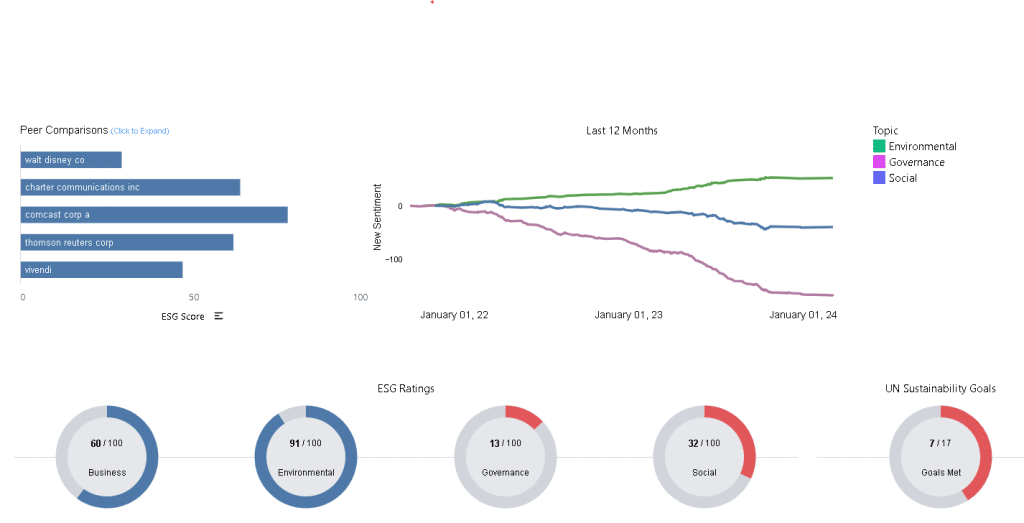
Disney ESG score timeline

Above: Disney ESG score timeline

Bridging the gap: Permutable AI’s commitment to democratizing data

At Permutable AI, we are dedicated to bridging the gap between complex ESG data and those who need it most. By harnessing the power of artificial intelligence, Permutable AI is not only simplifying the analysis of sustainability metrics but is also making these insights more accessible to a broader audience, irrespective of their technical expertise or resources through our free ESG reports

Our quest to democratize ESG data stems from the understanding that informed decision-making is the cornerstone of sustainable investment and corporate practices. However, the sheer volume and complexity of data can deter stakeholders, especially small to medium-sized enterprises and individual investors, from integrating ESG considerations into their strategies. Permutable AI’s advanced AI-driven platforms tackle this issue head-on, and our free ESG reports are just the start, with more to come. 

Our vision is to create user-friendly dashboards, interactive visualisations, and automated reporting tools that will empowers users to navigate the complexities of ESG data with ease that is within reach of all. With this approach, we will enhance transparency and accountability but also level the playing field, allowing entities of all sizes to participate in the global movement towards sustainability. By providing easy access to critical sustainability insights, our aim is to fostering a culture of informed decision-making, where sustainable practices are not just ideals but actionable objectives.

Our mission to make ESG data accessible and understandable is part of a vision where AI is used for good to create a sustainable future powered by informed decision-making. Behind the scenes, we are working on breaking down the barriers to ESG data accessibility, enabling a more inclusive approach to sustainability, where every investment and corporate decision can be guided by comprehensive, reliable, and actionable ESG insights. Watch this space. 

Find out more

Are you looking to understand more about the transformative role of AI in revolutionizing sustainability insights and democratizing data? At Permutable AI, we’re dedicated to making ESG data more accessible and understandable, empowering informed decision-making for a sustainable future. If you’re keen to explore how our solutions can enhance your sustainability strategies or if you have any questions about integrating ESG considerations into your investment decisions, we’re here to help. Get in touch to learn more by emailing enquiries@permutable.ai or fill in the form below.

Get in touch

Loading

NVIDIA ESG score 2024: A game-changer in the tech industry’s sustainability journey

ESG scores have become integral in assessing the sustainability practices of companies across various industries. In the tech industry, where innovation and growth often come at the expense of the environment, ESG scores serve as a vital tool for measuring the impact of companies’ operations on the planet and society. NVIDIA, a leading technology company, has emerged as a game-changer with its remarkable ESG score. This article will delve into the significance of ESG scores in the tech industry and explore how the NVIDIA ESG score according to our latest data. 

Overview of NVIDIA ESG score and its significance

NVIDIA’s ESG score reflects its commitment to environmental conservation, social responsibility, and effective corporate governance. With an impressive score, NVIDIA has set itself apart as a sustainability leader in the tech industry. The company’s ESG initiatives encompass a wide range of areas, including reducing carbon emissions, promoting diversity and inclusion, and fostering transparent and ethical business practices.

NVIDIA’s ESG score serves as a testament to its dedication to sustainability and its proactive approach towards mitigating the negative impacts of its operations. By prioritizing ESG factors, NVIDIA has not only positioned itself as a responsible corporate citizen but has also gained a competitive advantage in the tech industry by appealing to environmentally and socially conscious consumers.

How our NVIDIA ESG score is calculated and evaluated

The calculation and evaluation of our NVIDIA ESG score involves a comprehensive analysis of various environmental, social, and governance factors using our ESG intelligence based on AI-driven news sentiment analysis.

In terms of the environmental aspect, our NVIDIA ESG score takes into account sentiment around its efforts towards achieving net zero emissions, minimizing waste generation, and promoting energy efficiency. The company’s commitment to renewable energy sources and sustainable supply chain practices also contributes to its high ESG score.

On the social front, our NVIDIA ESG score considers news sentiment around its initiatives to promote diversity, equity, and inclusion within its workforce and across its value chain. The company’s support for education and community development programs further enhances its social standing.

In the governance realm, our NVIDIA ESG score evaluates news sentiment on topics such as the effectiveness of its board structure, executive compensation practices, and transparency in financial reporting. Strong sentiment around corporate governance practices ensure accountability and responsible decision-making, leading to a higher ESG score.

Nvidia ESG score overview

NVIDIA ESG score breakdown

NVIDIA scores highly on environmental factors, with a score of 94 according to our data at time of writing. There are several reasons why NVIDIA scores highly on environmental factors. Let’s take a closer look below.

Product efficiency

– Focus on energy-efficient GPUs: NVIDIA’s graphics processing units (GPUs) are renowned for their powerful performance while consuming less power compared to traditional CPUs. This efficiency translates to reduced energy consumption for data centers and other users, lowering their environmental footprint.

– Investing in energy-saving technologies: NVIDIA actively invests in research and development of new technologies that further improve the energy efficiency of their GPUs. This includes innovations like Ampere architecture, which boasts significant power reductions while maintaining high performance.

Transparency and reporting

– Detailed sustainability reports: NVIDIA publishes comprehensive sustainability reports outlining their environmental goals, progress, and challenges. These reports are transparent and follow recognized frameworks like the Global Reporting Initiative (GRI), allowing for independent verification and evaluation.

– Participation in environmental initiatives: NVIDIA participates in various environmental to promote renewable energy adoption and accelerate progress towards climate goals. For example NVIDIA aims to purchase or generate enough renewable energy to match 100% of its global electricity usage by the end of 2025. They’re making progress, reducing emissions by 15% per employee since 2014. In addition, their ambitious Earth-2 Project aims to build a digital twin of the entire planet, simulating complex environmental interactions to predict climate change and its impacts.

Circular economy and recycling

– Product take-back program: NVIDIA offers a take-back program for used GPUs, ensuring responsible recycling and reuse of materials. This reduces electronic waste and promotes a circular economy approach in the industry.

– Investing in green manufacturing: NVIDIA invests in sustainable manufacturing practices at its facilities, including water conservation, waste reduction, and energy efficiency initiatives. These efforts further minimize their environmental impact.

It’s important to note that while NVIDIA scores highly on environmental factors, there are still areas for improvement. Some ongoing concerns include:

– Supply chain emissions: The production of GPUs and other electronics involves complex supply chains with indirect emissions. NVIDIA is working to address this by collaborating with suppliers to adopt more sustainable practices.

– Energy consumption of high-performance GPUs: Although efficient compared to CPUs, high-performance GPUs still consume significant amounts of energy. NVIDIA is working on further optimizations and encouraging responsible usage practices.

Overall, NVIDIA’s focus on energy-efficient products, transparent reporting, and commitment to environmental initiatives contribute to its strong performance in ESG rankings related to environmental factors. They continue to innovate and address remaining challenges, solidifying their position as a leader in sustainable technology practices.

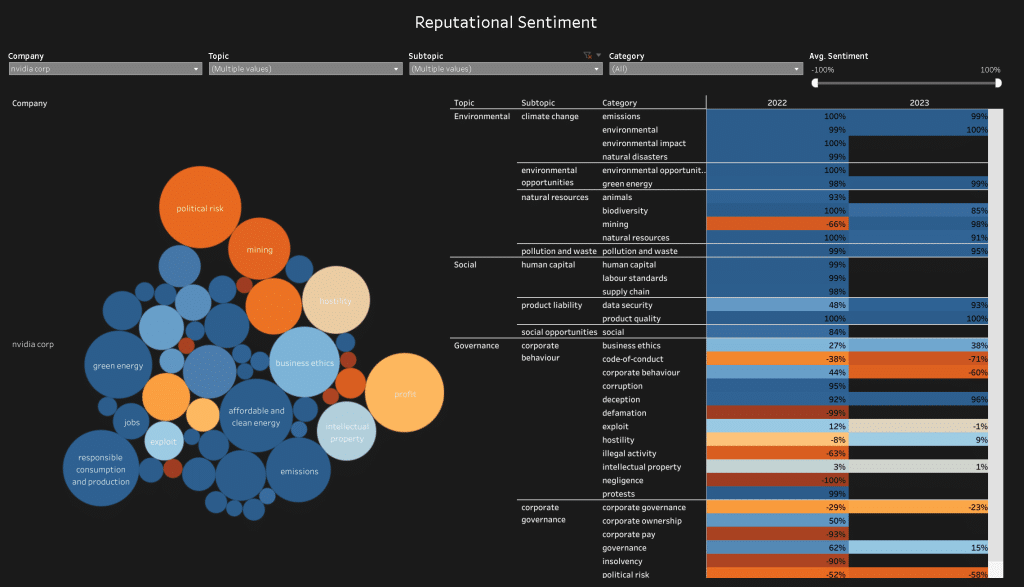
NVIDIA ESG reputation sentiment overview

PURCHASE DATASET


SEE ESG INTELLIGENCE

NVIDIA ESG score: Impact on its stakeholders

NVIDIA’s impressive ESG score has a profound impact on its stakeholders, including employees, customers, investors, and the communities it operates in. For employees, NVIDIA’s commitment to sustainability fosters a sense of pride and purpose, attracting top talent and increasing employee satisfaction. The company’s efforts towards diversity and inclusion also create a more inclusive and equitable workplace.

Customers are increasingly conscious of the environmental and social impact of the products they purchase. NVIDIA’s high ESG score assures customers that the company aligns with their values and that its products are developed sustainably. This enhances customer loyalty and helps NVIDIA maintain a competitive edge in the market.

Investors also consider ESG scores when making investment decisions. NVIDIA’s strong ESG performance demonstrates its long-term viability, stability, and responsible business practices. As a result, the company attracts socially responsible investors who prioritize sustainable investments.

Lastly, the communities where NVIDIA operates benefit from the company’s high ESG score. Through its various social initiatives, NVIDIA contributes to community development, education, and environmental conservation, making a positive difference in the lives of people in these areas.

NVIDIA ESG score peer comparison

NVIDIA is not the only tech company that has recognized the importance of ESG scores and its potential impact on sustainability practices. Several other tech giants have also taken significant strides in this regard.

One such example is Apple, which has consistently achieved high ESG scores due to its focus on renewable energy, responsible supply chain management, and reduced carbon footprint. As a result, Apple has become a sustainability leader in the tech industry, inspiring other companies to follow suit.

Another notable example is Google, which has excelled in the social aspect of ESG scoring. The company actively promotes diversity and inclusion, provides numerous employee benefits, and supports charitable initiatives. Google’s high ESG scores have not only improved its public image but have also influenced other companies to prioritize similar social initiatives.

These examples highlight the positive effects of high ESG scores on sustainability practices within the tech industry. By showcasing the achievements of companies like NVIDIA, Apple, and Google, the importance of ESG scores in driving positive change becomes evident.

What to make further comparisons? Why not explore our data on NVIDIA’s competitors below:

– Advanced Micro Devices (ARM) ESG score

– Intel ESG score

– Qualcomm ESG score 

– Xlinix ESG score 

The role of ESG scores in investor decision-making

ESG scores play a crucial role in investor decision-making, with more investors recognizing the value of sustainable investments. Traditionally, financial performance was the primary consideration for investors. However, as the awareness of environmental and social issues increased, investors began to prioritize companies that demonstrated responsible business practices.

ESG scores provide investors with a standardized framework to evaluate companies’ sustainability performance. By considering a company’s ESG score, investors can assess its ability to manage risks, adapt to changing regulations, and create long-term value. High ESG scores indicate that a company is well-positioned to address environmental and social challenges while maintaining strong financial performance.

Investors who prioritize ESG factors are more likely to invest in companies with high ESG scores. As a result, these companies can attract capital more easily, allowing them to invest in sustainable initiatives and further improve their ESG scores. This positive feedback loop encourages companies to prioritize sustainability, benefiting both investors and the environment.

The future of ESG scores in the tech industry

ESG scores are expected to play an increasingly important role in the tech industry’s future. As the impacts of climate change become more evident and societal expectations evolve, tech companies will face growing pressure to demonstrate their commitment to sustainability. ESG scores will serve as a benchmark for companies, encouraging them to integrate sustainability into their core business strategies.

Moreover, regulatory bodies are recognizing the significance of ESG scores and are implementing measures to ensure companies disclose their ESG practices. This increased transparency will further emphasize the importance of ESG scores and push companies to improve their sustainability performance.

The tech industry, with its immense influence and resources, has the potential to drive significant positive change through sustainable practices. ESG scores will continue to be a critical tool in measuring and promoting sustainability within the industry, ultimately contributing to a more sustainable future.

Steps for tech companies to improve their ESG scores

Tech companies looking to improve their ESG scores can take several steps to enhance their sustainability performance. Companies should conduct thorough ESG assessments to identify areas for improvement and set clear goals. This involves evaluating the environmental impact of their operations, reviewing social initiatives, and strengthening governance practices.

It is also vital that tech companies integrate sustainability into their core business strategies. This includes incorporating environmental considerations into product development, establishing diversity and inclusion programs, and adopting sustainable supply chain practices. By making sustainability a priority, companies can improve their ESG scores and contribute to a more sustainable tech industry.

Tech companies should also ensure transparency and accurate reporting of their ESG practices. Independent verification of ESG data can enhance the credibility of the scores and mitigate concerns of greenwashing. By providing clear and reliable information, companies can build trust with stakeholders and demonstrate their commitment to sustainability.

Finally, collaboration and knowledge-sharing among tech companies can accelerate progress towards sustainability. By sharing best practices and collectively addressing challenges, companies can learn from each other and drive industry-wide change.

NVIDIA’s ESG score as a game-changer in the tech industry’s sustainability journey

NVIDIA’s remarkable ESG score has positioned the company as a game-changer in the tech industry’s sustainability journey. With its commitment to environmental stewardship, social responsibility,  effective governance and a proactive approach to managing ESG risks, NVIDIA has set a high standard for other tech companies to emulate. 

ESG scores play a vital role in assessing the sustainability practices of tech companies and have a profound impact on stakeholders, including employees, customers, and investors. By prioritizing sustainability and demonstrating strong ESG performance, companies like NVIDIA can attract top talent, enhance customer loyalty, and secure long-term investments.

While ESG scoring systems face challenges and criticisms, they are expected to play an increasingly important role in the future of the tech industry. As regulatory bodies push for greater transparency and companies recognize the importance of sustainability, ESG scores will continue to drive positive change and contribute to a more sustainable future for the tech industry and beyond.

Find out more

Are you looking for more granular data on NVIDIA’s ESG practices? 


PURCHASE DATASET

Proctor & Gamble ESG score: A closer look at their sustainability initiatives

Proctor & Gamble (P&G), the multinational consumer goods corporation headquartered in Cincinnati, Ohio, has a rich history dating back to 1837, and has grown to become one of the world’s largest and most well-known companies, offering a wide range of products including household cleaning supplies, personal care items, and baby care products. P&G’s commitment to innovation, quality, and sustainability has positioned them as a leader in the industry. In this article we’ll take a deep dive into our Proctor & Gamble ESG score according to our latest data.

What is ESG and why is it important?

ESG stands for Environmental, Social, and Governance, and it refers to the three main factors used to measure the sustainability and ethical impact of a company’s operations. Environmental factors include a company’s impact on the environment, such as carbon emissions and waste management. Social factors encompass a company’s relationship with its employees, customers, and communities. Governance factors focus on a company’s internal policies and practices, including diversity and transparency. ESG has gained significant importance in recent years as consumers and investors increasingly prioritize sustainability and ethical practices.

Overview of the Proctor & Gamble ESG score 

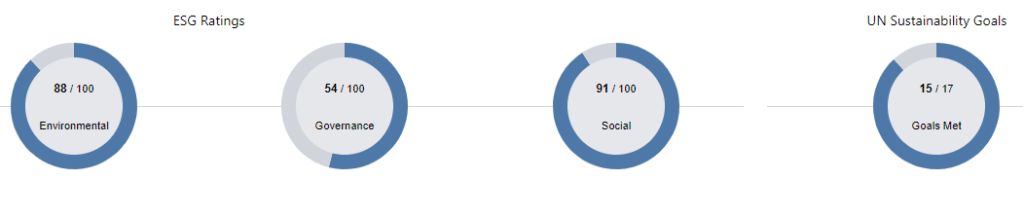
According to our data at time of writing, the Proctor & Gamble ESG score comes in at 88 for environmental factors, 91 for social factors and 54 for governance factors. What instantly stands out if that their social score is higher than there environmental score, which is uncommon across most of our company data. But why is this?

Proctor & Gamble’s social score is likely higher than its environmental score due to its long-standing commitment to social responsibility, transparent approach, and accountability to stakeholders. The company’s social initiatives have led to a strong track record of positive outcomes, including diversity, inclusion, philanthropy, employee engagement, and workplace safety.

Despite progress in some environmental areas, Proctor & Gamble’s use of palm oil and synthetic chemicals has attracted criticism for potential environmental and human health impacts. The company needs to continue making strides in environmental sustainability to elevate its overall score. We will take a closer look at all these aspects below. 

Procter & Gamble ESG score overview

P&G’s commitment to sustainability and ESG initiatives

P&G has long recognized the importance of sustainability and has made a firm commitment to integrate ESG principles into its business practices. The company’s sustainability vision, known as “Ambition 2030,” sets ambitious goals to address some of the world’s most pressing challenges, including climate change, water scarcity, and waste reduction. P&G aims to achieve zero manufacturing waste to landfill, use 100% renewable or recycled materials in all products and packaging, and reduce greenhouse gas emissions across its value chain.

Overview of P&G’s environmental initiatives

P&G has implemented a variety of environmental initiatives to reduce its impact on the planet. One of the key areas of focus is renewable energy. The company has committed to powering its plants with 100% renewable electricity by 2030. P&G is also investing in renewable energy projects and exploring innovative technologies to further reduce its carbon footprint. Additionally, P&G has set a goal to reduce water consumption by 35% per unit of production by 2030, and has implemented water conservation measures across its operations.

Another important aspect of P&G’s environmental initiatives is waste reduction. The company aims to achieve zero manufacturing waste to landfill by 2030. P&G has implemented waste reduction programs, such as recycling and composting, in its manufacturing facilities. The company is also working towards using 100% recyclable or reusable packaging for all its products by 2030. These initiatives not only contribute to a more sustainable future but also help P&G reduce costs and improve operational efficiency.

P&G’s social responsibility efforts

In addition to its environmental initiatives, P&G places a strong emphasis on social responsibility. The company is committed to promoting diversity and inclusion, both within its workforce and in the communities it operates in. P&G has set a goal to achieve gender equality in its management positions and to ensure that women hold at least 50% of all entry-level positions. The company also supports various initiatives to empower women and girls, including education programs and economic empowerment projects.

Furthermore, P&G is dedicated to making a positive impact on the communities it serves. The company has a long history of philanthropy and has contributed significant resources to address societal issues. P&G has launched numerous initiatives to improve access to clean drinking water, provide disaster relief, and support education and healthcare programs in underserved communities. By actively engaging in social responsibility efforts, P&G is not only making a difference in the lives of individuals but also strengthening its brand and reputation.

Proctor & Gamble governance score 

While Proctor & Gamble has a strong commitment to corporate governance, the company’s governance score of 54 out of 100 indicates room for improvement. Factors influencing this score include board composition, executive compensation, shareholder rights, and transparency and disclosure. 

P&G’s board is majority independent, a positive aspect, but could benefit from enhanced diversity in terms of gender, ethnicity, and experience. Executive compensation is linked to performance, a commendable practice, but CEO pay could be revisited to mitigate excessive compensation risks. Strengthening shareholder rights by embracing proxy access, enabling shareholder nominations for board members, would further empower stakeholders.

P&G generally demonstrates transparency in governance practices and publishes an annual corporate governance report. However, providing more detailed insights into boardroom dynamics and risk management approaches would strengthen transparency. By addressing these areas, P&G can elevate its governance score and overall ESG performance.

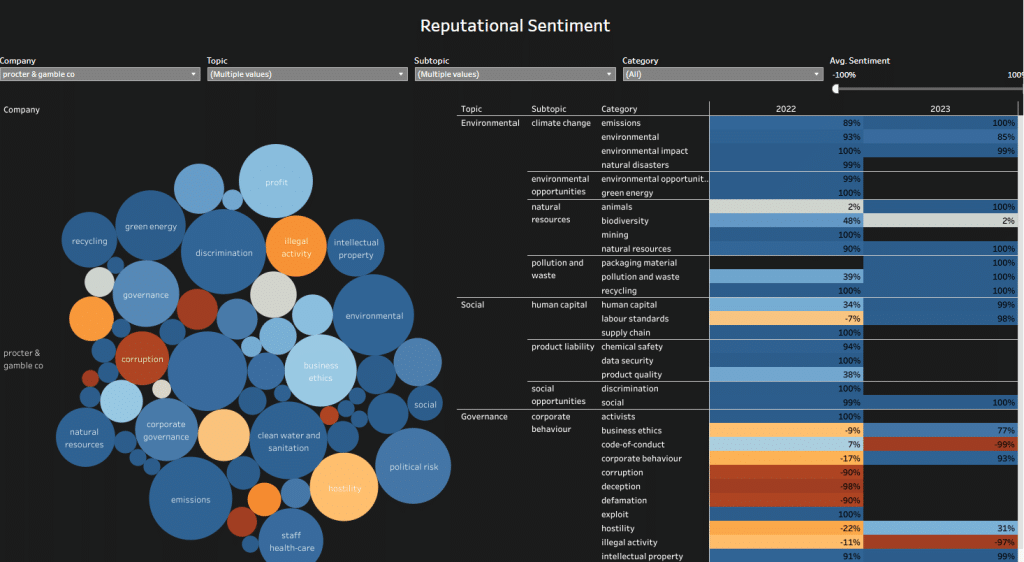
Procter & Gamble ESG sentiment breakdown
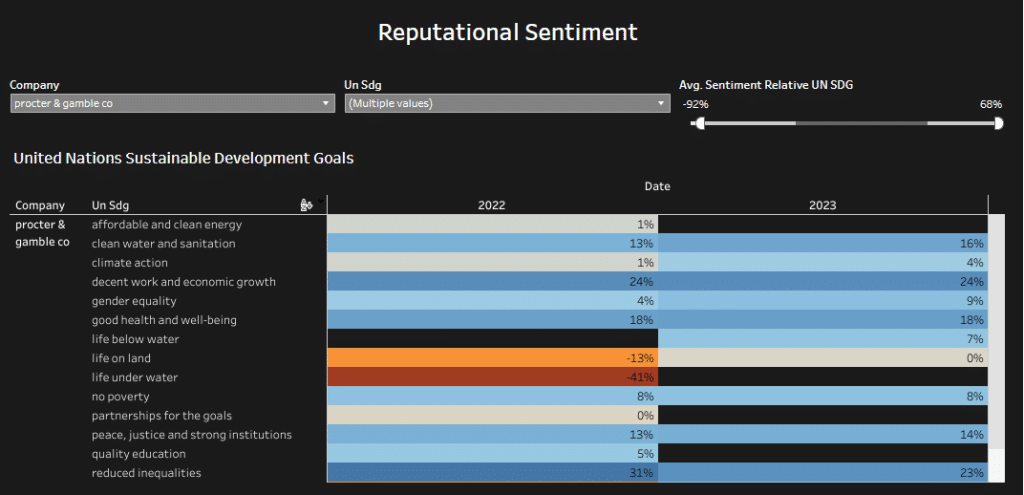
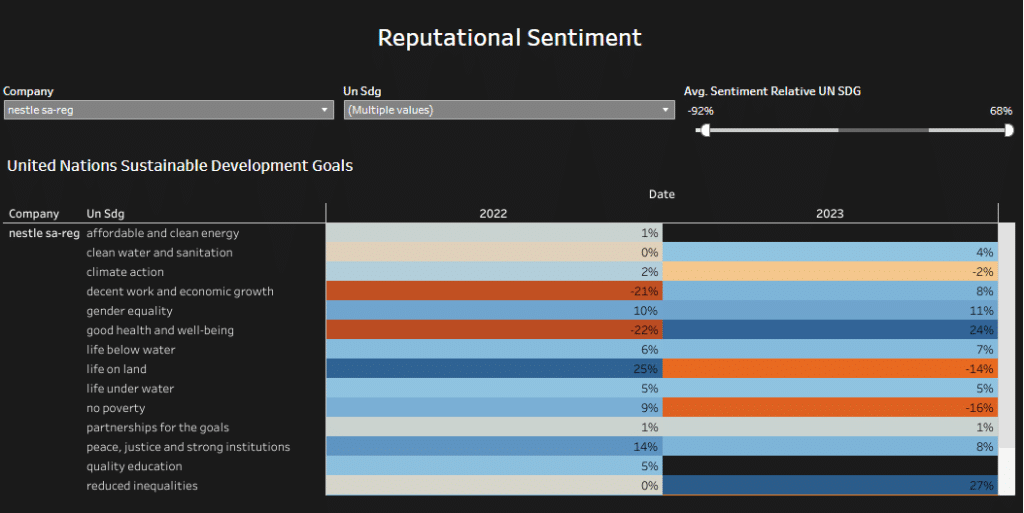
Procter & Gamble ESG score SDG alignment

Procter & Gamble ESG score and recognition

P&G’s commitment to sustainability and ESG practices has been widely recognized and acknowledged. The company has consistently received high rankings in various sustainability and ESG assessments. For instance, P&G has been included in the Dow Jones Sustainability Index for many years, which recognizes the top sustainability performers globally. P&G has also received recognition for its efforts in climate change mitigation, water stewardship, and responsible sourcing. These rankings and accolades validate P&G’s dedication to sustainable business practices and serve as a testament to its leadership in the industry.

The benefits of sustainable business practices for P&G

Implementing sustainable business practices brings numerous benefits to P&G. Firstly, it helps the company reduce its environmental impact and conserve natural resources, which contributes to a healthier planet. By using renewable energy and reducing waste, P&G can lower its carbon emissions and minimize its ecological footprint. These efforts not only align with consumer expectations but also position P&G as an industry leader committed to environmental stewardship.

Secondly, sustainable practices can drive innovation and improve operational efficiency. P&G’s focus on renewable materials and packaging innovation has led to the development of more sustainable products, which resonate with environmentally conscious consumers. Additionally, waste reduction initiatives and energy-saving measures can result in cost savings and improved resource allocation. By integrating sustainability into its business model, P&G can create value for both the company and its stakeholders.

Lastly, sustainable business practices enhance P&G’s reputation and brand image. In today’s socially conscious world, consumers are increasingly drawn towards companies that demonstrate a genuine commitment to sustainability and ethical practices. By showcasing its ESG initiatives and transparently communicating its progress, P&G can build trust and loyalty with its customers. This ultimately translates into increased market share, customer satisfaction, and long-term business success.

Challenges and obstacles faced by P&G in implementing ESG initiatives

While P&G has made significant progress in its sustainability journey, it has also encountered challenges and obstacles along the way. One of the main challenges is the complexity of global supply chains. P&G sources materials and components from numerous suppliers worldwide, making it challenging to ensure sustainable practices throughout the entire value chain. Collaborating with suppliers, setting clear expectations, and providing support and resources are essential to overcome this challenge.

Another obstacle is the need for continuous innovation and research. Developing sustainable products and materials requires ongoing investment in research and development. P&G must stay at the forefront of technological advancements and collaborate with experts and partners to find innovative solutions. This can be resource-intensive and time-consuming, but it is crucial for P&G to maintain its competitive edge and deliver on its sustainability commitments.

Furthermore, P&G faces the challenge of balancing sustainability with cost-effectiveness. While sustainable practices often lead to long-term cost savings, there may be upfront investments required for infrastructure upgrades, technology adoption, and employee training. P&G must carefully evaluate the financial implications of its sustainability initiatives and ensure that they align with its long-term business strategy.

Proctor & Gamble ESG score peer comparison

P&G in the top 13% of companies for its ESG practices. However the P&G ESG score is lower than some of its competitors, such as Unilever, Colgate-Palmolive, and Nestlé. However, P&G’s score is still above average for the consumer packaged goods (CPG) industry. P&G’s primary areas of weakness are its environmental performance, particularly its use of palm oil and synthetic chemicals, and its governance performance, particularly its handling of tax issues.

Take a look at P&G’s competitor ESG scores below:

Proctor & Gamble ESG score: final thoughts 

In conclusion, Proctor & Gamble’s commitment to sustainability and ESG initiatives sets a positive example for the business world. Through its environmental initiatives, social responsibility efforts, and governance practices, P&G is driving positive change and making a significant impact on the planet and society. By integrating sustainability into its business model, P&G not only reduces its environmental footprint but also strengthens its brand, improves operational efficiency, and enhances its reputation. As P&G continues to set ambitious goals and pursue innovative solutions, it paves the way for a more sustainable future and inspires other companies to follow suit. Embracing ESG principles is not only the responsible thing to do but also a strategic advantage in today’s rapidly changing world.

Find out more

Ready to dive deeper into Procter & Gamble’s ESG score? Unlock more granular insights and detailed data by filling in the form below. Stay informed and join us in the journey towards a sustainable future.


Siemens sustainability & ESG score: A closer look

Siemens, a global leader in technology and engineering, has long been committed to sustainability and environmental stewardship. The company’s Environmental, Social, and Governance (ESG) Score is a comprehensive measure of its sustainability efforts. In this article, we will delve into the significance of Siemens sustainability journey, the company’s ESG score.  

Understanding ESG and its importance

ESG refers to the three main factors that measure the sustainability and ethical impact of a company’s operations. Environmental criteria assess a company’s impact on the environment, such as carbon emissions and resource consumption. Social criteria evaluate a company’s relationships with employees, customers, and communities, focusing on factors like labor practices and community engagement. Governance criteria examine a company’s internal policies, including board diversity and executive compensation.

The importance of ESG has grown significantly in recent years as investors and consumers increasingly prioritize companies that demonstrate strong sustainability practices. ESG factors are seen as indicators of long-term financial performance and risk management. By considering ESG criteria, companies like Siemens can enhance their reputation, attract investors, and contribute to a sustainable future.

Overview of Siemens ESG Score and its significance

Siemens’ ESG Score is a comprehensive assessment of the company’s sustainability efforts across various dimensions. It provides a clear snapshot of Siemens’ performance in environmental, social, and governance areas, allowing stakeholders to evaluate its impact on society and the planet.

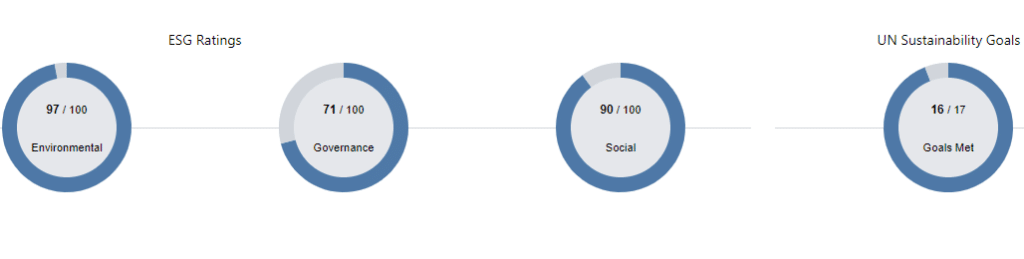
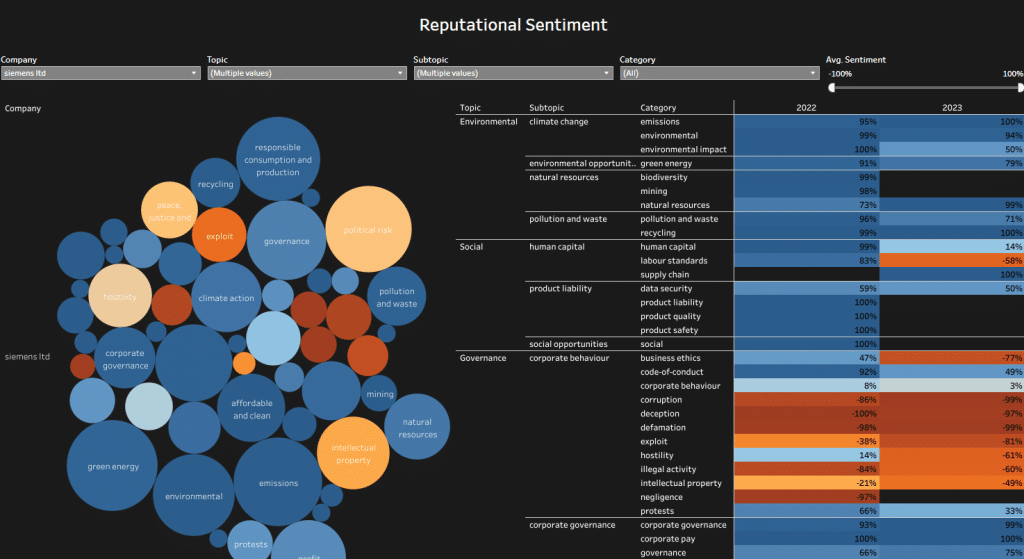
The Siemens ESG Score of 97 for environmental, 90 for social and 71 for governance factors reflects the company’s commitment to environmental stewardship, social responsibility, and ethical practices. By actively managing its ESG risks and opportunities, Siemens aims to create long-term value for its shareholders while minimizing its environmental footprint and positively impacting communities.

Siemens sustainability and ESG score topline

Key components of Siemens sustainability efforts

Environmental initiatives by Siemens

Siemens recognizes the urgent need to address climate change and reduce its environmental impact. As part of its sustainability efforts, the company has set ambitious targets to become carbon neutral by 2030. Siemens aims to achieve this by increasing energy efficiency, transitioning to renewable energy sources, and developing innovative technologies that enable sustainable practices.

One of Siemens’ notable environmental initiatives is its commitment to promoting the circular economy. The company focuses on designing products that are resource-efficient, easily recyclable, and have minimal environmental impact throughout their lifecycle. Siemens also invests in research and development to create sustainable solutions for industries such as energy, transportation, and manufacturing.

Social responsibility initiatives by Siemens

Siemens places a strong emphasis on social responsibility, aiming to create a positive impact on communities and society as a whole. The company actively engages in corporate social responsibility initiatives, including educational programs, community development projects, and philanthropy.

Siemens invests in education and skills development to empower individuals and improve employability. The company collaborates with educational institutions to promote STEM education, fostering innovation and preparing future generations for the challenges of a rapidly evolving world.

Furthermore, Siemens is committed to diversity and inclusion within its workforce. The company aims to create a working environment that embraces individuals from diverse backgrounds and fosters equal opportunities for all. By prioritizing social responsibility, Siemens demonstrates its commitment to making a positive difference in society.

Governance and ethical practices at Siemens

Good governance and ethical practices are fundamental to Siemens’ sustainability efforts. The company operates with integrity, transparency, and accountability, ensuring that its decision-making processes align with its values and the expectations of its stakeholders.

Siemens maintains a robust governance framework that includes clear policies, procedures, and internal controls. The company’s board of directors oversees the implementation of these practices, ensuring compliance with legal and regulatory requirements.

Siemens also prioritizes risk management and business ethics. The company has established mechanisms to identify and mitigate risks related to corruption, bribery, and other unethical practices. By upholding high standards of governance and ethics, Siemens builds trust with its stakeholders and maintains its reputation as a responsible corporate citizen.


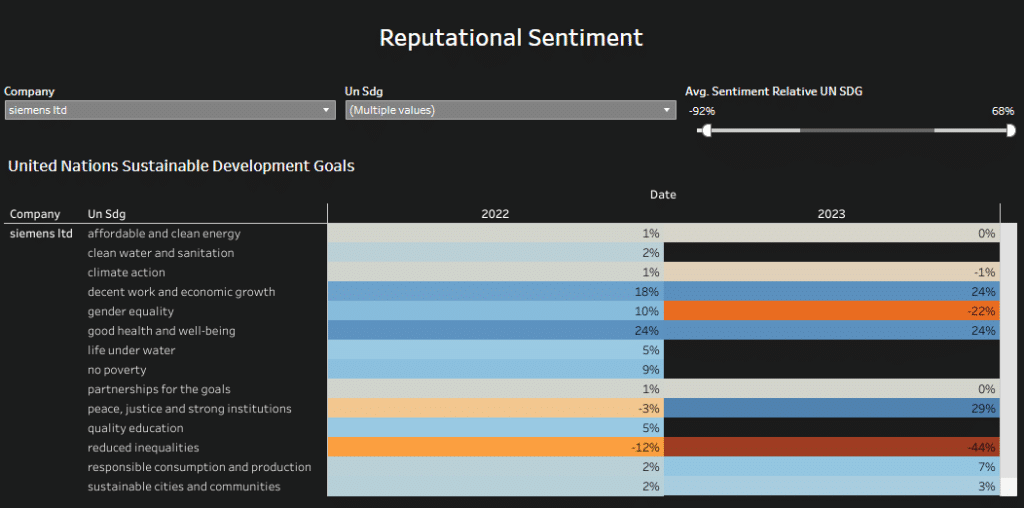
Siemens ESG score SDG alignment

Impact of Siemens sustainability efforts on the business and stakeholders

Siemens’ sustainability efforts have a positive impact on both the business and its stakeholders. By integrating sustainability into its core business strategy, Siemens strengthens its competitive advantage, attracts top talent, and fosters innovation. The company’s commitment to sustainability resonates with customers and investors who prioritize ethical and environmentally conscious practices.

Siemens’ sustainability initiatives also contribute to the well-being of its stakeholders. By reducing its environmental footprint, the company helps mitigate climate change and protect ecosystems. Through its social responsibility initiatives, Siemens supports education, skills development, and community empowerment, positively impacting individuals and communities worldwide.

Furthermore, Siemens’ strong governance practices enhance trust and confidence among stakeholders. By operating with integrity and transparency, the company ensures that its actions align with the expectations of shareholders, employees, customers, and the wider society.

Challenges and future goals for Siemens sustainability

While Siemens has made substantial progress in its sustainability efforts, there are challenges and opportunities that lie ahead. As a technology company operating in a rapidly evolving landscape, Siemens must continually adapt and innovate to address emerging environmental and social issues.

One of the key challenges for Siemens is to further reduce its carbon footprint and transition to renewable energy sources. The company aims to achieve this through energy-efficient solutions and renewable energy projects. Siemens also faces the challenge of promoting sustainable practices across its supply chain, collaborating with suppliers to improve their environmental and social performance.

In terms of social responsibility, Siemens seeks to deepen its impact by expanding educational programs and community development initiatives. The company aims to empower individuals and communities, particularly in underserved areas, to foster inclusive growth and social progress.

Siemens sustainability and ESG score peer comparison 

Siemens is generally considered to be a leader in sustainability among its peers in the industrial sector. consistently outperformed its competitors in terms of ESG ratings. This is likely due to its strong commitment to sustainability, which is reflected in its DEGREE framework. The DEGREE framework is a comprehensive approach to sustainability that encompasses six key areas: decarbonization, ethics, governance, resource efficiency, equity, and employability. Explore our ESG scores for Siemen’s competitors below:

Conclusion: The role of Siemens ESG Score in shaping a sustainable future

Siemens’ ESG Score serves as a powerful tool to measure and communicate the company’s sustainability efforts. It showcases Siemens’ commitment to environmental stewardship, social responsibility, and good governance. By integrating sustainability into its core business strategy, Siemens contributes to a more sustainable future.

The importance of ESG factors cannot be overstated. As investors and consumers increasingly prioritize sustainability, companies like Siemens have a crucial role to play in driving positive change. By embracing ESG principles, companies can enhance their performance, attract capital, and contribute to the well-being of society and the planet.

Siemens’ sustainability efforts demonstrate that economic success and environmental and social responsibility can go hand in hand. Through its environmental initiatives, social responsibility programs, and strong governance practices, Siemens sets a benchmark for sustainable business practices. By striving for continuous improvement and innovation, Siemens paves the way for a more sustainable and prosperous future.

Find out more 

Ready to delve deeper into Siemens’ sustainability initiatives and ESG performance? Fill in the form below to access more granular data on key components, environmental initiatives, social responsibility efforts, and governance practices. Gain valuable insights into the impact of Siemens’ sustainability on business and stakeholders, its challenges, and future goals. Additionally, explore a peer comparison of Siemens’ ESG score against industry competitors. 

Request more data


Nestle ESG score: An in-depth analysis and look at its impact on the industry

In today’s rapidly changing world, businesses are increasingly being scrutinized not only for their financial performance but also for their impact on the environment, society, and governance practices. This holistic approach, known as Environmental, Social, and Governance (ESG), has gained significant traction in recent years. Nestle, a global leader in the food and beverage industry, has been at the forefront of implementing sustainable practices and has achieved an impressive ESG score. This article will delve into the Nestle ESG score, compare it to industry standards, and explore the impact of its initiatives on the environment, communities, and the overall industry.

What is Nestle’s ESG Score?

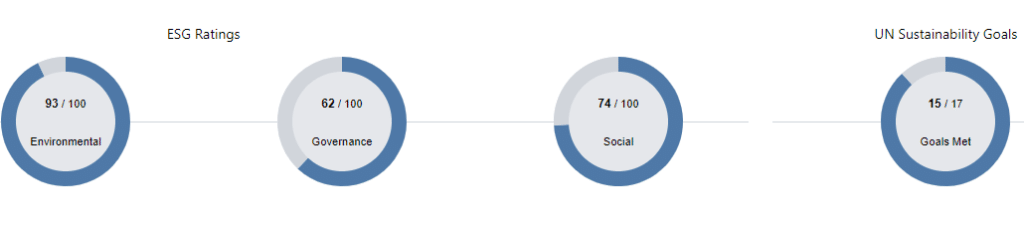
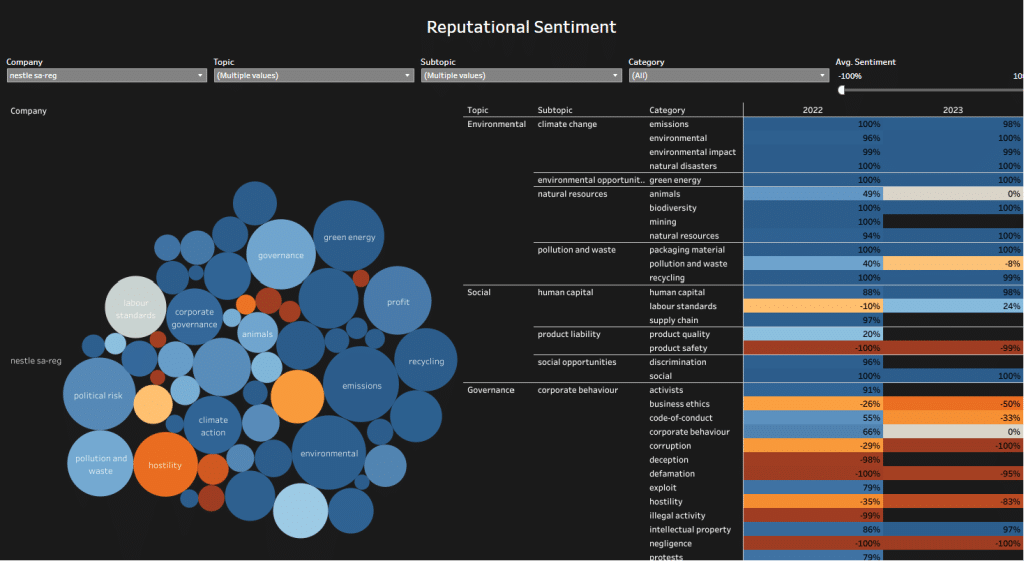
Nestle’s ESG score is a measure of the company’s performance in the areas of environmental sustainability, social responsibility, and governance practices. It is a comprehensive assessment that takes into account various factors, including carbon emissions, water usage, waste management, labour practices, community engagement, board diversity, and transparency in reporting. According to our ESG intelligence at time of writing, the Nestle ESG score comes in at 93 for environmental factors, 74 for social factors and 62 for governance factors. 

Nestle’s commitment to environmental sustainability and social responsibility is reflected in its high ESG score, which showcases its dedication to driving positive change and minimizing its impact on the planet and society.

Nestle ESG score overview

How Nestle’s ESG Score Compares to Industry Standards

Nestle’s ESG score stands out when compared to industry standards. The company has consistently ranked among the top performers in the food and beverage sector, showcasing its commitment to sustainable practices and responsible business operations. Nestle has set ambitious targets to reduce greenhouse gas emissions, conserve water resources, and achieve zero waste. By exceeding industry benchmarks, Nestle has demonstrated its leadership in driving sustainability and inspiring other companies to follow suit.

The Impact of Nestle’s ESG Initiatives on the Environment

Nestle’s ESG initiatives have had a profound impact on the environment. The company has taken significant steps to reduce its carbon footprint, with a particular focus on transitioning to renewable energy sources and improving energy efficiency in its operations. Nestle has also implemented sustainable sourcing practices, ensuring that its agricultural supply chains are environmentally responsible and promote biodiversity. These efforts have not only reduced Nestle’s environmental impact but also inspired its suppliers and competitors to adopt similar practices, leading to a collective positive change across the industry.

Nestle’s commitment to sustainable packaging is another area where it has made a tangible difference. The company has been actively working towards eliminating single-use plastics from its packaging and promoting recyclability. By investing in innovative packaging solutions and collaborating with stakeholders, Nestle has set a precedent for responsible packaging practices that prioritize the planet’s well-being. This commitment extends beyond the company’s own products, as Nestle actively engages with policymakers and industry associations to drive systemic change and promote circular economy principles.

Nestle’s Social Responsibility Efforts and Their Impact on Communities

Beyond its environmental initiatives, Nestle has also prioritized social responsibility and community engagement. The company recognizes the importance of supporting local communities and empowering individuals. Nestle has implemented various initiatives to improve the livelihoods of farmers and small-scale producers in its supply chains, ensuring fair prices, access to training, and promoting sustainable agricultural practices. Through partnerships with organizations and NGOs, Nestle has made a significant positive impact on communities by addressing social issues such as poverty, education, and nutrition.

One notable example is Nestle’s commitment to providing clean drinking water to communities in need. Through its “Nestle Pure Life” initiative, the company has installed water purification systems in areas where access to clean water is limited. This has not only improved the quality of life for countless individuals but has also helped to prevent waterborne diseases and promote better health outcomes. Nestle’s dedication to social responsibility is not just a corporate responsibility but is ingrained in its values and has become a driving force for positive change.

Governance Practices at Nestle and Their Influence on the Company’s Success

Governance practices play a crucial role in ensuring transparency, accountability, and ethical conduct within a company. Nestle’s governance practices have been instrumental in maintaining its high ESG score and driving its success. The company has implemented robust internal controls, risk management systems, and compliance frameworks to ensure business integrity and responsible decision-making. Nestle’s board of directors comprises individuals with diverse backgrounds and expertise, promoting a culture of inclusivity and effective oversight.

Transparency and disclosure are also key aspects of Nestle’s governance practices. The company regularly publishes comprehensive sustainability reports that provide detailed insights into its ESG performance and progress. By sharing this information openly, Nestle builds trust with its stakeholders, including investors, consumers, and the wider public. This transparent approach has been recognized and praised by industry experts, further enhancing Nestle’s reputation as a leader in corporate governance.


PURCHASE DATASET


SEE ESG INTELLIGENCE

Challenges Faced by Nestle in Maintaining a High ESG Score

Maintaining a high ESG score is not without its challenges, and Nestle is no exception. The company operates in a complex global landscape, facing diverse environmental and social issues across its value chain. Nestle recognizes that sustainability is an ongoing journey and continuously strives to address challenges and improve its performance. Some of the challenges Nestle faces include ensuring sustainable sourcing of raw materials, reducing water usage in water-stressed regions, and addressing labour practices within its supply chains. By acknowledging these challenges and actively working towards solutions, Nestle demonstrates its commitment to continuous improvement and long-term sustainability.

The Significance of Nestle’s ESG Score for the Industry

Nestle’s impressive ESG score holds significant importance for the food and beverage industry as a whole. It serves as a benchmark for other companies, inspiring them to adopt sustainable practices and prioritize ESG considerations. Nestle’s leadership in sustainability has challenged industry norms and set a higher standard for responsible business operations. By sharing its knowledge and experiences, Nestle contributes to the collective progress towards a more sustainable and responsible industry.

Nestle ESG Score Peer Comparison

Nestlé’s ESG score is generally considered to be good relative to its peers in the food and beverage industry. See how they compare to their competitors below:

Unilever ESG score

The Coca Cola company ESG score

Pepsi Co ESG score

Mondelez International ESG score

Danone ESG score

Kellogg’s ESG score

The Hershey Company ESG score

General Mills ESG score

Kraft Heinz ESG score


Conclusion: Nestle’s Role in Driving Sustainability in the Industry

Nestle’s commitment to sustainability, as reflected in its impressive ESG score, has positioned the company as a global leader in driving positive change within the food and beverage industry. Through its environmental initiatives, social responsibility efforts, and robust governance practices, Nestle has made a significant impact on the environment, communities, and the industry as a whole. By setting ambitious targets, collaborating with stakeholders, and sharing best practices, Nestle inspires other companies to embrace sustainability and work towards a more sustainable and responsible future. As the world continues to face environmental and social challenges, Nestle’s role in driving sustainability becomes increasingly crucial, paving the way for a better tomorrow.

Find Out More

Are you looking for more granular data on Nestle’s ESG practices? 


PURCHASE DATASET

Visa ESG score: A deep dive into sustainability and corporate responsibility

Visa, the global leader in digital payments, has been at the forefront of sustainability and corporate responsibility initiatives. As the world becomes more conscious of the environmental, social, and governance (ESG) aspects of businesses, Visa has recognized the importance of measuring and communicating its sustainability efforts. In this article, we will delve into the Visa ESG score according to our data and understand how it reflects the company’s commitment to sustainable practices.

Overview of Visa’s Sustainability and Corporate Responsibility Initiatives

Visa has a strong commitment to sustainability and corporate responsibility. The company recognizes that its success is intertwined with the well-being of the communities it serves and the planet as a whole. Visa’s sustainability initiatives are focused on three main areas: environmental impact, social responsibility, and ethical governance.

In terms of environmental impact, Visa has set ambitious goals to reduce its carbon footprint and increase renewable energy usage. The company has implemented energy-efficient technologies, reduced water consumption, and invested in renewable energy projects. Visa also aims to support sustainable supply chains and promote responsible sourcing practices.

Visa’s social responsibility initiatives are centered around financial inclusion and empowering underserved communities. The company has launched programs to promote financial literacy, support small and micro-businesses, and provide access to digital payments in areas with limited banking infrastructure. Visa also advocates for diversity and inclusion within its workforce and partners with organizations that promote social equality.

Ethical governance is a fundamental aspect of Visa’s corporate responsibility. The company has established strong ethical standards, a robust compliance program, and a commitment to transparency. Visa’s board of directors oversees the company’s sustainability initiatives and ensures that they align with its long-term strategy.

Visa ESG Score and its Significance

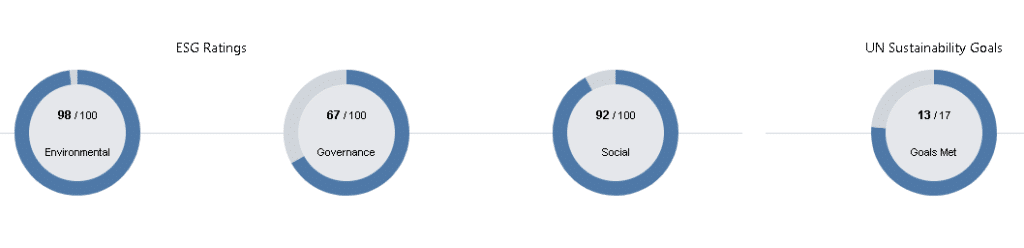
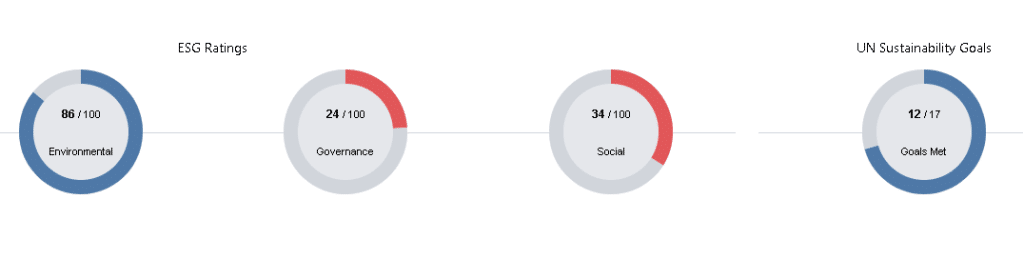
At time of writing, our Visa ESG score comes in at 98 for environmental, 67 for governance and 92 for social which is strong across the board.  Visa’s ESG score is an important metric that provides a snapshot of the company’s sustainability and corporate responsibility performance. It allows investors and stakeholders to assess Visa’s commitment to ESG factors and make informed decisions about their engagement with the company. A high ESG score indicates that Visa is effectively managing its environmental impact, social responsibility, and governance practices.

Moreover, this strong ESG score enhances Visa’s reputation and attract socially responsible investors. As the demand for sustainable investments grows, companies with high ESG scores are more likely to receive capital allocation and support. By prioritizing ESG factors, Visa demonstrates its long-term vision and resilience in the face of emerging sustainability challenges.

Visa ESG score overview

Visa ESG Score: How it is Calculated

Our Visa ESG score is calculated using a rigorous methodology that takes into account various factors and indicators. The company considers both quantitative and qualitative data to assess its performance across the environmental, social, and governance dimensions.

In the environmental dimension, Visa evaluates its greenhouse gas emissions, water usage, waste management practices, and energy efficiency. The company also assesses its efforts in promoting sustainable supply chains and reducing the environmental impact of its operations.

On the social front, Visa measures its contributions to financial inclusion, customer satisfaction, employee engagement, and diversity and inclusion. The company also considers its impact on the communities it operates in and its efforts to address social issues such as poverty and inequality.

In terms of governance, Visa evaluates its board structure, executive compensation practices, risk management, and ethical standards. The company also looks at its policies and procedures for transparency, anti-corruption, and stakeholder engagement.

Visa ESG Score: Key Factors Considered 

Visa’s ESG score is influenced by several key factors that reflect the company’s commitment to sustainability and corporate responsibility. These factors include:

  1. Climate Change Mitigation: Visa’s efforts to reduce its carbon footprint, increase renewable energy usage, and support initiatives that mitigate climate change.

  2. Financial Inclusion: Visa’s initiatives to promote financial literacy, support underserved communities, and provide access to digital payments in areas with limited banking infrastructure.

  3. Diversity and Inclusion: Visa’s commitment to fostering diversity and inclusion within its workforce and ensuring equal opportunities for all employees.

  4. Ethical Governance: Visa’s adherence to ethical standards, transparency, and robust compliance practices that promote responsible business conduct.

  5. Responsible Sourcing: Visa’s commitment to responsible sourcing practices, including ensuring the ethical treatment of workers and minimizing environmental impact throughout its supply chain.

Visa’s Performance in Sustainability and Corporate Responsibility

Visa has consistently demonstrated strong performance in sustainability and corporate responsibility. The company’s ESG score reflects its commitment to environmental stewardship, social impact, and ethical governance. Visa has set ambitious goals to reduce its carbon footprint, increase renewable energy usage, and promote financial inclusion.

In terms of environmental impact, Visa has made significant progress in reducing its greenhouse gas emissions and water consumption. The company has also invested in renewable energy projects and implemented energy-efficient technologies in its operations. Additionally, Visa has been actively working towards sustainable supply chains by promoting responsible sourcing practices and minimizing waste.

On the social front, Visa has been a champion of financial inclusion. The company has launched initiatives to promote financial literacy, support small businesses, and provide access to digital payments in underserved communities. Visa’s commitment to diversity and inclusion is evident through its efforts to create an inclusive workplace and ensure equal opportunities for all employees.

In terms of governance, Visa has established strong ethical standards and a robust compliance program. The company’s board of directors provides oversight and guidance on sustainability initiatives, ensuring that they align with Visa’s long-term strategy. Visa also maintains transparency by regularly reporting on its ESG performance and engaging with stakeholders.

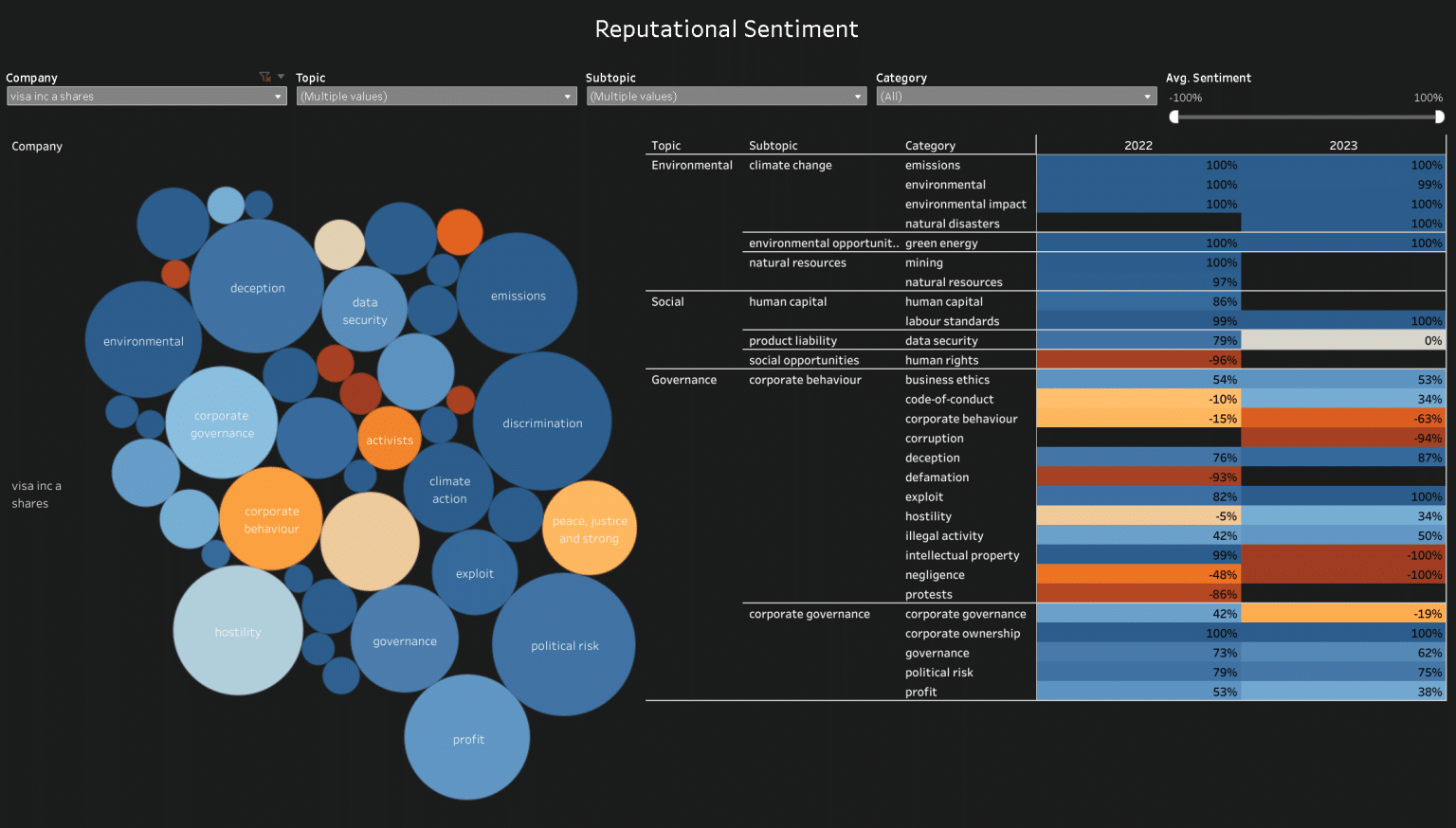
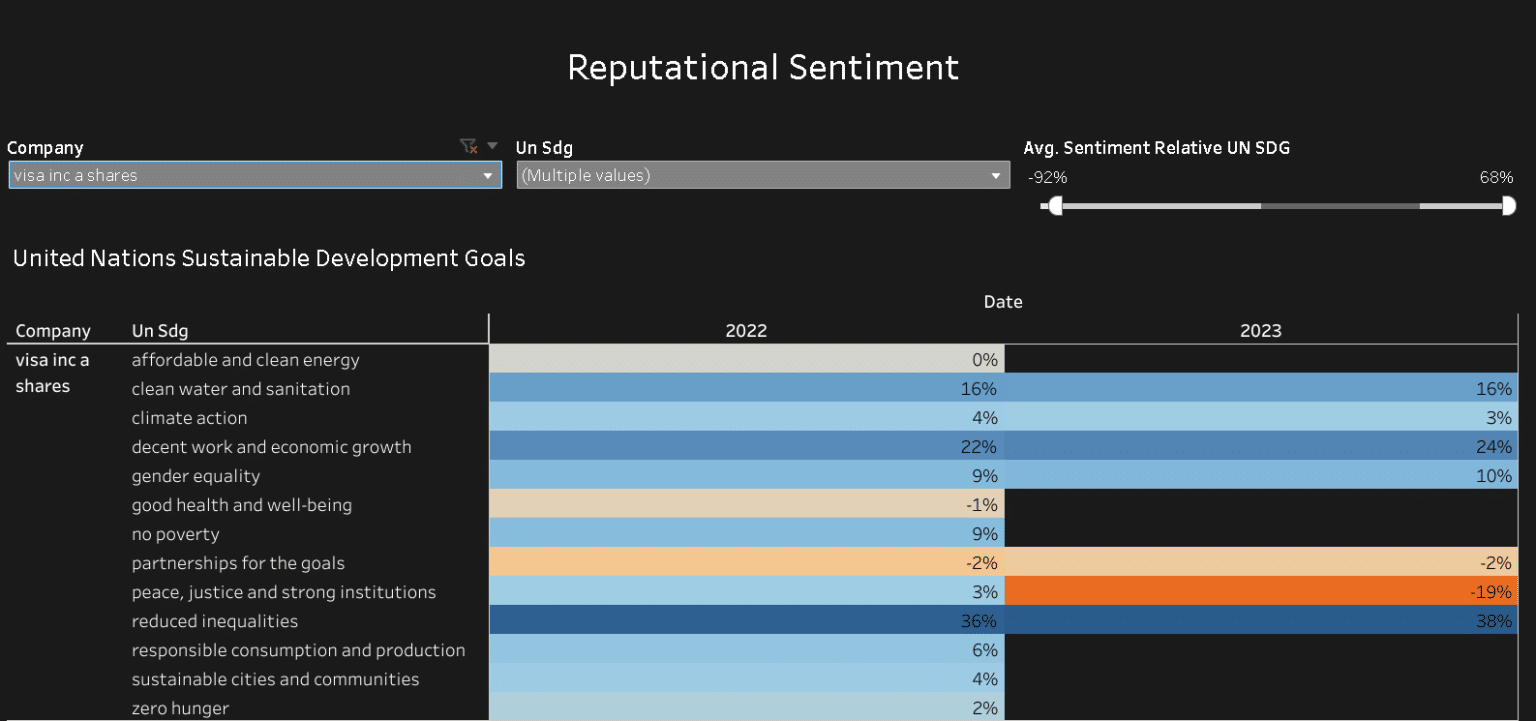
Visa ESG score sentiment analysis

Visa ESG Score: Impact on Investors and Stakeholders

Visa’s ESG score has a significant impact on investors and stakeholders. For investors, the ESG score provides valuable insights into Visa’s sustainability practices and long-term viability. By considering ESG factors, investors can assess the risks and opportunities associated with their investment in Visa. A high ESG score indicates that Visa is well-positioned to navigate sustainability challenges and create long-term value.

Stakeholders, including customers, employees, and communities, also benefit from Visa’s strong ESG score. They can have confidence in Visa’s commitment to social responsibility, environmental stewardship, and ethical governance. A high ESG score enhances Visa’s reputation and strengthens its relationships with stakeholders, leading to increased trust and loyalty.

Visa ESG Score Peer Comparison

Visa faces competition from several notable players in the financial services and payment industry. How does the Visa ESG score compare to those of their competitors? Find out below:

Mastercard ESG score

American Express ESG score

Discover Financial Services ESG score

 – PayPal ESG score

JPMorgan Chase ESG score

Square ESG score

Apple (Pay) ESG score

Google (Pay) ESG score

Visa ESG Score: The Future and the Role of Sustainability

Visa recognizes that sustainability is not a static concept but an ongoing journey. The company is committed to continuously improving its ESG score and addressing emerging sustainability challenges. Visa’s sustainability strategy is aligned with the United Nations Sustainable Development Goals (SDGs) and focuses on areas where the company can make the most significant impact.

In the future, Visa’s ESG score is expected to evolve to reflect changing stakeholder expectations and industry standards. The company will continue to integrate sustainability into its business practices and collaborate with partners to drive positive change. Visa’s ESG score will serve as a benchmark for its progress towards a more sustainable and responsible future.

Visa’s Commitment to Sustainability and Corporate Responsibility

The Visa ESG score is a testament to the company’s commitment to sustainability and corporate responsibility. By prioritizing environmental, social, and governance factors, Visa is creating long-term value for its stakeholders and contributing to a more sustainable world. The company’s strong performance in sustainability and corporate responsibility is reflected in its ESG score, which serves as a benchmark for its commitment to sustainable practices.

As Visa continues to navigate the evolving landscape of sustainability, its ESG score will play a crucial role in communicating its progress and engaging with investors and stakeholders. By maintaining a high ESG score, Visa can attract socially responsible investors, enhance its reputation, and drive positive change. Visa’s dedication to sustainability and corporate responsibility sets an example for other companies in the financial industry and beyond, highlighting the importance of ESG in creating a sustainable future.

Find Out More

Unlock deeper insights into Visa’s ESG performance and its competitive standing in the financial landscape by requesting more granular data. As investors and stakeholders, your understanding of Visa’s ESG score is pivotal for informed decision-making. Fill in the form below to request more data.

Get In Touch


Uber ESG score: A deep dive into sustainability and social responsibility

Uber, the ride-sharing giant, has gained widespread attention not only for its innovative business model but how committed are they really to sustainability and social responsibility? In this article, we take a deep dive into the Uber ESG score according to our data, decoding what it really means and how it reflects the company’s efforts in these areas.

Understanding ESG scores and their significance

ESG (Environmental, Social, and Governance) is a measure used by investors and stakeholders to evaluate a company’s performance in these key areas. ESG scores have become increasingly important in recent years as consumers and investors demand greater transparency and accountability from businesses. These scores provide a snapshot of how well a company is managing its environmental impact, addressing social issues, and maintaining good governance practices.

When it comes to Uber, its ESG score is a reflection of the company’s commitment to sustainability and social responsibility. It serves as a benchmark for assessing its performance in these areas and provides insights into the initiatives and practices that Uber has implemented to make a positive impact on the world.

Uber ESG score: Exploring its components

Uber’s ESG score is a comprehensive assessment of its performance in the areas of environmental impact, social initiatives, and governance practices. By examining each of these components, we can gain a better understanding of how Uber is addressing sustainability and social responsibility.

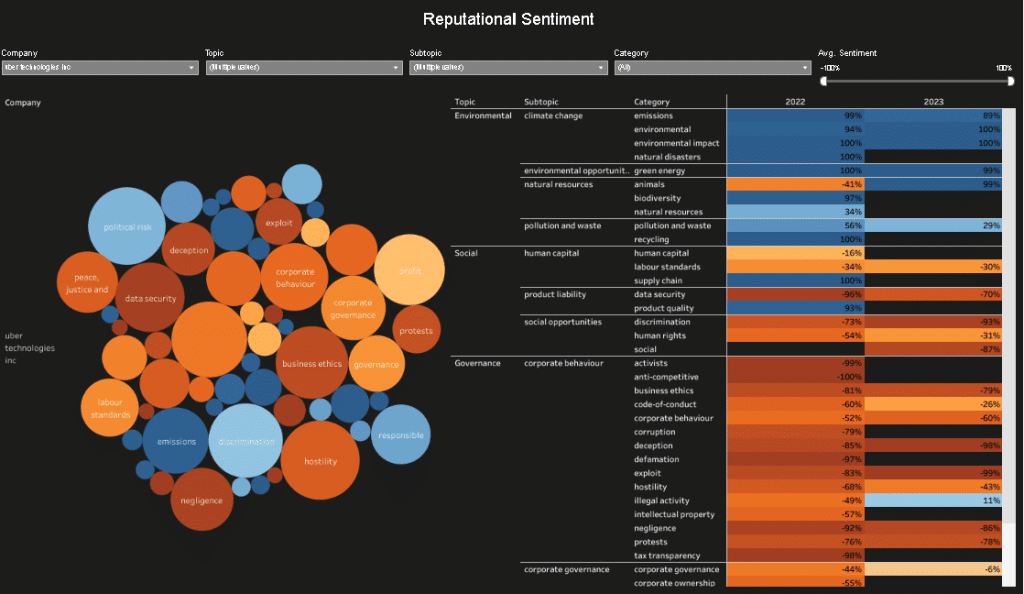
Uber ESG score sentiment analysis overview

Environmental initiatives and commitments by Uber

According to our data, Uber has a score of 86 at time of writing in this area. The company has made significant strides in reducing its environmental footprint driven by one of its key initiatives to transition to electric vehicles (EVs). Uber aims to have 100% of rides in the United States, Canada, and Europe be in EVs by 2030 and globally by 2040. This commitment to electrification not only helps reduce carbon emissions but also promotes the adoption of sustainable transportation options.

In addition to EVs, Uber has also invested in other environmentally friendly initiatives. It has partnered with public transit agencies to promote shared mobility and reduce congestion. Uber has also introduced initiatives like UberPOOL and Uber Bike to encourage the use of shared and sustainable transportation modes. These efforts demonstrate Uber’s commitment to minimizing its environmental impact and promoting sustainable practices.

Social impact programs and community partnerships

The Uber ESG score in social factors, stands at a relatively low 34. This score is reflective of a multitude of factors that have come under scrutiny including:

  1. Labour Disputes and Controversies: Uber has faced persistent criticism and legal challenges related to the treatment of its drivers. Drivers have raised concerns about low pay, the absence of employment benefits, and the perceived unfairness of deactivation practices. These issues have eroded Uber’s reputation and contributed to its low social score.

  2. Driver Classification Issues: The company has been embroiled in lawsuits over its classification of drivers as independent contractors rather than employees. This classification has allowed Uber to avoid providing drivers with benefits such as minimum wage and overtime pay, further damaging its social standing.

  3. Consumer Trust and Safety: A series of safety incidents and concerns about the background checks of drivers have also impacted Uber’s social score. Instances of harassment and safety lapses have led to a loss of trust among passengers and the wider public.

  4. Corporate Culture: Uber’s corporate culture has faced criticism for being toxic and riddled with allegations of discrimination and sexual harassment. Such cultural issues have negatively affected the company’s social reputation and its ability to attract and retain talent.

  5. Transparency and Accountability: Uber has been criticised for a perceived lack of transparency and accountability in its operations. These issues further undermine the company’s social responsibility and its efforts to address its societal impact.

Governance practices and transparency at Uber

Good governance is crucial for any company striving to maintain the highest standards of sustainability and social responsibility however the Uber ESG score in governance is low at 24 according to our data at time of writing.  There are a number of reasons for this including:

  1. Leadership Controversies: Uber has grappled with a series of leadership controversies and scandals, most notably in 2017 when the company’s CEO, Travis Kalanick, was compelled to resign. Allegations of sexual harassment, discrimination, and a lack of effective leadership undermined Uber’s corporate governance. The departure of its CEO was a pivotal moment in Uber’s governance challenges.

  2. Lack of Transparency: Uber has been criticised for a perceived lack of transparency in its operations. Concerns have been raised about the company’s disclosure practices, including issues related to data privacy, which have impacted its governance rating.

  3. Corporate Ethics: Allegations of unethical conduct and a toxic corporate culture have eroded trust in Uber’s governance. The company has faced accusations of prioritising aggressive growth over ethical and responsible business practices, which has contributed to its low governance score.

  4. Regulatory Battles: Uber has been embroiled in regulatory battles in many regions, often stemming from its disruptive business model and labour classification issues. These battles have raised questions about Uber’s willingness to work within the regulatory framework and have negatively affected its governance standing.

  5. Board Composition: Concerns about the composition of Uber’s board of directors and its independence have also played a role in the company’s low governance score. Questions have been raised about the board’s ability to effectively oversee the company’s actions and decisions.

Uber ESG score senitment analysis

Uber ESG score: Assessing the strengths and weaknesses 

While Uber has made significant progress in sustainability there is still plenty of work to be down within the remit of social responsibility and governance. 

With that said, Uber can embark on a strategic journey to bolster its ESG score by focusing on key initiatives. Firstly, in the realm of environmental responsibility, Uber can expedite its transition to a greener fleet by accelerating its efforts to electrify vehicles and reduce carbon emissions. By achieving its goals in this domain, the company can demonstrate a tangible commitment to mitigating the environmental impacts of its operations, which would have a positive influence on its ESG rating.

Simultaneously, Uber can make significant strides in social responsibility by enhancing its relationships with drivers. Improving pay structures, benefits, and safety measures can foster a more positive working environment, while also bolstering the company’s reputation in the eyes of both drivers and passengers. Furthermore, implementing measures to combat discrimination and harassment and promoting diversity and inclusion can contribute to a healthier corporate culture. Lastly, Uber can make a substantial contribution to the communities it serves by actively engaging with local stakeholders, addressing community concerns, and supporting social initiatives, thereby strengthening its social credentials. Such strategic efforts will collectively contribute to an improved ESG score and position Uber as a socially and environmentally responsible corporate citizen.

The future of sustainability and social responsibility in the ride-sharing industry

As the ride-sharing industry continues to evolve, sustainability and social responsibility will play an increasingly significant role among players like Uber and their main competitor Lyft. Consumers are becoming more conscious of their choices, and they expect businesses to prioritize environmental and social considerations. This shift in consumer behaviour will likely drive industry-wide changes, pushing companies to adopt more sustainable practices and contribute positively to society.

Uber, with its focus on sustainability is well-positioned to thrive in this changing landscape but needs to the work in social and governance factors. By continually innovating and investing in initiatives that address environmental and social challenges, Uber can set the standard for the ride-sharing industry and inspire others to follow suit.

The role of ESG scores in driving positive change in businesses

The Uber ESG score serves as a testament to the company’s commitment to sustainability and social responsibility. By decoding this score and examining its components, we have gained insights into Uber’s environmental initiatives, social impact, and governance practices. While there are areas where Uber can improve, its efforts to reduce carbon emissions and provide safer transportation options are commendable.

ESG scores play a vital role in driving positive change in businesses. They provide a framework for evaluating a company’s performance in key areas and encourage transparency and accountability. As consumers and investors continue to prioritize sustainability and social responsibility, ESG scores will become increasingly important in shaping the business landscape as well as corporate decision making. 

Find out more

If you’re eager to delve deeper into granular ESG data on Uber, don’t hesitate to get in touch with us. Simply drop us an email at enquiries@permutable.ai or complete the contact form below. We’re here to provide you with the insights you need to make informed decisions and drive positive change. Reach out today.

Get in touch


Loading

Amazon ESG score: A deep dive into the e-commerce giant’s corporate responsibility

Corporate sustainability has become an integral part of business operations, with companies competing to demonstrate their commitment to environmental, social, and governance criteria. Amazon, the global e-commerce giant, is no exception. With its vast operations and increasing market influence, understanding the Amazon ESG score is essential.

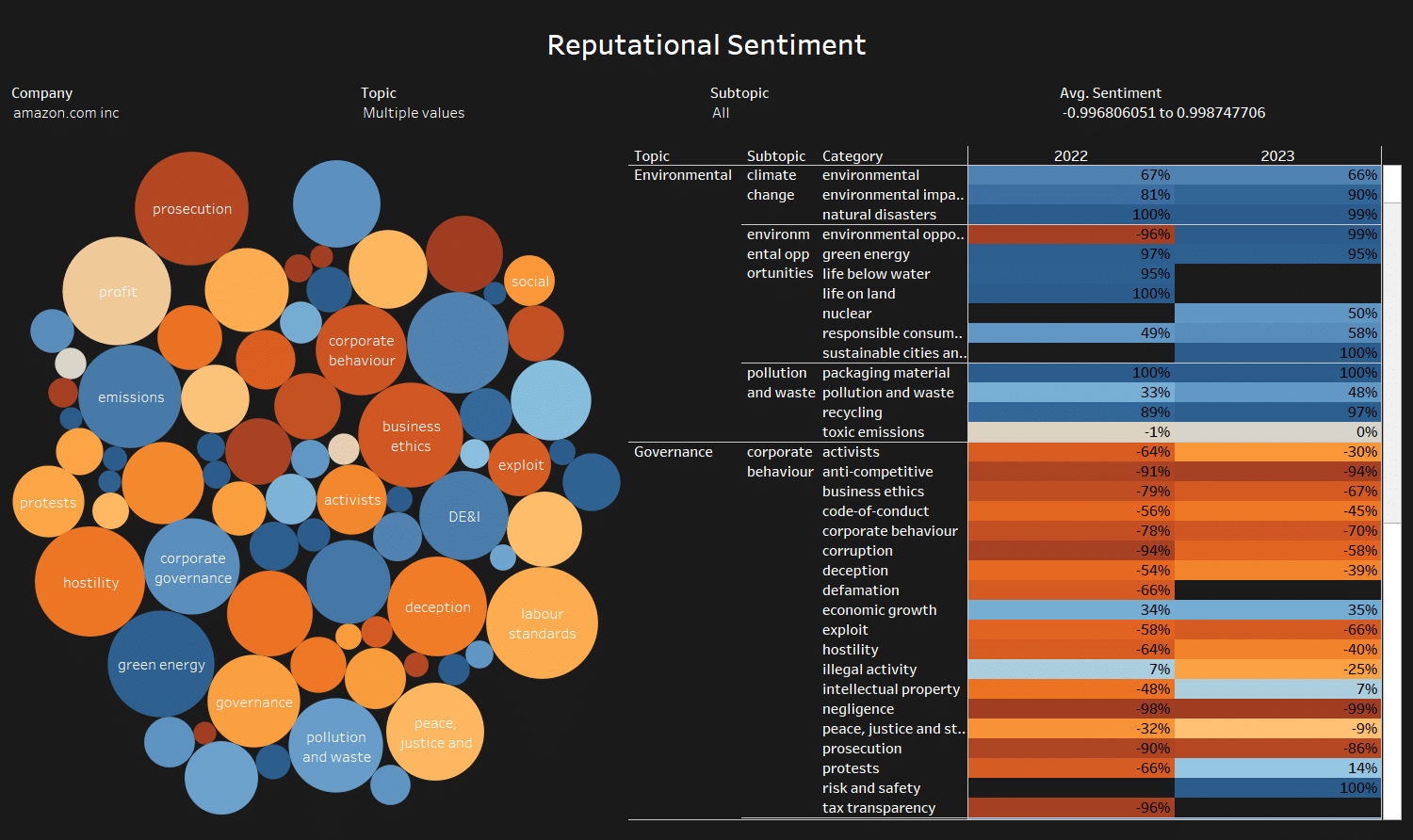
In this article, we take a deep dive into the factors that contribute to the Amazon ESG score according to our data and uncover the key to its corporate sustainability. By analyzing Amazon’s environmental initiatives, social impact endeavours, and governance practices, we shed light on how the company manages its ESG responsibilities.

Understanding Amazon’s ESG score and its importance

ESG is a set of criteria that investors, customers, and other stakeholders use to evaluate the sustainability and ethical impact of a company’s operations. Our Amazon ESG score is a measure of how the company performs in these areas based on sentiment analysis. It is essential because it affects the company’s reputation, financial performance, and ability to attract and retain customers and investors.

Our Amazon ESG score is based on its performance in three areas: environmental sustainability, social sustainability, and governance. Environmental sustainability focuses on reducing the company’s impact on the environment, while social sustainability focuses on improving the well-being of employees, customers, and communities. Governance covers how the company is managed, ensuring transparency and accountability.

Amazon ESG score

Factors contributing to Amazon’s ESG score

Our Amazon ESG score is influenced by various factors, including its environmental, social, and governance practices.

Environmental sustainability initiatives at Amazon

Amazon has implemented various measures to reduce its carbon footprint and improve the sustainability of its operations. The company has committed to achieving net-zero carbon emissions by 2040 and has invested heavily in renewable energy sources. It has also launched initiatives such as the Climate Pledge, which encourages other companies to commit to reducing their carbon footprint.

In addition to its efforts to reduce carbon emissions, Amazon has implemented sustainable packaging initiatives. The company has introduced Frustration-Free Packaging, which uses less material and is easier to open, reducing waste. Amazon has also pledged to make all of its packaging recyclable by 2025.

However there is still plenty of room for improvement as their score of 72 in environmental factors implies.  

Amazon produces a significant amount of packaging waste, much of which is not recyclable. In 2020, Amazon generated over 600 million pounds of plastic packaging waste in the United States alone. Their massive transportation network is a major source of greenhouse gas emissions. The company has a fleet of over 100,000 delivery vehicles, and it also ships products by air and sea.

In addition, their data centers and warehouses consume a large amount of energy. In 2020, Amazon’s energy consumption was equivalent to the annual electricity consumption of over 1 million homes, while their operations require a significant amount of water, particularly for its data centers and fulfillment centers. In 2020, Amazon withdrew over 100 billion gallons of water from the environment.

In addition to these specific issues, Amazon has also been criticized for its overall environmental impact. Many critics have argued that Amazon’s business model, which encourages consumers to buy more and more goods, is unsustainable in the long term.

Social sustainability initiatives at Amazon

Amazon’s ESG score according to our sentiment data comes in at a sub par 42. This will be of no surprise to those who have been following criticism of its poor worker safety record. In 2021, the company’s injury rate was nearly double the industry average. Amazon has also been accused of failing to provide its workers with adequate breaks and of retaliating against workers who speak out about safety concerns.

Amazon has also been criticized for its unfair labour practices. The company has been accused of suppressing unionization efforts and of paying its workers low wages. Amazon has also been accused of firing workers for minor infractions and of denying workers bathroom breaks. Amazon’s track record in regards to diversity and inclusion has also come under fire. The company’s workforce is predominantly white and male, and its leadership team is even less diverse. Amazon has also been accused of discriminating against women and minorities in hiring and promotion.

In addition to these specific issues, Amazon has also been criticized for its overall social impact. For example, some critics have argued that Amazon’s business model, which relies on low-cost labour and aggressive competition, is harmful to workers and communities.

Amazon is aware of its social impact and has taken steps to improve its social performance. For example, the company has raised its minimum wage and has pledged to invest in worker safety. Amazon has also launched a number of diversity and inclusion initiatives. However, the company still has a long way to go to improve its social ESG score.

Governance practices at Amazon

Amazon’s governance score is low at 23.   This is due to a variety of reasons including a lack of independent board members (Amazon’s board of directors is dominated by insiders and allies of CEO Andy Jassy) raising concerns about the company’s accountability and transparency. Meanwhile, Amazon’s shareholders have limited rights, such as the right to nominate directors and to vote on executive compensation. This makes it difficult for shareholders to hold management accountable.

Amazon’s executive compensation is excessive, particularly given the company’s poor social and environmental performance while the company spends heavily on lobbying and campaign contributions, raising concerns about the company’s influence on government policy.
In addition to these specific issues, Amazon has also been criticized for its overall governance practices. For example, some critics have argued that Amazon’s culture of secrecy and its focus on short-term profits make it difficult for the company to make responsible long-term decisions.

Although some improvements have been made in this area such as the addition of some independent board members and increased shareholders rights, the company still has a long way to go to improve its governance ESG score.

Amazon ESG score sentiment analysis

PURCHASE DATASET


SEE ESG INTELLIGENCE

The impact of Amazon’s ESG score on its reputation and stakeholders

Amazon’s ESG score has a significant impact on its reputation and stakeholders. A high ESG score can improve the company’s reputation, attracting customers and investors who prioritize sustainability and ethical business practices. A low ESG score can damage the company’s reputation, leading to decreased trust from customers and investors.

Moreover, Amazon’s ESG score can impact its relationships with stakeholders, including employees, suppliers, and local communities. A strong ESG score can improve the company’s relationships with stakeholders, leading to increased loyalty and support.

Comparing Amazon’s ESG score with other companies in the industry

Comparing Amazon’s ESG score with other companies in the industry provides insights into how it performs in terms of sustainability and ethical business practices. According to the 2021 Corporate Knights Global 100 Most Sustainable Corporations, Amazon ranked 92nd, with a weighted ESG score of 51.4%.

See our ESG scores for Amazon’s competitors to see how they compare:

Alibaba ESG score

Walmart ESG score 

eBay ESG score

JD.com ESG score

Rakuten ESG score 

Best Buy Co ESG score

Target ESG Score

Shopify ESG score

Costco ESG score

While Amazon’s ESG score is lower than some of its competitors, such as Microsoft and Alphabet, the company has made significant progress in recent years. By investing in renewable energy, reducing waste, and promoting diversity and inclusion, Amazon is paving the way for a more sustainable future in the corporate world.

Challenges and criticisms of Amazon’s sustainability efforts

Amazon’s sustainability efforts have faced criticism from various stakeholders. Some environmental activists argue that the company’s carbon reduction targets are not ambitious enough, and that it should do more to reduce its reliance on fossil fuels. Others criticize Amazon’s labor practices, including low wages and poor working conditions in its warehouses.

Despite these criticisms, Amazon has taken steps to address these issues. The company has pledged to invest in renewable energy and improve working conditions for its employees. However, there is still room for improvement, and Amazon must continue to address these challenges to improve its ESG score and maintain its reputation as a sustainable and ethical company.

Conclusion: The future of corporate sustainability and the role of ESG scores

Corporate sustainability and ESG scores will continue to play an essential role in the business world. Companies that prioritize sustainability and ethical business practices will have a competitive advantage, attracting customers and investors who prioritize these values.

By understanding Amazon’s ESG score and the factors that contribute to it, we can gain insights into how the company manages its ESG responsibilities. Amazon’s commitment to environmental sustainability, social impact, and governance practices demonstrates its dedication to corporate sustainability. By continuing to invest in renewable energy, reduce waste, and promote diversity and inclusion, Amazon is setting an example for other companies to follow.

As consumers and investors increasingly prioritize sustainability and ethical business practices, ESG scores will become even more critical. Companies must prioritize sustainability and transparency to succeed in the future of the business world.

Find out more

Are you looking for more granular data on Amazon’s ESG practices? 


PURCHASE DATASET

Unlocking the value of ESG initiatives: A call for clear communication

In today’s rapidly changing business landscape, understanding the value of ESG (Environmental, Social, and Governance) initiatives has become pivotal not only for sustainability but for sustainable growth. Investors recognize the importance of ESG factors, yet they often find themselves seeking clarity on the value of ESG. Recent survey results from McKinsey reveal that chief investment officers desire a more explicit connection between a company’s sustainability efforts and its financial performance and intrinsic value. This underscores the need for corporate leaders to step forward and craft a transparent, value-focused ESG narrative. In this thought piece, we delve into the significance of effective ESG communication, exploring the relevance of ESG for businesses, the linkage between ESG initiatives and the value of ESG creation, and the key levers that drive this transformation.

The Relevance of ESG for Businesses

ESG is not a mere buzzword or a checkbox exercise—it has evolved into a defining factor for businesses operating in the 21st century. Beyond its moral imperative, understanding the value of ESG is tightly interwoven with a company’s risk management, reputation, and, critically, its growth prospects. Today’s investors, stakeholders, and consumers increasingly assess businesses through an ESG lens, making it crucial for businesses to align with this shifting paradigm.

Sustainability, once seen as a philanthropic endeavor, is now a strategic business imperative. Companies that effectively integrate ESG into their operations are better positioned to anticipate and mitigate risks, seize market opportunities, and foster innovation. Moreover, these companies are more likely to attract investors who understand that sustainable practices can translate into long-term value creation.

The Link Between ESG Initiatives and Value Creation

To address the demand for clarity regarding the value of ESG’s impact on financial performance and intrinsic value, it is imperative to establish a direct connection between ESG initiatives and the value of ESG creation. ESG is not a standalone entity; it should be an integral part of a company’s overall business strategy. ESG initiatives that are strategically aligned with a company’s core objectives can drive growth, enhance resilience, and boost competitiveness.

  1. Risk Mitigation: ESG initiatives are not solely about amplifying opportunities; they are also about safeguarding against risks. Robust ESG practices can help identify and mitigate environmental, social, and governance risks that might otherwise harm a company’s reputation and bottom line. By demonstrating a commitment to responsible business conduct, companies can inspire trust among investors and consumers alike, thereby enhancing the value of ESG.

  2. Innovation and Market Leadership: ESG can be a catalyst for innovation. Companies that embed sustainability into their DNA are often better positioned to identify emerging market trends and capitalize on them. By fostering a culture of sustainability, businesses can align their products and services with evolving consumer preferences, potentially opening up new revenue streams and increasing the value of ESG.

  3. Cost Savings: Sustainable practices can lead to cost reductions. For instance, energy-efficient processes not only reduce a company’s carbon footprint but also lower operational expenses. As businesses embrace ESG-driven operational efficiencies, they can allocate resources more effectively, enhancing profitability and the value of ESG.

  4. Access to Capital: Companies that excel in ESG performance are more likely to attract a diverse pool of investors. ESG-focused investment funds are on the rise, and investors are increasingly considering a company’s ESG track record when making decisions. Access to a broader investor base can provide companies with the capital needed for growth initiatives, amplifying the value of ESG.

Key Levers and Value Drivers in ESG Initiatives

Effectively communicating the value of ESG initiatives requires identifying the key levers and value drivers within a company’s sustainability strategy. These elements should be integrated into the core of the ESG narrative, offering stakeholders a comprehensive understanding of how ESG contributes to value creation.

  1. Materiality Assessment: Companies should conduct thorough materiality assessments to identify the ESG factors that are most relevant to their industry, business model, and stakeholders. This process ensures that ESG initiatives are not only aligned with the company’s goals but also address the concerns and expectations of investors, enhancing the perceived value.

  2. Data and Measurement: Robust data collection and measurement mechanisms are essential for quantifying the impact of ESG initiatives. Investors seek transparency and evidence of progress. Utilizing key performance indicators and benchmarks allows companies to demonstrate their commitment to continuous improvement, further emphasizing its value.

  3. Integration with Strategy: ESG initiatives should be seamlessly integrated into a company’s broader strategic framework. This means that sustainability goals should align with the company’s long-term objectives, ensuring that ESG is not viewed as an isolated effort but as an integral part of the business strategy, strengthening the alignment with the value.

  4. Engagement and Stakeholder Communication: Effective communication with stakeholders, including investors, is pivotal. Companies should engage in transparent and open dialogue, sharing both successes and challenges related to their ESG journey. Demonstrating a commitment to learning and improvement fosters trust and reinforces the perceived value.

Wilson Chan, CEO of Permutable AI, emphasises: “ESG initiatives are no longer just a moral imperative; they are a source of competitive advantage and value creation. It’s crucial for companies to articulate the tangible benefits of their ESG efforts to investors and stakeholders. Effective communication is the bridge that connects sustainability with long-term value.”

The Road Ahead: Navigating the ESG Landscape

In conclusion, the growing emphasis on ESG initiatives presents a unique opportunity for companies to not only embrace sustainability but to leverage it as a source of growth and value creation. Investors are eager to understand how ESG aligns with a company’s strategy and impacts its financial performance. Therefore, it falls upon corporate leaders to step up and provide a clear, value-focused ESG narrative.

By effectively communicating the relevance of ESG for the business, the link between ESG initiatives and the value of ESG creation, and the key levers driving this transformation, companies can empower investors with the knowledge they seek and reinforce the notion that sustainability is not just an option but a strategic imperative. As ESG continues to shape the future of business, clear communication will be the bridge that connects sustainable practices with long-term value creation, ensuring that businesses thrive in an ever-evolving world where sustainability is not just an option but a strategic imperative.

Coca Cola ESG score: A closer look at sustainability efforts 2024 UPDATE

In today’s corporate landscape, sustainability has become an essential aspect of business operations. Companies are increasingly embracing ESG practices to ensure a greener and more responsible future. As a global leader in the beverage industry, the Coca Cola Company has been at the forefront of sustainability efforts. In this article, we delve deep into the Coca Cola ESG score and take a closer look at the extensive sustainability endeavours undertaken by the beverage giant.

Understanding the Coca Cola ESG Score

The Coca Cola ESG score is a comprehensive measure of its performance in environmental conservation, social responsibility, and ethical governance. The ESG score evaluates various criteria such as carbon emissions, water usage, waste management, employee diversity, community engagement, and board diversity. It provides an overall assessment of the company’s commitment to sustainable practices and its impact on society and the environment.

Our Coca Cola ESG score – a culmination of our ESG intelligence on the company – reflects the company’s dedication to sustainable operations and its efforts to minimize its ecological footprint. This score is essential for investors, consumers, and other stakeholders who prioritize sustainability. By analyzing Coca Cola’s ESG score, we can gain insights into the company’s sustainability initiatives and their impact on the environment and society.

Coca Cola ESG score

Environmental Sustainability Initiatives

Coca Cola has implemented several initiatives to reduce its environmental impact and promote sustainability. One of its notable efforts is the replenishment of water resources. The company aims to replenish the water it uses in its beverages and production processes by 2020. Through partnerships with local communities and organizations, Coca Cola has successfully replenished billions of liters of water worldwide.

Additionally, Coca Cola has made strides in reducing its carbon emissions. The company has set ambitious targets to reduce its carbon footprint throughout its value chain, from manufacturing to distribution. By investing in renewable energy sources and implementing energy-efficient technologies, Coca Cola is working towards its goal of becoming a carbon-neutral company.

Waste management is a crucial aspect of Coca Cola’s sustainability efforts. The company has implemented recycling programs and initiatives to promote responsible waste disposal. Through innovative packaging designs and increased use of recycled materials, Coca Cola aims to minimize waste generation and promote a circular economy.

Coca-Cola’s Environmental Impact and the Plastic Problem

While many companies are striving to improve their ESG performance, some face significant challenges in addressing their environmental impact. A prime example is Coca-Cola, which has been consistently identified as one of the worst plastic polluters globally. The Coca-Cola Company increased its use of plastic packaging by over 6% or over 454 million pounds (206,000 metric tons) to a reported 3.43 million metric tons in 2022. This massive plastic production contributes significantly to the global plastic pollution crisis, although at the same time there are reports they are make strides towards its World Without Waste goals of reducing PET use by three million metric tons by 2025.

In response to growing criticism and environmental concerns, Coca-Cola has pledged to tackle the plastic issue. The company has set goals to reduce plastic waste and increase the use of recycled materials. By 2030, Coca-Cola aims to collect and recycle the equivalent of every bottle or can it sells globally.

As part of its commitment to the Ellen MacArthur Foundation’s New Plastics Economy Global Commitment, Coca-Cola has promised to:

  1. Make 100% of its packaging recyclable globally by 2025
  2. Use at least 50% recycled material in its packaging by 2030
  3. Collect and recycle a bottle or can for each one sold by 2030

Despite these commitments, critics argue that Coca-Cola’s efforts are insufficient given the scale of its plastic bottle production. The company’s continued reliance on single-use plastics and virgin plastic in its packaging remains a significant environmental concern.

To truly address its environmental impact, Coca-Cola faces the challenge of fundamentally rethinking its packaging strategy. This may involve investing in alternative packaging materials, supporting improved recycling infrastructure, and potentially moving away from single-use containers altogether.

As investors and consumers become increasingly aware of environmental issues, companies like Coca-Cola will need to demonstrate substantial progress in reducing their plastic footprint. This case highlights the complex challenges that many companies face in aligning their business practices with ESG principles and the growing expectations for corporate environmental responsibility.

Social Sustainability Initiatives

Coca Cola recognizes the importance of social sustainability and is committed to making a positive impact on communities worldwide. The company actively engages in various initiatives to uplift local communities, focusing on education, clean water access, and women empowerment.

One of Coca Cola’s flagship programs is the Coca Cola Foundation, which supports numerous community development projects. Through partnerships with NGOs and local organizations, the foundation provides financial assistance and resources to improve education, health, and access to clean water in underserved areas.

Furthermore, Coca Cola is dedicated to promoting diversity and inclusion within its workforce. The company believes in fostering an inclusive culture that celebrates differences and embraces diverse perspectives. Through initiatives and programs, Coca Cola strives to create equal opportunities for employees of all backgrounds and identities.

Governance and Ethical Practices

Governance and ethical practices are crucial for any company aiming to achieve sustainability. Coca Cola has implemented robust governance measures to ensure transparency, accountability, and ethical conduct. The company maintains a strong code of business conduct that outlines its commitment to integrity, fair competition, and compliance with legal and regulatory requirements.

Coca Cola’s board of directors is responsible for overseeing the company’s governance practices and ensuring ethical behavior at all levels. The board comprises experienced professionals from diverse backgrounds, bringing valuable perspectives and expertise to decision-making processes.

Furthermore, Coca Cola actively engages with stakeholders to gather feedback, address concerns, and incorporate their perspectives into its sustainability strategies. The company believes in open and transparent communication, fostering trust and long-term relationships with its stakeholders.


PURCHASE DATASET


SEE ESG INTELLIGENCE

Impact of Sustainability Efforts on Coca Cola’s Brand Image and Reputation

Coca Cola’s sustainability efforts have had a significant impact on its brand image and reputation. By prioritizing sustainability, the company has positioned itself as a responsible corporate citizen, appealing to conscious consumers who value environmentally and socially responsible brands.

The Coca Cola brand has become synonymous with sustainability, and its commitment to environmental and social causes resonates with consumers worldwide. This positive perception not only enhances customer loyalty but also attracts new consumers who align with Coca Cola’s values.

Moreover, Coca Cola’s sustainability initiatives have garnered recognition and accolades from various organizations and industry bodies. These accolades not only validate the company’s efforts but also contribute to its positive brand reputation.

Challenges Faced by Coca Cola in Achieving Sustainable Goals

Despite its significant sustainability efforts, Coca Cola faces several challenges in achieving its sustainable goals. One of the primary challenges is the complex and global nature of its supply chain. Coca Cola relies on a vast network of suppliers, distributors, and bottlers, making it challenging to monitor and ensure sustainable practices throughout the value chain.

Another challenge is the increasing competition and changing consumer preferences. As consumer awareness about sustainability grows, companies across industries are adopting sustainable practices. Coca Cola needs to continuously innovate and evolve its sustainability initiatives to stay ahead of the competition and meet the ever-changing demands of its consumers.

Additionally, engaging diverse stakeholders and addressing their concerns can be a complex task. Balancing the interests of shareholders, employees, consumers, communities, and the environment requires careful planning and effective communication.


Coca Cola ESG score sentiment analysis
Coca Cola ESG rating SDGs alignment

PURCHASE DATASET

Future Plans and Goals for Sustainability

Looking ahead, Coca Cola aims to strengthen its sustainability efforts and set new benchmarks for the industry. The company has set ambitious goals for 2030, focusing on four key areas: water, women, well-being, and waste.

Coca Cola plans to continue replenishing water resources in communities where it operates, aiming to achieve a water-neutral status. The company also aims to empower five million women entrepreneurs through its initiatives, promoting gender equality and economic empowerment.

Furthermore, Coca Cola will focus on promoting well-being by offering a diverse range of beverage options and providing transparent nutritional information. The company aims to reduce the sugar content in its products and offer more low- or no-sugar alternatives.

Lastly, Coca Cola aims to achieve a world without waste by promoting recycling, investing in sustainable packaging solutions, and reducing the environmental impact of its packaging.

Coca Cola ESG Score: Competitor Comparison 

To assess Coca Cola’s sustainability performance, it is essential to compare its ESG score with that of its competitors. While each company’s ESG score may vary based on their industry and specific sustainability initiatives, such comparisons provide valuable insights into their relative positions.

To access our ESG scores on Coca Cola’s competitors see below:

Coca Cola ESG Score: Summing Up 

The Coca Cola ESG score highlights its dedication to sustainability and responsible business practices. Through its environmental, social, and governance initiatives, Coca Cola has established itself as a leader in the beverage industry.

ESG scores serve as a vital tool for stakeholders to evaluate a company’s sustainability efforts and its impact on society and the environment. As consumers increasingly prioritize sustainability, companies that embrace ESG practices are better positioned to meet customer expectations and remain competitive in the long run.

Coca Cola’s sustainability efforts not only contribute to a greener and more socially responsible future but also enhance its brand image and reputation. By setting ambitious goals, addressing challenges, and collaborating with stakeholders, Coca Cola is paving the way for a more sustainable corporate world.

Find Out More

Are you looking for more granular data on Coca Cola’s ESG practices? 


PURCHASE DATASET