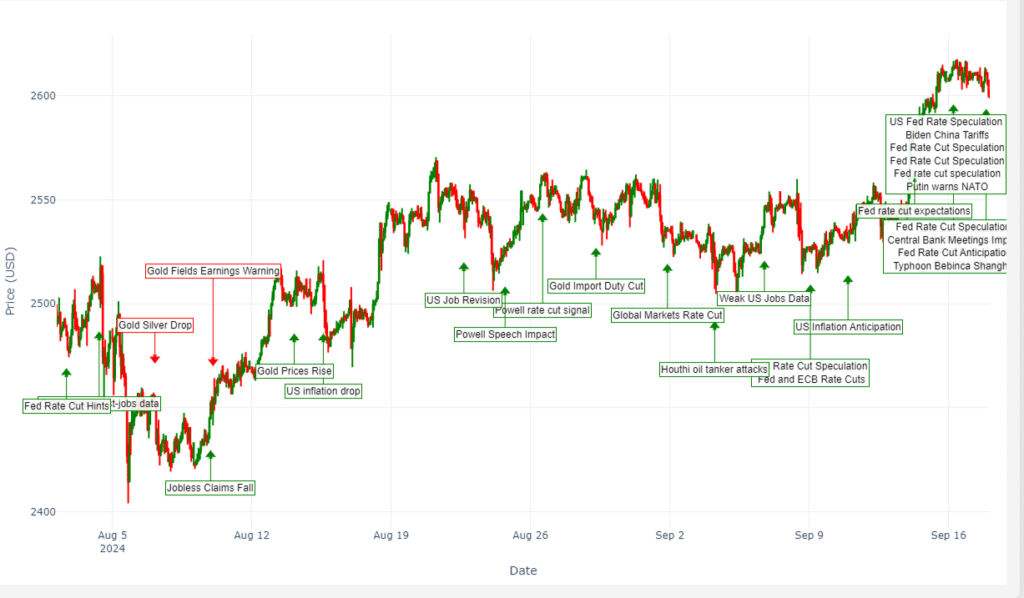
Gold has always been a barometer for the global economy, with investors traditionally turning to the precious metal during periods of uncertainty. The recent outlook for gold has been one of rising prices. But what actually is going on here? Everywhere you look, the question persists: why is the price of gold going up? And how long can this last? The truth is more complicated than a simple explanation, but through our analysis and insights from our Trading Co-Pilot, we can be reasonably confident that several key factors are contributing to this surge.
Above: Gold’s price movements: Data-driven insights from our Trading Co-Pilot
One of the most frequently cited reasons for gold’s price increase is inflation. We live in an age of highly volatile geopolitics, and the economic impact of post-pandemic recovery, supply chain disruptions, and increased government spending has fuelled inflationary pressures globally. As such, the crisis in rising inflation has seen central banks respond with aggressive monetary tightening measures, including interest rate hikes. And yet, perhaps, we can expect inflationary fears to persist for some time, given the unstable economic climate.
While core inflation numbers showed a slight decrease last week, many analysts argue that these figures can be misleading. The continued increase in government spending may be a more representative indicator of the economy’s health. This recent decrease in inflation has shifted market expectations from a 50 basis point rate cut to a more modest 25 point one. However, the underlying inflationary pressures remain a concern for many investors
Much of that is due to fears that monetary policies alone cannot temper inflation. The loss of trust in governments’ ability to manage economic volatility is driving more investors toward gold, a traditional hedge against inflation. In addition, the escalating costs of living are feeding into an ongoing uncertainty about the future. This method applies to both individual investors seeking a safe haven and institutional investors looking for stability.
You can’t argue with the fact that gold thrives in times of geopolitical unrest. This is especially true given that we live in a world of highly complex and rapidly changing global dynamics. The war in Ukraine, rising tensions in the South China Sea, and general instability across various regions all play a part in the price of gold. The hardest part is predicting how these events will unfold, but the truth is, gold provides a cushion for investors seeking refuge from volatile global markets.
As long as we rely on traditional safe havens like gold, we can expect its price to increase whenever there is uncertainty on the global stage. The present outlook for geopolitical stability is far from optimistic, which is likely to keep gold in demand for the foreseeable future.
Another key factor driving the price of gold is the decline in bond yields. With real yields (adjusted for inflation) either low or negative, investors are increasingly looking for alternative stores of value. Defining what is classed as a “good” return has shifted over the past few years, especially as central banks have kept interest rates low for an extended period. This dynamic puts gold in an attractive position since it does not pay interest or dividends, but offers long-term value preservation, making it a more appealing investment compared to bonds.
In a way, this shift reflects broader market concerns about the ability of traditional investments to deliver the kinds of returns seen in the past. The keys to gold’s appeal lie in its historical track record of retaining value, especially when other asset classes underperform.
So why is gold coming up? The next question you should be asking is what about the US dollar? Gold and the US dollar typically have an inverse relationship. When the dollar weakens, gold prices tend to rise, and vice versa. Recently, the dollar has experienced bouts of weakness due to various factors, including trade deficits and changes in monetary policy.
Recent central bank decisions have further influenced the dollar’s strength and, consequently, gold prices. The European Central Bank’s recent rate cut, coupled with the anticipated Federal Reserve rate decision, have been key factors in shaping market expectations. These expectations have been building since Federal Reserve Chairman Jerome Powell’s speech in late August, signaling a potential shift in monetary policy. Such changes in interest rate policies often lead to fluctuations in currency strengths, impacting gold prices. As the US dollar potentially weakens in response to these rate cuts, we may see a corresponding rise in gold prices
Despite this, there are things that can be done to stabilise the dollar in the long run. However, the game changer will be how investors react to continued fluctuations in global currencies. Just as notably, gold serves as an alternative when confidence in fiat currencies, like the US dollar, wanes. We must therefore be ready to reject the argument being made that gold’s rise is merely temporary—it is tied to structural concerns about global currency values.
If experience tells us anything, it’s that gold has always been viewed as a safe haven during times of economic turmoil. The present moment is no different. Increasingly, investors are turning to gold as a hedge against stock market volatility, political uncertainty, and inflationary pressures. In addition, economic instability caused by high debt levels, especially in developing countries, further supports gold’s ascent.
The keys to understanding gold’s current trajectory, therefore, is looking at both short-term market forces and long-term systemic challenges in the global economy. Ultimately, what is needed is a comprehensive view of how these elements converge to shape the price of gold.
Another often-overlooked factor to consider when mulling over the question “Why is the price of gold going up” is the supply and demand for gold itself. Imagine too the impact of reduced mining outputs or increased demand from countries like China and India. For the avoidance of doubt, gold is still viewed as a tangible store of wealth in many cultures, which supports long-term demand. While central banks across the globe continue to increase their gold reserves, retail investors and sovereign wealth funds alike are also adding gold to their portfolios.
As we move towards the end of 2025, the drivers behind gold’s price trajectory have shifted but remain anchored in the same structural themes of inflation, geopolitics, and currency volatility.
The conflicts in Ukraine, the Middle East, and across parts of Africa continue to inject uncertainty into global markets. Our Political Tension Index shows sustained high readings, with sentiment spikes closely correlated to upward moves in gold. Gold’s safe-haven role remains firmly intact, with each escalation reinforcing investor demand.
2025 has seen central banks, particularly in Asia and the Middle East, accelerate gold reserve accumulation as a hedge against dollar exposure. This institutional demand provides an additional layer of support for prices beyond speculative trading flows.
While headline inflation has eased, core measures remain elevated. Investors are increasingly sceptical that rate adjustments alone will restore price stability, fuelling continued gold buying as a hedge against systemic risk.
Our sentiment analysis shows that narratives around “currency debasement” and “rate divergence” are gaining traction, particularly following policy shifts by the Federal Reserve and European Central Bank. This has reinforced gold’s inverse correlation with the dollar, driving rallies whenever the greenback weakens.
Overall, the long-term trajectory of gold remains upwardly supported, underpinned by macro uncertainty and structural demand from central banks. Our intelligence confirms that gold remains not only a hedge but also a strategic asset class in 2025 portfolios.
Are you ready to be part of the future of trading? At Permutable AI, we’re extending an exclusive opportunity to a select group of corporate partners to gain access to our advanced Trading Co-Pilot, powered by cutting-edge machine learning for contextual understanding.
If your firm is ready to lead the way in AI-driven trading innovation, get in touch today to explore this limited opportunity and discover how our Trading Co-Pilot can transform your approach to the market by contacting us at enquiries@permutable.ai or fill in the form below.
A: Gold prices are rising due to persistent inflation concerns, geopolitical uncertainty in regions such as Ukraine and the Middle East, declining bond yields, and recent weakness in the US dollar. These combined forces are reinforcing gold’s role as a safe-haven asset.
A: Wars and political instability often drive investors toward gold as a hedge against volatility. For instance, ongoing conflicts and sanctions risk have created spikes in gold demand as investors look for protection from uncertainty in global markets.
A: Yes. Gold has historically acted as a hedge against inflation, and in today’s environment of rising government spending and persistent cost-of-living pressures, investors continue to view gold as a reliable store of value.
A: Gold typically has an inverse relationship with the US dollar. As the dollar weakens due to trade deficits or central bank policy shifts, gold becomes more attractive, pushing its price higher.
A: Gold prices are likely to fluctuate in the short term, but structural drivers such as inflationary pressures, ongoing geopolitical risks, and strong central bank demand suggest that long-term momentum remains supportive.
Gold retains value when markets are volatile, making it a preferred hedge during inflation, geopolitical tensions, or economic instability.
Key drivers include inflation rates, bond yields, currency strength (particularly the US dollar), central bank policy, and geopolitical events.
Global gold supply constraints, such as reduced mining outputs, and rising demand from countries like China and India add upward pressure on prices.
While short-term pullbacks are possible, structural drivers — from inflation to geopolitical risks — point to continued strength in gold prices through 2025.
Permutable’s Trading Co-Pilot uses real-time sentiment analysis to map news flows, inflation data, and geopolitical signals directly into trading scenarios, helping clients anticipate shifts in gold prices before markets react.
Our CEO and Founder, was recently invited onto Disruptive Live‘s AI Show, where he and host Emily Barrett, AI Lead for Lenovo, discussed innovation in AI. If you didn’t have a chance to watch it then you can catch up here. But in the meantime, we’ve taken 5 powerful insights from Wilson’s experience at the helm of our leading market intelligence company, serving them up for you here in this article
In the interview, Wilson quips that being a leading market intelligence company is a bit like being a global detective. Why is this? We dig through mountains of news from every corner of the world to piece together what’s really going on. Contrary to popular belief, this isn’t just about collecting data (although we do have a pretty impressive data moat under our belts and you can find out about some of the use cases of our data intelligence here). The reality is it’s about cutting through the noise to reveal global truths.
For now, information overload and potential bias is everywhere. All of this means our role in deciphering what’s truly going on has never been more crucial. This isn’t just about aggregating news. First and foremost, we’re analyzing it and cross-referencing it, but above all we’re distilling it into actionable intelligence. All of this means using our AI algorithms to detect subtle nuances in language, identify potential biases, and corroborate information across multiple sources. Imagine having a team high-level analysts working round the clock, but with the added advantage of processing power that can handle millions of data points simultaneously. This is the kind of advantage we’re able to deliver.
But perhaps most important of all, it’s not just about what’s being said, it’s also what’s not being said. It can also be about detecting when a topic is suspiciously absent from certain news sources, or when there’s a sudden shift in narrative across multiple outlets. In this scenario, we can paint a truly comprehensive picture of global events, free from the distortions of any single perspective.
Which brings us to the end result, which is a clear, unbiased view of the world that our clients come to us for and trust us with – the kind of insights that enable them to make informed decisions and find competitive edge.
A while ago we put out an article about whether AI will replace traders. The reality is, once upon a time, getting your hands on solid intel was like striking gold. Now, with AI in our toolkit, our team is able to sift through more information than an army of analysts. It’s like having a superpower.
But right now, it’s not about replacing traders, but about enhancing their capabilities. AI is akin to a research assistant that never sleeps. Its key advantage is that it processes vast amounts of data 24/7. Where it really shines is in its capability of tackling patterns and anomalies that human eyes might often miss, analyzing market sentiment from public sources, parsing through earnings reports in seconds. Where it really makes strides is in predicting market movements based on historical data and current trends. All of which allows plays a vital role in helping traders to focus on what they do best – making strategic decisions and managing risk.
The real magic happens when human intuition meets AI-powered insights. In short, a seasoned trader’s gut feeling – honed by years of experience – can be combined with AI’s data-crunching abilities. This marrying of the two has the potential to create a formidable force in the market like never before. It’s a big splash – like having a co-pilot who never sleeps. Imagine its powerful ability to constantly scan the horizon for opportunities and potential pitfalls. One thing is for certain, with the landscape changing, the most successful traders won’t be those who resist AI, but those who learn to dance with it, leveraging its strengths to enhance their own decision-making processes. That’s why the future of trading isn’t man vs. machine – it’s man and machine, working in harmony to navigate the complex waters of global markets.
You will be forgiven for almost spilling your coffee when we mention that we track over a million companies. It’s like creating a family tree for every business out there. The level of detail we go into is mind-boggling – suppliers, customers, competitors, the works. But it’s more than just a static picture; it’s a living, breathing ecosystem that we monitor in real-time.
Imagine having a birds-eye view of the entire corporate world, where you can zoom in on any company and instantly see its connections, influences, and vulnerabilities. That’s what our corporate mapping achieves. We don’t just look at financial statements and press releases; we analyze media sentiments, track supply chain risks, and even monitor regulatory changes that might impact a company’s operations. This holistic approach allows us to predict market movements before they happen, identify emerging competitors, and spot potential acquisition targets or partnership opportunities. It’s like having a corporate GPS that not only shows you where a company is now, but where it’s likely to go in the future. In today’s fast-paced business environment, this level of insight isn’t just valuable – it’s absolutely critical for anyone looking to stay ahead of the curve.
Think of us as time travelers. We’ve squirreled away years of data that you can’t find anywhere else now. It’s not just about looking back, though – this treasure trove also helps us peek into the future of markets. It’s like having a supercharged crystal ball, one that doesn’t just show fuzzy images of the future, but provides clear, data-driven insights into market trends and potential disruptions.
This early adoption has given us a significant edge. While others are still grappling with the basics of AI implementation, we’re fine-tuning our models and pushing the boundaries of what’s possible. Our AI doesn’t just process information; it connects dots across vast datasets, identifying patterns and correlations that would be impossible for human analysts to spot alone. It’s this combination of cutting-edge technology and years of accumulated expertise that allows us to offer unparalleled insights to our clients, helping them navigate the increasingly complex global business landscape with confidence.
If you’re ready to an early adopter and gain competitive by working with an AI-driven market intelligence company like Permutable, we’d love to from you.
Access crucial insights giving you the competitive edge needed in today’s fast-paced business world. As a global market intelligence company, our cutting-edge AI technology, combined with years of accumulated data and expertise, can give you the edge you need to make informed decisions and navigate the complex global business landscape with confidence.
Whether you’re a trader looking to augment your skills, a company seeking to understand your place in the corporate ecosystem, or a decision-maker in need of unbiased global insights, we’re here to help.
Take the first step towards transforming your approach to market intelligence by working with a leading market intelligence company. Contact us today for a personalized demo of our AI-driven solutions to explore how we can work together to unlock the full potential of your business strategies.
Don’t just react to the market—anticipate it. Reach out now and discover the difference that truly intelligent market insights can make by dropping a line to enquries@permutable.ai or filling the form below.
To say that real-time data intelligence has become the buzzword of the day is one of the biggest understatements of today’s global business ecosystem. The reality is that real-time data intelligence is no longer a mere luxury; but an outright necessity. For businesses looking to stay ahead of the curve, understanding the broader economic landscape, anticipating market shifts, and making informed decisions has never been so important. They are, in fact, the key to success. This is something we are very well versed on at Permutable AI – our real-time data intelligence tools equip organisations with hugely powerful insights needed to navigate the complexities of the global market. In this article here, we will delve into the transformative uses of our real-time data intelligence across several critical aspects: Macro datasets, World events, company Intelligence, and supply Chain Intelligence.
Understanding macroeconomic trends is fundamental for any business looking to make strategic decisions. Our Macro datasets offer powerful insights into global economic indicators, geopolitical events, and policy developments. These datasets provide a macro-level perspective, enabling businesses to anticipate market movements and adjust strategies accordingly.
Imagine having the ability to access real-time and historical data on key economic indicators such as GDP growth rates, inflation, and employment figures? This is the level of insight our Macro datasets offer, giving businesses the edge they need to stay ahead of economic cycles and make informed decisions with confidence. What we’ve found is that by analysing trends in consumer spending and inflation, companies can better forecast demand and adjust their production or investment strategies. The keys to successful macroeconomic analysis lie in the depth and accuracy of the data, all of which suggests a more nuanced understanding of market dynamics.
Our Macro datasets include analysis of geopolitical events and policy changes, providing businesses with a deeper understanding of the factors influencing market dynamics (more on that below). This might be a trade policy shift, a major election, or a geopolitical conflict. In each instance, having access to this information helps businesses navigate uncertainties and seize opportunities. Much of that is due to the real-time nature of our award-winning data which is refreshed half hourly, allowing for immediate adjustments to strategies with the very latest, up-to-date data.
The impact of world events on global markets and economies in an increasingly volatile world cannot be overstated. Think about the impact of extreme weather events and pandemics, or wars and economic shifts. They are often seismic. Thus, staying informed about these developments is crucial for businesses. Our real-time data intelligence tools offer unparalleled insights into these critical world events, helping businesses understand their potential impact and plan accordingly.
For example, our platform provides comprehensive coverage of central bank policies and monetary decisions. Understanding the implications of stimulus packages, interest rate changes, and quantitative easing measures allows businesses to anticipate shifts in financial markets and adjust their strategies proactively. We can expect significant market movements based on these policies, and yet perhaps the subtler impacts often go unnoticed without such detailed analysis.
Insights into economic data such as housing trends, inflation rates, and consumer spending patterns are vital for businesses across various sectors. By keeping abreast of these developments, companies can make data-driven decisions that align with current economic conditions. Despite this, it’s important to continuously update and verify the data to maintain accuracy.
In the competitive business landscape, having access to real-time company intelligence is a game-changer. Our platform provides detailed information and analysis on companies worldwide, covering aspects such as business performance, environmental, social, and governance (ESG) factors, net zero targets, and competitive positioning.
In a world of corporate smokescreens, it can often be hard to decipher what is actually going on. But here’s the bottom line. The key is to understand a company’s financial health is actually to track its ESG initiatives, and comprehend its market position in real-time through this particular lens. This level of intelligence is invaluable for strategic planning and investment decisions. Investors can use this data to identify companies with strong ESG commitments, aligning their investments with sustainability goals. Increasingly, businesses are prioritising ESG factors, making this data critical for informed decision-making.
Quite simply, our company intelligence tools enable businesses to monitor competitors, identify potential partners, and explore new market opportunities. By leveraging data-driven insights, companies can make informed decisions that drive growth and innovation. Just as notably, understanding the competitive landscape helps in positioning and strategic initiatives.
Geopolitical tensions have never been so high, which means that understanding and anticipating risks has become essential for businesses operating on a global scale. Our Geopolitical Risk Intelligence tools provide detailed insights into the complex landscape of international relations, political instability, and global events that can impact markets and business operations.
Our platform continuously monitors global developments, offering real-time updates on significant geopolitical events such as elections, conflicts, and policy changes. What we’ve found is that this level of awareness allows businesses to proactively manage risks, ensuring they can respond swiftly to emerging threats. For instance, the loss of trust in government institutions during political crises can have far-reaching implications for market stability and investor confidence.
Our tools use advanced algorithms to analyse news articles, and government reports, providing a comprehensive view of the geopolitical environment in real-time, but also providing a look back at historical trends. This valuable method can be applied to all sectors, from finance to manufacturing, helping businesses make informed decisions that safeguard their interests. Just as notably, our geopolitical intelligence can support strategic planning, enabling companies to navigate uncertainties with confidence and resilience.
One thing we have learnt all too well in recent years is that supply chains are the backbone of global trade. As a result, their efficient management is critical for business success. Our Supply Chain Intelligence tools provide comprehensive visibility into supply chain networks, helping businesses identify potential risks and implement proactive management strategies.
Through supply chain network analysis and adverse data tracking, our platform enhances the transparency of supply chain operations. Businesses can monitor supplier performance, track disruptions, and assess the impact of external factors such as geopolitical events or natural disasters on their supply chains. The crisis in various regions often highlights the fragility of supply chains, underscoring the importance of robust risk management.
If a key supplier is located in a region prone to political instability, our tools can provide early warnings and suggest alternative sources. This method applies to both local and international suppliers, ensuring continuity of operations. This level of insight enables businesses to mitigate risks, avoid disruptions, and maintain the continuity of their operations.
Real-time data intelligence is indispensable for businesses looking to thrive in a dynamic global environment. At Permutable AI, our suite of intelligence tools—spanning Macro Datasets, World Events, Company Intelligence, and Supply Chain Intelligence—empowers businesses to make informed, strategic decisions. By leveraging our comprehensive big data analytics, businesses can navigate uncertainties, seize opportunities, and drive sustainable growth.
Whether you’re looking to gain macro-level insights, stay ahead of global developments, make informed business decisions, or enhance supply chain transparency, Permutable AI has the tools and expertise to support your goals. Explore our solutions today and take the first step towards a more informed and resilient future.
The ability to track and analyze news coverage in real-time is invaluable for businesses, policymakers, and analysts alike. Understanding how different events influence news volume can offer deep insights into public sentiment, economic impacts, and strategic decision-making. Permutable AI’s Global Regime Tracking system, as illustrated in the heatmap above, provides a comprehensive visualization of how various events have driven news attention from 2018 to 2023. This article explores the importance and implications of such real-time monitoring, with a specific focus on the insights gleaned from our news shocks and uncertainty heatmap.
The heatmap titled above tracks news shocks and uncertainty across several categories over a period of six years. The categories include economic data (such as consumer spending, employment, and GDP), extreme weather events (cold, drought, heat), fiscal and monetary policies, natural disasters, oil spills, pandemics, political events, terrorist attacks, and wars. The intensity of news coverage is represented by different shades of blue, with darker shades indicating higher news volume.
Economic indicators often serve as primary drivers of news coverage, especially during times of crisis or significant change. For instance, the heatmap highlights:
These spikes in news coverage underscore the public’s heightened interest in economic conditions, especially during periods of instability.
Climate change and extreme weather events are becoming increasingly prominent in news coverage. The news shocks and uncertainty heatmap captures:
Certain global events have caused substantial news volume shocks, reflecting their widespread impact:
Natural disasters and crises often lead to spikes in news volume due to their immediate and dramatic impact on communities and economies:
Real-time monitoring of news shocks and uncertainty is crucial for several reasons. Here’s an in-depth look at how it impacts proactive crisis management, informed decision-making, public sentiment analysis, and strategic planning.
Understanding news coverage trends allows organizations to respond promptly to crises. In today’s fast-paced media environment, a delay in addressing negative news can result in significant reputational damage. By identifying spikes in news attention early, companies can deploy strategic communication plans to manage public perception effectively. This involves quickly disseminating accurate information, addressing misinformation, and demonstrating the organization’s commitment to resolving the issue. For example, if a company detects a sudden surge in negative coverage related to a product recall, it can immediately issue statements, engage with affected customers, and outline the steps being taken to rectify the problem. This proactive approach not only helps in mitigating immediate damage but also strengthens the company’s long-term reputation for transparency and accountability.
Real-time data provides insights that are critical for decision-makers. When there is a surge in news coverage around economic indicators, such as an unexpected rise in unemployment rates or a sudden spike in inflation, it signals to businesses and policymakers the need for timely intervention or strategic adjustments. For instance, a central bank might decide to alter interest rates in response to real-time data showing increased news coverage of economic instability. Similarly, a company might shift its investment strategy or operational focus if it notices a significant rise in news discussing industry-specific risks or opportunities. Having access to real-time news monitoring enables decision-makers to base their strategies on the most current information available, reducing the lag between recognizing a trend and responding to it.
News volume shocks often reflect broader public sentiment. By analyzing these trends, organizations can gain a deeper understanding of public concerns and priorities. This is particularly important for businesses and governments aiming to engage with their audiences in a meaningful and empathetic way. For instance, a sudden increase in news coverage about climate change might indicate growing public concern over environmental issues. Companies can respond by highlighting their sustainability initiatives, while governments might accelerate policy measures to address climate-related challenges. By staying attuned to the nuances of public sentiment through real-time news monitoring, organizations can tailor their messaging and actions to better align with the values and expectations of their stakeholders.
Anticipating news trends based on historical data can significantly enhance strategic planning. Organizations that recognize patterns in news coverage can prepare more effectively for future media engagement and operational responses. For example, certain seasons or events might consistently attract heightened attention to specific issues, such as extreme weather events during hurricane season or increased political coverage during election cycles. By understanding these patterns, companies can develop strategic plans that anticipate media coverage spikes and prepare appropriate responses in advance. This might involve ramping up customer service support, preparing detailed communication plans, or adjusting marketing strategies to better align with expected public interest. Strategic planning informed by real-time news monitoring ensures that organizations are not caught off guard by predictable news shocks and can respond more efficiently and effectively.
As AI technology evolves, its applications in monitoring news shocks and uncertainty will become even more sophisticated. At Permutable AI, we are committed to advancing our capabilities to provide more comprehensive and actionable insights. Here’s what we envision for the future of AI in this field:
In the future, AI will not only track current news volume but also predict future news shocks by analyzing patterns and historical data. In fact, this is something our team is already working on. We are currently working to leverage our advanced machine learning algorithms to identify early indicators of potential news shocks. This capability will enable organizations to prepare proactively for upcoming trends and potential crises. For example, by analyzing historical data on market reactions to economic announcements, our system could forecast how similar future events might impact market sentiment and investor behaviour. This predictive power will allow businesses to strategize and mitigate risks well in advance, ensuring they remain agile and responsive in a rapidly changing news landscape.
Transparency is key to building trust with stakeholders. We are currently working to finetune our real-time insights into a company’s news coverage and public perception. These enhanced transparency tools will enable organizations to share detailed, real-time reports with their investors, customers, and regulatory bodies, showcasing their commitment to openness and accountability. For instance, companies will be able to generate dynamic dashboards that track their media presence and public sentiment in real-time, allowing stakeholders to monitor how news events are influencing public perception. This level of transparency will foster greater trust and confidence in the organization’s ability to manage its reputation and respond to emerging issues effectively.
We are continuously refining our advanced AI models to detect nuances in sentiment, offering deeper insights into public reactions and concerns. Current sentiment analysis techniques can identify whether news coverage is positive, negative, or neutral, but future models will delve even deeper into the subtleties of language. By understanding emotions such as anger, joy, fear, and surprise, our AI will provide a more comprehensive view of public discourse. This will help businesses and policymakers understand the underlying emotions driving news coverage and public sentiment, allowing for more empathetic and targeted responses. For example, if a sudden spike in negative sentiment is detected around a particular issue, companies can quickly address the concerns with tailored communications that resonate emotionally with their audience.
To provide a holistic view of the factors influencing public opinion and market movements, we plans to integrate news monitoring with other data sources such as social media and other data streams. By combining diverse data streams, our AI systems will offer a more comprehensive analysis of how various factors interact to shape public sentiment and market behaviour. For example, a significant event might be discussed not only in news articles but also across social media platforms, influencing market trends and public opinion simultaneously. Our integrated approach will enable organizations to see the bigger picture, understanding the interconnectedness of different data sources and making more informed decisions based on a complete view of the information landscape.
At Permutable AI, our Global Regime Tracking system, with its real-time monitoring of news shocks and uncertainty, represents a significant advancement in the field of business intelligence and ethical monitoring. By providing a clear visualization of how various events influence news coverage, this tool empowers businesses, policymakers, and analysts to navigate the complexities of the modern media landscape proactively and effectively. This not only protects corporate reputation but also fosters a culture of integrity and accountability.
For more information on how Permutable AI can help your business with real-time news monitoring and ethical practices, get in touch to arrange an exploratory call.
In today’s fast-paced and ever-changing business environment, staying ahead of the competition requires more than just market research and financial analysis. To truly understand the dynamics of the market and make informed business decisions, companies are turning to economic sentiment data. Economic sentiment data provides a valuable insight into the overall mood and outlook of consumers, businesses, and investors, offering a unique perspective on the state of the economy. This article will explore the importance of economic sentiment data in business planning and provide a comprehensive guide on how to harness its power of this type of economic data.
Economic sentiment data plays a crucial role in business planning as it provides a real-time snapshot of the economic landscape. By monitoring the sentiment of consumers, businesses can gain valuable insights into their purchasing behavior, confidence levels, and future intentions. This form of data intelligence can help companies identify emerging trends, evaluate market demand, and adjust their strategic direction accordingly. Additionally, economic sentiment data can also provide early warning signs of economic downturns or recessions, allowing businesses to prepare and mitigate potential risks.
To truly understand the importance of economic sentiment data, consider the following scenario: a retail company is planning to launch a new product line targeting millennials. By analysing economic sentiment data, the company discovers that millennials are increasingly concerned about the environmental impact of consumer goods. Armed with this information, the company can tailor its marketing strategy to emphasise the sustainability and eco-friendliness of their products, thereby gaining a competitive edge in the market.
Economic sentiment data serves as a critical input in strategic business planning. By incorporating this data into the decision-making process, companies can align their strategies with the prevailing economic conditions and consumer sentiment. For instance, if economic sentiment data indicates a positive outlook and high consumer confidence, a company may decide to invest in expansion or launch new products to capitalise on the favourable market conditions. On the other hand, if economic sentiment data reveals a negative outlook and low consumer confidence, a company may opt for a more conservative approach, focusing on cost-cutting measures and risk mitigation.
Additionally, economic sentiment data can also help businesses identify untapped opportunities and emerging markets. By analysing the sentiment of consumers and businesses in different regions or industries, companies can identify potential growth areas and tailor their strategies accordingly. For example, if economic sentiment data suggests that there is a growing demand for sustainable and eco-friendly products, a company may decide to develop and market such products to meet the needs of environmentally conscious consumers.
When using economic sentiment data for strategic business planning, it is essential to consider key indicators that provide meaningful insights into the state of the economy and consumer sentiment. Some of the key indicators to consider include:
Consumer spending: Understanding patterns and trends in consumer expenditure provides valuable insights into consumer confidence and purchasing behaviour, crucial for assessing market demand and shaping business strategies.
Employment: Monitoring employment figures offers insights into the health of the labour market, indicating potential changes in consumer spending power, business conditions, and overall economic stability.
GDP: Gross Domestic Product serves as a broad measure of economic health, reflecting the total value of goods and services produced within a country. Analyzing GDP trends helps businesses gauge the overall economic performance and anticipate market conditions.
Inflation: Keeping track of inflation rates is essential for assessing changes in purchasing power and pricing dynamics. High inflation may impact consumer behaviour and business costs, influencing strategic decisions such as pricing strategies and resource allocation.
Business confidence: Assessing business sentiment and confidence levels provides indications of corporate outlook and investment intentions. High levels of business confidence often correlate with increased economic activity and growth opportunities.
Stock market performance: Monitoring stock market indices and trends can offer insights into investor sentiment and market expectations. Changes in stock prices and trading volumes may reflect broader economic trends and influence business planning decisions.
By incorporating these key indicators into economic sentiment analysis, businesses can gain a comprehensive understanding of the economic environment, enabling them to make informed decisions and adapt their strategies to prevailing market conditions.
By considering these key facets of data intelligence businesses can gain a comprehensive understanding of the economic landscape and make informed decisions based on the prevailing sentiment.
Slide 2 HeadingLorem ipsum dolor sit amet consectetur adipiscing elit dolorClick HereSlide 2 HeadingLorem ipsum dolor sit amet consectetur adipiscing elit dolorClick HereSlide 3 HeadingLorem ipsum dolor sit amet consectetur adipiscing elit dolorClick HereSlide HeadingLorem ipsum dolor sit amet, consectetur adipiscing elit. Ut elit tellus, luctus nec ullamcorper mattis, pulvinar dapibus leo.Click Here
Previous slide
Next slide
Above: Permutable AI’s economic datasets used to track macroeconomic sentiment and gain a competitive edge.
While economic sentiment data is a valuable tool for strategic business planning, there are some common challenges that businesses may face when using this data. These challenges include:
Data quality and reliability: Ensuring the quality and reliability of economic sentiment data can be challenging, especially when relying on surveys or social media data. To overcome this challenge, it is important to use rigorous sampling techniques, validate the data against other sources, and employ statistical methods to identify outliers or anomalies.
Data interpretation: Analysing economic sentiment data requires expertise in statistical analysis and data interpretation. To overcome this challenge, consider engaging data analysts or hiring professionals with experience in econometrics and data analysis. Additionally, investing in training and development programs for employees can help improve data literacy within the organization.
Data privacy and ethics: Collecting and analysing economic sentiment data raises ethical and privacy concerns, especially when dealing with personal information or sensitive topics. To address this challenge, ensure compliance with data protection regulations, obtain informed consent from survey participants, and anonymise or aggregate data whenever possible.
Data integration: Integrating economic sentiment data with other internal and external datasets can be complex and time-consuming. To overcome this challenge, consider investing in data management systems or data integration platforms that streamline the process and ensure data consistency and accuracy.
By being aware of these challenges and implementing appropriate strategies, businesses can maximise the value of economic sentiment data and overcome obstacles in its utilization.
To effectively incorporate economic sentiment data into your strategic business planning process, consider the following tips:
Define clear objectives: Clearly define your business objectives and identify the specific questions you want to answer using economic sentiment data. This will help guide your data collection efforts and ensure that you gather the right information to inform your strategic decisions.
Choose the right data sources: Select data sources that are relevant to your industry, target audience, and geographical location. Consider a combination of official economic indicators, sentiment surveys, and social media data to gain a comprehensive understanding of consumer sentiment and market trends.
Invest in data analytics: Invest in data analytics tools and expertise to effectively analyze and interpret economic sentiment data. This may involve hiring data analysts, upskilling existing employees, or partnering with external data analytics firms.
Monitor trends and changes: Continuously monitor economic sentiment data to identify emerging trends, shifts in consumer behavior, and changes in market conditions. Regularly review and update your strategic plans based on the latest insights to stay ahead of the competition.
Collaborate across departments: Foster collaboration between different departments within your organization to ensure that economic sentiment data is integrated into the decision-making process. Encourage cross-functional teams to share insights and collaborate on strategic initiatives.
Evaluate the impact: Regularly evaluate the impact of incorporating economic sentiment data into your strategic business planning process. Measure the effectiveness of your decisions and assess whether the data has contributed to improved performance and competitive advantage.
These tips are a a sound starting point for effectively leveraging economic sentiment data to drive strategic business planning and achieve business success.
In today’s data-driven world, economic sentiment data has become an invaluable tool for businesses seeking to gain a competitive edge. By understanding the importance of economic sentiment data in business planning, learning how to collect and analyze this data effectively, and incorporating it into the strategic decision-making process, companies can unlock its power and drive business success.
By monitoring key indicators, leveraging tools and resources, and learning from successful case studies, businesses can make informed decisions based on the prevailing economic conditions and consumer sentiment. While there may be challenges along the way, by overcoming these obstacles and following best practices, businesses can harness the power of economic sentiment data to drive strategic business planning and position themselves for long-term success.
Are you ready to harness the power of economic sentiment data to gain a competitive edge in today’s fast-paced business environment? Start your free trial of Permutable AI’s economic data intelligence today. Our data intelligence feeds provides valuable insights into consumer, business, and investor sentiment, empowering you to make informed decisions and drive business success.
Recency bias is a psychological phenomenon that affects the decision-making process of investors. It refers to the tendency of individuals to place more importance on recent events or information when making investment decisions, rather than considering the long-term historical data. This bias can have a significant impact on investment strategies and can lead to suboptimal outcomes.
Investors often fall into the trap of recency bias because of a natural human tendency to give more weight to recent experiences. When faced with a choice between investing in a stock that has performed well in the past few weeks or one that has shown consistent growth over several years, many investors tend to choose the former. This bias can be detrimental, as it may cause investors to overlook valuable opportunities or make impulsive decisions based on short-term fluctuations.
Recency bias stems from the way our brains process and interpret information. The human mind is wired to give more attention to recent events due to their perceived relevance and immediacy. This bias is reinforced by the availability heuristic, where individuals rely on easily accessible information rather than conducting a comprehensive analysis. As a result, investors tend to focus on recent market trends or news stories, which may not necessarily reflect the long-term performance of an investment.
Additionally, recency bias is amplified by emotional factors such as fear and greed. When markets are experiencing volatility, investors may be more inclined to sell their holdings based on recent losses rather than considering the overall performance of their portfolio. Similarly, during periods of market euphoria, investors may be tempted to chase after recent high-performing stocks, disregarding the potential risks involved.
Recency bias can be observed in various aspects of the investment world. For instance, investors often flock to sectors or asset classes that have recently outperformed others, hoping to ride the wave of success. This behavior can lead to overcrowding in certain areas of the market, which may eventually result in a bubble and subsequent market correction.
Recency bias can influence investment decisions on an individual stock level. If a company has recently released positive earnings results or announced a groundbreaking product, investors may become overly optimistic and overlook potential red flags in the company’s financials or industry trends.
The impact of recency bias on investment decision-making can be far-reaching. By focusing solely on recent events or trends, investors may miss out on long-term investment opportunities. This bias can lead to a short-term mindset that hinders the ability to build a well-diversified and resilient portfolio.
Furthermore, recency bias can contribute to increased market volatility. As more investors make decisions based on short-term movements, the market becomes prone to exaggerated price swings. This can create a self-reinforcing cycle, where investors react to short-term fluctuations, causing further market instability.
Proximity bias is closely related to recency bias and refers to the tendency to give more weight to information or events that are geographically or temporally closer to us. In the context of investment strategies, this bias can lead investors to favor local or recent investment opportunities, disregarding potentially more lucrative options elsewhere.
Investors who succumb to proximity bias may miss out on international investment opportunities or fail to diversify their portfolio across different regions. To overcome proximity bias, it is essential to consider a global perspective and conduct thorough research on investment opportunities beyond one’s immediate surroundings.
There are several strategies investors can employ to mitigate the impact of recency bias on their investment decisions. Firstly, maintaining a disciplined investment approach based on a well-defined investment plan can help counteract the temptation to make impulsive decisions based on recent events. This involves setting clear investment goals, diversifying the portfolio, and adhering to a long-term strategy.
Secondly, conducting thorough research and analysis is crucial to overcome recency bias. By examining historical data, fundamental analysis, and macroeconomic factors, investors can gain a comprehensive understanding of the investment landscape and make informed decisions based on long-term trends rather than short-term noise.
Several successful investment strategies have managed to avoid the pitfalls of recency bias. One notable example is the value investing approach employed by legendary investor Warren Buffett. By focusing on the intrinsic value of companies rather than short-term market fluctuations, Buffett has been able to identify undervalued stocks with long-term growth potential.
Another example is the approach taken by index fund investors. These investors aim to replicate the performance of a specific market index rather than trying to beat it. By diversifying across a broad range of stocks and sectors, index fund investors mitigate the impact of recency bias and focus on long-term market trends.
Recognizing and overcoming recency bias is crucial for successful investment strategies. At Permutable we have trained our AI model to provide an accurate representation of the prominence of events in the media. The inherent biases of recency and proximity that affect human perception are mitigated through the meticulous analysis conducted by our model. By delving into historically stored news data, our model identifies patterns and trends, allowing for a more nuanced and objective assessment of media coverage.
Our carefully trained AI model addresses these biases by harnessing the power of historical data. Unlike humans who might be swayed by what is trending in the present moment, our model delves into vast reservoirs of archived news. By analysing patterns over time, the model identifies trends in media coverage that might not align with immediate perceptions influenced by recency and proximity biases.
One of the key strengths of our model lies in its ability to provide historical context. By considering the ebb and flow of media attention over an extended period, the model discerns underlying patterns that might be obscured by short-term biases. This historical context is invaluable in offering a more balanced and accurate portrayal of events, allowing users to make informed decisions without being unduly influenced by the latest media frenzy.
The applications of our model extend across various industries where an unbiased understanding of media coverage is crucial. In finance, for instance, where market sentiment is often influenced by media reports, our model can provide investors with a more objective view of events, free from the distortions of recency and proximity biases.
Similarly, in public relations and crisis management, understanding the historical context of media coverage allows for more strategic decision-making. By comprehending how events have been portrayed in the media over time, organisations can tailor their responses to align with broader narratives, steering clear of knee-jerk reactions driven by short-term biases, charting a course towards a more nuanced understanding of events, unburdened by the limitations of recency and proximity biases.
Recency bias can have a profound impact on investment strategies, leading to suboptimal decisions and increased market volatility. By understanding the psychology behind this bias, recognizing its presence in investment decision-making, and implementing strategies to mitigate its influence, investors can improve their long-term investment outcomes.
Adopting a long-term perspective, diversifying investments, conducting thorough research, and seeking guidance from financial advisors are key steps in addressing recency bias. By doing so, investors can build resilient portfolios that are better positioned to weather short-term market fluctuations and capitalize on long-term growth opportunities.
Recognizing and addressing recency bias is not only crucial for individual investors but also for financial institutions and policymakers. By promoting investor education and awareness of biases, the investment industry can foster a more informed and rational approach to decision-making, ultimately benefiting both investors and the broader economy.
Are you ready to elevate your corporate investment or trading strategy? At Permutable, we understand the challenges posed by recency bias in investment decision-making. Our AI-driven solutions are meticulously designed to offer a balanced and accurate analysis, free from the distortions of recency and proximity biases. By leveraging historical data and identifying long-term trends, our model helps investors make informed decisions, ensuring a well-diversified and resilient portfolio.
Want to secure a more stable and profitable future? We’re here to guide you every step of the way. Contact us at enquiries@permutable.ai or complete the form below to explore further.
In the dynamic world of business, staying ahead of the curve is not just an advantage but a necessity. At Permutable AI, our market intelligence tools provide unparalleled insights, guiding enterprises through the complexities of market trends, competitive landscapes, and regulatory environments. In this article we’ll look into the multifaceted applications of our intelligence platform, illustrating how it can underpin strategic decisions and lead to sustainable, competitive, and compliant operations.
The ability to identify and anticipate market trends is invaluable. Market trend analysis and forecasting, powered by advanced data intelligence, enables businesses to discern emerging patterns within specific industries, providing a foundation upon which to align strategies with future developments. By leveraging our market intelligence to forecast trends, companies can pivot their offerings, marketing strategies, and operational focuses to meet the future head-on, ensuring relevance and resilience in a rapidly evolving marketplace.
Understanding the competitive landscape is crucial for any business aiming to maintain or capture market share. Our market intelligence provides an easy way to track competitors and competitor activities through the systematic gathering and analysis of information regarding competitors’ strategies, strengths, weaknesses, and market positioning and even competitor products and customer service. Using this intelligence for market research and market segmentation can create a distinct competitive advantage, informing strategic planning. Thus, helping businesses to differentiate themselves, exploit competitors’ vulnerabilities, and reinforce their market positioning, thereby maintaining a competitive edge.
The efficiency and sustainability of the supply chain are pivotal to operational success and risk mitigation. Our market intelligence tools have the ability to play a critical role in assessing risks within the supply chain, encompassing supplier performance, environmental, social, and geo-location-based risks. This comprehensive analysis aids in refining the supply chain to enhance sustainability and mitigate risks, ensuring smooth operations and adherence to ethical practices.
The strategic expansion of a business often involves investments and mergers and acquisitions. Our market intelligence can provide a panoramic view of the market landscape, identifying high-potential investment or M&A opportunities through comprehensive analysis and predictive analytics. This enables businesses to make informed decisions, capitalising on opportunities that align with their growth strategies and long-term objectives.
In an environment fraught with uncertainties, risk management is indispensable. Our data intelligence tools can the identification and assessment of market risks, including regulatory changes, competitive threats, and economic fluctuations. This proactive approach allows businesses to devise strategies to mitigate potential impacts, ensuring operational continuity and financial stability.
Staying compliant in a landscape of ever-evolving regulations is a challenge. Permutable’s market intelligence tools support businesses by monitoring regulatory changes and assessing their potential impact on industry practices, market access, and business models. This vigilance ensures compliance, mitigates the risk of penalties, and aligns business strategies with regulatory expectations, safeguarding the company’s reputation and operational integrity.
A company’s brand is one of its most valuable assets. Permutable’s market intelligence tools facilitate the tracking of brand perception and reputation across various channels and demographics. This real-time monitoring allows companies to manage their brand health proactively, addressing potential issues before they escalate and ensuring that their brand resonates positively with their target audience.
In today’s world, sustainability is not just a buzzword but a business imperative. Our market intelligence is instrumental in understanding sustainability trends, regulatory expectations, and consumer preferences related to ESG factors. This insight enables businesses to integrate sustainable practices into their operations, product development, and corporate ethos, aligning with societal values and regulatory mandates.
Expanding into new markets or increasing presence in existing ones requires a nuanced understanding of market attractiveness, entry barriers, and the competitive landscape. Our market intelligence tools provide the data and analysis necessary to inform these strategies, identifying the most viable markets and the optimal approaches for entry or expansion. This strategic planning ensures that businesses maximise their chances of success in new ventures, leveraging opportunities while mitigating risks.
Perhaps the application where our market intelligence is most sought after – enhancing trading strategies. By leveraging real-time data, historical analysis, and predictive analytics, traders and investors can gain a nuanced understanding of market dynamics, sentiment analysis, and financial trends. This intelligence informs the development of sophisticated trading strategies, enabling market participants to identify lucrative trading opportunities, optimise entry and exit points, and manage portfolio risk more effectively.
Market intelligence is the lifeblood of strategic business decision-making. At Permutable AI, we offer deep insights into trends, competition, regulatory landscapes, and market opportunities, empowering businesses to navigate the complexities of the modern economic environment. Whether it’s enhancing supply chain sustainability and conducting related supply chain due diligence, managing risks, ensuring regulatory compliance, or exploring new markets, our market intelligence equips businesses with the knowledge and tools needed to make informed decisions, drive sustainable growth, and maintain a competitive edge. In the quest for success in an ever-changing world, market intelligence is an indispensable ally, guiding businesses towards strategic excellence and operational.
At Permutable AI, we’re not just providing market intelligence; we’re revolutionizing how businesses interact with and utilize data. Our suite of tools represents the cutting edge of AI and data analytics, offering unparalleled insights and predictive power across industries. Let’s delve deeper into what sets our platform apart.
Our market intelligence is built on a robust foundation of advanced technologies. At the core of our platform lies a sophisticated AI engine that employs various machine learning algorithms, including deep learning neural networks, random forests, and gradient boosting machines. These algorithms continuously learn from new data, improving their accuracy and predictive capabilities over time. Our advanced Natural Language Processing (NLP) capabilities allow us to analyze unstructured text data from diverse sources such as news articles, social media posts, and customer reviews. We use techniques like sentiment analysis, entity recognition, and topic modeling to extract meaningful insights from textual data.
We understand that market intelligence is most valuable when it’s seamlessly integrated into your existing workflows. That’s why we’ve designed our platform with interoperability in mind. Our robust API allows for easy integration with a wide range of business intelligence tools, and data visualization platforms. We offer fully customizable dashboards that can be tailored to your specific KPIs and metrics, ensuring that the most relevant information is always at your fingertips.
You can set up automated reports delivered directly to key stakeholders, ensuring that critical insights are always communicated promptly. Whether you’re a startup or a multinational corporation, our platform scales effortlessly to meet your needs, from handling increased data volumes to supporting a growing user base.
The quality of insights depends on the quality and breadth of data. At Permutable AI, we leave no stone unturned. We have exclusive partnerships with industry leaders, giving our clients access to unique and valuable data sets not available elsewhere. Our advanced web crawlers continuously scour the internet for relevant information, ensuring our data is always up-to-date. All data undergoes rigorous cleaning and validation processes, including anomaly detection and cross-referencing, to ensure accuracy and reliability.
Our predictive analytics capabilities go beyond simple forecasting. Using advanced algorithms, we can accurately predict future trends and values based on historical data. Our platform allows you to model different scenarios and their potential outcomes, helping you prepare for various market conditions.
We employ sophisticated anomaly detection algorithms to identify unusual patterns or events that could signify emerging trends or potential risks. Beyond correlation, our tools can help identify causal relationships between different factors, providing deeper insights into market dynamics.
By leveraging these advanced capabilities, our market intelligence can provide a level of insight and predictive power that is unmatched in the industry. Whether you’re looking to optimize your current operations, explore new markets, or stay ahead of emerging trends, our platform equips you with the intelligence you need to make informed, data-driven decisions.
Discover how our market intelligence can transform your business strategy and decision-making processes. For a deeper dive into our solutions and to explore how we can tailor our expertise to your unique needs, we invite you to get in touch. Reach out to us at enquiries@permutable.ai or fill in the form below. Our team is ready to provide you with the insights and support you need to navigate the complexities of the modern market. Let’s unlock the full potential of your business together.
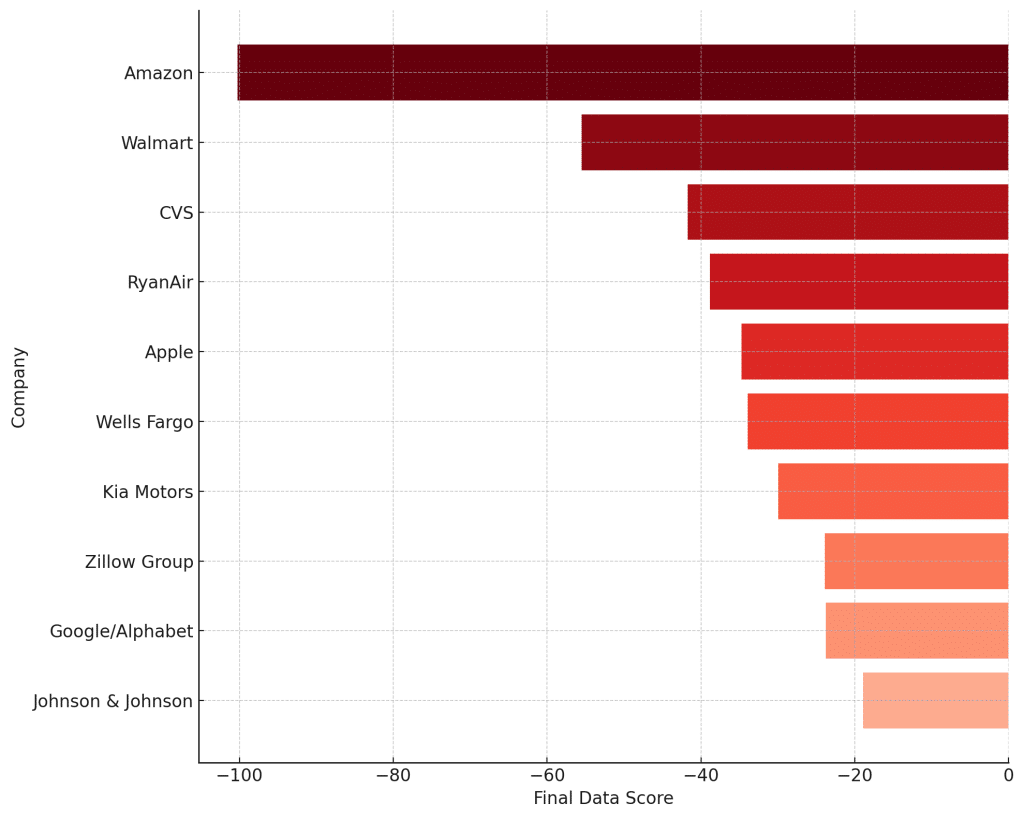
At Permutable AI, we are pleased to announce our latest analysis on consumer protection sentiment, highlighting companies perceived as falling short in protecting consumer rights across the globe. The analysis, leveraging cutting-edge AI and sentiment analysis, analyzes vast amounts of data from various sources to gauge public and market opinions on corporate consumer protection practices. This analysis is crucial for businesses navigating the modern landscape, where consumer trust is paramount for building brand trust, loyalty and achieving sustainable success.
The analysis encompassed a diverse range of industries, including e-commerce, retail, pharmaceuticals, airlines, and technology. Companies with the most negative sentiment scores concerning consumer protection include:
Each company listed in the report is accompanied by specific concerns identified within the data:
Amazon: Concerns about counterfeit products being sold on Amazon and allegations of manipulating search results to favour their own products have eroded trust with some consumers.
Walmart: Walmart has been involved in numerous product recalls due to safety concerns as well as being accused of misleading customers with false advertising, “rollback” pricing that may not reflect actual savings, and price discrimination based on location.
CVS: The pharmacy chain has been criticised for its complex pricing structure and its handling of customer data, raising concerns about transparency and privacy.
Ryanair: The airline is known for its aggressive cost-cutting measures, which often translate to poor customer service and hidden fees, leading to frustration and dissatisfaction among travelers.
Apple: The tech giant has been criticised for its restrictive repair policies that make it difficult and expensive for consumers to repair their own devices, and for practices like planned obsolescence, where Apple products are designed to become obsolete quickly, encouraging frequent upgrades.
Wells Fargo: The bank has been working to regain trust after a massive scandal involving fraudulent accounts opened by employees without customer consent. In 2022, Wells Fargo was fined for mismanaging loans and accounts, including misapplied payments and wrongful repossessions.
Kia Motors: The automaker has faced safety recalls for some of its vehicles and concerns about the warranty coverage offered to customers, raising questions about Kia Motors‘ commitment to consumer safety.
Zillow Group: The online real estate marketplace Zillow has been under scrutiny for the accuracy of its valuations and its data use practices, leading to concerns about reliability and potential ethical violations.
Google/Alphabet: The tech giant operating under the umbrella of Alphabet continues to face challenges related to data privacy and potential bias in its search algorithms, requiring ongoing efforts to demonstrate transparency and fairness in its practices to its users.
Johnson & Johnson: The pharmaceutical company has been involved in several high-profile legal challenges related to the safety of its products, which has significantly damaged Johnson & Johnson‘s brand image and requires significant effort to regain consumer trust.
These findings emphasise the critical role of consumer protection in building brand integrity and trust. In a competitive marketplace, trust is a key differentiator that drives consumer choice and navigates crises effectively. Ultimately, prioritising consumer protection translates into long-term business success and a competitive advantage.
We believe that these companies should be focusing on improving transparency in their operations, especially in areas like product safety, privacy, and data handling. Strengthening customer service, addressing ethical concerns promptly, and ensuring clear, fair pricing and advertising practices are essential. Additionally, implementing robust systems for feedback and grievances can help in quickly addressing consumer issues, improving trust and loyalty. Adopting a consumer-first approach in policy-making and operational strategies will not only mitigate reputation risks but also foster a positive brand image, contributing to long-term success and sustainability in today’s increasingly aware and ethically focused market.
Wilson Chan, CEO of Permutable AI, commented: “This analysis highlights the importance of consumer protection in maintaining brand trust. Companies must actively address these concerns to foster positive relationships with their consumers. At Permutable AI, we are committed to leveraging AI to shed light on these critical issues, helping to encourage businesses towards more ethical, transparent and ultimate and more consumer-friendly practices.”
Talya Stone, CMO at Permutable AI highlighted: “In today’s digital era, the essence of consumer trust has never been more critical. Our findings not only spotlight the imperative of consumer protection but also serve as a call to action for businesses to realign their practices with the evolving expectations of society. As we navigate through the complexities of consumer sentiment, let us remember that at the heart of every transaction lies the foundational pillar of trust.”
Permutable AI encourages a continuous dialogue around consumer protection and hopes this analysis will inspire companies to embrace more sustainable and ethical practices. By highlighting these issues, we aim to contribute to a marketplace characterised by transparency, informed decision-making, and ethical conduct.
Interested in diving deeper into our consumer protection sentiment analysis? Our findings reveal significant areas of concern across industries from e-commerce to technology, highlighting companies that have room to improve in building consumer trust—a key to sustainable success. If you’re a company keen on understanding the specifics behind these insights, we invite you to get in touch. Discover how you can address consumer protection more effectively and enhance your brand integrity. Email us at enquiries@permutable.ai or fill in the form below.
– Company deforestation impact rankings
– Software companies data security rankings
– Corporate behaviour rankings