Exploring the key factors influencing Nextera Energy stock price 2024

In this article, we’ll examine the key factors influencing Nextera Energy stock price, the leading U.S. energy company known for its focus on renewable energy sources, such as wind and solar power. Influenced by a variety of factors – both internal and external to the organisation – understanding these factors is crucial for investors, analysts, and industry stakeholders to make informed decisions about the company’s future performance.

Key factors influencing Nextera Energy stock price

Nextera Energy stock is influenced by a range of factors, which can be broadly categorised into the following groups:

  1. Economic factors
  2. Regulatory factors
  3. Environmental factors
  4. Market demand and supply dynamics
  5. Financial performance and investor sentiment
  6. Analyst recommendations

Let’s explore each of these factors in more detail.

Economic factors affecting Nextera Energy stock price

The overall state of the economy has a significant impact on Nextera Energy’s stock price. Factors such as GDP growth, inflation, interest rates, and unemployment levels can all influence the company’s financial performance and investor sentiment. During periods of economic expansion, for example, increased energy demand and higher electricity prices can boost Nextera Energy’s revenue and profitability, leading to a rise in its stock price. Conversely, economic downturns can result in reduced energy consumption and lower electricity prices, putting downward pressure on the company’s stock.

Regulatory factors impacting Nextera Energy stock price

The energy industry is heavily regulated, and changes in government policies, laws, and regulations can significantly impact Nextera Energy’s operations and financial outlook. Factors such as renewable energy mandates, emission control regulations, tax incentives, and permitting processes can all affect the company’s ability to develop and operate its renewable energy projects. Favourable regulatory environments that support the growth of renewable energy can positively impact Nextera Energy’s stock price, while unfavourable regulations can have the opposite effect.

Environmental factors and their impact on Nextera Energy stock price

As a company focused on renewable energy, Nextera Energy’s operations and financial performance are closely tied to environmental factors. The availability and reliability of natural resources, such as wind and solar, can directly affect the company’s ability to generate electricity and meet its energy production targets. Extreme weather events, such as hurricanes or droughts, can also disrupt Nextera Energy’s operations and impact its financial results, which can then influence its stock price.

Market demand and supply dynamics for Nextera energy stock

The demand and supply of Nextera Energy’s stock in the market can also affect its price. Factors such as investor sentiment, trading volume, and market liquidity all play a role in determining the stock’s price. If there is high demand for Nextera Energy’s stock, with more buyers than sellers, the stock price is likely to increase. Conversely, if there is an oversupply of the stock, with more sellers than buyers, the price may decline.

Financial performance and investor sentiment affecting Nextera Energy stock price

Nextera Energy’s financial performance, as reflected in its earnings reports, revenue growth, and profitability, is a key factor influencing its stock price. Investors closely monitor the company’s financial metrics, as they provide insights into its operational efficiency, growth potential, and ability to generate returns. Strong financial performance can boost investor confidence and lead to an increase in the stock price, while poor financial results can have the opposite effect.

Investor sentiment, i.e. the overall mood and perception of the market towards a company, can also significantly impact Nextera Energy’s stock price. Positive sentiment, driven by factors such as the company’s strategic initiatives, industry trends, and market outlook, can lead to increased demand for the stock and higher prices. Conversely, negative sentiment can result in decreased demand and lower stock prices.

Analyst recommendations and their influence on Nextera Energy stock price

Analyst recommendations can also heavily influence Nextera Energy’s stock price. In this case, positive analyst recommendations, which suggest that the stock is undervalued or has the potential for growth, can lead to increased investor interest and a rise in the stock price. On the other hand, negative recommendations, on the other hand, can result in a decline in the stock price.

A look back at recent events impacting Nextera Energy stock
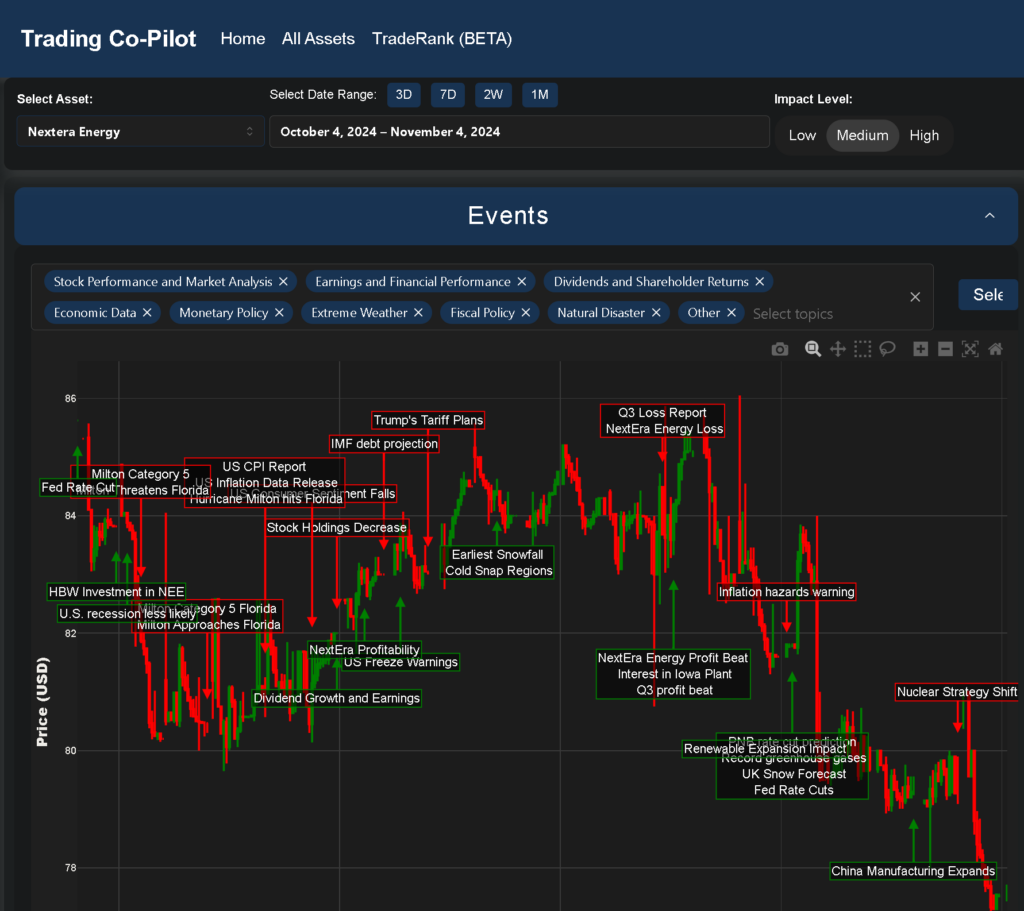
 

Factors affecting Nextera Energy stock price

Using our Trading Co-Pilot to review NextEra Energy’s stock performance during October-November 2024 reflects a complex interplay of company-specific events, macroeconomic factors, and industry developments. The most significant impact came from the company’s Q3 loss report, though this was partially offset by positive news about Q3 beating beats in specific divisions and increased interest in their Iowa nuclear plant operations. 

Weather events played a crucial role in price volatility, with Hurricane Milton’s impact on Florida operations, early snowfall, and cold snap conditions in key regions affecting potential operational outlook and demand. The company faced additional pressure from stock holdings decreases by a significant investor (Meyer Handelman) while broader economic factors such as Federal Reserve policy developments, IMF debt projections, and Trump’s tariff plans created market uncertainty. 

The company’s dividend growth and earnings outlook provided some positive momentum during this period. External factors such as China’s manufacturing expansion and record greenhouse gas measurements influenced investor sentiment by highlighting changing global energy demand patterns and the growing importance of renewable energy solutions. 

Final thoughts on factors influencing Nextera Energy stock price

Ultimately, Nextera Energy’s stock price is influenced by a complex interplay of economic, regulatory, environmental, market, financial, and analyst-related factors. By understanding and monitoring these key factors, investors, analysts, and industry stakeholders can make more informed decisions about the company’s future performance and the potential risks and opportunities associated with its stock.


Factors affecting Nextera Energy stock price

Stay ahead of NextEra Energy stock and market movements

Don’t miss critical events affecting Nextera Energy stock prices. Our Trading Co-Pilot keeps you informed in real-time by monitoring multiple impact factors in real-time including:

✓ Stock performance & market analysis
✓ Earnings & financial Reports
✓ Weather events & natural disasters
✓ Economic d0ata & monetary Policy
✓ Regulatory changes & fiscal Policy
✓ Dividend updates & shareholder returns

Register your interest now to receive targeted alerts and never miss another market-moving event affecting your NextEra Energy investments by filling in the form below.

Register interest below

Schneider Electric ESG score and commitment to sustainability: A closer look

Schneider Electric, the global leader in energy management and automation, has long been at the forefront of sustainability initiatives. With a firm belief in the importance of environmental, social, and governance (ESG) responsibility, Schneider Electric has committed itself to develop innovative solutions that contribute to a more sustainable future. In this article, we will take a closer look at Schneider Electric’s ESG initiatives and their impact on the industry.

Understanding our Schneider Electric ESG score  

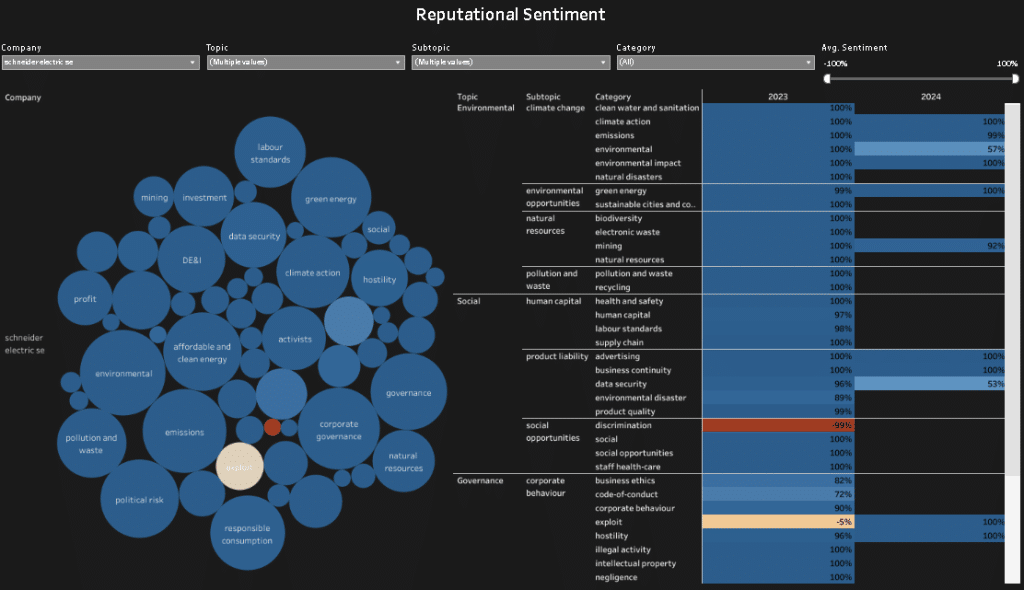
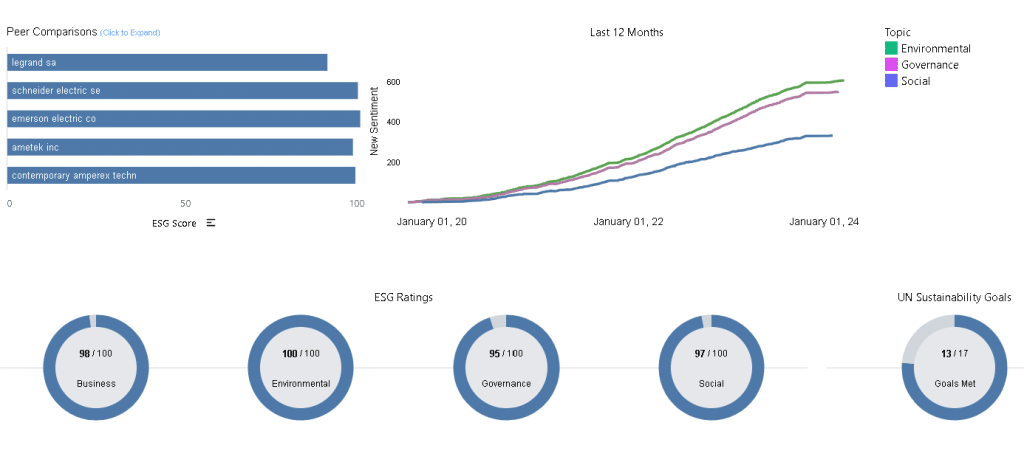
Understanding our Schneider Electric ESG score provides a comprehensive insight into the company’s performance across three critical dimensions of sustainability: environmental, social, and governance. According to our advanced analytics, which leverages news sentiment analysis, Schneider Electric has achieved remarkable scores in each category: 100 in environmental, 97 in social, and 95 in governance. These scores are not just numbers but reflect Schneider Electric’s steadfast commitment and industry-leading efforts in integrating sustainability into its core operations. It is plain to see from these scores that Schneider Electric has recognized the significance of ESG and has integrated these principles into its business strategy. Now let’s take a closer look at the activities behind each pillar of our Schneider Electric ESG score. 

Schneider Electric ESG score overview sentiment analysis
Schneider Electric ESG score sentiment analysis

Schneider Electric’s environmental sustainability efforts

Schneider Electric is dedicated to minimizing its environmental footprint and creating sustainable solutions. The company has set ambitious targets to reduce its greenhouse gas emissions, energy consumption, and water usage. Through innovative technologies and practices, Schneider Electric aims to help its customers achieve energy efficiency and reduce carbon emissions. By leveraging digital solutions and renewable energy sources, the company is driving the transition towards a low-carbon economy.

Schneider Electric’s EcoStruxure software aids businesses in optimizing energy usage across buildings, data centres, and industrial operations. Their commitment to innovation has led to partnerships with customers that have collectively saved 302 million tons of CO2 emissions since 2018. As part of their ambitious sustainability agenda, Schneider Electric has launched the “Zero Carbon Project,” targeting a 50% reduction in carbon emissions from their top suppliers by 2025. This initiative is a key component of their broader strategy to minimize their environmental footprint and achieve carbon neutrality by 2025, with a longer-term goal of reaching net-zero emissions by 2050.

Schneider Electric’s commitment to environmental sustainability also extends to its product lifecycle. The company focuses on eco-design and circular economy principles, ensuring that its products are energy-efficient, recyclable, and contribute to a more sustainable future. Schneider Electric also actively promotes the use of renewable energy sources, such as solar and wind power, to reduce reliance on fossil fuels.

In addition to these technical and operational efforts, Schneider Electric places a strong emphasis on transparency and fostering a collaborative work culture. They encourage their employees to actively participate in sustainability efforts through a “Speak Up” culture that promotes ethical conduct. The company has established a Sustainability School, aiming to educate its workforce on climate issues and empower them to contribute positively to the environment. Through these comprehensive approaches, Schneider Electric not only enhances its operational sustainability but also invests in building a knowledgeable and ethically driven team committed to environmental stewardship.

Social initiatives and community engagement by Schneider Electric

Schneider Electric recognizes that its success is intertwined with the well-being of the communities it operates in. The company is committed to creating positive social impact through various initiatives. Schneider Electric’s Access to Energy program aims to provide electricity to underserved communities around the world, enabling economic development and improving quality of life. Through partnerships with local organizations and governments, Schneider Electric has already brought electricity to millions of people in remote areas.

In addition to its Access to Energy program, Schneider Electric actively promotes diversity and inclusion within its workforce. The company believes that a diverse and inclusive workforce fosters creativity, innovation, and better decision-making. Schneider Electric also encourages its employees to engage in volunteer activities, empowering them to make a difference in their local communities.

Governance and ethical practices at Schneider Electric

Schneider Electric places a strong emphasis on governance and ethical practices. The company has implemented strict codes of conduct and compliance policies to ensure transparency, integrity, and accountability in its operations. Schneider Electric’s Board of Directors oversees the company’s governance framework and ensures that it aligns with global best practices.

In addition, Schneider Electric actively engages with its stakeholders, including shareholders, customers, employees, and communities, to ensure that their voices are heard and their interests are considered. The company’s commitment to good governance and ethical practices is essential in maintaining trust and building long-term relationships with its stakeholders.

The impact of Schneider Electric’s ESG initiatives

Schneider Electric’s ESG initiatives have had a significant impact on the industry. By prioritizing sustainability and integrating ESG principles into its business strategy, Schneider Electric has become a leader in the energy management and automation sector. The company’s innovative solutions and commitment to environmental stewardship have not only reduced its own environmental footprint but have also inspired other organizations to follow suit.

Schneider Electric’s social initiatives, such as the Access to Energy program, have made a tangible difference in the lives of millions of people. By providing electricity to underserved communities, Schneider Electric is empowering economic development and improving access to education, healthcare, and other essential services.

Schneider Electric peer comparison 

Schneider Electric’s commitment to sustainability is robust and clearly articulated through its ambitious goals, such as achieving carbon neutrality by 2025 and net-zero emissions by 2050. This places Schneider Electric at the forefront of the industry in terms of sustainability targets. Compared to its main competitors like Siemens AG, ABB Ltd, Eaton Corporation, and others, Schneider Electric’s initiatives, particularly its Zero Carbon Project and comprehensive energy management solutions, showcase a deep integration of sustainability into its core business strategy. 

While Siemens and ABB also have strong sustainability agendas, focusing on renewable energy and reducing greenhouse gas emissions, Schneider Electric differentiates itself through a wide-ranging approach that includes not only environmental sustainability but also significant investments in social and governance aspects. Its efforts to reduce the carbon footprint across its value chain, combined with transparency and employee engagement in sustainability practices, underscore a holistic approach that may offer a competitive edge. 

Each competitor, including Honeywell, Johnson Controls, and Mitsubishi Electric, brings its strengths to sustainability efforts, but Schneider Electric’s clear targets, innovative solutions like EcoStruxure, and educational initiatives like the Sustainability School demonstrate a comprehensive and actionable commitment to environmental stewardship and social responsibility. See our ESG reports for Schneider Electric’s competitors below.


– Siemens Energy ESG score 

– ABB ESG score 

– Eaton Corporation ESG score

– Rockwell Automation ESG score 

– Honeywell ESG Score 

– Mitsubishi Electric ESG score 

Schneider Electric’s leadership in ESG and its impact on the industry

Schneider Electric’s commitment to sustainability and its comprehensive ESG initiatives have positioned the company as a global leader in energy management and automation. By prioritizing environmental, social, and governance responsibility, Schneider Electric has not only reduced its own environmental footprint but has also made a positive impact on the industry and the communities it serves.

Through its environmental sustainability efforts, social initiatives, and ethical practices, Schneider Electric has set a benchmark for other organizations to follow. The company’s partnerships and collaborations for sustainable development further demonstrate its commitment to driving positive change.

As Schneider Electric continues to innovate and lead in the ESG space, it is inspiring others to embrace sustainability and contribute to a more sustainable and inclusive future. With its clear goals, transparent reporting, and commitment to ongoing improvement, Schneider Electric is paving the way for a greener and more sustainable world.

Scheider Electric ESG score final thoughts

Schneider Electric’s robust ESG score underlines its leadership role in integrating sustainability across the environmental, social, and governance spectrums. Schneider Electric sets a high benchmark, not just in terms of ambitious targets like achieving carbon neutrality by 2025 and net-zero emissions by 2050 but also in the depth and breadth of its initiatives. Compared to industry peers like Siemens AG, ABB Ltd, Eaton Corporation, and others, Schneider Electric distinguishes itself with a comprehensive approach that seamlessly blends innovative solutions, such as its EcoStruxure platform and the Zero Carbon Project, with significant investments in its people and ethical practices.

This strategic focus on sustainability has not only enabled Schneider Electric to reduce its environmental footprint significantly but also to drive industry-wide change by inspiring other organizations to follow suit. With its impressive ESG score, Schneider Electric demonstrates the tangible benefits of embedding sustainability into the core business strategy—benefits that extend beyond the company to positively impact the global community and environment. As the world grapples with the urgent need for sustainable development, Schneider Electric’s continued commitment and progress in ESG practices serve as a model for corporate responsibility and environmental stewardship in the 21st century.

Find out more

Looking for more granular data on our Schneider Electric ESG score or another play in the energy market? Get in touch at enquiries@permutable.ai or fill in the form below to request more data.


Loading

Permutable AI releases leaders in clean and affordable energy solutions corporate ranking ahead of International Energy Week 2024

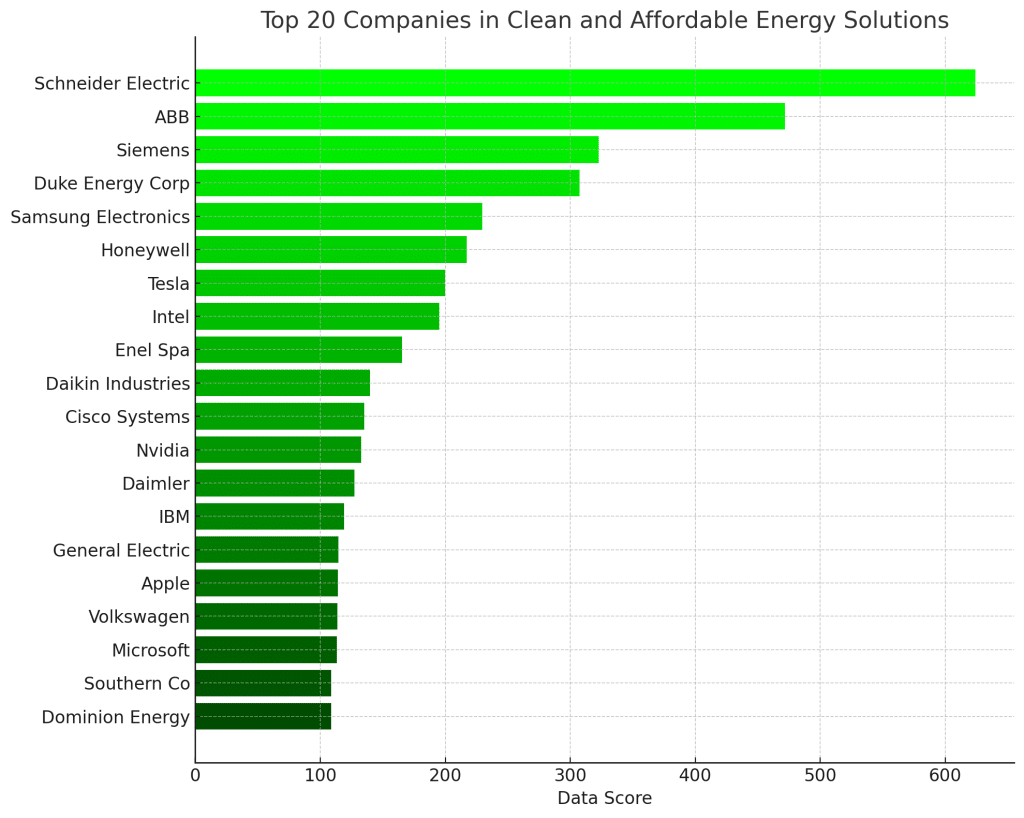
Ahead of International Energy Week, Permutable AI has released its latest rankings of the companies best perceived for clean and affordable energy solutions based on our news sentiment analysis and market intelligence. This list showcases those that are perceived to be at the helm of the clean and affordable energy revolution, with Schneider Electric, ABB, and Siemens earning top spots for their outstanding contributions.

As the global community increasingly acknowledges the necessity of clean and affordable energy for both combating climate change and supporting the growth of critical sectors like agriculture, business, and healthcare, the urgency for more rapid advancements towards sustainability targets has never been clearer. Permutable AI’s cutting-edge analysis brings to light the companies leading the charge towards a more sustainable future.

Top 20 companies perceived for clean and affordable energy solutions

Rank Company Data Score
1 Schneider Electric 623.88
2 ABB 471.52
3 Siemens 322.79
4 Duke Energy  307.36
5 Samsung Electronics 229.52
6 Honeywell 217.29
7 Tesla 199.92
8 Intel 195.3
9 Enel Spa 165.5
10 Daikin Industries 139.58
11 Cisco Systems 135.03
12 Nvidia 132.66
13 Daimler 127.43
14 IBM 119.21
15 General Electric 114.52
16 Apple 114.05
17 Volkswagen 113.76
18 Microsoft 113.4
19 Southern Co 108.88
20 Dominion Energy 108.62

A closer look at the leaders

The rankings reveal a diverse group of companies making significant strides across the clean energy spectrum. Let’s take a closer look at some of the leaders here:

  • Schneider Electric’s efforts are deeply embedded in its core strategy, focusing on renewable energy solutions, energy efficiency, and smart grid technology. Their commitment to R&D in clean technology has led to the development of EcoStruxure, an IoT-enabled architecture that drives efficiency and sustainability by leveraging advancements in AI, robotics, and cyber security.
  • ABB stands out for its pioneering work in electrification and automation technologies that facilitate the integration of renewable energy into existing grids, enhancing the reliability and efficiency of energy systems worldwide. ABB’s focus spans a wide range of technologies, including high-efficiency robotics and electrification products, aimed at reducing energy consumption and minimizing environmental impact. Their investment in digital solutions and services, such as ABB Ability™, underscores their commitment to leading the industrial digital transformation, offering significant advancements in operational efficiency and sustainability.
  • Siemens, another titan in the field, has demonstrated exceptional leadership in clean energy through its extensive portfolio of energy-efficient solutions, ranging from gas and steam turbines that can run on a mixture of hydrogen and natural gas, to cutting-edge wind turbines and energy storage technologies. Siemens’ commitment to renewable energy and digitalization in the energy sector is evident in their development of smart grid solutions that optimize the distribution and use of electricity, thus facilitating a more sustainable energy landscape.
  • Tesla, a name synonymous with the electric vehicle revolution, continues to lead the charge in transforming the automotive industry towards sustainability. Its pioneering approach extends beyond the production of EVs to include the development of high-capacity batteries, solar panels, and the Supercharger network, aiming to create a comprehensive ecosystem for electric mobility. Tesla’s commitment to innovation has not only popularised EVs but also set new standards for vehicle performance, safety, and environmental impact.

  • Mercedes-Benz, under its parent company Daimler, is making significant strides in the electric mobility space. With the launch of the EQ brand, Mercedes-Benz has embarked on an ambitious plan to electrify its vehicle lineup, introducing a range of fully electric and plug-in hybrid models. This move is complemented by investments in charging infrastructure and research into battery technology, signaling a strong commitment to electric mobility and the reduction of carbon emissions. Mercedes-Benz’s strategy reflects a broader industry shift towards sustainable fuel alternatives and cleaner transportation solutions.

  • Intel’s journey towards sustainability is marked by its relentless pursuit of innovations in energy-efficient processors and semiconductor technologies. These advancements are pivotal in addressing one of the tech industry’s most significant challenges: the environmental impact of data centres and computing infrastructure. By developing processors that require less energy for data processing and cooling, Intel is helping to drastically reduce the carbon footprint associated with digital operations. This commitment extends beyond their products to their operational practices, with Intel aiming for net-positive water use, zero waste to landfill, and 100% renewable energy use across their global manufacturing operations, setting a new benchmark for sustainability in the technology sector.

  • Microsoft’s approach to sustainability is holistic and ambitious, reflecting its global influence and responsibility. The tech giant’s pledge to become carbon negative by 2030 encompasses a wide range of initiatives designed to reduce its environmental impact and foster a sustainable future. Microsoft is investing heavily in renewable energy sources, aiming to power its data centres, buildings, and campuses with 100% renewable energy. Furthermore, the company is pushing the boundaries of carbon reduction technologies, exploring and funding projects that remove carbon from the atmosphere. Microsoft’s sustainability strategy also includes the development of cloud-based tools and AI to help other organisations track and reduce their carbon emissions, demonstrating a commitment to collective action against climate change.

  • Nvidia’s role in promoting energy efficiency and renewable energy solutions leverages its core strengths in graphics processing units (GPUs) and AI. The company’s GPUs are at the heart of complex computations needed for deep learning and AI applications, which are increasingly used to optimise energy consumption in various sectors. For instance, Nvidia’s technology enables smarter grid management and more efficient renewable energy distribution, helping to balance supply and demand with greater precision. Additionally, Nvidia’s AI platforms are used to improve the efficiency of buildings and industrial processes, reducing energy use and emissions. By harnessing the power of AI and machine learning, Nvidia is contributing to the creation of more sustainable energy systems and promoting a shift towards cleaner, more efficient use of resources.

top 20 companies perceived for clean and affordable energy 2024 based on news sentiment analysis

Innovation at the forefront

The top 20 companies, ranging from energy conglomerates to tech firms, exemplify commitment to cleaner energy sources and a dedication to addressing the global sustainability challenge. Permutable AI’s CEO, Wilson Chan, emphasises the importance of recognising these companies during International Energy Week, stating, “We aim to shed light on the positive progress being made towards a sustainable future, countering the often pessimistic narratives with a message of hope and action.

Methodology behind the rankings

Our data analysis aimed to comprehensively evaluate companies as perceived in regards to clean and affordable energy.  The dataset was gathered from 500,000 articles scanned daily, ensuring a broad and current representation of market sentiments. Sentiment analysis was performed on the textual data extracted from articles related to each company. This involved assessing the overall sentiment expressed towards a company in the media. The sentiment analysis algorithms considered positive, negative, and neutral sentiments, providing a nuanced view of the public perception.

To delve deeper into sentiment analysis, we identified and quantified specific positive and negative data points within the articles. This allowed us to gauge the factors contributing to a company’s positive or negative sentiment, providing valuable insights into public opinion. The culmination of our analysis is reflected in the end data score, a composite metric synthesizing various factors. This score, ranging from  0 to 1000, represents an aggregate evaluation of the company’s perceived performance concerning clean and affordable energy. The methodology ensures a balanced and holistic assessment of each company’s standing within its respective industry.

To ensure the inclusion of companies with significant market influence and substantial data coverage, a minimum market capitalisation threshold of £50 million was applied. Additionally, a minimum data cap of 50 articles ensured that companies were evaluated based on a substantial volume of relevant information, enhancing the accuracy and reliability of the analysis.

By combining these parameters, our methodology aims to provide a comprehensive and nuanced perspective on companies leading the global transition towards clean and affordable energy, contributing to the ongoing dialogue on sustainability and corporate responsibility.

Towards a sustainable future

As the global community prepares for International Energy Week, the unveiling of Permutable AI’s rankings serves as a timely reminder of the critical role that innovation and commitment play in the energy sector. The companies leading in clean and affordable energy solutions, as identified in this ranking, not only pave the way for a more sustainable future but also set benchmarks for excellence and responsibility in an industry that is at the heart of global development and environmental stewardship.

This comprehensive analysis, underpinned by cutting-edge AI-driven sentiment analysis, offers an unparalleled insight into the companies at the forefront of the clean energy revolution. It reflects a broader shift towards sustainability, where clean and affordable energy is not just a goal but a guiding principle for development across all sectors. As these companies continue to break new ground with their innovative solutions and investments in clean technology, they not only contribute to environmental sustainability but also to economic and social resilience worldwide.

The findings highlight the importance of cross-sector collaboration and the influential role of technology in advancing the clean energy agenda. From Schneider Electric’s leadership to the emerging commitment of automotive giants like Daimler and tech innovators such as Intel and Microsoft, the landscape of clean energy solutions is both diverse and dynamic. This diversity emphasizes the multifaceted approach required to tackle the complex challenges of climate change and sustainable development.

Looking ahead, the AI-driven intelligence provided by Permutable AI highlight the urgency and opportunity for continued innovation and investment in clean energy. As we move towards a future where sustainable energy solutions become the norm, the leadership and vision of these top-ranking companies will undoubtedly inspire further progress and innovation across the globe.

See our other rankings below

Company deforestation impact rankings

Software companies data security rankings 

Corporate behaviour rankings 

Company labour standards rankings 

Company consumer protection rankings 

– Worst pharmaceutical companies perceived for governance