As responsible investing continues to gain momentum, investors are seeking more insights into companies’ environmental, social, and governance practices. Wells Fargo, one of the largest banks in the United States, is no exception. With growing scrutiny on its ESG credentials, it’s important to understand the Wells Fargo ESG score and how it impacts responsible investing.
In this article, we dive into the metrics that determine our Wells Fargo ESG score according to our data, and shed light on its implications for investors. We explore the bank’s approach to environmental sustainability, social impact, and corporate governance. By analyzing Wells Fargo’s performance in each category, we uncover the strengths and weaknesses of its ESG practices. Moreover, we examine how investors can use the Wells Fargo ESG score as a tool to align their investment decisions with their values. Understanding the bank’s ESG performance not only provides insights into its sustainability efforts but also helps investors make more informed choices.
Join us as we delve into the world of ESG metrics and discover the significance of Wells Fargo’s ESG score in responsible investing.
ESG scores play a crucial role in responsible investing as they help investors evaluate the sustainability and societal impact of their investment choices. Traditionally, financial performance has been the primary consideration for investors. However, the increasing recognition of the interplay between environmental, social, and governance factors and long-term financial performance has shifted the focus towards ESG considerations.
Investors are increasingly realizing that companies with strong ESG practices are better equipped to navigate future challenges and generate sustainable long-term returns. ESG factors can directly impact a company’s reputation, operational efficiency, regulatory compliance, and risk management. Therefore, incorporating ESG scores into investment decisions can provide investors with a more holistic understanding of a company’s overall performance and its potential for long-term value creation.
Additionally, ESG scores also serve as an accountability mechanism for companies. By making ESG performance transparent, companies are incentivized to improve their sustainability practices and address any deficiencies. This transparency fosters a culture of responsible business practices and encourages companies to consider their impact on the environment and society.
To understand Wells Fargo’s ESG score, we need to delve into the components that contribute to it. Wells Fargo’s ESG score is determined by various metrics related to environmental sustainability, social impact, and corporate governance.
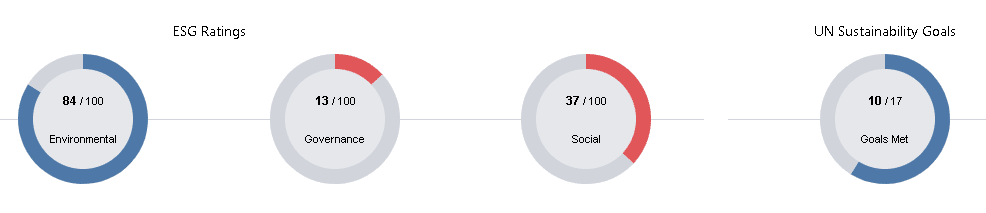
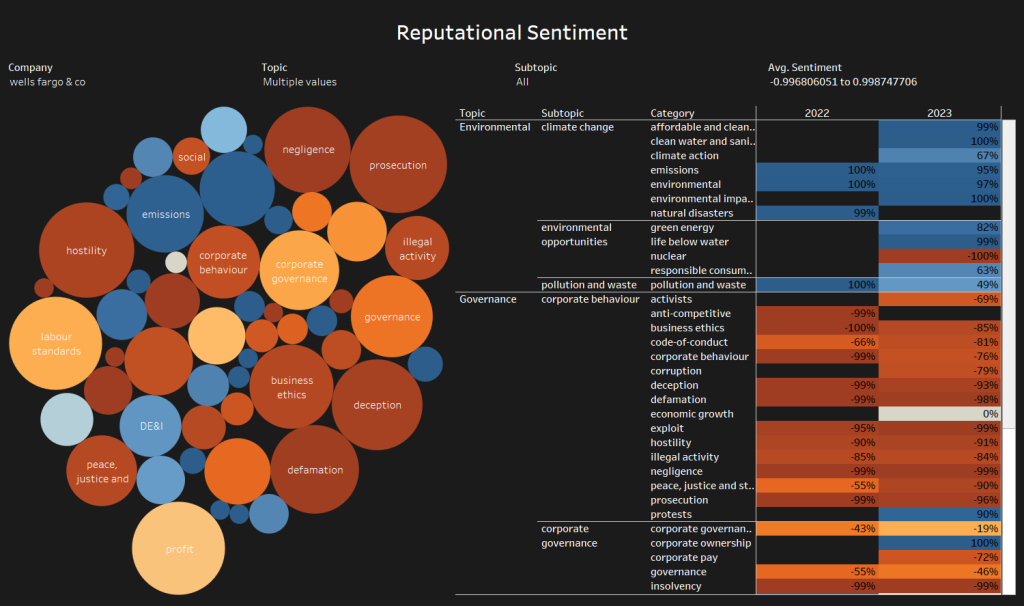
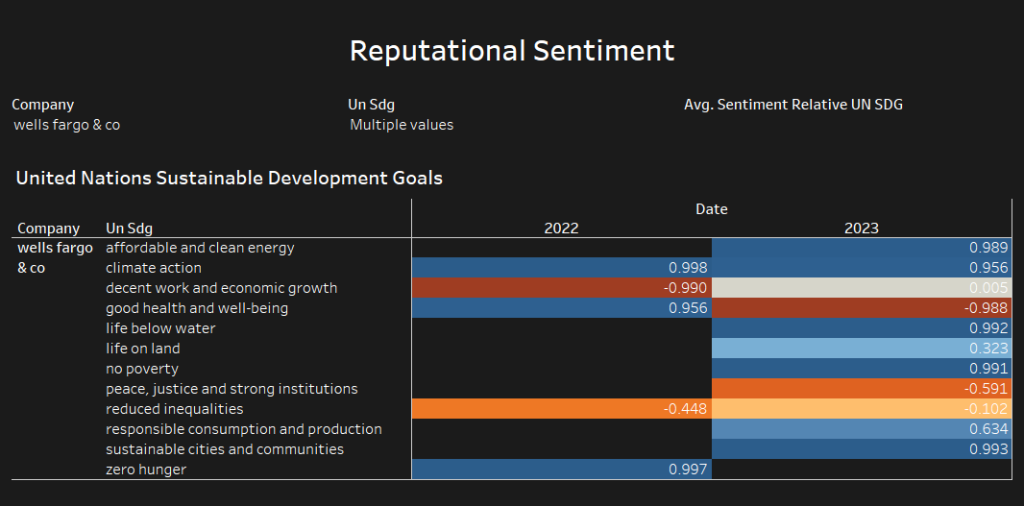
In terms of environmental sustainability, Wells Fargo is evaluated on factors such as its carbon emissions, energy usage, waste management, and efforts to mitigate climate change. The bank’s environmental score at 84 is regarded as mixed. Although it has made a commitment to reducing its environmental footprint, and transitioning towards renewable energy sources the bank has been called out for greenwashing because of their continued commitment to funding fossil fuel projects.
The latest report last week from Banking on Climate Chaos, an organization that tracks bank financing for companies in the fossil fuel industry, found that US banks – of which Wells Fargo is one – had loaned over $4.6tn to the fossil fuel industry since 2016, the year the Paris climate agreement was struck.
Additionally Wells Fargo’s greenhouse gas emissions are high. The bank’s emissions are more than twice the average for large banks. Meanwhile the institution has been criticized for its involvement in the construction of the Dakota Access Pipeline, which is a controversial oil pipeline that crosses Native American land.
Social impact is another crucial component of Wells Fargo’s ESG score, though the bank scores poorly compared to other banks at only 37 according to our data. The Wells Fargo ESG score on social factors is relatively low compared to other large banks due to a number of factors, including:
In addition to these specific factors, Wells Fargo’s social ESG score is also lower than some other large banks because of its overall size and complexity. Large banks are more likely to have ESG risks than smaller banks, simply because they have more operations and more employees.
Corporate governance is the third pillar of Wells Fargo’s ESG score. This encompasses factors such as board composition, executive compensation, transparency in financial reporting, and risk management practices. Evaluating Wells Fargo’s adherence to good governance principles helps gauge its commitment to accountability, ethical behaviour, and responsible decision-making.
Wells Fargo scores poorly on governance factors with a score of 13 according to our data for a number of reasons, including:
It is important to note that Wells Fargo has taken steps to improve its governance in recent years. For example, the bank has added new independent directors to its board and has strengthened its risk management policies. However, the bank still has a long way to go to improve its governance ESG performance.
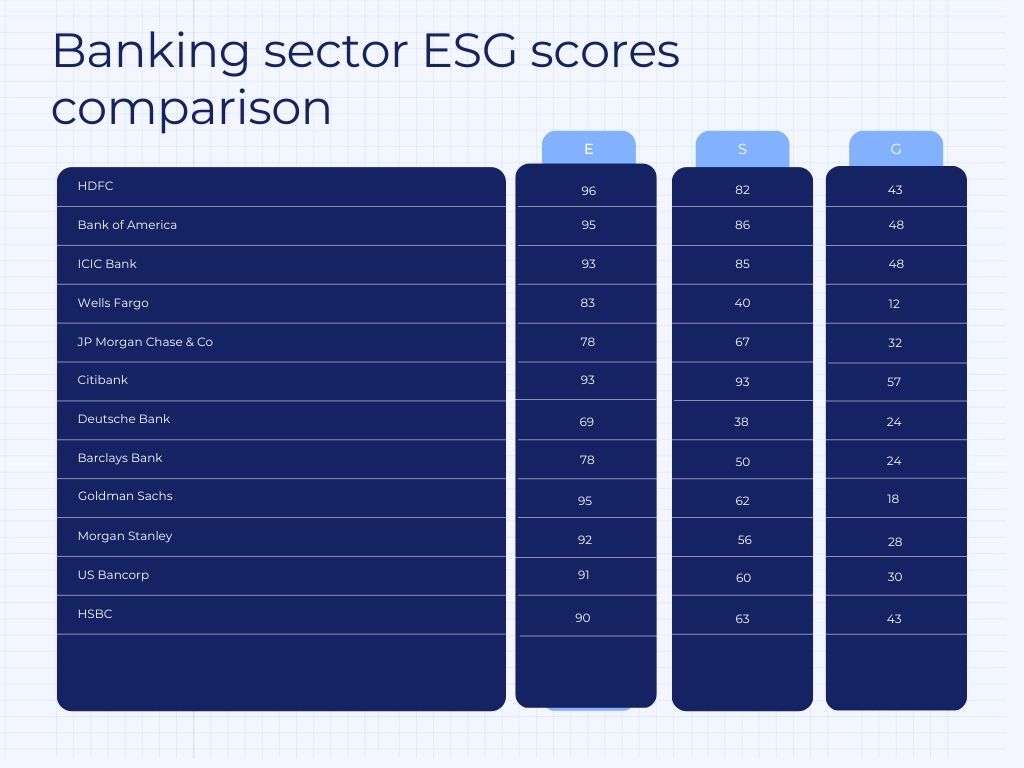
To evaluate Wells Fargo’s ESG score, it is helpful to compare it with other financial institutions in the industry. Below we have listed Wells Fargo’s key competitors and links to our ESG reports and scores for each financial institutions:
Wells Fargo’s ESG score has significant implications for responsible investing. By analyzing the bank’s ESG performance, investors can determine whether it aligns with their own values and sustainability goals. If Wells Fargo’s ESG score reflects strong environmental sustainability practices, social impact initiatives, and robust corporate governance, it may attract investors who prioritize responsible investing.
On the other hand, a low ESG score may raise concerns among investors and prompt them to reconsider their investment decisions. A poor ESG score may indicate a lack of commitment to sustainability, ethical practices, or transparency. Investors who prioritize responsible investing may choose to divest from companies with low ESG scores or engage in shareholder activism to encourage positive change.
Understanding Wells Fargo’s ESG score allows investors to make more informed decisions that align with their values and contribute to a more sustainable and responsible financial system.
Investors can utilize Wells Fargo’s ESG score as a valuable tool in their investment decisions. By considering the bank’s ESG performance, investors can align their portfolio with their values and support companies that prioritize sustainability and responsible business practices.
Investors who prioritize environmental sustainability can evaluate Wells Fargo’s efforts to reduce its carbon footprint, transition to renewable energy sources, and manage its environmental impact. They can compare Wells Fargo’s ESG score with other banks that have a strong focus on sustainability and choose to invest in institutions that demonstrate a higher commitment to environmental stewardship.
For investors concerned about social impact, Wells Fargo’s ESG score provides insights into its diversity and inclusion initiatives, community engagement efforts, and customer satisfaction. By evaluating these social factors, investors can identify banks that prioritize social responsibility and support communities.
Corporate governance is another critical aspect for investors considering Wells Fargo’s ESG score. Investors can assess the bank’s board composition, executive compensation, and risk management practices to gauge its commitment to ethical behavior, transparency, and accountability.
By incorporating Wells Fargo’s ESG score into their investment decisions, investors can support companies that align with their values and contribute to a more sustainable and responsible financial system.
ESG scores are likely to play an increasingly important role in responsible investing as sustainability considerations become more integrated into investment decision-making. As investors demand greater transparency and accountability from companies, ESG scores will continue to evolve and improve.
Standardization of ESG metrics and methodologies is a key area of development. Efforts are underway to establish consistent reporting standards and frameworks, enabling investors to compare ESG scores more accurately. This standardization will enhance the credibility and reliability of ESG scores and make them a more effective tool for responsible investing.
Additionally, advancements in technology and data analytics are expected to enhance the quality and depth of ESG scoring. Machine learning algorithms and natural language processing can help analyze vast amounts of data, identify relevant ESG factors, and provide more comprehensive assessments of a company’s sustainability practices.
The future of responsible investing is likely to be characterized by increased integration of ESG considerations into investment strategies, as well as greater collaboration between investors, companies, and regulators. ESG scores will continue to serve as a valuable tool for investors seeking to align their portfolios with their values and contribute to a more sustainable and responsible financial system.
Understanding Wells Fargo’s ESG score is essential for investors interested in responsible investing. By delving into the metrics that contribute to Wells Fargo’s ESG score, investors can evaluate the bank’s environmental sustainability, social impact, and corporate governance practices. This evaluation allows investors to align their investment decisions with their values and support companies that prioritize sustainability and responsible business practices.
While ESG scores have limitations, they provide a valuable starting point for investors to assess a company’s sustainability performance. As ESG scores continue to evolve and become more standardized, they will play an increasingly important role in responsible investing.
Investors have the power to drive positive change by considering ESG factors in their investment decisions and supporting companies that prioritize sustainability, social responsibility, and good governance. By utilizing Wells Fargo’s ESG score as a tool, investors can contribute to a more sustainable and responsible financial system while potentially achieving their investment objectives.
In an era rife with heightened awareness surrounding environmental responsibility, the notion of sustainability has morphed into an incessantly invoked catchphrase, galvanizing businesses to swiftly embrace its allure. Against the backdrop of these unfolding events, including the recent eyebrow-raising revelation of Barclays’ assertion that its loan to Shell constitutes ‘environmental financing’, a disquieting undercurrent of skepticism looms large—a sentiment amplified by the specter of rampant greenwashing. Concurrently, regulatory actors such as the FCA have interjected their voice of caution, issuing stern advisories to financial institutions regarding the treacherous terrain of ‘greenwashing’ within the realm of sustainable loans.
Intricately intertwined with this is the perennial conundrum: how does one delineate between earnest environmental stewardship and artful marketing artifice? It’s an inquiry that resounds with pressing urgency. ‘Greenwashing‘, emerges as the operative concept. At its essence, greenwashing embodies the art of beguiling consumers through skillfully misleading narratives, conjuring an illusion of ecological alignment even when products or services remain decidedly discordant with such ideals. This rings particularly true in the domain of sustainable loans—an arena where the contours of ethical lending intermingle with corporate stratagems. Herein, the adept leveraging of ‘greenwashing’ enables lenders to cast an irresistible veneer of environmental rectitude, an appealing gambit designed to captivate discerning, ecologically-conscious borrowers.
The inception of the term ‘greenwashing’ can be traced back to the transformative era of the 1980s, a period marked by the burgeoning recognition of pressing environmental concerns. This coinage took root in response to a growing acknowledgment that not all claims of environmental stewardship were as genuine as they appeared. Greenwashing, in its essence, embodies the strategic act of disseminating deceptive and often exaggerated assertions concerning the environmental virtues of a given product, service, or corporate entity. This crafty practice, frequently executed with a deliberate intent to bolster financial gains and enhance reputations, deceives the conscientious consumer into believing that their choices align with eco-conscious ideals.
Within the milieu of sustainable loans, the concept of greenwashing takes on a particularly insidious form. It unfolds as a calculated orchestration wherein financial institutions, entrusted with facilitating ethical lending, cloak their offerings in the veneer of ecological benevolence while forsaking authentic commitments to sustainability. In this theater of financial discourse, the unscrupulous lender adroitly projects an image of unwavering dedication to environmentally responsible initiatives, deftly exploiting the burgeoning consumer demand for ethical finance. Yet, the reality often belies this artifice, revealing a disheartening lack of genuine eco-friendly practices or meaningful impact.
At its core, greenwashing in the context of sustainable loans is a strategic maneuver, executed with an aim to capitalize on the evolving socio-environmental consciousness. As eco-consciousness ascends the hierarchy of consumer priorities, financial entities have recognized the potency of the ‘green’ cachet. Eager to align their image with the zeitgeist of sustainability, these lenders partake in the performative act of marketing loans as instruments of positive environmental change. However, beneath the façade of glossy marketing materials and eloquent sustainability rhetoric, an unsettling reality often prevails.
Greenwashing within the realm of sustainable loans is not a mere superficiality; it represents a palpable discord between perception and reality. It is a phenomenon wherein lenders tout the environmental merits of their loan products through cleverly concocted narratives, while the underlying lending practices betray an adherence to conventional, profit-driven paradigms. Consequently, borrowers who are genuinely committed to advancing environmental progress may find themselves ensnared in financial arrangements that contribute little, if anything, to the noble cause of sustainability.
The subversion of genuine environmental commitment through greenwashing casts a shadow not only on financial transactions but also on the broader drive for sustainable advancement. As these misrepresentations proliferate, the resources, attention, and capital that could otherwise be directed toward bona fide eco-friendly initiatives become diluted. This diversion of focus has the potential to stall progress, hamstringing the much-needed momentum in addressing urgent ecological challenges.
In the convoluted world of finance, where profits and ethical considerations often intersect, the role of discerning consumers cannot be overstated. The task at hand requires a dual vigilance: that of the conscientious borrower seeking truly sustainable financing options and that of the astute investor scrutinizing the legitimacy of institutions claiming environmental stewardship. As financial institutions respond to market dynamics and consumer demands, the onus is on borrowers and investors to be the vanguards of accountability.
In the intricate dance between commerce and environmental responsibility, the act of greenwashing emerges as a formidable antagonist to genuine efforts towards sustainability. Beyond its surface allure, greenwashing carries far-reaching consequences that reverberate through the delicate tapestry of ecological progress.
At its core, greenwashing perpetuates a cycle of deception that ensnares not only unsuspecting consumers but also dilutes the earnest endeavors of businesses and organizations striving for authentic environmental change. The elaborate charade of projecting an environmentally conscientious image while maintaining business-as-usual practices misleads consumers into making choices they believe are aligned with their values. However, the repercussions of this deception extend far beyond the realm of individual purchases.
One of the most insidious outcomes of greenwashing lies in its ability to divert attention and resources away from genuine sustainability initiatives. As companies invest in glossy marketing campaigns that tout their superficial environmental commitment, the genuine innovators and change-makers who are working to develop and implement truly eco-friendly technologies, products, and services are overshadowed. Scarce resources that could have been channeled towards research, development, and implementation of impactful solutions end up being squandered on marketing tactics that prioritize appearance over substance.
This diversion of resources has tangible implications for the progress of eco-friendly projects. The very projects that could usher in tangible advancements towards a greener future—such as renewable energy initiatives, sustainable agriculture, and waste reduction technologies—are hindered by the shadow cast by greenwashing. As funds are siphoned away from these endeavors, their potential for meaningful change is stymied, leaving a void where authentic progress could have taken root.
Furthermore, the presence of greenwashing casts a disheartening pall over the realm of consumer activism. As individuals become increasingly skeptical of the veracity of environmental claims, cynicism pervades the landscape. The disillusionment sowed by greenwashing makes it difficult for consumers to distinguish between genuine commitment to sustainability and mere marketing ploys. This skepticism, while justifiable, can inadvertently dissuade consumers from actively supporting initiatives that are genuinely eco-friendly.
In a world grappling with urgent environmental imperatives, the time lost to greenwashing is time squandered in addressing pressing ecological challenges. As greenhouse gas emissions rise, ecosystems degrade, and natural resources deplete, the urgency for real solutions becomes more pronounced. However, greenwashing’s subtle erosion of trust, diversion of resources, and cultivation of cynicism exacerbate the complexities of this fight for environmental renewal.
Within the complex interplay of finance and environmental stewardship, the phenomenon of greenwashing presents a formidable challenge that demands astute discernment. To navigate this intricate terrain and unravel the intricacies of greenwashing within the realm of sustainable loans, an acute awareness of the subtle cues and indicators is paramount. Unveiling the truth requires a vigilant eye capable of deciphering the nuanced tactics employed to mislead and obfuscate.
At the forefront of this investigative pursuit lies the recognition of telltale signs that cast a shadow of doubt over purported ecological responsibility. One glaring indicator emerges in the form of nebulous or unsupported claims—assertions that cloak themselves in vague, yet enticing, language. When promotional materials tout loans as “eco-sensitive” or “green” without substantiating these assertions with concrete evidence, a critical lens must be applied. Such generalities, devoid of specific details, should be regarded as potential red flags warranting closer scrutiny.
A visual assault of verdant imagery can often serve as another pointer to potential greenwashing. The presence of an abundance of leafy symbols and environmentally evocative visuals, while appealing, can ring hollow without tangible proof of actual eco-friendly practices. The dissonance between flashy visuals and tangible environmental impact raises questions about the authenticity of the lender’s commitment to sustainability.
Another glaring discrepancy that often reveals greenwashing is the divergence between a lender’s overarching operations and their purported environmental dedication. When a financial institution champions sustainable loans on the surface, yet concurrently allocates substantial resources to industries with a known track record of environmental harm, the disjunction between rhetoric and action becomes apparent. This incongruity serves as a stark reminder that genuine dedication to sustainability transcends mere marketing and necessitates alignment across all facets of a lender’s endeavors.
The careful observer, armed with an understanding of these markers, is poised to delve deeper into the intricate web of greenwashing. In the crosshairs of this scrutiny, a dissonant narrative begins to unravel, exposing the disingenuous veneer that attempts to mask the true nature of financial engagements. The commitment to authentic sustainability transcends catchy catchphrases and superficial imagery—it embodies a comprehensive alignment of values, practices, and impacts.
Amid the intricate web of financial institutions purporting to champion environmental causes, the quest to differentiate between genuine environmental commitment and the artful guise of greenwashing assumes paramount significance. This pursuit necessitates a comprehensive and methodical examination of a lender’s core policies and operational ethos. It entails peeling back layers of rhetoric to reveal the substance beneath, guided by a relentless pursuit of transparency, accountability, and tangible action.
Central to this endeavour is the elevation of transparency and accountability to a position of utmost importance. Reputable lenders, truly dedicated to environmental responsibility, demonstrate a willingness to lay bare their inner workings. The disclosure of information, far from being a mere formality, becomes a testament to their commitment. Their sustainability initiatives are not veiled in ambiguity but are presented with clarity, accompanied by tangible metrics and targets that showcase progress and impact. A genuine lender’s willingness to open their books and metrics to scrutiny signifies a dedication to honesty and a sincere endeavor to be held accountable for their claims.
The essence of authentic commitment lies not in static assertions but in an unwavering pursuit of progress. The genuine environmental steward understands that the journey towards sustainability is ever-evolving. As such, a clear and coherent roadmap to mitigate their carbon footprint is an indispensable marker. Scrutinizing this roadmap reveals more than a plan; it unveils the lender’s ethos of continuous improvement. The recalibration of practices in tandem with shifting ecological benchmarks demonstrates an innate willingness to adapt, innovate, and drive meaningful change beyond the veneer of marketing campaigns.
Yet, the picture is not complete without delving into a lender’s affiliations and collaborations. A genuine commitment to environmental responsibility transcends isolated efforts and reaches out to the broader community. Partnerships with respected environmental entities or participation in industry-wide sustainability initiatives exemplify a commitment that extends beyond self-interest. Such collaborations are emblematic of an entity that values collective impact and seeks to contribute to a larger movement, rather than merely pursuing individual accolades.
In the age of skepticism and discernment, the distinction between greenwashing and authentic environmental commitment hinges on a comprehensive evaluation of an institution’s practices, transparency, adaptability, and collective outlook. The diligent observer, fortified with the knowledge of these markers, possesses the tools to navigate the treacherous landscape of green finance. In this pursuit, the power to promote genuine sustainability lies not only with lenders but also with the informed choices of consumers and the collective pressure for integrity.
In an era where the terminology of sustainability permeates financial landscapes, the journey towards securing a genuinely sustainable loan demands more than mere intent. It necessitates a meticulous expedition into the labyrinth of claims, assurances, and promises. As one embarks on this investigative voyage, a deliberate and thorough research approach becomes an invaluable compass, guiding borrowers through the tangled maze of greenwashing and authentic environmental commitment.
At the onset of this journey, the digital realm becomes the first port of call. Lenders’ online domains and promotional materials serve as windows into their purported sustainability initiatives. Scrutinizing these digital corridors unveils the narrative they weave and the image they project to the world. A discerning eye is cast over their words, evaluating the specificity and depth of their commitment. Do they merely skim the surface with vague assurances of eco-friendliness, or do they delve into the intricacies of their initiatives, offering concrete details of their efforts to reduce environmental impact?
Yet, words alone are insufficient. The discerning borrower seeks tangible evidence of authenticity. Here, certifications and endorsements from reputable environmental organizations serve as powerful indicators. These accolades are not just badges of honor; they signify an institution’s adherence to recognized ecological standards. Delving into the presence of these certifications is akin to finding an anchor amidst a sea of information, grounding the borrower’s research in a realm of established credibility.
Expanding the scope of investigation, impartial sources emerge as vital allies. Independent news features and analytical reports offer an objective perspective beyond the confines of a lender’s controlled narrative. These external evaluations serve as a litmus test, offering insights into an institution’s actions and practices from a dispassionate vantage point. It’s in this arena that a lender’s true track record—their genuine contributions to the environment—begins to emerge.
However, the journey need not be undertaken alone. Seeking guidance from those entrenched in the environmental landscape provides a multi-dimensional perspective. Industry experts, steeped in knowledge, can dissect the nuances of sustainability efforts particularly when robust data is at hand. Environmental groups, driven by a commitment to authenticity, can provide recommendations grounded in their expertise. This collaborative approach offers the borrower a wealth of insights that transcend the limitations of individual research.
In the end, the quest to distinguish between a truly sustainable loan and an alluring mirage demands vigilance, inquiry, and a readiness to delve deeper. It necessitates an unwavering dedication to transparency, the pursuit of endorsements, reliance on impartial assessments, and the wisdom of those well-versed in the domain. Armed with these tools, the borrower emerges not only as a seeker of financial support but also as a discerning guardian of their ecological ideals.
Embarking on a transformative mission within the intricate tapestry of sustainability, Permutable, through a collaboration with GFIN facilitated by the FCA, has assumed a pioneering role in the development of a definitive framework to combat the insidious phenomenon of greenwashing. As a vanguard in this arduous endeavor, Permutable recognizes that the battle against deceptive environmental claims demands more than mere rhetoric; it necessitates a structured approach rooted in transparency and accountability. With an unwavering commitment to unveiling the truth beneath superficial assertions, Permutable hopes that our proprietary greenwashing framework will emerge as a beacon of clarity in a landscape clouded by misinformation.
Delving into their digital domain reveals the blueprint of this framework—a multidimensional compass designed to empower consumers, businesses, and regulators alike. Certifications and endorsements from esteemed environmental bodies are not just accolades; they symbolize the rigorous standards upheld by Permutable to verify authenticity. Beyond this, impartial sources and analytical assessments stand as sentinels of impartiality, fortifying the framework’s credibility. The concerted engagement of industry experts and environmental groups amplifies the impact, shaping a collaborative effort that transcends individual boundaries. Permutable’s greenwashing framework, the fruit of our collaboration with GFIN via the FCA, is a testament to our unyielding dedication to aligning actions with intentions, paving the way for a landscape where genuine environmental commitment prevails over deceptive facades.
In our roles as consumers, we possess a formidable power to hold companies accountable for the authenticity of their environmental assertions. Armed with the weapon of self-education, we become champions of discernment in a world inundated with greenwashing. Our influence is magnified by an unwavering vigilance that scrutinizes claims, seeking the substance beneath the surface. This vigilant mindset becomes our shield against misinformation and our guide towards enlightened choices that promote true sustainability.
In this era of conscious consumerism, our voices resonate as catalysts for change. When confronted with the shadow of potential greenwashing, it becomes not only our prerogative but our responsibility to voice our reservations. This demand for clarity isn’t just an act of advocacy; it’s a call for transparency, a clarion call for companies to substantiate their claims. Questions posed are not obstacles but gateways to authenticity, urging corporations to reveal their practices beyond the veneer of marketing campaigns.
In a digital landscape, our influence doesn’t end with questions and reservations. Social media platforms, virtual arenas where experiences are shared, and insights disseminated, become the theaters of our advocacy. Online reviews, once merely commentaries, transform into channels of awareness. Each post, each review, becomes a brushstroke that contributes to the collective mural of consumer consciousness. As our experiences cascade through digital networks, a tide of awareness swells, washing away deceit and nurturing the seeds of genuine environmental commitment.
The pressure we exert is a force that reverberates through boardrooms and decision-making tables. As companies recognize that the discerning consumer is not just a passive participant but an empowered advocate, the paradigm shifts. The pressure to uphold authenticity becomes a matter of necessity, aligning corporate actions with consumer expectations. Our insistence on transparency and accountability carves a new path, steering corporations away from the chasms of greenwashing towards the path of authentic environmental stewardship.
In the tapestry of modern commerce, consumers have emerged as the weavers of change. Through self-education, vigilance, and an unyielding commitment to transparency, we alter the narrative. By raising our voices, we challenge deceptive claims and pave the way for authenticity. In the interconnected digital landscape, our influence permeates beyond purchases; it becomes the cornerstone of a sustainable future shaped by our choices and the echoes of our advocacy.
As the curtains draw close on the intricate interplay of greenwashing and authentic environmental commitment in the domain of sustainable loans, it becomes evident that the pursuit of genuine sustainability is a matter of paramount import, resonating far beyond mere financial transactions. The act of unmasking greenwashing isn’t a solitary endeavor; it’s a clarion call for a collective reorientation towards responsible finance and ethical lending practices that align with the imperatives of our planet.
In the symphony of consumer decision-making, the conductor’s baton lies in the hands of the informed and discerning borrower. Armed with a comprehensive understanding of the nuanced markers of greenwashing, consumers have been endowed with the power to discern between hollow promises and substantive dedication to environmental causes. With the adeptness of seasoned investigators, they traverse the terrain of marketing jargon, scrutinizing the alignment of rhetoric with reality. By artfully posing relevant inquiries, they extract transparency from the veneer, ensuring that every financial transaction echoes with a genuine environmental commitment.
Yet, this symphony of change is not a solo performance; it is a duet of demand and supply. Lenders, the other half of this transformative duet, find themselves at the intersection of conscience and commerce. The responsibility to champion authentic sustainability transcends bottom lines. For them, transparency isn’t an optional flourish; it’s a non-negotiable virtue. The imperative to align operational practices with environmental claims becomes the cornerstone of their modus operandi. It’s a pledge to navigate the landscape of lending with a compass guided by ethics, bolstered by disclosure, and fortified by genuine ecological impact.
As the concluding notes of this exploration resonate, it becomes clear that the nexus between consumers and lenders has evolved into a dynamic force for environmental change. Their interactions cease to be mere transactions; they transform into assertions of ethical commitments and demands for authenticity. The path forward is illuminated by the synergy of their actions—a path where greenwashing retreats into obscurity, and genuine environmental responsibility emerges as the unassailable norm.
In the grand tapestry of our shared planet, the pursuit of sustainability isn’t confined to the realm of finance alone. It’s a call to action for every individual, every institution, to embrace the values that champion ecological well-being. By harmonizing the chords of awareness, discernment, and accountability, we orchestrate a symphony of authentic sustainability that reverberates through the financial ecosystem and beyond. The narrative has shifted, and the crescendo of genuine commitment has begun.
Lloyd’s Banking Group is a UK-based financial institution that has been operating for over 250 years. With over 30 million customers, it is one of the largest banks in the UK. In recent years, Lloyd’s has made a concerted effort to promote sustainability and social responsibility throughout its operations. Some of the key initiatives that Lloyd’s has implemented include reducing its carbon footprint, promoting diversity and inclusion, and supporting local communities. For example, the bank has set a target to reduce its operational carbon emissions by 50% by 2030 and has launched a £100 million fund to support green businesses.
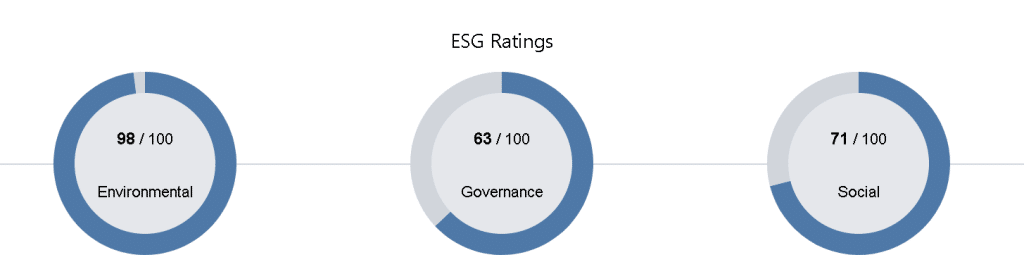
Lloyd’s Banking Group’s commitment to sustainability has is recognized within its ESG ratings, with the bank recently earning a top rating according to Permutable’s ESG data which shows a high score in environmental (98), social (71) and governance (63). This rating reflects Lloyd’s strong performance across a range of ESG criteria, including carbon emissions, diversity, and human rights. The bank’s commitment to sustainability is reflected in its governance structure, with a Sustainability Committee overseeing the bank’s ESG strategy. The committee includes senior executives from across the organization, ensuring that sustainability is integrated into all aspects of the bank’s operations.

Lloyd’s Banking Group has earned a good ESG rating due to several factors:
Commitment to environmental sustainability
Lloyd’s Banking Group has made substantial efforts to mitigate its environmental impact. It has set ambitious targets to reduce its carbon emissions, increase renewable energy usage, and improve energy efficiency across its operations. The bank also supports projects and initiatives that promote environmental sustainability.
Social responsibility
Lloyd’s Banking Group places emphasis on social responsibility by actively supporting communities and addressing social issues. It invests in programs that promote financial inclusion, education, and social development. The bank also encourages employee volunteerism and philanthropic activities.
Strong Corporate Governance
The bank prioritizes strong corporate governance practices, ensuring transparency, accountability, and ethical conduct. Lloyd’s Banking Group adheres to regulatory requirements, maintains a robust risk management framework, and demonstrates responsible governance practices at all levels.
Stakeholder Engagement
Lloyd’s Banking Group engages with its stakeholders, including customers, employees, investors, and communities. By actively listening to their concerns and feedback, the bank incorporates stakeholder perspectives into its decision-making processes and strategic planning.
ESG Integration
Lloyd’s Banking Group integrates ESG considerations into its business operations and decision-making. It incorporates environmental and social risk assessments into its lending and investment practices and actively seeks sustainable financing opportunities.
These factors contribute to Lloyd’s Banking Group’s good ESG score, indicating its dedication to sustainable practices, responsible governance, and positive social impact. The bank’s commitment to ESG principles aligns with the growing demand for sustainable and socially responsible banking services.
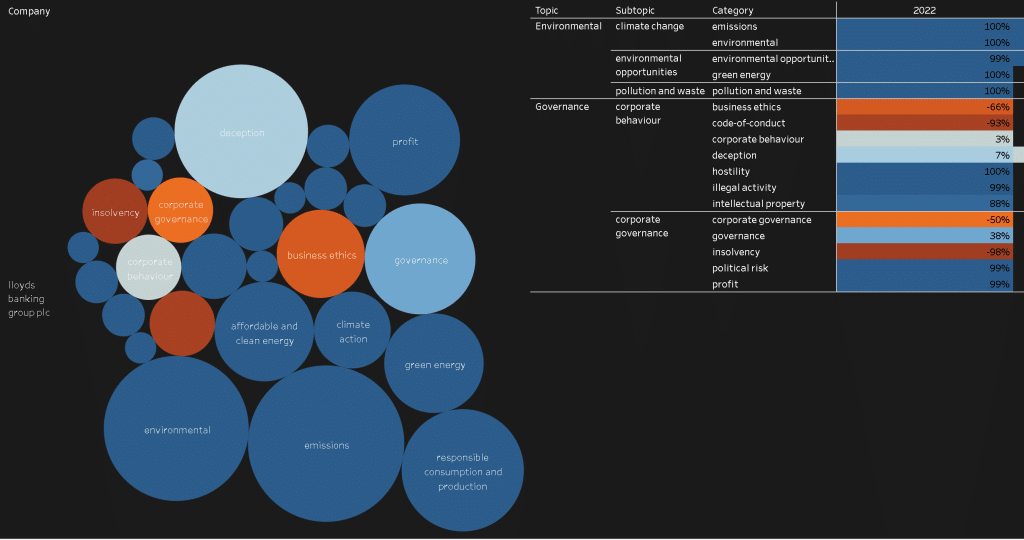
Within the Lloyd’s Banking Group ESG rating however and according to our data, the weakest link in the chain remains around governance, business ethics and code of conduct as highlighted below.
To enhance its governance score, Lloyd’s Banking Group can focus on strengthening its business ethics and code of conduct. by clearly defining and communicating its ethical principles to all employees and stakeholders and establishing a robust and comprehensive code of conduct that outlines expected behaviours, integrity standards, and guidelines for ethical decision-making. Effective compliance and risk management systems to ensure adherence to legal and regulatory requirements could also be a way of fostering a culture of integrity and accountability, thereby enhancing its governance score.


Sustainable finance is an emerging trend in the banking industry, with more and more banks offering green products and services. Sustainable finance refers to financial products and services that promote environmental and social sustainability. This can include green bonds, which finance environmentally friendly projects, or sustainable loans, which offer lower interest rates for businesses that meet certain sustainability criteria. As the demand for sustainable finance continues to grow, it is likely that we will see more banks incorporating sustainability into their business models.
Lloyd’s Banking Group is not the only bank that is prioritizing sustainability. There are many other banks around the world that are making significant efforts to promote sustainability and social responsibility. One example is Triodos Bank, a Dutch bank that only invests in sustainable projects and businesses. Another is Amalgamated Bank, a US-based bank that is a certified B Corporation and has a strong focus on social and environmental impact. These banks demonstrate that sustainability can be a key differentiator in the banking industry.
Sustainable banking has the potential to have a significant positive impact on both society and the environment. By financing sustainable projects and businesses, banks can support the transition to a more sustainable economy. This can include financing renewable energy projects, supporting sustainable agriculture, and promoting sustainable transportation. Additionally, by prioritizing diversity and inclusion, banks can help to create more equitable societies. For example, by offering loans and other financial products to underserved communities, banks can help to reduce inequality and promote economic development.
While there are many opportunities for sustainable banking, there are also significant challenges. One of the main challenges is the lack of standardization in ESG metrics. This can make it difficult for investors and consumers to compare the sustainability performance of different banks. Additionally, there is a risk that some banks may engage in greenwashing, where they make misleading or exaggerated claims about their sustainability performance. To address these challenges, there is a need for greater transparency and accountability in the banking industry, as well as increased collaboration between banks and other stakeholders.
Alongside Lloyd’s Banking Group, the bank’s competitors all play a crucial role in the sustainable finance transition. Take a look at their ESG ratings below:
– Barclays
In conclusion, sustainable banking is an emerging trend that has the potential to have a significant positive impact on society and the environment. Lloyd’s Banking Group is one example of a bank that is making significant efforts to promote sustainability and social responsibility. However, there is still much work to be done to ensure that sustainability is integrated into all aspects of the banking industry. As consumers and businesses, we have a role to play in supporting sustainable banking by choosing to do business with banks that prioritize sustainability and by advocating for greater transparency and accountability in the banking industry. By working together, we can create a more sustainable and equitable financial system for the future.
As we delve deeper into the topic of sustainable banking and the remarkable ESG rating achieved by Lloyd’s Banking Group, it becomes increasingly important to access comprehensive and accurate data. To further enhance your understanding and gain valuable insights, why not get in touch to request additional ESG data pertaining to Lloyd’s Banking Group’s sustainability efforts.
[wpforms id=”16023″ title=”false” description=”false”]
Permutable has released a new report that highlights the most ESG-friendly perceived banks based on sentiment analysis. This report aims to provide valuable insights into the institutions that have demonstrated a commitment to ethical and sustainable practices in the banking industry and where there is room for improvement.
The report analyses various indicators such as corporate behaviour, climate action, human rights, business ethics, governance, and discrimination. The banks highlighted in the report include Citigroup, Standard Chartered, Access Bank, Standard Bank, TCS Group, Goldman Sachs, Deutsche Bank, Barclays Bank, Credit Suisse, and Wells Fargo.
Permutable CEO Wilson Chan stated, “We believe that ESG performance is a crucial factor in evaluating the sustainability and responsible business practices of banks. Our report provides valuable insights into the banks that have demonstrated a commitment to ethical and sustainable practices, highlighting the areas where they excel and the areas where they can improve and those who still have more work to do.”
The report provides a comprehensive overview of the ESG performance of the banks within and delves into the factors that have contributed to their success in becoming the most ESG-friendly perceived banks, whilst highlighting those where ESG still requires prioritization.
Permutable’s report offers valuable insights for investors, stakeholders, and decision-makers in the banking industry. It highlights the importance of incorporating ESG factors into business strategy and operations to ensure long-term success and resilience in an ever-changing business landscape.
Overall, the report aims to encourage banks to prioritize ESG factors in their business operations and decision-making processes. It provides a valuable resource for stakeholders in the banking industry to make informed decisions that align with their values and sustainability goals.
The report is available for download now here.
See individual ESG reports on the banks featured as follows: Citigroup, Standard Chartered, Access Bank, TCS Group, Goldman Sachs, Deutsche Bank, Barclays Bank, Credit Suisse, and Wells Fargo.
In an era of growing environmental consciousness, investors are increasingly seeking companies committed to sustainability and ethical practices. Citigroup, the global banking giant, has recently garnered attention with its ESG rating. But what exactly does the Citigroup ESG rating signify? And how does it influence both the bank’s operations and the broader environment? This article delves into the intricacies of Citigroup’s ESG rating, exploring its implications for investors and its potential impact on our planet. Whether you’re a seasoned investor seeking informed decision-making or an individual passionate about the future of our world, this compelling read unveils the significance of this crucial subject.
Before we dive into our Citigroup ESG rating, let’s first understand what an ESG rating is and why it’s important for investors. ESG stands for Environmental, Social, and Governance, and refers to the three key factors that are used to evaluate a company’s sustainability and ethical practices.
Environmental factors are concerned with the impact a company has on the environment, including its carbon footprint, waste management, and resource conservation efforts. Social factors are concerned with the impact a company has on society, including its labour practices, diversity and inclusion policies, and community involvement. Governance factors are concerned with the way a company is managed and governed, including its board diversity, executive compensation, and transparency.
ESG ratings are used by investors to evaluate the sustainability and ethical practices of companies they are considering investing in. By considering these factors, investors can make more informed decisions about where to put their money, and can choose to support companies that align with their values and priorities.
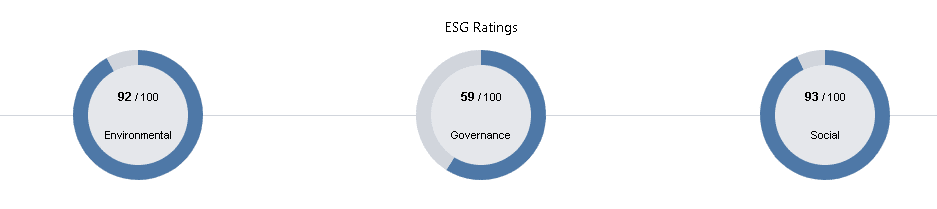
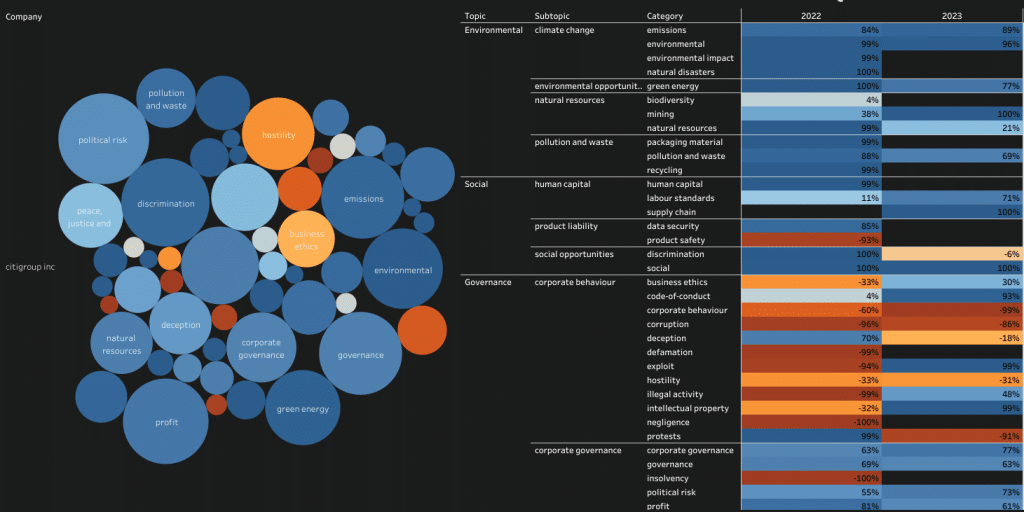
The Citigroup ESG rating is strong across the board. Their environmental rating stands at 92, their social rating at 93 and finally governance at 59. This rating places Citigroup in the top 21% of banks globally, and reflects the bank’s strong performance across a range of ESG factors.
Citigroup’s high score in the environmental category, reflects the bank’s efforts to reduce its carbon footprint and manage its resource use. Citigroup has set ambitious goals to reduce its greenhouse gas emissions and increase its use of renewable energy sources, and has been recognized by a number of organizations for its sustainability efforts.
Citigroup also scored well in the social category, reflecting the bank’s efforts to promote diversity and inclusion, and its support for community development initiatives. Citigroup has implemented a number of programs and policies aimed at increasing diversity in its workforce, and has provided funding and support for a range of community development initiatives around the world.
Finally, Citigroup scored well (though not as highly) in the category, reflecting the bank’s efforts to improve its corporate governance practices in recent years. Citigroup has implemented a number of governance reforms, including changes to its executive compensation structure and improvements to its board diversity.
Overall, the Citigroup ESG rating reflects the bank’s commitment to sustainability and ethical practices, and provides investors with valuable information about the bank’s performance in these areas.


While Citigroup’s ESG rating of A- is certainly impressive, it’s important to consider how it compares to other banks.
When we compare Citigroup’s ESG rating to those of other banks, we see that it is in the top 21% globally. However, it is important to note that there are still many banks that score higher than Citigroup in terms of their sustainability and ethical practices. See how Citibank compares to their competitors below:
– Standard Chartered ESG report
ESG ratings can have a significant impact on investment decisions. By providing investors with information about a company’s sustainability and ethical practices, ESG ratings can help investors make more informed decisions about where to put their money.
For example, investors who prioritize sustainability and ethical practices may choose to invest in companies with high ESG ratings, while avoiding companies with low ratings. In this way, ESG ratings can serve as a powerful tool for promoting sustainability and ethical practices among companies.
ESG ratings can also affect a company’s access to capital. Investors who prioritize sustainability and ethical practices may be more likely to invest in companies with high ESG ratings, providing these companies with greater access to capital. On the other hand, companies with low ESG ratings may struggle to attract investment, limiting their ability to grow and expand.
While the Citigroup’ ESG rating is certainly an important factor to consider when evaluating the bank’s sustainability and ethical practices, it is important to look beyond the rating to get a fuller picture of the bank’s performance in these areas.
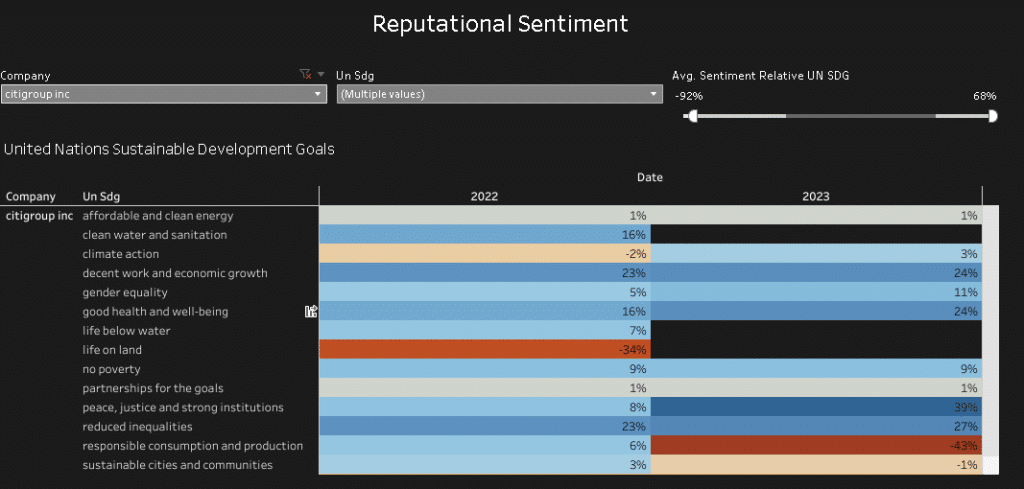
For example, while Citigroup has made impressive progress in reducing its carbon footprint and promoting diversity and inclusion, there are still areas where the bank could improve. For example, Citigroup has faced criticism for its financing of fossil fuel projects, and has been accused of failing to adequately address human rights concerns in its supply chain.
Additionally, while Citigroup has made efforts to improve its corporate governance practices in recent years, there are still concerns about the bank’s executive compensation structure and its transparency around political spending.
Investors should consider these factors and others when evaluating Citigroup’s sustainability and ethical practices, and should use multiple sources of information to get a complete picture of the bank’s performance in these areas.
As with any company, Citigroup has faced criticism regarding its ESG rating, particularly with regard to its role in financing fossil fuel projects. In response, Citigroup has made a number of commitments to reduce its exposure to fossil fuels and increase its financing of renewable energy projects.
For example, Citigroup has pledged to invest $100 billion in climate solutions over the next decade, including renewable energy, energy efficiency, and sustainable transportation. The bank has also committed to reducing its exposure to coal mining and thermal coal power, and to increasing its financing of wind and solar projects.
While these commitments are certainly positive steps, some critics argue that they do not go far enough to address the urgent need to transition to a low-carbon economy. Investors should consider these criticisms and Citigroup’s response when evaluating the bank’s sustainability and ethical practices.
ESG ratings can be a valuable tool for investors looking to make more informed decisions about where to put their money. However, it is important to use ESG ratings in conjunction with other sources of information, and to consider individual company performance rather than relying solely on industry averages.
Investors should also consider their own priorities and values when evaluating ESG ratings. For example, investors who prioritize environmental sustainability may place more weight on a company’s environmental score, while investors who prioritize diversity and inclusion may place more weight on its social score.
Finally, investors should be aware of the limitations of ESG ratings. While they can provide valuable information about a company’s sustainability and ethical practices, they are not a perfect measure, and there may be factors that are not captured by the rating. Investors should use ESG ratings as one tool among many when making investment decisions.
ESG ratings are likely to become an increasingly important tool for investors as the world becomes more aware of the need to prioritize sustainability and ethical practices. As more companies seek to improve their sustainability and ethical practices, ESG ratings will become an important way to evaluate their progress.
However, there are still challenges to be addressed in the ESG rating space. For example, there is currently no standardized methodology for calculating ESG ratings, which can lead to confusion and inconsistency. Additionally, there is a need for greater transparency around the data used to calculate ESG ratings, and for more rigorous evaluation of company performance.
Despite these challenges, ESG ratings are an important step forward in promoting sustainability and ethical practices among companies. As investors continue to prioritize these factors, companies will be incentivized to improve their performance in these areas, leading to a more sustainable and equitable future for all.
The Citigroup ESG rating is an important indicator of the bank’s sustainability and ethical practices, and provides investors with valuable information about the bank’s performance in these areas. While the rating is certainly impressive, it is important to consider Citigroup’s performance beyond the rating, and to use multiple sources of information when evaluating the bank’s sustainability and ethical practices.
As ESG ratings become an increasingly important tool for investors, it is important to use them in conjunction with other sources of information, and to consider individual company performance rather than relying solely on industry averages. With continued focus on sustainability and ethical practices, we can create a more sustainable and equitable future for all.
Are you an investor seeking detailed insights into Citigroup’s ESG rating and its implications for sustainability? Unlock the power of Permutable’s granular data to gain a comprehensive understanding of Citigroup’s performance in environmental, social, and governance factors.
Permutable offers in-depth analysis, utilizing cutting-edge algorithms and a vast array of data sources to provide you with accurate and actionable information. With Permutable’s data, you can assess Citigroup’s sustainability efforts beyond its ESG rating, evaluate its strengths and weaknesses, and make informed investment decisions aligned with your values and priorities.
Don’t rely solely on industry averages or surface-level information. Dive deep into Citigroup’s ESG rating with Permutable’s granular data and gain a competitive edge in the sustainable investing landscape. Get in touch to access Permutable’s granular data for Citigroup’s ESG rating as well as competitor ESG reports.
[wpforms id=”16023″ title=”false” description=”false”]
As we move towards a more sustainable future, the financial industry is undergoing a transformational shift towards sustainable finance. This approach to investing considers environmental, social and governance (ESG) factors alongside traditional financial metrics to create long-term value for investors and the planet. Sustainable finance issuance trends, such as green bonds, social bonds and sustainability-linked loans, are shaping the financial landscape and creating new opportunities for investors to align their portfolios with their values. In this article, we will explore how sustainable finance is changing the investment landscape, and how investors can take advantage of these trends to invest in the future while making a positive impact on the world. So, whether you are a seasoned investor or just starting out, read on to discover why sustainable finance is becoming an increasingly important consideration for investors looking to build a better future.
Sustainable finance is important because it provides a framework for investors to consider the impact of their investments on the environment and society. It recognizes that financial decisions have a significant impact on the world, and that investors have a responsibility to consider the long-term effects of their investments. By integrating ESG factors into investment decisions, sustainable finance can help investors create value while contributing to a more sustainable future.
One of the key drivers of sustainable finance is climate change. The global community is facing an urgent need to reduce greenhouse gas emissions and transition to a low-carbon economy. Sustainable finance can play a critical role in this transition by directing capital towards renewable energy, energy efficiency and other sustainable projects. By doing so, it can help mitigate climate risks and create a more resilient economy.
Moreover, sustainable finance can also promote social and economic development. By investing in projects that promote social equity and economic development, sustainable finance can help create jobs and improve the quality of life in communities around the world. It can also help address social issues such as poverty, inequality, and access to education and healthcare.
Sustainable finance issuance trends are a key indicator of the growing importance of sustainable finance in the financial industry. Green bonds, social bonds and sustainability-linked loans are among the most popular sustainable finance instruments.
Green bonds are used to finance projects that have a positive environmental impact, such as renewable energy, energy efficiency and sustainable transport. They are typically issued by governments, corporations and financial institutions, and are becoming increasingly popular among investors. The global green bonds market was valued at USD 436.0 billion in 2022 and is anticipated to grow at a CAGR of 9.7% from 2022 to 2030.
Social bonds are similar to green bonds, but focus on social issues such as healthcare, education and affordable housing. They are designed to finance projects that promote social equity and development, and are often issued by governments and development banks.
Sustainability-linked loans, on the other hand, are loans that are tied to the borrower’s performance on ESG metrics. They are designed to incentivize borrowers to improve their ESG performance, and can be used to finance a wide range of projects.
There are several companies that are leading the way in sustainable finance issuance trends. Some of the notable players in this space include:
Apple Inc. – The tech giant issued a $2.2 billion green bond in 2021, the largest ever issued by a U.S. corporation, to fund environmental projects.
Alphabet Inc. (Google) – The company issued a $5.75 billion sustainability bond in 2021 to fund projects related to renewable energy, circular economy, and affordable housing.
Bank of America – The bank has been a leading issuer of green bonds and sustainable bonds, with over $30 billion issued to date.
JPMorgan Chase & Co. – The bank has issued over $50 billion in green bonds and sustainable bonds, and has committed to financing $2.5 trillion in climate-related projects by 2030.
Danone S.A. – The food and beverage company issued a €2 billion sustainability-linked bond in 2021, linking the coupon rate to the achievement of ESG targets.
Climate Bonds Initiative – The only organisation working solely on mobilising the $100 trillion bond market for climate change solutions.
These companies are setting an example for others in the industry and demonstrating the importance of incorporating sustainability into financing strategies.
Investors play a critical role in driving sustainable finance. By incorporating ESG factors into their investment decisions, they can help promote sustainable development and create long-term value for themselves and society. Investors can also use their influence to encourage companies and governments to adopt more sustainable practices.
One way investors can promote sustainable finance is by engaging with companies on ESG issues. By holding companies accountable for their ESG performance, investors can encourage them to adopt more sustainable practices and reduce their environmental and social impact. Investors can also use their voting power to support ESG-related proposals and resolutions.
Another way investors can drive sustainable finance is by investing in sustainable finance instruments such as green bonds, social bonds and sustainability-linked loans. By doing so, they can support sustainable projects and help create a more sustainable future.
ESG criteria are a key component of sustainable finance. These criteria are used to evaluate companies and investments based on their environmental, social and governance performance. By incorporating ESG criteria into investment decisions, investors can identify companies and projects that are aligned with their values and have a positive impact on the world.
Environmental criteria evaluate the impact of companies and investments on the environment. This includes factors such as greenhouse gas emissions, resource use, and waste management. Social criteria evaluate the impact of companies and investments on society. This includes factors such as human rights, labor practices, and community engagement. Governance criteria evaluate the management and leadership of companies and investments. This includes factors such as board composition, executive compensation, and shareholder rights.
By considering ESG criteria alongside traditional financial metrics, investors can create a more complete picture of the risks and opportunities associated with their investments. This can help them make better-informed investment decisions and create a more sustainable portfolio.
The future of sustainable finance looks bright. Sustainable finance issuance is expected to continue to grow in the coming years, and more investors are expected to incorporate ESG criteria into their investment decisions. The COVID-19 pandemic has also highlighted the importance of sustainability, and has accelerated the transition to a more sustainable economy.
One of the key trends in sustainable finance is impact investing. Impact investing involves investing in companies and projects that have a measurable social or environmental impact, alongside financial returns. This approach is becoming increasingly popular among investors who want to make a positive impact on the world while generating returns.
Another trend in sustainable finance is the development of new sustainable finance instruments. For example, green securitization is a new type of financial instrument that allows investors to invest in a portfolio of green assets. This can help diversify sustainable finance portfolios and create new investment opportunities.
Sustainable finance has the potential to play a significant role in the global economy. By directing capital towards sustainable projects, it can help create jobs, promote economic development and mitigate climate risks. It can also help address social issues such as poverty, inequality, and access to education and healthcare.
However, there are also challenges and risks associated with sustainable finance. For example, there is a risk that some sustainable finance instruments may be greenwashed or used to finance projects that do not have a positive impact on the environment or society. There is also a risk that unsustainable projects may be excluded from sustainable finance, which could limit their access to capital.
One of the main challenges of sustainable finance is the lack of standardized ESG criteria. There is currently no universally accepted framework for evaluating ESG performance, which can make it difficult for investors to compare and evaluate companies and investments.
Another challenge is the lack of transparency in sustainable finance. Some sustainable finance instruments may be marketed as “green” or “sustainable” without providing clear information about the impact of the investment. This can make it difficult for investors to make informed decisions about their investments.
Finally, there is a risk that sustainable finance may be used as a marketing tool without actually promoting sustainable development. Some companies and financial institutions may use sustainable finance instruments to improve their image without making meaningful changes to their environmental or social impact.
Sustainable finance is an increasingly important consideration for investors who want to create long-term value for themselves and society. By incorporating ESG factors into investment decisions, investors can identify companies and projects that are aligned with their values and have a positive impact on the world. Sustainable finance issuance trends such as green bonds and social bonds are shaping the financial landscape and creating new opportunities for investors to align their portfolios with their values. However, there are also challenges and risks associated with sustainable finance, and investors must remain vigilant to ensure that their investments are truly sustainable. Overall, sustainable finance has the potential to promote economic development, mitigate climate risks, and create a more sustainable future for all.
Just when we thought we had seen the last banking crisis, back it comes. First Silicon Valley Bank and Credit Suisse, then possibly Deutsche Bank. What is going on? Well, in some ways, the story is simple. Investors are rightfully suspicious of the governance of banks, as our own analysis shows. Our data shows that there is much work to do to improve governance across the banking sector.
So, when there are big changes in economies that investors fear that some banks may not have anticipated (like the rise in interest rates and its effect on bond markets), things start to go haywire, with serious concerns arising concerning possible domino effects.
So much for short-term economic and governance effects. But what about longer term ones? Well, university research has shown that banks are highly resistant to government attempts to improve governance, for example, by introducing particular requirements for the appointment of independent non-executive directors. Given the pivotal role of banks in the financial system, what hope is there if banks are asked to apply their governance disciplines to their activities (whether direct or those of their clients or investors) in relation to the environment? There is some scepticism around about this, so the natural next step is to consider what sanctions might be imposed upon banks, for example, litigation.
Some bank boards, as the university research cited above shows, have a track record of trying to reduce the impact of any control which might disturb their conventional (and usually highly profitable) ways of working. While some banks will resist this temptation, others will not. This is the reason why the European Central Bank highlights the continuing need to be vigilant concerning bank resilience, including in relation to exposure to climate-related and environmental risks.
Fortunately, we now have the data which highlights where there are question marks over both governance and the environmental performance of individual banks. This data should be a start point for all stakeholders, whether governments or legislators, bank investors or clients, bank business or legal advisors, or NGOs targeting banks whose behaviour they might consider irresponsible.
Our ESG data provides comprehensive insights into companies’ environmental, social, and governance practices, allowing you to make informed investment decisions that align with your values. With our data, you can identify companies that are leaders in sustainability and ethical practices, and avoid those that fall short.
– JPMorgan Chase & Co. ESG report
By subscribing to our ESG data, you’ll have access to a wealth of information, including company ratings, industry comparisons, and trend analysis. Our data is updated in real-time, so you can stay up-to-date on companies’ evolving ESG practices.
But our ESG data isn’t just for investors. It’s also valuable for organizations looking to improve their sustainability and ethical impact. With our data, you can benchmark your practices against industry leaders, identify areas for improvement, and track your progress over time.
So, are you ready to subscribe to our ESG data? Request a demo today.