2024 ESG trends forecast: Discover the key trends shaping sustainable investing

As sustainable investing continues to evolve, staying ahead of the evolving trends is crucial for investors. In this article, we explore the key 2024 ESG trends shaping sustainable investing in 2024 and provide insights into the ESG forecast and its fascinating evolution for the coming years.

2024 is poised to be an important year for ESG driven by a growing awareness of environmental and social issues, ESG policy and regulation. the increasing demand for responsible investment options. Investors are expected to increasingly prioritize companies with strong ESG performance, seeking out those that align with their values and offer long-term sustainable growth. Let’s take a look at some of the key 2024 ESG trends here.

Industry Trends in ESG

The ESG landscape is experiencing significant shifts as global ESG initiatives gain momentum. One of the most notable industry trends is the push for standardized financial reporting that integrates environmental, social, and governance factors. The International Sustainability Standards Board (ISSB) is at the forefront of this movement, working to develop a comprehensive global baseline of sustainability disclosure standards. These standards aim to enhance the consistency and comparability of ESG reporting across different jurisdictions. Simultaneously, regulatory bodies worldwide are introducing more stringent disclosure rules, compelling companies to provide more transparent and detailed information about their ESG practices and performance. This trend towards increased transparency and standardization in the ESG reporting is reshaping how businesses communicate their sustainability efforts to stakeholders and is expected to have a profound impact on investment decisions and corporate strategies in the coming years.

Another key trend is the growing focus on net zero targets and supply chain transparency, with companies increasingly setting ambitious carbon reduction goals and implementing measures to track and disclose emissions throughout their value chains. This trend towards increased transparency and standardization in the ESG reporting is reshaping how businesses communicate their sustainability efforts to stakeholders and is expected to have a profound impact on investment decisions and corporate strategies in the coming years.

2024 ESG trends: The Importance of ESG in Investment Decision-Making

ESG factors have become integral to investment decision-making in recent years. Despite what supporters of the ESG backlash may say, investors now recognize that companies with robust environmental, social, and governance practices are better positioned to manage risks and seize opportunities in an increasingly complex business environment. ESG data provides insights into a company’s sustainability, ethical practices, and long-term viability, making it a valuable tool for investors to assess the overall performance and resilience of their portfolios.

Moreover, ESG considerations are no longer limited to ethical or moral concerns; they have become financial imperatives. Numerous studies have shown that companies with strong ESG performance tend to outperform their peers in terms of profitability and shareholder returns. This growing body of evidence has led investors to recognize that ESG factors can serve as valuable indicators of a company’s long-term financial performance, prompting them to incorporate such considerations into their investment strategies.

The integration of ESG factors in investment decision-making is not just limited to asset managers and institutional investors. Individual investors are increasingly demanding investment options that align with their values and contribute to positive change. As a result, sustainable investing has gone mainstream, with ESG considerations becoming a key driver of investment decisions across the board. Let;s take a closer look at some of these trends in more detail below.

Key Trends in ESG for 2024

1. Rise of Impact Investing

Impact investing, which aims to generate measurable social and environmental impact alongside financial returns, is set to gain significant traction in 2024. Investors are increasingly interested in investing in companies and projects that directly address pressing global challenges, such as climate change, poverty alleviation, and access to clean energy. Impact investing offers a unique opportunity to align financial goals with positive societal outcomes, making it an attractive option for investors looking to make a difference while earning returns.

The rise of impact investing is driven by a shift in investor preferences, as individuals and institutions seek to invest their capital in a way that aligns with their values and contributes to sustainable development. This trend is further supported by an increasing number of impact-focused investment products and platforms that provide opportunities for investors to allocate capital to specific causes or sectors, facilitating the mainstream adoption of impact investing.

2. Incorporating ESG Factors in Portfolio Construction

In 2024, investors will increasingly view ESG factors as integral components of their portfolio construction process. Traditionally, ESG considerations were often treated as a separate overlay or an exclusionary filter applied to investment portfolios. However, this approach is evolving, with investors recognizing the need to integrate ESG factors throughout the entire investment process.

By incorporating ESG factors in portfolio construction, investors can identify companies that are better equipped to manage risks and capitalize on opportunities arising from sustainability trends. This integration allows for a more holistic assessment of a company’s overall performance, considering not only its financial metrics but also its environmental and social impact. As a result, portfolios that are constructed with robust ESG considerations are expected to outperform their peers in the long run, delivering both financial returns and positive impact.

3. Technology and Data-Driven Approaches to ESG Analysis

The integration of technology and data analytics is transforming the way investors assess ESG risks and opportunities. Advanced tools and platforms are now available to help investors analyze vast amounts of ESG data, enabling more informed decision-making. These tools leverage artificial intelligence, machine learning, and natural language processing to extract valuable insights from complex ESG datasets, allowing investors to identify material ESG risks and develop customized investment strategies.

Technology also plays a crucial role in enhancing ESG reporting and transparency. Companies are increasingly adopting digital platforms to streamline their ESG reporting processes, ensuring timely and accurate disclosure of relevant information. These digital reporting solutions not only facilitate the collection and analysis of ESG data but also improve communication between companies and investors, allowing for better engagement and collaboration.

4. Regulatory Developments and the Future of ESG Reporting

Regulatory frameworks surrounding ESG reporting and disclosures like are evolving rapidly. In 2024, we can expect stricter regulations and reporting requirements to come into effect, compelling companies to provide more comprehensive and standardized ESG information. This regulatory push is driven by the need for greater transparency and accountability, as investors and stakeholders demand consistent and comparable ESG data for decision-making.

Standardized ESG reporting frameworks, such as the Global Reporting Initiative (GRI) and the Sustainability Accounting Standards Board (SASB), are gaining traction as industry standards. These frameworks provide guidelines and metrics for companies to report on their ESG performance, facilitating comparability and benchmarking among peers. As regulatory requirements continue to evolve, companies will need to adapt and enhance their ESG reporting practices to meet the growing demands of investors and regulators.

Two key developments are set to shape this trend:

Corporate Sustainability Reporting Directive (CSRD): The European Union’s Corporate Sustainability Reporting Directive is expected to come into effect, marking a pivotal moment in the world of ESG reporting. The CSRD will expand the scope of ESG reporting obligations, making it mandatory for a broader range of companies. This directive will require companies to provide comprehensive ESG disclosures, ensuring greater transparency and accountability. Investors will benefit from access to more standardized and comparable ESG data, enabling them to make informed decisions that align with their sustainability goals.

Securities and Exchange Commission (SEC): In the United States, the Securities and Exchange Commission (SEC) is also moving towards enhanced ESG reporting requirements. With increased scrutiny on ESG matters, the SEC is expected to introduce regulations that promote consistent and accurate ESG disclosures. These regulations will not only provide investors with valuable information but also encourage companies to improve their ESG performance and reporting practices.

5. ESG Integration in Corporate Governance

Corporate governance plays a crucial role in shaping a company’s ESG performance. In 2024, there will be a heightened focus on the integration of ESG considerations into corporate governance frameworks. Investors are increasingly calling for greater board diversity, improved risk oversight, and enhanced transparency in decision-making processes.

Companies that prioritize ESG considerations in their governance structures are more likely to demonstrate long-term sustainability and resilience. They are better equipped to address emerging risks, adapt to changing market dynamics, and attract and retain top talent. As a result, investors are placing greater emphasis on evaluating a company’s governance practices, including board composition, executive compensation, and shareholder rights, to assess its ESG performance and long-term value creation potential.

6. Greater Scrutiny of Companies to Tackle Greenwashing

In 2024 and beyond, the concept of greenwashing, a term widely used to critique inadequate or deceptive corporate sustainability endeavours, is set to gain stronger legal definitions and impose more substantial consequences. This movement is underpinned by recent events, such as an asset manager being fined $19 million in 2023 for misleading ESG disclosures. The  European Union’s significant strides in banning greenwashing, which includes the formulation of new regulations aimed at curbing deceptive advertising practices and providing consumers with improved product information. Meanwhile the FCA has recently announced in new anti-greenwashing rules which will come into effect in 2024.

Simultaneously, there is a growing focus on scrutinising the legitimacy of carbon offsets. Additionally, leaders in the voluntary carbon market are offering more robust guidance on claims related to carbon credits. These developments promise enhanced clarity for consumers but also pose heightened risks for companies that publicly promote their ESG initiatives.

Ensuring compliance with evolving regulatory standards will become a paramount concern for ESG teams. Collaborating closely with communications and marketing teams will be essential to ensure that environmental messaging aligns with jurisdictional requirements.

7. 2024 ESG Trends: Scope 3 Emissions and Supply Chain Transparency

In the upcoming year, 2024, the landscape of ESG is poised for a significant shift, with a heightened emphasis on two critical factors: Scope 3 emissions and supply chain transparency. This evolution marks a pivotal moment in sustainable investing, reflecting a more comprehensive approach to assessing a company’s commitment to environmental responsibility.

Scope 3 emissions, often referred to as “indirect emissions,” encompass the greenhouse gas emissions that arise not only from a company’s direct operations but also from its entire value chain. This extensive value chain includes suppliers, customers, and other stakeholders. In essence, Scope 3 emissions represent the broader environmental impact of a company’s activities. These emissions are typically the most substantial portion of a company’s carbon footprint and can significantly affect its overall sustainability profile.

Investors are expected to place a heightened focus on understanding a company’s endeavours to curtail these indirect emissions. This entails assessing the measures a company takes to reduce its carbon footprint throughout its supply chain, including sourcing materials, production processes, transportation, and distribution. This expanded perspective on ESG allows investors to gain a more holistic view of a company’s environmental impact and commitment to sustainability.

Furthermore, the scrutiny of supply chain transparency will play a pivotal role in the evolving ESG landscape. Investors are increasingly concerned with understanding the ethical and sustainable aspects of a company’s supply chain. This includes issues such as responsible sourcing of materials, fair labour practices, and efforts to minimise environmental harm throughout the entire supply chain.

In 2024 and beyond, companies will need to demonstrate not only their commitment to reducing Scope 3 emissions but also their dedication to ensuring transparency and sustainability in every facet of their supply chain. 

As we peer into the promising horizon of 2024 ESG trends, the realm of ESG stands on the brink of significant transformation, heralding a new era of heightened awareness, regulatory fortification, and investor prioritization. The landscape of sustainable investing continues to evolve, guided by a growing consciousness of environmental and social issues, a surge in ESG policy and regulation, and an escalating demand for responsible investment avenues. The pivotal trends of 2024 in the ESG domain illuminate a fascinating trajectory of growth and evolution.


Why ESG is still important: The resilience of sustainability

In a world characterized by dynamic shifts in economic paradigms and societal values, it’s clear that ESG is still important. ESG provides not just a moral compass for companies but a pragmatic roadmap to sustainable success. Recent headlines reinforce the notion that ESG is not just a trend, but a movement that is steadily gaining momentum and acceptance.

One of the most compelling signs that ESG is still important is the fact that ESG integration is “steadily becoming the norm” amongst fund managers. Recent press articles confirm the growing acknowledgment of the importance of ESG principles in investment strategies. ESG has evolved beyond being an optional add-on; it is now firmly integrated into the decision-making processes of institutional investors, underscoring its importance in modern finance.

The resilience of ESG further illustrates why ESG is important. It can be witnessed in the persistence of investors’ commitment to sustainable investing, despite concerns surrounding greenwashing. However, this phenomenon has fostered greater scrutiny and an unwavering resolve to ensure genuine ESG compliance. This highlights why ESG is important; investors recognise its significance in pursuing long-term returns with a positive impact.

The Importance of ESG Principles

  1. Risk Mitigation: In an era marked by increasing climate volatility, social unrest, and evolving regulations, ESG serves as a robust risk management tool. Companies that embrace ESG principles are better equipped to anticipate and adapt to emerging risks. This recognition is a core reason why ESG is important, making it an essential part of due diligence for investors.

  2. Long-term Value: ESG focuses on sustainable practices that inherently align with the long-term interests of both investors and companies. The importance of ESG lies in promoting a culture of responsible stewardship and a commitment to delivering consistent returns while maintaining a positive societal and environmental footprint.

  3. Regulatory Backing: Another reason why ESG is important is the increasing commitment to sustainability from governments worldwide. Regulations and incentives are being designed to support ESG integration, creating a more conducive environment for ESG investment.

  4. Changing Consumer Preferences: The importance of ESG is evident as consumers become more conscious of the ethical and environmental implications of their choices. Companies that embrace ESG principles are better positioned to meet the changing preferences of the market, driving revenue growth and shareholder value.

  5. Innovation and Adaptation: The need for innovation and adaptation is another reason why ESG is important. Companies actively integrating ESG principles often find themselves at the forefront of technological and operational advancements, positioning them as leaders in their industries.

Why ESG Integration is Becoming the Norm

The shift towards ESG integration becoming the norm among fund managers is significant for a fundamental reason: it demonstrates why ESG is important. ESG is no longer a niche consideration but a mainstream criterion. Investors recognise the importance of ESG factors in assessing the potential risks and opportunities associated with any investment, emphasizing the significance of ESG in today’s financial landscape.

This shift towards ESG integration as a standard practice also stems from the growing realisation that sustainable and responsible investment isn’t just a moral imperative; it’s a sound financial strategy. Companies that incorporate ESG principles are better equipped to identify and navigate the challenges and opportunities presented by our rapidly evolving world. ESG integration safeguards investments against unforeseen risks and positions them to thrive in an environment where societal and environmental concerns are at the forefront. In essence, it’s about future-proofing investments and aligning them with a world that values sustainability and ethical responsibility.

Greenwashing and Why ESG Remains Important

Greenwashing poses challenges, but in a twist of events its ubiquity also signifies that ESG is still important. To counter its prevalence, regulators and investors are becoming increasingly vigilant, pushing for greater transparency and accountability. The vigilance against greenwashing underscores the importance of maintaining the authenticity and integrity of ESG principles in modern finance.

This ongoing battle against greenwashing reflects a collective commitment to preserving the core values of ESG. It’s a testament to the unwavering dedication to ensuring that ESG isn’t just a buzzword, but a tangible force for positive change. The efforts to expose and rectify greenwashing practices underscore the vital role of ESG in creating a financial landscape where ethical, responsible, and sustainable business practices are upheld. It is a reminder that the enduring importance of ESG is not just about the concept itself but about the principles and values it represents in a world increasingly focused on long-term sustainability and integrity.

Investors Continue to Embrace ESG

Recent analysis published in Investment Week has highlighted that investors continue to push into ESG despite greenwashing concerns because they understand the profound impact ESG can have on a company’s long-term performance. The importance of ESG is not limited to aligning investments with values; it is about assessing a company’s risk profile and its ability to navigate a rapidly changing world, making it a core element of investment decisions.

This steadfast commitment from investors underlines their recognition of the dual benefits that ESG provides. It offers a moral compass that aligns with individual and societal values, but it is equally a pragmatic tool for safeguarding their financial interests. Investors have come to appreciate that ESG isn’t a mere overlay to their portfolios; it is an intrinsic element in managing risks and seizing opportunities in a world where sustainability and responsibility are pivotal to long-term success. By embracing ESG, investors contribute to a financial landscape where ethics and economics coexist harmoniously, reaffirming the enduring importance of this paradigm shift in investment strategies.

The Growing Importance of Third-Party Assurances

In the ever-evolving landscape of ESG, the emergence of third-party assurances has become a critical element, shedding light on the evolution of ESG and how ESG is still important.  As ESG considerations have moved from the periphery to the heart of investment strategies, the need for accountability and transparency has never been more pronounced. Third-party assurances are, in essence, independent assessments and verifications of a company’s ESG commitments. These assessments play a pivotal role in validating a company’s sustainability claims and, in turn, offer investors the confidence that these claims are not merely lip service. Let’s delve into why third-party assurances have gained prominence and their implications for the ESG landscape.

The Evolution Towards Impact Investing

Impact investing, where investors actively seek companies that make a positive difference in society and the environment, is gaining momentum. This shift further exemplifies why ESG is still important. Investors are not just avoiding ‘bad’ companies; they are actively seeking ‘good’ companies that contribute to positive change, cementing the enduring significance of ESG.

This transformative approach to investment places a spotlight on those businesses that not only meet traditional financial criteria but also make a meaningful impact on the world. It’s a paradigm shift that aligns profit with purpose, and it’s reshaping the investment landscape. Companies that integrate ESG principles are well-positioned to attract this growing cohort of impact-conscious investors, reinforcing the vital role of ESG in shaping the future of finance and responsible business practices.

Permutable AI’s View

In today’s dynamic world, we firmly believe that the importance of ESG cannot be overstated. It is a process of continuous evolution, and despite its critics, ESG considerations have emerged as a vital framework for businesses and investors alike, offering a clear path towards not just financial success, but also sustainable and responsible growth.

The world is changing at an unprecedented pace. Environmental challenges like climate change and resource scarcity, social issues such as inequality and diversity, and governance matters like corporate ethics and transparency are no longer isolated concerns. They are the front and centre of the global discourse, affecting how businesses operate and how investments are made.

As businesses and investors navigate this complex terrain, ESG provides a structured framework to address these challenges. It isn’t a static checklist; rather, it’s a dynamic compass, pointing towards a future that is not just financially secure, but environmentally and socially responsible. Why does ESG continue to be important? It’s because it acknowledges the ever-evolving nature of the world we live in. ESG isn’t a one-off project; it’s an ongoing commitment to adapt and grow in harmony with changing societal expectations and ecological realities.

Companies embracing ESG principles are, in essence, embracing a mindset of perpetual improvement. They recognise that the world’s needs and expectations will never stand still. Thus, the importance of ESG lies in its capacity to foster resilience and adaptability.

Navigating the ESG Landscape with Permutable AI

At Permutable AI, we are passionate about ESG intelligence and data. In today’s dynamic world, ESG isn’t a static checklist but a dynamic compass, guiding you towards informed decisions and data-driven insights. The importance of ESG data lies in its capacity to foster resilience and adaptability, enabling you to navigate the ever-evolving landscape of environmental, social, and governance factors.

Join us in this journey towards leveraging the power of ESG intelligence and data. Contact us at enquiries@permutable.ai to explore how our solutions can benefit your business or investment strategy or connect with us using the form below.

Get In Touch


Drax Group’s ESG Score: Unraveling the truth behind their sustainability claims

In the evolving landscape of business, the significance of Environmental, Social, and Governance (ESG) factors is increasingly paramount. Companies are being assessed not solely on their financial performance, but also on their commitment to sustainability, ethical practices, and sound governance. One such company that has been making significant strides in the ESG arena is the Drax Group, a British electrical power generation company that has been transforming its business model to focus on renewable energy sources. In this article, we will delve deeper into the 2023 ESG rating of Drax Group, its evolution over time, and the initiatives the company has undertaken to enhance its score.

Understanding Drax Group’s ESG Score

Drax Group’s ESG performance has been evaluated by several organisations, each with their unique criteria and methodologies. Here’s a snapshot of their ratings:

  • Sustainalytics ESG Risk Rating: 25.9 (Low Risk 0 to High Risk 100)
  • Moody’s ESG Solutions: 62 (0 to 100, with 100 being the highest score)
  • MSCI ESG Ratings: AA (AAA-CCC)

At Permutable, our sustainability analytics models have evaluated Drax Group to have an ESG Score of – E:86  G:46  S:20
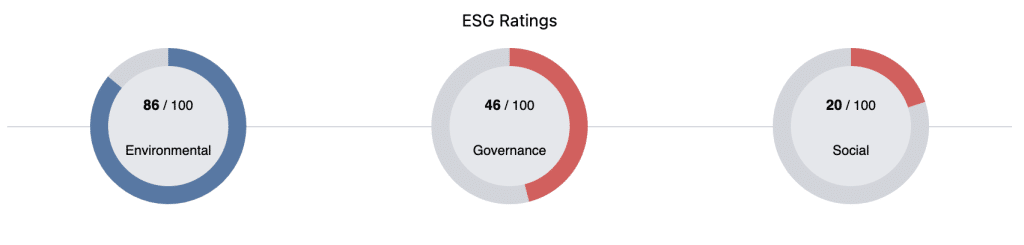
 
Drax ESG Score

To access the full ESG report click here . These ratings reflect Drax Group’s commitment to ESG principles and its efforts to manage related risks. However, it’s important to note that these scores may change over time.

Drax Group’s Actions to Improve ESG Score

Drax Group has taken several actions to improve its ESG score. These include participating in the UN Global Compact since 2018, being a constituent of the FTSE4Good Index Series, and receiving a B rating in the CDP Climate Change Programme and CDP Forests Programme. 

They’ve implemented numerous ESG-linked initiatives, including a trailblazing ESG-linked foreign exchange (FX) derivatives initiative. In 2019, Drax secured a £125m ESG CO2 emission-linked loan facility, which was a global first for a power generator and also rolled out the first sustainable CO2 emission-linked deferred letter of credit facility. In late 2020, the group refinanced its existing revolving credit facility (RCF), replacing it with a new £300m ESG RCF, thereby incorporating ESG methodology across the full corporate finance spectrum.

Following is a snapshot of Drax Group’s public sentiment analyiss provided by our sustainability analytic models:
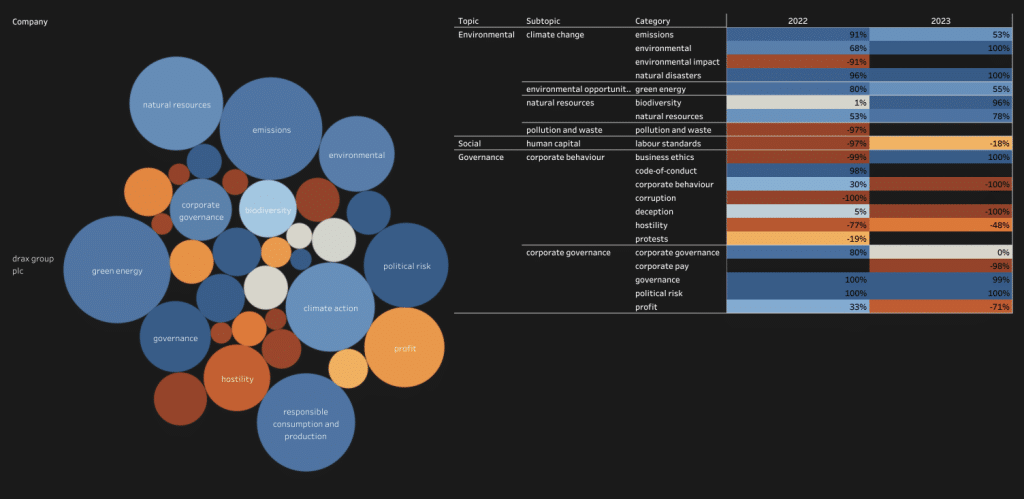
Drax Group ESG Public Sentiment

to access our company ESG Reports dashboard with 7000 comprehensive live reports click here

Initiatives to Address Climate Change

Drax Group has set an ambitious target of becoming a carbon negative business by 2030. To achieve this, Drax has embarked on several ground-breaking initiatives. One such initiative has been reducing its generation Scope 1 and 2 carbon emissions by approximately 99% since 2012. The group is also actively investing in the UK’s journey towards a net zero economy and is collaborating with the University of Nottingham and Promethean Particles on an innovative new carbon capture technology.

In a further bid to achieve its carbon-negative goal, Drax Group has recently signed a Memorandum of Understanding (MoU) with Respira International, an impact-driven carbon finance business. This agreement has the potential to lead to the largest volume of carbon dioxide removals (CDRs) traded so far globally. Under this MoU, Respira will be able to secure up to 2 million metric tonnes of CDRs from Drax over a five-year period. These CDRs are linked to the future deployment of Drax’s pioneering Bioenergy with Carbon Capture and Storage (BECCS) technology in North America.

The CDRs that Respira purchases from Drax will then be sold on a voluntary carbon market. This will enable corporations and financial institutions to buy these CDRs and achieve their own carbon emissions reduction targets. 

This agreement between Drax and Respira is expected to play a pivotal role in the development of voluntary carbon markets globally and the deployment of BECCS. It showcases the increasing demand for engineered carbon removals and the supportive policies being developed by progressive governments in the US and UK. This deal is likely to stimulate the necessary investment to kickstart a new sector of the economy, potentially creating tens of thousands of jobs. It represents a landmark moment for Drax, the fight against climate change, and the global transition towards a sustainable future.

Achieving Carbon Negative Goal by 2030

To achieve its carbon negative goal by 2030, Drax Group plans to close its two remaining coal-fired power generation units at Drax Power Station, use bioenergy with carbon capture and storage (BECCS) to remove more CO2 from the atmosphere than is emitted during power generation, and submit plans to build the world’s largest carbon capture and storage project. 

What is the BECCS technology that Drax is using?

ECCS, or Bioenergy with Carbon Capture and Storage, is a technology that provides reliable, renewable power while simultaneously removing carbon dioxide from the atmosphere. It’s considered a critical technology required globally to combat climate change.

Drax Group’s Role in the Supply Chain

Drax Group’s commitment to sustainability extends beyond its own operations to its supply chain. The company recognises the importance of ensuring that its suppliers also adhere to high environmental and social standards. This is particularly relevant given the company’s reliance on biomass as a key source of renewable energy. Drax Group has implemented stringent supplier selection criteria and conducts regular audits to ensure compliance with its sustainability standards.

The Impact of Regulatory Changes on Drax Group

The regulatory landscape for ESG is rapidly evolving, and companies like Drax Group are continuously adapting to these changes. The European Commission’s recent proposal on ESG rating regulation is one such development that could have significant implications for the company. By standardising ESG ratings, the proposal aims to enhance transparency and comparability across companies and sectors.

The Role of Technology in Drax Group’s ESG Journey

Technology plays a crucial role in Drax Group’s ESG journey. From using innovative carbon capture technology to achieve its carbon negative goal, to leveraging data analytics for real-time monitoring of its ESG performance, the company is at the forefront of using technology to drive sustainability.

The Future of Drax Group’s ESG Performance

Looking ahead, Drax Group is well-positioned to continue improving its ESG performance. The company’s ambitious goals, combined with its commitment to transparency and accountability, set a strong foundation for future progress. However, achieving these goals will require ongoing effort, innovation, and collaboration with various stakeholders.

In conclusion, Drax Group’s ESG performance is a testament to the company’s commitment to sustainability. As the company continues to innovate and adapt, it serves as a model for other companies striving to improve their own ESG performance.

For more insights into how companies can improve their supply chain resilience through ESG due diligence, check out our article on Improving Supply Chain Resilience. To understand the implications of the EU Parliament’s approval of the Supply Chain Due Diligence Directive, read our EU Parliament Approves Supply Chain Due Diligence Directive article. 

Our experts are always happy to provide guidance on ESG regulations –  reach out to us over email.

[wpforms id=”16023″ title=”false” description=”false”]

Prologis ESG: Building a sustainable future

Prologis Inc is a leader in the logistics real estate industry, and their commitment to environmental, social, and governance (ESG) practices has set them apart. In this article, we will delve into Prologis ESG initiatives and their ESG score/rating, demonstrating the company’s dedication to sustainable business practices.

What does ESG stand for and why is it important?

ESG stands for Environmental, Social, and Governance. These three components encompass the impact of a company’s operations on the environment, its relationships with employees, customers, and communities, and its approach to governance practices. ESG is crucial as it helps investors, stakeholders, and customers identify responsible companies that are committed to sustainability and ethical business practices.

ESG trends and opportunities

As ESG continues to gain importance in the business world, several trends and opportunities are emerging, such as:

  1. Integration of ESG factors into investment decisions: Investors are increasingly considering ESG performance when evaluating companies, making it essential for businesses like Prologis to maintain a strong ESG profile.

  2. Focus on climate change and carbon emissions: With growing awareness about climate change, companies are expected to demonstrate their commitment to reducing their carbon footprint. Prologis’ use of renewable energy and green building standards positions them well in this regard.

  3. Emphasis on social and governance factors: Companies are expected to pay more attention to employee well-being, diversity and inclusion, and ethical governance practices. Prologis’ commitment to these areas sets a positive example for other businesses to follow.

For more insights on ESG trends, you can check out ESG trends 2023: Outlook, opportunities & challenges.

Prologis ESG efforts: A closer look

The current director of ESG at Prologis is Samantha Klug, a seasoned professional with years of experience in sustainability and ESG matters. Under her guidance, Prologis has made significant strides in their ESG initiatives and developed a reputation as a responsible corporate citizen.

This is evidenced by their comprehensive ESG initiatives and high ESG score/rating. Let’s examine some of their key efforts in each ESG component:

  1. Environmental: Prologis is committed to minimizing their environmental impact through energy efficiency, renewable energy, and resource conservation. They have implemented green building standards and use solar energy to power their facilities, reducing greenhouse gas emissions.

  2. Social: The company’s dedication to employee well-being, diversity, and inclusion is evident in their corporate culture. They also invest in local communities by providing education and job opportunities through their Community Workforce Initiative.

  3. Governance: Prologis maintains a strong commitment to transparency, accountability, and ethical governance, as highlighted in their corporate governance practices.

ESG controversy and Prologis’ response

Why is ESG controversial? ESG can be controversial because not everyone agrees on the best methods to measure and report ESG performance. Critics argue that there is a lack of standardized ESG metrics, which can make it challenging for investors to compare companies accurately. Furthermore, some claim that ESG initiatives are merely superficial “greenwashing” tactics that don’t result in meaningful change.

Despite the controversy, Prologis has been proactive in addressing these concerns by adopting transparent reporting practices and providing detailed information about their ESG initiatives. They actively engage with stakeholders and adhere to internationally recognized frameworks, ensuring their ESG efforts are genuine and impactful.

Comparing Prologis to other companies

How does Prologis’ ESG performance stack up against other leading companies? Following Permutable AI’s ESG reports, Prologis Inc scores the following on ESG metrics:  estat

Prologis Inc ESG Ratings

You can explore ESG reports for various companies, such as:

By reviewing these reports, you can get a better understanding of how Prologis compares to its peers in terms of ESG initiatives and performance.

The future of ESG and Prologis

As the world becomes more focused on sustainable practices and ESG performance, companies like Prologis will need to continue evolving and adapting to maintain their leadership in this space. Here are some steps that Prologis and other businesses can take to stay ahead of the curve:

  1. Embrace new ESG standards and frameworks: As ESG measurement evolves and new frameworks emerge, companies must stay informed and adapt their practices accordingly to remain competitive.

  2. Invest in innovation and new technologies: Prologis can continue to lead the way in sustainability by investing in cutting-edge technologies that improve energy efficiency, reduce waste, and lower carbon emissions.

  3. Expand community engagement and social initiatives: By deepening their commitment to local communities, businesses like Prologis can create a lasting positive impact and foster goodwill among stakeholders.

  4. Promote transparency and accountability: As demands for transparency grow, Prologis should continue to provide detailed information about their ESG initiatives and engage in open dialogue with stakeholders to address concerns and share best practices.

In summary

As ESG becomes increasingly important in the business world, companies like Prologis will need to stay ahead of the curve and adapt their practices to maintain their leadership in the industry. By embracing new standards, investing in innovation, expanding community engagement, and promoting transparency, Prologis can continue to set a positive example for others to follow. Moreover, their strong ESG profile will help them attract top talent and loyal customers, ensuring long-term success and growth.

For more information on sustainability and ESG in business, don’t forget to explore these insightful articles:

 Get in touch:

[wpforms id=”16023″ title=”false” description=”false”]
HSBC ESG: An in-depth analysis of the bank’s sustainability efforts

In today’s rapidly evolving financial landscape, understanding the importance of ESG (Environmental, Social, and Governance) factors in banking is crucial. In this article, we dive into the ESG review of HSBC to uncover what sets it apart as a sustainable bank and how it compares to other industry leaders.

HSBC’s ESG Performance and Rating

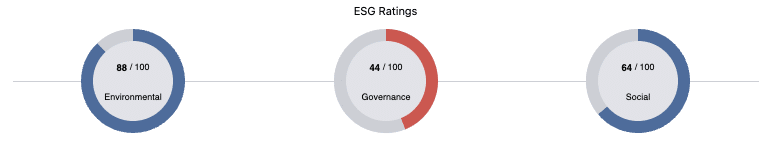
HSBC’s commitment to ESG is reflected in their efforts to promote sustainable practices and uphold strong governance. This includes investing in renewable energy, implementing responsible lending policies, and fostering a diverse and inclusive workplace. Their ESG rating, as assessed by top rating agencies, provides valuable insight into the bank’s sustainability performance. Permutable AI ranks HSBC as having a rating of 88 in environmental, 44 in governance, and 64 in social: 

HSBC ESG Ratings

To access the full analysis and rating, head over to  Permutable AI ESG Reports Home Page.

The Role of ESG at HSBC

ESG is important to HSBC because it allows the bank to stay competitive and future-proof its business model. By addressing environmental, social, and governance concerns, HSBC can better manage risks, attract investors, and ensure long-term value creation. The head of ESG at HSBC is responsible for overseeing the bank’s sustainability strategy and ensuring alignment with global ESG standards. This individual plays a critical role in driving HSBC’s commitment to responsible banking and shaping the organisation’s sustainable future.

Sustainable Banking: HSBC and Industry Leaders

Yes, HSBC is a sustainable bank. Their ESG performance demonstrates a strong commitment to addressing environmental and social issues, while maintaining robust governance practices. The bank is actively working towards reducing its carbon footprint and promoting responsible lending to create a more sustainable financial sector.

When it comes to ESG performance, HSBC is undoubtedly among the top contenders. Other banks with strong ESG credentials include Goldman Sachs, JPMorgan Chase, and Morgan Stanley. These institutions have demonstrated their commitment to sustainability by prioritising ESG integration, setting ambitious climate targets, and promoting responsible business practices.

ESG in Banking: Challenges and Opportunities

ESG means that banks must prioritise the integration of environmental, social, and governance factors into their operations and decision-making processes. By doing so, they can better manage risks, enhance their reputation, and ultimately, drive long-term value creation for stakeholders. While HSBC has historically invested in fossil fuels, the bank is now actively transitioning towards a low-carbon economy. This includes setting ambitious climate targets and increasing investments in renewable energy projects. However, as with many financial institutions, complete divestment from fossil fuels remains a complex and ongoing process.

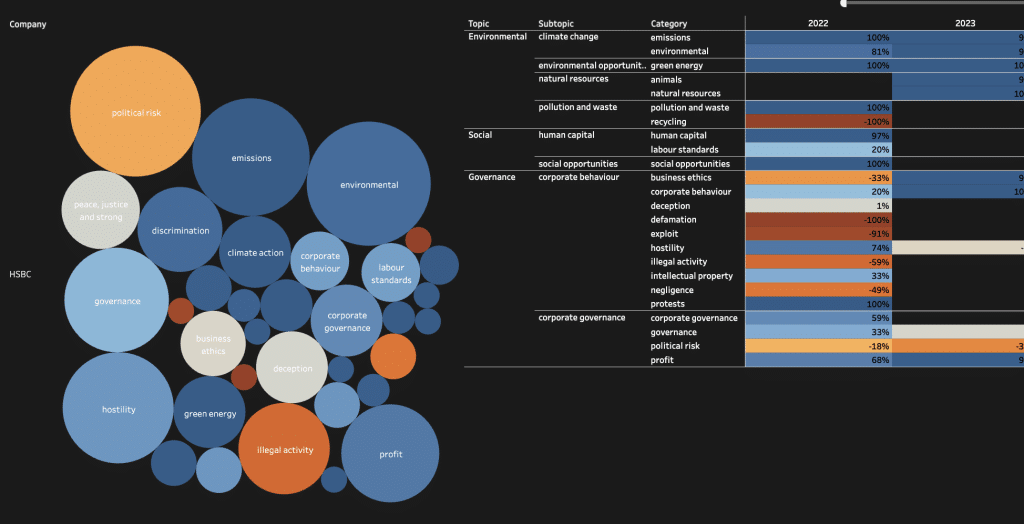
The benefit of ESG to a bank lies in the ability to manage risks, attract investors, and build long-term value. By prioritising ESG integration, banks can better navigate a rapidly changing financial landscape and ensure their business model remains resilient and future-proof. This ties into the impact public sentiment has on a company’s market performance. Public sentiment is increasingly becoming a major driver in investment success. By reigning in the factors affecting a company’s public sentiment you can focus on better long term prospects. Here is a snippet of Permutable’s public sentiment dashboard on HSBC: 

HSBC Public Sentiment Rating

Evaluating ESG Funds and Rating Agencies

There are numerous ESG rating agencies, each with its methodology and focus. Some of the most reputable agencies include MSCI, Sustainalytics, and the Carbon Disclosure Project (CDP). However, an emerging leader in the ESG analytics space is Permutable AI, an award-winning platform that provides valuable insights into a company’s ESG performance, helping investors make informed decisions.

While ESG funds are designed to invest in companies with strong ESG credentials, the degree to which they align with sustainable practices can vary. Investors should carefully review the fund’s criteria, methodology, and holdings to ensure that their investments genuinely align with their ESG values. Conducting thorough due diligence and consulting reputable ESG rating agencies, such as Permutable AI, can help investors make well-informed decisions

HSBC’s ESG Initiatives and the Future of Sustainable Banking

HSBC has implemented numerous initiatives to demonstrate its commitment to ESG principles. A few notable examples include:

  • Climate Ambitions: HSBC has set ambitious goals to align its financing activities with the Paris Agreement, aiming to achieve net-zero carbon emissions by 2050. As part of this strategy, the bank

    has pledged to provide $1 trillion in sustainable financing and investments by 2030.

  • Responsible Lending Policies: HSBC has developed stringent lending policies that take into account the environmental and social risks associated with financing projects. This includes avoiding financing projects that have a significant negative impact on climate, biodiversity, or local communities.

  • Diversity and Inclusion: HSBC is dedicated to fostering a diverse and inclusive workplace, promoting equal opportunities and implementing policies to address discrimination and harassment. The bank’s diversity and inclusion initiatives cover a wide range of areas, such as gender equality, LGBTQ+ rights, and support for people with disabilities.

Comparing HSBC to Other Banks

To better understand HSBC’s ESG performance, it’s essential to compare the bank with its industry peers. The following is a brief comparison of HSBC’s ESG efforts with those of other leading banks:

  • Goldman Sachs: Like HSBC, Goldman Sachs has made significant strides in ESG integration. Their ESG report highlights the bank’s commitment to sustainable finance, climate risk management, and diversity and inclusion.
  • JPMorgan Chase: JPMorgan Chase is another bank with a strong focus on ESG principles. The bank’s ESG report showcases its efforts to reduce its environmental impact, promote financial inclusion, and ensure robust governance practices.
  • Morgan Stanley: Morgan Stanley has been proactive in addressing ESG concerns, as evidenced by their ESG report. The bank has made considerable investments in renewable energy and has implemented responsible lending policies that prioritise sustainability.

The Future of ESG in Banking

As ESG continues to gain momentum in the financial sector, banks like HSBC, Goldman Sachs, JPMorgan Chase, and Morgan Stanley will play a vital role in shaping the industry’s sustainable future. Here are some key trends and challenges to watch for in the coming years:

  • Regulatory Changes: Governments worldwide are increasingly implementing regulations that require banks to integrate ESG considerations into their operations. Banks must stay up-to-date with these regulatory changes to ensure compliance and mitigate potential risks.
  • Technology Integration: Advancements in technology, such as artificial intelligence and blockchain, have the potential to revolutionise ESG in banking. Banks must be agile and adapt to these new technologies to improve their ESG data collection, analysis, and reporting capabilities.
  • Stakeholder Expectations: As stakeholders increasingly demand greater transparency and accountability from banks regarding their ESG performance, banks must enhance their ESG reporting and communication strategies to meet these expectations.
  • Green Finance: As the demand for green finance grows, banks will need to develop innovative financing solutions to support sustainable projects and help clients transition to a low-carbon economy.

By proactively addressing these trends and challenges, HSBC and other banks can further enhance their ESG performance, create long-term value for stakeholders, and contribute to a more sustainable future.

Conclusion

In conclusion, HSBC’s ESG review highlights the bank’s strong commitment to sustainability and responsible banking practices. As the financial sector continues to evolve, it’s crucial for banks like HSBC to proactively address emerging trends and challenges related to ESG. By doing so, they can effectively manage risks, attract investors, and contribute to a more sustainable future, ultimately creating long-term value for all stakeholders.

To further explore ESG in the banking sector, check out the following resources:

For more information on ESG reports of leading companies, visit the Permutable AI ESG Reports Home Page and explore the reports of companies like Apple, Microsoft, Amazon, Facebook , Nike.

Get in touch

[wpforms id=”16023″ title=”false” description=”false”]
BlackRock’s ESG rating: A leader in sustainable investing

BlackRock, the world’s largest asset manager, is at the forefront of ESG (Environmental, Social, and Governance) investing. With a deep understanding of the importance of sustainability and ethical practices, the company is increasingly using ESG factors to inform its investment decisions. This article will explore BlackRock’s ESG rating, what ESG means to companies and investors, and how BlackRock is shaping the future of responsible investing.

What is ESG with BlackRock?

ESG refers to the three key factors that determine a company’s commitment to sustainability and ethical practices: Environmental, Social, and Governance. ESG investing is a growing trend in the financial sector, as more investors recognize the need for responsible investment practices that take into account a company’s long-term impact on society, the environment, and its stakeholders.

As a leader in the investment world, BlackRock has committed itself to integrating ESG factors into its investment process. But does BlackRock have ESG? The answer is a resounding yes. The company offers a wide range of ESG-focused investment products and has adopted a proactive approach to responsible investing.

How does BlackRock use ESG?

BlackRock uses ESG data to evaluate companies’ performance and make informed investment decisions. By analyzing ESG factors, BlackRock can better understand the risks and opportunities associated with a particular investment. This approach allows the company to select companies with strong ESG practices, which are more likely to succeed in the long term.

Who runs ESG at BlackRock? The company’s ESG efforts are led by a dedicated team of experts, who work together to develop and implement ESG strategies across the organisation. This team collaborates closely with BlackRock’s broader investment teams to ensure that ESG factors are integrated into the investment decision-making process.

What does ESG mean to companies and investors?

For companies, ESG represents a commitment to responsible business practices and long-term value creation. A strong ESG rating can help companies attract investors, reduce risk, and improve their reputation. For investors, ESG investing is about aligning their investments with their values and supporting companies that contribute positively to society and the environment.

ESG is increasingly important in various areas of finance, such as private equity and investing. In private equity, ESG factors are being used to assess potential investments, while ESG investing is a growing trend among retail and institutional investors.

Is BlackRock ethical?

BlackRock’s commitment to ESG investing reflects its belief in the importance of ethical and responsible investment practices. The company has been recognised for its efforts in this area, with a strong ESG rating that places it among the leaders in sustainable investing.

However, it is essential to understand that ESG ratings are not the only way to evaluate a company’s ethical standing. There are other factors to consider, such as the company’s supply chain emissions. For instance, nearly 60% of companies fail to report on a supply chain emission category, according to Permutable AI.

Who ranks ESG companies?

Several organisations and agencies provide ESG ratings for companies, including MSCI, Sustainalytics, and Permutable AI. These agencies analyse a company’s ESG performance based on various criteria, such as environmental impact, social responsibility, and corporate governance.

Permutable AI offers detailed ESG reports for numerous companies, including Apple, Microsoft, Amazon, Alphabet (Google), Facebook, and Nike. These reports provide valuable insights into a company’s ESG performance and help investors make informed decisions.

The Future of ESG and BlackRock

With ESG investing becoming more mainstream, it is crucial for companies to stay ahead of the curve and address the challenges and opportunities associated with sustainable business practices. BlackRock, as an industry leader, plays a vital role in shaping the future of ESG investing.

As we look forward to ESG trends in 2023, we can expect to see continued growth in sustainable investing, as well as increased focus on areas such as carbon risk management and the role of carbon offsetting in addressing climate change. To learn more about these topics, check out the following resources from Permutable AI:

The Importance of ESG Ratings and Scores

With the growing interest in ESG investing, ESG ratings and scores have become an essential tool for investors to evaluate a company’s commitment to sustainability and ethical practices. These ratings and scores are based on a wide range of criteria, which vary depending on the rating agency. Some common factors include a company’s environmental impact, social responsibility, and corporate governance practices.

An ESG rating or score provides investors with a benchmark to compare companies within the same industry and make more informed investment decisions. A high ESG rating is an indication that a company is managing its environmental, social, and governance risks effectively and is likely to perform better in the long term. Conversely, a low ESG rating may signal potential risks and vulnerabilities that could affect the company’s performance. Public sentiment is increasingly becoming a driver in investment opportunities and success. 

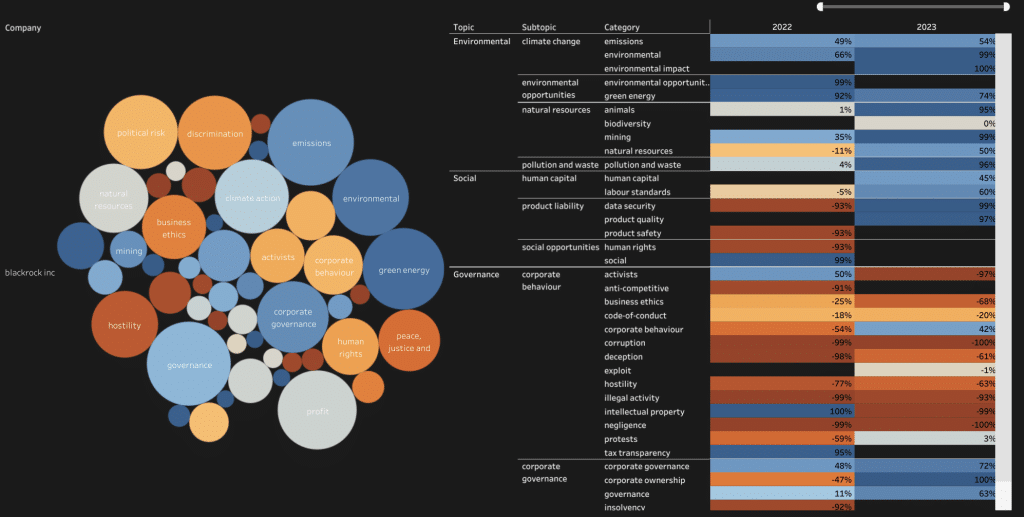
Blackrock Public Sentiment analysis
 

ESG Integration: A Growing Trend in Asset Management

BlackRock’s focus on ESG investing is part of a broader trend in the asset management industry. Increasingly, asset managers are recognising the value of integrating ESG factors into their investment processes to make better-informed decisions, manage risks, and generate long-term value for their clients.

As more institutional and retail investors demand sustainable investment options, asset managers must adapt and develop new strategies to meet these changing preferences. By incorporating ESG factors into their investment process, asset managers can provide clients with a more comprehensive understanding of a company’s long-term prospects and identify potential risks and opportunities that traditional financial analysis may not capture.

The Role of ESG Ratings in Investment Decision-Making

When considering an investment in a company, BlackRock uses ESG ratings to assess the company’s performance across a range of sustainability and ethical criteria. This allows the asset manager to make more informed decisions and select companies with strong ESG practices that are more likely to succeed in the long term.

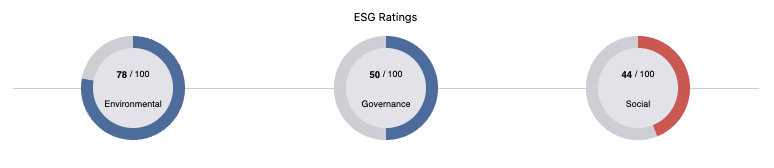
In addition to using ESG ratings to guide investment decisions, BlackRock also engages with companies on ESG issues to encourage improvements in their practices. This proactive approach helps BlackRock build a more sustainable and resilient investment portfolio, while also contributing to positive change in the companies it invests in. Following is Permutable’s ESG ratings for BlackRock:

Blackrock ESG Ratings

Challenges and Opportunities in ESG Investing

While ESG investing presents a wealth of opportunities for investors and companies alike, it is not without its challenges. One of the most significant challenges is the lack of standardized ESG reporting and metrics. This makes it difficult for investors to compare companies’ ESG performance accurately and assess the true impact of their investments.

Despite these challenges, there are several opportunities for companies and investors to capitalize on the growing demand for ESG investments. Companies that demonstrate strong ESG practices can attract more investment, reduce risks, and improve their reputation. Investors, on the other hand, can support companies that contribute positively to society and the environment while generating long-term value for their portfolios.

The Future of ESG Ratings and Reporting

As ESG investing continues to gain traction, there is a growing need for more transparent and standardized ESG reporting. Investors, regulators, and other stakeholders are increasingly calling for companies to disclose their ESG performance more consistently and comprehensively.

In response to these demands, several initiatives are underway to develop standardized ESG reporting frameworks and metrics. These initiatives aim to improve the quality and comparability of ESG data, making it easier for investors to assess a company’s ESG performance and make more informed investment decisions.

As the largest asset manager in the world, BlackRock has a unique opportunity to drive change in ESG reporting and promote the adoption of best practices across the industry. By advocating for more transparent and standardized ESG reporting, BlackRock can help ensure that ESG investing continues to grow and evolve in a way that benefits both investors and society as a whole.


Conclusion: BlackRock’s ESG Commitment and the Future of Sustainable Investing

BlackRock’s strong ESG rating is a testament to its dedication to sustainable investing and incorporating ESG factors into its investment decisions. As the world’s largest asset manager, BlackRock has the power to shape the future of responsible investing and drive meaningful change in the investment industry.

The continued growth of ESG investing presents both challenges and opportunities for companies and investors. As the demand for ESG investments increases, companies must adapt their practices and reporting to meet the evolving expectations of investors and other stakeholders. Investors, in turn, must refine their approach to evaluating companies’ ESG performance and ensure they are making informed decisions based on reliable and comparable data.

By actively promoting ESG integration and advocating for more transparent and standardized ESG reporting, BlackRock is well-positioned to lead the industry in sustainable investing. As the company continues to build on its ESG commitments and expand its range of ESG-focused investment products, it will play a crucial role in shaping the future of responsible investing and creating long-term value for both its clients and society as a whole.

In summary, BlackRock’s ESG rating demonstrates the company’s commitment to responsible investing and the integration of ESG factors into its investment process. As the importance of sustainability and ethical practices continues to grow, BlackRock will undoubtedly remain at the forefront of the ESG investing movement, setting the standard for ethical and responsible investment practices. With ongoing developments in ESG reporting and the increasing demand for sustainable investment options, BlackRock’s commitment to ESG integration is set to drive meaningful change in the investment industry and contribute to a more sustainable and resilient global economy.

Get in touch for our full sustainability analytics tools and comprehensive datasets.

[wpforms id=”16023″ title=”false” description=”false”]
McDonald’s ESG Score: Unwrapping the fast-food giant’s sustainability efforts

You’ve probably heard the buzz around ESG (Environmental, Social, and Governance) scores, and how they reflect a company’s sustainability and ethical practices. With climate change and social issues dominating the headlines, businesses are scrambling to improve their ESG scores. One company you might be curious about is McDonald’s, the global fast-food behemoth. So, let’s unravel their ESG performance and discover what’s cooking behind the Golden Arches.

A Quick ESG Refresher

To fully understand McDonald’s ESG score, let’s take a moment to recap the three main pillars that make up these scores:

  1. Environmental: Measures a company’s impact on the planet, such as waste management, carbon emissions, and resource conservation.
  2. Social: Examines a company’s relationships with employees, customers, and communities, considering factors like labor practices, diversity, and human rights.
  3. Governance: Looks at a company’s management structure, board composition, and transparency, taking into account things like executive compensation, shareholder rights, and business ethics.

To learn more about the 2023 ESG trends to be aware of, make sure you read about the rise of litigation of ESG companies and inform yourself about how to approach ESG.

McDonald’s ESG Score: Flipping Through the Numbers

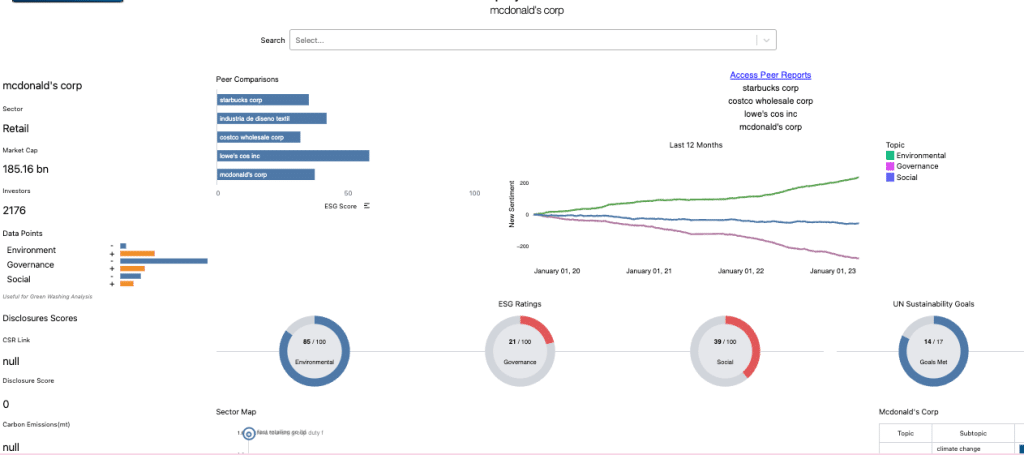
McDonald's ESG SCORE

Now that we’re all on the same page, let’s break down McDonald’s ESG performance, one pillar at a time.

Environmental Performance: Turning Up the Heat on Sustainability

As a fast-food leader, McDonald’s environmental footprint is massive. However, they’ve been making strides to reduce their impact:

  • Energy Efficiency: McDonald’s has installed energy-saving technologies like LED lighting and high-efficiency kitchen equipment in their restaurants.
  • Waste Reduction: They’re working towards recycling 100% of guest packaging by 2025 and committing to sustainable packaging materials.
  • Sustainable Sourcing: McDonald’s sources ingredients from suppliers who follow sustainable agricultural practices and aims for 100% sustainable coffee, fish, and palm oil.
  • Climate Action: McDonald’s has set a target to reduce greenhouse gas emissions by 36% by 2030 (compared to 2015) and achieve net-zero emissions by 2050.

Despite these efforts, there’s still room for improvement in areas like deforestation and water usage.

Social Performance: Serving Up Goodwill and Fairness

McDonald’s social performance showcases their commitment to employees, customers, and communities:

  • Employee Relations: McDonald’s offers training, development, competitive benefits, and promotes diversity and inclusion in the workplace.
  • Customer Health and Safety: They’ve introduced healthier menu options, reduced sodium levels, and provided nutritional information for customers.
  • Community Engagement: McDonald’s is involved in charitable initiatives, such as Ronald McDonald House Charities, supporting families of seriously ill children.

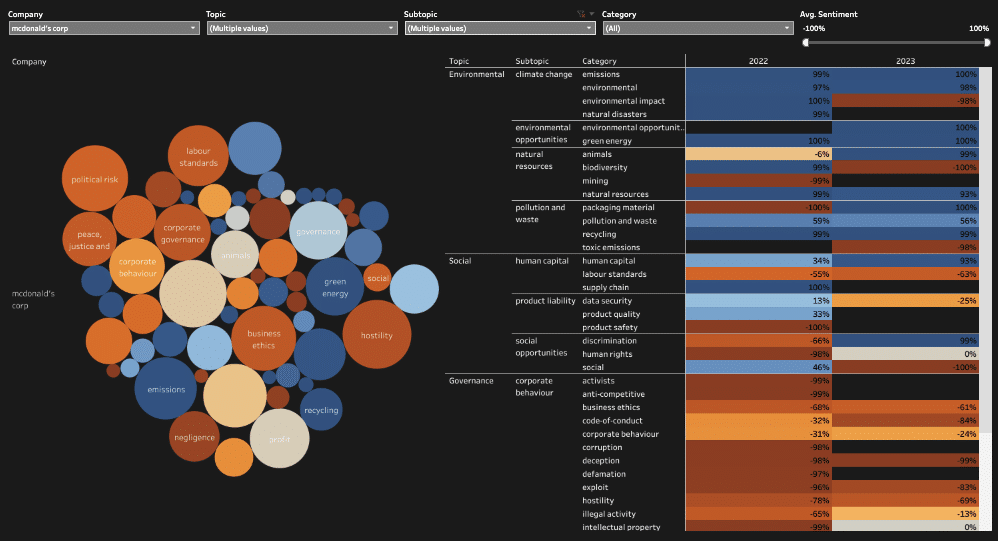
However, they continue to face challenges related to labor practices and employee satisfaction. Here’s a sneak peak of Permutable AI’s public sentiment ESG analyses on McDonalds.

McDonald's ESG public sentiment

Governance Performance: Cooking Up a Transparent and Ethical Recipe

McDonald’s governance performance is vital to their ESG score, with key aspects including:

  • Board Structure: McDonald’s board is diverse, with a majority of independent directors and a clear separation between CEO and Chairman roles.
  • Ethical Conduct: They have a comprehensive Code of Conduct, outlining ethical business practices and guidelines for employees and suppliers.
  • Transparency and Reporting: McDonald’s publishes annual sustainability reports, discloses ESG-related progress, and engages with stakeholders to gather feedback.

There’s still work to be done regarding executive compensation and shareholder rights.

McDonald’s ESG Score: Comparing Burgers and Industry Peers

McDonald’s ESG score shows their ongoing efforts to improve, but there’s still room for growth, especially in environmental performance. When compared to other fast-food companies, McDonald’s ESG score is pretty much on par. However, they need to keep prioritising ESG initiatives to stand out and stay competitive in the industry. 

McDonald's ESG Report

The Future of McDonald’s ESG Performance: Super-Sizing Sustainability

As the world becomes increasingly focused on sustainability and corporate responsibility, it’s crucial for McDonald’s to continue addressing its ESG challenges and building on its successes. Here are some areas where the company could further improve its ESG performance:

  • Innovative Environmental Solutions: McDonald’s could explore new technologies and initiatives to further reduce its carbon emissions, water usage, and waste generation.
  • Strengthening Labor Practices: By addressing concerns related to employee satisfaction and labor rights, McDonald’s can enhance its social performance and reinforce its commitment to its workforce.
  • Enhanced Governance Practices: McDonald’s should continue to review and refine its governance practices, ensuring the company remains transparent, accountable, and focused on ethical conduct.

As a real estate giant, McDonald’s must also consider the environmental impact of their properties and leverage their influence to drive sustainable practices across their vast network. With AI and ML tools like those provided by Permutable AI, McDonald’s can dive deeper into sustainability analytics and make informed decisions to improve their ESG efforts. 

By prioritising ESG performance and driving improvements in these areas, McDonald’s can not only boost its ESG score but also contribute to a more sustainable and responsible business landscape. So the next time you grab a meal under the Golden Arches, remember that there’s more to McDonald’s than just burgers and fries – they’re working to make a difference in the world, one step at a time.  

McDonald’s ESG Efforts: The Ripple Effect on the Fast-Food Industry

McDonald’s commitment to enhancing its ESG performance has far-reaching implications beyond the company itself. As a global leader in the fast-food industry, McDonald’s actions can inspire change among other fast-food chains and food suppliers. When McDonald’s sets the bar higher for sustainability and ethical practices, it creates a ripple effect, driving other companies to follow suit and raise their own ESG standards. 

For instance, McDonald’s commitment to sourcing sustainable ingredients can encourage suppliers to adopt more responsible practices, ultimately leading to a greener and more ethical food supply chain. Moreover, McDonald’s efforts to reduce waste and improve energy efficiency in their restaurants can serve as a benchmark for other fast-food companies, motivating them to adopt similar measures and reduce their environmental impact.

In addition, by actively addressing social and governance issues, McDonald’s can lead the way in promoting better labor practices, workplace diversity, and corporate transparency across the fast-food industry. This not only benefits McDonald’s employees and stakeholders but also creates a more equitable and accountable business environment for everyone involved.

The Role of Consumers in Driving McDonald’s ESG Progress

As consumers, we play a crucial role in driving McDonald’s ESG progress. By expressing our concerns about sustainability and corporate responsibility, we can encourage McDonald’s to prioritise ESG initiatives and make positive changes. We can also support McDonald’s efforts by choosing to purchase more sustainable and ethically sourced products from their menu or opting for eco-friendly packaging options when available.

Furthermore, we can leverage platforms like ESG Reports by Permutable AI to stay informed about McDonald’s ESG performance and compare it with other companies like AppleMicrosoftAmazonAlphabet (Google)Facebook, and Nike. By understanding how McDonald’s ESG score stacks up against others, we can make more informed decisions about which companies to support with our purchasing power.

Wrapping It Up: McDonald’s ESG Journey Continues

In conclusion, McDonald’s ESG score reveals a company that is actively working to improve its sustainability and ethical practices. While there is still much work to be done, McDonald’s is taking important steps towards a more responsible future. By continuing to prioritise ESG initiatives and incorporating advanced tools like AI and ML for sustainability analytics, McDonald’s can lead the fast-food industry towards a more sustainable and ethical future. Another prevalent and upcoming movement to fixate and join is reducing company carbon emissions. Make sure you and your business are up to date with its regulations and policies! 

As consumers and stakeholders, we play a pivotal role in holding McDonald’s accountable for its ESG performance and driving positive change. By staying informed and making conscious choices, we can help ensure that McDonald’s continues on its journey towards a greener, more equitable, and more responsible tomorrow.

Get in touch to know more about all of Permutable AI’s analytics tools and get expert insight on use cases for your business.

[wpforms id=”16023″ title=”false” description=”false”]
ESG trends 2023: Outlook, opportunities & challenges

As the world becomes increasingly aware of the impact of business on the environment, society, and governance, Environmental, Social, and Governance (ESG) has become a critical factor for investors, regulators, and companies. The trend towards sustainability and responsible investing is accelerating, and by 2023, it is expected to be a major driver of corporate strategy and investment decisions. Companies that prioritize ESG factors are likely to be more resilient, profitable, and attractive to investors. In this article, we will explore the latest trends in ESG and what to expect in the next few years. From climate change to social justice, we will delve into the key themes that will shape the future of ESG and the implications for investors, companies, and society as a whole. Whether you are an investor, a company executive, or simply curious about the future of ESG, this article will provide you with valuable insights and perspectives. So, let’s dive in and explore the exciting world of ESG!

The Importance of ESG in Business

ESG has gained significant traction in recent years as investors, consumers, and regulators demand more transparency and accountability from corporations. ESG factors are now considered important indicators of a company’s long-term sustainability and success. Investors are increasingly integrating ESG criteria into their investment decisions, and companies are realizing that prioritizing ESG factors can lead to improved financial performance, reduced risk, and enhanced reputation.

One of the key reasons for the growing importance of ESG is the increasing recognition of the impact of climate change on businesses and society. Climate change poses significant risks and challenges for businesses, from physical risks such as extreme weather events and supply chain disruptions to transition risks such as changing regulations and market shifts. In addition, consumers and investors are becoming more conscious of the role of businesses in addressing climate change and are demanding action.

Furthermore, social and governance issues are also gaining importance. Social factors such as human rights, labour practices, and diversity and inclusion are increasingly important to consumers and employees, and companies that prioritize these factors are likely to attract and retain top talent and customers. Governance factors such as board diversity, executive compensation, and anti-corruption measures are also critical for ensuring accountability and transparency.

ESG Trends to Watch in 2023

Looking ahead to 2023, there are several key ESG trends that are likely to shape the future of business, investment, and society. These trends include:

Climate Change and Sustainability

Climate change will continue to be a major driver of ESG considerations in the coming years. As the impacts of climate change become more visible and severe, investors and consumers will demand more action from companies to reduce their carbon footprint and transition to a low-carbon economy. Companies that fail to address climate change risks may face reputational damage, regulatory action, and financial losses.

Sustainability will also be a key trend, as consumers and investors demand more sustainable products and services. Companies that prioritize sustainability will be better positioned to meet these demands and capitalize on the growing market for sustainable products and services.

Social and Human Rights Issues

Social and human rights issues will continue to be important considerations for ESG investors and consumers. Companies that prioritize human rights, labour practices, and diversity and inclusion are likely to be more successful in attracting and retaining top talent and customers. In addition, these factors can help companies avoid reputational damage and legal risks.

In particular, there will be a growing focus on social justice issues such as racial and gender equality. Companies that prioritize diversity and inclusion will be better positioned to address these issues and capitalize on the growing demand for socially responsible products and services.

Governance and Accountability

Governance and accountability will continue to be critical ESG considerations in the coming years. Companies that prioritize good governance practices such as board diversity, executive compensation, and anti-corruption measures are likely to be more successful in attracting and retaining investors and customers. In addition, these factors can help companies avoid legal and reputational risks.

Regulators are also likely to increase their focus on ESG issues, with more stringent reporting requirements and enforcement actions. Companies that prioritize ESG reporting and compliance will be better positioned to meet these requirements and avoid regulatory penalties.

Technology and Innovation

Technology and innovation will play an increasingly important role in ESG considerations. Companies that invest in technologies that reduce their environmental impact, such as renewable energy and energy-efficient products, are likely to be more successful in meeting the demands of investors and consumers. In addition, companies that prioritize innovation in areas such as social impact and governance are likely to be more successful in addressing emerging ESG challenges.

ESG Trends in Investing and Financial Performance

ESG investing has gained significant traction in recent years, with more investors integrating ESG criteria into their investment decisions. Studies have shown that companies that prioritize ESG factors tend to outperform their peers in terms of financial performance and risk management. In addition, ESG investing can help investors align their investments with their values and contribute to positive social and environmental outcomes.

In the coming years, ESG investing is likely to become even more mainstream, with more investors demanding ESG integration and more companies prioritizing ESG factors. In addition, new ESG investment products and strategies are likely to emerge, providing investors with more options for aligning their investments with their values.

ESG Trends in Regulation and Reporting

Regulators are also increasing their focus on ESG issues, with more stringent reporting requirements and enforcement actions. Companies are now required to report on their ESG performance and risks, and failure to do so can result in regulatory penalties and reputational damage.

In the coming years, ESG reporting requirements are likely to become even more stringent, with more standardized reporting frameworks and greater emphasis on materiality and impact. This will require companies to prioritize ESG reporting and ensure that their reporting is accurate and transparent so as not to fall foul of litigation.

How Businesses Can Prepare for the Future of ESG

To prepare for the future of ESG, businesses should prioritize ESG considerations in their strategy and operations. This includes:

  • Setting ambitious ESG goals and targets, and integrating these into business strategy and operations
  • Prioritizing sustainability and innovation, and investing in technologies that reduce environmental impact
  • Incorporating social and human rights considerations into business operations, and ensuring diversity and inclusion in the workforce
  • Ensuring good governance practices, and prioritizing transparency and accountability in reporting
  • Engaging with stakeholders, including investors, customers, and regulators, to understand their ESG priorities and concerns

By prioritizing ESG considerations, businesses can enhance their long-term sustainability and success, and contribute to positive social and environmental outcomes.

Conclusion

ESG is no longer a niche consideration for investors and companies. It is now a critical factor for long-term sustainability, success, and positive impact. Looking ahead to 2023, ESG considerations will continue to shape the future of business, investment, and society. From climate change to social justice, companies that prioritize ESG factors are likely to be more resilient, profitable, and attractive to investors. Investors that prioritize ESG factors are likely to align their investments with their values and contribute to positive social and environmental outcomes. Regulators that prioritize ESG considerations are likely to ensure transparency, accountability, and positive impact. In short, ESG is the future, and businesses that embrace it will be better positioned to succeed in the years ahead.

 By using our ESG data, you can stay on top of emerging ESG issues and ensure that your company is taking the necessary steps to address them. Don’t fall behind on the latest ESG trends – take action now to leverage our data and keep your company ahead of the game.

Request a demo below

[wpforms id=”16021″ title=”false” description=”false”]

The rise of ESG litigation: What companies need to know

In recent years, environmental, social, and governance (ESG) issues have become a major focus for investors, consumers, and regulators alike. As a result, companies are facing increasing scrutiny over their ESG practices, and the risk of ESG-related litigation is on the rise. From climate change and pollution to labour rights and diversity, ESG issues are now front and center in the legal landscape, and companies must be prepared to navigate this new reality. In this article, we’ll explore the rise of ESG litigation and what companies need to know to protect themselves from potential legal and reputational risks. Whether you’re a small startup or a multinational corporation, understanding the legal landscape around ESG issues is essential for staying compliant, building trust with stakeholders, and ensuring long-term success. So, let’s dive in and uncover the key insights you need to know about ESG litigation.

Understanding ESG and litigation

ESG refers to the environmental, social, and governance factors that are increasingly used by investors, consumers, and regulators to evaluate the performance of companies. ESG encompasses a range of issues, including climate change, environmental impact, labour practices, human rights, diversity and inclusion, data privacy, and more. Companies that fail to address ESG issues may face reputational damage, regulatory fines, and potential litigation.

ESG litigation refers to legal action taken against companies for alleged violations of ESG-related laws, regulations, or standards. ESG litigation can take many forms, including shareholder lawsuits, regulatory enforcement actions, and consumer class actions. ESG litigation can be costly and time-consuming, and can damage a company’s reputation and bottom line.

ESG litigation is on the rise, as investors, regulators, and consumers become more focused on ESG issues. In recent years, there has been a surge in ESG-related lawsuits, particularly in the areas of climate change and environmental impact. Companies that are unprepared for ESG litigation risk significant legal and reputational damage.

Recent examples of ESG litigation

ESG litigation has become increasingly common in recent years, as investors, regulators, and consumers seek to hold companies accountable for their ESG practices. Some recent examples of ESG litigation include:

  • In 2020, ExxonMobil faced a lawsuit from the Attorney General of Massachusetts, alleging that the company had misled investors on the risks of climate change. The case is ongoing, but could result in significant damages for ExxonMobil.
  • In 2019, Johnson & Johnson faced a lawsuit from the state of Oklahoma, alleging that the company had contributed to the opioid epidemic through its marketing of opioid painkillers. The case resulted in a $572 million settlement for the state.
  • In 2021, Amazon faced a lawsuit from the District of Columbia, alleging that the company had violated consumer protection laws by failing to provide adequate protections for workers during the COVID-19 pandemic. The case is ongoing, but could result in significant damages for Amazon.

These are just a few examples of the many ESG-related lawsuits that companies are facing. ESG litigation can be costly and time-consuming, and can damage a company’s reputation and bottom line.

The impact of litigation on businesses

ESG litigation can have a significant impact on businesses, both financially and reputationally. The costs of defending against ESG lawsuits can be significant, and can include legal fees, fines, and damages. ESG litigation can also damage a company’s reputation, leading to lost customers, decreased sales, and decreased shareholder value.

In addition to the direct costs of ESG litigation, there are also indirect costs to consider. Companies that are the subject of ESG litigation may face increased regulatory scrutiny, which can result in additional fines and penalties. ESG litigation can also lead to negative media coverage, which can damage a company’s brand and reputation.

Given the potential impact of ESG litigation on businesses, it’s important for companies to take steps to mitigate their risk.

Steps companies can take to mitigate ESG litigation risk

Companies can take a number of steps to mitigate their risk of ESG litigation. These include:

  • Conducting regular ESG assessments to identify areas of risk and opportunities for improvement.
  • Developing and implementing ESG policies and procedures that are in line with industry standards and regulatory requirements.
  • Providing regular ESG disclosures to investors and other stakeholders, including information on ESG risks and opportunities, as well as progress on ESG goals and targets.
  • Engaging with stakeholders on ESG issues, including investors, consumers, regulators, and advocacy groups.
  • Conducting due diligence on ESG issues in mergers and acquisitions, to identify potential risks and liabilities.

By taking these steps, companies can reduce their risk of ESG litigation and build trust with stakeholders.

The role of investors and shareholders in ESG litigation

Investors and shareholders play an important role in ESG litigation, as they can bring lawsuits against companies for alleged ESG violations. Shareholder lawsuits can take a number of forms, including derivative lawsuits, securities fraud lawsuits, and class actions.

Investors and shareholders can also use their influence to push companies to improve their ESG practices. This can include filing shareholder resolutions, engaging with companies on ESG issues, and divesting from companies that fail to meet ESG standards.

Given the increasing focus on ESG issues among investors and shareholders, companies that fail to address ESG risks may face significant financial and reputational consequences.

Best practices for ESG reporting and disclosure

ESG reporting and disclosure is an important tool for companies to communicate their ESG practices and performance to stakeholders. Best practices for ESG reporting and disclosure include:

  • Following established reporting frameworks, such as the Global Reporting Initiative (GRI) or the Sustainability Accounting Standards Board (SASB).
  • Providing clear and concise information on ESG risks and opportunities, including details on the company’s policies, procedures, and performance.
  • Including information on ESG risks and opportunities in financial filings, such as annual reports and 10-K filings.
  • Providing regular updates on progress towards ESG goals and targets.
  • Engaging with stakeholders on ESG issues, including responding to stakeholder inquiries and feedback.

By following these best practices, companies can improve their ESG reporting and disclosure and build trust with stakeholders.

The importance of ESG due diligence in mergers and acquisitions

ESG due diligence is an important tool for companies to identify potential ESG risks and liabilities in mergers and acquisitions. ESG due diligence can help companies to:

  • Identify potential environmental, social, and governance risks and liabilities associated with the target company.
  • Assess the target company’s ESG policies and practices, and identify areas for improvement.
  • Evaluate the potential impact of the acquisition on the company’s ESG performance.

By conducting ESG due diligence in mergers and acquisitions, companies can reduce their risk of ESG-related liabilities and ensure that they are making informed decisions.

ESG litigation trends to watch in the future

ESG litigation is likely to continue to increase in the coming years, as investors, regulators, and consumers become more focused on ESG issues. Some trends to watch in the future include:

Companies that are prepared for these trends will be better positioned to manage their ESG risks and protect their bottom line.

Resources for staying up-to-date on ESG developments

Staying up-to-date on ESG developments is essential for companies that want to stay ahead of the curve. Some resources for staying up-to-date on ESG developments include:

By staying up-to-date on ESG developments, companies can ensure that they are aware of emerging risks and opportunities.

Conclusion

ESG issues are becoming increasingly important for companies, investors, regulators, and consumers. As a result, ESG litigation is on the rise, and companies must be prepared to navigate this new reality. By understanding the legal landscape around ESG issues, conducting regular ESG assessments, and engaging with stakeholders on ESG issues, companies can reduce their risk of ESG litigation and build trust with stakeholders. Staying up-to-date on ESG developments and best practices is essential for ensuring long-term success.

Take action now to mitigate your company’s ESG risks and avoid potential litigation threats by monitoring your ESG performance in real time. Request a demo below.


Tesla ESG Score: Driving towards a sustainable future 2024 UPDATE

Tesla, the renowned electric vehicle manufacturer, has been making waves not only in the automotive industry but also in the realm of sustainable business practices. One key metric that has been gaining prominence in recent years is the Tesla ESG score.  In this article, we will delve into the significance of ESG in the business world, understand how our Tesla ESG score is calculated, and explore the impact it has on the electric vehicle market and beyond.

Understanding ESG and its Significance in the Business World

ESG has emerged as a crucial framework for evaluating the sustainability and ethical practices of companies. Environmental factors encompass the impact of a company’s operations on the planet, such as carbon emissions, waste management, and resource consumption. Social factors involve a company’s treatment of employees, customers, and communities, including diversity and inclusion, labour practices, and human rights. Governance factors assess the effectiveness of a company’s leadership, board structure, and transparency.

ESG scores are used by investors, stakeholders, and consumers to assess a company’s long-term viability and sustainability. Companies with high ESG scores are seen as more responsible and are increasingly sought after by investors looking to align their portfolios with ethical and sustainable practices. Tesla’s ESG score has become a significant benchmark in the electric vehicle market, where sustainability is at the forefront of innovation.

What is Tesla’s ESG Score and How is it Calculated?

Our Tesla ESG score is a rating that quantifies the company’s performance in environmental, social, and governance aspects. It is calculated based on various metrics using cutting-edge sentiment analysis across key indicators, including carbon emissions, energy efficiency, labour practices, employee diversity, board structure, executive compensation, and transparency.

The calculation of our Tesla ESG score involves a comprehensive evaluation of the company’s operations, policies, and disclosures based on NLP news sentiment analysis. This score provides a snapshot of how well the company is managing its environmental impact, engaging with its stakeholders, and maintaining good governance practices. According to our latest data at time of writing, the breakdown of Tesla’s ESG score is as follows: Environmental – 90, Social  –  27, Governance – 34.

Tesla ESG score

Tesla ESG Score: Impact on the Electric Vehicle Market

Tesla’s ESG score has had a significant impact on the electric vehicle market. As sustainability concerns continue to rise, consumers are increasingly focused on supporting companies that prioritize environmental responsibility. Tesla’s high ESG score has positioned the company as a leader in the industry, attracting environmentally conscious customers who are willing to invest in electric vehicles that align with their values.

Moreover, Tesla‘s strong ESG score has put pressure on other electric vehicle manufacturers to improve their sustainability practices. Competitors in the market are now striving to match Tesla’s performance and meet the growing demand for eco-friendly vehicles. This heightened competition has accelerated the adoption of sustainable technologies and practices across the industry, leading to a positive environmental impact on a larger scale.

Tesla ESG Score: A Competitive Advantage

Tesla’s ESG score not only influences consumer preferences but also provides the company with a competitive advantage. As sustainability becomes an increasingly important differentiating factor, Tesla’s strong ESG performance sets it apart from its competitors. The company’s commitment to reducing carbon emissions, promoting renewable energy, and advancing sustainable transportation has resonated with customers and investors alike.

Tesla’s focus on environmental responsibility has allowed it to build a loyal customer base and attract investors who prioritize ESG factors. This strong reputation for sustainability has translated into increased market share and higher valuations for the company. By leveraging its ESG score as a competitive advantage, Tesla has solidified its position as a leader in the electric vehicle market.

Tesla ESG Score: How it Influences Investor Decisions

ESG scores, including Tesla’s, have become critical considerations for investors making decisions about where to allocate their capital. As sustainability concerns gain prominence, investors are becoming increasingly aware of the potential risks associated with companies that fail to address ESG factors adequately. Tesla’s high ESG score has garnered attention from institutional investors and asset managers who prioritize sustainable investments.

Investors are recognizing that sustainable companies like Tesla are better equipped to navigate long-term challenges, such as climate change regulations and shifting consumer preferences. By incorporating ESG considerations into their investment strategies, investors aim to align their portfolios with their values while seeking financial returns. Tesla’s strong ESG score has positioned the company as an attractive investment opportunity for those seeking both sustainability and profitability.

Tesla’s Environmental Score

Tesla’s high environmental score in ESG ratings stems from its contributions to reducing greenhouse gas emissions and promoting sustainable energy solutions.

Zero-Emission Vehicles: Tesla’s primary focus on electric vehicles (EVs) has significantly reduced the company’s environmental impact compared to traditional gasoline-powered vehicles. EVs produce zero tailpipe emissions, which helps to improve air quality and reduce greenhouse gas emissions.

Sustainable Energy Initiatives: Tesla’s investments in renewable energy projects, such as solar panels and battery storage systems, further contribute to the company’s environmental sustainability efforts. These initiatives help to reduce reliance on fossil fuels and promote cleaner energy sources.

Circular Economy Practices: Tesla has implemented measures to promote a circular economy, such as recycling battery materials and recovering components from scrapped vehicles. These practices reduce the environmental impact of Tesla’s products throughout their lifecycle.

Supply Chain Management: Tesla has made efforts to improve the sustainability of its supply chain by sourcing materials from responsible suppliers and working to reduce the environmental impact of transportation and logistics.

Overall, Tesla’s commitment to zero-emission vehicles, sustainable energy initiatives, and circular economy practices has earned the company a high environmental score in ESG ratings. However, it is important to note that Tesla continues to face environmental challenges, such as the ethical sourcing of raw materials and the potential environmental impact of battery manufacturing.

Tesla’s Social Score

Tesla’s low social score in their ESG rating stems from several factors related to corporate governance, labour rights, and environmental concerns.

Corporate Governance: Tesla has faced criticism for its lack of transparency and accountability, particularly regarding CEO Elon Musk’s behaviour. Musk’s tweets and public statements have been deemed irresponsible and have led to regulatory scrutiny. Additionally, Tesla’s board of directors has been criticized for lacking independence and diversity.

Labour Rights: Allegations of racial discrimination and poor working conditions at Tesla’s Fremont, California, factory have raised concerns about the company’s labour practices. Workers have reported facing harassment, discrimination, and unsafe working conditions. Tesla has also been criticized for its use of temporary workers and its efforts to unionize its workforce.

Environmental Concerns: Tesla’s manufacturing processes have been criticized for their environmental impact, particularly the use of cobalt, a mineral sourced from mines with questionable labour practices. Additionally, Tesla’s self-driving technology has been involved in several accidents, raising concerns about its safety and the company’s handling of these incidents.

These factors have contributed to Tesla’s low social score in ESG ratings, highlighting the need for the company to address these issues to improve its overall ESG performance.

Tesla’s Governance Score

Tesla’s low governance score in ESG ratings stems from several factors related to corporate structure, executive compensation, and board oversight.

Corporate Structure: Tesla’s dual-class share structure, which grants CEO Elon Musk significant control over shareholder voting, raises concerns about the company’s accountability to its shareholders. This structure allows Musk to make major decisions without having to seek approval from other shareholders.

Executive Compensation: Musk’s compensation package, which is tied to the company’s financial performance and certain operational goals, has been criticized for its lack of alignment with long-term sustainability and stakeholder interests. The emphasis on short-term financial performance could lead to decisions that prioritize profits over long-term environmental and social considerations.

Board Oversight: Tesla’s board of directors has been criticized for lacking independence and diversity. The majority of board members have ties to Musk or the company’s early investors, raising concerns about their ability to objectively evaluate Musk’s actions and make decisions in the best interests of all stakeholders.

Transparency and Disclosure: Tesla has been criticized for its lack of transparency and disclosure, particularly regarding its handling of environmental and social issues. The company has been reluctant to share detailed information about its supply chain, manufacturing processes, and labor practices, making it difficult for investors and stakeholders to assess the company’s ESG risks.

Risk Management: Tesla’s approach to risk management has been questioned, particularly its handling of worker complaints and potential safety hazards related to its self-driving technology. The company’s reactive approach to these issues suggests a lack of proactive risk management practices.

These factors have contributed to Tesla’s low governance score in ESG ratings, highlighting the need for the company to strengthen its corporate governance practices to improve its overall ESG performance.

PERMUTABLE AI ESG SENTIMEN

Head over to our ESG Company Gallery to access the full version of our ESG company reports.

Comparing Tesla’s ESG Score with Other Electric Vehicle Manufacturers

When comparing Tesla’s ESG score with other electric vehicle manufacturers, it becomes evident that Tesla is leading the pack. While several companies have made strides in sustainability, Tesla’s comprehensive approach to ESG sets it apart. The company consistently outperforms its competitors in areas such as carbon emissions reduction, energy efficiency, and transparency.

Tesla’s commitment to sustainability and its ability to integrate ESG considerations into its business strategy has allowed it to maintain a significant advantage over other electric vehicle manufacturers. As the market continues to evolve, it will be crucial for competitors to improve their ESG performance to remain competitive in the industry. Why not explore Tesla’s peer ESG scores below:

– Volkswagen ESG score

– BMW ESG score 

– Audi ESG score

Porsche ESG score

Nissan ESG score

Ford ESG score


The Future of Tesla’s ESG Score and its Implications for the Industry

As sustainability becomes an increasingly important aspect of business, Tesla’s ESG score is likely to play a significant role in shaping the future of the electric vehicle market and beyond. The company’s strong ESG performance has set a high standard for the industry, pushing competitors to improve their sustainability practices and driving the adoption of electric vehicles on a global scale.

Tesla’s influence extends beyond the automotive sector, as other industries look to the company as a model for sustainable business practices. The success of Tesla’s ESG initiatives has demonstrated that profitability and sustainability can go hand in hand, inspiring companies across various sectors to prioritize environmental responsibility, social impact, and good governance.

The Role of ESG Scores in Shaping the Future of Sustainable Businesses

Tesla’s ESG score has emerged as a game-changer in the electric vehicle market and beyond. It has not only positioned the company as a leader in sustainability but has also influenced consumer preferences, investor decisions, and industry standards. Tesla’s strong ESG performance serves as a testament to the importance of environmental responsibility, social impact, and good governance in driving long-term success.

As the world continues to grapple with pressing sustainability challenges, ESG scores will play a crucial role in shaping the future of sustainable businesses. Companies that prioritize ESG factors and demonstrate a commitment to sustainability are likely to thrive in this changing landscape, while those that fail to adapt may face significant risks and challenges. Tesla’s ESG score serves as a beacon of inspiration for businesses across industries, reminding us that sustainable practices are key to building a better future for our planet and its inhabitants.

Find Out More

Looking for more nuanced ESG data on Tesla?  Fill out the form below to request more granular data.