HSBC ESG: An in-depth analysis of the bank’s sustainability efforts

In today’s rapidly evolving financial landscape, understanding the importance of ESG (Environmental, Social, and Governance) factors in banking is crucial. In this article, we dive into the ESG review of HSBC to uncover what sets it apart as a sustainable bank and how it compares to other industry leaders.

HSBC’s ESG Performance and Rating

HSBC’s commitment to ESG is reflected in their efforts to promote sustainable practices and uphold strong governance. This includes investing in renewable energy, implementing responsible lending policies, and fostering a diverse and inclusive workplace. Their ESG rating, as assessed by top rating agencies, provides valuable insight into the bank’s sustainability performance. Permutable AI ranks HSBC as having a rating of 88 in environmental, 44 in governance, and 64 in social: 
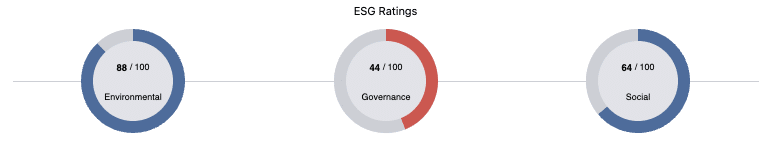
HSBC ESG Ratings

To access the full analysis and rating, head over to  Permutable AI ESG Reports Home Page.

The Role of ESG at HSBC

ESG is important to HSBC because it allows the bank to stay competitive and future-proof its business model. By addressing environmental, social, and governance concerns, HSBC can better manage risks, attract investors, and ensure long-term value creation. The head of ESG at HSBC is responsible for overseeing the bank’s sustainability strategy and ensuring alignment with global ESG standards. This individual plays a critical role in driving HSBC’s commitment to responsible banking and shaping the organisation’s sustainable future.

Sustainable Banking: HSBC and Industry Leaders

Yes, HSBC is a sustainable bank. Their ESG performance demonstrates a strong commitment to addressing environmental and social issues, while maintaining robust governance practices. The bank is actively working towards reducing its carbon footprint and promoting responsible lending to create a more sustainable financial sector.

When it comes to ESG performance, HSBC is undoubtedly among the top contenders. Other banks with strong ESG credentials include Goldman Sachs, JPMorgan Chase, and Morgan Stanley. These institutions have demonstrated their commitment to sustainability by prioritising ESG integration, setting ambitious climate targets, and promoting responsible business practices.

ESG in Banking: Challenges and Opportunities

ESG means that banks must prioritise the integration of environmental, social, and governance factors into their operations and decision-making processes. By doing so, they can better manage risks, enhance their reputation, and ultimately, drive long-term value creation for stakeholders. While HSBC has historically invested in fossil fuels, the bank is now actively transitioning towards a low-carbon economy. This includes setting ambitious climate targets and increasing investments in renewable energy projects. However, as with many financial institutions, complete divestment from fossil fuels remains a complex and ongoing process.

The benefit of ESG to a bank lies in the ability to manage risks, attract investors, and build long-term value. By prioritising ESG integration, banks can better navigate a rapidly changing financial landscape and ensure their business model remains resilient and future-proof. This ties into the impact public sentiment has on a company’s market performance. Public sentiment is increasingly becoming a major driver in investment success. By reigning in the factors affecting a company’s public sentiment you can focus on better long term prospects. Here is a snippet of Permutable’s public sentiment dashboard on HSBC: 
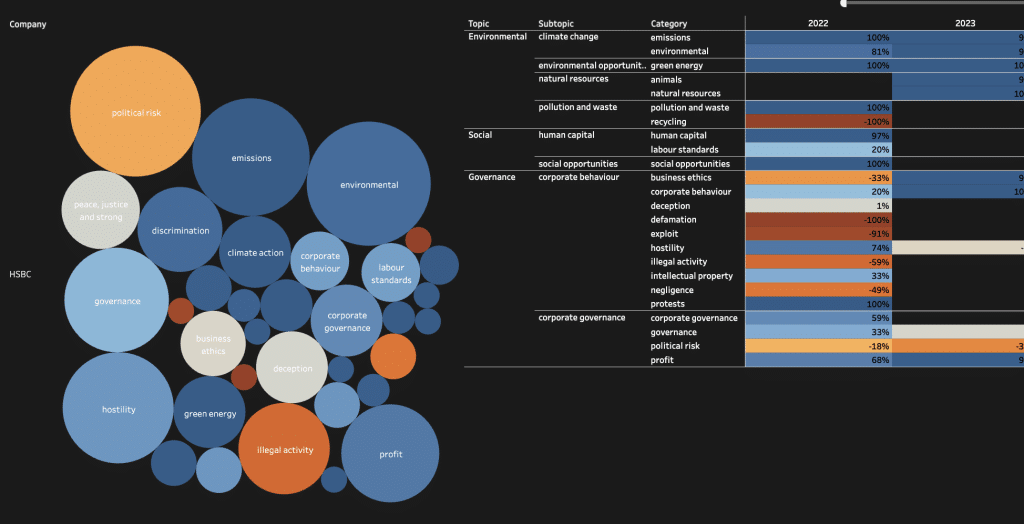
HSBC Public Sentiment Rating

Evaluating ESG Funds and Rating Agencies

There are numerous ESG rating agencies, each with its methodology and focus. Some of the most reputable agencies include MSCI, Sustainalytics, and the Carbon Disclosure Project (CDP). However, an emerging leader in the ESG analytics space is Permutable AI, an award-winning platform that provides valuable insights into a company’s ESG performance, helping investors make informed decisions.

While ESG funds are designed to invest in companies with strong ESG credentials, the degree to which they align with sustainable practices can vary. Investors should carefully review the fund’s criteria, methodology, and holdings to ensure that their investments genuinely align with their ESG values. Conducting thorough due diligence and consulting reputable ESG rating agencies, such as Permutable AI, can help investors make well-informed decisions

HSBC’s ESG Initiatives and the Future of Sustainable Banking

HSBC has implemented numerous initiatives to demonstrate its commitment to ESG principles. A few notable examples include:

  • Climate Ambitions: HSBC has set ambitious goals to align its financing activities with the Paris Agreement, aiming to achieve net-zero carbon emissions by 2050. As part of this strategy, the bank

    has pledged to provide $1 trillion in sustainable financing and investments by 2030.

  • Responsible Lending Policies: HSBC has developed stringent lending policies that take into account the environmental and social risks associated with financing projects. This includes avoiding financing projects that have a significant negative impact on climate, biodiversity, or local communities.

  • Diversity and Inclusion: HSBC is dedicated to fostering a diverse and inclusive workplace, promoting equal opportunities and implementing policies to address discrimination and harassment. The bank’s diversity and inclusion initiatives cover a wide range of areas, such as gender equality, LGBTQ+ rights, and support for people with disabilities.

Comparing HSBC to Other Banks

To better understand HSBC’s ESG performance, it’s essential to compare the bank with its industry peers. The following is a brief comparison of HSBC’s ESG efforts with those of other leading banks:

  • Goldman Sachs: Like HSBC, Goldman Sachs has made significant strides in ESG integration. Their ESG report highlights the bank’s commitment to sustainable finance, climate risk management, and diversity and inclusion.
  • JPMorgan Chase: JPMorgan Chase is another bank with a strong focus on ESG principles. The bank’s ESG report showcases its efforts to reduce its environmental impact, promote financial inclusion, and ensure robust governance practices.
  • Morgan Stanley: Morgan Stanley has been proactive in addressing ESG concerns, as evidenced by their ESG report. The bank has made considerable investments in renewable energy and has implemented responsible lending policies that prioritise sustainability.

The Future of ESG in Banking

As ESG continues to gain momentum in the financial sector, banks like HSBC, Goldman Sachs, JPMorgan Chase, and Morgan Stanley will play a vital role in shaping the industry’s sustainable future. Here are some key trends and challenges to watch for in the coming years:

  • Regulatory Changes: Governments worldwide are increasingly implementing regulations that require banks to integrate ESG considerations into their operations. Banks must stay up-to-date with these regulatory changes to ensure compliance and mitigate potential risks.
  • Technology Integration: Advancements in technology, such as artificial intelligence and blockchain, have the potential to revolutionise ESG in banking. Banks must be agile and adapt to these new technologies to improve their ESG data collection, analysis, and reporting capabilities.
  • Stakeholder Expectations: As stakeholders increasingly demand greater transparency and accountability from banks regarding their ESG performance, banks must enhance their ESG reporting and communication strategies to meet these expectations.
  • Green Finance: As the demand for green finance grows, banks will need to develop innovative financing solutions to support sustainable projects and help clients transition to a low-carbon economy.

By proactively addressing these trends and challenges, HSBC and other banks can further enhance their ESG performance, create long-term value for stakeholders, and contribute to a more sustainable future.

Conclusion

In conclusion, HSBC’s ESG review highlights the bank’s strong commitment to sustainability and responsible banking practices. As the financial sector continues to evolve, it’s crucial for banks like HSBC to proactively address emerging trends and challenges related to ESG. By doing so, they can effectively manage risks, attract investors, and contribute to a more sustainable future, ultimately creating long-term value for all stakeholders.

To further explore ESG in the banking sector, check out the following resources:

For more information on ESG reports of leading companies, visit the Permutable AI ESG Reports Home Page and explore the reports of companies like Apple, Microsoft, Amazon, Facebook , Nike.

Get in touch

[wpforms id=”16023″ title=”false” description=”false”]

McDonald’s ESG Score: Unwrapping the fast-food giant’s sustainability efforts

You’ve probably heard the buzz around ESG (Environmental, Social, and Governance) scores, and how they reflect a company’s sustainability and ethical practices. With climate change and social issues dominating the headlines, businesses are scrambling to improve their ESG scores. One company you might be curious about is McDonald’s, the global fast-food behemoth. So, let’s unravel their ESG performance and discover what’s cooking behind the Golden Arches.

A Quick ESG Refresher

To fully understand McDonald’s ESG score, let’s take a moment to recap the three main pillars that make up these scores:

  1. Environmental: Measures a company’s impact on the planet, such as waste management, carbon emissions, and resource conservation.
  2. Social: Examines a company’s relationships with employees, customers, and communities, considering factors like labor practices, diversity, and human rights.
  3. Governance: Looks at a company’s management structure, board composition, and transparency, taking into account things like executive compensation, shareholder rights, and business ethics.

To learn more about the 2023 ESG trends to be aware of, make sure you read about the rise of litigation of ESG companies and inform yourself about how to approach ESG.

McDonald’s ESG Score: Flipping Through the Numbers

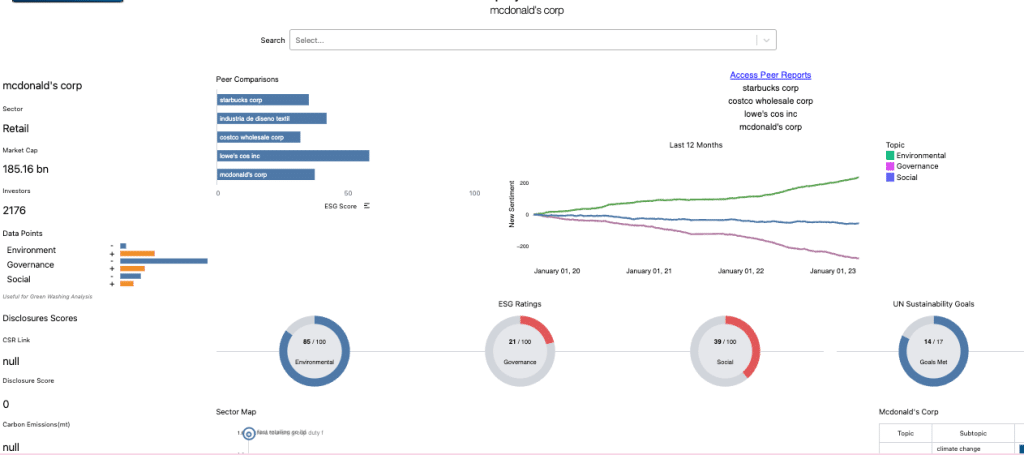
McDonald's ESG SCORE

Now that we’re all on the same page, let’s break down McDonald’s ESG performance, one pillar at a time.

Environmental Performance: Turning Up the Heat on Sustainability

As a fast-food leader, McDonald’s environmental footprint is massive. However, they’ve been making strides to reduce their impact:

  • Energy Efficiency: McDonald’s has installed energy-saving technologies like LED lighting and high-efficiency kitchen equipment in their restaurants.
  • Waste Reduction: They’re working towards recycling 100% of guest packaging by 2025 and committing to sustainable packaging materials.
  • Sustainable Sourcing: McDonald’s sources ingredients from suppliers who follow sustainable agricultural practices and aims for 100% sustainable coffee, fish, and palm oil.
  • Climate Action: McDonald’s has set a target to reduce greenhouse gas emissions by 36% by 2030 (compared to 2015) and achieve net-zero emissions by 2050.

Despite these efforts, there’s still room for improvement in areas like deforestation and water usage.

Social Performance: Serving Up Goodwill and Fairness

McDonald’s social performance showcases their commitment to employees, customers, and communities:

  • Employee Relations: McDonald’s offers training, development, competitive benefits, and promotes diversity and inclusion in the workplace.
  • Customer Health and Safety: They’ve introduced healthier menu options, reduced sodium levels, and provided nutritional information for customers.
  • Community Engagement: McDonald’s is involved in charitable initiatives, such as Ronald McDonald House Charities, supporting families of seriously ill children.

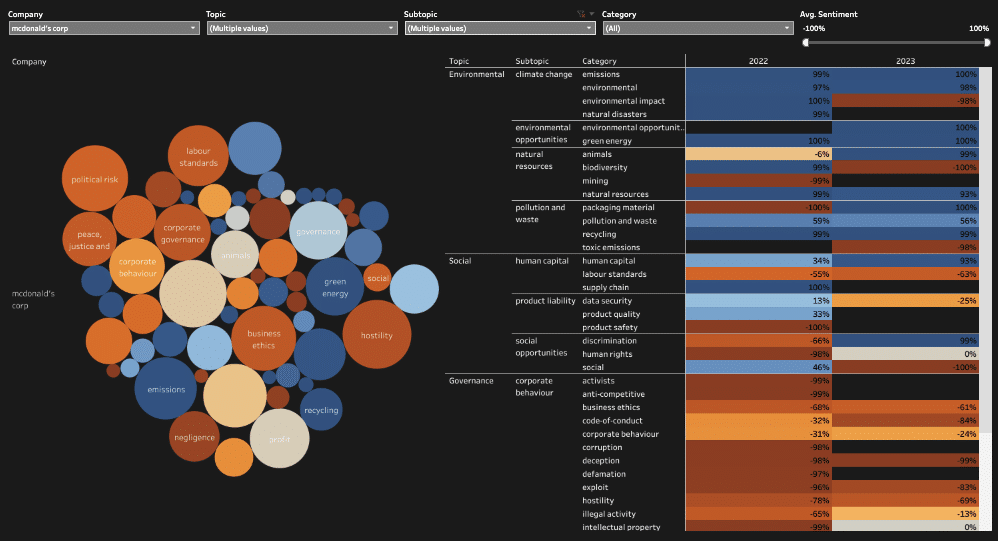
However, they continue to face challenges related to labor practices and employee satisfaction. Here’s a sneak peak of Permutable AI’s public sentiment ESG analyses on McDonalds.

McDonald's ESG public sentiment

Governance Performance: Cooking Up a Transparent and Ethical Recipe

McDonald’s governance performance is vital to their ESG score, with key aspects including:

  • Board Structure: McDonald’s board is diverse, with a majority of independent directors and a clear separation between CEO and Chairman roles.
  • Ethical Conduct: They have a comprehensive Code of Conduct, outlining ethical business practices and guidelines for employees and suppliers.
  • Transparency and Reporting: McDonald’s publishes annual sustainability reports, discloses ESG-related progress, and engages with stakeholders to gather feedback.

There’s still work to be done regarding executive compensation and shareholder rights.

McDonald’s ESG Score: Comparing Burgers and Industry Peers

McDonald’s ESG score shows their ongoing efforts to improve, but there’s still room for growth, especially in environmental performance. When compared to other fast-food companies, McDonald’s ESG score is pretty much on par. However, they need to keep prioritising ESG initiatives to stand out and stay competitive in the industry. 

McDonald's ESG Report

The Future of McDonald’s ESG Performance: Super-Sizing Sustainability

As the world becomes increasingly focused on sustainability and corporate responsibility, it’s crucial for McDonald’s to continue addressing its ESG challenges and building on its successes. Here are some areas where the company could further improve its ESG performance:

  • Innovative Environmental Solutions: McDonald’s could explore new technologies and initiatives to further reduce its carbon emissions, water usage, and waste generation.
  • Strengthening Labor Practices: By addressing concerns related to employee satisfaction and labor rights, McDonald’s can enhance its social performance and reinforce its commitment to its workforce.
  • Enhanced Governance Practices: McDonald’s should continue to review and refine its governance practices, ensuring the company remains transparent, accountable, and focused on ethical conduct.

As a real estate giant, McDonald’s must also consider the environmental impact of their properties and leverage their influence to drive sustainable practices across their vast network. With AI and ML tools like those provided by Permutable AI, McDonald’s can dive deeper into sustainability analytics and make informed decisions to improve their ESG efforts. 

By prioritising ESG performance and driving improvements in these areas, McDonald’s can not only boost its ESG score but also contribute to a more sustainable and responsible business landscape. So the next time you grab a meal under the Golden Arches, remember that there’s more to McDonald’s than just burgers and fries – they’re working to make a difference in the world, one step at a time.  

McDonald’s ESG Efforts: The Ripple Effect on the Fast-Food Industry

McDonald’s commitment to enhancing its ESG performance has far-reaching implications beyond the company itself. As a global leader in the fast-food industry, McDonald’s actions can inspire change among other fast-food chains and food suppliers. When McDonald’s sets the bar higher for sustainability and ethical practices, it creates a ripple effect, driving other companies to follow suit and raise their own ESG standards. 

For instance, McDonald’s commitment to sourcing sustainable ingredients can encourage suppliers to adopt more responsible practices, ultimately leading to a greener and more ethical food supply chain. Moreover, McDonald’s efforts to reduce waste and improve energy efficiency in their restaurants can serve as a benchmark for other fast-food companies, motivating them to adopt similar measures and reduce their environmental impact.

In addition, by actively addressing social and governance issues, McDonald’s can lead the way in promoting better labor practices, workplace diversity, and corporate transparency across the fast-food industry. This not only benefits McDonald’s employees and stakeholders but also creates a more equitable and accountable business environment for everyone involved.

The Role of Consumers in Driving McDonald’s ESG Progress

As consumers, we play a crucial role in driving McDonald’s ESG progress. By expressing our concerns about sustainability and corporate responsibility, we can encourage McDonald’s to prioritise ESG initiatives and make positive changes. We can also support McDonald’s efforts by choosing to purchase more sustainable and ethically sourced products from their menu or opting for eco-friendly packaging options when available.

Furthermore, we can leverage platforms like ESG Reports by Permutable AI to stay informed about McDonald’s ESG performance and compare it with other companies like AppleMicrosoftAmazonAlphabet (Google)Facebook, and Nike. By understanding how McDonald’s ESG score stacks up against others, we can make more informed decisions about which companies to support with our purchasing power.

Wrapping It Up: McDonald’s ESG Journey Continues

In conclusion, McDonald’s ESG score reveals a company that is actively working to improve its sustainability and ethical practices. While there is still much work to be done, McDonald’s is taking important steps towards a more responsible future. By continuing to prioritise ESG initiatives and incorporating advanced tools like AI and ML for sustainability analytics, McDonald’s can lead the fast-food industry towards a more sustainable and ethical future. Another prevalent and upcoming movement to fixate and join is reducing company carbon emissions. Make sure you and your business are up to date with its regulations and policies! 

As consumers and stakeholders, we play a pivotal role in holding McDonald’s accountable for its ESG performance and driving positive change. By staying informed and making conscious choices, we can help ensure that McDonald’s continues on its journey towards a greener, more equitable, and more responsible tomorrow.

Get in touch to know more about all of Permutable AI’s analytics tools and get expert insight on use cases for your business.

[wpforms id=”16023″ title=”false” description=”false”]
ESG trends 2023: Outlook, opportunities & challenges

As the world becomes increasingly aware of the impact of business on the environment, society, and governance, Environmental, Social, and Governance (ESG) has become a critical factor for investors, regulators, and companies. The trend towards sustainability and responsible investing is accelerating, and by 2023, it is expected to be a major driver of corporate strategy and investment decisions. Companies that prioritize ESG factors are likely to be more resilient, profitable, and attractive to investors. In this article, we will explore the latest trends in ESG and what to expect in the next few years. From climate change to social justice, we will delve into the key themes that will shape the future of ESG and the implications for investors, companies, and society as a whole. Whether you are an investor, a company executive, or simply curious about the future of ESG, this article will provide you with valuable insights and perspectives. So, let’s dive in and explore the exciting world of ESG!

The Importance of ESG in Business

ESG has gained significant traction in recent years as investors, consumers, and regulators demand more transparency and accountability from corporations. ESG factors are now considered important indicators of a company’s long-term sustainability and success. Investors are increasingly integrating ESG criteria into their investment decisions, and companies are realizing that prioritizing ESG factors can lead to improved financial performance, reduced risk, and enhanced reputation.

One of the key reasons for the growing importance of ESG is the increasing recognition of the impact of climate change on businesses and society. Climate change poses significant risks and challenges for businesses, from physical risks such as extreme weather events and supply chain disruptions to transition risks such as changing regulations and market shifts. In addition, consumers and investors are becoming more conscious of the role of businesses in addressing climate change and are demanding action.

Furthermore, social and governance issues are also gaining importance. Social factors such as human rights, labour practices, and diversity and inclusion are increasingly important to consumers and employees, and companies that prioritize these factors are likely to attract and retain top talent and customers. Governance factors such as board diversity, executive compensation, and anti-corruption measures are also critical for ensuring accountability and transparency.

ESG Trends to Watch in 2023

Looking ahead to 2023, there are several key ESG trends that are likely to shape the future of business, investment, and society. These trends include:

Climate Change and Sustainability

Climate change will continue to be a major driver of ESG considerations in the coming years. As the impacts of climate change become more visible and severe, investors and consumers will demand more action from companies to reduce their carbon footprint and transition to a low-carbon economy. Companies that fail to address climate change risks may face reputational damage, regulatory action, and financial losses.

Sustainability will also be a key trend, as consumers and investors demand more sustainable products and services. Companies that prioritize sustainability will be better positioned to meet these demands and capitalize on the growing market for sustainable products and services.

Social and Human Rights Issues

Social and human rights issues will continue to be important considerations for ESG investors and consumers. Companies that prioritize human rights, labour practices, and diversity and inclusion are likely to be more successful in attracting and retaining top talent and customers. In addition, these factors can help companies avoid reputational damage and legal risks.

In particular, there will be a growing focus on social justice issues such as racial and gender equality. Companies that prioritize diversity and inclusion will be better positioned to address these issues and capitalize on the growing demand for socially responsible products and services.

Governance and Accountability

Governance and accountability will continue to be critical ESG considerations in the coming years. Companies that prioritize good governance practices such as board diversity, executive compensation, and anti-corruption measures are likely to be more successful in attracting and retaining investors and customers. In addition, these factors can help companies avoid legal and reputational risks.

Regulators are also likely to increase their focus on ESG issues, with more stringent reporting requirements and enforcement actions. Companies that prioritize ESG reporting and compliance will be better positioned to meet these requirements and avoid regulatory penalties.

Technology and Innovation

Technology and innovation will play an increasingly important role in ESG considerations. Companies that invest in technologies that reduce their environmental impact, such as renewable energy and energy-efficient products, are likely to be more successful in meeting the demands of investors and consumers. In addition, companies that prioritize innovation in areas such as social impact and governance are likely to be more successful in addressing emerging ESG challenges.

ESG Trends in Investing and Financial Performance

ESG investing has gained significant traction in recent years, with more investors integrating ESG criteria into their investment decisions. Studies have shown that companies that prioritize ESG factors tend to outperform their peers in terms of financial performance and risk management. In addition, ESG investing can help investors align their investments with their values and contribute to positive social and environmental outcomes.

In the coming years, ESG investing is likely to become even more mainstream, with more investors demanding ESG integration and more companies prioritizing ESG factors. In addition, new ESG investment products and strategies are likely to emerge, providing investors with more options for aligning their investments with their values.

ESG Trends in Regulation and Reporting

Regulators are also increasing their focus on ESG issues, with more stringent reporting requirements and enforcement actions. Companies are now required to report on their ESG performance and risks, and failure to do so can result in regulatory penalties and reputational damage.

In the coming years, ESG reporting requirements are likely to become even more stringent, with more standardized reporting frameworks and greater emphasis on materiality and impact. This will require companies to prioritize ESG reporting and ensure that their reporting is accurate and transparent so as not to fall foul of litigation.

How Businesses Can Prepare for the Future of ESG

To prepare for the future of ESG, businesses should prioritize ESG considerations in their strategy and operations. This includes:

  • Setting ambitious ESG goals and targets, and integrating these into business strategy and operations
  • Prioritizing sustainability and innovation, and investing in technologies that reduce environmental impact
  • Incorporating social and human rights considerations into business operations, and ensuring diversity and inclusion in the workforce
  • Ensuring good governance practices, and prioritizing transparency and accountability in reporting
  • Engaging with stakeholders, including investors, customers, and regulators, to understand their ESG priorities and concerns

By prioritizing ESG considerations, businesses can enhance their long-term sustainability and success, and contribute to positive social and environmental outcomes.

Conclusion

ESG is no longer a niche consideration for investors and companies. It is now a critical factor for long-term sustainability, success, and positive impact. Looking ahead to 2023, ESG considerations will continue to shape the future of business, investment, and society. From climate change to social justice, companies that prioritize ESG factors are likely to be more resilient, profitable, and attractive to investors. Investors that prioritize ESG factors are likely to align their investments with their values and contribute to positive social and environmental outcomes. Regulators that prioritize ESG considerations are likely to ensure transparency, accountability, and positive impact. In short, ESG is the future, and businesses that embrace it will be better positioned to succeed in the years ahead.

 By using our ESG data, you can stay on top of emerging ESG issues and ensure that your company is taking the necessary steps to address them. Don’t fall behind on the latest ESG trends – take action now to leverage our data and keep your company ahead of the game.

Request a demo below

[wpforms id=”16021″ title=”false” description=”false”]

Tesla ESG Score: Driving towards a sustainable future 2024 UPDATE

Tesla, the renowned electric vehicle manufacturer, has been making waves not only in the automotive industry but also in the realm of sustainable business practices. One key metric that has been gaining prominence in recent years is the Tesla ESG score.  In this article, we will delve into the significance of ESG in the business world, understand how our Tesla ESG score is calculated, and explore the impact it has on the electric vehicle market and beyond.

Understanding ESG and its Significance in the Business World

ESG has emerged as a crucial framework for evaluating the sustainability and ethical practices of companies. Environmental factors encompass the impact of a company’s operations on the planet, such as carbon emissions, waste management, and resource consumption. Social factors involve a company’s treatment of employees, customers, and communities, including diversity and inclusion, labour practices, and human rights. Governance factors assess the effectiveness of a company’s leadership, board structure, and transparency.

ESG scores are used by investors, stakeholders, and consumers to assess a company’s long-term viability and sustainability. Companies with high ESG scores are seen as more responsible and are increasingly sought after by investors looking to align their portfolios with ethical and sustainable practices. Tesla’s ESG score has become a significant benchmark in the electric vehicle market, where sustainability is at the forefront of innovation.

What is Tesla’s ESG Score and How is it Calculated?

Our Tesla ESG score is a rating that quantifies the company’s performance in environmental, social, and governance aspects. It is calculated based on various metrics using cutting-edge sentiment analysis across key indicators, including carbon emissions, energy efficiency, labour practices, employee diversity, board structure, executive compensation, and transparency.

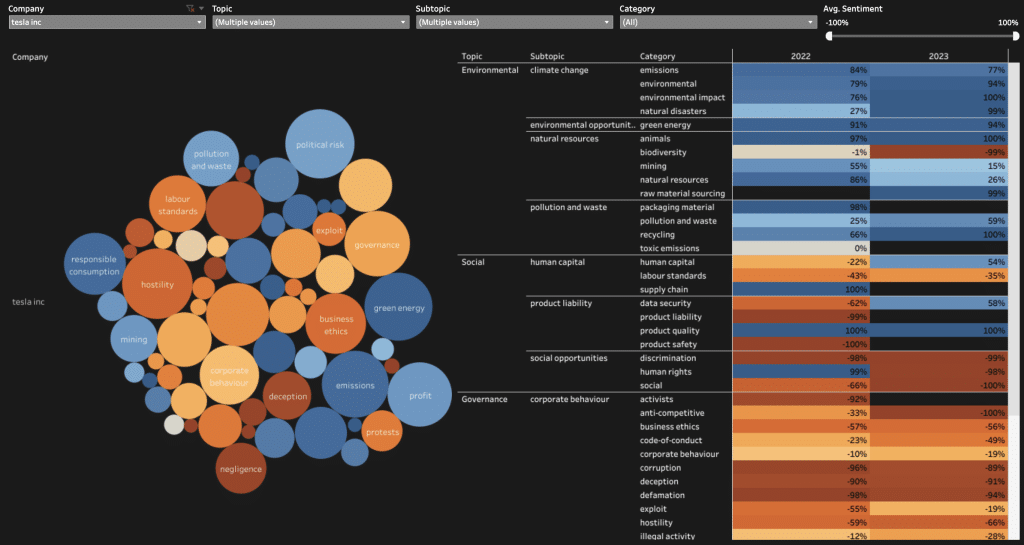
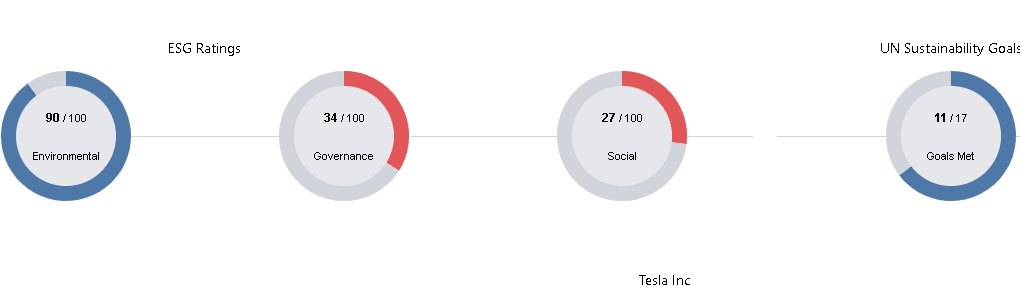
The calculation of our Tesla ESG score involves a comprehensive evaluation of the company’s operations, policies, and disclosures based on NLP news sentiment analysis. This score provides a snapshot of how well the company is managing its environmental impact, engaging with its stakeholders, and maintaining good governance practices. According to our latest data at time of writing, the breakdown of Tesla’s ESG score is as follows: Environmental – 90, Social  –  27, Governance – 34.

Tesla ESG score

Tesla ESG Score: Impact on the Electric Vehicle Market

Tesla’s ESG score has had a significant impact on the electric vehicle market. As sustainability concerns continue to rise, consumers are increasingly focused on supporting companies that prioritize environmental responsibility. Tesla’s high ESG score has positioned the company as a leader in the industry, attracting environmentally conscious customers who are willing to invest in electric vehicles that align with their values.

Moreover, Tesla‘s strong ESG score has put pressure on other electric vehicle manufacturers to improve their sustainability practices. Competitors in the market are now striving to match Tesla’s performance and meet the growing demand for eco-friendly vehicles. This heightened competition has accelerated the adoption of sustainable technologies and practices across the industry, leading to a positive environmental impact on a larger scale.

Tesla ESG Score: A Competitive Advantage

Tesla’s ESG score not only influences consumer preferences but also provides the company with a competitive advantage. As sustainability becomes an increasingly important differentiating factor, Tesla’s strong ESG performance sets it apart from its competitors. The company’s commitment to reducing carbon emissions, promoting renewable energy, and advancing sustainable transportation has resonated with customers and investors alike.

Tesla’s focus on environmental responsibility has allowed it to build a loyal customer base and attract investors who prioritize ESG factors. This strong reputation for sustainability has translated into increased market share and higher valuations for the company. By leveraging its ESG score as a competitive advantage, Tesla has solidified its position as a leader in the electric vehicle market.

Tesla ESG Score: How it Influences Investor Decisions

ESG scores, including Tesla’s, have become critical considerations for investors making decisions about where to allocate their capital. As sustainability concerns gain prominence, investors are becoming increasingly aware of the potential risks associated with companies that fail to address ESG factors adequately. Tesla’s high ESG score has garnered attention from institutional investors and asset managers who prioritize sustainable investments.

Investors are recognizing that sustainable companies like Tesla are better equipped to navigate long-term challenges, such as climate change regulations and shifting consumer preferences. By incorporating ESG considerations into their investment strategies, investors aim to align their portfolios with their values while seeking financial returns. Tesla’s strong ESG score has positioned the company as an attractive investment opportunity for those seeking both sustainability and profitability.

Tesla’s Environmental Score

Tesla’s high environmental score in ESG ratings stems from its contributions to reducing greenhouse gas emissions and promoting sustainable energy solutions.

Zero-Emission Vehicles: Tesla’s primary focus on electric vehicles (EVs) has significantly reduced the company’s environmental impact compared to traditional gasoline-powered vehicles. EVs produce zero tailpipe emissions, which helps to improve air quality and reduce greenhouse gas emissions.

Sustainable Energy Initiatives: Tesla’s investments in renewable energy projects, such as solar panels and battery storage systems, further contribute to the company’s environmental sustainability efforts. These initiatives help to reduce reliance on fossil fuels and promote cleaner energy sources.

Circular Economy Practices: Tesla has implemented measures to promote a circular economy, such as recycling battery materials and recovering components from scrapped vehicles. These practices reduce the environmental impact of Tesla’s products throughout their lifecycle.

Supply Chain Management: Tesla has made efforts to improve the sustainability of its supply chain by sourcing materials from responsible suppliers and working to reduce the environmental impact of transportation and logistics.

Overall, Tesla’s commitment to zero-emission vehicles, sustainable energy initiatives, and circular economy practices has earned the company a high environmental score in ESG ratings. However, it is important to note that Tesla continues to face environmental challenges, such as the ethical sourcing of raw materials and the potential environmental impact of battery manufacturing.

Tesla’s Social Score

Tesla’s low social score in their ESG rating stems from several factors related to corporate governance, labour rights, and environmental concerns.

Corporate Governance: Tesla has faced criticism for its lack of transparency and accountability, particularly regarding CEO Elon Musk’s behaviour. Musk’s tweets and public statements have been deemed irresponsible and have led to regulatory scrutiny. Additionally, Tesla’s board of directors has been criticized for lacking independence and diversity.

Labour Rights: Allegations of racial discrimination and poor working conditions at Tesla’s Fremont, California, factory have raised concerns about the company’s labour practices. Workers have reported facing harassment, discrimination, and unsafe working conditions. Tesla has also been criticized for its use of temporary workers and its efforts to unionize its workforce.

Environmental Concerns: Tesla’s manufacturing processes have been criticized for their environmental impact, particularly the use of cobalt, a mineral sourced from mines with questionable labour practices. Additionally, Tesla’s self-driving technology has been involved in several accidents, raising concerns about its safety and the company’s handling of these incidents.

These factors have contributed to Tesla’s low social score in ESG ratings, highlighting the need for the company to address these issues to improve its overall ESG performance.

Tesla’s Governance Score

Tesla’s low governance score in ESG ratings stems from several factors related to corporate structure, executive compensation, and board oversight.

Corporate Structure: Tesla’s dual-class share structure, which grants CEO Elon Musk significant control over shareholder voting, raises concerns about the company’s accountability to its shareholders. This structure allows Musk to make major decisions without having to seek approval from other shareholders.

Executive Compensation: Musk’s compensation package, which is tied to the company’s financial performance and certain operational goals, has been criticized for its lack of alignment with long-term sustainability and stakeholder interests. The emphasis on short-term financial performance could lead to decisions that prioritize profits over long-term environmental and social considerations.

Board Oversight: Tesla’s board of directors has been criticized for lacking independence and diversity. The majority of board members have ties to Musk or the company’s early investors, raising concerns about their ability to objectively evaluate Musk’s actions and make decisions in the best interests of all stakeholders.

Transparency and Disclosure: Tesla has been criticized for its lack of transparency and disclosure, particularly regarding its handling of environmental and social issues. The company has been reluctant to share detailed information about its supply chain, manufacturing processes, and labor practices, making it difficult for investors and stakeholders to assess the company’s ESG risks.

Risk Management: Tesla’s approach to risk management has been questioned, particularly its handling of worker complaints and potential safety hazards related to its self-driving technology. The company’s reactive approach to these issues suggests a lack of proactive risk management practices.

These factors have contributed to Tesla’s low governance score in ESG ratings, highlighting the need for the company to strengthen its corporate governance practices to improve its overall ESG performance.

PERMUTABLE AI ESG SENTIMEN

Head over to our ESG Company Gallery to access the full version of our ESG company reports.

Comparing Tesla’s ESG Score with Other Electric Vehicle Manufacturers

When comparing Tesla’s ESG score with other electric vehicle manufacturers, it becomes evident that Tesla is leading the pack. While several companies have made strides in sustainability, Tesla’s comprehensive approach to ESG sets it apart. The company consistently outperforms its competitors in areas such as carbon emissions reduction, energy efficiency, and transparency.

Tesla’s commitment to sustainability and its ability to integrate ESG considerations into its business strategy has allowed it to maintain a significant advantage over other electric vehicle manufacturers. As the market continues to evolve, it will be crucial for competitors to improve their ESG performance to remain competitive in the industry. Why not explore Tesla’s peer ESG scores below:

– Volkswagen ESG score

– BMW ESG score 

– Audi ESG score

Porsche ESG score

Nissan ESG score

Ford ESG score


The Future of Tesla’s ESG Score and its Implications for the Industry

As sustainability becomes an increasingly important aspect of business, Tesla’s ESG score is likely to play a significant role in shaping the future of the electric vehicle market and beyond. The company’s strong ESG performance has set a high standard for the industry, pushing competitors to improve their sustainability practices and driving the adoption of electric vehicles on a global scale.

Tesla’s influence extends beyond the automotive sector, as other industries look to the company as a model for sustainable business practices. The success of Tesla’s ESG initiatives has demonstrated that profitability and sustainability can go hand in hand, inspiring companies across various sectors to prioritize environmental responsibility, social impact, and good governance.

The Role of ESG Scores in Shaping the Future of Sustainable Businesses

Tesla’s ESG score has emerged as a game-changer in the electric vehicle market and beyond. It has not only positioned the company as a leader in sustainability but has also influenced consumer preferences, investor decisions, and industry standards. Tesla’s strong ESG performance serves as a testament to the importance of environmental responsibility, social impact, and good governance in driving long-term success.

As the world continues to grapple with pressing sustainability challenges, ESG scores will play a crucial role in shaping the future of sustainable businesses. Companies that prioritize ESG factors and demonstrate a commitment to sustainability are likely to thrive in this changing landscape, while those that fail to adapt may face significant risks and challenges. Tesla’s ESG score serves as a beacon of inspiration for businesses across industries, reminding us that sustainable practices are key to building a better future for our planet and its inhabitants.

Find Out More

Looking for more nuanced ESG data on Tesla?  Fill out the form below to request more granular data.


Decoding Meta’s ESG score: A comprehensive analysis

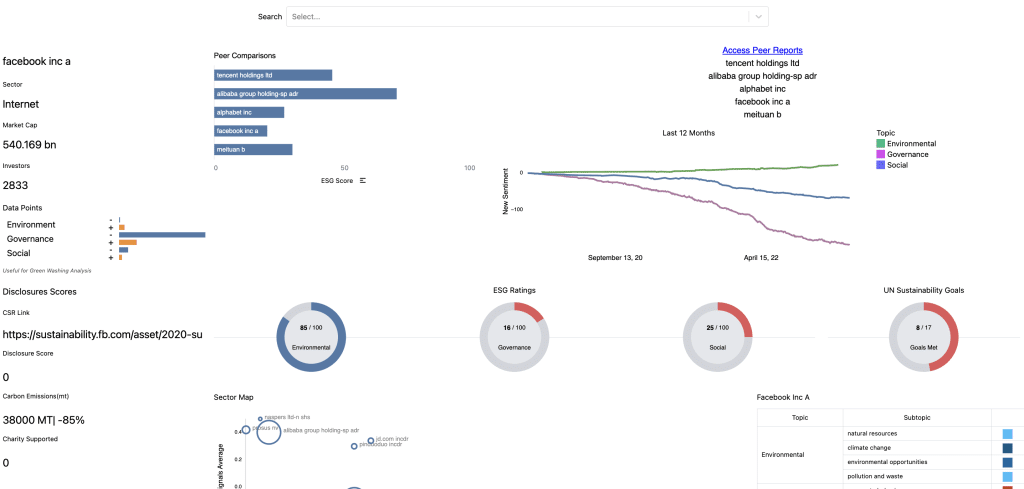
Environmental, Social, and Governance (ESG) scores have become increasingly important in recent years as investors and consumers pay more attention to companies’ ethical and sustainable practices. But what exactly is an ESG score, and how does Facebook, now known as Meta Platforms, fare in this area? In this article, we will explore Meta’s ESG score and how it compares to other tech giants. Let’s dive into the fascinating world of ESG scores and see how Meta stacks up.

Meta’s ESG Score: A Closer Look

Meta Platforms, formerly known as Facebook, as one of the leading social media platforms, has a significant influence on society, the environment, and corporate governance. Its ESG score reflects how well the company performs in these areas and provides insights into potential risks and opportunities for investors. To understand Meta’s ESG score, we need to explore the factors that affect it.

Factors Affecting ESG Score

The ESG score comprises three main components: environmental, social, and governance factors.

Environmental

The environmental aspect of the ESG score focuses on a company’s impact on the environment, including its carbon footprint, waste management, and resource efficiency. To learn more about the importance of ESG disclosure and why it matters, check out this guide.

Social

The social component evaluates how a company treats its employees, customers, and communities. This includes factors such as diversity and inclusion, working conditions, and data privacy. For an in-depth look at creating a successful ESG strategy, read these 5 steps.

Governance

The governance aspect of the ESG score assesses a company’s leadership, transparency, and ethical practices. It also takes into account executive compensation, board diversity, and shareholder rights.

Meta’s ESG Performance

To understand Meta’s ESG score, we need to examine its performance in each of the three components.

PERMUTABLE AI ESG SCORES

Environmental Performance

Meta has made efforts to reduce its environmental impact by investing in renewable energy and setting ambitious goals to reach net-zero emissions by 2030. The company also reports its progress in its annual sustainability report.

Social Performance

While Meta has faced criticism for issues such as data privacy, misinformation, and its handling of hate speech, the company has implemented initiatives to improve its social performance. These include increased content moderation, investments in artificial intelligence to detect harmful content, and partnerships with fact-checking organizations.

Governance Performance

Meta’s governance performance is marked by efforts to increase transparency and accountability, including the establishment of the Oversight Board to make binding decisions on content moderation. However, critics argue that more needs to be done to ensure effective governance, particularly in terms of executive oversight and board independence.

Click here To access Meta’s full ESG report 


Permutable AI META ESG REPORT

Comparing ESG Scores

Meta vs. Other Tech Giants

Comparing Meta’s ESG score to other tech giants like Google, Apple, and Amazon reveals that the company is not an industry leader in terms of sustainability and ethical practices. While Meta has made some progress, it still lags behind its peers in certain areas, particularly in terms of social and governance performance. To see how Meta’s ESG score compares to other companies, visit Permutable AI’s ESG Reports for detailed information on companies like AppleMicrosoft, and Amazon.

Industry Average

In general, the tech industry has a mixed record when it comes to ESG scores. While some companies are recognised for their strong commitments to sustainability, diversity, and ethical governance, others face criticism for their environmental impact, labor practices, and data privacy concerns. As a result, Meta’s ESG score can be considered average when compared to the industry as a whole.

Improving Meta’s ESG

Meta’s Initiatives

Meta has taken several steps to improve its ESG performance in recent years, including the following:

Carbon Reduction

Meta is investing heavily in renewable energy projects and aims to have 100% of its operations powered by renewable energy. Additionally, the company is working to improve its energy efficiency and reduce its overall carbon footprint.

Community Investments

To address its social performance, Meta is investing in initiatives to support local communities, such as small business grants, digital literacy programs, and partnerships with nonprofits to promote social and economic development.

Transparency and Accountability

In response to concerns about the company’s governance, Meta has taken steps to increase transparency and accountability, including the creation of the Oversight Board and the release of regular transparency reports.

ESG scores and Public Sentiment

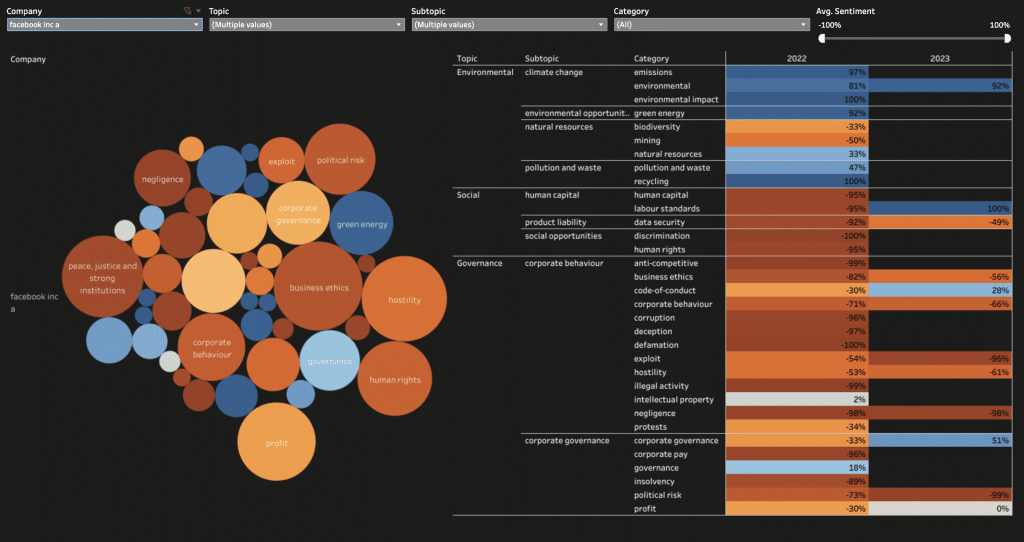
ESG scores and public sentiment are increasingly intertwined as investors and consumers become more conscious of the ethical and sustainable practices of companies. Tracking industries and specific news articles that affect a company’s public sentiment can provide valuable insights into potential risks and opportunities. With tools like Permutable AI’s analytics dashboard, you can deep-dive into real-time data and monitor how various factors influence the public’s perception of a company’s ESG performance, ultimately empowering more informed and responsible decision-making. 
PERMUTABLE AI META SENTIMENT

Conclusion

Meta’s ESG score reflects its mixed performance across environmental, social, and governance factors. While the company has made progress in some areas, it still has room for improvement, particularly when compared to other tech giants. By continuing to invest in sustainability, social responsibility, and ethical governance, Meta can enhance its ESG score and create long-term value for its stakeholders.

FAQs

What is an ESG score?

An ESG score evaluates a company’s performance in environmental, social, and governance aspects, providing insights into its sustainability and ethical practices.

Why is Meta’s ESG score important?

Meta’s ESG score is important because it helps investors and consumers understand the company’s commitment to ethical and sustainable practices, which can impact its long-term success and reputation.

How does Meta’s ESG score compare to other tech giants?

Compared to other tech giants like Google, Apple, and Amazon, Meta’s ESG score is average, with the company lagging behind its peers in certain areas, particularly in terms of social and governance performance.

What is Meta doing to improve its ESG score?

Meta is investing in renewable energy, community development initiatives, and increased transparency and accountability to improve its ESG performance.

Where can I find more information about Meta’s ESG performance?

You can find more information about Meta’s ESG performance in its annual sustainability report and through independent ESG rating agencies like Permutable AI.

By staying informed about ESG scores and their impact on companies like Meta, investors and consumers can make more informed decisions about where to put their money and which brands to support. Keep an eye on ESG trends and stay up to date with Permutable AI’s ESG Reports to ensure you’re making the most ethical and sustainable choices possible.

Looking for for ESG reports? Get in touch to request a look around our ESG dashboard and data sets!


[wpforms id=”16023″ title=”false” description=”false”]
Nike ESG Score: Just Do It, sustainably!

A Sneak Peek at Nike’s ESG Performance

You might be wondering, what on Earth is the Nike ESG score, and why should I care? Well, let’s break it down, shall we? ESG stands for Environmental, Social, and Governance, and it’s a way to evaluate a company’s sustainability and ethical impact. In today’s world, being eco-friendly and socially responsible is more important than ever, and Nike’s ESG score gives us a glimpse into how well the sportswear behemoth is keeping up with these ever-evolving standards.

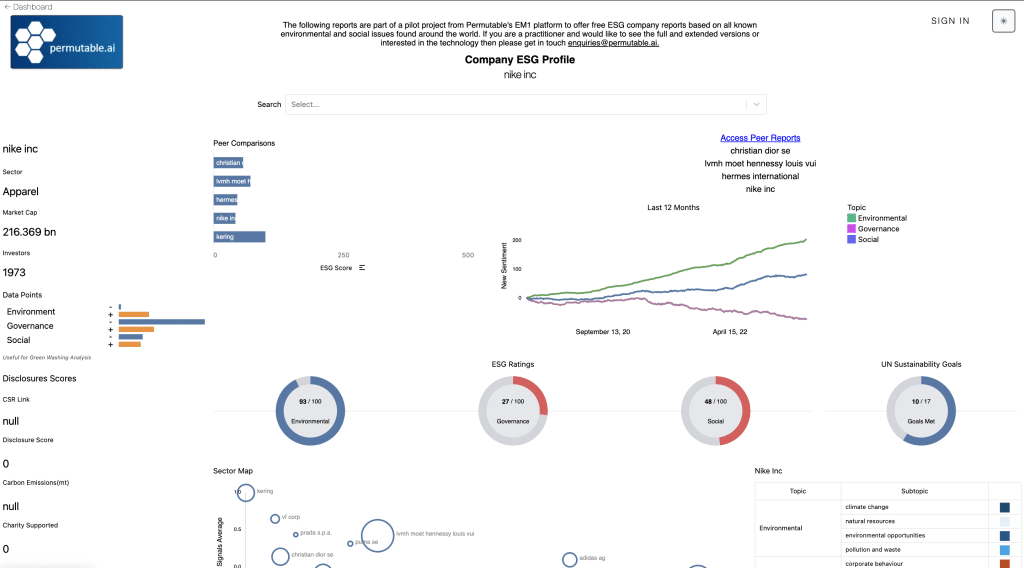
What is Nike’s current ESG score?

Nike’s ESG score is subject to change based on the latest data and evaluations. To get the most up-to-date information, you can refer to Permutable AI’s real-time analytic ESG tools or other ESG rating agencies like MSCI or Sustainalytics.

Permutable AI Nike ESG Scores
The Breakdown: Understanding Nike’s ESG Score

To better understand Nike’s ESG score, we need to dive into the nitty-gritty of each component:

Environmental Impact: Going Green or Greenwashing?

  • Reducing Carbon Footprint: Nike has been working on reducing its carbon emissions in manufacturing, logistics, and retail operations.
  • Sustainable Materials: The company is increasing the use of recycled materials in its products, like the popular “Move to Zero” line.
  • Waste Reduction: Nike has implemented waste reduction initiatives throughout the supply chain, from manufacturing to packaging.

Social Responsibility: Empowering People and Communities

  • Fair Labor Practices: Nike is committed to ensuring safe and fair working conditions for its employees and supply chain partners.
  • Diversity and Inclusion: The company has made strides in promoting diversity and inclusion within its workforce and leadership.
  • Community Engagement: Nike actively invests in community programs and initiatives, such as sports and education projects.

Governance: Keeping an Eye on the Ball

  • Board Structure: Nike’s board of directors is designed to promote transparency, accountability, and sound decision-making.
  • Executive Compensation: The company links executive pay to ESG performance, encouraging long-term sustainable growth.
  • Ethics and Compliance: Nike has a robust ethics and compliance program in place to ensure adherence to legal and regulatory standards.

Here you can find a glimpse of the full Nike ESG Report

Permutable AI NIKE ESG REPORT

Why ESG Disclosure Matters

Understanding Nike’s ESG score and its importance goes hand in hand with understanding why ESG disclosure is crucial for businesses in 2023. Transparency in ESG performance is becoming increasingly essential, and Nike’s score helps us evaluate their progress in various sustainability aspects. Permutable AI in uses real time news data and publications to determine the company’s public sentiment  and implement analytics tools to deep dive into the implications of this.

Permutable AI Nike ESG Sentiment
Creating a Successful ESG Strategy

Nike is not alone in the quest for sustainability. Many businesses are working on creating successful ESG strategies, emphasizing the importance of good data in making informed decisions. As consumers, we need to stay informed and make choices based on companies’ ESG strategies and scores.

ESG Reporting: Understanding and Comparing

Nike ESG score is just one among many, and to make educated decisions, we need to understand ESG reporting in a broader context. Comparing Nike’s ESG score with other industry players, like Microsoft ESG ReportAmazon ESG ReportFacebook ESG Report, and Tesla ESG Report, will help us gain a comprehensive understanding of the industry’s sustainability landscape

How does Nike’s ESG score compare to its competitors?

Nike’s ESG score is generally considered above average in the sportswear industry. However, it’s essential to keep an eye on the latest developments and compare it to competitors like Adidas, Puma, and Under Armour. 

Does a higher ESG score guarantee a better investment?

Not necessarily. While a higher ESG score indicates a company’s commitment to sustainability and ethical practices, it’s just one factor to consider when making investment decisions.

Conclusion: So, Is Nike a Sustainable Choice?

In a nutshell, Nike’s ESG score paints a picture of a company that’s striving to make a positive impact in the realms of environmental sustainability, social responsibility, and corporate governance. While there’s always room for improvement, it’s clear that the sportswear giant is making an effort to walk the walk when it comes to ESG performance.

As a consumer or investor, it’s important to stay informed about Nike’s ESG score and how it compares to other players in the industry. By doing so, you can make better decisions and contribute to a more sustainable future for all. After all, every step counts when it comes to creating a greener, more equitable world. So, let’s lace up our sneakers and make every step count, sustainably!

For more guides to ESG check out our 2023 ESG Investing blog or contact our industry experts.

Image by wirestock on Freepik

[wpforms id=”16023″ title=”false” description=”false”]
Apple ESG 2024: A deep dive into Apple’s Environmental, Social, and Governance efforts

ESG scores have become increasingly important in recent years as investors and consumers alike are placing more emphasis on sustainability and corporate responsibility. Apple, one of the leading tech companies in the world, has consistently received high ESG scores, making it a prime example of how a company’s commitment to these values can have a significant impact. In this article, we will explore the Apple ESG score and delve into the ways in which it has influenced the tech industry.

What is Apple’s ESG score and why is it important?

Apple’s ESG score is a measure of the company’s performance in terms of its environmental, social, and governance practices. It takes into account factors such as carbon emissions, waste management, labour practices, diversity and inclusion, board composition, and ethical business conduct. A high ESG score indicates that a company is operating in a sustainable and responsible manner, which can have a positive impact on its reputation, brand image, and ultimately its bottom line. According to our ESG intelligence, the Apple ESG score comes in at 93 for environmental factors, 42 for social factors and 15 for governance factors. 


Apple ESG score overview
Apple ESG score sentiment analysis

PURCHASE DATASET


SEE ESG INTELLIGENCE

Apple’s commitment to environmental sustainability

Apple has a high environmental score due to the company’s ambitious goals to reduce its carbon footprint, transition to renewable energy sources, and minimize waste. For instance, Apple has made significant progress in reducing the carbon emissions of its supply chain, investing in renewable energy projects, and implementing energy-efficient technologies in its products. By prioritizing sustainability, Apple has not only reduced its environmental impact but has also inspired other companies in the tech industry to follow suit.

Apple’s social impact 

The Apple ESG score is lower in social factors attributable to challenges in its vast global supply chain, including labour practices and ethical sourcing, as well as issues concerning data privacy and security. Despite advancements in diversity and inclusion, achieving significant diversity in leadership and technical roles remains a challenge, impacting the social component of its ESG rating.

However, Apple is working towards improving working conditions in its supply chain, promoting diversity and inclusion within its workforce, and supporting education and community development initiatives. For example, Apple’s Supplier Responsibility program ensures that its suppliers adhere to strict labour standards, including fair wages and safe working conditions. This growing commitment to social responsibility is one that must continue to be built on if Apple is to build a positive reputation and attract socially conscious consumers.

Apple’s corporate governance practices

Apple’s low governance score is likely to be a result of several factors, including executive compensation concerns, where high pay levels relative to company performance and broader employee compensation can detract from the score. Additionally, the composition and independence of Apple’s board, including diversity and the presence of independent directors, alongside the mechanisms for shareholder engagement and rights, play critical roles in governance evaluations. Limited shareholder influence on company decisions and perceived deficiencies in board oversight can further negatively affect the governance score.

It is important to note that governance scores can be influenced by the level of transparency and detail in reporting on business practices, supply chain management, and sustainability efforts. Legal and regulatory compliance issues, including any ongoing or past legal challenges, also impact perceptions of governance quality. Despite these challenges, Apple continues to navigate a complex global landscape, striving to improve its governance practices and address stakeholder concerns in an effort to enhance its ESG ratings across the board.

The influence of Apple’s ESG score on the tech industry

Apple’s exemplary ESG score has had a significant influence on the tech industry as a whole. Firstly, it has set a benchmark for other companies in terms of environmental sustainability, social impact, and corporate governance. Many tech companies have taken note of Apple’s success and have started to prioritize ESG factors in their own operations. This has led to a positive ripple effect, with the industry as a whole becoming more conscious of its impact on the environment and society.

How Apple’s ESG score affects consumer perception and purchasing decisions

Apple’s high ESG score has also had a profound impact on consumer perception and purchasing decisions. Today’s consumers are increasingly concerned about the social and environmental implications of the products they buy. By consistently receiving high ESG scores, Apple has positioned itself as a brand that aligns with these values. This has not only attracted socially conscious consumers but has also given Apple a competitive advantage over other tech companies. Consumers are more likely to choose Apple products over alternatives because they see the company as one that shares their values and makes a positive impact on the world.

Comparing Apple’s ESG score to other tech companies

Apple operates in a highly competitive technology market. Here’s a general overview of how Apple might compare to some of its main competitors based on common ESG criteria:

Environmental Practices: Apple has been recognized for its strong commitment to environmental sustainability, including efforts to reduce carbon emissions, use renewable energy across its operations, and improve the energy efficiency of its products. Competitors like Samsung and Google also have significant initiatives in place for environmental sustainability, but Apple’s ambitious goals, such as becoming carbon neutral across its entire business by 2030, set a high benchmark in the tech industry.

Social Responsibility: Apple’s social initiatives focus on privacy, equity, and education, including substantial investments in coding and education programs. However, it faces challenges related to labour practices and supply chain management. Competitors such as Google and Microsoft also emphasize social responsibility, with initiatives supporting digital inclusion and ethical supply chains. The social scores can vary based on how each company’s labour practices, data privacy, and community engagement are evaluated.

Governance: Apple’s governance practices are scrutinized for executive compensation, board diversity, and shareholder rights, similar to its peers. Companies like Microsoft and Amazon are also evaluated on these criteria, with governance scores influenced by factors such as transparency, ethical business practices, and compliance with regulations. Differences in governance scores among these companies often reflect their corporate structures, policies, and transparency levels.

While Apple generally scores well in ESG metrics, especially on environmental initiatives, its competitors also have strong ESG commitments and performance in various areas. The exact comparison of ESG scores can vary over time and depending on the rating agency, reflecting the ongoing efforts by all these companies to address ESG concerns and improve their practices.

Apple ESG score: summing up

Apple’s journey in the realms of environmental sustainability, social impact, and corporate governance paints a vivid picture of a tech giant striving to lead by example in the ESG domain. With a commendable environmental score driven by ambitious sustainability goals, Apple has not only minimized its carbon footprint but has also set a benchmark for the industry. Despite facing challenges in social and governance aspects, particularly concerning supply chain practices, data privacy, and executive compensation, the company is actively working to enhance its standings. Initiatives like the Supplier Responsibility program underline Apple’s commitment to improving working conditions and promoting fair labour practices.

The broader impact of Apple’s ESG efforts extends well beyond its own operations, influencing both the tech industry at large and consumer perceptions. By setting high ESG standards, Apple has catalysed a shift towards more sustainable and responsible business practices among its peers. For consumers, Apple’s strong ESG score translates into a brand that resonates with their values of sustainability and ethical responsibility, influencing purchasing decisions. Similarly, investors increasingly factor in ESG scores, with Apple attracting those prioritising social and environmental considerations. As the tech industry continues to evolve, Apple’s ongoing commitment to ESG excellence remains a critical part of its identity, underscoring the integral role of sustainability and ethical practices in shaping the future of technology.

Find out more

Are you looking for more granular data on Nestle’s ESG practices? 


PURCHASE DATASET

Addressing ESG data gaps: 4 things you can do today

ESG factors are increasingly recognized as key considerations for investors, as they seek to invest in companies that are sustainable and responsible. However, one major challenge facing the ESG investing and institutional landscape is the data gap, which refers to the lack of consistent, reliable, and comparable data on ESG factors across companies and industries. The challenges of ESG data gaps is something that is raised time and time again at that sustainable finance conferences we attend, and always the key message is this: Don’t let perfect be the enemy of the good. 

Addressing this data gap is crucial for investors to make informed decisions and for companies to improve their sustainability practices. So what steps can be taken?

Greater standardization

One way to address ESG data gaps is through greater standardization. Currently, there is a lack of consistent and comparable ESG data across companies, making it difficult for investors to compare performance and for companies to benchmark themselves against peers. By developing standardized metrics and reporting frameworks, companies can provide investors with more reliable and consistent data, allowing for better comparability and analysis. This could include the development of industry-specific ESG standards, such as the Sustainability Accounting Standards Board (SASB) framework, which provides industry-specific sustainability accounting standards.

Improved transparency

Another way to address the ESG data gap is through increased transparency. Companies can improve their reporting practices by providing more detailed and comprehensive disclosures on their ESG performance, including data on their carbon emissions, diversity and inclusion policies, and supply chain management. This can be supported by third-party verification and auditing, which can help to enhance the credibility and accuracy of ESG data.

Greater collaboration

In addition to these initiatives, there is a need for greater collaboration between investors, companies, and regulators to address the ESG data gap. This can include the development of industry-wide initiatives, such as the Task Force on Climate-related Financial Disclosures (TCFD), which provides a framework for companies to disclose climate-related risks and opportunities. There is also a need for greater engagement between investors and companies on ESG issues, which can help to identify areas for improvement and drive positive change.

Invest in technology

At Permutable, we know that artificial intelligence has the potential to play a key role in solving the missing ESG data gap problem. One major challenge with ESG data is the lack of consistent and comparable data across companies and industries, making it difficult for investors to make informed decisions. AI can help to address this challenge by analyzing and interpreting large amounts of data from multiple sources, including public disclosures, news articles, and other unstructured data sources.

Using natural language processing (NLP) and machine learning algorithms, AI can analyze ESG data to identify trends, patterns, and insights that might otherwise be missed. For example, AI can analyze company disclosures to identify specific ESG metrics, such as carbon emissions or employee diversity, and compare them to industry benchmarks. This can help investors to make more informed decisions and identify potential risks and opportunities.

AI can also help to identify emerging ESG issues that are not yet captured by existing reporting frameworks. By analyzing news articles and social media posts, AI can identify emerging ESG issues that are not yet captured by traditional reporting frameworks. This can help companies to proactively address emerging ESG risks and opportunities, and help investors to stay ahead of the curve.

Another benefit of AI is its ability to provide real-time insights into ESG data which is at the core of our ESG analytics offering. Traditional ESG reporting frameworks typically provide annual or quarterly data, which can quickly become outdated. Through the use of AI, we are able to provide real-time insights into ESG data, allowing investors and companies to stay up-to-date on emerging risks and opportunities.

Finally, AI can also help to improve the accuracy and reliability of ESG data. By analyzing multiple data sources and identifying potential errors or inconsistencies, AI can help to ensure that ESG data is accurate and reliable. This can help to improve the credibility of ESG data and increase investor confidence in a matter of hours. Something that would otherwise take a huge mechanical turk and number of man hours to complete.

In conclusion, addressing the ESG data gap is crucial for investors and companies alike. By promoting standardization, transparency, collaboration, and the use of technology, we can improve the quality and reliability of ESG data, enabling more informed decision-making and driving positive change towards a more sustainable future.

Get in touch to find out how our real-time ESG data can help address ESG data gaps


These are our most requested ESG company data and reports

Navigating the world of sustainable investing can be complex, but understanding key ESG factors is crucial for making informed decisions. A good place to start is by familiarizing yourself with top ESG company ratings and essential metrics, as well as ESG compliance guidelines to ensure a strong foundation in the field.

Key things to look out for in ESG company data

ESG data provides insight into how companies operate and their impact on society and the environment. Here are some key things to look out for in ESG company data:

Environmental impact

This includes data on a company’s carbon footprint, energy usage, waste management, and water consumption. It’s important to look at the company’s efforts to reduce its environmental impact and its plans for the future.

Social responsibility

This includes data on a company’s labour practices, diversity and inclusion policies, community involvement, and product safety. Look at how the company treats its employees, customers, and the communities where it operates.

Governance

This includes data on a company’s leadership structure, executive compensation, board diversity, and shareholder rights. Look at how the company is managed and whether there are effective checks and balances in place to prevent misconduct.

Industry-specific issues

Some industries have specific ESG issues to consider. For example, a mining company may have to disclose data on its impact on local ecosystems, while a healthcare company may need to disclose data on its drug pricing policies.

Data quality

It’s important to assess the quality of the data being provided. Look at the methodology used to collect and analyze the data, as well as the data’s sources and timeliness.

Materiality

ESG issues that are material to a company’s operations and financial performance are most relevant. Look for ESG factors that are closely tied to the company’s core business, and that have the potential to impact its long-term sustainability.

Comparability

To effectively evaluate a company’s ESG performance, it’s important to be able to compare its data to that of its peers. Look for standardized ESG reporting frameworks, such as the Global Reporting Initiative (GRI) or the Sustainability Accounting Standards Board (SASB), to facilitate comparability.

Most requested ESG company data and reports

We share our most requested ESG company data and reports here:

  1. Apple
  2. Microsoft
  3. Amazon
  4. Alphabet (Google)
  5. Facebook
  6. Walmart
  7. JPMorgan Chase
  8. Morgan Stanley
  9. Goldman Sachs
  10. BlackRock
  11. Bank of America
  12. Wells Fargo
  13. Visa
  14. Mastercard
  15. PepsiCo
  16. Coca-Cola
  17. Procter & Gamble
  18. Johnson & Johnson
  19. Pfizer
  20. General Electric

Key findings from our ESG company data

  • Apple, Microsoft, Amazon, and Alphabet (Google) all score relatively well in terms of environmental practices, but their social and governance scores vary.
  • Facebook scores lower in terms of governance and social practices, with concerns around data privacy and user safety.
  • Walmart and Coca-Cola score lower in terms of environmental practices, while PepsiCo has a relatively high environmental score.
  • Within the banking sector, JPMorgan Chase, Morgan Stanley, Goldman Sachs, BlackRock, Bank of America, and Wells Fargo score relatively low in terms of governance. Improvements are also required around social practices (with the exception of Bank of America) with concerns around employee diversity, fair pay, and financing of controversial industries.
  • Visa and Mastercard score relatively well across all ESG categories.
  • Procter & Gamble, Johnson & Johnson, Pfizer and General Electric score relatively well across all ESG categories.

Search our ESG company data here or get in touch to request more data and pricing information.


ESG regulations and standards essentials: 2023 guide

Environmental, Social, and Governance (ESG) regulations and standards have become a crucial aspect of corporate responsibility and long-term value creation. Companies must navigate these regulations to ensure compliance, mitigate risks, and showcase their commitment to responsible business practices. This guide will provide an in-depth overview of the key ESG standards, reporting requirements, and best practices to help you effectively manage ESG risks and opportunities.

Understanding the Key ESG Standards

There are several ESG standards and frameworks that companies can adopt to guide their ESG efforts. The most prominent ones include the Global Reporting Initiative (GRI), the Sustainability Accounting Standards Board (SASB), the Task Force on Climate-related Financial Disclosures (TCFD) and the newer The Task Force on Nature-related Financial Disclosures (TNFD). Each of these standards has its unique focus and approach, enabling companies to choose the one that aligns best with their ESG objectives.

Global Reporting Initiative (GRI)

The Global Reporting Initiative (GRI) is an international independent organization that helps businesses and governments understand and communicate their sustainability impacts. GRI provides a comprehensive framework for sustainability reporting, covering environmental, social, and governance issues. The GRI Standards are widely recognized and adopted by organizations globally, offering a common language for reporting on ESG performance.

Sustainability Accounting Standards Board (SASB)

The Sustainability Accounting Standards Board (SASB) is a non-profit organization that develops and maintains industry-specific sustainability accounting standards. SASB standards help companies identify, manage, and report on the ESG factors most relevant to their industry and stakeholders. By focusing on materiality, SASB standards enable companies to provide concise and decision-useful information to investors and other stakeholders.

Task Force on Climate-related Financial Disclosures (TCFD)

The Task Force on Climate-related Financial Disclosures (TCFD) was established by the Financial Stability Board to develop a set of voluntary, consistent disclosure recommendations for companies to provide information on their climate-related financial risks. TCFD recommendations focus on four key areas: governance, strategy, risk management, and metrics and targets. By adopting the TCFD framework, companies can enhance their climate risk disclosures and better inform investors and other stakeholders.

The Task Force on Nature-related Financial Disclosures (TNFD)

The Task Force on Nature-related Financial Disclosures (TNFD) is a global initiative that aims to create a framework for financial institutions and corporations to report on their dependencies and impacts on nature. This task force was launched in 2021 by a group of financial institutions, corporations, and governments in response to the increasing recognition of the financial risks associated with biodiversity loss and ecosystem degradation. The TNFD will develop a set of recommendations and metrics for companies and financial institutions to disclose their nature-related financial risks and opportunities, which will help investors and other stakeholders make informed decisions. The TNFD is modeled after the successful Task Force on Climate-related Financial Disclosures (TCFD), which focuses on climate-related financial risks and opportunities.

ESG Reporting and Disclosure Requirements

ESG reporting and disclosure requirements vary by jurisdiction and may be mandatory or voluntary, depending on the country and regulatory framework. In the UK, for example, certain ESG reporting requirements are mandatory for listed companies under the UK Companies Act and the UK Stewardship Code. Other countries, like the United States, have a mix of mandatory and voluntary ESG reporting guidelines. It is essential for companies to understand their jurisdiction’s reporting and disclosure requirements to ensure compliance and avoid potential fines or reputational damage.

To navigate ESG reporting requirements effectively, companies should:

1.  Identify the relevant ESG regulations and standards applicable to their industry and jurisdiction.

2.  Establish a robust ESG data collection and reporting system to gather accurate and timely information.

3.  Disclose ESG information in a clear and transparent manner, utilising the chosen ESG standards as a guide.

For further guidance on ESG reporting in 2023, read our article on ESG disclosure: Your guide to understanding ESG reporting in 2023 and why it matters .

Best Practices for ESG Compliance

To achieve ESG compliance and demonstrate commitment to responsible business practices, companies should consider the following best practices:

1.  Establish a clear ESG strategy and set measurable goals.

2.  Adopt a recognized ESG reporting standard that aligns with the company’s objectives and stakeholder expectations.

3.  Integrate ESG factors into decision-making processes across the organisation.

4.  Communicate progress and achievements on ESG performance to stakeholders regularly.

5. Continuously monitor and review ESG performance, identifying areas for improvement and adjusting the strategy as needed.

For more insights on creating a successful ESG strategy, read our article on 5 steps to creating a successful ESG strategy: The importance of good data.

ESG Risk Management and Performance Metrics

Effective ESG risk management and performance measurement are crucial for companies to optimise their ESG efforts and demonstrate progress to stakeholders. To manage ESG risks and track performance, companies should:

1.  Identify and assess ESG risks and opportunities relevant to their business and industry.

2.  Develop Key Performance Indicators (KPIs) to measure ESG performance and align them with the chosen ESG reporting standard.

3.  Implement risk mitigation strategies to address identified ESG risks and capitalise on opportunities.

4.  Monitor and report on ESG KPIs regularly, using the insights to drive continuous improvement and strategic decision-making.

Examples of ESG performance metrics include greenhouse gas emissions, water usage, employee diversity and inclusion, and board composition.

Conclusion

Understanding ESG regulations and standards is crucial for companies seeking to navigate the increasingly complex landscape of corporate responsibility and stakeholder expectations. By adopting recognized ESG standards, implementing best practices for ESG compliance, and actively managing ESG risks and performance, companies can not only mitigate potential risks but also enhance their long-term value creation and build trust with stakeholders.

As ESG regulations continue to evolve and gain prominence, companies must stay up-to-date with the latest developments and adapt their strategies accordingly. By embracing a proactive approach to ESG management, organisations can position themselves as leaders in sustainability and social responsibility, creating a competitive advantage in the market and driving long-term success.

For more information on the importance of ESG disclosure and how it can benefit your business in 2023, read our article on Why ESG disclosure is important for your business in 2023: 5 key points.

To further explore ESG reporting and gain insights into specific companies’ ESG performance, visit Permutable AI’s ESG Reports homepage , where you can access ESG reports for major companies such as Apple, Microsoft, Amazon, Alphabet (Google), and Facebook.

Looking for ESG data? Why not get in touch to request a look around our ESG dashboard and data sets?