GMSI: Detect macro turns before the release

Track changes in inflation, growth and policy pressure across 90+ economies using hourly, point-in-time signals drawn from local and international information.

Test more than 11 years of history and integrate the same signal structures into live research, trading and risk workflows.
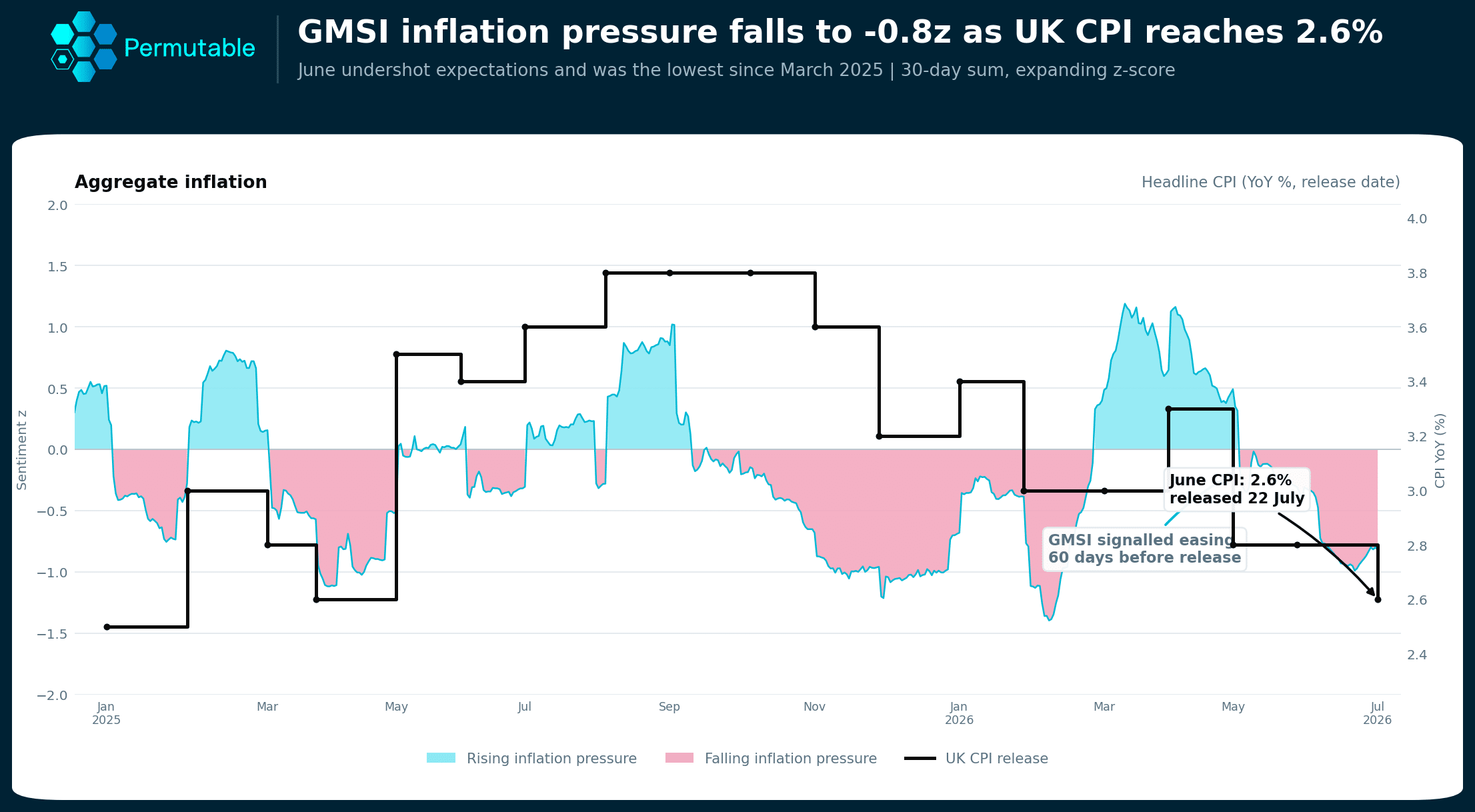

Chart comparing Permutable’s point-in-time UK inflation pressure signal with annual UK CPI inflation in 2026. Rising pressure peaks near +1.2 standard deviations in early spring before the signal turns negative during May and reaches −0.8z by 22 July. UK CPI remains at 2.8% in May before falling to 2.6% in June.
  • Domestic, international and combined country indices
  • Directional and semantic macro sentiment
  • Index-level and underlying source-level data
  • 90+

    economies

  • 80+

    languages

  • 70+

    macro topics

  • 11+

    point-in-time history

  • 1hr

    update frequency

Used across hedge fund, banking, asset-management and economic-intelligence workflows.

Request sample GMSI data

See what is changing beneath the macro data

GMSI lets researchers examine the same economy through multiple signal layers – from emerging inflation pressure to differences between local conditions, international perception and market pricing.

Detect whether inflation is broadening or easing

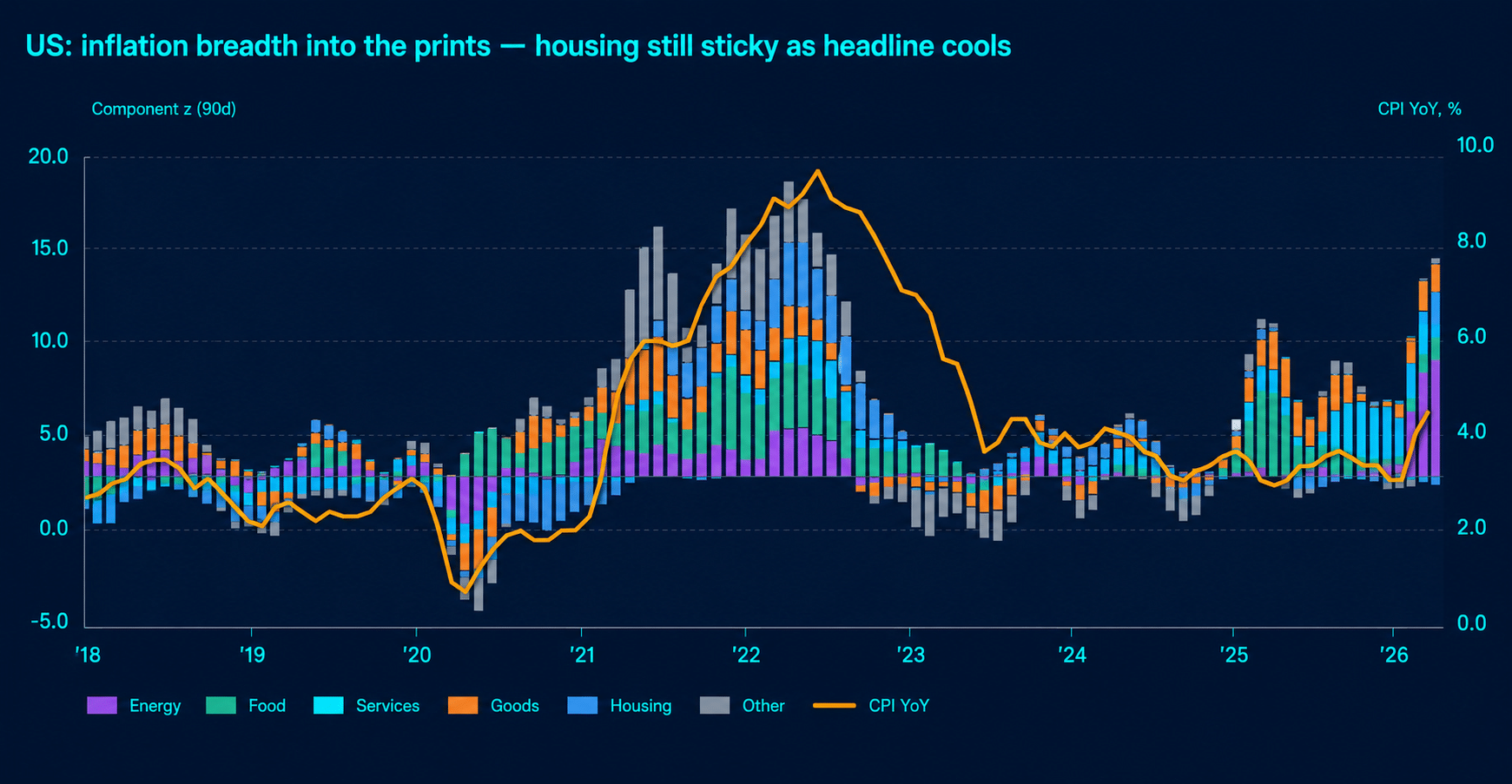
Decompose inflation pressure across energy, food, housing, goods, services and wages. Identify whether the change is broad-based, concentrated or rotating before it is fully visible in headline releases.

Dark Permutable chart showing US inflation breadth from 2018 to 2026, with stacked component z-scores for energy, food, services, goods, housing and other categories alongside CPI YoY.

Trusted by institutional macro teams

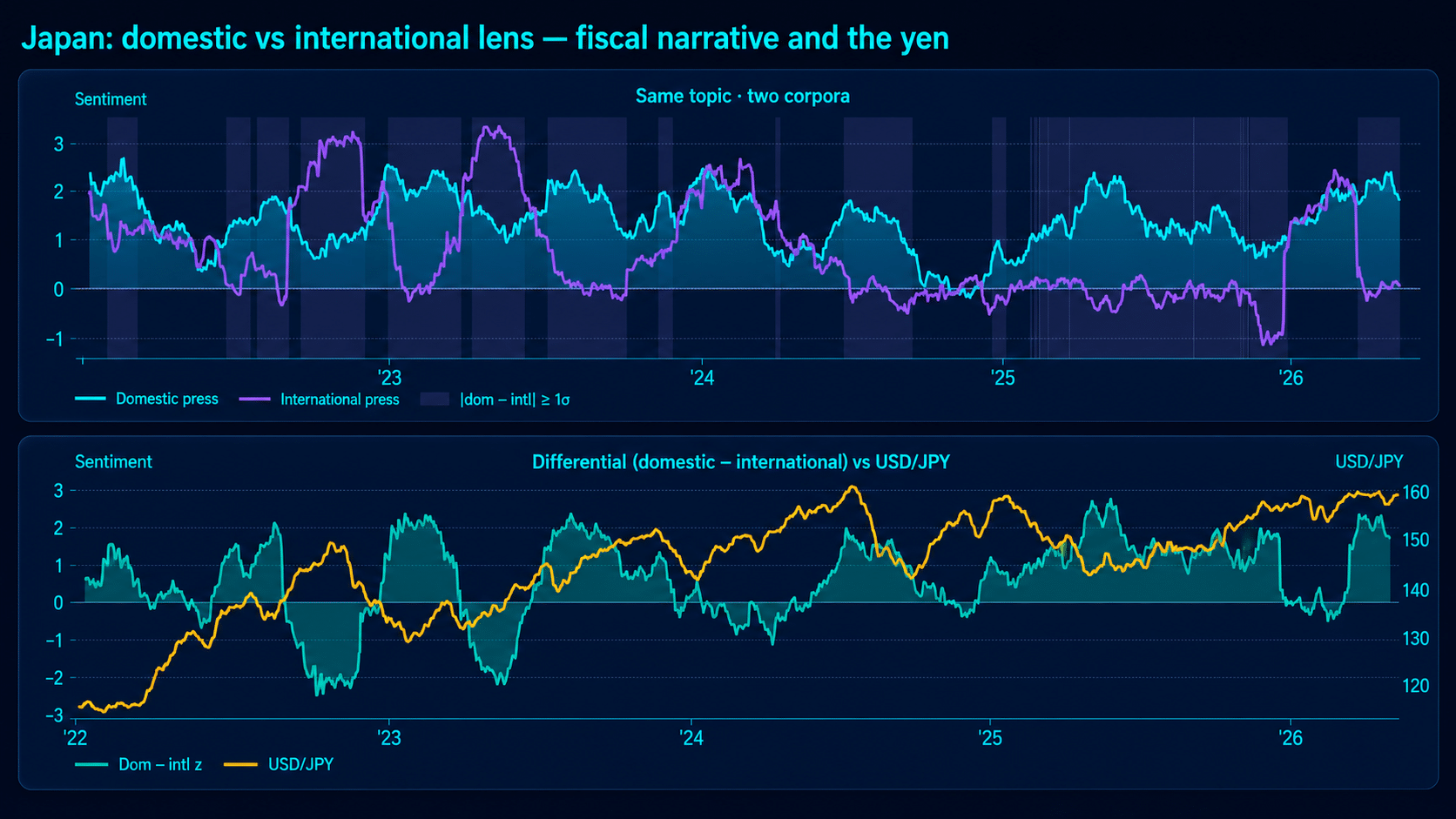
Leading global hedge fund “Permutable helped us follow the Japan fiscal-policy story from London. We could see how the local narrative was changing and why it was starting to impact USD/JPY.”
Tier 1 bank “Permutable helped us see macro pressure building before it appeared in the official data. The signal was structured, timestamped and tied back to the narrative, which made it much easier to use.”
Institutional research team “Permutable gives us a cleaner way to monitor macro change between official releases, showing when inflation, policy or growth narratives are beginning to turn.”

Built for breadth, differentiation and historical testing

GMSI transforms global and local information flow into structured country and topic indices that can be analysed historically, compared across economies and integrated into institutional research infrastructure.

The dataset is designed to provide information that is distinct from official economic releases, market prices, consensus forecasts and generic news sentiment.

  • Broad source coverage

    Capture macroeconomic reporting, central-bank communication, government announcements, policy commentary and market-relevant information across international and local-language sources.

  • Domestic vs international

    Analyse what is being reported within an economy separately from how that economy is being interpreted by international sources and global markets.

  • Hourly frequency

    Observe changes in inflation, growth, policy and macro risk between monthly and quarterly economic releases.

  • Point-in-time history

    Research more than 11 years of historical signals using only the information that was available at each timestamp.

See the systematic workflow

GMSI signals, structured for institutional workflows

What is measured? How is it structured? How is it used?
Country and topic-level indices Inflation, growth, monetary policy, fiscal conditions, labour, trade, political and geopolitical themes Research, monitoring, systematic models and risk workflows
Direction and magnitude Directional and semantic signals with source-linked events and timestamps Historical replay, event studies, alerts, API, Excel and data feeds
Domestic, international and combined views Local-versus-external narrative divergence across economies Cross-country research, rates and FX analysis, sovereign risk and custom configurations

Macro coverage by topic

  • Inflation and prices

    Headline inflation, core inflation, energy, food, housing, services, goods, wages and inflation expectations.

  • Growth and economic activity

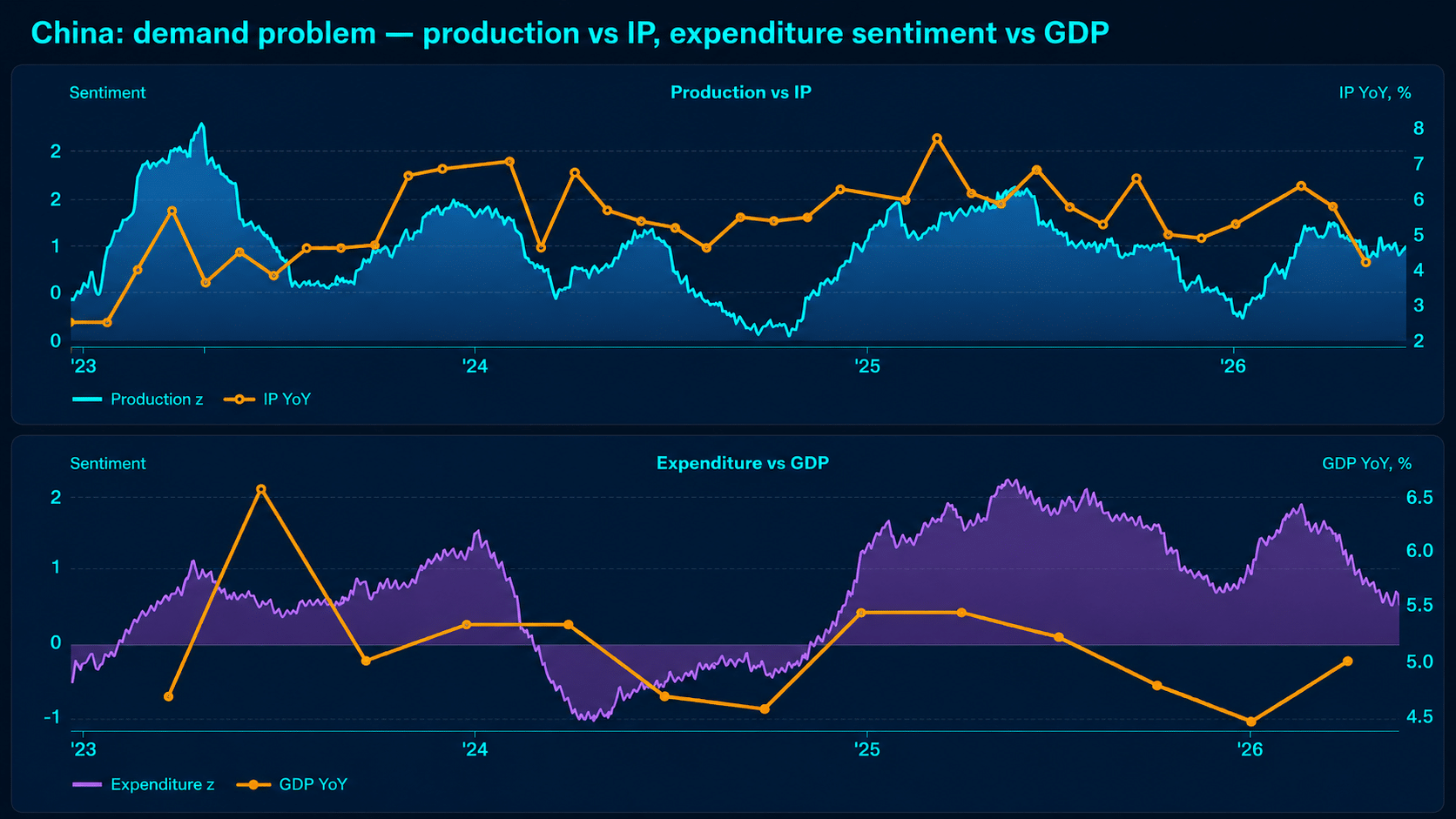
    GDP growth, production, expenditure, consumption, business activity, investment, housing activity and recession risk.

  • Monetary policy

    Policy outlook, interest rates, central-bank credibility and quantitative policy.

  • Fiscal and sovereign conditions

    Government spending, taxation, public finances and sovereign risk.

  • Labour and household conditions

    Employment, unemployment, labour-market pressure, household finances, consumer confidence and purchasing power.

  • Trade and capital flows

    Trade, investment flows, capital flows and currency pressure.

  • Political and geopolitical risk

    Political instability, regulatory risk and geopolitical pressure.

Request full topic taxonomy

Built to be evaluated without hindsight

Permutable’s core production models were trained in 2020 and have not been refitted using subsequent macroeconomic events. COVID-19, supply disruption, the inflation surge, global policy tightening and later disinflation were therefore processed as unseen regimes.

  • Point-in-time history

    Each historical value reflects only the information available at that timestamp.

  • Frozen production models

    Post-2020 events were not used to retrospectively optimise the underlying classifications.

  • Consistent research and live signals

    The same core signal behaviour can be examined historically and monitored in production.

  • Out-of-sample regime coverage

    Major post-2020 shifts were processed without model retraining, allowing signal behaviour to be evaluated across genuinely unseen market conditions.

Request full methodology

Evidence across macro workflows

UK inflation pressure turned earlier

GMSI moved into falling-pressure territory before June 2026 CPI undershot expectations, showing how changes in the information environment can identify a macro turn ahead of the official release.

Chart comparing Permutable’s point-in-time UK inflation pressure signal with annual UK CPI inflation in 2026. Rising pressure peaks near +1.2 standard deviations in early spring before the signal turns negative during May and reaches −0.8z by 22 July. UK CPI remains at 2.8% in May before falling to 2.6% in June.

A consistent intelligence layer across global macro markets

Global and local information is classified into country, topic, narrative and event-level macro intelligence, with domestic-versus-international separation, source traceability and point-in-time processing throughout.

Explore the Intelligence Engine

FAQ

  • What are the Global Macro Sentiment Indices?

    Permutable’s Global Macro Sentiment Indices, or GMSI, convert global and local reporting into structured macroeconomic signals at country and topic level. The indices are updated hourly and designed to show how inflation, growth, monetary policy, fiscal conditions, labour markets, trade and political risk are changing between official releases.

    GMSI includes domestic, international and combined views, allowing users to compare conditions reported inside an economy with the narrative developing around it externally.

  • What does the GMSI dataset contain?

    The GMSI dataset includes historical and live country and topic-level indices, directional and semantic signals, domestic and international views, event records and source-linked observations.

    Outputs can be organised by:

    • Economy
    • Macroeconomic topic
    • Reporting perspective
    • Signal type
    • Direction and magnitude
    • Event, narrative and source

    This allows users to move from an aggregate index into the topics, events and source records contributing to a signal change.

  • Which economies and macroeconomic topics are covered?

    GMSI covers more than 95 economies and over 70 macroeconomic topics, with reporting processed across more than 80 languages.

    Topic coverage includes inflation, economic growth, production, expenditure, consumption, monetary policy, fiscal policy, labour markets, trade, investment flows, sovereign conditions, political instability and geopolitical risk.

    Coverage spans major developed economies, emerging markets and countries that are often less extensively represented in conventional English-language macro datasets.

  • What is the difference between domestic and international signals?

    Domestic signals are constructed from reporting originating within the economy being analysed. International signals reflect how that economy is discussed by sources originating outside it.

    Permutable also provides a combined view. Comparing these perspectives helps identify whether domestic conditions and external market perception are aligned, diverging or changing at different speeds.

    This can be particularly useful for analysing currencies, sovereign risk, policy credibility and markets exposed to shifts in international investor perception.

  • What is the difference between directional and semantic signals?

    Directional signals identify whether reporting implies improvement, deterioration, acceleration, deceleration, tightening or easing within a macroeconomic topic.

    Semantic signals capture the broader meaning and context of the reporting. They help distinguish developments that may contain similar language but imply different economic outcomes.

    The two signal structures can be examined separately or combined, depending on the research question, monitoring workflow or model design.

  • How far back does GMSI history extend?

    GMSI provides more than 11 years of point-in-time macroeconomic history, with core series extending from 2015 to the present.

    Exact availability can vary by economy, topic, reporting perspective and configuration. Historical extracts can be provided during the data-evaluation process to confirm the coverage available for a particular research requirement.

  • Is the historical dataset strictly point in time?

    Yes. Each historical value is constructed using only the information available at its original timestamp.

    Events, narratives, source records and signal values are preserved without incorporating information published later. This helps users conduct historical research without hindsight or look-ahead bias.

    Historical and live outputs use a consistent structure, allowing the same fields and signal definitions to be examined in research and monitored in production.

  • Are the production models tested out of sample?

    Yes. Permutable’s core production models were trained in 2020 and have not been retrospectively refitted using the major economic developments that followed.

    COVID-19, global supply disruption, the inflation surge, widespread monetary tightening and subsequent disinflation were therefore processed as previously unseen regimes.

    This allows institutions to evaluate how the production framework behaved through economic conditions that were not included in its original training period.

  • Can users inspect the events and sources behind an index?

    Yes. Users can access the source-linked events, narratives, headlines, countries, entities, macroeconomic topics and timestamps contributing to an index movement.

    This makes it possible to investigate why a signal changed, distinguish isolated reports from persistent narratives and trace the evidence behind historical and live observations.

    Access to complete event and source records depends on the selected data configuration.

  • How is GMSI delivered?

    GMSI can be delivered through API, Excel, structured files and institutional data feeds.

    Standard indices are updated hourly, with historical and live outputs available in consistent schemas for research, monitoring, alerting and production workflows.

    Delivery can be configured around specific countries, topics, reporting perspectives and signal types.

  • Can Permutable create custom country and topic configurations?

    Yes. Permutable can create customised country groups, macroeconomic topics, reporting perspectives, event categories and cross-country views.

    Configurations can be designed around particular economies, policy themes, macro relationships, regions or institutional workflows. Custom outputs can also combine GMSI signals with other Permutable intelligence across commodities, geopolitics and cross-market themes.

  • Can institutions evaluate sample GMSI data?

    Yes. Institutions can request a sample containing country and topic-level indices, domestic and international views, directional and semantic signals, source-linked events and example records.

    Samples can be structured around a defined research question, such as:

    • Inflation breadth
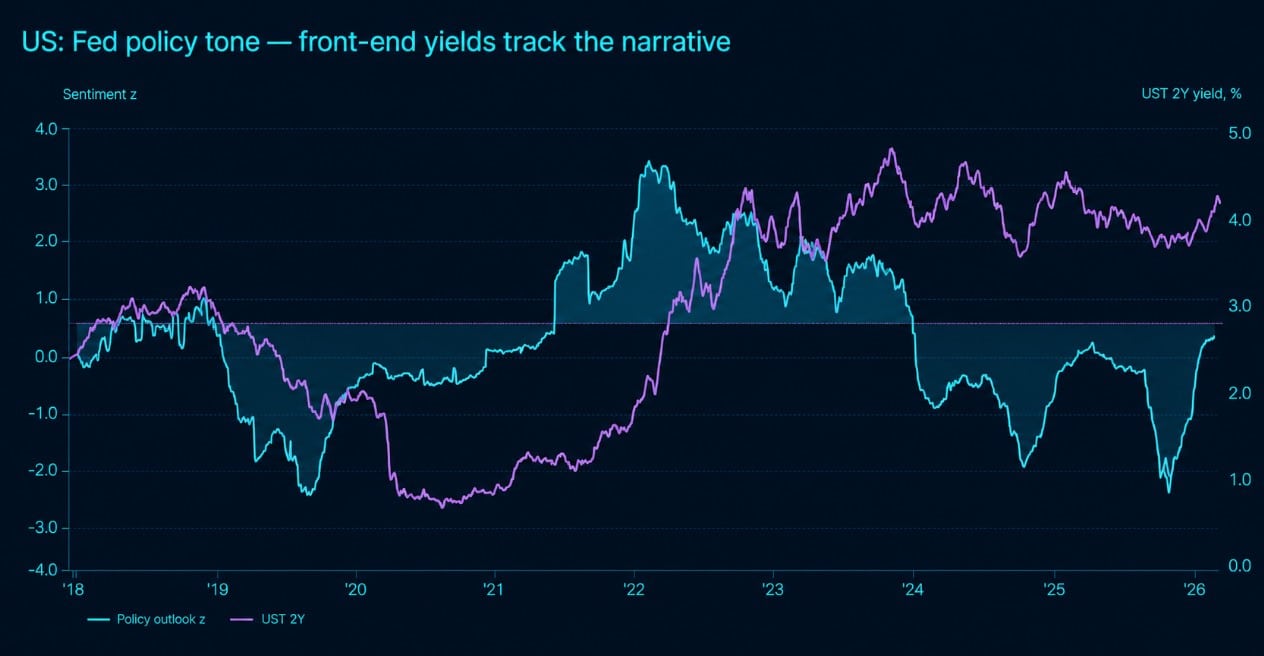
    • Monetary-policy expectations
    • Domestic versus international divergence
    • Cross-country comparison
    • Production versus expenditure
    • Cross-market transmission

    A sample pack can also include a data dictionary and point-in-time methodology note.

  • How is GMSI priced?

    GMSI pricing depends on the economies and topics selected, the required historical depth, the signal and source-record access required, the delivery method and any custom configurations.

    Institutions can evaluate representative sample data before discussing the most appropriate coverage and access structure for their workflow.