Gold outlook 2026: Why US rates outweigh geopolitical risk
16 Oct 2026
16 Oct 2026
Permutable’s market intelligence research examines why gold has struggled despite geopolitical risk and elevated oil prices. Using asset and macro sentiment data, it analyses how US monetary policy expectations and Treasury yields shape gold’s response to market shocks. Aimed at institutional investors, commodity traders and macro researchers, the analysis identifies conditions that could support a sustained recovery in gold prices.
Gold has long been the asset of last resort, the metal investors reach for when wars break out, currencies wobble and governments lose the confidence of their creditors. On that logic, 2026 should have been a vintage year. The US-Iran war, oil above $105 a barrel and wave after wave of spikes in geopolitical-tension sentiment have given investors every reason to seek shelter, yet gold stands 23% below the record $5,420 it set on 28 January.
The reason lies in the bond market. As US policy expectations hardened, the 2-year Treasury yield rose 143bp between January and September, and gold, which pays no income, found itself up against Treasuries that pay a good deal of it. Holding the metal as insurance became an expensive habit, and since then every shift in inflation and rate expectations has moved the price more than events in the Gulf.
That shift is visible in sentiment well before it surfaces in the quarterly supply and demand figures. Permutable tracks the narratives and drivers behind the price moves in real time, from geopolitical bursts to investment demand and central-bank expectations to the US policy outlook, and shows, with precision, which of them is in command.
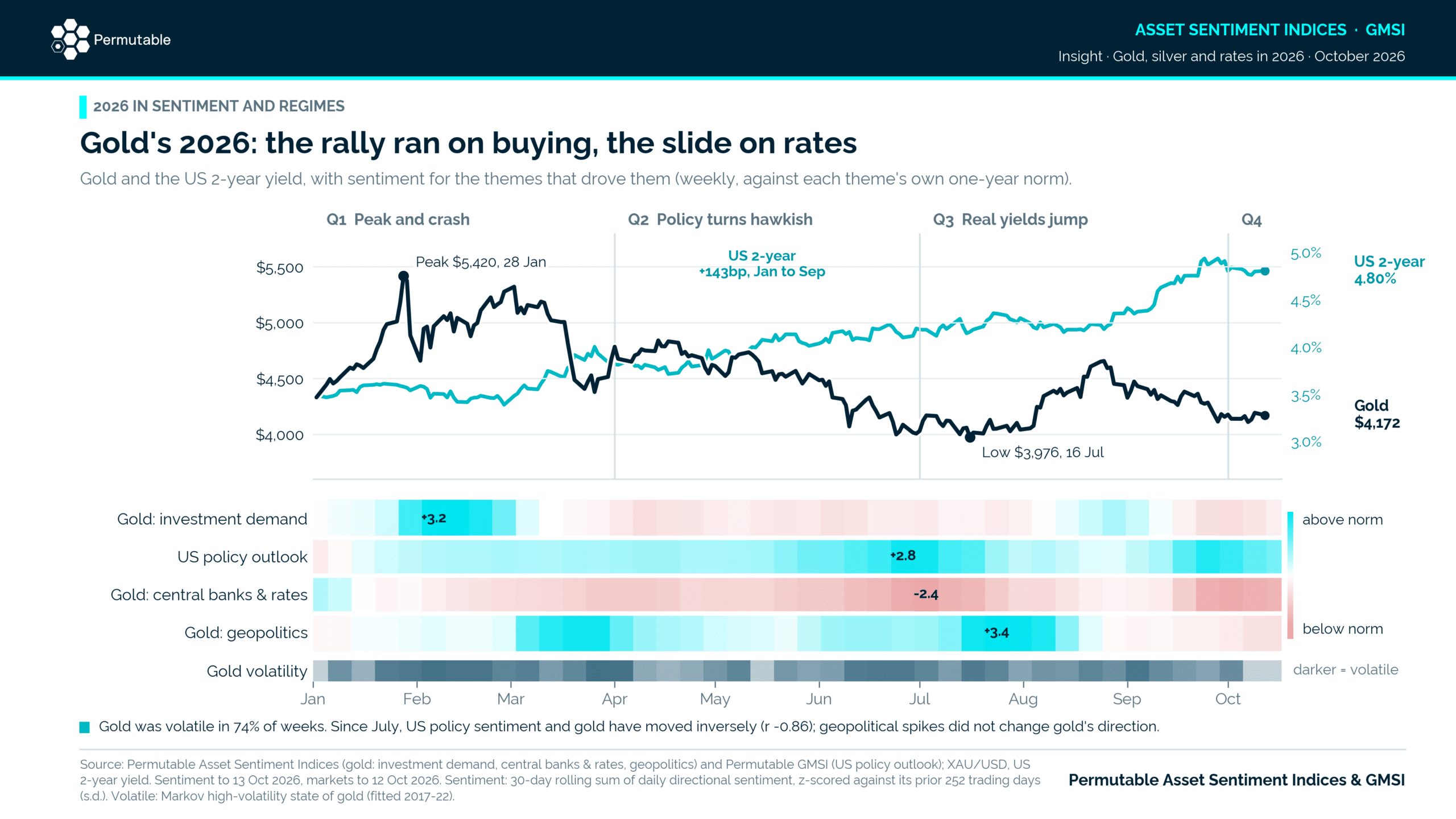
Chart 1: Gold and the US 2-year yield, with weekly sentiment for the themes that drove them, against each theme’s own one-year norm, source: Permutable Global Macro Sentiment Indices (GMSI)
Investment-demand sentiment rose 3.2 standard deviations (s.d.) above its one-year norm in January as gold set its record, alongside an equally strong surge in currency sentiment.
Gold lost 9% in a single session on 30 January, when Kevin Warsh’s nomination as Fed chair lifted the dollar and trimmed expectations of rate cuts. By spring, investment-demand sentiment had slipped below its norm, and it has not come close to January’s intensity since.
The March oil shock lifted inflation expectations and pushed back hopes of rate cuts, handing control of gold to the rates market. US policy-outlook sentiment grew steadily more hawkish, reaching almost 3 s.d. above its norm in late June, as the Fed held rates and cited energy-driven inflation. In September, the Fed followed through with a quarter-point hike.
Higher policy expectations lift Treasury yields and, with them, the opportunity cost of holding gold. With the 2-year at 4.8% and the 10-year real yield near 2.9%, the income forgone is substantial. Gold’s own sentiment on central banks and interest rates reflects the strain: it has sat below its norm on 97% of days this year.
Since July, gold’s 30-day return has moved inversely with US policy sentiment at a correlation of −0.86, against −0.31 over 2017–25. A time-varying model suggests the change is structural: gold’s sensitivity to policy sentiment has risen about fivefold in a year, and almost none of that rise is down to volatility.
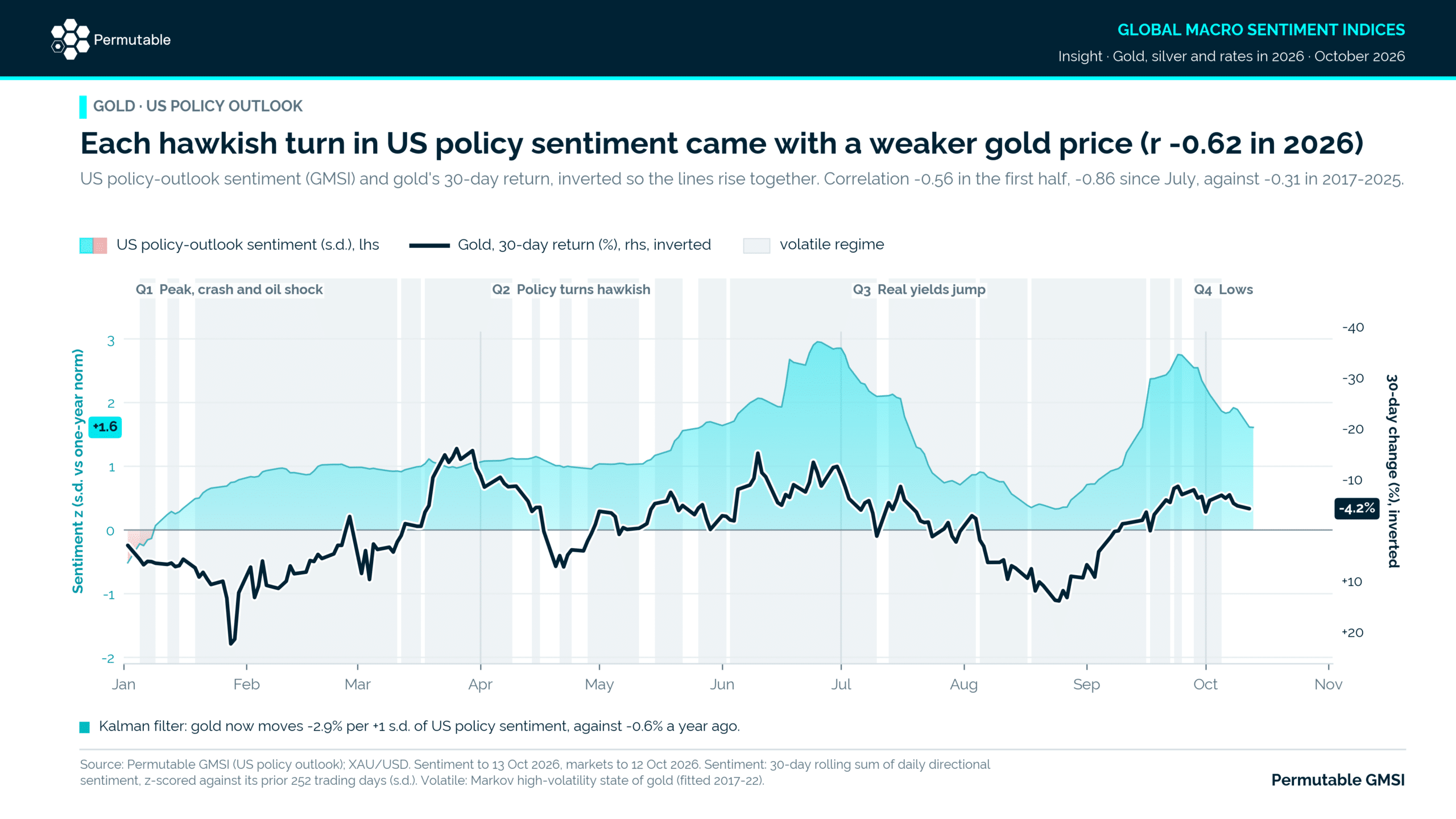
Chart 2: US policy-outlook sentiment against gold’s 30-day return ( inverted so the two lines rise together), source: Permutable Global Macro Sentiment Indices (GMSI)
The year’s turbulence magnified each turn. Gold spent 74% of 2026’s weeks in its high-volatility regime, against about one week in six over 2017–25, and in that state a given shift in sentiment has historically brought two to four times the price move of calmer markets.
Gold’s response to each geopolitical spike this year depended on what the 2-year yield did at the same time.
Across 37 geopolitical and tension spikes since 2017, gold rose in 83% of cases when 2-year yields fell, against 47% when they rose. An oil-driven shock tends to lift rate expectations too, and can weigh on gold just when investors want a hedge.
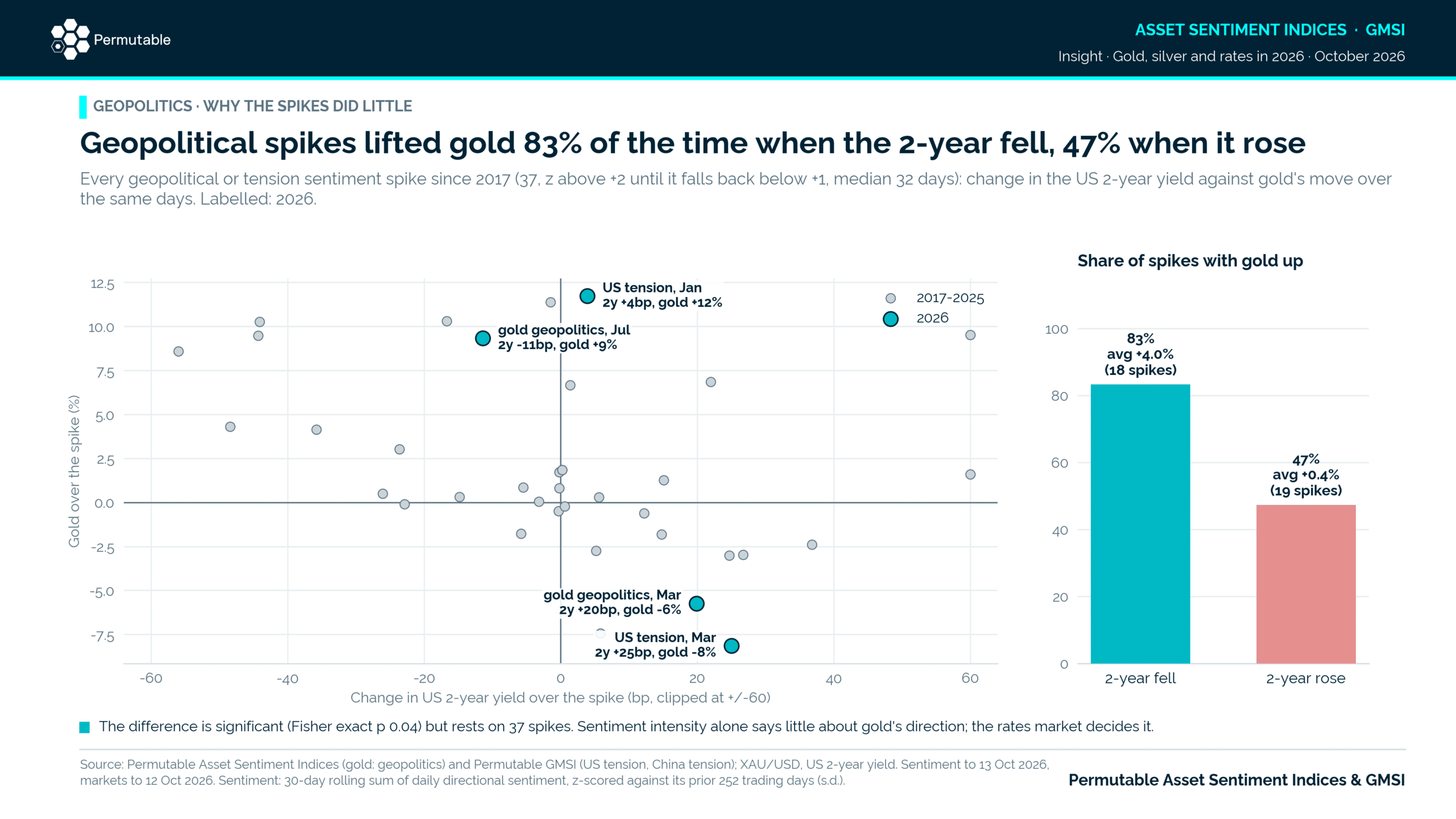
Chart 3: Every geopolitical or tension sentiment spike since 2017: the change in the 2-year yield against gold’s move over the same days, source: Permutable Global Macro Sentiment Indices (GMSI)
Gold enters the final quarter more closely tied to rates sentiment than at any point this year, with its own sentiment near its weakest since 2017. September’s CPI, released on 14 October, showed inflation accelerating to 3.7% on higher energy costs, keeping another hike in play when the Fed meets on 27–28 October.
A sustained recovery needs US policy sentiment, still 1.6 s.d. above its norm, to ease back towards normal, confirmed by lower Treasury yields. Until then, geopolitical shocks are likely to offer gold only fleeting support, and those that push oil higher may do more harm than good. Permutable’s policy and central-bank themes will register that turn as it happens.
If this research raises a question relevant to your investment process, test it with us. We’ll help define a focused trial around your commodity or macro coverage, with historical data, methodology notes and agreed evaluation criteria.

Analysis
14 Oct 2026
Beneath US headline inflation: tracking pressure across energy, food, services and housing
Read more >
Analysis
13 Oct 2026
France’s debt alarm hits a decade high and drowns out the rest of the G20
Read more >
Analysis
12 Oct 2026
Macro sentiment in rates research: Can macro sentiment add information to front-end rates research?
Read more >