Institutional intelligence for markets moving on information

Permutable’s Intelligence Engine transforms raw global information into structured, point-in-time intelligence feeds for institutional research, trading, risk and monitoring workflows.

Recognised as Technology Provider of the Year: Innovation at the Hedgeweek European Awards 2026, it delivers live indices, event records, market-driver signals and source-linked evidence so teams can see what is changing – and why.
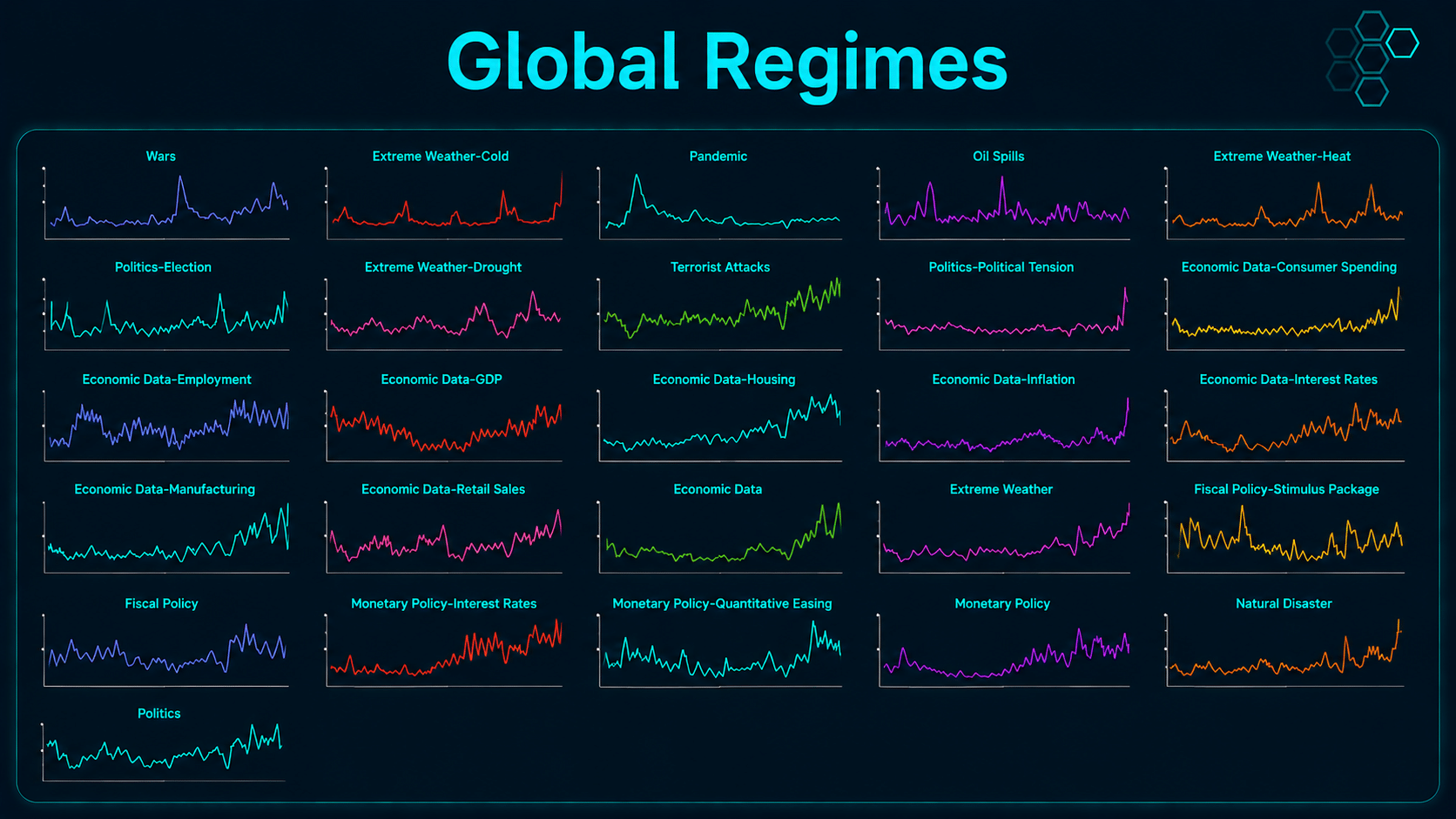

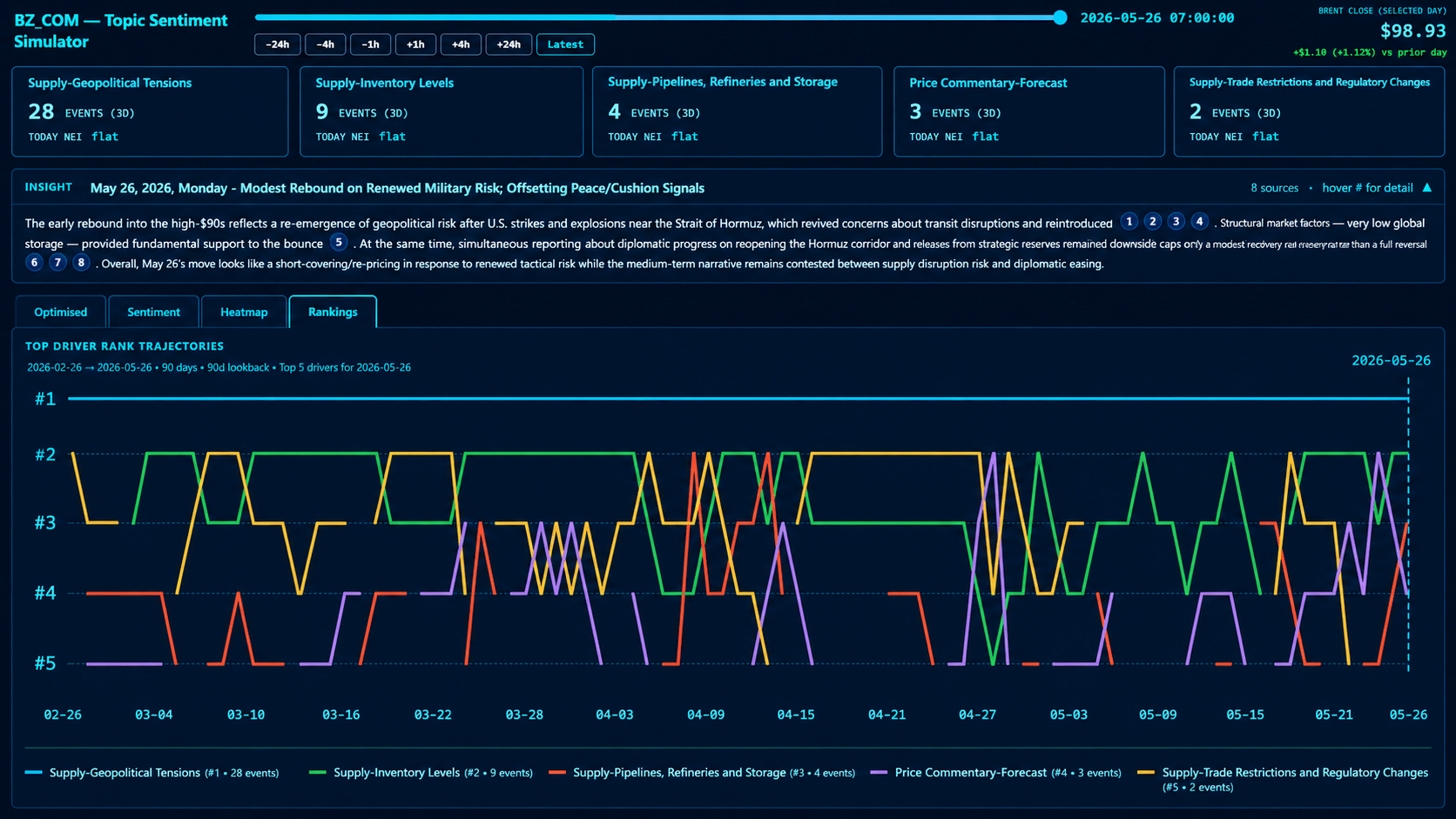
Visualisation of Permutable’s sentiment intelligence engine tracking global regimes including wars, weather, policy, economic data and market risk signals.
  • 250k sources
  • 90+ countries
  • 80+ languages
  • 70+ assets
  • 11+ years point-in-time signals
Request sample intelligence feeds

Intelligence feeds produced by the Engine

  • Macro intelligence feeds

    Point-in-time signals across inflation, growth, policy, fiscal pressure, trade, labour markets and political risk, delivered by country, topic, source region and timestamp.

  • Commodity driver feeds

    Structured supply, demand, policy, weather, infrastructure, inventory and geopolitical signals for energy, metals, agriculture and other traded assets.

  • Geopolitical event feeds

    Escalation, disruption, conflict, sanctions, shipping-route, policy and regional-risk events mapped to affected countries, assets and market drivers.

  • Narrative persistence feeds

    Signals showing whether a market narrative is isolated, broadening, fading or becoming persistent across sources, languages and geographies.

  • Source-linked event records

    Machine-readable records connecting each signal to contributing sources, topics, entities, timestamps, event clusters and evidence trails.

See sample API output

From signal to feed: what institutions can consume

Permutable’s Intelligence Engine does not only generate dashboards or commentary. It produces structured intelligence feeds that can be integrated directly into institutional research, trading, monitoring and risk infrastructure.

Indices Country, asset and topic-level sentiment time series Macro research, factor testing, regime monitoring
Event records Timestamped narrative and market-driver events Analyst monitoring, alerting, event studies
Driver signals Supply, demand, policy, weather, geopolitical and macro drivers Commodity, FX and cross-asset research
Source-linked records Event-to-source evidence trails Explainability, auditability, analyst validation
Historical PIT files Point-in-time research datasets Backtesting, model validation, signal research
Live API feeds Updated structured outputs Internal dashboards, alerts and production workflows

See the Intelligence Engine in action

Turn global information into structured thematic signals

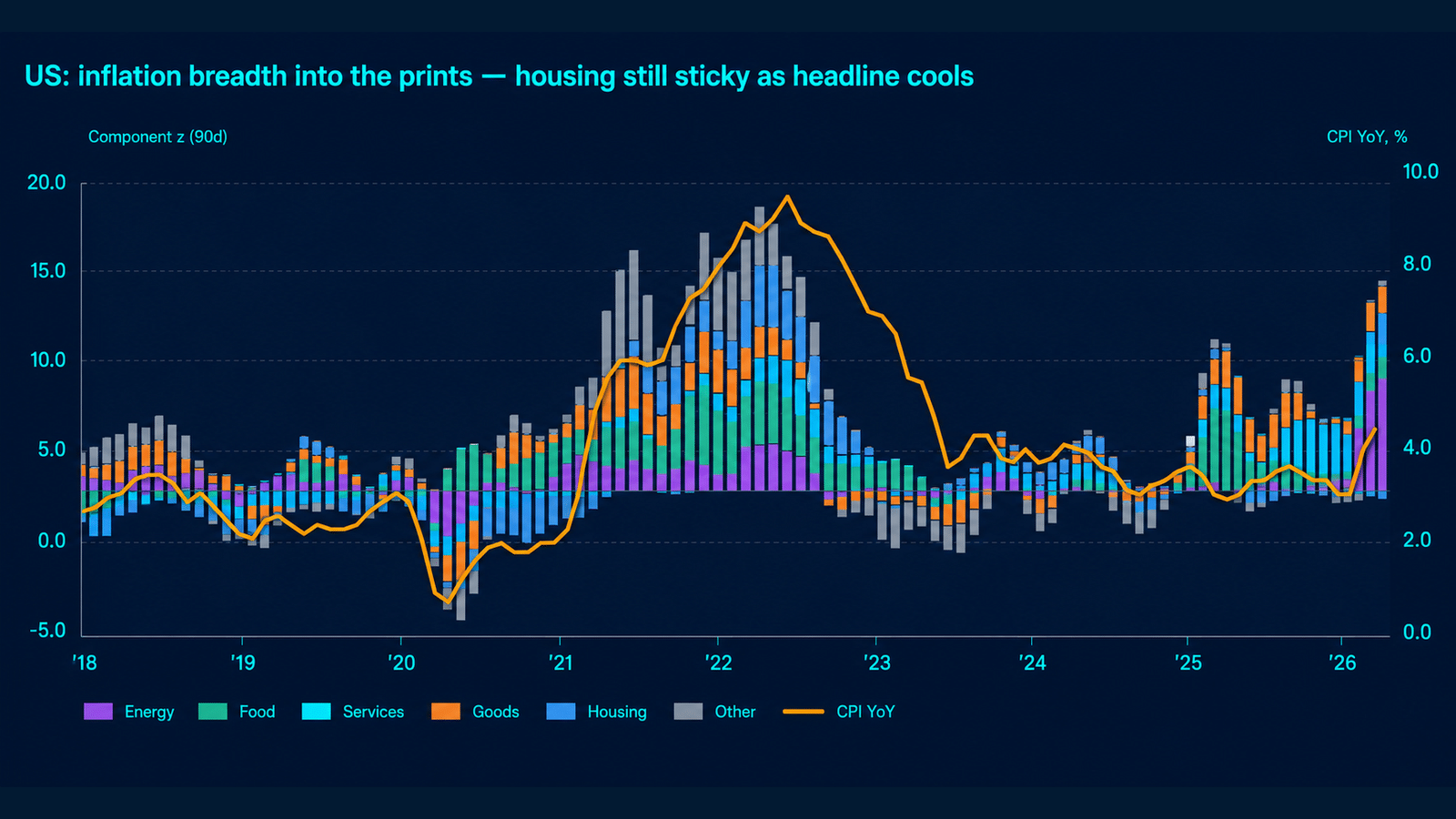
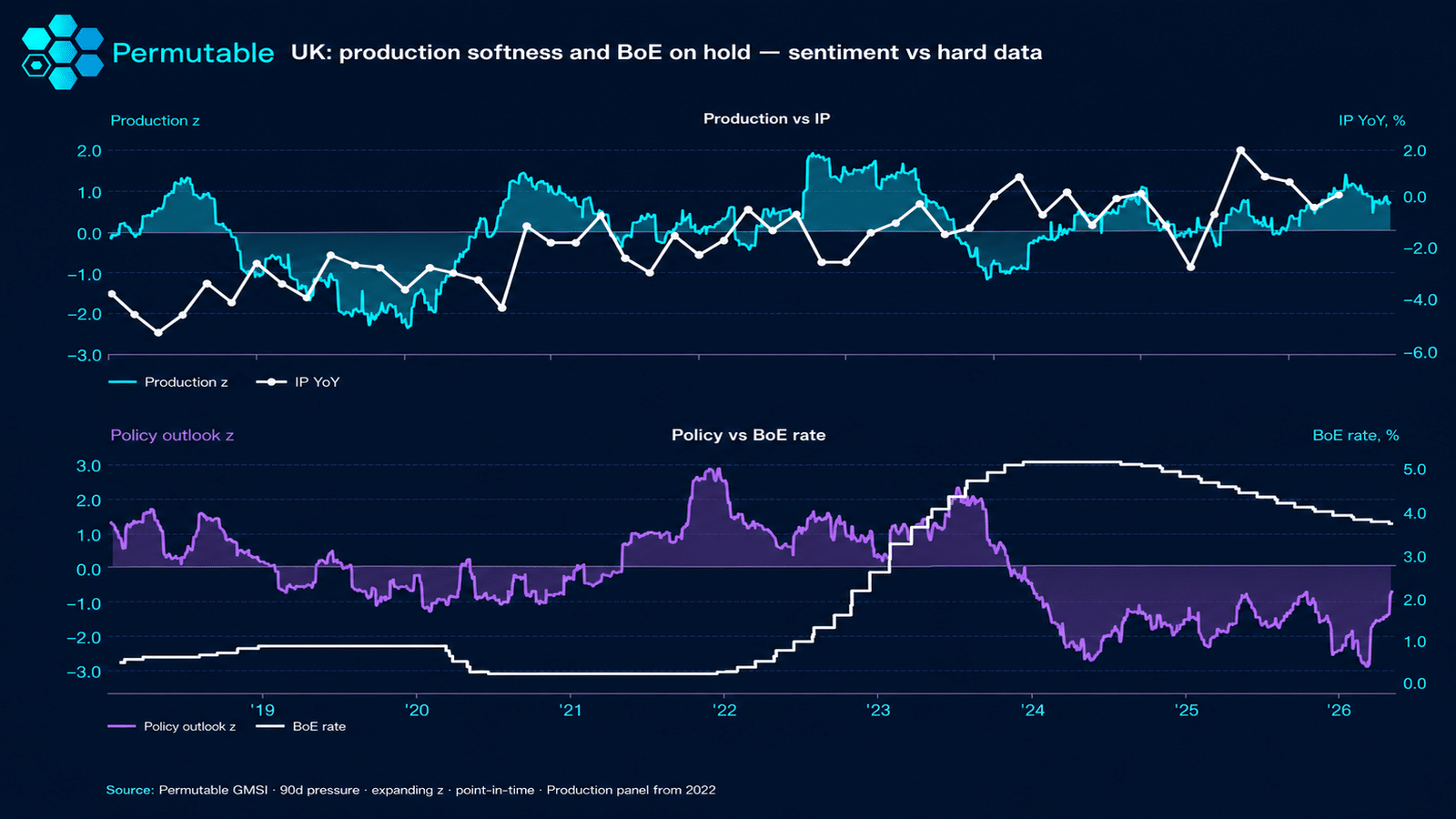
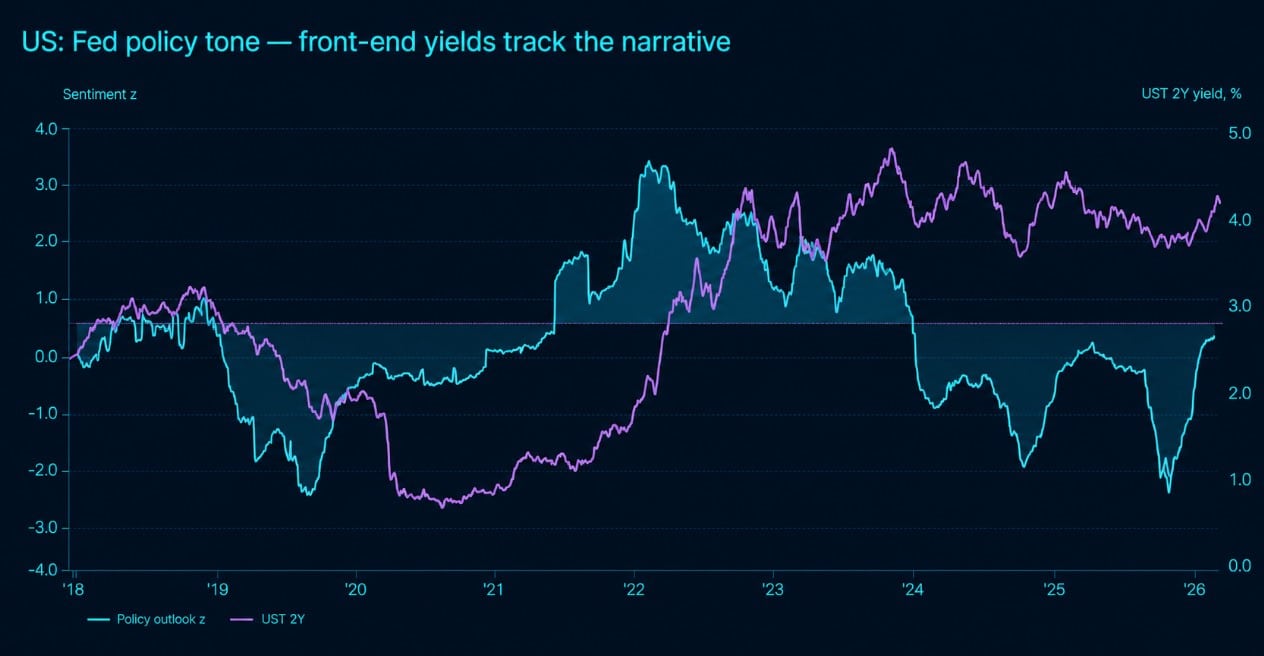
Classify global information into structured macro themes, separating inflation, growth, policy and sector-level signals so institutional teams can analyse changing pressure consistently across countries, assets, regions, markets and time horizons.

Dark Permutable chart showing US inflation breadth from 2018 to 2026, with stacked component z-scores for energy, food, services, goods, housing and other categories alongside CPI YoY.
Discuss feed coverage for your market

Designed for institutional data workflows

Permutable intelligence feeds can be delivered through API, Excel, scheduled files, dashboards or custom enterprise integrations. Typical fields include:

  • Timestamp
  • Country
  • Asset
  • Market driver
  • Directional score
  • Semantic score
  • Impact score
  • Event cluster ID
  • Source reference
  • Model version
  • Point-in-time vintage

One intelligence system. Multiple routes to value.

  • Systematic

    Use point-in-time macro and sentiment signals for research, feature engineering and strategy testing.

  • Discretionary

    Identify emerging narratives, price drivers and risk events before consensus forms.

  • Asset managers

    Monitor macro regime shifts, country risk and cross-asset narrative transmission.

  • Investment banks

    Support research, sales and trading, market colour and client intelligence workflows.

  • Commodity desks

    Track supply disruption, weather, policy, geopolitics and demand narratives across energy, metals and agriculture.

Find your workflow

Evidence across signals, markets and workflows

Signals tested in live commodity markets

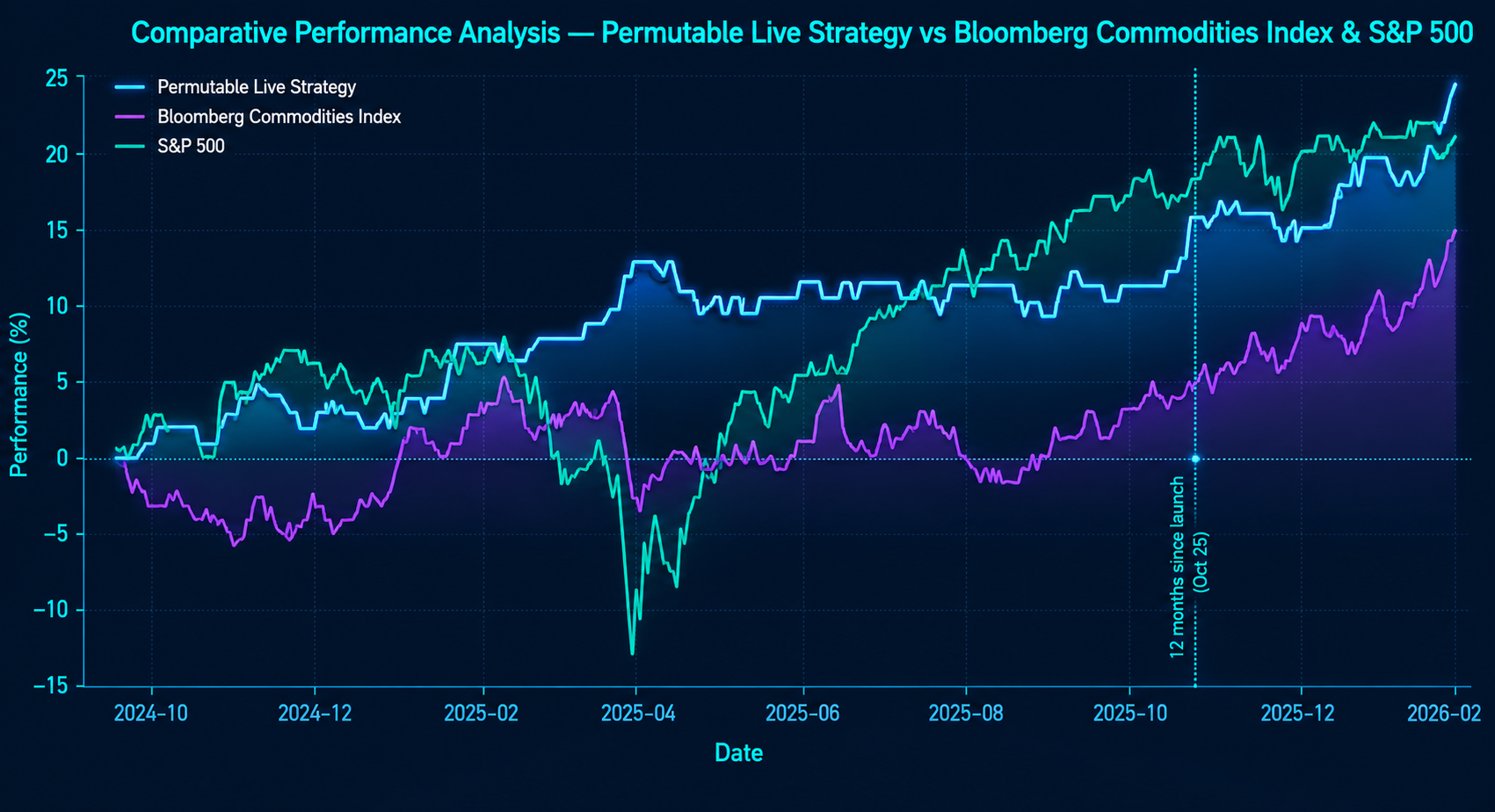
A 16-month live commodities futures experiment delivered 28.54% total return, 20.86% annualised return, 7.01% annualised volatility and a −2.95% maximum drawdown using Permutable sentiment signals across energy, metals and agriculture.

Dark-themed performance comparison chart showing Permutable's Live Strategy, Bloomberg Commodities Index, and S&P 500 from October 2024 to February 2026. The Permutable strategy, displayed in bright cyan, outperforms the Bloomberg Commodities Index and closely tracks the S&P 500, ending with approximately 24% returns. The chart includes a marker highlighting the 12-month anniversary since launch and demonstrates the effectiveness of AI-powered market intelligence and narrative-driven trading signals.
Discuss your workflow

Designed to fit existing infrastructure

  • API and structured feeds

    Integrate indices, events, signals and source-linked records into models, dashboards and internal applications.

  • Excel and analyst workflows

    Bring structured intelligence into existing research, monitoring and decision-support processes without replacing established tools.

  • Historical research datasets

    Access point-in-time time series for backtesting, regime analysis, factor research and event studies.

  • Enterprise deployment

    Support institution-specific integration, delivery and infrastructure requirements according to the scope of the engagement.

Explore API delivery

From global information flow to structured market intelligence

Source ingestion

Validated global news, macro, market and alternative data sources across languages and regions.

  • Source ingestion

  • Entity and event detection

  • Narrative classification

  • Sentiment and signal construction

  • Delivery into workflows

FAQ

  • What does Permutable’s Intelligence Engine produce?

    The Intelligence Engine transforms global information flow into structured macroeconomic, commodity, asset and geopolitical intelligence.

    Outputs include point-in-time sentiment indices, market-driver signals, event classifications, narrative indicators, country and asset intelligence, and source-linked records designed for research, trading, monitoring and risk workflows.

  • How is the Intelligence Engine different from traditional news monitoring?

    Traditional news-monitoring platforms primarily help users search, filter and read information.

    Permutable classifies information by country, asset, topic, event, market driver and sentiment, then converts it into consistent time series and structured signals that can be analysed, compared and integrated into institutional systems.

  • How is the Intelligence Engine different from generative AI?

    The Intelligence Engine is designed to produce structured, repeatable and machine-readable intelligence rather than open-ended generated commentary.

    It converts information into defined indices, classifications, events, metadata and market-driver signals while preserving the connection between each output and its underlying evidence.

  • How are historical signals constructed on a point-in-time basis?

    Historical outputs are constructed using only the information available at each moment.

    This allows institutional teams to test signals, conduct event studies and develop models without introducing information that would not have been available at the time of the historical decision.

  • Can users trace signals back to their underlying sources?

    Yes. Our intelligence and outputs are designed around source-linked explainability.

    Users can investigate the events, narratives, topics, entities and underlying information contributing to changes in an index or market-driver signal, rather than relying solely on an unexplained composite score.

  • How does the Intelligence Engine classify narratives, events and market drivers?

    The Engine identifies the countries, assets, policy actors, topics and events referenced within each item of information.

    It then maps those records to structured taxonomies covering macroeconomic themes, commodity drivers, geopolitical developments, directional sentiment, semantic sentiment and related market relationships.

  • What is the difference between directional and semantic sentiment?

    Directional sentiment measures whether the underlying economic or market variable is moving higher or lower, tightening or easing, strengthening or weakening.

    Semantic sentiment measures whether the surrounding language and interpretation are positive, negative or neutral. Separating the two allows users to distinguish market direction from narrative tone.

  • How does the Intelligence Engine distinguish temporary news shocks from persistent narratives?

    The Intelligence Engine evaluates the direction, frequency, breadth and persistence of related information over time.

    This helps separate isolated headlines from sustained narrative changes that may influence expectations, positioning, policy interpretation or market repricing across multiple sources and regions.

  • How are outputs validated before institutional delivery?

    Permutable applies filtering, classification checks, historical testing and dataset-level quality controls before outputs are delivered.

    Validation methods vary by dataset and use case. Relevant methodology, field definitions and technical documentation can be provided during an institutional evaluation.

  • Which markets and regions does the Intelligence Engine cover?

    The Engine supports intelligence across macroeconomics, commodities, currencies, geopolitical risk and other globally traded markets.

    Coverage spans more than 90+ countries, 80+ languages and 70+ assets, with information drawn from a global universe of curated sources.

  • How is Intelligence Engine data delivered?

    Outputs can be delivered through API, Excel, institutional data feeds, historical files, dashboards and tailored enterprise workflows.

    The appropriate format depends on whether the data is being used for systematic research, analyst monitoring, portfolio oversight, internal applications or production infrastructure.

  • Can the Intelligence Engine integrate with existing institutional systems?

    Yes. Structured indices, events, market-driver signals and source-linked records can be integrated into research environments, models, internal dashboards, monitoring systems and portfolio or risk infrastructure.

    Permutable works with institutions to define the datasets, frequency, fields and delivery approach required for their workflow

  • How are model changes, dataset revisions and versions handled?

    Versioning and revision processes depend on the dataset and deployment requirements.

    During evaluation and integration, Permutable can provide relevant information on dataset definitions, timestamps, corrections, methodology changes and the handling of historical and live output

  • Can institutions evaluate the Intelligence Engine before integration?

    Yes. Institutional teams can request sample indices, market-driver signals, source-linked records, technical documentation and an integration overview relevant to their markets and workflows. Contact our team to request sample Intelligence Engine outputs.