
Weekly energy commodities sentiment overview: what is driving cross-commodity direction?
30 Apr 2026
30 Apr 2026
This weekly energy sentiment overview, based on Permutable AI data, examines how narrative shifts are shaping crude oil, refined products and gas markets in real time. It is designed for institutional investors, trading desks and commodity specialists seeking to understand how geopolitical risk, supply signals and demand dynamics are interacting before being fully reflected in price. All observations reflect conditions at the time of writing and may evolve rapidly.
Welcome to our comprehensive weekly energy commodities sentiment analysis designed for institutional traders, asset managers, and energy funds. Our aim is to deliver cutting-edge commodities intelligence that captures how market narratives shape outcomes in energy markets long before price action confirms directional moves.
This report provides a structured view of market sentiment across global energy commodities using real-time data from Permutable AI. The dataset aggregates tens of thousands of headlines across hundreds of sources, translating narrative flow into directional indicators for institutional use across crude oil, natural gas, LNG, and refined products.
All sentiment indicators and interpretations reflect market conditions at the time of writing. In current markets, narrative shifts can occur quickly, and positioning may adjust rapidly as new information emerges.
The current environment is defined by a clear pattern. Markets are no longer moving on single drivers. Instead, price formation reflects a balance between geopolitical risk, supply response and demand elasticity. This has resulted in a broad neutralisation of sentiment across energy markets despite elevated volatility.
Across crude, gas and refined products, the dominant theme is not direction, but uncertainty.
Across major energy benchmarks, sentiment indicators are currently neutral at approximately 65 percent conviction at the time of writing. This reflects a convergence of opposing forces.
The result is a market in consolidation rather than expansion. However, these dynamics remain fluid and may shift quickly with new geopolitical or macro developments.
Permutable AI data shows that Brent sentiment remains balanced at the time of writing despite recent price strength above 110 dollars.
The dominant narrative over the past week has been geopolitical risk. Concerns around Iran and the Strait of Hormuz have driven expectations of supply disruption, supporting a sustained risk premium. However, more recent signals have introduced instability into this narrative.
Over the last 24 to 48 hours, sentiment has been shaped by three competing developments. First, extreme price projections in the range of 120 to 126 dollars have increased volatility expectations. Second, profit-taking behaviour has emerged following the rally. Third, discussions around potential supply responses, including OPEC positioning and strategic reserve releases, have reduced directional conviction.
Taken together, these signals suggest that while the structural trend remains supported by risk, the market lacks immediate follow-through. The neutral classification reflects this balance, which may change rapidly as new supply or geopolitical signals emerge.
WTI sentiment mirrors Brent but with a stronger emphasis on short-term correction dynamics.
The past week was defined by a sharp bullish move driven by supply disruption fears. However, the latest data shows a shift in behaviour. A pullback of approximately 1.5 percent has been driven by profit-taking and macro factors, including currency volatility.
At the same time, conflicting signals have emerged around demand strength and supply additions. While geopolitical risks remain elevated, there is growing evidence that the market may be temporarily overextended.
Permutable AI’s indicators suggest that WTI has entered a consolidation phase. This neutral stance reflects current conditions and should be interpreted as dynamic rather than static.
Gasoil sentiment reflects a transition from strong bullish momentum to a more uncertain regime.
Earlier in the week, prices were supported by declining US distillate stocks and supply constraints, particularly in Asian markets. This resulted in a breakout toward recent highs. However, subsequent price action shows a loss of momentum.
Recent narratives include policy intervention, tactical releases and profit-taking. These signals are offsetting the earlier supply tightness story.
The neutral reading reflects a market that remains structurally supported but lacks incremental catalysts at the time of writing.
ULSD sentiment is characterised by high volatility and conflicting signals.
The initial rally was driven by strong inventory draws and geopolitical risk. However, recent sessions show a reversal driven by profit-taking and emerging bearish headlines, including policy adjustments and potential price moderation.
Permutable AI’s data indicates that traders are currently recalibrating expectations. Physical tightness remains a supporting factor, but the absence of consistent follow-through has resulted in a neutral stance, which may shift quickly with new inventory or policy data.
RBOB continues to exhibit mixed directional signals.
Supply-side concerns and refinery disruptions have supported price strength over the past week. However, the most recent data highlights increasing uncertainty. Profit-taking behaviour, regional price relief and policy developments are limiting further upside.
The market is now balancing structural tightness against near-term moderation signals. This has resulted in consolidation within a defined range at the time of writing.
LNG sentiment has stabilised following a period of elevated volatility.
Supply risks remain present, particularly linked to shipping disruptions and regional shortages. However, these are increasingly offset by demand-side weakness. Data highlights reduced import demand from China and broader signs of consumption slowdown.
At the same time, increased US export flows are reinforcing the perception of ample supply.
Permutable AI’s signals show a clear balance between residual supply risk and visible demand erosion. This balance remains highly sensitive to changes in weather, geopolitics and trade flows.
Henry Hub sentiment remains anchored by bearish fundamentals but shows signs of stabilisation.
Inventory builds, mild weather and strong domestic supply continue to exert downward pressure. However, recent sessions indicate a pause in the decline as geopolitical risks remain a potential upside catalyst.
The current regime is defined by oversupply with intermittent volatility. Direction may shift quickly if demand or supply expectations change.
TTF sentiment reflects a similar pattern to LNG but with stronger geopolitical sensitivity.
Recent price strength has been driven by risk premia linked to shipping routes and regional tensions. However, this is counterbalanced by mild weather forecasts, improving inventories and alternative supply signals.
The combination of these factors has produced sharp intraday volatility without sustained direction. The neutral positioning reflects this balance at the time of writing.
Across energy markets, the key shift is from directional conviction to narrative balance.
Permutable AI’s sentiment intelligence suggest that three dynamics are now dominant. First, geopolitical risk continues to anchor upside expectations but is no longer sufficient to drive sustained rallies. Second, supply responses are increasingly visible and are moderating extremes. Third, demand signals are fragmenting, introducing uncertainty into forward projections.
These conditions are inherently unstable. As such, positioning should account for the potential for rapid narrative shifts.
The current energy landscape is defined by competing narratives rather than a single dominant driver. This has resulted in a broad neutralisation of sentiment across crude, refined products and gas markets.
Permutable AI data indicates that while structural risks remain elevated, short-term direction is increasingly determined by how these risks interact with supply responses and demand signals.
All observations reflect conditions at the time of writing. In fast-moving energy markets, sentiment and price dynamics can evolve quickly. For institutional participants, the advantage lies in continuously tracking these shifts as they develop, rather than relying on static interpretations.
Our energy commodities sentiment intelligence provides institutional teams with real-time visibility into narrative momentum, regime shifts and cross-commodity risk across crude, gas, LNG and refined products – before they are fully priced in.
Request an institutional demo below to explore our sentiment feeds and early-warning signals, or contact enquiries@permutable.ai to see how our intelligence layer supports trading, risk and allocation decisions.

Analysis
23 Sep 2026
How does the 2026 energy shock reach 2027? From shipping routes to policy rates
Read more >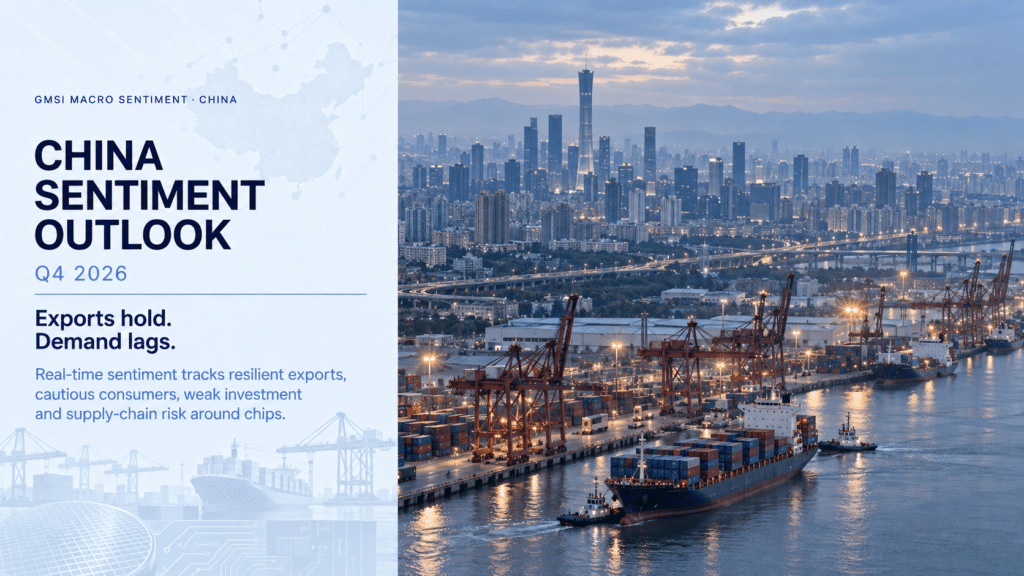
17 Sep 2026
China Sentiment Outlook Q4 2026: exports carry the load as consumers hold back and chip risk lingers
Read more >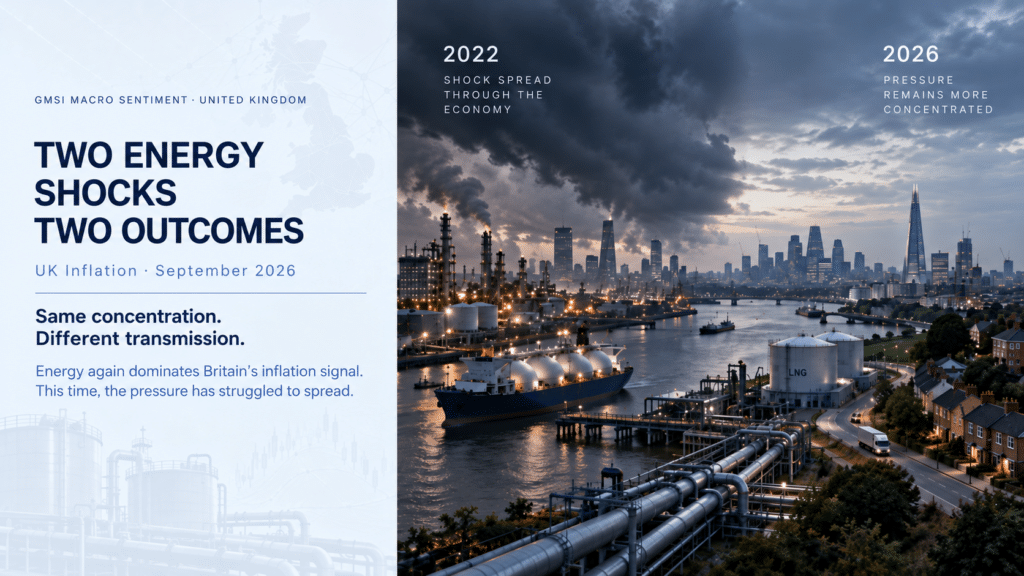
Analysis
10 Sep 2026
UK inflation and energy shocks: 2022 vs 2026
Read more >