UK data sets: Exploring news sentiment on key economic and political issues in 2024

The pulse of news sentiment can shift rapidly, understanding these changes is crucial for policymakers, business leaders, and community advocates. Our recent comprehensive analysis of our UK data sets sheds light on the intricacies of public mood across various sectors in the United Kingdom, revealing how employment, housing, political tension, and concerns over violence influence collective sentiment. Let’s take a closer look at what we have uncovered. 

Employment sentiment: A rollercoaster ride

Let’s start by looking at employment sentiment. The employment landscape in the UK during the selected period of late March to June 2024 has been marked by significant volatility, as indicated by our UK data sets. Over the past few months, news sentiment has experienced sharp peaks and deep troughs, reflecting the complex realities of the job market. Take late April – for example – where there was a notable spike in positive sentiment, suggesting a temporary boost in public confidence. This is likely to be due to the announcement of new legislation expanding rights for employees around flexible working, paid and unpaid leave, and protection from redundancy during parental leave around that time. Sad to say that this resulting optimism was sadly short-lived as sentiment quickly plummeted thereafter. But look how the fluctuating sentiment can be linked to a series of impactful headlines. 

Housing market: A beacon of relative stability

In contrast to the employment sector, the housing market sentiment has been relatively stable in recent months, albeit with its own set of challenges which we are all well versed on. Here, the overall trend is that of a slight positive sentiment, which suggests that despite periodic setbacks, the public maintains a generally optimistic view of the housing sector. This stability is occasionally disrupted by minor peaks and valleys, often triggered by specific news events. For example, a headline like “UK’s cheapest seaside town to buy a house where properties cost less than £83,000” in early June unsurprisingly brought a wave of positive sentiment. This would have provided a glimmer of hope for potential homeowners, reflecting affordability and accessibility in certain areas while so many continue to struggle to get a foot on the ladder. However, the housing market remains susceptible to broader economic trends and policy changes, so continuous monitoring and adaptive strategies are the order of the day, as reflected in the UK data sets.

Political tensions: A persistent cloud

Next, let’s look at political sentiment. Political sentiment in the UK remains predominantly negative, reflecting widespread public dissatisfaction with the current political landscape. Our UK data sets reveal significant dips in sentiment, particularly in late March and mid-April. These periods of heightened tension are often driven by contentious political developments and policy decisions, and in this case most likely linked to when speculation around a general election date began to mount. As so often happens, headlines like “Brexit betrayal: Leave voters turn against UK government over broken promises” capture the essence of public discontent. The ongoing Brexit saga, coupled with perceived governmental failures, continues to erode public trust. This sustained negativity calls for a more transparent and accountable political process to rebuild confidence and address the root causes of dissatisfaction, as suggested by the trends in the UK data sets.

Concerns over violence: A consistent worry

Now let’s talk violence. News sentiment regarding violence has remained consistently low, highlighting a deep-seated concern among the populace. Although there are brief periods of stabilisation, the overall mood is marked by apprehension and unease. The persistent negative sentiment around violence highlights a need for comprehensive strategies to address underlying causes and improve public safety to mitigate these concerns. The reality is that this low sentiment is reflective of widespread fear and anxiety about crime and violence, which can have far-reaching impacts on community well-being and cohesion that must be addressed by policymakers and community leaders alike.

Insights and implications

So what does this all mean? All of these points taken from our UK data sets highlight the varying sentiments across different sectors, illustrating the complexities of news sentiment. For policymakers, this data provides critical insights into areas requiring immediate attention, such as employment stability and political transparency. For businesses, understanding these trends is vital for tailoring strategies that resonate with consumer sentiment and address their concerns effectively. Ultimately, the data highlights the importance of staying connected to news sentiment. By keeping a finger on the pulse of public opinion through our UK data sets, decision makers can better navigate the challenges and opportunities that lie ahead. For community leaders and advocates, this means leveraging these insights to drive positive change and foster resilience within communities.

UK data sets: How we conduct news sentiment analysis

Now let’s get to the part where we explain how we do this. We use advanced machine learning algorithms to analyse extensive news data from various reputable sources. This comprehensive process begins with data collection, where news articles, reports, and headlines related to key sectors such as employment, housing, political tension, and violence are aggregated. Next, sentiment analysis is conducted using natural language processing (NLP) techniques to evaluate the tone of each news piece, categorising it as positive, negative, or neutral and assigning a sentiment score to quantify its intensity.

But that’s not all. The analysis also includes trend identification, tracking sentiment trends over time to detect significant fluctuations and patterns, thereby understanding how specific events and headlines influence public sentiment daily. Finally, significant sentiment changes are correlated with impactful headlines and news events, providing context and insight into the underlying factors driving public mood.

Our data-driven analysis of news sentiment in the United Kingdom, based on our UK data sets, offers a nuanced understanding of the current mood across various sectors. The fluctuating sentiments around employment, the relative stability in housing, the persistent negativity in political tensions, and the consistent concerns over violence all paint a complex picture of public opinion.

Find out more

There are so many use cases for our UK data sets. If you’d like to experience firsthand how our comprehensive news sentiment analysis can inform your decisions and strategies, get in touch to request a free by emailing enquiries@permutable.ai or fill in the form below.


Permutable AI releases ranking of worst companies facing political risk in 2024

Our latest AI-driven sentiment analysis of companies facing political risk shows what a turbulent world now means for businesses. For corporations, the world is intricate. Consequently; negotiating through the ever moving parts of politics can be tough for enterprises. This is because sometimes political events happen unexpectedly and they usually affect everything from procurement processes right up to how consumers feel about products and services provided by organizations.

An insight into some of the companies facing political risk is given by our AI-driven news sentiment analysis. Our analysis relies on artificial intelligence to find out organizations that stand out due to negative sentiment driven by political uncertainties. It does so by examining huge amounts of information looking at more than half a million articles each day across up to 12,000 sources so as to measure what public perception looks like in relation to this particular concern. 

Worst companies facing political risk: Our findings from news sentiment analysis 

Let’s take a closer look at the findings. Gazprom tops the list because, ultimately, it used gas as part of its political strategies while  engaged in Ukraine conflicts. At the same time, despite its popularity level; Apples reputation has fallen due to ongoing privacy issues and the the associated politics of privacy policies. Our findings also unearth financial scandals an lack of controls characterised by Credit Suisse’s operations.

Our analysis also singles out major tech companies. Google’s parent company, Alphabet is perceived to be quite monopolistic in its operations and has faced various criticisms on how it handles data. Such is also the case with Facebook/Meta whose privacy breaches keep attracting much criticism including allegations surrounding their alleged political bias.

Ranking


Company Name

Sector

Data Sources

Average Sentiment

Positive Data Points

Negative Data Points

Negative Score

1

Gazprom

Oil & Gas

262

-0.35

982

2109

-1075.70

2

Apple 

Computers

225

-0.60

321

1403

-1038.71

3

Credit Suisse 

Banks

120

-0.68

109

621

-499.97

4

Alphabet

Internet

135

-0.61

114

505

-376.53

5

Nvidia 

Semiconductors

112

-0.52

143

472

-321.01

6

Moody’s 

Commercial Services

84

-0.49

112

351

-226.73

7

McDonald’s 

Retail

181

-0.30

233

447

-204.37

8

Facebook 

Internet

100

-0.68

43

239

-191.33

9

British American Tobacco 

Agriculture

66

-0.47

93

261

-165.58

10

Uniper 

Electric

68

-0.38

124

284

-154.78

Politics and profits 

According to Wilson Chan, our CEO: “These findings underline an important aspect within which organisations must conduct their political interactions.” He further emphasizes that, “Being politically savvy in today’s global economy is not just about following the rules; it also involves defining paths consistent with both corporate principles and societal demands”. These findings are important for businesses of various sizes, allowing them to understand how their interaction with politics impacts public perception. In terms of reputation risk management, companies can leverage these insights to proactively mitigate potential reputational damage.

It’s a reasonable argument that businesses should take this sentiment analysis into account when interpreting public opinion on political matters and do the following:

  • Introduce policies that are in tandem with the community’s beliefs: Even amid political turmoil, organisations that highly regard environmental consciousness, fair employment treatments, and moral data handling are likely to receive positive reception.
  • Employ straightforward running strategies that involve consistent talking: Honesty in matters related to political participation results in credibility as well as enabling them to keep potential negative assumptions under control.
  • Do away with any unforeseen issues: By taking a more proactive approach to risk mitigation – for example, by using our real-time sentiment analysis tracking tools – they can be alerted to and respond to any reputational risks before, putting measures in place before they become too significant to handle. 
  • Determine the impact of political campaigns impact: Frequent monitoring of the popular mood enables such companies to know  how effective their political policies are and tweak where necessary.

The facts are clear enough. Our analysis of the worst companies facing political risk using our AI-driven new sentiment analysis highlights the significance of adopting a strategic view on political engagement. To avoid political and reputational risks, global market players should –  particularly in today’s turbulent world economy –  be politically savvy and forward-looking.

Find out more about our company political risk data sets, available as part of our ESG intelligence data, or request more granular data by contacting us at enquiries@permutable.ai

Geopolitical risk data: Exploring key uses in 2024 and beyond

To say the world has become an increasingly volatile place to do business is no exaggeration. With that being the case, it’s absolutely no wonder that geopolitical risk data has become the unsung hero of many of today’s critical decisions. From assessing the stability of a country to predicting the impact of social unrest, geopolitical risk data provides a treasure trove of insights for businesses, investors, and policymakers. The fact is that thanks to the advancements in technology such a LLM transformers – which is the foundation of what we use at Permutable AI – this data revolution means that the provision of real-time in-depth geopolitical risk sentiment analysis can make or break strategic decisions.

Why geopolitical risk data matters

One thing above all is certain. understanding geopolitical risks isn’t just an option in the current business climate; it’s a necessity. Imagine you’re a business executive eyeing an expansion into a new market. Geopolitical risk data can shed light on the political, economic, and social dynamics at play, helping you make informed decisions. It’s like having a crystal ball that highlights potential pitfalls and opportunities.

Take, for example, Permutable AI’s geopolitical risk sentiment analysis. By tapping analysing vast amount of news data related to geopolitical risk in real-time data, we’re able to provide businesses with actionable insights that can guide everything from market entry strategies to supply chain adjustments. The point is, this isn’t just about avoiding risks; it’s about seizing opportunities that others might miss.

The power of informed decision-making

Business is harder than ever and competition is fierce. But geopolitical risk data can give decision-makers competitive edge in several ways. For instance, our geopolitical analysis digs into the political and economic factors that could impact operations, giving businesses a clearer picture of the landscape. 

Needless to say, identifying potential risks is half the battle. Armed with this knowledge, companies can develop strategies to manage and mitigate these risks. Whether it’s diversifying supply chains or adjusting market entry plans, geopolitical risk data is invaluable. Additionally, in the fast-paced business world, staying ahead of the curve is crucial. Companies that effectively leverage geopolitical risk data can anticipate market changes and identify new opportunities before their competitors.

Real-world applications of geopolitical risk data

Risk assessment and mitigation for international businesses

When it comes to businesses operating internationally, geopolitical risk data is a game-changer. It can help to identify potential risks and develop strategies to manage them. For instance, our data and analysis can highlight political instability or economic downturns in specific regions, allowing companies to adjust their strategies accordingly. The key here is a proactive approach, which not only ensures business continuity but also protects investments and assets.

Investment decision-making

We know from our clients that investors rely heavily on geopolitical risk data to make informed decisions. By evaluating the stability and growth potential of different markets, they can allocate their capital more wisely. Our sentiment analysis helps investors makes strides when assessing the risks and rewards associated with various opportunities, leading to higher risk-adjusted returns. Not only that, it also enables companies to stay ahead of regulatory changes and adapt to evolving geopolitical landscapes.

Supply chain management

There’s no question that in today’s global supply chain network, understanding geopolitical risks is crucial. First and foremost, geopolitical risk data can map and assess risks associated with supply chains, such as trade disputes or natural disasters. Ultimately, geopolitical risk insights provide organizations with valuable information to help diversify and optimize supply chains, ensuring resilience and continuity. Additionally, this data helps companies identify potential bottlenecks and develop contingency plans to mitigate disruptions effectively.

Insurance underwriting and risk assessment

For insurers, accurately pricing risks is vital. So where does geopolitical risk data come into play? This type of data allows them to understand the risks associated with different regions and industries. In this case, geopolitical risk data helps insurers develop tailored products and enhance their overall risk management strategies, ensuring they are well-prepared for any eventuality. It also enables insurers to improve their portfolio diversification and make more informed decisions about reinsurance arrangements.

Government and policy-making

Increasingly, governments and policymakers are also benefitting from geopolitical risk data, aiding in national security assessments, economic policy formulation, and disaster preparedness. That means governments can develop more effective policies and allocate resources more efficiently. It also supports international cooperation and diplomacy efforts by providing a clearer understanding of global dynamics and potential threats.

Corporate Social Responsibility initiatives 

There’s no question that geopolitical risk data can significantly impact how companies design and implement their CSR initiatives. First and foremost, understanding the social and political dynamics of a region allows companies to tailor their CSR efforts to address local needs more effectively. For example, our data can highlight areas where environmental or social issues are particularly pressing, enabling businesses to focus their resources where they can make the most significant impact. This not only benefits the community but also enhances the company’s reputation and stakeholder relations.

Crisis management and emergency response planning

In an era where crises can bubble up unexpectedly – from political upheavals to natural disasters – having robust emergency response plans is essential. Geopolitical risk data provides critical insights into potential crisis hotspots and helps organizations prepare for various scenarios. As a result, companies using this data can develop comprehensive crisis management strategies, ensuring they are ready to respond swiftly and effectively when a crisis occurs. Case in point – our real-time geopolitical data and analysis can be particularly valuable in monitoring developing situations and providing up-to-date information to guide response efforts.

Key considerations when using geopolitical risk data

While the benefits of geopolitical risk data are clear, it’s crucial to use this data judiciously. First and foremost, ensure the data is sourced from reputable and credible providers like Permutable AI, known for their accurate and insightful analysis. It’s also vital that the data is regularly updated to reflect the latest developments and changes in the global landscape.

Interpreting geopolitical risk data within the broader context of the relevant region, industry, or organization is essential. This means considering historical trends, cultural nuances, and socio-political factors that might influence the data. A holistic approach to interpretation leads to more accurate assessments and strategic decisions. Combining quantitative data, such as economic indicators and political stability indexes, with qualitative insights like expert analysis and on-the-ground intelligence provides a more comprehensive understanding of geopolitical risks. This mixed-methods approach can uncover deeper insights and nuances that numbers alone might miss.

Transparency and objectivity in the data are also crucial. Look for providers that offer clear and unbiased assessments, as data influenced by biases or political agendas can skew analysis. An objective provider ensures that the data is presented without undue bias, offering a clear and accurate picture of the risks. Additionally, regular monitoring and updating of geopolitical risk assessments are vital because geopolitical landscapes can change rapidly. This ensures that decisions and strategies remain relevant and effective, allowing for adaptation to new information and trends, which is key to maintaining a proactive stance in risk management.

Finally, integrating geopolitical risk data into broader strategic planning processes ensures that it informs all aspects of decision-making. This integration helps align risk management strategies with overall business or policy objectives, maximizing the value of the data and making it a powerful tool for navigating the complexities of the global landscape.

Navigating the global landscape

In today’s complex world, effectively managing geopolitical risks is crucial. The bottom line is this: by leveraging geopolitical risk data, organizations, investors, and policymakers can make strategic decisions that mitigate threats and capitalize on opportunities. Companies like Permutable AI are leading the way, developing the tools needed to surface geopolitical insights in real-time in the ever-changing global landscape. 

Ready to see how AI-driven geopolitical risk intelligence can transform your decision-making? Contact us for a demo of our AI-driven news sentiment analysis which is available through our Trading Co-Pilot subscription, or to request a free trial. You can also access top-line geopolitical insights through our Real-Time Geopolitical Insights & AI Market Sentiment Analysis Dashboard which is publicly available to view. 

Request demo


Using AI for supply chain due diligence in 2024: A case study featuring Tesco

It goes without saying that in today’s complex business environment, ensuring ethical and sustainable supply chains is a non-negotiable for maintaining corporate responsibility and customer trust. With that said, in this case study, we will explore the use case of AI for supply chain due diligence using Permutable AI’s proprietary technology and our Tesco dataset as an example.  Not interested in Tesco? Not to worry. Our  innovative technologies and data intelligence can be used to replicate this for any other company to monitor and improve its supply chain performance across various environmental, social, and governance -or ESG metrics.  

Comprehensive data integration

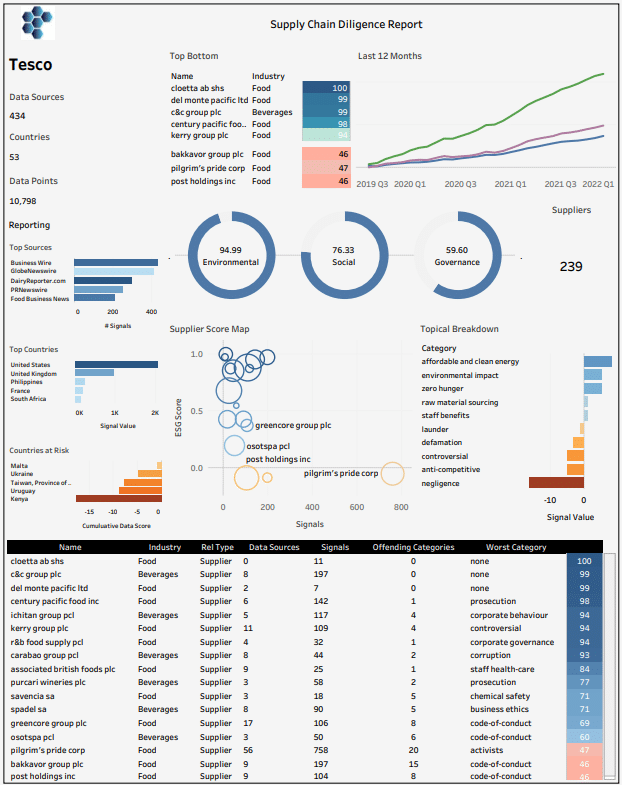
Let’s start at the beginning. At the heart of this Tesco supply chain due diligence example is the integration of diverse data sources. Using AI for supply chain due diligence, we collected data from 434 sources across 53 countries, encompassing over 10,798 data points for this study. This comprehensive data integration includes environmental reports, regulatory filings, and real-time monitoring systems, ensuring no critical data points are overlooked. The system also leverages natural language processing (NLP) to analyze unstructured data from news articles, providing a holistic view of each supplier’s performance.

Tesco supply chain due diligence report

Key performance metrics

This example supply chain due diligence report evaluates Tesco’s suppliers based on environmental, social, and governance criteria. The top performers include Cloetta (food industry, score: 100) and Del Monte (food industry, score: 99), demonstrating robust sustainability and ethical practices. These companies not only adhere to regulatory standards but also set higher benchmarks for environmental and social governance. In this case, using AI for supply chain due diligence would allow for these top performers to serve as benchmarks, helping to elevate overall performance by sharing best practices with other suppliers.

Conversely, Pilgrim’s Pride (food industry, score: 46) and Post Holdings Inc (food industry, score: 47) are identified as areas of concern, particularly in governance and code-of-conduct issues. Using AI for supply chain due diligence provides an avenue to detect suppliers falling short on ESG standards enabling direct engagement  to address deficiencies, setting clear improvement targets and conducting regular audits. This proactive approach ensures suppliers across a supply chain such as Tesco’s meet the high standards expected, reducing risks to supply chain integrity and brand reputation. Again, this can be replicated for any company and its supply chain. 

Environmental Performance

So where do things stand environmentally speaking? The report reveals an impressive environmental score of 94.99 for Tesco’s supply chain according to our analysis, indicating strong compliance with environmental standards. Suppliers are engaging in practices that reduce carbon footprints, manage waste efficiently, and use renewable resources. This is good news. Using AI for supply chain due diligence enables the tracking, maintenance of this score, by encouraging innovation in green technologies and providing incentives for significant environmental milestones.

Social and governance scores

Next, social and governance. While the environmental score is high, there is room for improvement in social (76.33) and governance (59.60) metrics. These scores suggest areas where Tesco’s supply chain can improve labour practices, diversity and inclusion, and corporate ethics. Using AI for supply chain due diligence, shines a lights on where  stricter standards should be put in place for suppliers in this use case and where transparency initiatives, such as public reporting of social and governance metrics, could be used to build trust and drive improvements to ensures suppliers meet high social and governance standards.

Supplier analysis and intervention

So then, the Supplier Score Map highlights varying levels of performance among suppliers. Companies like Greencore Group show high ESG scores, while others like Pilgrim’s Pride lag behind. In this case, using AI for supply chain due diligence would facilitate the development of a tiered support system, offering intensive support to lower-performing suppliers and recognizing high performers. Regular reviews and performance assessments could be put in place to ensure continuous improvement and compliance, leveraging high-performing suppliers to mentor and share best practices.

Addressing key issues by category

The report categorizes key issues such as affordable and clean energy, environmental impact, and raw material sourcing, highlighting where Tesco and its suppliers focus their sustainability efforts.  From our analysis in this example, it’s clear to see that Tesco prioritizes these areas, investing in technologies and practices that support clean energy use, sustainable sourcing, and overall environmental impact reduction. Collaborative projects with suppliers drive industry-wide improvements, ensuring Tesco remains a leader in sustainability – a smart move by the industry leader by all accounts.

Geographical insights and risk management

The example report identifies top countries providing data signals, including the United States, United Kingdom, Philippines, and South Africa, and highlights countries at risk such as Malta, Bulgaria, and Kenya. Using AI for supply chain due diligence reveals geographical areas of weakness in real time, signalling where engaging with suppliers in high-risk countries to address and mitigate specific issues is absolutely crucial to ensure compliance, thereby improving supply chain resilience. Ultimately, this knowledge will facilitate geographic-specific strategies and tailored interventions to the unique challenges and regulatory environments of each region, enhancing overall performance.

In this scenario, this example report shows how companies can leverage our insights and how by using AI for supply chain due diligence they are better positioned to make informed decisions that enhance supply chain operations, ensure ethical practices, and maintain high standards of corporate responsibility. Using Tesco here as example, it is clear that a continued focus on tracking environmental performance, improving social and governance metrics, and addressing regional risks strengthens across the supermarket giant’s sustainability initiatives would improve overall supply chain and business resilience. 

This case study give a sense of the transformative power of AI in creating a more transparent, accountable, and sustainable supply chain. If you are curious to find out more and would like to see how this can be applied to your company, customers and suppliers across your supply chain then we will be happy to help. Get in touch below to discover how our technology, data intelligence and insights can assist you.


GET IN TOUCH

The new normal: The evolution of consumer spending trends post-2020 to 2024

Consumer spending trends have always been a key indicator of economic health and societal preferences. However, the year 2020 brought about unprecedented changes in consumer behaviour due to the COVID-19 pandemic. Here, we explore the evolution of consumer spending trends post-2020 era to 2024. Understanding these trends is crucial for businesses to adapt and thrive in the new normal.

The impact of the COVID-19 pandemic on consumer spending

The COVID-19 pandemic has had a profound impact on consumer spending habits. Lockdowns, social distancing measures, and economic uncertainties forced consumers to rethink their priorities and alter their spending patterns. In the initial stages of the pandemic, panic buying of essential goods was witnessed as consumers stocked up on supplies amid fears of shortages. However, as the situation stabilized, consumer spending shifted towards health and hygiene products, as well as home entertainment and exercise equipment.

The shift to online shopping and e-commerce

One of the most significant changes in consumer spending trends post-2020 is the rapid shift towards online shopping and e-commerce. With brick-and-mortar stores temporarily closing or operating under limited capacity, consumers turned to the convenience and safety of online shopping. This shift has not only impacted traditional retailers but has also created opportunities for businesses to establish or expand their online presence. The rise of contactless payments and doorstep deliveries has further accelerated the growth of e-commerce.

Changes in consumer preferences and priorities

Consumer preferences and priorities have undergone a transformation in the wake of the pandemic. Health and safety have become top priorities for consumers, leading to increased demand for products and services that promote well-being. Organic and sustainable products, as well as home-based fitness solutions, have witnessed a surge in popularity. Additionally, consumers have become more conscious of supporting local businesses and brands that align with their values. As a result, businesses need to adapt their offerings to cater to these changing preferences.

Consumer spending intelligence

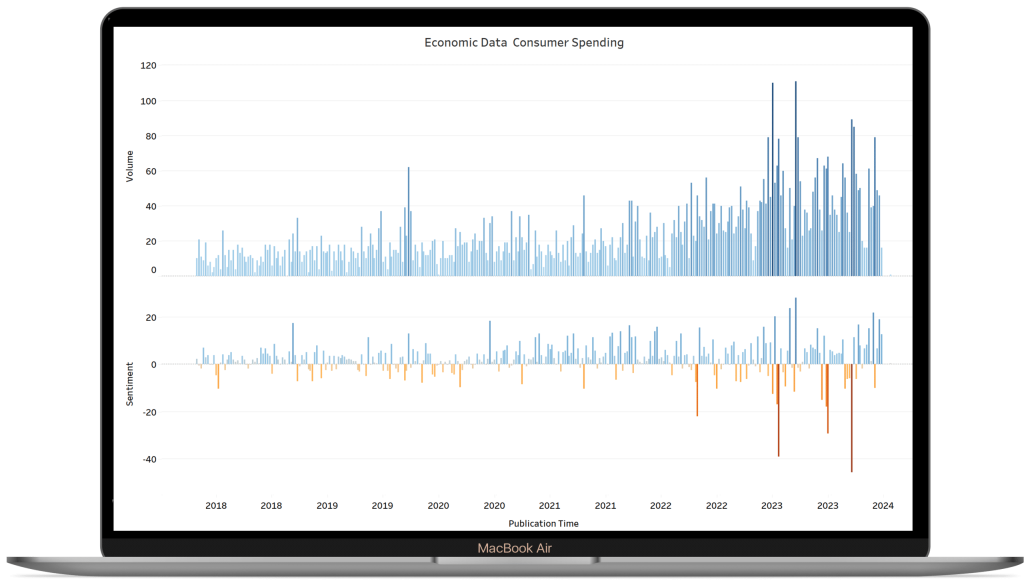
Above: Permutable AI’s consumer spending dataset 


REQUEST FREE TRIAL OF CONSUMER SPENDING INTELLIGENCE

Predictions for consumer spending 

Looking ahead, several predictions can be made for consumer spending.  Firstly, the shift towards online shopping and e-commerce is expected to continue, even as physical stores reopen. Consumers have become accustomed to the convenience and wider product selection offered by online platforms. Secondly, there will likely be a sustained focus on health and wellness, with increased spending on products and services related to personal well-being. Finally, consumers are likely to prioritize experiences over material possessions, leading to increased spending on travel, dining out, and entertainment.

The role of technology in shaping consumer spending trends

Technology plays a pivotal role in shaping consumer spending trends. From personalized marketing campaigns to AI-powered chatbots, businesses are leveraging technology to understand consumer needs and provide tailored experiences. The use of data analytics and artificial intelligence enables businesses to gain insights into consumer behaviour and make informed decisions. Additionally, emerging technologies such as virtual reality and augmented reality have the potential to revolutionize the way consumers shop and interact with brands.

Strategies for businesses to adapt to the new normal

To adapt to the new normal, businesses need to embrace certain strategies. Firstly, they must invest in their online presence and optimize the user experience of their websites and mobile apps. This includes ensuring fast loading times, intuitive navigation, and secure payment options. Secondly, businesses should focus on building trust and transparency with consumers by clearly communicating safety measures and social responsibility initiatives. Lastly, businesses need to be agile and responsive to changing consumer preferences, constantly innovating their products and services to meet evolving needs.

Case studies of successful businesses that have embraced the new consumer spending trends

Several businesses have successfully adapted to the new consumer spending trends including:

AmazonAmazon‘s e-commerce platform remains one of the most popular online marketplaces, with a vast selection of products and fast shipping options. Its Prime membership program, which offers benefits such as free two-day shipping and streaming services, continues to attract millions of subscribers.

Netflix: As a leading streaming service, Netflix continues to dominate the entertainment industry with its extensive library of movies, TV shows, and original content. Its subscription-based model and personalized recommendations keep users engaged and coming back for more.

Walmart: As one of the largest retailers in the world, Walmart has successfully adapted to changing consumer preferences by expanding its omnichannel offerings and investing in e-commerce capabilities. Its online grocery pickup and delivery services, along with initiatives like Walmart+, cater to the evolving needs of today’s shoppers.

Boohoo: Despite facing controversies related to labour practices and sustainability, Boohoo remains a prominent player in the UK’s online fashion retail sector. Its affordable clothing lines and frequent product launches appeal to budget-conscious shoppers looking for trendy styles and fast turnaround times. Boohoo’s strong digital presence and social media marketing strategies have helped it maintain its popularity among young consumers.

Tesco: The leading UK supermarket chain, has successfully navigated the shifting consumer landscape post-COVID-19 by adapting its strategies to meet evolving consumer needs. Embracing the surge in online shopping, Tesco expanded its online grocery services, offering home delivery and Click & Collect options, while also increasing delivery slot availability to accommodate high demand and diversifying its product offerings to include essential items and health-related products, aligning with changing consumer priorities. 

Apple: The global technology giant has adapted to new consumer spending trends by leveraging its digital ecosystem and emphasizing product innovation. With the acceleration of remote work and digital connectivity, Apple capitalized on the increased demand for its devices, including iPhones, iPads, and MacBooks, which became essential tools for remote communication and productivity. The company also focused on enhancing its online retail experience, offering convenient purchasing options and virtual customer support. 

The importance of consumer spending intelligence as a barometer 

Understanding consumer spending trends is essential for businesses to gauge market demand, anticipate changes, and tailor their strategies accordingly. Consumer spending intelligence serves as a barometer of economic health and societal preferences, providing valuable insights into consumer behaviour and market dynamics. By analyzing consumer spending patterns, businesses can identify emerging trends, assess competitive threats, and capitalize on new opportunities. Ultimately, consumer spending intelligence empowers businesses to make informed decisions and stay ahead in today’s rapidly evolving marketplace.

Embracing the evolution of consumer spending trends

The COVID-19 pandemic brought about significant changes in consumer spending trends – the effects of which can still be keenly felt today. The shift towards online shopping, changes in consumer preferences, and the role of technology have reshaped the way businesses operate. To thrive in the new normal, businesses must adapt their strategies and offerings to cater to these evolving trends. By embracing technology, analyzing consumer data, and prioritizing safety and well-being, businesses can position themselves for success in the post-2020 era. It is essential for businesses to stay agile and responsive to consumer needs and embrace the evolution of consumer spending trends to secure their place in the future.

Navigating consumer spending trends with Permutable AI’s economic data intelligence

Unlock the power of economic data intelligence with Permutable AI’s comprehensive data feeds offering insights into consumer spending trends from 2018 to the present. Our data intelligence provides in-depth insights into the dynamics behind consumer spending patterns worldwide, enabling you to stay ahead of the curve. By staying informed about shifts in consumer preferences, economic drivers, and sentiment analysis, businesses can make data-driven decisions to foster growth and success in an ever-evolving marketplace.


REQUEST FREE TRIAL OF CONSUMER SPENDING INTELLIGENCE

Top AI data analytics companies revolutionising the industry in 2025

Artificial Intelligence has revolutionised the world of data analytics, transforming the way organisations collect, process, and derive insights from vast amounts of data. AI-powered data analytics companies have emerged as key players in this rapidly evolving landscape, offering innovative solutions that unlock the true potential of data for businesses across various industries.

These companies – including ourselves at Permutable AI – leverage the power of machine learning, natural language processing, and other AI technologies to deliver advanced analytics capabilities that go far beyond traditional data analysis methods. By automating complex tasks, identifying hidden patterns, and making accurate predictions, they enable organisations to make more informed decisions, optimise their operations, and gain a competitive edge.

The era of big data and top AI analytics firms

In the era of big data, the volume, velocity, and variety of information available to businesses have grown exponentially. Traditional data analytics approaches often struggle to keep pace with this deluge of data, leading to missed opportunities and suboptimal decision-making. Here, AI bridges  this gap, providing the necessary tools and expertise to harness the full power of data.

AI-powered analytics solutions can process and analyse vast datasets in real-time, uncovering insights that would be nearly impossible for human analysts to detect. By automating repetitive tasks and applying advanced algorithms, these companies can identify trends, predict future outcomes, and uncover hidden correlations that can drive strategic business decisions.

The benefits of AI data analytics

The integration of AI into data analytics has yielded a multitude of benefits for organisations across various sectors. These advantages are transforming how businesses operate, compete, and deliver value to their customers. We break down the key benefits here:

Benefit What It Means How It Helps Organisations
Enhanced decision-making AI analyses vast structured & unstructured data in real time, removing bias and revealing hidden correlations. Enables data-driven decisions, nuanced risk assessment, and confidence-based forecasting in complex environments.
Improved efficiency Automation streamlines data collection, cleaning, and processing while monitoring markets 24/7. Reduces manual workload, cuts errors, and allows faster response to changing market or operational conditions.
Predictive capabilities Machine learning identifies subtle historical patterns to forecast future events and trends. Anticipates risks, detects opportunities early, and improves long-term strategic planning.
Personalised experiences AI creates dynamic customer profiles, tailoring recommendations and interactions in real time. Boosts satisfaction, loyalty, and engagement by delivering hyper-relevant, timely, and scalable experiences.
Competitive advantage AI uncovers insights competitors miss, optimises processes, and forecasts market behaviours. Delivers faster responses, accurate demand forecasts, sharper targeting, and even new business models.

Leading AI Data Analytics Companies in 2025

The AI data analytics landscape in 2025 is dominated by companies that have successfully integrated artificial intelligence capabilities into comprehensive data platforms. These organisations are shaping how businesses extract value from their data assets.

1. Tableau Software

Tableau is a leading provider of visual analytics and business intelligence software, empowering organisations to explore, visualise, and share data insights. The company has established itself as a pioneer in making data analytics accessible to non-technical users through intuitive drag-and-drop interfaces and powerful visualisation capabilities.

The company’s AI-powered features, such as Explain Data and Ask Data, enable users to uncover hidden patterns and ask natural language questions to gain deeper understanding. Explain Data uses machine learning algorithms to automatically identify potential explanations for outliers and unexpected patterns in data, while Ask Data allows users to type questions in plain English and receive instant visualisations.

Tableau’s strength lies in its ability to connect to virtually any data source, from spreadsheets and databases to cloud services and big data platforms. The platform’s real-time collaboration features enable teams to share insights instantly, while advanced analytics capabilities including forecasting, clustering, and statistical modelling help organisations move beyond descriptive analytics to predictive insights.

2. Alteryx

Alteryx is a platform that combines data preparation, data blending, and advanced analytics capabilities to help organisations unlock the value of their data. The company has positioned itself as a leader in self-service data analytics, enabling business analysts to perform complex data transformations without requiring extensive technical expertise.

Its AI-driven automation and machine learning capabilities streamline the entire analytics workflow, enabling faster and more accurate insights. Alteryx’s assisted modelling features guide users through the process of building predictive models, while automated machine learning capabilities can identify the best algorithms and parameters for specific use cases.

The platform excels in data preparation, often the most time-consuming aspect of analytics projects. Alteryx can automatically detect data quality issues, suggest corrections, and perform complex data transformations through an intuitive visual workflow designer. This capability significantly reduces the time required to prepare data for analysis while improving the reliability of analytical outputs.

3. Databricks

Databricks is a data and AI company that offers a unified analytics platform based on Apache Spark. Founded by the creators of Apache Spark, the company has built a comprehensive platform that combines data engineering, data science, and machine learning capabilities in a single collaborative environment.

Its AI-powered features, such as Delta Lake and MLflow, help organisations build and deploy machine learning models at scale, accelerating their data-driven decision-making. Delta Lake provides reliable data storage with ACID transaction support, while MLflow manages the complete machine learning lifecycle from experimentation to production deployment.

The platform’s strength lies in its ability to handle massive datasets and complex analytical workloads across cloud environments. Databricks offers automated cluster management, collaborative notebooks, and integrated version control, making it easier for data teams to work together on large-scale analytics projects. The platform’s support for multiple programming languages and frameworks provides flexibility for diverse analytical requirements.

4. Splunk

Splunk specialises in real-time monitoring, analysis, and visualisation of machine data. The company has carved out a unique position in the market by focusing specifically on operational intelligence and security analytics, making it indispensable for IT operations and cybersecurity teams.

Its AI-powered capabilities, including anomaly detection and predictive analytics, enable organisations to identify and address issues before they become critical. Splunk’s machine learning toolkit can automatically detect unusual patterns in log data, network traffic, and system metrics, providing early warnings for potential security threats or operational problems.

The platform excels at ingesting and analysing massive volumes of unstructured machine data from diverse sources including servers, networks, applications, and IoT devices. Splunk’s real-time processing capabilities enable organisations to respond to incidents within minutes rather than hours or days, significantly reducing the impact of system failures or security breaches.

5. Palantir Technologies

Palantir is a software company that provides data integration and analytics solutions for government agencies and large enterprises. The company specialises in handling complex, sensitive datasets and has built a reputation for solving challenging analytical problems in national security, healthcare, and financial services.

Its AI-driven platforms, such as Gotham and Foundry, help organisations make sense of complex, disparate data sources and uncover critical insights. Gotham focuses on government and defence applications, while Foundry serves commercial enterprises. Both platforms emphasise data integration, enabling organisations to combine information from multiple sources into coherent analytical frameworks.

Palantir’s approach emphasises human-AI collaboration, providing powerful tools that augment rather than replace human analysts. The platform’s ontology-based data modelling helps organisations understand complex relationships within their data, while advanced privacy and security controls ensure sensitive information remains protected throughout the analytical process.

6. SAS 

SAS is a leading provider of analytics software and services, with a strong focus on AI-powered solutions. The company has over four decades of experience in statistical analysis and has successfully transitioned to become a major player in the AI and machine learning space.

The company’s AI and machine learning capabilities are integrated across its various analytical tools, empowering organisations to make data-driven decisions. SAS offers comprehensive solutions for every stage of the analytics lifecycle, from data management and preparation to advanced modelling and deployment.

SAS distinguishes itself through its emphasis on model governance, reliability, and interpretability. The platform provides extensive capabilities for model validation, monitoring, and compliance reporting, making it particularly valuable in highly regulated industries such as banking, healthcare, and insurance. SAS also offers industry-specific solutions that incorporate domain expertise and best practices.

7. IBM Watson Studio

IBM Watson Studio is a comprehensive platform that combines data science, machine learning, and deep learning capabilities to help organisations build and deploy AI-powered analytics solutions. The platform represents IBM’s significant investment in democratising AI and making advanced analytics accessible to broader audiences.

Its AI-driven features, such as AutoAI and Watson Machine Learning, streamline the entire analytics lifecycle. AutoAI automatically builds and evaluates multiple machine learning models, selecting the best performing options and explaining their decision-making processes. This capability enables organisations to develop sophisticated models without requiring extensive data science expertise.

Watson Studio integrates with IBM’s broader ecosystem of AI and cloud services, providing seamless access to natural language processing, computer vision, and other cognitive capabilities. The platform’s collaborative features enable data science teams to work together effectively, while enterprise-grade governance and security controls ensure analytical assets remain protected.

8. Microsoft Power BI

Microsoft Power BI is a suite of business analytics tools that enable organisations to visualise, analyse, and share data insights. The platform has gained significant market share by integrating seamlessly with Microsoft’s ecosystem of productivity and cloud services, making it a natural choice for organisations already using Office 365 and Azure.

Its AI-powered capabilities, including automated machine learning and natural language processing, help users uncover hidden patterns and make more informed decisions. Power BI’s Q&A feature allows users to ask questions in natural language and receive instant visualisations, while automated insights proactively identify interesting patterns in data.

The platform’s strength lies in its accessibility and ease of use, enabling business users to create sophisticated dashboards and reports without requiring technical expertise. Power BI’s integration with Excel, SharePoint, and Teams creates a seamless analytical workflow within familiar Microsoft environments, while cloud-based sharing and collaboration features ensure insights reach the right stakeholders.

9. Google Cloud Platform

Google Cloud Platform offers a range of AI-powered data analytics services, such as BigQuery, Cloud Dataflow, and Cloud Dataproc, that help organisations process and analyse large datasets at scale. Google leverages its expertise in search, machine learning, and distributed computing to provide cutting-edge analytics capabilities.

These services leverage Google’s expertise in machine learning and AI to deliver advanced analytics capabilities. BigQuery provides serverless, highly scalable data warehousing with built-in machine learning capabilities, while Cloud Dataflow offers stream and batch data processing. Cloud Dataproc provides managed Apache Spark and Hadoop services for big data workloads.

Google’s platform stands out for its ability to handle massive scale analytics workloads cost-effectively. The serverless architecture eliminates infrastructure management overhead, while pay-per-use pricing models ensure organisations only pay for resources they actually consume. Integration with Google’s AI and machine learning services provides access to pre-trained models and advanced analytical capabilities.

10. Amazon Web Services (AWS)

AWS is a leading cloud computing platform that provides a comprehensive suite of AI-powered data analytics services, including Amazon Athena, Amazon Redshift, and Amazon SageMaker. As the largest cloud provider globally, AWS offers the most extensive portfolio of analytics and AI services available in the market.

These services enable organisations to efficiently store, process, and derive insights from their data using cutting-edge AI and machine learning technologies. Amazon SageMaker provides a complete machine learning platform, while Athena offers serverless query capabilities for data stored in S3. Redshift provides high-performance data warehousing for complex analytical workloads.

AWS’s strength lies in its breadth of services and global infrastructure, enabling organisations to build sophisticated analytics solutions that scale globally. The platform’s extensive partner ecosystem and marketplace provide access to hundreds of specialised analytics tools and solutions, while comprehensive security and compliance capabilities ensure enterprise-grade data protection.

11. Bonus: Permutable AI

At Permutable AI, we are a data intelligence company revolutionising the industry with advanced machine learning algorithms, news sentiment analysis, and customisable data analytics solutions. We are at the forefront of financial market intelligence, providing real-time insights that enable superior investment decision-making.

By leveraging real-time AI-driven insights across world, macroeconomic and geopolitical factors, we empower organisations to unlock the full potential of data, driving data-driven decision-making and innovation. Our Trading Co-Pilot technology processes vast amounts of unstructured market data, transforming news, earnings calls, and regulatory filings into actionable trading intelligence.

With a focus on scalability and industry expertise, enabling businesses to stay ahead in today’s competitive landscape, transforming the way they harness data for insights and strategic growth. Our platform’s unique combination of large language models and financial domain expertise creates alpha-generating insights that traditional analytics approaches cannot match. Through comprehensive sentiment analysis, event detection, and predictive forecasting, we delivers the intelligent market analysis that institutional traders and asset managers require for superior performance in dynamic global markets.

  • All
  • Economic Data
  • Monetary Policy
  • Political
  • Physical Events

Natural Disaster

Natural Disaster

Global full news source and sentiment data on natural disasters around the world from 2018 to present

Elections

Elections

Global full news source and sentiment data on political events around the world from 2018 to present

Extreme Weather Heat

Extreme Weather Heat

Global full news source and sentiment data on extreme weather heat around the world from 2018 to present

Consumer Spending

Consumer Spending

Global full news source and sentiment data on consumer spending around the world from 2018 to present

Employment

Employment

Global full news source and sentiment data on employment data around the world from 2018 to present

Inflation

Inflation

Global full news source and sentiment data on inflation data around the world from 2018 to present

GDP

GDP

Global full news source and sentiment data on gross domestic product around the world from 2018 to present

Pandemic

Pandemic

Global full news source and sentiment data on pandemic around the world from 2018 to present

Extreme Weather Cold

Extreme Weather Cold

Global full news source and sentiment data on extreme weather cold around the world from 2018 to present

Global Wars

Global Wars

Global full news source and sentiment data on wars around the world from 2018 to present

Stimulus Package

Stimulus Package

Global full news source and sentiment data on stimulus package around the world from 2018 to present

Quantitative Easing

Quantitative Easing

Global full news source and sentiment data on quantitative easing around the world from 2018 to present

Above: Permutable AI’s live real-time data feeds

Comparison Matrix: Top AI Data Analytics Companies 2025

Company Strengths AI Features Key Use Cases
Tableau Accessible data visualisation, intuitive dashboards Explain Data, Ask Data (NLP, ML) Business intelligence, data exploration, real-time collaboration
Alteryx Self-service analytics, strong in data prep Assisted modelling, AutoML Predictive modelling, fast data blending, workflow automation
Databricks Scalable analytics, Apache Spark foundation Delta Lake, MLflow Machine learning lifecycle management, big data workloads, cloud environments
Splunk Operational intelligence, security analytics Anomaly detection, predictive monitoring Cybersecurity, IT operations, incident response
Palantir Complex data integration for sensitive sectors Gotham, Foundry Defence, healthcare, financial services
SAS Advanced analytics, compliance, statistical modelling Model validation, interpretability tools Banking, insurance, healthcare, regulated industries
IBM Watson Studio Enterprise AI + cloud ecosystem AutoAI, Watson ML, NLP, computer vision AI democratisation, collaborative ML modelling
Microsoft Power BI Seamless Microsoft integration Q&A natural language, automated insights Dashboards, SME data analytics, reporting
Google Cloud Scalable big data processing BigQuery ML, Dataflow, pre-trained ML models Large dataset analysis, cost-efficient analytics
AWS Broadest AI + cloud portfolio SageMaker, Athena, Redshift Global-scale ML deployment, enterprise-grade analytics
Permutable AI Real-time market intelligence, financial domain expertise Trading Co-Pilot, sentiment analysis, forecasting Commodities, forex, macro & geopolitical risk, institutional trading

Top AI data analytics companies: Final thoughts 

The rise of AI-powered data analytics companies has ushered in a new era of data-driven decision-making, transforming the way organisations collect, process, and derive insights from their data. By leveraging advanced AI technologies, these companies are empowering businesses across various industries to make more informed decisions, optimise their operations, and gain a competitive edge.

As the field of AI data analytics continues to evolve, organisations must stay attuned to the latest trends and technologies to ensure they are capitalising on the full potential of their data. By partnering with the leading AI data analytics companies, businesses can unlock new sources of data, enhance their predictive capabilities, and drive sustainable growth in an increasingly data-driven world.

Explore our AI data analytics

Ready to unlock the power of AI data analytics for your organization? Get in touch with us today to request a demo of our cutting-edge solutions. Experience firsthand how our AI-driven platform can provide valuable insights into world events, macroeconomic trends, and geopolitical factors, empowering you to make informed decisions and stay ahead of the curve.  Simply email us at enquiries@permutable.ai to find out how our data solutions can provide you with edge.

FAQ 

Q1: What are AI data analytics companies?

These companies use machine learning, NLP, and automation to analyse massive datasets, uncover insights, and make predictions beyond traditional analytics methods.

Q2: Why are AI-powered analytics important in 2025?

With exponential data growth, AI-driven analytics ensure businesses can process information in real time, detect hidden patterns, and respond to risks and opportunities faster than competitors.

Q3: Which industries benefit most from AI data analytics?

Financial services, commodities trading, healthcare, retail, and cybersecurity are among the sectors seeing the largest benefits from AI-driven analytics.

Q4: How does Permutable AI differ from other companies?

Permutable AI specialises in market sentiment, geopolitical risk, and macroeconomic data for institutional traders and asset managers, offering real-time intelligence through its Trading Co-Pilot.

Q5: What is the main competitive advantage of AI-driven analytics?

The ability to predict and act before markets or competitors react, thanks to faster processing, predictive models, and deeper contextual understanding.

People Also Ask 

What is the best AI data analytics company?

The best depends on use case – Tableau and Power BI for accessibility, Databricks for big data, AWS for scalability, and Permutable AI for real-time financial market intelligence.

What are the benefits of AI in data analytics?

AI analytics improves decision-making accuracy, efficiency, predictive capabilities, and personalisation — while uncovering insights that traditional analytics miss.

Which companies use AI for data analytics in trading?

Permutable AI leads in financial trading, offering AI-driven sentiment analysis, geopolitical feeds, and forecasting to give institutional clients a market edge.
Transparency in corporate environmental claims: Leveraging AI to combat greenwashing in 2024

In an age where environmental awareness is at its pinnacle, consumers are no longer satisfied with mere green rhetoric; they demand verifiable proof of companies’ environmental commitments and the regulation to ensure this is realised is coming down the line. This demand arises from the pervasive issue of greenwashing, and the fact is that this year – as businesses race to seize the burgeoning market for sustainable products whilst navigating incoming anti-greenwashing laws – the imperative for transparency and accountability in corporate environmental claims has never been stronger. In this article, we’ll take a closer look at how AI can be a force for good and powerful tool in the fight against greenwashing. 

Why AI to scrutinize corporate environmental claims?

AI offers sophisticated mechanisms to assess the validity of companies’ environmental assertions. By harnessing AI technologies, stakeholders can delve deeper into corporate sustainability reporting, distinguishing genuine commitments from mere marketing tactics. Here we break down the mechanisms whereby AI can excel in scrutinizing and validating corporate environmental claims. 

Data analysis and pattern recognition

The proficiency of AI algorithms in processing extensive datasets and recognising intricate patterns surpasses human capabilities. Through meticulous analysis, AI can navigate through corporate sustainability reports, delve into supply chain data, and scrutinise historical performance metrics with unparalleled precision. This rigorous examination allows AI to identify subtle inconsistencies and discrepancies that might evade human detection, thereby shedding light on potential instances of greenwashing practices. By leveraging this analytical prowess, stakeholders are empowered to make informed decisions based on reliable and substantiated information, thus fostering a climate of transparency and accountability in corporate environmental reporting.

Natural Language Processing (NLP)

Natural Language Processing is a critical tool in AI’s arsenal for combating greenwashing by analyzing the language used in corporate sustainability reports, press releases, and public statements. NLP algorithms are adept at parsing text, extracting meaningful patterns, and assessing the sentiment of the content to determine the sincerity and substance behind corporate environmental claims. These algorithms can sift through vast amounts of textual data to identify buzzwords and phrases that are commonly used in greenwashing, distinguishing them from language that indicates genuine sustainability efforts.

Moreover, NLP enables the comparison of a company’s public statements against its actual performance and commitments (more on how we are doing this with our GreenProof solution below), highlighting discrepancies that may indicate greenwashing. It can automate the monitoring of changes in corporate communication strategies over time, providing insights into how a company’s approach to sustainability is evolving. This continuous analysis helps stakeholders keep track of whether companies are improving in their environmental practices or merely changing their rhetoric.

NLP can facilitate the integration of diverse data sources, including regulatory filings, third-party sustainability certifications, and industry benchmarks, into a coherent analysis framework. This comprehensive approach allows for a more nuanced understanding of a company’s environmental impact, beyond what traditional data analysis methods can offer.

By leveraging NLP, we can more effectively scrutinize corporate narratives and hold companies accountable for their environmental claims. This technology empowers consumers, investors, and regulators to make more informed decisions based on a deeper understanding of the context and credibility of corporate sustainability communications. In essence, NLP acts as a bridge between raw data and actionable insights, playing a pivotal role in unveiling the truth behind corporate green façades and fostering a culture of transparency and accountability in environmental reporting.

Image recognition and satellite imaging

The integration of AI-driven image recognition and satellite imaging technologies represents a groundbreaking avenue for corroborating environmental assertions. Through the analysis of satellite imagery, AI algorithms can discern intricate details regarding land usage, deforestation rates, and levels of pollution. This analytical prowess allows for the independent validation of companies’ environmental impact claims, providing stakeholders with an objective assessment of their sustainability efforts. 

By scrutinising the evidence provided by satellite imagery, stakeholders can effectively debunk attempts at greenwashing and expose discrepancies between rhetoric and reality. This transparent evaluation serves as a catalyst for companies to embrace more sustainable practices, driven by the imperative to align their actions with the observable environmental data. Ultimately, the integration of AI-powered image recognition and satellite imaging technologies heralds a new era of accountability and integrity in corporate environmental reporting, fostering a culture of genuine commitment to environmental preservation.

Local news and social media monitoring and sentiment analysis

In today’s interconnected digital landscape, local news and social media platforms have evolved into powerful indicators of public sentiment and opinion. With millions of users engaging in discussions and sharing their views online and local news outlets often reporting local incidents a long time before environmental incidents are uncovered on a national, international or corporate level, these platforms provide invaluable insights into societal attitudes towards corporate environmental practices. Leveraging advanced AI-powered sentiment analysis tools, stakeholders can meticulously monitor local news, online conversations and social media posts pertaining to companies’ environmental endeavours. 

By scrutinising the tone and content of these articles and discussions, AI algorithms can discern patterns and trends indicative of public perception, enabling stakeholders to identify potential instances of greenwashing where a company’s actions do not match up to what is being reported on at a local level. This analytical approach empowers stakeholders to hold companies accountable for their environmental commitments and advocate for greater transparency in corporate sustainability reporting. By tapping into the vast wealth of data available on local news and social media platforms, stakeholders can play a proactive role in promoting genuine environmental stewardship and combatting deceptive greenwashing tactics.

Blockchain technology for verifying corporate environmental claims

Blockchain technology offers a secure and transparent platform for recording and verifying environmental data. By leveraging blockchain, companies can create immutable records of their sustainability efforts, including carbon emissions, energy consumption, and waste management practices. This tamper-proof system enhances accountability and trust, reducing the risk of greenwashing and promoting genuine environmental stewardship. 

Meanwhile, smart contracts, powered by blockchain technology, automate the verification and validation of environmental data against predefined criteria. These self-executing contracts ensure that companies adhere to their stated sustainability goals and commitments, providing stakeholders with greater confidence in the veracity of corporate environmental claims. By utilising smart contracts and transparency mechanisms, companies can demonstrate their commitment to sustainability and build trust with consumers and investors alike.

While blockchain technology offers promising benefits in validating corporate environmental claims, it is not without its drawbacks. One significant limitation is the issue of scalability. Blockchain networks, especially public ones like Ethereum, face challenges in handling large volumes of transactions efficiently. As a result, verifying every environmental claim on a blockchain may strain the network and lead to slow transaction processing times. Moreover, the energy consumption associated with blockchain mining poses environmental concerns of its own, particularly in the case of proof-of-work consensus mechanisms. Additionally, blockchain technology requires widespread adoption and standardisation across industries to realise its full potential in verifying environmental claims. Without universal implementation and interoperability, the effectiveness of blockchain in combating greenwashing may be hindered.

Permutable AI’s GreenProof framework for scrutinizing corporate environmental claims

Permutable AI is pioneering a revolutionary solution in the fight against greenwashing using our GreenProof framework. Developed with advanced AI algorithms and data analytics and powered by our market intelligence, GreenProof aims to validate company green claims with unparalleled accuracy and rigour. Currently seeking funding to develop GreenProof into a Minimum Viable Product (MVP), we are committed to providing stakeholders with a comprehensive tool to combat greenwashing and promote transparency in corporate environmental reporting.

By harnessing the capabilities of AI, GreenProof aims to offer a proactive approach to corporate environmental claims validation, continuously monitoring and updating assessment criteria to reflect evolving environmental concerns and regulatory requirements. This adaptability ensures that companies remain accountable for their environmental impact and are encouraged to pursue ongoing improvements in sustainability practices.

As consumers become increasingly discerning and environmentally conscious, the onus is on companies to uphold the highest standards of transparency and integrity in their environmental claims. With the development of GreenProof, Permutable AI is leading the charge towards a more sustainable future, empowering stakeholders to make informed decisions and hold companies accountable for their environmental commitments.

In the battle against greenwashing, AI emerges as a powerful ally, offering sophisticated tools to assess the validity of companies’ environmental claims. With initiatives like GreenProof, Permutable AI is at the forefront of this transformative movement, seeking to revolutionise corporate sustainability reporting and foster greater transparency and accountability in environmental practices. As stakeholders join forces to combat greenwashing, the promise of a more sustainable future grows ever closer, guided by the principles of integrity, transparency, and environmental stewardship.

Call to action: Funding opportunity for GreenProof development

As the prevalence of greenwashing continues to challenge consumer trust and hinder informed decision-making, the development of GreenProof represents a pivotal step towards fostering transparency and accountability in the corporate world. By leveraging advanced AI algorithms and data analytics, GreenProof offers a comprehensive solution to scrutinise green statements, providing stakeholders with the tools to distinguish genuine sustainability efforts from mere rhetoric.

However, to bring GreenProof to fruition and realise its potential impact, we are seeking funding opportunities to support its development into a fully functional MVP. This funding will enable us to refine and enhance the framework, integrate regulatory guidelines, and conduct rigorous testing to ensure its effectiveness and reliability.

If you are interested in supporting this initiative and contributing to the advancement of transparency and accountability in corporate environmental claims, we invite you to get in touch with us. Together, we can drive meaningful change and set a new standard for environmental integrity in corporate sustainability reporting.

Contact us today at enquiries@permutable.ai or get in touch using the form below to learn more about how you can be a part of this transformative journey towards a more sustainable future. Let’s work together to make GreenProof a reality and empower stakeholders to make informed decisions for a better world.

Get in touch