
AI tools for hedge funds: The best platforms for research, signals and market intelligence in 2026
28 Aug 2025
28 Aug 2025
This article explains how AI tools are changing hedge fund research, trading and risk workflows. It compares platforms for market intelligence, document analysis, alternative data, event detection and systematic signal generation, aimed at hedge fund managers, analysts, quants and institutional investment teams assessing AI-driven investment technology for portfolio decisions. Written on 28 August 2025 and last updated in July 2026.
Hedge funds today face a paradox. Information is more abundant than ever, but useful insight is harder to uncover. Analysts and portfolio managers contend with regulatory filings, research reports, earnings transcripts, and alternative datasets – a torrent of unstructured content that slows decision-making. The challenge is no longer accessing information, but distilling it into conviction quickly enough to act. This is why AI tools for hedge funds are rapidly gaining traction.
They promise efficiency, sharper insights, and in some cases, predictive capabilities. Yet, not all solutions deliver equally. Many tools are effective at information gathering, but far fewer translate that information into transparent, contextual intelligence that supports real trading decisions. This distinction is where our team at Permutable has focused our innovation capabilities.
AI tools for hedge funds help investment teams process large volumes of market information, extract signals from unstructured data and make faster research, trading and risk decisions. The most useful platforms do not simply summarise documents; they support specific workflows such as macro research, earnings analysis, portfolio monitoring, systematic signal generation, event detection and real-time market intelligence. For hedge funds, the strongest AI tools combine speed, explainability, data coverage, auditability and integration into existing research or trading infrastructure.
| Category | What it does | Example providers |
|---|---|---|
| Market intelligence platforms | Convert market information into signals and decision support | Permutable |
| Document intelligence tools | Search and analyse filings, transcripts, research and data rooms | AlphaSense, Hebbia, Captide |
| Alternative data and signal platforms | Turn datasets into predictive indicators | ExtractAlpha, Exabel |
| Financial modelling tools | Generate models, charts and comparisons from natural language | Fiscal.ai |
| Event detection tools | Alert teams to market-moving developments | Dataminr |
| Private markets data platforms | Support alternative assets research and benchmarking | Preqin Pro |
| Quant research environments | Help test and develop trading strategies | Quantiacs |
| AI tool | Best for | Primary workflow |
|---|---|---|
| Permutable | Market intelligence, macro signals and asset-level narrative detection | Research, trading, risk and systematic workflows |
| AlphaSense | Searching financial documents, broker research and transcripts | Fundamental research |
| Hebbia | Analysing large document sets with citation-backed answers | Due diligence and document-heavy research |
| ExtractAlpha | Alternative data and predictive signals | Quantitative research |
| LinqAlpha | Research co-pilot workflows | Analyst productivity |
| Fiscal.ai | Financial modelling and natural language charting | Equity research and modelling |
| Captide | Extracting insights from filings and transcripts | Company research |
| Exabel | Combining alternative data with KPIs and forecasts | Data-driven equity research |
| Preqin Pro | Private markets data and benchmarking | Alternative assets research |
| Dataminr | Real-time event alerts | Event-driven monitoring |
| Quantiacs | Strategy testing and quant competitions | Quant research experimentation |
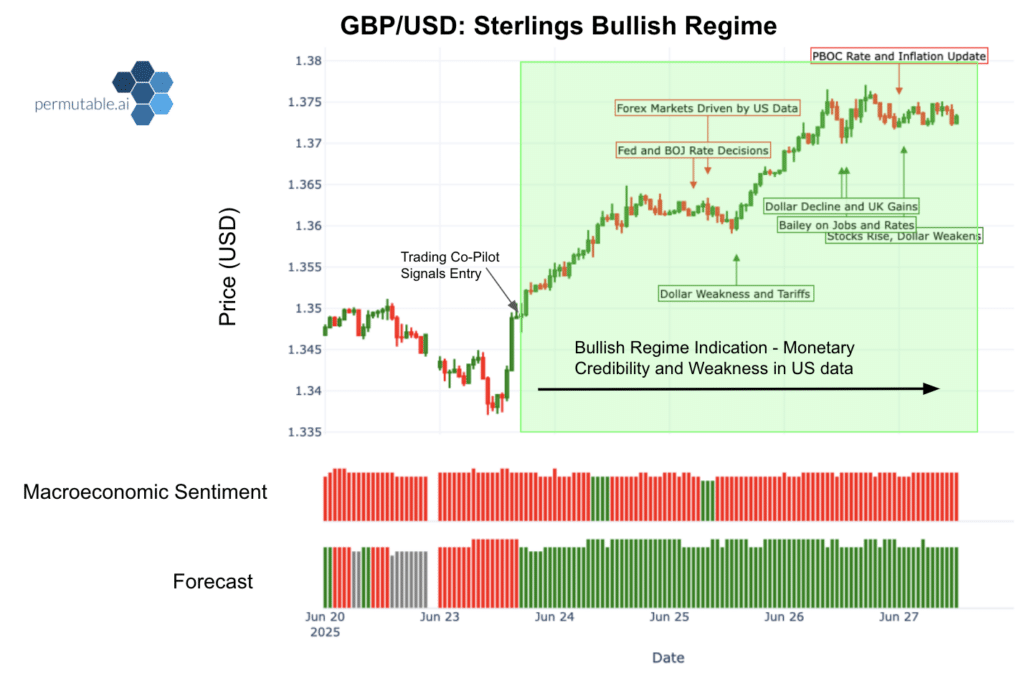
Permutable provides institutional market intelligence for hedge fund teams that need to understand not only what is being reported, but what is starting to move markets.
The platform converts global news, macro narratives, asset-level developments and market-moving events into structured intelligence that can support research, trading, risk and systematic workflows. For hedge funds, this means tracking shifts in macro sentiment, commodity narratives, geopolitical risk, policy expectations and asset-specific drivers before they are fully reflected in price.
Permutable is best suited to teams that need explainable market signals rather than generic document summarisation. Its intelligence can support discretionary research, systematic signal development, risk monitoring and API-based integration into existing investment infrastructure.

AlphaSense has become a familiar name among financial professionals. By bringing together broker research, company filings, transcripts, and expert calls, it provides analysts with a single point of access to vast amounts of market intelligence. Its generative AI tools help speed up the discovery of themes and trends.
Hebbia addresses the challenge of analysing large sets of documents. Its multi-agent AI can review filings, contracts, or data room materials and return structured, citation-backed answers. This makes it particularly useful in workflows such as due diligence or compliance-heavy research.
ExtractAlpha focuses on transforming alternative datasets into predictive signals that can be used in quantitative models. For quants, it offers a way to bridge the gap between raw data and structured, testable factors.
LinqAlpha positions itself as a research co-pilot for hedge fund teams. It supports day-to-day workflows such as screening, valuation, and reporting, enabling analysts to reduce manual effort and free up time for interpretation.
Fiscal.ai makes financial modelling more accessible by allowing analysts to generate models, charts, and comparisons using natural language queries. It is particularly relevant for equity-focused strategies where rapid scenario building is valuable.
Captide helps streamline the process of extracting insights from company filings and earnings transcripts. By converting unstructured reports into structured answers, it enables quicker access to key metrics without manual searching.
Exabel brings together multiple alternative datasets with traditional KPIs and forecasts. By combining these sources, it helps analysts identify patterns in company and sector performance that may otherwise be missed.
Preqin Pro is widely used by hedge funds and asset managers with exposure to private capital. It provides data, benchmarking, and trend analysis across alternative assets, offering context that complements public market research.
Dataminr scans millions of sources, from news wires to social media, to provide early alerts on potentially market-moving events. For event-driven strategies in particular, this immediacy can be a valuable component of research.
Quantiacs takes a community-driven approach, hosting competitions and backtesting environments for quant strategies. It provides a space for innovation and experimentation within the wider quantitative finance community.
| Workflow | What hedge funds need | Relevant AI capability |
|---|---|---|
| Macro research | Understand changing growth, inflation, policy and geopolitical narratives | Macro sentiment analysis, event clustering and narrative tracking |
| Equity research | Process filings, earnings calls, broker research and company updates | Document search, transcript analysis and financial modelling |
| Commodity trading | Monitor supply disruption, demand shifts, weather, policy and geopolitical risk | Real-time commodity intelligence and asset sentiment signals |
| Systematic trading | Convert unstructured information into structured, testable signals | Point-in-time datasets, API delivery and signal history |
| Risk management | Detect emerging portfolio stress, event risk and narrative shifts | Early-warning indicators and explainable alerts |
| Portfolio monitoring | Track changes across assets, regions and sectors | Dashboards, watchlists and automated summaries |
| Criterion | Why it matters |
|---|---|
| Explainability | Black-box outputs are hard to trust in regulated investment workflows |
| Source traceability | PMs and analysts need to see where an answer or signal came from |
| Point-in-time history | Required for backtesting and avoiding look-ahead bias |
| Data coverage | Macro, commodities, equities, FX and geopolitics require different source depth |
| Workflow integration | API, Excel, dashboards and alerts determine whether the tool is actually used |
| Signal structure | Hedge funds need outputs that can be tested, compared and integrated |
| Latency | Event-driven and trading workflows need fast updates |
| Auditability | Investment teams need a defensible process, not just a generated answer |
For hedge funds, the next stage of AI adoption is not simply faster document search. The larger opportunity is converting global information flows into structured signals that can be monitored, tested and integrated into investment workflows.
This is where Permutable’s market intelligence layer connects AI research with signal generation. Global Macro Sentiment Indices can help teams monitor shifts in inflation, growth, policy, trade and geopolitical narratives, while asset-level sentiment signals can support commodity, FX and cross-asset research. Delivered through dashboards, APIs and data feeds, these signals are designed to support both discretionary and systematic investment processes.
At Permutable, we help hedge funds cut through the noise with transparent, contextual intelligence that explains not just what is happening, but why it matters. If you’d like to see how our Intelligence Engine can give your team foresight in fast-moving markets, get in touch with us at enquiries@permutable.ai to arrange a personalised demo.
AI tools for hedge funds are platforms that help investment teams process information, generate research, detect market-moving events, analyse documents, build models or convert unstructured data into structured investment signals.
The best tool depends on the workflow. Document-heavy fundamental teams may need transcript and filing analysis. Macro and commodity teams may need real-time market intelligence. Quant teams may need structured historical signals, point-in-time datasets and API delivery.
Hedge funds use AI to monitor news, filings, macro narratives, central bank communication, geopolitical developments, commodity drivers, earnings calls and alternative datasets. The goal is to identify relevant changes faster and understand their potential market impact.
Some AI tools can support actionable signal generation, but hedge funds should distinguish between generic summaries and structured, testable signals. For systematic use, signals need point-in-time history, stable methodology, clear definitions and integration into research or trading infrastructure.
Explainability matters because investment teams need to understand why a model or system produced a result. In regulated or high-stakes workflows, black-box outputs are harder to trust, audit and defend.
AI research tools usually help users search, summarise or analyse documents. AI market intelligence platforms go further by tracking market-moving developments, identifying narrative shifts and converting information into structured signals that can support trading, research and risk workflows.

Analysis
14 Oct 2026
Beneath US headline inflation: tracking pressure across energy, food, services and housing
Read more >
Analysis
13 Oct 2026
France’s debt alarm hits a decade high and drowns out the rest of the G20
Read more >
Guide
07 Oct 2026
Commodity signal evaluation: from information flow to portfolio evidence
Read more >