How is the US economy viewed around the world?

The question – how is the US economy viewed? – is a particularly interesting one in present times. Global news reports about the U.S. economy and its expected trajectory have been somewhat conflicting of late. On one hand, analysts have been mulling over the possibility that the U.S. economy may be heading for a recession. But then those speculations are also sitting cheek-by-jowl next to the U.S. economy heading for healthy growth, albeit with some challenges to navigate along the way.

But what does the world really think? We used our AI-driven news sentiment analysis to provide a fascinating overview of sentiment in relation to US economic indicators, and it puts forward a rather interesting answer to the question “How is the US economy viewed”, especially in the run up to the upcoming U.S. election.

When you take a step back, our data shows a complex and often polarised view of how the US economy is doing according to perceptions from around the world. From regions like Oceania and the Middle East to Europe and Asia, there are varying degrees of sentiment, and each tells its own story. The context for this is shaped by geopolitics, trade relations, foreign policy, and, of course, economic outlooks. But there’s a broader point of view here—this isn’t just about economics, but rather how nations position themselves in relation to the world’s leading economy.

How is the US economy viewed around the world: Key findings

How is the US economy viewed in Oceania and the Middle East

Let’s start with the good news. Thankfully for the US, in Oceania, the sentiment towards their economy is generally positive. Australia (+43%) and New Zealand (+47%) show a level of confidence in how the US economy is doing. The answer seems obvious – these nations maintain strong trade and defence ties with the US, which naturally bolsters their economic optimism. But there’s a broader point of view here: Oceania countries often see the US as a key ally, not only in terms of trade but also security.

Now for the bad news. Here, the Middle East tells a deeply different story. Our data shows lukewarm sentiment from UAE at only +1%, then starkly negative sentiment from Israel (-92%) and Qatar (-84%) highlighting how regional geopolitics can turn perception on its head. And this, we fear, is a reflection of recent US foreign policy decisions that have left a bruising sentiment in certain Middle Eastern countries.

How is the US economy viewed in Asia?  

To be clear, Asia is not homogenous in its view of how the US economy is doing. Much is left to be desired in terms of sentiment from India (-2%), Indonesia (0%), and Vietnam (+3%) meanwhile Thailand (+11%), Singapore (+16%) Pakistan (+19%), Malaysia (+24%) are somewhat more positive. All these countries have complex relationships with the US, balancing between cooperation and competition with China.  But what about the Philippines? Here, we see a notably high positive sentiment (+68%) which in all likelihood reflects the strength of ongoing US-Philippines economic and military cooperation, with the US viewed as a reliable partner. 

How is the US economy viewed in Africa? 

Amid the furor surrounding US relations with other parts of the world, Africa has an overall positive view of the US economy. Nigeria (+63%) and Zimbabwe (+65%) display significant confidence in how the US economy is doing according to our data. Fact check: Africa’s growing trade with the US and the potential for investment and aid play a key role here. But you can glimpse another factor—many African nations view the US as a key player in global development, which adds a layer of goodwill to the economic perception.

How is the US economy viewed in Europe?

And then we have Europe, where the sentiment towards how the US economy is rather tepid. Germany (+30%) exhibits perhaps the strongest confidence in the US economy according to our data, while the UK (+7%) is still positive yet cautious likely influenced by Brexit’s ongoing economic uncertainties and trade negotiations with the US.  Meanwhile countries like Spain and Portugal (both at 0%), and Italy (just slightly up at 1%) only just keep within the neutral range. We should perhaps say that Europe’s diverse sentiment towards the US is as much about politics as it is about economics. In retrospect, Europe’s rather half-hearted sentiment may signal a reluctance to fully commit to the US economically until global economic conditions stabilise. 

What does all this mean?

So, why does this matter? When you examine how the US economy is doing based on economic indicators, you uncover deep layers of geopolitical and economic dynamics. There have been, broadly, three things influencing global sentiment towards the US. First, trade relations – countries with strong trade ties to the US tend to have more positive perceptions. Second, geopolitical alliances – nations aligned with US foreign policy tend to show greater economic optimism. And third, regional economic stability – countries with less reliance on the US or a strong regional bloc, like the EU, may lean towards neutrality or even indifference.

But there is a key message here, and its that signs that all is not perfect in the US economy – such as inflation or foreign policy missteps—can cast long shadows on global perception. And it is, we think, this last point that is most significant. Global perception of the US economy, driven by a combination of hope and caution, will shape future economic ties and cooperation.

The result of our analysis is something of a disparity between countries that see the US as a continued economic leader and those that are taking a wait-and-see approach. And that is why understanding how the US economy is doing matters more than ever. Thankfully, AI-driven news sentiment analysis like this, allows us to monitor and measure these perceptions in real time. This bruising sentiment in some regions is balanced by optimism in others, and it is this interplay that will determine the future of US global economic leadership.

Methodology

The sentiment analysis was conducted using Permutable’s AI-driven intelligence, which is the product of the analysis of millions of news articles, and other publicly available text-based sources from around the world. The system employs advanced natural language processing and machine learning algorithms to assess the tone, context, and frequency of mentions related to the US economy.

Omissions: Our news sentiment analysis does not include how China and Russia perceives the United States economically due to limited access to unbiased, reliable data sources within China that meet our standards for comprehensive and accurate insights. We also do not currently offer news sentiment analysis on how Latin America perceives the United States, and some Middle Eastern and African countries, due to gaps in comprehensive media coverage, limiting the availability of consistent and reliable data sources from the region.

Stay ahead with real-time economic insights

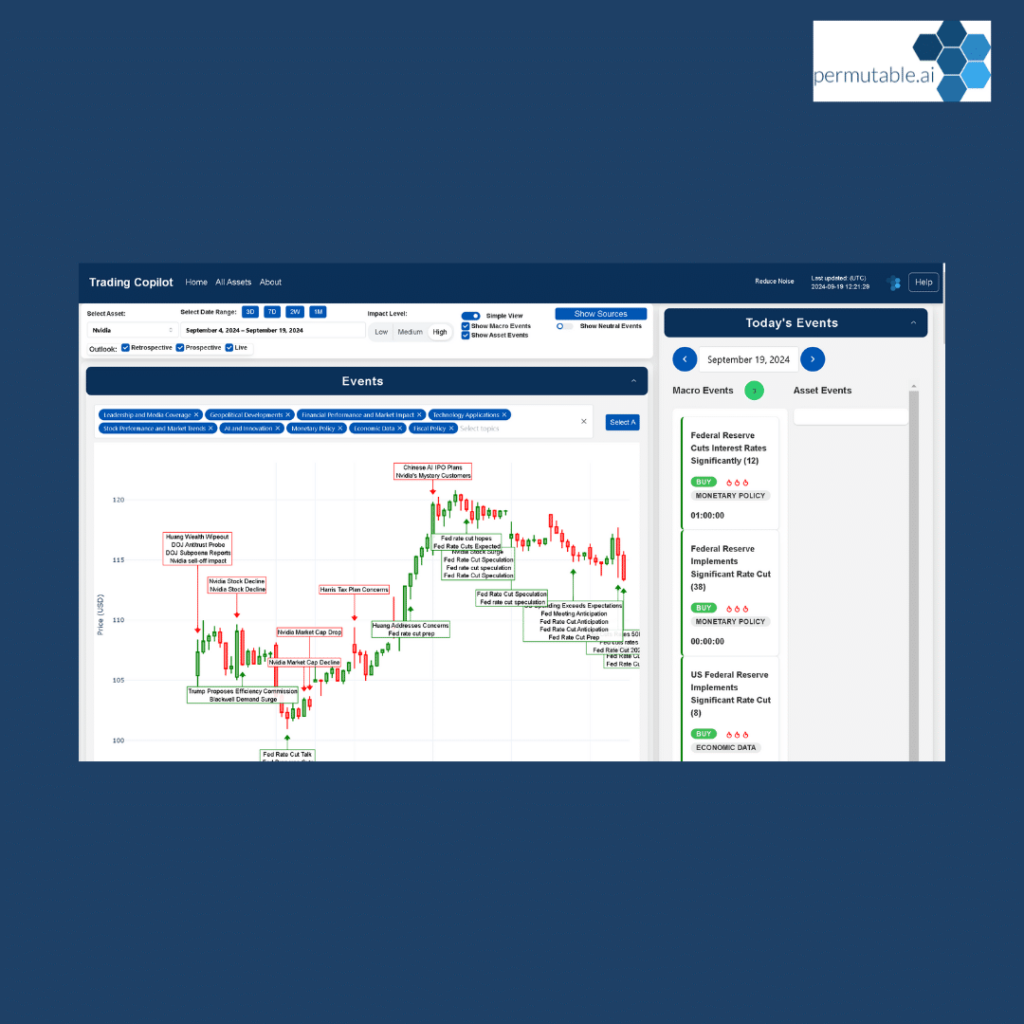
Want real-time insights into how US economic indicators are impacting financial markets? Our Trading Co-Pilot, now in BETA, offers AI-powered analysis to keep you ahead of market shifts. If you’re a corporate trader looking to trial this cutting-edge tool, get in touch with us today and be one of the first to experience the future of trading with precision and confidence.

Your trading is about to take off

Schedule a free enterprise demo to see how our Trading Co-Pilot can help you make smarter trading decisions, faster. 

contact us

How does the world see Russia? An examination of global opinions in 2024 according to our news sentiment analysis

Russia stands as one of the most powerful countries in the world, and its choices have a big impact on global politics, money matters, and conflicts. But how does the world see Russia? To answer this question, we analysed global news sources to discover the prevailing news sentiment around the country, looking at data from June to August 2024 in three key areas: war, politics, and the economy.

Using advanced AI, our analysis breaks down the amount and tone of media stories about Russia. This gives us a fact-based grasp of how people see the country in various fields. This article digs into these results and gives a full picture, giving us an answer to the question – how does the world see Russia.  

How does the world see Russia in relation to war? 

Let’s start with the issue of Russia’s role in war and armed conflict, one of the most divisive topics in today’s global politics. Since it took over Crimea in 2014 and the ongoing strife with Ukraine and Western nations that followed, Russia’s military moves keep casting a dark cloud over how the world sees it.

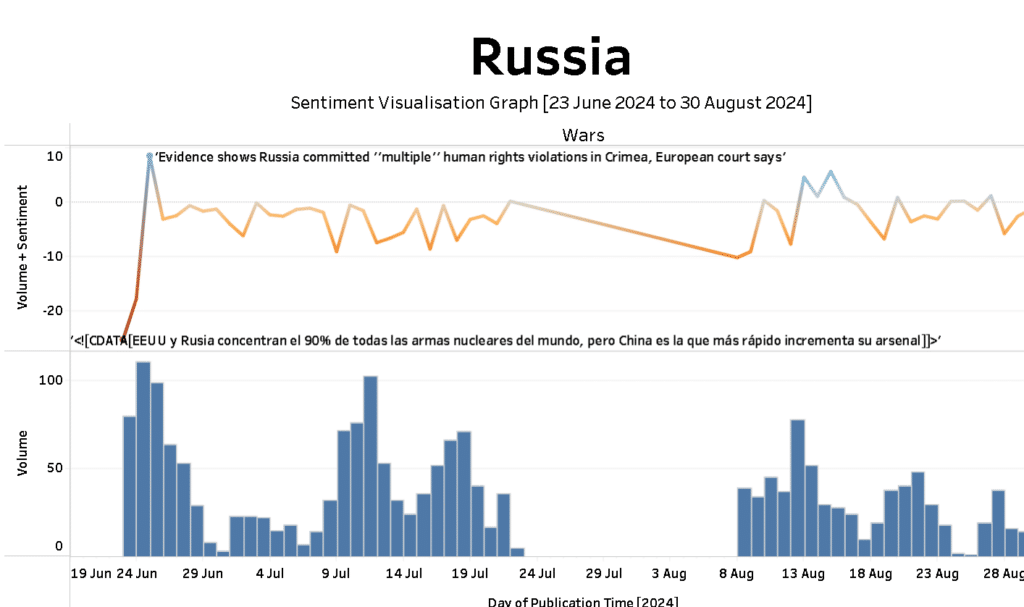
From June to August 2024, our sentiment analysis unsurprisingly revealed a negative view of Russia in news related to the war. This period was marked by big swings in sentiment due to major events related to military operations and human rights abuses.

How does the world see Russia in relation to war - news sentiment analysis

How does the world see Russia in relation to war – key findings

Human rights violations in Crimea

Sentiment was markedly negative around Russia after a European court made a decision in late June. The court said Russia had broken a string of human rights laws in Crimea. This news further damaged Russia’s image in Europe and North America, where human rights violations  is regarded as an extreme violation of justice. 

Nuclear arms discussions

Another major source of negative sentiment bubbled up in July, this time regarding discussions around Russia’s nuclear posture which caused global concern. Russia’s part in this story increased fears in Western countries that its military goals could upset global peace.

Global impact

Our analysis reveals that military actions unsurprisingly shape Russia’s image worldwide as depicted in international media. News about Russia’s ongoing war with the Ukraine and claims of war crimes keep worldwide sentiment toward Russia’s involvement in conflict negative. This shows deep distrust and worry in Western free countries.

But remember, news about Russia always spikes when big military events happen and Russia’s moves will never fail to grab world news attention. This constant news focus keeps Russia in people’s minds globally, albeit for the wrong reasons. 

How does the world see Russia in relation to politics?

Russia’s standing on the world stage is tricky to say the least. It has rocky relationships with Western nations but has far more positive relations with non-Western countries like India and China. Our news sentiment analysis reveals the mood regarding Russia in relation to  political news from June to August 2024. 

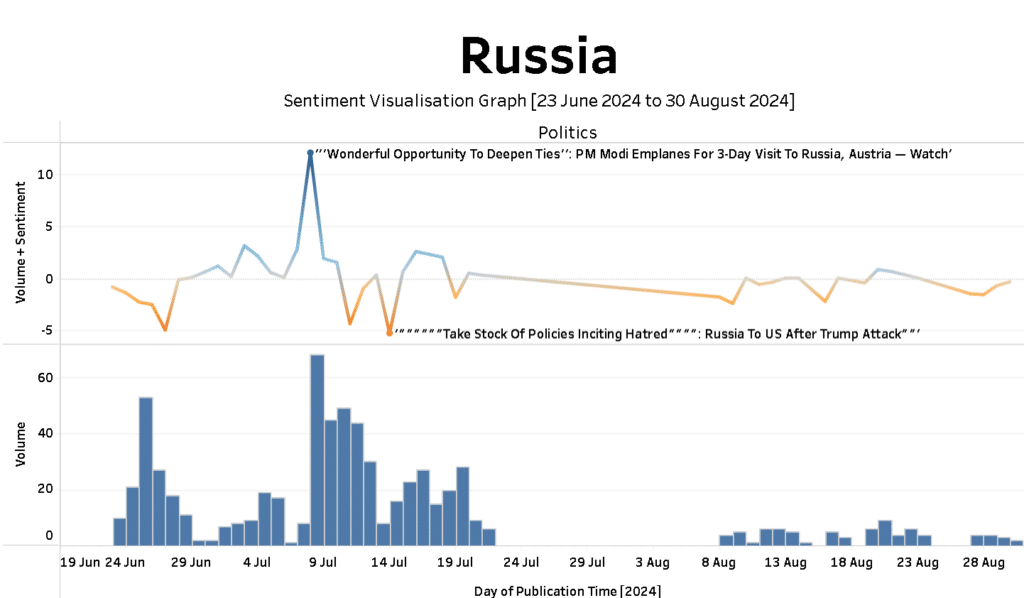
How does the world see Russia in relation to politics - news sentiment analysis

How does the world see Russia in relation to politics – key findings

Positive sentiment spikes

At the start of July, sentiment reached its peak due to Indian Prime Minister Modi’s state visit to Russia and Austria. People saw this event as a “wonderful opportunity to deepen ties,” which highlighted how much Russia values its relationships with non-Western powers. India has kept a practical relationship with Russia, striking a balance between working together and considering wider geopolitical interests. The upbeat sentiment shows hope for diplomatic talks between Russia and countries outside the West.

Negative political rhetoric

In contrast to this diplomatic goodwill, the mood soured after Russia criticized U.S. policies. When Donald Trump attacked Russian policy, the Russian government fired back with harsh words. This caused a negative shift in public opinion. This incident shows how the ongoing political friction between Russia and the U.S. still shapes much of the global story, and ultimately, casts a dark cloud over Russia’s political image in Western media.

Global impact

Russia’s political reputation divides opinion worldwide. Western countries view Russia negatively due to political clashes and sanctions that have damaged relationships. Yet, Russia has built good ties with non-Western powers like India and China, proving that not everyone sees the country in a bad light. These friendships give Russia other ways to boost its political power, even though its rocky relations with the U.S. and Europe often sway overall world opinion.

How does the world see Russia in relation to economic indicators?

The world has long kept a close eye on Russia’s economy given international sanctions, changing energy prices, and its huge natural resource deposits. Even with these hurdles, Russia still plays a big role in global energy markets, and news about its economy often catches worldwide attention.

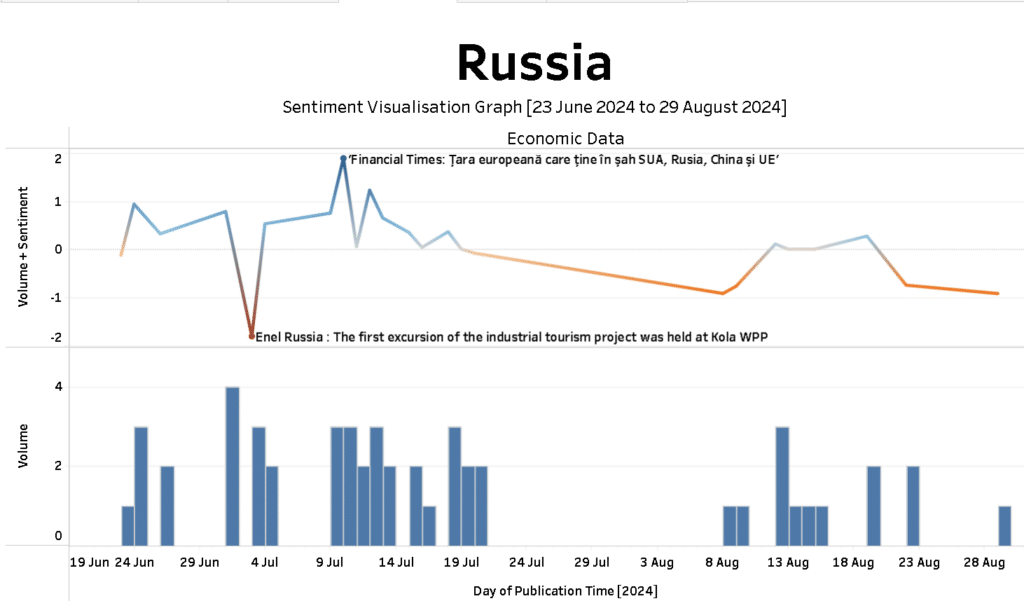
Our news sentiment analysis showed that global media views were steadier compared to war and political areas, with sentiment rising and falling in relation to specific events, but staying more balanced overall. 

How does the world see Russia in relation to economic indicators?

How does the world see Russia in relation to economic indicators? Key findings

Positive economic developments

At the start of July, people positive was more sentiment after the Financial Times published an article about Serbia’s  strategic role in international relations, influencing the United States, Russia, China, and the European Union. It examines how this country navigates geopolitical tensions, impacting the balance of power among these global players. 

Negative sentiment around energy projects

On the flip side, sentiment took a hit in late June after news broke about Russia’s Kola WPP (Wind Power Plant) industrial tourism project. The project might have sparked some interest, but the bigger picture includes worries about environmental and energy-related issues in Russia. These concerns echo the ongoing global discussion about Russia’s energy policies and how they affect sustainability and climate change.

Global impact

The world’s view of Russia’s economy stays steady, with ups and downs tied to news stories. Even though its political and military moves often lead to bad press and negative sentiment, Russia’s key role in energy markets ensures it’s still a crucial player in world economics, despite being embroiled in political tensions and conflict.

How does the world see Russia? Summing up

Our news sentiment analysis shows a complex view of Russia worldwide. Russia’s military moves and political strains often lead to negative sentiment in Western news, but its economic power and friendly ties with non-Western countries paint a more detailed and surprisingly positive picture.

Of course, when it comes to war and military action, Russia is seen in a bad light, with news around the world pointing out human rights violations and concerns about nuclear weapons. In politics, Russia’s image goes fluctuates, gaining some diplomatic wins but also  harsh criticism. In regards to economic matters, Russia keeps a steadier global image, thanks to its key role in energy, though it faces hurdles related to long-term growth and trade limits.

As with many complex geopolitical situations, the world’s view of Russia depends on the context — whether people see it through the lens of war, talks between countries, or economic matters. Each of these areas helps shape a bigger, ever-changing story about where Russia stands in the world right now.

Surely, then, it’s important to consider all these factors when analysing Russia’s global standing. The obvious point here is that Russia’s image is multifaceted and often contradictory. But also, we must remember that perceptions can shift rapidly in response to world events.

Separately, it’s inevitable that Russia’s actions on the world stage will continue to be scrutinised closely. In essence, the country’s global image is a reflection of its complex role in international affairs. Most importantly, understanding these perceptions is crucial for anyone engaged in global politics or business.

There are two questions that arise from this analysis: How can Russia improve its global image, particularly in the West? And how can other nations engage with Russia constructively while addressing concerns about its actions?

Find out more

Take your strategic decision-making to the next level with our advanced economic and geopolitical datasets. Our in-depth, real-time analytics give you unmatched insights into worldwide market trends, political shifts, and news patterns.  Our datasets use state-of-the-art AI tech to analyse sentiment in real-time, predicting economic factors, and assessing geopolitical risks in detail. Be at the forefront of data-driven strategy and get ahead in today’s fast-changing global scene. To see how our capabilities can help stay ahead, simply email us at enquiries@permutable.ai to set up a demo of our services tailored to your needs, or fill in the form below. 


Further reading

Looking for more global insights? Why not read our articles on:

How countries of Europe view each other’s economy according to GDP

How the UK’s economy is perceived in Europe

How France’s political situation is viewed

An analysis of sentiment around the UK property market recovery

An analysis of global perceptions towards the Germany economy

Why geopolitics is important to international business in 2024

Geopolitics, the study of how geography, economics, and politics intersect to shape the world, has become increasingly important. This field looks at the complex relationships between countries, regions, and international organizations and how these interactions influence power, resource distribution, and global decision-making. In our fast-changing world, understanding the impact of geopolitics is crucial for businesses, policymakers, and individuals. Geopolitical factors impact everything from trade agreements and investments to the stability of supply chains and access to critical resources. And we mustn’t forget how quickly these factors can change. In this article, we’ll take a closer look at why geopolitics is important to international business in today’s complex world. 

Why geopolitics is important to business and the role of geopolitics in today’s world

Geopolitics shapes the global economic and political environment. It examines how a region’s physical characteristics, like resources, climate, and location, influence power dynamics and strategic interests. Additionally, geopolitics explores historical and cultural factors, such as colonial legacies, ethnic tensions, and ideological differences, which contribute to conflicts and alliances.

By understanding geopolitical forces, businesses and organizations can better anticipate and navigate global challenges and opportunities. This knowledge helps businesses identify risks, tap into emerging markets, and make more informed strategic decisions. At the moment, the importance of this understanding cannot be overstated.

How geopolitical risks impact businesses

Geopolitical risks are a major concern for businesses today. Factors like political instability, trade disputes, and international conflicts can disrupt supply chains, affect market access, and cause financial volatility. Companies that don’t account for these risks may face unexpected challenges that hurt their competitiveness and profitability. First, the obvious impact is on supply chains.

To manage these risks, businesses need a deep understanding of the geopolitical landscape. This involves thorough risk assessments, diversifying supply chains, and maintaining flexible business strategies to adapt to changing circumstances.

Measuring and assessing geopolitical risk

Assessing geopolitical risk is complex. Organizations use both quantitative and qualitative data to evaluate the impact of geopolitical factors. This includes analyzing economic indicators, political stability indexes, and expert assessments of global trends. The facts and numbers are clear enough when we look at historical data, but the truth is more complicated when predicting future risks.

One common approach to measuring geopolitical risk is using risk assessment frameworks, which assign numerical values to various factors based on their likelihood and impact. These frameworks help businesses prioritize risk management efforts and allocate resources effectively.

Emerging geopolitical risks in 2024

These days, we can see some new geopolitical risks bubbling up across the globe at a rapid rate. This year, it is expected that businesses will face major geopolitical risks including:

The continuation of geopolitical risks between major powers 

Trade, investments and global cooperation can be adversely affected thus heightening the state of instability through the strained relationships between China, USA plus Russia. On that basis, firms need to know how they are poised for such shifts occurring.

Regional conflicts and instabilities

Many of the ongoing crises witnessed are likely to keep posing a threat to supply chains and cause strain on energy markets worldwide due to regional wars that have not been resolved. Of course, there is also the significant concern that these wars may escalate further at any given time. 

Technology competition and cyber risk

The world might is likely to witness a rise in geopolitical tensions and emerging threats as nations scramble for leadership in AI, quantum computing and cyber warfare. However; keeping pace with these fast changing technologies is extremely challenging as nations vie for tech supremacy. 

Climate change and the associated resource dearth

Scarcity of resources as well as climate change impacts such as severe weather patterns run the risk of fuelling more international disputes making it hard for companies to operate without friction from governments and other long-term implications.

Why geopolitics is important to international business

It is evident that geopolitical risks play a crucial role in influencing business operations, financial performance, and long term viability. Some of the ways that geopolitical risks can affect businesses include:

Supply chain disruption

Political uncertainties and trade wrangles can interfere with the smooth movement of goods leading to a slow down and extra costs in the process of shipment. Companies are increasingly diversifying their supply chain to mitigate these risks by securing alternative sources of supply.

Market access and investment barriers

Market access restrictions make it difficult for business expansion through foreign direct investment (FDI) which also fuels geopolitical tensions. What happens in the market whether there is a likelihood of it becoming stable again remains unclear hence companies should be on the lookout for both risks and opportunities.

Regulatory compliance risk

Sanctions from global policies based on political changes and the introduction of new rules’ can result in a compliance and legal nightmare. This gives a flavour of  how complicated regulatory environments are becoming.

Strategies for managing geopolitical risks

Managing geopolitical risks calls for proactive measures among companies including:

Regular risk assessments

Businesses need to ensure they always update geopolitical risk assessments  and be aware of how these might impact their operations. One can never play down the importance of carrying out regular reviews, particularly when geopolitical risks are involved.

Diversification of suppliers and markets

Flexibility is essential in dealing with geopolitical uncertainty. Businesses can adopt tactics such as multi-sourcing, which involves diversifying suppliers across multiple geographical regions. This technique reduces reliance on a single source and provides alternatives in the event of an interruption.

Engaging with policymakers and industry groups

Work together with government entities as well as organizations in the same industry field that regulate policies to be up to speed with what is required from such governing bodies and industry groups. This kind of connectivity enables anticipation over amendments to existing regulations across the globe. 

Investing in geopolitical intelligence and analysis

Permutable AI’s Geopolitical Risk Intelligence allows our partners to make informed decisions concerning what is happening in regards to geopolitical risk in real-time.  In a fast-paced environment where things change in split seconds, our Geopolitical Risk Intelligence tool uses advanced artificial intelligence as well as machine learning algorithms which analyze enormous volumes of data obtained from various media including news sources and social networking sites among others so that users can get instant insight about current sentiments shaping up globally.

Key elements and advantages

Our tool is able to scan through the web every 30 minutes for up-to-the-minute details on geopolitical incidences reported on in the news across up to 12,000 sources and across half a million articles day,  giving a whole, unbiased pictures regarding different areas of geopolitical risk enabling timely response by companies.

The next iteration of our tool will include forecasting capabilities, using advanced technologies including neural network systems to recognize patterns that point out ‘red flags’ during its predictions process. Interestingly, these models are capable of predicting key developments only by looking at a few data patterns based on vast amounts of information  to predict future potential geopolitical risks as they start bubbling up.  

Why geopolitics is important to business: Conclusion 

Understanding and managing geopolitical risks has never been more crucial in our contemporary world setting. However, failing to do so may lead to unpredicted challenges for some businesses while others may thrive on identifying as well as mitigating risks. The strategic decision-making process of organizations must be improved to reflect these turbulent times, with a focus on operational resilience. 

If experience tells us anything, it’s that proactive management of geopolitical risks can make a significant difference. We can be reasonably confident that with the right insights and strategies, businesses can navigate these challenges more effectively. Imagine, too, the potential for growth when businesses are well-prepared for geopolitical shifts. Just to make it absolutely crystal clear: there are real and sizeable risks inherent in geopolitics. The private sector must prepare itself for today’s highly volatile geopolitics through active risk management and real-time intelligence.

Harness AI-driven insights for proactive geopolitical risk management

Ready to see how AI-driven geopolitical risk intelligence can transform your decision-making? Contact us for a demo of our AI-driven news sentiment analysis which is available through our Trading Co-Pilot subscription, or to request a free trial. You can also access top-line geopolitical insights through our Real-Time Geopolitical Insights & AI Market Sentiment Analysis Dashboard which is publicly available to view. 

Request demo