In a world that has started to spin in ever faster geopolitical tension, gold continues to maintain its position as the safe-haven asset of choice for investors seeking stability. The precious metal recently surged past the $3,000 mark, reaching unprecedented heights as market volatility continues to shape investment strategies globally, with some saying this is just the beginning. In this article we’ll take a closer look at market volatility impact on gold, with insights taken from Analyst View of our Trading Co-Pilot.
The current crisis spanning multiple regions has created a perfect storm for gold markets. Humanitarian crises in Gaza, escalating tensions in Ukraine, and military actions in Yemen have all contributed to a climate of uncertainty that typically benefits gold prices. By the time markets opened this Monday, gold had already marked its third consecutive weekly gain, with analysts projecting further increases toward $3,100.
Consider the facts: gold prices reached a record high of $3,051 per ounce last Tuesday, driven primarily by safe-haven demand amidst growing geopolitical uncertainties. This wasn’t merely a speculative bubble. Indeed, the fundamental drivers behind gold’s rise reflect deep-seated concerns about global stability and economic outlook.
Let’s take a step back and examine how market volatility has historically influenced gold prices. Back when financial markets faced similar turbulence during the 2008 global financial crisis, gold demonstrated its resilience as a store of value. The same goes for periods of heightened geopolitical tension, where investors consistently turn to gold as a hedge against uncertainty.
Many believe that gold’s inverse relationship with market volatility is what makes it an essential component of a diversified portfolio. But the story of how gold responds to volatility is more nuanced than conventional wisdom might suggest. Insiders say that the current gold rally differs from previous surges in several key aspects. The reason for this is fairly straightforward. Unlike previous periods of volatility, we’re seeing a confluence of factors – geopolitical tensions, persistent inflation concerns, and central bank policies – all creating a particularly supportive environment for gold.”
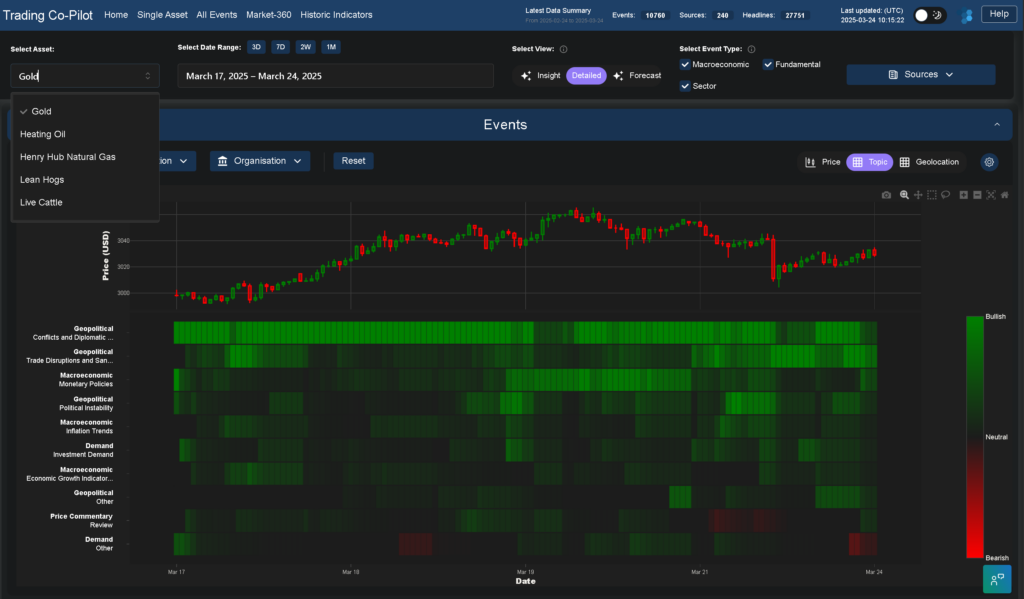
Above: Our Trading Co-Pilot‘s Sentiment Heatmap clearly showing a confluence of factors impacting gold prices
The Federal Reserve’s decision to maintain interest rates has significantly contributed to market volatility impact on gold. Such doubts withered away when markets began pricing in potential rate cuts later this year, providing additional support for non-yielding assets like gold.
However, many seasoned onlookers see this as a double-edged sword. There is no prospect of immediate monetary easing, especially with inflation remaining above target levels in many economies. This is the context in which investors must navigate their gold investment strategies. It is also the result of central banks themselves becoming substantial gold buyers, adding to their reserves at the fastest pace in decades. The Bank of England’s decision to maintain interest rates at 4.5% amidst global uncertainties further bolstered the case for gold as a portfolio stabiliser.
Why did this happen? The mists are lifting, revealing geopolitical tension as the primary catalyst for gold’s recent performance. Simply put, the ongoing conflict in Gaza, military actions in Ukraine, and tensions in Yemen have created a climate where investors prioritise capital preservation over growth. These are not isolated problems but interconnected challenges that continue to shape market sentiment. One of the big targets is achieving portfolio resilience in the face of such multifaceted risks, and gold has traditionally served this purpose well.
More generally, the market volatility impact on gold extends beyond price appreciation to include its role as a liquidity provider during market stress. To see what we mean, just look at how gold has maintained its trading volume and market depth even as other asset classes experienced liquidity constraints.
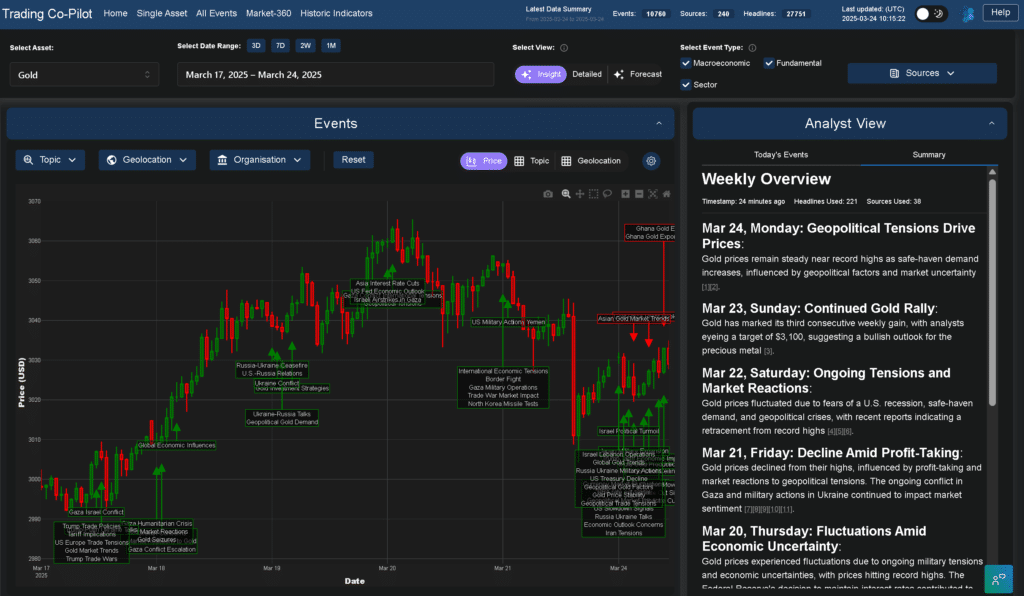
Above: Analyst Insight Mode from our Trading Co-Pilot showing gold price movements amid market volatility over the last week
What to do about it? For investors navigating this complex landscape, it normally just takes a strategic approach to incorporate gold effectively into portfolios. And yet we still see many investors under-allocated to this asset class relative to historical norms. That said, diversification remains essential. It’s the same with any investment strategy – concentration creates vulnerability. Gold should complement other assets rather than dominate portfolios.
It may, however, already be too late to capture the initial surge. The list goes on of factors that could influence gold’s trajectory from here – potential rate cuts, inflation persistence, and evolving geopolitical situations all remain in play. Like much of financial market dynamics, the market volatility impact on gold requires nuanced understanding. This isn’t to say that gold is immune to price fluctuations; recent profit-taking after reaching record highs demonstrates that gold prices can retrace even amid supportive conditions.
And what of gold’s prospects moving forward? Ultimately, the outlook depends on how several key factors evolve:
The market volatility impact on gold will likely remain positive as long as uncertainty persists. However, any resolution to current conflicts or shifts toward monetary tightening could temper enthusiasm. Yet, ultimately, gold isn’t merely responding to short-term headlines but to fundamental shifts in the global economic and political landscape.
In sum, the market volatility impact on gold has been profound, driving prices to historic highs amid a perfect storm of geopolitical tensions, monetary policy uncertainty, and safe-haven demand. As investors continue to navigate this volatile environment, gold’s role as a portfolio stabiliser and store of value remains as relevant as ever.
For those seeking to understand and potentially benefit from gold’s relationship with market volatility, a balanced approach that acknowledges both opportunities and risks remains essential. The precious metal’s current strength reflects genuine concerns about global stability – concerns that show little sign of abating in the near term.
Take your market analysis to the next level with our Trading Co-Pilot. Our advanced AI-driven platform delivers real-time intelligence on gold market movements, helping you navigate volatility with precision and confidence. Don’t let crucial market shifts catch you off guard – sign up today for a free 14-day trial and experience how our cutting-edge technology can give you the edge in today’s unpredictable markets. Simply get in touch with us at enquiries@permutable.ai or fill in the form below to request a demo or trial.
As markets reopen today for the new year, many will be asking the question “is gold a good investment for 2025?“. Well, there was a time when investing in gold was straightforward – buy during uncertainty, sell during stability. However today, the landscape has fundamentally changed. It is a volatile market where prices are predicted by unpredictable and ever-moving forces, making traditional investment strategies increasingly complex. The questions around whether gold is a good investment have become more nuanced, and will be one to watch in terms of commodity trading trends for 2025.
The struggle to make sense of gold’s place in a modern portfolio has intensified as digital assets like crypto and new investment vehhttps://permutable.ai/why-is-the-price-of-gold-going-up/icles compete for safe-haven status. Ultimately, this evolution in thinking about whether gold is a good investment reflects broader changes in global financial markets. In this article, we’ll answer the questions is gold a good investment for 2025 with insights from our Trading Co-Pilot. So read on to find out whether the gold rally is set to continue.
First, we’re seeing unprecedented central bank buying that’s reshaping market fundamentals. The ambition here is clear: countries are diversifying away from traditional reserve currencies. This activity will include continued accumulation through 2025, with central banks already having purchased record amounts in recent years.
Second, retail investor interest has surged amid economic uncertainties. Together with institutional buying, this has created a robust support level for gold prices. As shown with recent market data, the correlation between economic uncertainty and gold’s appeal as a safe-haven asset remains strong, suggesting gold is a good investment for those seeking portfolio stability.
There isn’t any doubt about it: monetary policy decisions continue to influence gold prices significantly. As per our Trading Co-Pilot‘s analysis, the Federal Reserve’s stance on interest rates will remain a crucial driver through 2025. The consequence of potential rate cuts could provide substantial support for gold prices, as lower rates typically make gold a more attractive investment.
Either way, inflation concerns persist across major economies. It appears that once again, investors are turning to gold as an inflation hedge. The revelation that several major economies are struggling to meet their inflation targets provides additional support for considering whether gold is a good investment for wealth preservation.
And then there is the questions about the impact of global tensions on investment decisions. No more so than now, with multiple geopolitical hotspots creating market uncertainty. That is an echo of historical patterns where gold has traditionally performed well during periods of international tension.
And guess what, the complexity of current geopolitical relationships suggests these tensions won’t resolve quickly. This is nothing new in the gold market, but the interconnectedness of modern financial systems means that geopolitical events have more immediate and pronounced effects on whether gold is a good investment than ever before.
The risk for investors lies in timing their entry points, with technical indicators suggesting key support levels around $2,040. Which explains why professional traders are closely monitoring price action near these levels. Instead of relying solely on technical analysis, successful investors are increasingly incorporating multiple data points into their decision-making process.
Later, these technical levels may prove crucial in determining whether gold is a good investment for short-term traders. Despite recent volatility, the overall trend remains supportive, with higher lows establishing a robust price floor. Yet look at the volume patterns: they suggest institutional investors continue to accumulate during price dips.
The consequence of current market conditions suggests a balanced approach to gold investment. But the alleged risks of gold investment – such as its lack of yield – need to be weighed against its portfolio diversification benefits and historical role as a store of value.
From our point of view, gold’s trajectory in 2025 depends heavily on several key macroeconomic factors. Now that the fragility of traditional financial systems has been exposed through recent banking sector stresses, gold’s appeal as a safe-haven asset has strengthened. Little wonder that investment flows into gold-backed ETFs have remained steady.
Over and over again, market cycles have demonstrated gold’s resilience during periods of economic uncertainty. Given that historical performance patterns often rhyme, if not repeat, our analysis suggests maintaining some gold exposure could be prudent. But the alleged simplicity of gold investment decisions masks the complexity of timing and position sizing.
Despite short-term price fluctuations, the fundamental case for gold remains strong. It’s plain to see that economic uncertainties could persist through 2025, potentially supporting gold prices. However, investors should remember that position sizing and timing are the linchpin of any successful gold investment strategy.
Want to enhance your precious metals trading strategy with AI-driven insights? We’re offering qualified enterprise trading teams a complimentary one-month trial of our Trading Co-Pilot platform. Experience how leading trading houses are using our advanced AI analytics to identify opportunities and manage risk in the gold market. Our platform provides real-time market analysis, predictive insights, and comprehensive sentiment analysis specifically calibrated for precious metals trading.
Request your enterprise trial today by emailing enquiries@permutable.ai or filling in the form below. Available for qualified enterprise trading teams. Subject to approval.
DISCLAIMER
The information contained in this article is for informational purposes only and should not be considered as financial or investment advice. While the insights presented are derived from our Trading Co-Pilot platform’s analysis of market data, they represent a point-in-time assessment and should not be relied upon as the sole basis for any investment decisions. Markets are inherently risky, and past performance is not indicative of future results. The price of gold and other precious metals can be volatile and can be affected by numerous factors outside of our control.
Trading in precious metals carries significant risk, and you should carefully consider your investment objectives, level of experience, and risk appetite before making any investment decisions. We recommend consulting with qualified financial advisors who can provide guidance tailored to your specific circumstances. Permutable AI and its employees do not accept any liability for any loss or damage, including without limitation to, any loss of profit, which may arise directly or indirectly from use of or reliance on such information.
The prospect of significant changes in the gold market has materialised, and our Trading Co-Pilot‘s insights have identified a complex series of technical breakdowns following Trump’s victory. Indeed, from looking at our AI-driven analysis of the latest gold market news, we’re witnessing a fascinating repositioning of traditional safe-haven assets.
Speaking of which, our AI detected an immediate bearish divergence post-election as it was unfolding, with gold market news dominated by a substantial selloff. With the precious metal dropping nearly 7% earlier this month, testing critical support levels around $2,550. One explanation, supported by our Trading Co-Pilot’s correlation analysis, is the significant capital rotation towards cryptocurrencies, evidenced by the iShares bitcoin ETF surpassing its gold counterpart in size.
Meanwhile, sentiment analysis of corporate performance has painted a more nuanced picture in the gold market news. Consider the case of Kinross Gold, which exceeded Q3 estimates, while Hudbay Minerals reported record gold production in Manitoba. More broadly, our AI analysis indicates multiple mining companies demonstrated resilience despite market turbulence.
The clue to this can be found in our Trading Co-Pilot‘s pricing analysis where cross-border arbitrage taking advantage of gold trading cheaper in India compared to the UAE, Qatar, and Singapore. This isn’t the only such example of market dislocation; with premium rates in Asia reaching a four-month peak as price drops attract more customers. By our estimate, based on real-time arbitrage calculations, these opportunities present significant trading possibilities.
Then came the Goldman Sachs analysis, which aligns with several of our Trading Co-Pilot’s long-term projections. Our AI models support their “buy” recommendation, particularly considering the anticipated Federal Reserve rate cuts in 2025 and increasing central bank purchases.
But alongside a weakening dollar and stalling rally, our geopolitical risk indicators are flashing warning signals. Want to understand why? The key problem, according to Trading Co-Pilot analysis, is that global tensions, including China’s rise and Putin’s ambitions, continue to influence safe-haven demand. Above all, though, our algorithms suggest the market is entering a critical consolidation phase.
We know that many people think that gold’s November dip signals a longer-term bearish trend, and our momentum indicators currently support this view. However, the good news is that our Trading Co-Pilot had identified several potential reversal signals even before most people were becoming aware of that fact. To put this in perspective, despite the recent turbulence in gold market news, our technical analysis shows prices bouncing off the 100-day moving average, suggesting potential support formation.
Returning to where we began, our AI analysis indicates the Trump victory has fundamentally reshaped market dynamics. But on that front, our institutional flow indicators suggest major players aren’t abandoning gold entirely. Instead, they’re strategically repositioning portfolios, which our Trading Co-Pilot interprets as potential accumulation at lower levels.
In short, our Trading Co-Pilot‘s comprehensive analysis of the gold market news landscape presents a complex picture of challenges and opportunities. The problem is that traditional correlations are breaking down, particularly regarding safe-haven dynamics. Adding insult to injury, our crypto-gold correlation metrics show the cryptocurrency sector’s growing prominence has introduced new competition for investment flows.
Looking ahead, our Trading Co-Pilot suggest monitoring Federal Reserve policy, geopolitical developments, and institutional buying patterns will be crucial. There is also the question of whether our identified resistance level around $2,600 will hold. Another core principle from our analysis is the importance of watching regional price differentials, which our Trading Co-Pilot flags as leading indicators of smart money flow.
We invite you to think back to previous market cycles – our historical pattern recognition shows gold has demonstrated remarkable resilience during periods of political and economic uncertainty. The fundamental story of gold remains unchanged according to our Trading Co-Pilot insights: it serves as a store of value and hedge against uncertainty. Indeed, as we are entering the age of increased geopolitical tensions and economic recalibration, our Trading Co-Pilot suggests gold’s role in investment portfolios may become even more significant.
Want to harness the same AI insights that spotted these market movements in real-time? Request your personalised Trading Co-Pilot demo to access live gold market analysis and buy/sell signals. Explore our Trading Co-Pilot‘s capabilities or email enquiries@permutable.ai to request a demo or simply fill in the form below to understand how you can transform your gold trading strategy with our award-winning AI platform.
It is worth remembering that today’s complex global economy, geopolitical risk in investments is a crucial factor for investors to consider in order to gain competitive advantage. Let’s explore how world events can impact your portfolio and what you can do to manage geopolitical risk in investments.
Gone are the days when domestic markets operated in isolation. Now, a political decision in Washington or Beijing can send ripples through stock exchanges worldwide. As investors, we must broaden our horizons and consider how geopolitical risk in investments might affect our financial decisions.
Recent events, from trade disputes to regional conflicts, have demonstrated how geopolitical tensions can swiftly impact markets. Take the ongoing situation in Ukraine, for instance. Its effects on energy prices and supply chains have been felt far beyond Eastern Europe, influencing portfolios and highlighting the importance of considering geopolitical risk in investments.
So, how can investors navigate this complex landscape? It starts with staying informed about geopolitical risk in investments. While you needn’t become an expert in international relations, a basic understanding of global affairs and their potential impact on investments can prove invaluable. Pay attention to major economic indicators, political developments, and international agreements that could affect markets.
Evaluating geopolitical risk in investments involves considering various factors:
By evaluating these elements, investors can better understand potential risks and opportunities in different markets.
One of the most effective strategies for managing geopolitical risk in investments is diversification. By spreading investments across different regions, sectors, and asset classes, you can potentially mitigate the impact of localized geopolitical events on your overall portfolio.
Some sectors are particularly vulnerable to geopolitical shifts. Energy stocks, for example, often react strongly to events in oil-producing regions. Technology companies can be caught in the crossfire of trade disputes. Understanding these sensitivities can help you anticipate potential market movements and manage geopolitical risk in investments more effectively.
While geopolitical events can create market turbulence, they can also present opportunities for astute investors. During periods of uncertainty, quality assets may become undervalued, offering potential for long-term gains. However, timing such moves requires careful consideration of geopolitical risk in investments and a strong stomach for risk.
In the face of geopolitical uncertainty, it’s crucial to maintain a long-term perspective. While short-term volatility can be unnerving, history shows that markets tend to recover and grow over time. Avoid knee-jerk reactions to headlines and focus on your long-term investment goals, always keeping an eye on geopolitical risk in investments.
Consider employing risk management tools such as stop-loss orders or options to protect your portfolio. These can help limit potential losses if geopolitical events cause sudden market shifts, providing another layer of protection against geopolitical risk in investments.
At Permutable, our AI-driven geopolitical data data analysis, offers unparalleled access to real-time, unbiased data. Our platform conducts meticulous sentiment analysis that spans a wide array of critical dimensions—global elections, conflicts, political tensions, terrorism, and national security—all through an impartial lens. This robust framework ensures that our clients receive a clear, unfiltered view of global dynamics, enabling them to make informed decisions without the cloud of bias.
Leveraging our geopolitical data analysis can significantly influence and shape your strategic investment strategies. Our actionable insights serve as invaluable resources, empowering you to refine and enhance strategies for your clients and stakeholders. By integrating our data into your decision-making processes, you can ensure that your strategies are informed by the most current and comprehensive intelligence available.
While geopolitical risk in investments adds a layer of complexity to investing, it needn’t be a source of paralysis. By staying informed, diversifying your portfolio, and maintaining a long-term perspective, you can navigate the choppy waters of global finance with greater confidence.
Remember, in the world of investing, knowledge truly is power. Keep abreast of global developments, understand their potential impact, and position your portfolio accordingly. With careful consideration and strategic planning, you can turn awareness of geopolitical risk in investments into a valuable tool in your investment arsenal.
Ready to see how AI-driven geopolitical risk intelligence can transform your decision-making? Contact us for a personalized demo of our AI-driven news sentiment analysis which is available through our Trading Co-Pilot subscription, or to request a free trial. You can also access top-line geopolitical insights through our Real-Time Geopolitical Insights & AI Market Sentiment Analysis Dashboard which is publicly available to view.
Ever since the dawn of modern finance, investors have been on a quest to predict market movements. It all started with simple hunches, but today, we’re diving deep into the world of economic indicators. These data points are the pulse of our financial system, offering economic insights that can make or break investment strategies. From the Consumer Price Index to the Gross Domestic Product, each indicator tells a story about the health of our economy. But it’s not just about knowing what these indicators are; it’s about understanding how they interplay and what they mean for the future of the markets. As we navigate this complex landscape, we’re constantly searching for the next piece of the puzzle that will give us an edge in our investment decisions.
First, let’s get one thing straight: economic indicators aren’t just dry statistics. They’re the lifeblood of market analysis, pumping vital information through the veins of the financial world. But while they’re incredibly powerful, they’re not a crystal ball. The reality is that interpreting these indicators is as much an art as it is a science. Gone are the days when a gut feeling was enough to make million-dollar decisions. Today’s market analysts are armed with sophisticated tools and algorithms, crunching numbers at lightning speed to spot trends and anomalies. Yet, even with all this technology at our fingertips, there’s still an element of human intuition that can’t be replaced. It’s this delicate balance between data-driven insights and experienced judgment that makes modern market analysis so fascinating – and challenging.
Now, nearly every investor worth their salt keeps a close eye on these economic signposts. From GDP growth to unemployment rates, these figures paint a picture of our economic landscape. But look how complex this picture has become! In stark contrast to the simpler days of yore, we’re now drowning in data. Economic indicators come in three main flavors: leading, lagging, and coincident. Leading indicators, like consumer confidence or building permits, offer a glimpse into the future. Lagging indicators, such as unemployment rates, confirm long-term trends. Coincident indicators, like personal income, give us a snapshot of current economic conditions. Understanding how these different types of indicators work together is crucial for any investor trying to stay ahead of the curve. It’s like putting together a jigsaw puzzle where the pieces are constantly changing shape.
This isn’t just because we love numbers. It’s the same story on Wall Street as it is on Main Street – everyone’s trying to get ahead. And that’s before we address the elephant in the room: the sheer unpredictability of global events. As with most things in life, the only constant in the stock market is change. Interpreting economic data goes beyond simple number crunching. It requires a deep understanding of context, historical trends, and the interconnectedness of global economies. A slight shift in interest rates in one country can have ripple effects across the world. Political upheavals, natural disasters, and technological breakthroughs can all throw a wrench in the most carefully crafted economic models. That’s why successful investors don’t just look at the numbers – they look beyond them, considering the broader narrative that these figures are telling.
These remarkable insights come in different flavours. We’ve got leading indicators, lagging indicators, and coincident indicators. Each plays its part in the grand economic orchestra. Initially, it might seem overwhelming, but with time, patterns emerge and even better, our AI has been trained to detect these patterns and at time of writing we are using this capability to develop a trading co-pilot.
The real power of economic indicators lies in their ability to reveal patterns and trends over time. A single data point might not tell you much, but when you look at how indicators change month after month, year after year, you start to see the bigger picture. Are housing starts consistently increasing? Is manufacturing output on a downward trend? These patterns can offer valuable clues about where the economy – and by extension, the stock market – might be headed. The trick is to look beyond short-term fluctuations and focus on the longer-term trends that can signal significant shifts in the economic landscape.
As for consumer confidence – now there’s a tricky customer. It’s like trying to measure the mood of a nation. One minute we’re riding high on optimism, the next we’re tightening our belts. These concerns also shape market behaviour in ways that can be hard to predict. Consumer confidence is one of the most closely watched economic indicators, and for good reason. It’s a measure of how optimistic people feel about their financial situation and the overall state of the economy. When consumers are confident, they’re more likely to spend money, which drives economic growth. But consumer sentiment can be fickle, influenced by everything from job markets to political events. A sudden dip in confidence can lead to reduced spending, potentially triggering a broader economic slowdown. For investors, understanding these mood swings is crucial – they can signal shifts in consumer behaviour that can have profound impacts on various sectors of the stock market.
Unlocking the potential means digging deeper than just the headlines. It’s about connecting the dots between different indicators and market trends. As so often happens in finance, it’s not just what the numbers say, but how they make investors feel. In today’s fast-paced market, the ability to quickly turn information into action is what separates successful investors from the pack. This means developing strategies to efficiently process and act on economic data. Some investors use quantitative models that automatically trigger buy or sell decisions based on certain economic indicators. Others rely on a more qualitative approach, considering economic data alongside other factors like company fundamentals and market sentiment. The key is to have a clear strategy that aligns with your investment goals and risk tolerance. Remember, information is only valuable if you know how to use it effectively.
Now for the million-dollar question: how can investors use this information? There’s a reason why the pros spend so much time analyzing these indicators. They know that in this scenario, knowledge truly is power. But it’s not just Wall Street that’s affected by these economic indicators. Main Street feels the impact too, often in ways that aren’t immediately obvious. When the Federal Reserve adjusts interest rates based on economic indicators, it affects everything from mortgage rates to credit card fees. When manufacturing indicators show a slowdown, it could signal potential job losses in certain sectors. Understanding these connections can help everyone – not just investors – make more informed decisions about their financial futures.
Which brings us to an important point: strategy. All of these points we’ve discussed? They’re not much use if you don’t know how to apply them. For now, the focus should be on developing a solid approach to incorporating economic data into your investment decisions. Think of economic indicators as your safety harness on the stock market rollercoaster. They won’t prevent all the ups and downs, but they can help you navigate the ride more safely. Start by identifying which indicators are most relevant to your investment strategy. If you’re heavily invested in retail stocks, for example, you might pay close attention to consumer spending data. Create a system for regularly reviewing and analyzing these indicators. Consider how they might impact different sectors of your portfolio. And remember, no single indicator should be viewed in isolation – it’s the combination of various data points that provides the most comprehensive picture of economic health.
Today, we’re seeing a shift in how investors approach the market. It’s not just about reading the numbers anymore; it’s about understanding the story they tell. These remarkable patterns offer a narrative of our economic journey, if only we know how to read them. The field of economic analysis is constantly evolving, with new tools and techniques emerging all the time. Big data and artificial intelligence are revolutionizing how we process and interpret economic indicators. At Permutable AI, we use machine learning algorithms to analyze vast amounts of data to spot trends and correlations that might be invisible to the human eye through mews sentiment analysis in real-time, coupled with predictive capabilities. As these technologies continue to develop, they promise to offer even more sophisticated and nuanced insights into economic trends. The future of forecasting is likely to be more accurate, more timely, and more comprehensive than ever before.
Our AI-driven economic indicators data intelligence, powered by news sentiment analysis, can provide you with the edge you need to navigate today’s complex market. Request a free trial to discover how our cutting-edge technology can transform your investment decisions.
REQUEST FREE TRIAL
EXPLORE DATASETS
Disclaimer: The information provided by Permutable AI is for informational purposes only and does not constitute financial advice, investment advice, or a recommendation to buy, sell, or hold any securities. While we strive to provide accurate and up-to-date information, we do not guarantee the completeness, accuracy, or reliability of the data. All investments involve risks, including the loss of principal. Past performance is not indicative of future results. Users are advised to conduct their own independent research and consult with a licensed financial advisor before making any investment decisions. Permutable AI, its affiliates, or its employees shall not be held liable for any losses or damages resulting from reliance on the information provided.
Recent geopolitical data from our news sentiment analysis sheds light on the global landscape of election-related risks and media coverage. Our data provides a look at regions of concern and stability, with significant variations in election risks apparent across countries. This is all underpinned by our innovative technology which facilitates extensive media coverage and sentiment analysis.
First, let’s take a look at the world map above visualizing countries based on their election risk levels. How do we interpret this data? The risk levels are indicated by colour codes: so red for high risk and blue for low risk.
So what did we find? Uganda, Fiji, Syria, and Ukraine are marked as red, signaling potential instability or significant issues related to the election process. Much of that is due to political unrest, allegations of election fraud, or violence related to the electoral process.
For instance, Uganda’s sentiment score is an -0.998 which shows highly critical media coverage. In Fiji, a sentiment score of -0.994 is a nod towards the tense and potentially volatile election atmosphere. The United States, India, and South Korea are marked in blue, indicating low election risk. While the United States has a high volume of election-related headlines, it doesn’t feature high on the negative sentiment list, implying a relatively balanced or even positive media tone.
The United States leads with 20,752 headlines, followed by India with 11,030, and the United Kingdom with 1,280. This high level of media attention indicates the significant global interest in the electoral processes of these nations on the global stage.
In obvious contrast, countries with fewer headlines, such as New Caledonia and American Samoa, indicate lower media focus. It’s important to note here that this isn’t just because of smaller electorates or less contentious political climates. It is also likely due to quieter election periods. At the end of the day, lower coverage does not necessarily correlate with the level of election risk, as some countries with lower coverage still exhibit high-risk scores.
Now let’s take a look at the sentiment analysis. Sentiment scores range from highly negative to positive with higher negative values indicating more critical or concerning news coverage. Uganda (-0.998) and Fiji (-0.994) top the list of negative sentiment, suggesting significant issues or unrest.
It’s no surprise that Ukraine (-0.498) and Gaza Strip (-0.476) also feature prominently in the negative sentiment list. You would expect that the ongoing conflicts and political instability overshadow their electoral processes. And yet perhaps, despite high news coverage, countries like the United States and the United Kingdom do not show up in the most negative sentiment list. This indicates a relatively balanced media tone, with a mix of positive and negative coverage.
So what does this all mean for the geographical distribution of election risks and sentiments? Quite simply, it reveals a complex global landscape. There are high-risk areas are scattered across different continents, including Africa, South America, and parts of Asia. This means election risks are not confined to a particular region but are a global concern. The crisis in Uganda and Tanzania reflects political tensions and electoral challenges in Africa. Meanwhile, South America, Brazil and Colombia are marked as high-risk areas, indicating potential instability in their electoral processes. As for low-risk areas, these are primarily found in North America, parts of Europe, and select countries in Asia. These regions, including the United States, United Kingdom, and South Korea, exhibit relatively stable electoral processes of course.
As we’ve discussed in previous articles, understanding election risks and sentiments is a non-negotiable for a number of stakeholders, including policymakers, investors, and journalists. For policymakers, identifying high-risk areas can help in allocating resources to ensure fair and safe elections. This is where the importance of international monitoring, support for democratic institutions, and conflict prevention initiatives comes in.
For investors and businesses, we know that insights into election risks are essential for strategic decision-making. Of course, there’s a reason why high-risk elections can lead to political instability, affecting market conditions and investment climates. But by understanding the risk landscape, investors can make informed decisions about where to focus or avoid during election periods. This method applies to both local and international investments. Another interesting use case here is journalists and analysts. Using sentiment analysis to gauge public perception and media tone can be a secret weapon in reporting and strategic planning in a fiercely competitive landscape where share of readership is hotly fought for.
It’s easier than ever to get a comprehensive view of global election risks and sentiments with our AI-driven news sentiment analysis. By mapping risk levels and analyzing media coverage, we can easily identify areas of concern and stability. The potential for this for stakeholders seeking to navigate the complex landscape of global elections more effectively is huge.
The relationship between news sentiment and GDP gross domestic product performance has long been a topic of interest for economists and policymakers. Understanding how news sentiment impacts the economy can provide valuable insights into economic forecasting, business decision-making, and policymaking. In this article, we will explore the concept of news sentiment analysis and its connection to GDP performance.
News sentiment analysis is the process of determining the sentiment or tone of news articles, social media posts, and other textual data. It involves using natural language processing algorithms to classify text as positive, negative, or neutral. By analyzing the sentiment of news, economists and analysts can gain a better understanding of public perception and its potential impact on economic variables such as GDP.
News sentiment analysis relies on advanced machine learning techniques that can accurately identify sentiment from large volumes of text data. These techniques use algorithms to analyze the words, phrases, and context of the text to determine sentiment. By classifying news articles into positive, negative, or neutral categories, analysts can quantify the overall sentiment of the news and its potential influence on the economy.
Positive news sentiment has been shown to have a positive impact on GDP gross domestic product performance. When the news is filled with positive stories and optimistic forecasts, it can boost consumer and investor confidence. This increased confidence often leads to higher spending, investment, and overall economic growth.
For example, during periods of positive news sentiment, consumers may feel more optimistic about their financial situation and be more willing to make purchases. This increase in consumer spending can stimulate economic activity and contribute to GDP gross domestic product growth. Similarly, positive news sentiment can also encourage businesses to invest in expansion, hiring, and research and development, further driving economic growth.
On the other hand, negative news sentiment can have a detrimental effect on GDP performance. When the news is dominated by negative stories, such as economic downturns, political instability, or natural disasters, it can create a sense of uncertainty and fear among consumers and investors. This increased uncertainty often leads to reduced spending, investment, and economic activity.
During periods of negative news sentiment, consumers may become more cautious about their spending, fearing potential economic hardships. This decrease in consumer spending can have a cascading effect on businesses, leading to reduced sales, layoffs, and a contraction in economic activity. Negative news sentiment can also deter investors from making new investments or expanding existing ones, further impacting economic growth.
To better understand the relationship between news sentiment and GDP gross domestic product performance, let’s examine two different case studies.
This study by the European Central Bank (ECB) examined the use of news sentiment analysis for “nowcasting” GDP growth in the Eurozone. Nowcasting refers to predicting economic activity in the very near future, typically within a quarter.
The ECB compared news sentiment metrics derived from newspaper articles to traditional economic indicators like the Purchasing Managers’ Index (PMI). They found that news sentiment offered valuable insights, particularly in the first half of a quarter when other data might be unavailable.
Interestingly, the study also highlighted the importance of considering the specific economic climate. News sentiment analysis proved especially effective during crisis periods like the Great Recession and the COVID-19 lockdowns.
This study by the Bank for International Settlements (BIS) looked at the relationship between news sentiment and economic activity in Malaysia [2]. The researchers used news sentiment analysis to forecast various economic indicators, including private investment growth and GDP growth.
Their findings suggested that news sentiment was a reliable predictor of private investment growth, particularly within a 2-3 quarter timeframe. However, the link between news sentiment and broader measures of GDP growth was less clear.
This case study highlights the potential limitations of news sentiment analysis. While it can provide valuable insights into specific economic sectors, it might not always capture the full picture of a nation’s GDP.
These two case studies demonstrate that news sentiment can be a useful tool for understanding and potentially predicting economic activity. However, it’s important to consider the specific context and limitations of this approach.
Several factors can influence the correlation between news sentiment and GDP gross domestic product performance. Firstly, the credibility and reliability of news sources can impact how individuals perceive and react to news sentiment. If news sources are viewed as biased or unreliable, their impact on sentiment and subsequent economic behaviour may be diminished.
Additionally, the timing and intensity of news sentiment can also affect its impact on GDP performance. For example, a short-lived positive news sentiment may not have a significant and lasting effect on economic variables. Conversely, a prolonged period of negative news sentiment can have a more profound and enduring impact on economic behaviour.
Furthermore, the specific economic conditions and structural factors of a country can influence the relationship between news sentiment and GDP performance. For instance, a country with a robust and diversified economy may be less susceptible to the impact of negative news sentiment compared to a country heavily reliant on a specific industry.
At Permutable AI, we have harnessed the power of cutting-edge natural language processing technologies to develop a robust platform that systematically evaluates the sentiment of global news sources towards GDP gross domestic product performance. We used state-of-the-art machine learning models to scan, categorize, and analyze large volumes of news data. This process not only identifies the general sentiment of articles—whether they are positive, negative, or neutral—but also captures the nuances and context that could influence economic indicators.
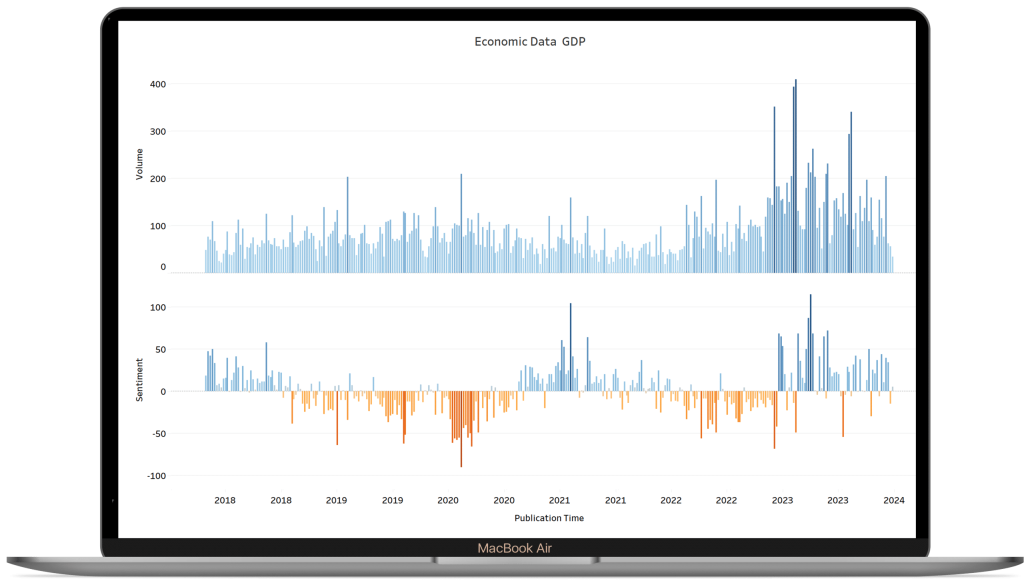
Our technology performs real-time tracking of news sentiment related to GDP trends. This data intelligence allows users to observe how shifts in media tone correlate with economic activity, offering insights into potential GDP movements before traditional economic data is available. Our data feeds offer insights based on sentiment trends. For policymakers, this could assist with adjusting economic policies in anticipation of changes signaled by news sentiment. For businesses, it can provide a basis for strategic planning and risk management, particularly in volatile markets.
Above: Our economic data GDP gross domestic product data intelligence
News sentiment analysis has gained popularity as a valuable tool for economic forecasting. By incorporating news sentiment data into forecasting models, economists and analysts can improve the accuracy of their predictions. News sentiment data provides real-time insights into public perception, which can be used to anticipate changes in consumer behaviour, investment trends, and overall economic performance.
For example, if news sentiment analysis indicates a rising positive sentiment, economists may forecast an increase in consumer spending and subsequent economic growth. Conversely, if news sentiment analysis reveals a declining negative sentiment, economists may forecast a decrease in consumer spending and a potential economic downturn.
By leveraging news sentiment analysis for economic forecasting, policymakers and businesses can make more informed decisions and develop strategies to mitigate potential risks or capitalize on emerging opportunities.
The link between news sentiment and GDP gross domestic product performance has significant implications for businesses and policymakers. Businesses can benefit from monitoring news sentiment to gauge consumer and investor confidence, identify emerging trends, and adjust their strategies accordingly. By understanding how news sentiment affects consumer behavior and economic activity, businesses can make informed decisions about product development, marketing campaigns, and investment opportunities.
Policymakers can also utilize news sentiment analysis to inform their economic policies and decision-making. By monitoring news sentiment, policymakers can gain valuable insights into public perception and adjust their policies to promote economic growth and stability. For example, during periods of negative news sentiment, policymakers may implement measures to boost consumer and investor confidence, such as tax incentives or stimulus packages.
The connection between news sentiment and GDP gross domestic product performance provides a fascinating area of study for economists and analysts. By understanding the impact of news sentiment on economic variables, businesses, and policymakers can make better-informed decisions and develop strategies to promote economic growth.
News sentiment analysis offers a powerful tool for analyzing public perception and its influence on economic behaviour. By leveraging advanced techniques and tools, economists and analysts can extract valuable insights from large volumes of textual data. Incorporating news sentiment analysis into economic forecasting models can improve the accuracy of predictions and enable businesses and policymakers to stay ahead of economic trends.
Ready to harness the power of Permutable’s data intelligence on GDP gross domestic product? To find out more about our data intelligence feeds and how it can benefit your organisation visit our dedicated data intelligence hub or request a free trial below.
In today’s complex global landscape, understanding the impact of war on markets is more crucial than ever. At Permutable AI, we have developed tools like our War Sentiment Index to distil vast amounts of data into actionable insights.
This index does not just reflect the current mood—it tells a story of proportion and perspective, vital for navigating the turbulent waters of today’s financial markets influenced by the impact of war on markets.
Our War Sentiment Index is an innovative tool that quantifies the mood of the market in relation to ongoing and potential geopolitical conflicts. A recent dip due to the Iran-Israel tensions has captured our attention, reflecting significant concern among global market participants. However, when we compare this data with past events, such as the Hamas-Israel conflict and the Russia-Ukraine invasion, we find that the current situation registers lower on the index.
This observation is critical; it underscores the importance of proportion when interpreting the impact of war on markets. Not all geopolitical disturbances carry the same weight or have an equivalent long-term impact on global markets.
The nuanced perspective provided by our index is a key tool for investors and policymakers alike. It serves as a reminder that, while markets react to geopolitical shocks, the reactions can vary greatly in scale and potential long-term effects. The recent fluctuations in the index, though noteworthy, suggest that market participants do not foresee an escalation to levels previously observed in other conflicts.
This is particularly important in an era dominated by a 24-hour news cycle that can amplify fears and lead to reactive decision-making. Maintaining a balanced perspective is essential, and our index helps stakeholders view these shifts within the broader context of the impact of war on markets.
As we continue to monitor developments not only in the Middle East but globally, the importance of informed decision-making comes to the forefront. Strategic foresight, supported by data-driven insights, is indispensable in such uncertain times.
Consequently, our War Sentiment Index plays a pivotal role. By providing a quantifiable measure of sentiment, it aids in the interpretation of complex geopolitical narratives, helping to predict their potential impacts on financial markets. This is crucial for developing resilient investment strategies that can withstand the shocks of geopolitical disturbances and understand the broader impact of war on markets.
At Permutable AI, we are committed to supporting our clients through these challenging times. Our tools and signals are designed to offer clarity and confidence, enabling you to make well-informed strategic decisions. Whether you are an investor seeking to navigate market volatility or a policymaker looking to understand the broader implications of international incidents, our data feeds and analytical tools are here to guide you.
“Understanding the impact of war on markets is not merely about observing fluctuations; it’s about deeply analysing how these changes affect global economic landscapes and investment strategies. At Permutable AI, we harness sophisticated data analytics to provide our clients with insights that are not only reactive but also proactive in nature. Our War Sentiment Index is a testament to our commitment to equip decision-makers with the tools they need to navigate through the complexities introduced by geopolitical tensions. The ability to discern between short-term market reactions and long-term economic impacts is crucial, and this is where our index plays a pivotal role. By interpreting these subtleties, we empower stakeholders to make informed, strategic decisions that go beyond mere survival and aim towards thriving in a volatile world,” highted Permutable AI CEO, Wilson Chan.
While the global stage is fraught with uncertainties, our tools and data and here to provide clarity. By understanding the proportions and implications of global events through our War Sentiment Index, you can navigate these uncertainties with greater assurance and strategic acumen. Let us help you turn data into actionable insights, fostering resilience and foresight in an unpredictable world.
Are you looking to navigate these choppy waters with data-driven confidence? Our team at Permutable AI is ready to assist. We offer a range of signals and data feeds that can help you understand and anticipate market movements in response to global events. Connect with us by emailing enquiries@permutable.ai to discuss how our insights can empower your decision-making process or fill in the form below.
In the ever-evolving landscape of financial services, the integration of artificial intelligence has reached a new zenith with the advent of Generative AI in investment strategy. While the impact of AI has been profound, Generative AI is set to redefine the terrain, particularly in the realm of investment strategy. The ability of Generative AI to succinctly summarize and compare myriad investment options holds the promise of transforming decision-making processes for investors and empowering financial advisors to deliver unparalleled precision and personalization.
One of the most compelling contributions of Generative AI in the financial sector lies in its capacity to streamline decision-making for investors. The technology’s capability to swiftly analyze, summarize, and compare diverse investment options provides investors with a comprehensive and digestible overview of their choices. In an era where information overload is a common challenge, Generative AI acts as a sophisticated filter, distilling complex data into actionable insights.
This streamlined approach is particularly beneficial for investors seeking to make quicker and more concise decisions. Generative AI’s real-time analysis and data-driven summaries empower investors to navigate the complexities of the financial market with greater ease. By presenting information in a clear and accessible manner, Generative AI facilitates a more informed decision-making process, reducing the time and effort investors need to allocate to research.
Beyond its impact on investors, Generative AI serves as a powerful ally for financial advisors. The technology’s ability to take into account individual risk tolerance, financial goals, and market trends allows financial advisors to offer more accurate and tailored investment advice. Generative AI transcends conventional analysis by providing a holistic view that aligns with the unique circumstances of each investor.
Financial advisors, armed with the insights generated by Generative AI, can go beyond generic recommendations and craft investment strategies that resonate with the specific needs of their clients. The personalization facilitated by Generative AI not only enhances the quality of advice but also strengthens the advisor-client relationship. In a landscape where trust and bespoke solutions are paramount, Generative AI becomes an invaluable tool for financial advisors seeking to elevate their service offerings.
The pace and volatility of the financial market demands agility and precision, and Generative AI emerges as a catalyst in meeting these imperatives. Investors, often confronted with time-sensitive decisions, benefit from the rapid analysis and comparison capabilities of Generative AI. The technology’s proficiency in handling vast datasets in real-time enables investors to stay ahead of market trends and make timely decisions to capitalize on opportunities or mitigate risks.
Financial advisors, too, grapple with the challenge of delivering timely and precise advice in a dynamic market environment. Generative AI equips them with the tools to navigate this landscape efficiently. By automating time-consuming tasks related to data processing and analysis, Generative AI liberates financial advisors to focus on strategic aspects of client interaction, fostering a symbiotic relationship between human expertise and technological efficiency.
While the potential of Generative AI in investment strategy is vast, it is essential to address challenges and ensure ethical implementation. Privacy concerns, data security, and transparency in algorithmic decision-making must be at the forefront of considerations. Striking a balance between harnessing the power of Generative AI and upholding robust ethical standards is paramount to building trust among investors and stakeholders.
Furthermore, as Generative AI becomes an integral part of investment strategy, ongoing investment in employee training and development is crucial. Financial professionals must be equipped with the skills to collaborate seamlessly with AI technologies, ensuring a harmonious integration that maximizes the benefits of both human intelligence and Generative AI capabilities.
In conclusion, the integration of Generative AI in investment strategy heralds a paradigm shift in how decisions are made in the financial services sector. Its ability to synthesize complex data, provide actionable insights, and facilitate personalized recommendations positions Generative AI as a catalyst for innovation and efficiency.
As financial institutions embrace this transformative technology, they stand at the cusp of a new era where decision-making is not just expedited but refined to meet the unique needs of each investor. The synergy between human expertise and Generative AI capabilities is poised to redefine the landscape of investment strategy, ushering in an era where precision, personalization, and timely decision-making become the cornerstones of financial success.
At Permutable AI, we recognise the transformative potential of Generative AI in investment strategy and seamlessly integrate this advanced technology into our suite of solutions. Our Generative AI-powered tools excel in swiftly analysing and summarising diverse investment options, providing investors with clear, actionable insights. This technology acts as a sophisticated filter, empowering investors and financial advisors to make informed decisions with greater ease and precision.
As we look ahead, Permutable AI remains dedicated to navigating the future of investment strategy with our clients, propelling us into an era where decision-making is not only expedited but refined to meet the unique needs of each investor. The synergy between human expertise and Generative AI capabilities positions Permutable AI as a trailblazer in the financial services sector, where precision, personalization, and timely decision-making redefine the landscape of financial success.
Get in touch below to find out how you can revolutionize your investment approach with Permutable AI, driving unparalleled precision and personalization tailored to your unique financial goals. Experience the future of financial success by embracing the transformative synergy between human expertise and cutting-edge Generative AI capabilities.
Tencent Holdings is a Chinese multinational conglomerate that specializes in various internet-related services and products. Founded in 1998, Tencent has grown to become one of the largest and most valuable technology companies in the world. With a diverse portfolio that includes social media, online gaming, e-commerce, and digital payments, Tencent has established a significant presence in the global market.
Tencent Holdings stock which was founded in 1998, headquartered in Shenzhen and listed on the Hong Kong Stock Exchange – is widely regarded as one of the most attractive investment opportunities in the technology sector. The stock ticker symbol is 0700.HK. As of Monday, December 2023, Tencent Holdings has a market capitalization of over $381.89 Billion, making it one of the largest publicly traded companies in the world.
Investing in Tencent Holdings stock provides investors with exposure to a well-diversified company that operates across various sectors of the internet industry. The stock has historically demonstrated strong growth potential and has been a preferred choice for long-term investors seeking exposure to the Chinese market.
Several factors influence the dynamics of Tencent Holdings limited, making it essential for investors to understand the key drivers behind its performance.
As a Chinese company, Tencent Holdings’ stock performance is closely tied to the overall health of the Chinese economy. Economic indicators such as GDP growth, consumer spending, and government policies can have a significant impact on the stock’s performance. Additionally, government regulations pertaining to the internet industry, cybersecurity, and data privacy can influence Tencent’s operations and, consequently, its stock price.
Tencent’s success is largely driven by its ability to engage and monetize its massive user base. The company’s social media platform, WeChat, boasts over 1.33 billion monthly active users, providing a fertile ground for advertising and e-commerce opportunities. This makes it one of the most popular social media platforms in the world, with a larger user base than Facebook, Instagram, and Twitter combined. WeChat is particularly popular in China, where it is used by over 1.2 billion people. Investors should closely monitor user engagement metrics and Tencent’s strategies for monetizing its platforms to assess the company’s growth prospects and potential impact on the stock price.
The technology sector is highly competitive, and Tencent Holdings faces competition from both domestic and international players. Keeping abreast of the latest technological innovations, product launches, and market trends is crucial for understanding Tencent’s competitive position. Investors should also evaluate Tencent’s ability to innovate and adapt to changing market dynamics to assess its long-term growth potential.
Tencent Holdings stock has exhibited impressive growth over the years, with notable fluctuations influenced by various external factors. In 2018, Tencent’s stock price experienced a significant surge, driven by the success of its mobile gaming division and the rising popularity of WeChat.
However, in 2022, concerns over the Chinese government’s tightening regulations on the gaming industry and potential economic slowdown led to a decline in Tencent’s stock price. From their peak in early 2021, Tencent’s shares have dropped by more than 55%. Despite these fluctuations, Tencent Holdings stock has demonstrated resilience, recovering from market downturns and continuing to deliver long-term value to investors.
Understanding Tencent Holdings’ financial performance is crucial for investors seeking to make informed decisions regarding the company’s stock. In the third quarter of 2023, the Chinese tech giant reported a net profit of 45 billion yuan, indicating a year-on-year increase of about 39 percent. During this period, the revenue from fintech and business services reached 52 billion yuan and revenue from online advertising amounted to about 26 billion yuan.
Tencent Holdings operates in a highly competitive market, both domestically and internationally. Understanding the company’s competitive landscape is crucial for assessing its long-term growth potential.
In the social media and messaging sector, Tencent faces competition from companies such as ByteDance and Meta. These companies offer similar services and are constantly innovating to attract and retain users. Tencent’s ability to differentiate itself through unique features, user experience, and strategic partnerships will play a crucial role in maintaining its competitive edge
In the online gaming industry, Tencent faces competition from both domestic and international game developers and publishers. The company’s ability to secure exclusive partnerships, develop popular game titles, and leverage its massive user base will determine its success in this highly lucrative sector. Investors should closely monitor Tencent’s competitive positioning and evaluate its strategies for staying ahead of the competition to make informed investment decisions.
Analysts are generally bullish on Tencent Holdings’ future prospects. The company has a strong track record of growth and is positioned to benefit from the continued growth of the Chinese internet market. However, analysts also note that the company faces some challenges, such as regulatory risks and its dependence on the gaming industry. Overall, Tencent Holdings is a well-managed company with a strong track record of innovation. However, investors should carefully consider the company’s risks and challenges before making any investment decisions.
Investing in Tencent Holdings stock carries certain risks and challenges that investors should be aware of.
As a Chinese company, Tencent is subject to government regulations that can impact its operations and profitability. Changes in regulations related to the internet industry, cybersecurity, and data privacy can pose risks to Tencent’s business model and, consequently, its stock price.
Tencent operates in highly competitive markets, and its success depends on its ability to stay ahead of competitors. Increased competition can impact user engagement, monetization, and market share, potentially affecting Tencent’s stock performance.
Tencent’s stock price is influenced by macroeconomic factors, particularly those affecting the Chinese economy. Economic downturns, changes in consumer spending patterns, and geopolitical tensions can all have an impact on Tencent’s financial performance and stock price. Investors should carefully assess these risks and challenges and consider their risk tolerance before investing in Tencent Holdings stock.
Tencent Holdings, a Chinese multinational conglomerate, continues to be a dominant force in the global tech industry. The company, primarily engaged in internet-related services and products, operates through four segments: Value-Added Services (VAS), Online Advertising, Fintech and Business Services, and Others. As an investment holding company primarily focused on expanding its digital ecosystem, Tencent’s diverse portfolio and strategic investments have played a critical role in its market positioning.
Tencent’s Value-Added Services (VAS) segment is its largest revenue generator, mainly engaged in providing online games, social networks, and digital content. The VAS segment remains strong, with online games and videos continuing to drive substantial revenue, supported by Tencent’s extensive user base and innovative content offerings. The company primarily operates its VAS segment through platforms like WeChat and QQ, leveraging these social networks to enhance user engagement and monetization.
The Online Advertising segment has shown resilience, despite global economic headwinds. Tencent’s services in VAS and online advertising benefit from its ability to target vast audiences through its social media platforms and cloud services. The online advertising segment remains a crucial growth area, with significant contributions from media advertising and performance-based ads on Tencent’s social networks.
Tencent’s Fintech and Business Services segment has also seen growth, driven by its cloud services and payment solutions. This segment is a critical component of Tencent’s long-term strategy, aiming to diversify its revenue streams beyond gaming and social media. The company’s investment holding company structure has allowed it to integrate and scale its cloud offerings, contributing positively to its overall cash flow.
Tencent’s financial performance in the first half of 2024 reflects a balanced approach to growth and investment. The company’s cash flow has been bolstered by strong performances in its VAS and fintech segments, with consistent contributions from its online advertising segment. This diversified revenue base has allowed Tencent to navigate market fluctuations effectively, maintaining a stable financial outlook.
Despite its robust performance, Tencent faces challenges in a highly competitive market. The company’s engagement in media, particularly through its online platforms, continues to face regulatory scrutiny. Moreover, the competitive landscape in sectors such as social networks and online gaming remains intense, with rivals both domestic and international vying for market share.
Tencent’s ability to innovate and adapt to regulatory changes, while expanding its cloud services and fintech offerings, will be key to sustaining its growth trajectory in the latter half of 2024.
As an investment holding company with a vast digital ecosystem, Tencent is well-positioned to continue its leadership in the tech industry. The company’s focus on expanding its cloud services, enhancing its social networks, and leveraging its VAS segment will be critical in driving future growth. Investors should monitor Tencent’s strategic initiatives and regulatory environment closely as these factors will significantly influence the company’s stock performance in the coming months.
Tencent’s diversified operations across its four segments provide a strong foundation for continued success, making it a compelling option for investors seeking exposure to the Chinese technology sector.
Understanding the dynamics of Tencent Holdings stock is crucial for investors seeking exposure to the technology sector and the Chinese market. Factors such as the Chinese economy, user engagement, technological innovations, and competitive landscape significantly influence the stock’s performance
By analyzing Tencent’s financial performance, keeping informed about expert opinions and forecasts, and being aware of the associated risks and challenges, investors can make informed decisions when considering investing in Tencent Holdings stock. It is important to conduct thorough research, diversify portfolios, and maintain a long-term perspective to maximize potential returns.
Looking for more stock market insights? See our articles on the factors that determine Spotify stock price, Advanced Micro Devices stock price, Lucid stock price, Berkshire Hathaway stock price, Apple stock price, Nvidia stock price, Google stock price, Walmart stock price, Tesla stock price, Microsoft stock price and Amazon stock price with more added weekly.
At Permutable AI, our expertise powers your strategy, facilitating human-to-AI knowledge transfer and offering a unique edge in discerning investor sentiment, from global macro trends to corporate happenings. With over 1.1 million companies tracked across 120 countries and natural language processing inspired by GPT-4, our real-time insights transform trading. Plus, our state-of-the-art machine learning trading platform, R2, systematically pinpoints entry points for various securities. Join us on the journey to reimagine your trading. Get in touch below to find out more.