
Energy commodity trends Q4 2025: Seasonal patterns, supply constraints, and geopolitical risk shape energy complex
01 Oct 2025
01 Oct 2025
This quarterly analysis examines commodity trends across energy markets through the lens of Permutable’s Trading Co-Pilot, aimed at portfolio managers, energy traders, and corporate strategists seeking actionable insights into evolving supply-demand dynamics.
As we enter the two months of 2025, commodity trends across the energy complex reveal a market environment fundamentally shaped by the interplay of seasonal demand patterns, persistent supply-side constraints, and elevated geopolitical risk premiums. Our Trading Co-Pilot‘s analysis of sentiment and fundamental drivers across crude oil, natural gas, liquefied natural gas, and refined products markets identifies several dominant themes that will likely define commodity market performance through year-end.
The overarching narrative emerging from current commodity trends is one of fragmentation rather than convergence. Unlike previous periods when energy markets moved in relative lockstep, the final quarter of 2025 presents distinct supply-demand dynamics across different segments of the energy complex. This divergence creates both opportunities and challenges for institutional participants seeking to navigate what has become an increasingly nuanced commodity landscape.
Commodity trends in crude oil markets Q4 reflect a delicate equilibrium between geopolitical supply disruption risks and fundamental supply-demand balances. Brent crude’s trajectory throughout 2025 exemplifies this tension, with early-year strength driven by OPEC+ production discipline giving way to mid-year weakness as output increases and rising inventories weighed on sentiment, before partial recovery on softer dollar conditions and intermittent Chinese demand signals.
The current environment sees crude markets navigating between $65 and $75 per barrel ranges, with sentiment oscillating based on drone attack risks targeting Russian and Ukrainian energy infrastructure, Black Sea shipping disruptions, and evolving OPEC+ policy signals. What distinguishes current commodity trends from previous cycles is the persistence of these geopolitical risk premiums despite relatively balanced fundamental supply-demand conditions.
In Q4, commodity trends in crude oil will likely be shaped by several key variables. Winter demand patterns historically provide seasonal support, particularly if Chinese economic stimulus measures translate into tangible consumption increases. OPEC+ production policy remains the critical swing factor, with any significant supply increases capable of overwhelming demand-side improvements. The group’s messaging and actual production behaviour will be crucial in determining whether crude markets maintain their current equilibrium or break decisively in either direction.
The interplay between North American production trends and global supply balances adds further complexity. Rising US rig counts and restored Iraqi-Turkish pipeline flows represent supply-side headwinds that could pressure markets absent offsetting demand strength or voluntary OPEC+ restraint. This dynamic underscores how commodity trends increasingly reflect sophisticated multi-variable optimisation rather than simple supply-demand mechanics.
Commodity trends in natural gas markets present perhaps the most weather-dependent outlook across the energy complex in Q4. Henry Hub’s dramatic journey from above $5.78 in Q1 2025 to below $3.00 during summer oversupply episodes illustrates the extreme volatility that characterises this market, with current stabilisation around $3.17 reflecting the tension between elevated storage levels and approaching heating season demand.
The structural narrative dominating commodity trends in natural gas centres on persistent oversupply conditions driven by record production levels. This fundamental backdrop creates a bearish bias that only severe winter weather can overcome sustainably. The magnitude of any Q4 rally will therefore depend critically on temperature deviations from seasonal norms across key demand centres, with mild winter scenarios keeping prices range-bound whilst severe cold snaps could trigger sharp upward moves.
European natural gas markets, as reflected in TTF pricing, show similar seasonal sensitivity but with greater geopolitical complexity. Recent breakouts near €33 driven by Central European cold snaps and downgraded Russian export outlooks demonstrate how commodity trends in this market remain acutely sensitive to supply disruption narratives alongside fundamental weather-driven demand patterns.
The LNG market adds another dimension to natural gas commodity trends, with seasonal heating demand in Europe and Asia providing natural support, whilst new project commissioning and export capacity expansions create supply-side pressures. Record US exports through facilities like Freeport alongside LNG Canada project progress indicate that supply growth continues outpacing demand expansion on an annual basis, even as seasonal patterns create quarterly fluctuations.
For Q4 specifically, commodity trends in natural gas will likely exhibit heightened volatility around weather forecast updates and storage injection/withdrawal reports. The winter heating season represents natural gas markets‘ moment of truth, when theoretical oversupply meets actual demand realisation. Geopolitical disruptions to pipeline flows or LNG terminal operations could introduce additional volatility beyond weather-driven dynamics.
Commodity trends in refined products markets in Q4 reflect the typical seasonal patterns of autumn refinery maintenance transitioning into winter demand for heating fuels, with geopolitical supply disruptions adding complexity to fundamental seasonal dynamics.
Distillate markets, as exemplified by NY Harbor ULSD, have exhibited pronounced volatility throughout 2025 driven by episodic supply disruptions across Libya, Russia, and various pipeline systems. Current positioning suggests the market in Q4 with moderate speculative length and technical support levels that should provide downside protection, whilst Gulf Coast refinery maintenance schedules and early heating demand provide natural seasonal tailwinds.
The commodity trends trajectory for distillates will likely depend heavily on several factors: the severity and duration of refinery maintenance activities, which reduce product output precisely when seasonal demand begins increasing; the pace of heating oil and diesel demand as temperatures decline across the northern hemisphere; and any supply-side disruptions from geopolitical events or operational issues at major production facilities.
Gasoline markets present different commodity trends dynamics, with RBOB exhibiting cyclical swings throughout 2025 before ending September near $1.98 amid persistent product stock draws and hurricane threat premiums. The seasonal pattern for gasoline typically sees weakening fundamentals into year-end as driving activity declines, but this year’s trajectory may prove more complex given supply-side constraints and inventory dynamics.
Hurricane risks remain relevant, with historical patterns showing October can still produce significant storm activity affecting Gulf Coast refining operations. The combination of hurricane risk, refinery maintenance schedules, and evolving inventory levels creates a commodity trends outlook where refined products could exhibit greater strength relative to crude oil, as refining margin dynamics respond to supply-demand imbalances.
Across all segments of the energy complex, commodity trends for Q4 2025 are characterised by supply-side constraints that prevent significant price weakness despite demand concerns. Whether examining OPEC+ production discipline in crude markets, pipeline and export infrastructure limitations in natural gas, or refinery capacity constraints in products, supply-side factors provide consistent price support.
This supply-constrained environment differs markedly from previous cycles where demand weakness translated more directly into price declines. Current commodity trends reflect structural underinvestment in production capacity across multiple energy sectors following the 2020 downturn, creating supply inelasticity that makes markets more responsive to marginal demand changes or supply disruptions.
The geopolitical dimension of supply constraints deserves particular emphasis. Drone attacks on energy infrastructure, sanctions affecting Russian energy flows, shipping disruptions through critical maritime chokepoints, and trade policy uncertainty all contribute to risk premiums embedded in current commodity valuations. These geopolitical factors add volatility and upside skew to commodity trends that fundamental supply-demand analysis alone would not predict.
Whilst seasonal patterns remain relevant to commodity trends, their expression in Q4 2025 occurs within a structurally different market environment than prevailed in previous cycles. Winter demand for heating fuels provides natural seasonal support, but the magnitude of any rally depends critically on weather outcomes and supply responses.
Historical volatility patterns suggest commodity markets entering Q4 with wider-than-typical confidence ranges reflecting elevated uncertainty around multiple variables. The probability-weighted forecasts emerging from our Trading Co-Pilot analysis indicate markets expecting modest upside biases across most energy commodities, but with significant scenario divergence depending on weather, geopolitical events, and policy decisions.
For institutional participants, commodity trends in Q4 demand several strategic considerations. First, seasonal positioning must account for supply-side constraints that could amplify typical winter demand effects. Second, geopolitical event risk requires robust hedging strategies rather than directional bets. Third, cross-commodity spread opportunities may offer better risk-adjusted returns than outright directional exposure given the fragmented nature of current commodity trends.
Weather derivatives and volatility products become increasingly relevant tools as commodity trends exhibit greater sensitivity to temperature outcomes. The range of plausible scenarios across energy commodities remains unusually wide, suggesting that position sizing and risk management deserve particular attention as we progress through the quarter.
The integration of fundamental analysis with sentiment tracking and geopolitical risk assessment represents the optimal approach for navigating current commodity trends. Markets are pricing complex interactions between seasonal patterns, supply constraints, and event risks that require sophisticated multi-dimensional analytical frameworks rather than simple supply-demand projections.
This assessment of commodity trends is powered by our Trading Co-Pilot’s sentiment and fundamental analysis across energy markets. For access to our real-time commodity sentiment tracking capabilities, contact enquiries@permutable.ai.

Analysis
22 May 2026
Brent volatility: Tracking Brent’s three-month sentiment shift
Read more >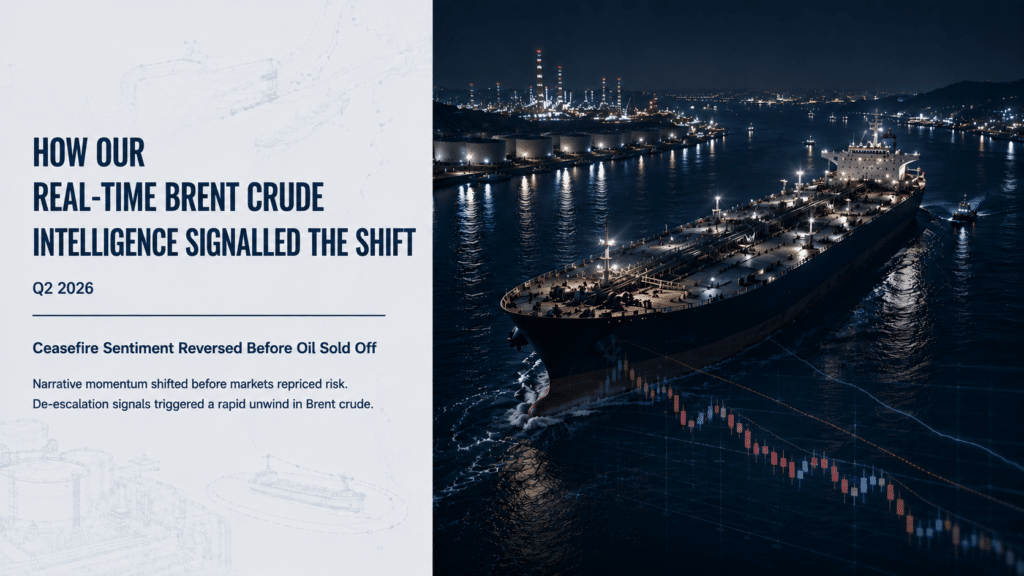
06 May 2026
How our real-time Brent crude intelligence signalled a shift in ceasefire sentiment before the oil selloff
Read more >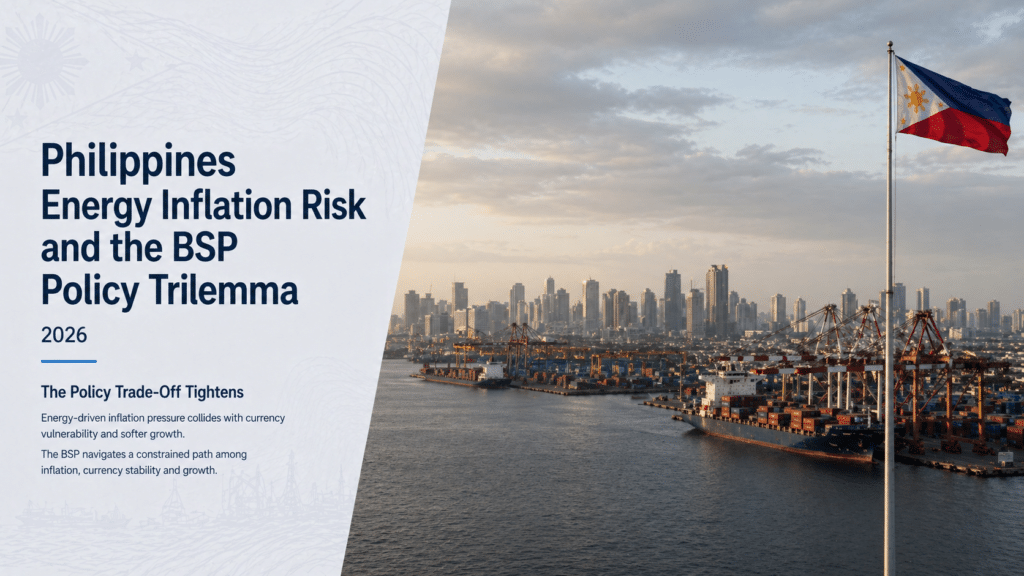
27 Apr 2026
Philippines: Energy Inflation Risk and the Monetary Policy Trilemma
Read more >