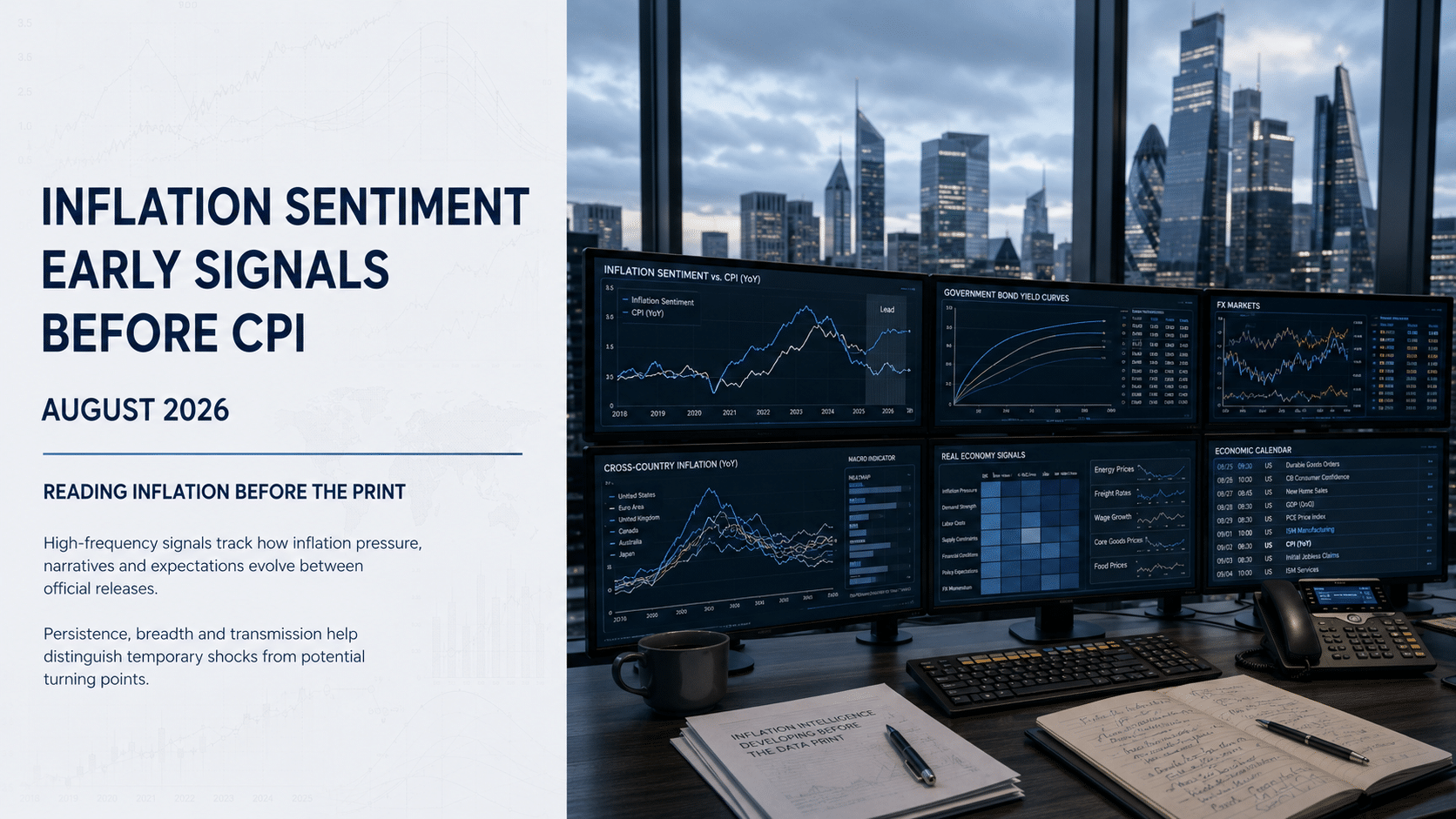
Inflation Sentiment Index: identifying early inflation signals before CPI
13 Aug 2026
13 Aug 2026
This analysis examines how Permutable’s Inflation Sentiment Index can help institutional investors identify changing inflation pressures before they are fully reflected in official CPI data. Aimed at macro, rates, FX and quantitative research teams, it explains how inflation sentiment can identify potential turning points, distinguish temporary shocks from persistent shifts and support point-in-time analysis across countries and markets.
Official inflation data remain the anchor for macro analysis, but they are not designed to describe the information arriving between releases. By the time a CPI print is published, markets have already absorbed weeks of changes in energy prices, wage commentary, company pricing decisions, supply disruptions, policy language and consumer expectations.
That gap matters most near turning points.
Permutable’s Inflation Sentiment Index is designed to measure the direction and intensity of inflation-related information as it develops. Rather than attempting to replace CPI, the Inflation Sentiment Index creates a structured, high-frequency view of how the inflation narrative is changing before those developments are fully reflected in official data.
For institutional investors, the useful question is not whether inflation sentiment is “right” and CPI is “wrong”. It is whether a change in the information environment is persistent, broad enough to matter and likely to transmit into the variables central banks and financial markets ultimately price.
An Inflation Sentiment Index is a high-frequency measure of how inflation-related information, narratives and perceived price pressures are changing over time.
Permutable’s Inflation Sentiment Index forms part of our Global Macro Sentiment Indices, which structure macroeconomic information across countries, topics and sources. Inflation-related signals are updated as new information arrives and preserved point in time, allowing researchers to examine what the information environment looked like at any historical moment rather than reconstructing it using hindsight.
This creates a different analytical layer from official inflation statistics.
CPI measures observed price changes over a defined period. The Inflation Sentiment Index instead captures changes in the information surrounding inflation as they emerge.
That distinction can become particularly useful during periods when the inflation outlook is changing quickly.
Monthly inflation releases are necessarily backward-looking. They measure prices collected during a specified period and become available after collection, processing and publication.
Markets operate on a different timetable.
A refinery outage can change energy pricing expectations immediately. A weaker currency can alter perceptions of imported inflation before those costs appear in final goods. Companies can warn about higher input costs, workers can demand higher wages and policymakers can change their language while the latest official inflation rate still reflects conditions from several weeks earlier.
The Inflation Sentiment Index provides a way of structuring those developments as they occur.
This does not mean every change in inflation sentiment will subsequently appear in CPI. Rather, it gives researchers another observable layer through which to assess whether the underlying inflation environment may be shifting.
A higher Inflation Sentiment Index reading should not automatically be interpreted as a higher future CPI print.
That is one of the most important distinctions when working with alternative inflation data.
A sudden increase in inflation-related coverage can be economically important without becoming a broad inflation regime shift. An oil shock is the clearest example. Energy-related inflation concerns may dominate the information flow while underlying goods demand, services inflation and wages remain relatively stable.
For macro investors, three characteristics therefore matter more than the movement in the Inflation Sentiment Index alone:
A short-lived increase driven by a single factor is a very different research signal from an Inflation Sentiment Index that rises, broadens and remains elevated.
Recent third-party use provides an example of how an Inflation Sentiment Index can sit alongside more established economic indicators.
CEIC has incorporated Permutable’s Inflation Sentiment Index into macroeconomic analysis alongside its own high-frequency inflation indicators and market data.
In a recent edition of CEIC Insights, CEIC highlighted rising inflation sentiment across the US and a number of European economies as geopolitical risks in the Persian Gulf increased. The analysis considered the Inflation Sentiment Index alongside inflation nowcasts and movements in longer-term government bond yields.
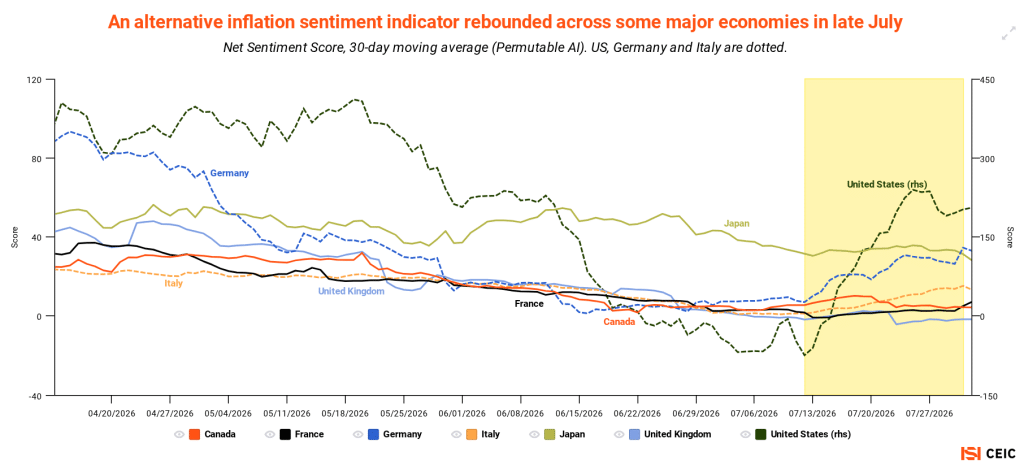
CEIC also highlights the historical relationship between Permutable’s inflation sentiment data and reported CPI across a broad range of economies.
The significance is not that several indicators happened to move in the same direction at one particular point in time – each measures a different stage of the inflation process.
The Inflation Sentiment Index captures changes in the information environment. High-frequency inflation estimates attempt to estimate current price developments. Government bond markets show how investors are pricing the implications for growth, inflation and monetary policy.
The more useful research question is therefore where these indicators agree, where they diverge and which appears to move first.
The potential value of our Inflation Sentiment Index is greatest around turning points.
Inflation regimes rarely change because of a single headline. They usually evolve through a series of developments that gradually change the balance of evidence.
Energy prices may rise first. Corporate commentary may subsequently indicate higher input costs. Wage pressure may become more visible. Policymakers may begin discussing upside inflation risks more frequently. Bond markets may then adjust their expectations for the policy path.
Permutable’s Inflation Sentiment Index allows these changes to be examined as part of a continuous information process rather than only through monthly data releases.
The key analytical question is persistence.
If inflation sentiment rises for several hours because of one geopolitical event, the signal may primarily reflect a temporary increase in uncertainty.
If it remains elevated for several weeks, spreads across different inflation drivers and appears simultaneously across multiple economies, the probability of a more meaningful change in the inflation environment becomes more interesting to test.
Cross-country comparison is another important use case.
The same global inflation shock does not have the same implications for every economy.
A rise in oil prices may affect an energy-importing economy with a weakening currency very differently from an energy-producing economy. Wage dynamics, domestic demand, fiscal policy and central-bank credibility can further change how external inflation pressure is transmitted.
A point-in-time Inflation Sentiment Index allows researchers to examine whether inflation pressure is becoming more pronounced in particular economies, which countries appear to move first and how long those divergences persist.
For rates and FX investors, that can create a useful framework for comparing potential changes in relative monetary-policy expectations.
Rather than asking whether global inflation sentiment is simply rising or falling, researchers can ask where the shift is strongest and where it is most likely to matter for policy.
For institutional investors, the strongest use case is not treating the Inflation Sentiment Index as a mechanical CPI forecasting model.
A more robust approach is conditional.
When inflation sentiment changes materially, persists and broadens beyond its initial driver, does that shift contain information about subsequent inflation outcomes, central-bank policy expectations or market pricing?
Because Permutable’s Global Macro Sentiment Indices are maintained on a point-in-time basis, researchers can test those questions against the information that would actually have been available at the time.
Potential applications include:
Permutable’s Inflation Sentiment Index therefore works best as an additional research feature rather than as a standalone trading signal.
Official statistics tell investors what has already been measured. Market prices show how those developments are currently being priced. Permutable’s Inflation Sentiment Index provides another layer between the two by showing how the information environment is changing.
For macro, rates and FX investors, that can make the period between official inflation releases considerably more observable.
Permutable’s Inflation Sentiment Index helps macro, rates and FX teams track changes in inflation narratives across 95+ economies, with hourly updates, point-in-time history and traceability to the underlying sources.
Use it to compare countries, test inflation turning points and assess how changes in sentiment relate to CPI, monetary policy and market pricing.
Book a demo to explore the Inflation Sentiment Index and Global Macro Sentiment Indices.

Analysis
11 Aug 2026
RBA interest rate outlook: A hawkish hold as inflation pressure fades
Read more >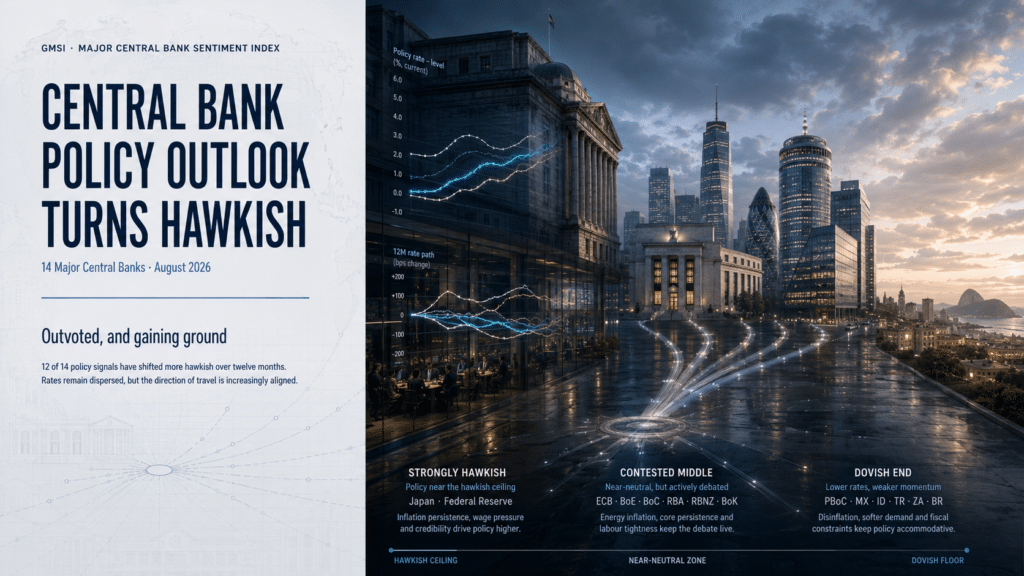
Analysis
10 Aug 2026
Central bank policy outlook 2026: 12 of 14 shift more hawkish
Read more >
Analysis
06 Aug 2026
Spotting macro regime shifts early: lessons from Japan, Turkey and Brazil
Read more >