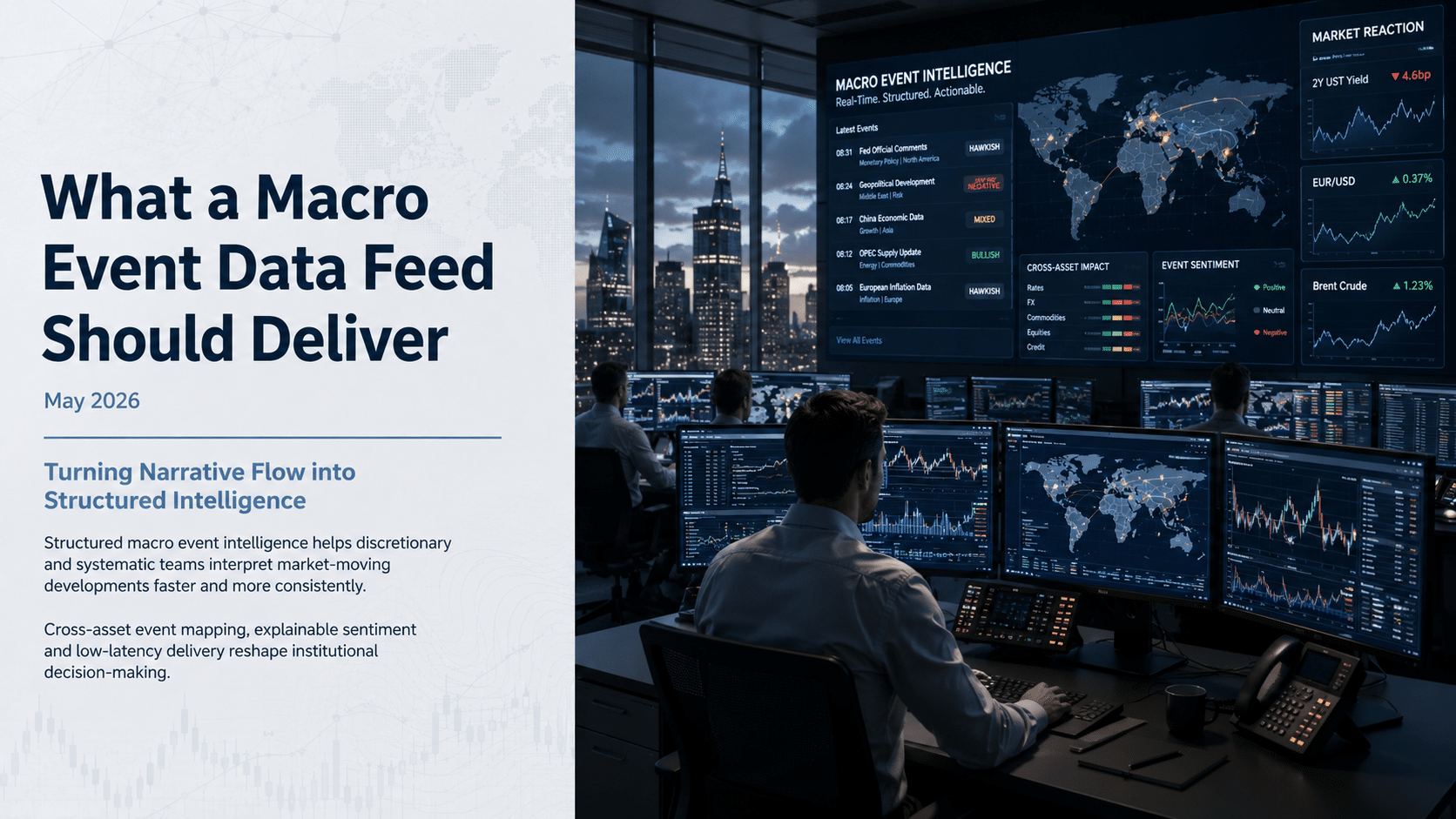
What a macro event data feed should deliver
12 May 2026
12 May 2026
This article explores what institutional traders should expect from a modern macro event data feed, from low-latency event detection and cross-asset intelligence to explainable sentiment scoring and flexible API delivery. Aimed at both discretionary and systematic trading teams, it explains how structured macro event intelligence helps traders, quants and risk managers transform fast-moving narratives into actionable, research-ready and execution-relevant insights.
By the time a discretionary macro PM has read the headline, spoken to the desk and checked the price action, the market has often already repriced the first-order macro implication. At the same time, a systematic strategy may already be recalibrating exposures, updating probabilities or triggering signals automatically. That is the operating reality a macro event data feed must address.
For institutional teams, the question is not whether more information is available. It is whether that information arrives in a form that can be interpreted, tested and acted on before the opportunity is gone – regardless of whether the end user is a discretionary macro trader, quantitative researcher, execution algorithm or risk team.
A genuine macro event data feed is not a news terminal stripped down into JSON. It is a machine-consumable intelligence layer that identifies events, classifies them, timestamps them accurately, maps them to assets and narratives, and exposes them through flexible delivery methods suited to different trading workflows. If it cannot support both research workflows and live execution environments, it is not solving the real problem.
Macro markets move on interpretation, not simply publication. A central bank comment, refinery outage, sovereign debt warning, sanctions update or payrolls surprise only matters insofar as it shifts expectations around rates, inflation, growth, supply, demand or cross-border capital flows.
The bottleneck is interpretation speed.
That bottleneck has widened as trading teams face a constant stream of official releases, policy signals, corporate commentary, geopolitical developments and narrative shifts across energy, FX, rates, commodities and equities. Human analysts still add edge, but not by manually triaging every source in real time. The edge comes from structuring the flow early enough that analysts, traders and models can focus on relevance, magnitude and positioning implications.
For discretionary traders, that means surfacing the developments that genuinely matter before the narrative becomes consensus. For systematic teams, it means receiving structured event intelligence that can be ingested directly into models, signal engines and execution systems.
This is where event-level data becomes more valuable than raw text. A macro event data feed should convert unstructured information into a consistent schema: what happened, when it happened, how unusual it is, which assets it is likely to affect, and what directional bias the event implies.
That structure is what allows quants to backtest event reactions, macro analysts to monitor regime shifts, discretionary PMs to contextualise price action, and execution systems to react systematically across multiple time horizons.
Most market data stacks still contain a gap between news ingestion and signal generation. Headlines arrive quickly, but they are noisy, repetitive and difficult to normalise. Structured event intelligence fills that gap.
A useful feed should do more than tag broad themes such as inflation or growth. It should identify event type, source credibility, geographic relevance, sector exposure and likely transmission path. A hawkish ECB comment and a disruption in LNG flows may both matter to European risk assets, but they transmit through markets differently.
Institutional users do not need another general-purpose summary layer. They need structured intelligence capable of distinguishing between routine commentary and genuine inflection points, consistently enough to support both human decision-making and machine-driven workflows.
That consistency becomes especially important when event intelligence is delivered across multiple formats. Some teams require low-latency APIs directly into trading infrastructure. Others need dashboards, alerting systems, data terminals, quantitative research environments or integration into existing execution and risk systems. Increasingly, firms want all of the above operating simultaneously.
At Permutable, this is precisely where we come in as a provider of real-time macro event intelligence as deployable infrastructure rather than a standalone content product.
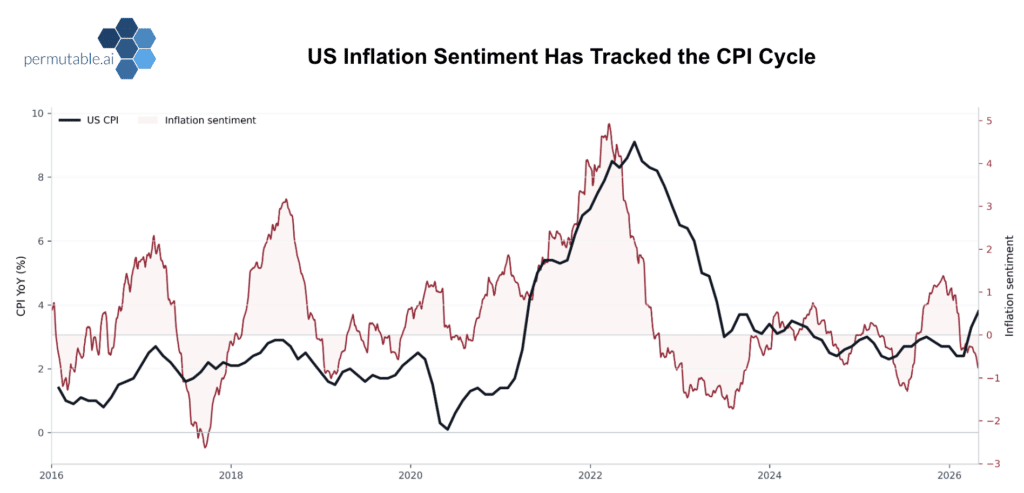
Latency matters, but latency alone is not enough. A very fast feed that misclassifies events or floods desks with noise creates false urgency rather than usable signal. The right standard is low-latency structured interpretation.
A strong feed should include:
The delivery layer is increasingly all-important. Different trading styles consume macro intelligence differently. For example systematic teams may require:
Meanwhile, discretionary desks may prefer:
Risk and strategy teams often sit somewhere in between, requiring both real-time visibility and historical analytical depth. A serious macro event data feed should therefore function across these workflows without forcing firms into a single interface or operating model.
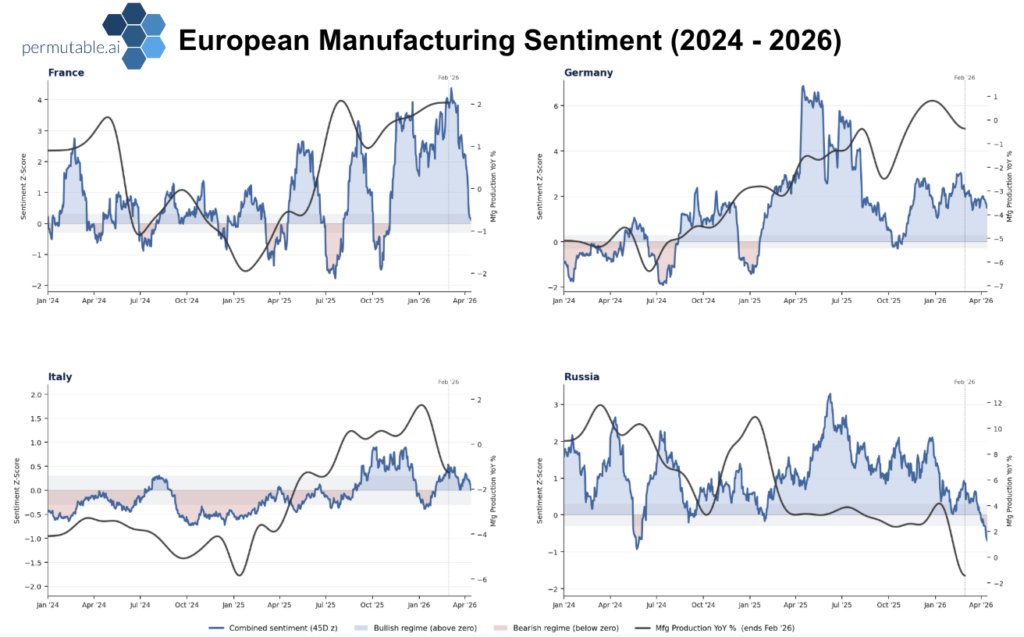
For discretionary macro desks, the value is speed to interpretation. When event intelligence is structured properly, traders can move rapidly from detection to scenario analysis. Instead of asking what just happened, the desk can focus on whether the move is underpriced, overextended or likely to spill into correlated assets.
For systematic teams, the value is consistency and scalability. Event data that is timestamped, labelled and historically archived becomes testable. Researchers can evaluate whether specific classes of macro events lead to persistent reactions in front-end rates, commodity spreads, FX crosses or equity index futures.
Because the data is structured and machine-readable, it can also support:
Risk teams use the same data differently. They care less about immediate alpha and more about exposure mapping and thematic concentration risk. A live macro event feed can highlight developing stress across supply chains, geopolitical corridors or policy regimes before those pressures fully materialise in prices.
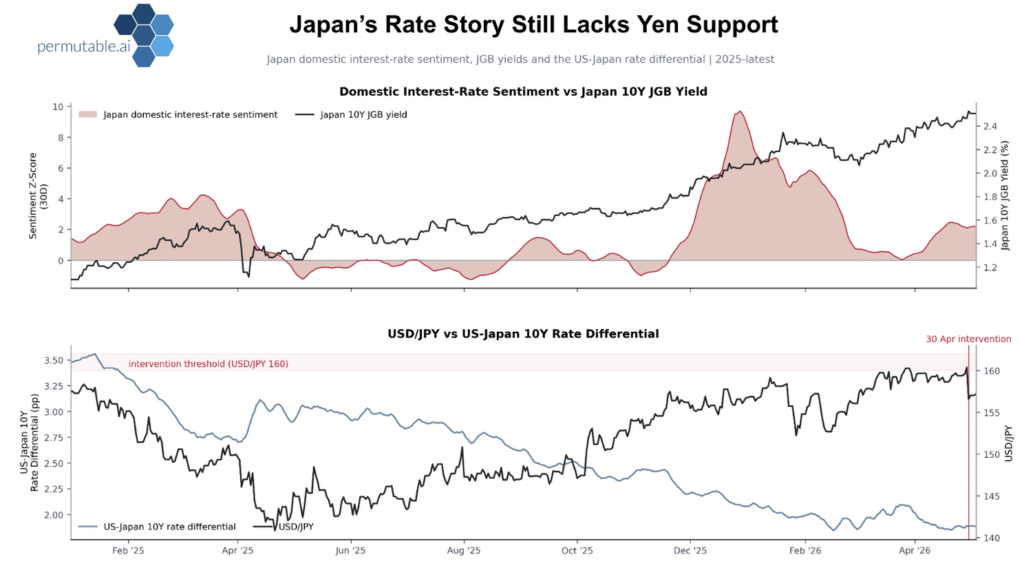
Macro events rarely stay confined to one asset class. A pipeline disruption may begin as an energy story but quickly evolve into a rates or FX and narrative. A labour market print may first impact front-end yields before reshaping USD direction, EM risk appetite and commodity demand assumptions.
This is where many feeds fall short. They classify events correctly within a narrow domain but fail to model cross-asset transmission effectively.
For institutional users, that is a major limitation. The purpose of structured macro intelligence is not merely to catalogue developments. It is to place them inside a broader market context where second and third-order effects can be identified early.
Cross-asset tagging, narrative clustering and sector linkage are therefore not optional enhancements. They are central to how a macro event feed becomes actionable for both discretionary and systematic workflows.
Some firms still consider building their own macro event infrastructure internally. In-house development can make sense where firms possess large engineering teams, mature taxonomy frameworks and sufficient resources to maintain source ingestion, event classification, model calibration and infrastructure reliability over time.
In practice, however, the hidden cost is not simply infrastructure. It is ongoing maintenance and adaptation. Narratives evolve. Sources change. Event relevance shifts across market regimes. What mattered during a disinflation cycle may not carry the same significance during an energy shock or tightening cycle.
Maintaining an event intelligence system that remains relevant across these shifts is a specialist task. That is why many institutional firms increasingly prefer external providers such as those provided by Permutable offering:
The key is not outsourcing judgement. It is accelerating access to structured intelligence that integrates directly into existing discretionary and systematic workflows.
The most important question is whether the feed improves decision quality under time pressure.
That can be evaluated empirically:
Coverage also matters, but breadth alone is not enough. Institutional teams should evaluate relevance within their mandate – whether that involves central banks, sovereign risk, commodities, energy infrastructure, sanctions, trade policy or geopolitical developments.
Explainability is equally critical. If users cannot trace a signal or classification back to the underlying rationale, trust deteriorates quickly. That matters not only for traders and researchers, but also for compliance, governance and post-trade review processes.
Finally, deployment flexibility matters. A macro event data feed should not remain trapped inside a vendor interface. It should be accessible through APIs, research environments, dashboards, alerting systems and execution infrastructure depending on how different teams consume intelligence.
The market does not reward firms for consuming more headlines. It rewards firms that can transform narrative flow into structured, testable and execution-relevant intelligence quickly enough to matter.
Ultimately, a strong macro event data feed is not a convenience layer. It is part of the institutional decision stack and workflow – for discretionary traders, systematic strategies and risk teams alike.
To see how Permutable’s macro event data feed can be embedded directly into your discretionary or systematic trading workflow – from APIs and quantitative research environments to dashboards, alerts and execution infrastructure – get in touch with the team for a tailored walkthrough of the platform and delivery options.
A macro event data feed is a structured, machine-readable intelligence layer that identifies and classifies macroeconomic, geopolitical and market-moving events in real time for trading, research and risk management workflows.
Macro event data feeds are used by discretionary traders, systematic trading teams, quantitative researchers, portfolio managers, risk teams and institutional analysts across asset classes including FX, rates, commodities as well as equities.
Structured event intelligence helps traders and models process fast-moving developments more efficiently by converting unstructured news and narratives into timestamped, classified and actionable market signals.
A strong macro event feed should include low-latency delivery, explainable sentiment scoring, cross-asset mapping, event taxonomy, deduplication, historical archives and flexible API or platform integration.
Systematic traders use Permutable’s structured macro event data to backtest event-driven strategies, generate signals, monitor market regimes and automate decision-making across trading models and execution systems.
Discretionary traders use Permutable’s macro event intelligence to identify market-moving developments faster, contextualise price action and assess second-order impacts across correlated asset classes.
Different teams consume macro intelligence differently. Some require APIs and quantitative datasets, while others rely on dashboards, alerts or execution workflows. At Permutable, we ensure flexible delivery of our event intelligence so that it fits directly into existing trading infrastructure.

Analysis
06 Oct 2026
Copper Sentiment Data for Institutional Commodities Desks: How Sentiment Flagged the 2026 Supply Squeeze Early
Read more >
30 Sep 2026
The Hawkish Turn: G10 Central Bank Policy Outlook into Q4 2026
Read more >
Guide
30 Sep 2026
The complete guide to early macro regime sentiment signals for hedge funds and institutional investors
Read more >