Key geo political issues 2025: 8 global flashpoints investors can’t ignore

This article provides a comprehensive analysis of the most critical breaking geo political issues 2025 at time of writing and their profound impact on global markets, providing institutional investors with strategic insights for navigating unprecedented political risk. It is aimed at institutional investors, portfolio and macro strategists, risk managers, commodities and energy traders, and global research teams seeking to anticipate and capitalise on geopolitical developments before they reach market consensus.

The landscape of global geopolitical risk has fundamentally shifted in 2025, presenting institutional investors with a complex web of interconnected tensions that demand sophisticated analytical capabilities and real-time intelligence. The rising wave of geo political issues are not merely isolated incidents but part of a broader realignment of global power structures that will continue to shape market dynamics for years to come. The traditional approach of reactive positioning – waiting for geopolitical events to unfold before adjusting portfolios – has proven increasingly inadequate in an environment where milliseconds can determine the difference between capturing alpha and experiencing significant losses.

For institutional investors, the challenge extends beyond simply identifying potential flashpoints to understanding their interconnected nature and cascading effects across multiple asset classes, regions, and time horizons. The sophisticated investor recognises that effective macro research in today’s environment requires not just awareness of these tensions but the ability to process vast streams of real-time intelligence, identify subtle shifts in sentiment and positioning, and translate these insights into actionable investment strategies before market consensus emerges.

Key geo political issues 2025

1. US-China trade relations and alliance dynamics

The evolving trade relationship between the United States and China continues to represent one of the most significant geo political issues in 2025, with implications extending far beyond bilateral trade flows. The complexity of this relationship has deepened as both nations navigate technological competition, supply chain reorganisation, and strategic alliance building. For institutional investors, understanding these dynamics requires monitoring not only official government communications but also corporate earnings calls, supply chain disruptions, and shifting patterns in global manufacturing and technology investment.

The alliance dimension adds another layer of complexity, as US partnerships with Japan, South Korea, Australia, and European nations create ripple effects that impact everything from semiconductor markets to rare earth metal pricing. Importantly, sophisticated macro research capabilities enables investors to track sentiment shifts across multiple jurisdictions simultaneously, providing early warning signals for policy changes that may not be immediately apparent through traditional diplomatic channels. The ability to process and analyse these diverse information streams in real-time through technologies such as our provides powerful advantages for positioning in technology sector equities, emerging market currencies, and commodity futures.

2. Iran-Israel regional conflict and energy security implications

The ongoing tensions between Iran and Israel have evolved into a broader regional confrontation with profound implications for global energy markets and Middle Eastern stability. The Strait of Hormuz, through which approximately 20% of global oil passes, remains a critical chokepoint that demands constant monitoring by energy traders and macro strategists. The sophistication required to analyse this situation extends beyond simple conflict monitoring to encompass complex supply chain analysis, regional alliance dynamics, and the potential for proxy conflicts across multiple theatres.

For institutional investors, the challenge lies in understanding how these regional tensions translate into global market impacts. Oil price volatility, safe-haven flows into precious metals and government bonds, and currency fluctuations in energy-dependent economies all require sophisticated analytical capabilities that can process information from diverse sources whilst identifying patterns and connections that may not be immediately apparent. It is here that real-time sentiment analysis of government communications, military positioning, and diplomatic initiatives provides distinct competitive advantage, providing crucial early warning signals for potential escalation or de-escalation scenarios.

3. India-Pakistan border dynamics and South Asian stability

The persistent tensions along the India-Pakistan border represent a significant source of regional instability with global implications for technology outsourcing, manufacturing supply chains, and emerging market investment flows. The nuclear dimension of this relationship adds layers of complexity that require sophisticated risk assessment capabilities beyond traditional geopolitical analysis. For institutional investors with exposure to South Asian markets, understanding these dynamics requires monitoring not only official government communications but also military movements, diplomatic initiatives, and public sentiment across both nations.

The economic implications extend far beyond the immediate region, with potential disruptions to global technology supply chains, pharmaceutical manufacturing, and textile production. Macro research capabilities that can track sentiment shifts in this context provide essential insights for investors seeking to position themselves appropriately in emerging market equities, currency markets, and sector-specific exposures that may be affected by escalating tensions.

4. Turkey-Israel confrontation and Syrian complexity

The evolving relationship between Turkey and Israel, particularly in the context of Syrian developments, represents a complex geopolitical dynamic with implications for NATO cohesion, regional stability, and energy transit routes. The multifaceted nature of this situation requires advanced analytical capabilities that can process information from diverse sources whilst understanding the historical context and strategic implications of various policy positions.

For institutional investors, the challenge lies in understanding how these regional dynamics translate into broader market impacts. Currency volatility in the Turkish lira, implications for European energy security, and potential disruptions to trade routes all require sophisticated analytical frameworks that can identify subtle connections between seemingly unrelated developments. The ability to track sentiment across multiple stakeholders and jurisdictions provides obvious advantages for positioning in emerging market currencies, energy sector equities, and regional bond markets.

5. China-Russia-Iran-North Korea strategic coordination

The emerging strategic coordination between China, Russia, Iran, and North Korea – otherwise known as “The Axis of Upheaval” – represents a concerning fundamental shift in global power dynamics with far-reaching implications for international trade, financial markets, and security architecture. Understanding this complex relationship requires analytical capabilities that can process information from diverse sources whilst identifying patterns and connections that may not be immediately apparent through traditional diplomatic channels.

For institutional investors, the implications extend across multiple asset classes and regions. Sanctions regimes, trade route disruptions, technology transfer restrictions, and commodity price volatility all require sophisticated risk assessment capabilities that can anticipate policy changes and market reactions before they are reflected in asset prices. Here, the ability to track sentiment and positioning across multiple jurisdictions provides essential early warning signals for potential market disruptions or investment opportunities.

6. Chinese naval activity in the Tasman Sea

The expansion of Chinese naval presence in the Tasman Sea represents a significant development with implications for regional security architecture, trade routes, and alliance dynamics between Australia, New Zealand, and their Pacific partners. Understanding the strategic implications of this development requires analytical capabilities that can process information from diverse sources whilst assessing the potential for escalation or accommodation.

For institutional investors, the implications extend beyond immediate regional concerns to encompass broader questions about global trade routes, commodity exports, and currency stability in the Pacific region. The ability to track sentiment and positioning across multiple stakeholders provides crucial insights for positioning in commodity markets, regional currencies, and sector-specific exposures that may be affected by evolving strategic dynamics.

7. The War in Ukraine and proxy risk scenarios

The ongoing conflict in Ukraine continues to represent one of the most significant sources of geopolitical risk in 2025, with implications extending far beyond the immediate theatre of operations. The potential for proxy conflicts, alliance testing, and economic disruption requires sophisticated analytical capabilities that can process vast amounts of information whilst identifying patterns and connections across multiple dimensions of international relations.

For institutional investors, the challenge lies in understanding how this conflict continues to shape global markets through energy price volatility, supply chain disruptions, defence sector investment, and safe-haven flows. The ability to track sentiment and positioning across multiple stakeholders provides essential insights for positioning in energy markets, defence sector equities, and European regional investments alike that may be affected by evolving conflict dynamics.

The market impact of key geo political issues in 2025

The cumulative effect of these geo political issues in 2025 has created an environment of heightened market volatility that demands sophisticated risk management capabilities and strategic positioning. Traditional approaches to portfolio construction and risk assessment have proven inadequate in an environment where geopolitical developments can trigger rapid shifts in asset prices, currency values, and commodity markets within hours or even minutes of initial reports.

The interconnected nature of modern financial markets means that geopolitical developments in one region can quickly propagate across multiple asset classes and geographic regions. Central bank policy responses, safe-haven flows, and inflation expectations all become interconnected variables that require comprehensive analytical frameworks capable of processing vast amounts of information whilst identifying subtle patterns and relationships that may not be immediately apparent.

For institutional investors, the challenge extends beyond simply identifying potential risks to understanding their potential market impacts and developing appropriate hedging strategies. The ability to integrate real-time geopolitical intelligence into existing risk management frameworks provides crucial advantages for maintaining portfolio stability whilst identifying opportunities for alpha generation during periods of heightened volatility.

How our geopolitical intelligence enables strategic advantage in geopolitical analysis

Our advanced geopolitical sentiment provides institutional investors with the sophisticated analytical capabilities required to navigate these complex dynamics effectively.

LNG trade Chart

Above: Our real-time geopolitical and macro sentiment intelligence identified a bullish LNG regime before price momentum took off. From early entry post-project disruption to accurately tracking the market’s response to EU sanctions, pipeline expansions, and force majeure developments, Our system flagged the bullish shift in fundamentals and macro tone — well ahead of the crowd. 

Our real-time sentiment analysis enables investors to track developments, providing early warning signals for potential escalation or de-escalation scenarios before they are reflected in market prices. Importantly, the integration of historical data spanning multiple years enables sophisticated backtesting and scenario analysis that can help investors understand how their strategies might perform under various geopolitical conditions.

war index

Above: This chart reveals how our geopolitical sentiment data tracked a deepening negative tone surrounding Iran–Israel tensions before Brent crude broke out. With a clear sentiment trough marking the possible entry, investors using our signal analytics gained valuable early warning before the oil rally began to price in risk premium.

In terms of macro research, the ability to feed real-time sentiment data directly into trading algorithms and risk management systems represents a fundamental shift in how institutional investors can respond to evolving geopolitical conditions using our data. This integration enables dynamic adjustment of portfolio exposures based on real-time developments rather than static risk parameters or delayed market reactions.

Above: Our Political Tension Index captures 12 months of shifting geopolitical risk, from the US shutdown threat and Canada tariff war to the Trump-Musk fallout. The green zone highlights a brief diplomatic reprieve – rapidly followed by re-escalation. For institutional clients, this index offers a quantifiable edge in forecasting how political narratives translate into market volatility across FX, commodities, and safe-haven assets.

The bottom line here is that the top geo political issues 2025 weave a complex and delicate landscape of risk requiring sophisticated analytical capabilities that can process vast amounts of information whilst identifying actionable insights for institutional investors. Ultimately, the institutions that successfully leverage these advanced capabilities will find themselves with substantial competitive advantages in an increasingly complex global environment. Why? Simply because the future of geopolitical risk management lies not in replacing human expertise but in augmenting it with powerful analytical tools that can process information at scales and speeds that would be impossible through traditional methods.

As global tensions continue to evolve and intensify, the ability to anticipate and respond to geo political issues before they reach market consensus will become increasingly valuable for institutional investors seeking to maintain competitive advantages whilst managing portfolio risks effectively. The question for institutional investors is not whether to adopt these advanced capabilities but how quickly they can be integrated into existing investment processes to capture the substantial opportunities they represent.

Transform geopolitical chaos into alpha generation – discover how our real-time geopolitical intelligence turns breaking tensions into strategic advantage before they hit market consensus. Contact our enterprise team at enquiries@permutable.ai to see how institutional leaders are using our advanced analytics to navigate 2025’s most volatile geopolitical landscape.
Trump tariff plan: Impact on US Dollar and global markets

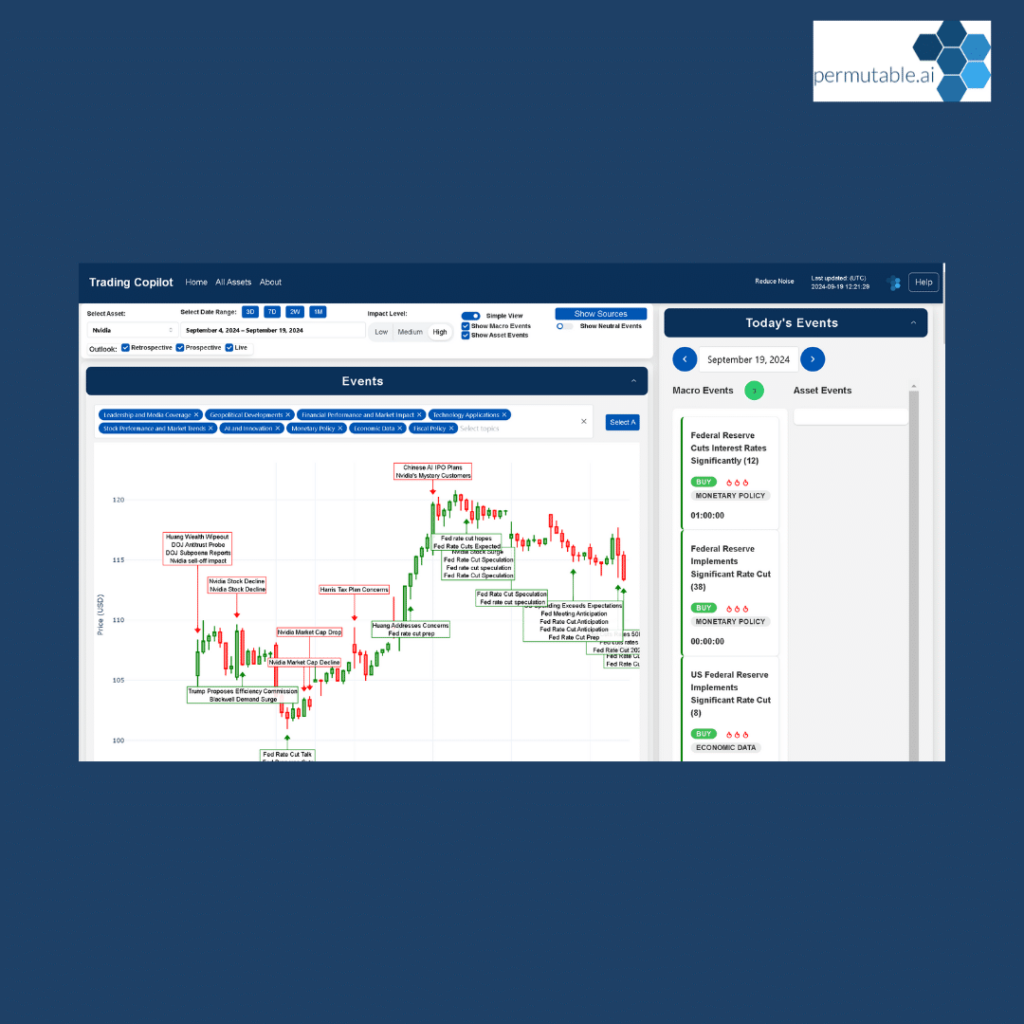
Our Trading Co-Pilot’s analysis of recent market movements reveals a clear correlation between the proposed Trump Tariff Plan and emerging weakness in the US Dollar. The plan, which outlines a sweeping 25% tariff on imports including automobiles, pharmaceuticals, and semiconductor components, has triggered significant market reactions that our AI models have been tracking in real-time.

As a matter of fact, the tariff announcement created immediate ripples across currency markets, with the dollar index showing particular vulnerability during the February 11-17 trading week. Our signals clearly identified increased volatility coinciding precisely with escalating rhetoric around the Trump Tariff Plan.

Inflation concerns: The primary driver of dollar weakness

The market narrative has been dominated by inflation concerns stemming directly from the Trump Tariff Plan. Our sentiment analysis model detected a marked shift in market psychology following the February 11 announcement, with inflation expectations rising significantly.

Furthermore, the data indicates consumer prices reacted unexpectedly to tariff discussions, with particular sensitivity observed in sectors directly targeted by the proposed measures. The correlation between tariff announcements and inflation data strengthened notably mid-week, suggesting traders are pricing in potential supply chain disruptions.

To add to this, the Federal Reserve‘s interest rate strategy now faces additional complications, and as our models suggest, the Trump Tariff Plan creates a challenging policy environment. Rising producer prices and persistent inflationary pressures are complicating potential interest rate adjustments, directly impacting dollar strength.

Global trade tensions and reciprocal measures

Another critical dimension of the Trump Tariff Plan involves potential retaliatory measures from trading partners. Our analysis indicates significant concern about reciprocal tariffs, particularly following the February 13 market reactions. The dollar index tracked lower amid these growing tensions, reflecting investor uncertainty about escalating trade conflicts.

Given the interconnected nature of global markets, the Trump Tariff Plan unsurprisingly appears to be creating feedback loops across multiple economies. Trade discussions between the US and India intensified directly following the tariff proposals, with our sentiment indicators capturing growing concerns about potential trade wars affecting investor positioning.

Speaking more broadly, our Trading Co-Pilot has observed consistent pressure from ongoing trade tensions tied directly to the Trump Tariff Plan. The impact has been felt across multiple sectors, with tourism and local businesses showing particular vulnerability in our cross-asset correlation models.

Market stability and Treasury yield implications

Despite these pressures, there have been periods of surprising market stability amid dollar weakness. Our historical context models suggest this pattern resembles previous tariff-related market reactions, though the current Trump Tariff Plan appears to be creating more pronounced effects on Treasury yields.

In essence, the financial markets are displaying a complex reaction to the Trump Tariff Plan, balancing inflationary concerns against potential economic growth implications. In all of this, our confidence metrics indicate high certainty in the correlation between tariff announcements and subsequent dollar movements throughout the analysed period.

Regional market reactions to the Trump tariff plan

Asian markets demonstrated particular sensitivity to the Trump Tariff Plan, with our macro sentiment analysis detecting significant positioning shifts following the February 17 trading session. The dollar weakened notably against Asian currencies as market participants assessed the regional impact of proposed tariffs.

To put it differently, the Trump Tariff Plan appears to be creating asymmetric effects across different market segments, with our models indicating varying levels of resilience in different economic sectors. Manufacturing has shown particular vulnerability, while consumer spending has demonstrated unexpected resilience despite tariff concerns.

Trade policy uncertainty and investment implications

Our Trading Co-Pilot’s LLM-driven analysis suggests the Trump Tariff Plan is introducing a new layer of policy uncertainty that institutional investors must navigate carefully. Historical confidence metrics indicate similar tariff proposals have typically led to extended periods of dollar weakness as markets adjust to changing trade dynamics.

The potential economic repercussions of the Trump Tariff Plan extend beyond immediate market reactions. Our models indicate growing concerns about long-term growth trajectories, with particular focus on how sustained trade tensions might impact investment decisions and capital flows.

Navigating Dollar weakness amid the Trump tariff plan

The Trump Tariff Plan represents a significant shift in trade policy with direct implications for US Dollar strength. Our AI market sentiment analysis reveals a clear connection between tariff announcements and subsequent currency market reactions, with inflation concerns serving as the primary transmission mechanism.

For institutional investors, these geopolitical and macroeconomic developments require careful positioning given the potential for continued volatility. Our Trading Co-Pilot’s signal confidence remains high regarding the correlation between the Trump Tariff Plan and dollar weakness, though our systems continue to monitor for stabilising factors that might emerge in response to market dislocations.

While the full impact of the Trump Tariff Plan continues to evolve, our AI-driven analysis strongly suggests that dollar weakness remains the primary market reaction to date. Continued monitoring of inflation metrics, trade negotiations, and policy responses will be essential for anticipating future market movements as this situation develops.

Experience our enterprise market intelligence for institutional traders 

Discover how our Trading Co-Pilot platform can help your team navigate complex trade policy implications and currency volatility with confidence. Qualified institutional users can book a personalised demonstration of our platform, featuring real-time tariff impact analysis, cross-asset correlation heatmaps, automated geopolitical sentiment tracking, and historical confidence metrics. Select institutional trading desks and macro hedge funds may qualify for a 14-day trial of our Trading Co-Pilot platform. Simply email enquiries@permutable.ai to experience our AI-driven market analysis capabilities firsthand or fill in the form below.

Request your personalised demo/institutional trial


Is China’s economy in trouble? Unpacking recent stimulus measures and economic indicators

In recent weeks, China economy news has been dominated by reports of slowing growth and recently announced aggressive stimulus measures, leading many to ask: Is China’s economy in trouble? The world’s second-largest economy, long considered an engine of global growth, appears to be sputtering. But what’s really going on beneath the surface? Get our thinking in this article which covers the latest developments and their implications.

Is China’s economy in trouble? China’s economic challenges

When you take a step back, the data shows a concerning picture. Is China’s economy in trouble? The signs are certainly there. China’s post-pandemic recovery has been lacklustre, with key indicators like retail sales, industrial production, and property investment all underperforming expectations. The property sector, which accounts for about 25-30% of China’s GDP, has been particularly hard hit, with major developers facing debt crises and declining home sales. Meanwhile, youth unemployment has reached record highs, and consumer confidence remains subdued. These factors have created a perfect storm of economic challenges for Beijing, further fueling concerns about whether China’s economy is in trouble.

Is China’s economy in trouble? Beijing responds with stimulus measures

Amid the furor surrounding China’s economic woes, the government has not stood idle. On September 24, 2024, China’s central bank announced a series of broad stimulus measures aimed at boosting the flagging economy. These include:

1. Cutting reserve requirements for banks
2. Lowering interest rates
3. Implementing fiscal policies to support key industries

The good news is that these measures are expected to inject liquidity into the market and stimulate lending. However, some economists question whether they’ll be enough to address the underlying structural issues facing China’s economy. Is China’s economy in trouble despite these interventions? The answer remains unclear.

is China's economy in trouble

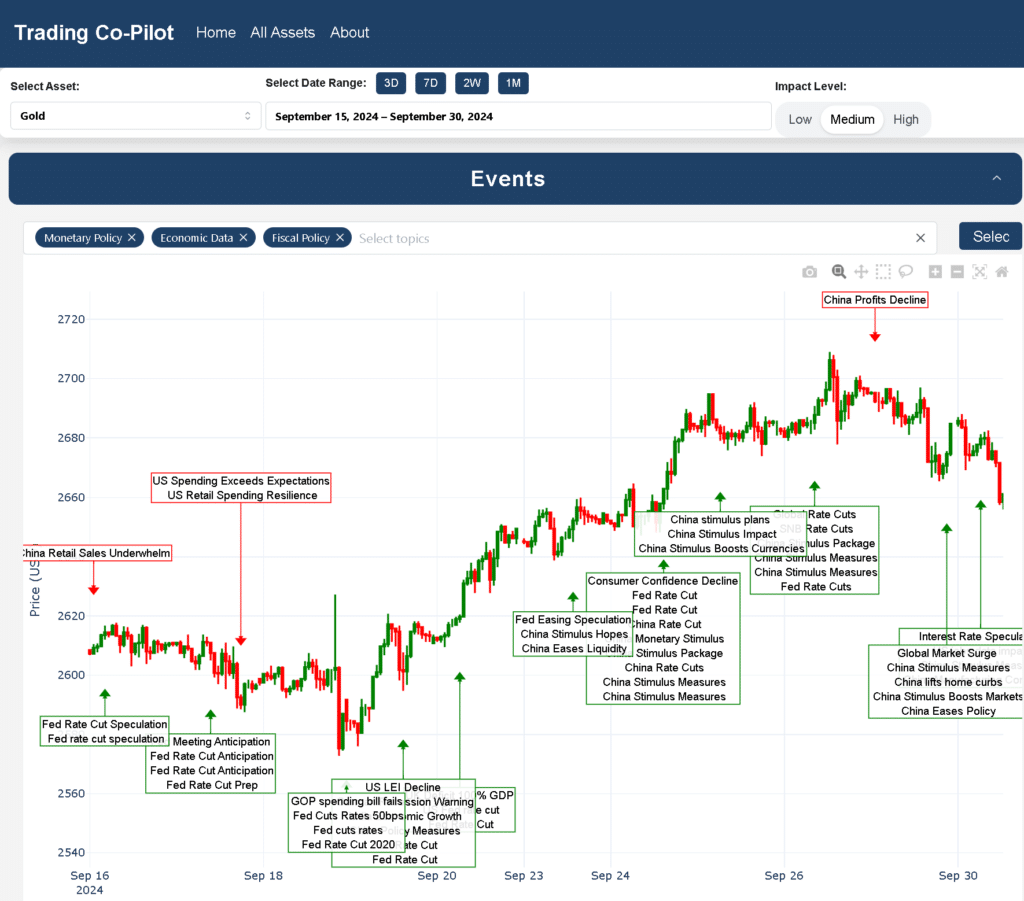
Above: Permutable’s Trading Co-Pilot in action: A snapshot of gold price movements and key economic events impacting China and global markets from September 15-30, 2024. This powerful tool correlates price action with major economic indicators and policy decisions, providing traders with crucial context for market analysis.

Global implications

To understand just how important this is, we need to consider China’s role in the global economy. As the world’s largest exporter and second-largest importer, China’s economic health has far-reaching consequences. A slowdown in China can ripple through global supply chains, affect commodity prices, and impact financial markets worldwide.

Indeed, the recent stimulus announcements have already sparked reactions in global markets. Asian stocks rallied, and commodity prices saw a boost. But there’s a broader point of view here: while short-term market reactions may be positive, the long-term implications of China’s economic challenges are more complex. The question “Is China’s economy in trouble?” is not just a domestic concern but a global one.

Is China’s economy in trouble – beyond the stimulus

While the stimulus measures are a step in the right direction, they don’t address some of the deeper structural issues facing China’s economy. Consider that:

1. China’s population is ageing, which could lead to labour shortages and increased social spending.
2. The country faces significant environmental challenges that require substantial investment.
3. Geopolitical tensions, particularly with the West, could impact trade and investment.

These are not idle concerns. They represent long-term challenges that stimulus alone cannot solve. The question remains: can China transition to a more sustainable economic model that relies less on debt-fuelled growth and more on domestic consumption and innovation?

Is China’s economy in trouble: A look at the property sector

Central to the answer to this question is the property sector. The recent troubles of major developers like Evergrande have sent shockwaves through the Chinese economy. The property market’s health is crucial not just for economic growth but also for social stability, as many Chinese citizens have significant portions of their wealth tied up in real estate.

The government’s attempts to deleverage the sector while preventing a market crash have been a delicate balancing act. Recent measures to support the property market, including easing restrictions on home purchases in some cities, show that Beijing recognises the urgency of the situation. But do these measures adequately address the question: Is China’s economy in trouble?

Innovation and technology: China’s future?

Amid the challenges, there are also opportunities. China has made significant strides in areas like artificial intelligence, renewable energy, and advanced manufacturing. These sectors could be key to future growth and help China move up the value chain.

However, geopolitical tensions and technology restrictions from the West pose challenges to China’s tech ambitions. The ongoing “tech war” with the United States, in particular, could have long-lasting impacts on China’s innovation landscape. As we ponder whether China’s economy is in trouble, the tech sector’s resilience will be a crucial factor to watch.

Is China’s economy in trouble? A look at consumer confidence

One of the questions levelled at China’s economic strategy is whether it can successfully transition to a consumption-driven economy. Despite years of effort, household consumption as a percentage of GDP remains relatively low compared to other major economies.

The recent economic challenges have further dented consumer confidence. Boosting this confidence will be crucial for China’s long-term economic health. Measures like improving social safety nets and increasing disposable income could help, but they require significant policy shifts. The success of these measures will be a key indicator in determining if China’s economy is in trouble in the long term.

The road ahead: Challenges and opportunities

As we look to the future, one thing that is undeniable is that China’s economic path remains uncertain. The government’s ability to navigate these challenges will have profound implications not just for China but for the global economy as a whole. Fact check: While China’s growth has slowed, it’s important to note that it’s still growing at a rate that many developed economies would envy. The challenge is whether this growth is sustainable and of high quality.

To be clear, China’s economy is not on the brink of collapse. The country has significant resources and policy tools at its disposal. However, the transition to a new economic model will likely be bumpy and require difficult reforms. When all is said and done, China’s economic future will depend on its ability to address structural issues, boost innovation, and maintain social stability. The recent stimulus measures are a start, but they’re just one piece of a much larger puzzle.

While the question “Is China’s economy in trouble?” continues to dominate headlines, it’s premature to sound the death knell. The country has shown remarkable resilience and adaptability in the past. However, the road ahead will require careful navigation and potentially painful reforms. As the world watches China’s economic evolution, one thing is certain: the outcome will have far-reaching consequences for the global economic landscape. Whether China can successfully transition to a new growth model will be one of the defining economic stories of the coming decades.

Trading Co-Pilot exclusive access 

Are you ready to be part of the future of trading? At Permutable AI, we’re extending an exclusive opportunity to a select group of corporate partners to gain early access to our advanced Trading Co-Pilot, powered by cutting-edge machine learning for contextual understanding.

This is a rare chance to stay ahead of the competition by leveraging AI that not only processes data but also grasps the global context—analysing real-time sentiment and market-shaping events to deliver more precise and risk-aware trading strategies.

If your firm is ready to lead the way in AI-driven trading innovation, get in touch today to explore this limited opportunity and discover how our Trading Co-Pilot can transform your approach to the market by contacting us at enquiries@permutable.ai.

Your trading is about to take off

Schedule a free enterprise demo to see how our Trading Co-Pilot can help you make smarter trading decisions, faster. 


contact us

10 factors affecting gold and silver spot prices in 2024

Gold and silver have long been regarded as valuable commodities. Investors, traders, and governments closely monitor their prices. The gold and silver spot prices reflect the current market value of these precious metals, quoted for immediate delivery. A multitude of factors can influence these prices, ranging from macroeconomic indicators to geopolitical events. Understanding these factors is essential for anyone involved in the precious metals market, whether for investment, hedging, or trading. This article explores the key elements that impact gold and silver spot prices.

10 factors affecting gold and silver spot prices 

1. How supply and demand dynamics affect gold and silver spot prices

The principle of supply and demand significantly impacts gold and silver spot prices. When demand for gold and silver rises—perhaps due to increased industrial use or heightened investor interest—prices tend to climb. Conversely, an oversupply can lead to price drops. For instance, the amount of gold and silver mined can fluctuate based on geological discoveries or new regulations, directly affecting the available supply. Additionally, large central banks hold substantial reserves of gold, and their buying or selling activities can cause significant market fluctuations.

2. Global economic conditions

The state of the global economy plays a crucial role in determining gold and silver spot prices. During times of economic uncertainty or recession, investors often turn to safe-haven assets like gold and silver, driving their prices higher. This occurs because precious metals are perceived to retain value better than other assets during economic instability. On the other hand, during periods of economic growth, with rising stock markets and strong currencies, the demand for gold and silver may decrease, leading to lower spot prices.

3. Inflation and currency fluctuations

Inflation has a direct influence on gold and silver spot prices. As inflation rises, the purchasing power of money declines, prompting investors to seek assets that preserve their value over time. Gold and silver are traditionally viewed as hedges against inflation, so their prices tend to increase with inflation rates. Similarly, fluctuations in currency values, especially the US dollar, affect spot prices. Since gold and silver are typically priced in dollars, a weaker dollar makes these metals cheaper for investors holding other currencies, boosting demand and pushing up prices.

4. Interest rates and gold and silver spot prices 

Interest rates play a pivotal role in shaping gold and silver spot prices. When interest rates are low, the opportunity cost of holding non-yielding assets like gold and silver decreases, making them more attractive to investors. Low interest rates generally lead to higher spot prices for these metals. Conversely, rising interest rates can prompt investors to shift their capital into interest-bearing assets such as bonds, reducing demand for precious metals and causing their prices to fall.

5. Geopolitical tensions and uncertainty

Geopolitical events, such as conflicts, political instability, or trade disputes, often lead to increased demand for safe-haven assets like gold and silver. During such times, gold and silver spot prices tend to rise as investors seek protection from potential losses in other markets. For example, tensions in the Middle East or trade negotiations between major economies can create uncertainty, leading to higher demand for precious metals. This flight to safety reflects a desire to preserve wealth amidst global instability.

6. Market speculation and investor behaviour

Investor and speculator actions significantly influence gold and silver spot prices. Speculative trading, often driven by market sentiment and technical analysis, can lead to short-term price fluctuations. For instance, if traders anticipate a rise in gold prices due to forthcoming economic data, they may purchase gold futures or physical gold, driving up the spot price. Similarly, large sell-offs can occur when investors expect prices to decline, leading to a decrease in spot prices. The behaviour of exchange-traded funds (ETFs) that hold large quantities of gold and silver also impacts the market. When ETFs engage in significant buying or selling, they can cause sharp movements in spot prices.

7. Industrial demand

While gold is primarily used for investment and jewellery, silver has substantial industrial demand, particularly in electronics, solar panels, and medical devices. Changes in industrial demand for silver can, therefore, have a notable impact on gold and silver spot prices. For instance, advancements in green technologies, such as solar energy, have increased demand for silver, supporting higher spot prices. Conversely, a slowdown in industrial production can reduce demand for silver, exerting downward pressure on its price.

8. Central bank policies and their effect on gold and silver spot prices

Central banks play a crucial role in shaping gold and silver spot prices. Their policies on gold reserves, including buying or selling large quantities of gold, can influence market prices. Additionally, central banks’ monetary policies, such as quantitative easing or tightening, affect the broader economic environment, which in turn influences demand for gold and silver. For example, expansive monetary policies that increase money supply can lead to higher inflation expectations, boosting demand for precious metals as a hedge.

9. Gold and silver spot prices and technological advancements

Technological advancements, particularly in mining and refining processes, can affect the supply side of the market, thereby influencing gold and silver spot prices. Improvements in mining technology can increase the efficiency of extraction, potentially increasing the supply of these metals and lowering prices. Conversely, any technological disruptions that hinder production can reduce supply, leading to higher spot prices.

10. Government policies and regulations

Government actions, such as taxation on mining operations, import/export tariffs, and environmental regulations, can impact the supply and cost of gold and silver. For example, stricter environmental regulations might reduce mining activity, limiting supply and driving up gold and silver spot prices. Similarly, government policies that affect the broader economic environment, such as fiscal stimulus or austerity measures, can also influence demand for these metals.

Gold and silver spot prices are influenced by a complex interplay of factors, including supply and demand dynamics, global economic conditions, inflation, interest rates, geopolitical tensions, and investor behaviour. To navigate the precious metals market effectively, it is essential to understand these factors. Gold and silver serve various purposes, from hedging against inflation to acting as safe-haven investments during uncertain times. These metals will continue to play a vital role in global financial markets, making it crucial to monitor the elements that affect their spot prices in order to succeed in this dynamic market.

Stay ahead with Permutable AI’s market intelligence 

In the dynamic world of precious metals, where gold and silver spot prices can shift rapidly in response to global events, economic indicators, and market sentiment, having the right information at the right time is crucial. The value of gold and silver is influenced by a myriad of factors, from geopolitical tensions to changes in inflation rates, and staying ahead of these fluctuations can make a significant difference to your investment outcomes.

At Permutable, we offer a state-of-the-art solution designed to keep you informed and ahead of the curve. Our advanced real-time data intelligence leverages artificial intelligence and natural language processing to provide real-time insights into gold and silver spot prices, driven by comprehensive news sentiment analysis. By continuously monitoring and analysing news as it breaks, we’re able to deliver immediate, actionable intelligence that allows you to navigate the precious metals market with confidence.

By using our market intelligence you can gain a competitive advantage in several ways:

  • React quickly to market movements: Our real-time sentiment analysis ensures you understand the underlying market sentiment as it develops, enabling you to make informed decisions before the broader market reacts. Whether it’s a sudden geopolitical event or an economic report affecting precious metal prices, Permutable AI keeps you ahead of the game.

  • Mitigate risk and enhance precision: Investing in gold and silver carries its own set of risks, but with our real-time insights, you can reduce uncertainty. By accurately gauging market sentiment and understanding the factors driving price movements, you can make more precise investment decisions. This strategic approach helps you mitigate risks associated with price volatility and maximise your returns in the precious metals market.

  • Identify emerging trends: Beyond real-time analysis, our predictive insights that help you anticipate future trends in gold and silver spot prices. By analysing historical data and current news sentiment, we can forecast potential market movements, giving you the foresight to plan and position your investments for long-term success in the precious metals market.

To truly stay ahead in the volatile world of gold and silver trading, you need more than just raw data—you need intelligent insights that provide clarity and direction. Our market intelligence offers exactly that, empowering you to make informed decisions, secure your investments, and capitalise on opportunities with confidence.

Trading Co-Pilot exclusive access 

Are you ready to be part of the future of trading? At Permutable AI, we’re extending an exclusive opportunity to a select group of corporate partners to gain early access to our advanced Trading Co-Pilot, powered by cutting-edge machine learning for contextual understanding.

This is a rare chance to stay ahead of the competition by leveraging AI that not only processes data but also grasps the global context—analysing real-time sentiment and market-shaping events to deliver more precise and risk-aware trading strategies.

If your firm is ready to lead the way in AI-driven trading innovation, get in touch today to explore this limited opportunity and discover how our Trading Co-Pilot can transform your approach to the market by contacting us at enquiries@permutable.ai or fill in the form below.

Get in touch


Navigating geopolitical risk in investment in 2024

It is worth remembering that today’s complex global economy, geopolitical risk in investments is a crucial factor for investors to consider in order to gain competitive advantage. Let’s explore how world events can impact your portfolio and what you can do to manage geopolitical risk in investments.

The global financial web

Gone are the days when domestic markets operated in isolation. Now, a political decision in Washington or Beijing can send ripples through stock exchanges worldwide. As investors, we must broaden our horizons and consider how geopolitical risk in investments might affect our financial decisions.

Why geopolitical risk in investments matters 

Recent events, from trade disputes to regional conflicts, have demonstrated how geopolitical tensions can swiftly impact markets. Take the ongoing situation in Ukraine, for instance. Its effects on energy prices and supply chains have been felt far beyond Eastern Europe, influencing portfolios and highlighting the importance of considering geopolitical risk in investments.

Developing awareness of geopolitical risk in investments

So, how can investors navigate this complex landscape? It starts with staying informed about geopolitical risk in investments. While you needn’t become an expert in international relations, a basic understanding of global affairs and their potential impact on investments can prove invaluable. Pay attention to major economic indicators, political developments, and international agreements that could affect markets.

The art of assessing geopolitical risk in investments

Evaluating geopolitical risk in investments involves considering various factors:

  1. Political stability
  2. Economic conditions
  3. Regulatory environments
  4. Social and cultural trends
  5. International relations

By evaluating these elements, investors can better understand potential risks and opportunities in different markets.

Diversification: your shield against geopolitical risk in investments

One of the most effective strategies for managing geopolitical risk in investments is diversification. By spreading investments across different regions, sectors, and asset classes, you can potentially mitigate the impact of localized geopolitical events on your overall portfolio.

Sector sensitivities

Some sectors are particularly vulnerable to geopolitical shifts. Energy stocks, for example, often react strongly to events in oil-producing regions. Technology companies can be caught in the crossfire of trade disputes. Understanding these sensitivities can help you anticipate potential market movements and manage geopolitical risk in investments more effectively.

Crisis and opportunity

While geopolitical events can create market turbulence, they can also present opportunities for astute investors. During periods of uncertainty, quality assets may become undervalued, offering potential for long-term gains. However, timing such moves requires careful consideration of geopolitical risk in investments and a strong stomach for risk.

The long view

In the face of geopolitical uncertainty, it’s crucial to maintain a long-term perspective. While short-term volatility can be unnerving, history shows that markets tend to recover and grow over time. Avoid knee-jerk reactions to headlines and focus on your long-term investment goals, always keeping an eye on geopolitical risk in investments.

Risk management strategies

Consider employing risk management tools such as stop-loss orders or options to protect your portfolio. These can help limit potential losses if geopolitical events cause sudden market shifts, providing another layer of protection against geopolitical risk in investments.

Permutable AI’s real-time geopolitical data analysis

At Permutable, our AI-driven geopolitical data data analysis, offers unparalleled access to real-time, unbiased data. Our platform conducts meticulous sentiment analysis that spans a wide array of critical dimensions—global elections, conflicts, political tensions, terrorism, and national security—all through an impartial lens. This robust framework ensures that our clients receive a clear, unfiltered view of global dynamics, enabling them to make informed decisions without the cloud of bias.

Leveraging our geopolitical data analysis can significantly influence and shape your strategic investment strategies. Our actionable insights serve as invaluable resources, empowering you to refine and enhance strategies for your clients and stakeholders. By integrating our data into your decision-making processes, you can ensure that your strategies are informed by the most current and comprehensive intelligence available.

Embracing the global perspective

While geopolitical risk in investments adds a layer of complexity to investing, it needn’t be a source of paralysis. By staying informed, diversifying your portfolio, and maintaining a long-term perspective, you can navigate the choppy waters of global finance with greater confidence.

Remember, in the world of investing, knowledge truly is power. Keep abreast of global developments, understand their potential impact, and position your portfolio accordingly. With careful consideration and strategic planning, you can turn awareness of geopolitical risk in investments into a valuable tool in your investment arsenal.

Ready to see how AI-driven geopolitical risk intelligence can transform your decision-making? Contact us for a personalized demo of our AI-driven news sentiment analysis which is available through our Trading Co-Pilot subscription, or to request a free trial. You can also access top-line geopolitical insights through our Real-Time Geopolitical Insights & AI Market Sentiment Analysis Dashboard which is publicly available to view. 

Request demo


Real-time data intelligence use cases of our datasets in 2024

To say that real-time data intelligence has become the buzzword of the day is one of the biggest understatements of today’s global business ecosystem. The reality is that real-time data intelligence is no longer a mere luxury; but an outright necessity. For businesses looking to stay ahead of the curve, understanding the broader economic landscape, anticipating market shifts, and making informed decisions has never been so important. They are, in fact, the key to success.  This is something we are very well versed on at Permutable AI – our real-time data intelligence tools equip organisations with hugely powerful insights needed to navigate the complexities of the global market. In this article here, we will delve into the transformative uses of our real-time data intelligence across several critical aspects: Macro datasets, World events, company Intelligence, and supply Chain Intelligence.

MACRO DATASETS

Understanding macroeconomic trends is fundamental for any business looking to make strategic decisions. Our Macro datasets offer powerful insights into global economic indicators, geopolitical events, and policy developments. These datasets provide a macro-level perspective, enabling businesses to anticipate market movements and adjust strategies accordingly.

Imagine having the ability to access real-time and historical data on key economic indicators such as GDP growth rates, inflation, and employment figures? This is the level of insight our Macro datasets offer, giving businesses the edge they need to stay ahead of economic cycles and make informed decisions with confidence. What we’ve found is that by analysing trends in consumer spending and inflation, companies can better forecast demand and adjust their production or investment strategies. The keys to successful macroeconomic analysis lie in the depth and accuracy of the data, all of which suggests a more nuanced understanding of market dynamics.

Our Macro datasets include analysis of geopolitical events and policy changes, providing businesses with a deeper understanding of the factors influencing market dynamics (more on that below). This might be a trade policy shift, a major election, or a geopolitical conflict. In each instance, having access to this information helps businesses navigate uncertainties and seize opportunities. Much of that is due to the real-time nature of our award-winning data which is refreshed half hourly, allowing for immediate adjustments to strategies with the very latest, up-to-date data. 

WORLD EVENTS

The impact of world events on global markets and economies in an increasingly volatile world cannot be overstated. Think about the impact of extreme weather events and pandemics, or wars and economic shifts. They are often seismic. Thus, staying informed about these developments is crucial for businesses. Our real-time data intelligence tools offer unparalleled insights into these critical world events, helping businesses understand their potential impact and plan accordingly.

For example, our platform provides comprehensive coverage of central bank policies and monetary decisions. Understanding the implications of stimulus packages, interest rate changes, and quantitative easing measures allows businesses to anticipate shifts in financial markets and adjust their strategies proactively. We can expect significant market movements based on these policies, and yet perhaps the subtler impacts often go unnoticed without such detailed analysis.

Insights into economic data such as housing trends, inflation rates, and consumer spending patterns are vital for businesses across various sectors. By keeping abreast of these developments, companies can make data-driven decisions that align with current economic conditions. Despite this, it’s important to continuously update and verify the data to maintain accuracy.

COMPANY INTELLIGENCE

In the competitive business landscape, having access to real-time company intelligence is a game-changer. Our platform provides detailed information and analysis on companies worldwide, covering aspects such as business performance, environmental, social, and governance (ESG) factors, net zero targets, and competitive positioning.

In a world of corporate smokescreens, it can often be hard to decipher what is actually going on. But here’s the bottom line. The key is to understand a company’s financial health is actually to track its ESG initiatives, and comprehend its market position in real-time through this particular lens. This level of intelligence is invaluable for strategic planning and investment decisions. Investors can use this data to identify companies with strong ESG commitments, aligning their investments with sustainability goals. Increasingly, businesses are prioritising ESG factors, making this data critical for informed decision-making.

Quite simply, our company intelligence tools enable businesses to monitor competitors, identify potential partners, and explore new market opportunities. By leveraging data-driven insights, companies can make informed decisions that drive growth and innovation. Just as notably, understanding the competitive landscape helps in positioning and strategic initiatives.

GEOPOLITICAL RISK INTELLIGENCE

Geopolitical tensions have never been so high, which means that understanding and anticipating risks has become essential for businesses operating on a global scale. Our Geopolitical Risk Intelligence tools provide detailed insights into the complex landscape of international relations, political instability, and global events that can impact markets and business operations.

Our platform continuously monitors global developments, offering real-time updates on significant geopolitical events such as elections, conflicts, and policy changes. What we’ve found is that this level of awareness allows businesses to proactively manage risks, ensuring they can respond swiftly to emerging threats. For instance, the loss of trust in government institutions during political crises can have far-reaching implications for market stability and investor confidence.

Our tools use advanced algorithms to analyse news articles, and government reports, providing a comprehensive view of the geopolitical environment in real-time, but also providing a look back at historical trends. This valuable method can be applied to all sectors, from finance to manufacturing, helping businesses make informed decisions that safeguard their interests. Just as notably, our geopolitical intelligence can support strategic planning, enabling companies to navigate uncertainties with confidence and resilience.

SUPPLY CHAIN INTELLIGENCE

One thing we have learnt all too well in recent years is that supply chains are the backbone of global trade. As a result, their efficient management is critical for business success. Our Supply Chain Intelligence tools provide comprehensive visibility into supply chain networks, helping businesses identify potential risks and implement proactive management strategies.

Through supply chain network analysis and adverse data tracking, our platform enhances the transparency of supply chain operations. Businesses can monitor supplier performance, track disruptions, and assess the impact of external factors such as geopolitical events or natural disasters on their supply chains. The crisis in various regions often highlights the fragility of supply chains, underscoring the importance of robust risk management.

If a key supplier is located in a region prone to political instability, our tools can provide early warnings and suggest alternative sources. This method applies to both local and international suppliers, ensuring continuity of operations. This level of insight enables businesses to mitigate risks, avoid disruptions, and maintain the continuity of their operations.

CONCLUSION

Real-time data intelligence is indispensable for businesses looking to thrive in a dynamic global environment. At Permutable AI, our suite of intelligence tools—spanning Macro Datasets, World Events, Company Intelligence, and Supply Chain Intelligence—empowers businesses to make informed, strategic decisions. By leveraging our comprehensive big data analytics, businesses can navigate uncertainties, seize opportunities, and drive sustainable growth.

Whether you’re looking to gain macro-level insights, stay ahead of global developments, make informed business decisions, or enhance supply chain transparency, Permutable AI has the tools and expertise to support your goals. Explore our solutions today and take the first step towards a more informed and resilient future.


REQUEST FREE TRIAL

Exploring the road to economic growth 2024

As the world emerges from the economic challenges of the past few years, the focus shifts towards unlocking the potential for sustained economic growth 2024. This article aims to provide a comprehensive analysis of the factors influencing economic growth, the global economic outlook, and the strategies for achieving progress in the coming year.

Understanding the concept of economic growth

Economic growth refers to the increase in the productive capacity of an economy, leading to a rise in the country’s Gross Domestic Product (GDP) over time. This growth can be measured in various ways, including GDP per capita, which reflects the standard of living, and the overall GDP growth rate, which indicates the pace of economic expansion.

Factors influencing economic growth

Numerous factors contribute to the economic growth of a nation, including:

Investments in capital

Investments in capital, both physical and human, play a fundamental role in driving economic growth. Physical capital includes infrastructure, machinery, and equipment, which enhance productivity and efficiency in production processes. Human capital refers to the skills, knowledge, and expertise of the workforce, acquired through education, training, and experience. By investing in both forms of capital, countries can improve their productive capacity, stimulate innovation, and foster long-term economic growth.

Technological advancements and innovation:

Technological advancements and innovation are catalysts for economic growth, driving productivity gains, efficiency improvements, and the creation of new industries and markets. Innovations in fields such as information technology, biotechnology, and renewable energy have transformative effects on economies, leading to increased competitiveness, higher living standards, and enhanced economic resilience. Governments, businesses, and research institutions play critical roles in fostering a culture of innovation and supporting the development and adoption of new technologies.

Efficient allocation of resources

Efficient allocation of resources is essential for maximizing economic output and promoting sustainable growth. This involves directing resources—such as labour, capital, and land—towards their most productive uses based on market signals and incentives. Policies that promote competition, remove barriers to entry, and facilitate market-driven allocation of resources can enhance efficiency, encourage entrepreneurship, and stimulate investment and innovation across sectors.

Favourable government policies and regulations

Favourable government policies and regulations create an enabling environment for economic growth by fostering stability, predictability, and confidence in the business environment. Pro-growth policies may include tax incentives for investment, deregulation to reduce bureaucratic hurdles, and measures to promote trade and international competitiveness. Additionally, sound monetary and fiscal policies aimed at maintaining price stability, controlling inflation, and managing public finances are crucial for creating conditions conducive to sustainable economic growth.

Demographic changes

Demographic changes, such as population growth, age distribution, and labour force participation rates, can significantly impact economic growth trajectories. A growing population can stimulate demand for goods and services, drive investment in infrastructure and housing, and expand the labour force, contributing to economic expansion. Conversely, aging populations may pose challenges related to labour shortages, rising healthcare costs, and reduced consumer spending. Understanding demographic trends and implementing policies to address associated challenges and opportunities are essential for sustaining economic growth over the long term.

Stable political and social environments

Political stability and social cohesion are fundamental prerequisites for economic growth and development. Stable political environments reduce uncertainty and risk for businesses and investors, encouraging long-term investment and fostering economic resilience. Similarly, social stability, characterized by strong institutions, rule of law, and social cohesion, enhances trust, cooperation, and productivity within societies, laying the foundation for sustainable economic progress. Policies that promote inclusivity, equality, and social mobility contribute to building resilient and dynamic economies capable of weathering challenges and seizing opportunities in an ever-changing global landscape.

International trade and integration

International trade and integration with the global economy are potent drivers of economic growth, enabling countries to capitalize on comparative advantages, access new markets, and foster innovation and specialization. Trade liberalization, removal of trade barriers, and participation in regional and international trade agreements facilitate the flow of goods, services, and capital across borders, promoting efficiency, competitiveness, and economic diversification. Moreover, international trade fosters technological transfer, knowledge exchange, and cultural diffusion, enriching societies and stimulating economic dynamism on a global scale.

Key indicators of economic growth

Economists and policymakers rely on a range of key indicators to assess the health and trajectory of an economy, providing insights into its performance and potential challenges. These indicators serve as vital barometers, reflecting various aspects of economic activity and sentiment. Here’s a closer look at some of the most closely monitored indicators:

Gross Domestic Product (GDP)

GDP stands as one of the most fundamental measures of economic health. It serves as a comprehensive gauge of economic output, encompassing consumption, investment, government spending, and net exports. Changes in GDP growth rates can indicate shifts in economic momentum, expansion, or contraction, guiding policymakers in formulating appropriate fiscal and monetary policies.

Unemployment rate

The unemployment rate provides insights into labour market dynamics, reflecting both cyclical and structural factors influencing job creation and workforce participation. High unemployment rates may signify economic weakness, underutilization of human capital, and decreased consumer spending, while low unemployment rates may indicate robust economic activity and potential inflationary pressures.

Inflation rate

Policymakers closely monitor inflation rates to ensure price stability and guard against deflationary or inflationary pressures. Moderate inflation is generally considered conducive to economic growth, as it incentivizes spending and investment, whereas high inflation can erode savings, disrupt business planning, and undermine consumer confidence.

Productivity levels

Productivity measures the efficiency with which inputs, such as labour and capital, are utilized to produce goods and services. Improvements in productivity drive economic growth by increasing output per unit of input, boosting competitiveness, and raising living standards. Policymakers focus on enhancing productivity through investments in education, infrastructure, technology, and innovation, as higher productivity levels contribute to sustainable economic expansion and prosperity.

Consumer spending and confidence

Consumer spending represents the expenditure on goods and services by households, constituting a significant component of GDP. Consumer confidence, on the other hand, reflects sentiment regarding current and future economic conditions, influencing spending decisions and economic activity. Rising consumer spending and confidence indicate optimism, stimulating demand, investment, and job creation, while declining levels may signal economic uncertainty and dampened growth prospects.

Foreign Direct Investment (FDI):

FDI refers to investments made by foreign entities in domestic businesses or assets, contributing to capital formation, technology transfer, and economic development. Policymakers monitor FDI inflows and outflows to assess a country’s attractiveness as an investment destination, its competitiveness, and its integration into the global economy. Robust FDI inflows can bolster economic growth, enhance productivity, and facilitate technology diffusion, while outflows may indicate capital flight or investment diversification.

International trade balances

International trade balances reflect the difference between a country’s exports and imports of goods and services, influencing its external accounts and overall economic performance. Trade surpluses occur when exports exceed imports, contributing to positive net exports and boosting GDP growth. Conversely, trade deficits arise when imports surpass exports, potentially straining domestic industries, currency valuations, and fiscal balances. Policymakers aim to maintain sustainable trade balances through trade policies, exchange rate management, and structural reforms to support economic stability and competitiveness.

Global economic growth 2024 outlook 

The global economic outlook for 2024 is characterized by a nuanced landscape, with divergent trends and prospects across different regions and economies. While certain areas are poised for robust growth and economic expansion, others may encounter persistent challenges and uncertainties. The International Monetary Fund (IMF), along with other prominent economic institutions and research organizations, plays a pivotal role in monitoring and analyzing these trends, offering valuable insights and projections to inform policymaking and business strategies.

Regional disparities

The economic outlook varies significantly across regions, reflecting disparities in growth trajectories, policy responses, and structural vulnerabilities. Developed economies, particularly in North America and parts of Europe, are projected to sustain moderate growth, supported by resilient consumer spending, robust labour markets, and accommodative monetary policies. In contrast, emerging markets and developing economies face a more complex landscape, with divergent growth prospects influenced by factors such as geopolitical tensions, commodity price fluctuations, and structural reforms.

Growth drivers and challenges

Key drivers of global economic growth 2024 include continued technological innovation, digital transformation, and infrastructure investments, which contribute to productivity gains and competitiveness. However, challenges such as supply chain disruptions, inflationary pressures, and geopolitical uncertainties pose significant headwinds to growth, particularly for export-oriented economies and industries heavily reliant on global trade.

Policy responses and macroeconomic management

Against this backdrop, policymakers are tasked with navigating a complex set of policy challenges to support economic recovery and resilience. Central banks are expected to maintain accommodative monetary policies to support liquidity and financial stability, while fiscal authorities may implement targeted stimulus measures and investment initiatives to bolster growth and employment. Additionally, policymakers must address structural imbalances, enhance regulatory frameworks, and promote sustainable development to address long-term economic challenges effectively.

Opportunities for innovation and adaptation

Amidst the challenges, the global economic landscape also presents opportunities for innovation, adaptation, and strategic realignment. Businesses that embrace digitalization, sustainability, and resilience-building strategies are better positioned to thrive in the evolving economic environment. Moreover, collaborative efforts among governments, businesses, and international organizations are essential to address shared challenges, foster inclusive growth, and build a more resilient and sustainable global economy.

Economic growth 2024: The largest economies in the world 

The ranking of the world’s largest economies is expected to undergo some shifts in the coming years. According to current projections, the top economies in 2024 are:

United States:

The United States maintains its position as the world’s largest economy, driven by a combination of factors including its massive consumer market, technological innovation, and robust financial sector. With a diverse range of industries spanning from technology and healthcare to finance and entertainment, the U.S. economy remains a global powerhouse, attracting investments and fostering entrepreneurship.

China:

China’s economic ascent continues unabated, propelled by ongoing economic reforms, infrastructure development, and a shift towards domestic consumption-driven growth. The country’s vast manufacturing capabilities, coupled with its burgeoning middle class and expanding digital economy, position it as a key driver of global economic growth and trade.

India:

India emerges as a significant player on the global economic stage, fueled by a young and dynamic population, a rapidly expanding digital economy, and ambitious infrastructure projects. With a focus on initiatives such as “Make in India” and “Digital India,” India aims to leverage its demographic dividend and technological advancements to drive inclusive growth and development.

Japan:

Japan maintains its status as one of the world’s largest economies, renowned for its advanced manufacturing, technological innovation, and strong export-oriented industries. Despite demographic challenges, Japan continues to lead in sectors such as automotive, electronics, and robotics, contributing to global supply chains and technological advancements.

Germany:

Germany’s robust industrial base, engineering excellence, and export-oriented economy solidify its position among the top global economies. Known for its strong manufacturing sector, particularly in automotive, machinery, and chemicals, Germany remains a key player in driving European economic growth and competitiveness.

United Kingdom:

Despite uncertainties surrounding Brexit, the United Kingdom retains its status as one of the largest economies, supported by a diverse range of industries including financial services, technology, and pharmaceuticals. While navigating post-Brexit trade arrangements, the UK continues to attract investments and foster innovation across various sectors.

France:

France‘s economy boasts strengths in luxury goods, aerospace, and technology, contributing to its position as one of the world’s leading economies. With a focus on innovation, sustainability, and entrepreneurship, France remains a key player in driving European economic growth and competitiveness.

Italy:

Italy’s economy is characterized by a rich cultural heritage, vibrant tourism industry, and strong manufacturing sector. Despite facing challenges such as high public debt and political instability, Italy continues to leverage its strengths in industries such as fashion, automotive, and design to drive economic growth and innovation.

Brazil:

Brazil’s abundant natural resources, diverse agricultural sector, and growing consumer market position it as a significant player in the global economy. With a focus on infrastructure development, environmental sustainability, and technological innovation, Brazil aims to capitalize on its economic potential and enhance its competitiveness on the world stage.

Canada:

Canada’s resource-rich economy, stable financial system, and skilled workforce contribute to its position among the world’s largest economies. With strengths in sectors such as energy, mining, and technology, Canada remains an attractive destination for investment and innovation, driving economic growth and prosperity.

These economies will play a crucial role in shaping the global economic landscape and influencing the overall growth trajectory.

Predictions for GDP growth in 2024

In 2024, global GDP growth is forecasted to hover around 3.2%, marking a modest uptick from the previous year, according to projections by major economic institutions. However, this growth trajectory is anticipated to vary significantly across regions, with developed economies experiencing slower expansion at approximately 1.7%, while emerging markets are poised for more robust growth at around 4.2%.

Delving into specific regions, the Eurozone is anticipated to undergo a sluggish recovery, with GDP growth projected at a modest 0.7% for the year . Meanwhile, China, despite its status as an emerging market powerhouse, is expected to witness a moderation in growth, with forecasts pegging it at 4.9% for 2024.

It’s crucial to acknowledge that these predictions are subject to a multitude of factors and uncertainties, and actual GDP growth figures may deviate from these forecasts. Nonetheless, these projections offer valuable insights into the economic trajectories of different regions and provide stakeholders with a basis for informed decision-making and strategic planning.

Strategies, policies, challenges and opportunities in achieving economic growth

Strategies for achieving economic growth encompass a range of initiatives adopted by governments, businesses, and policymakers. These strategies include investing in infrastructure development, fostering innovation and technological advancements, encouraging entrepreneurship and small business growth, improving the quality of education and skills development, promoting international trade and investment, implementing sound fiscal and monetary policies, addressing income inequality and social disparities, and ensuring environmental sustainability and climate resilience.

Governments play a critical role in shaping the economic landscape through policy interventions. Key policy tools for promoting economic growth include fiscal policies like tax incentives and government spending, monetary policies such as interest rate adjustments and money supply management, regulatory frameworks that encourage competition and investment, investments in research, development, and innovation, policies supporting workforce development and skill-building, trade agreements facilitating international commerce, and initiatives addressing infrastructure gaps and improving connectivity.

While the path to economic growth 2024 presents challenges such as geopolitical tensions, trade disputes, demographic shifts, and the ongoing impact of the COVID-19 pandemic, it also offers opportunities for innovation, adaptation, and strategic policymaking. To navigate these dynamics effectively and unlock the full potential for economic growth, it’s crucial to stay informed on the latest developments and strategies. Subscribe to our newsletter to stay up-to-date with the evolving economic landscape and empower yourself to make informed decisions for your business or personal investments.

Understanding economic growth 2024: Permutable AI’s sentiment-driven data intelligence

At Permutable AI, our economic data intelligence, driven by advanced news sentiment analysis, serves as a powerful barometer for understanding economic growth in 2024 and beyond. By harnessing sophisticated algorithms to analyze sentiment from a plethora of global news sources, we provide nuanced and unbiased insights into economic trends, market sentiments, and emerging opportunities.

In the dynamic landscape of 2024, where economic growth is influenced by multifaceted factors and rapidly evolving market dynamics, traditional economic indicators often fall short in capturing the full spectrum of sentiment-driven influences. This is where Permutable AI’s innovative approach excels. By monitoring sentiment surrounding economic factors such as GDP, inflation, employment, consumer spending, and more, we are able to offer a comprehensive view of the economic landscape, complementing traditional metrics with real-time sentiment analysis.

The significance of sentiment analysis lies in its ability to capture the collective mood and perception of market participants, policymakers, and consumers. Positive sentiment may indicate confidence, optimism, and a favourable outlook for economic expansion, while negative sentiment could signal concerns, uncertainties, or impending challenges. By analyzing sentiment trends over time, our meticulously trained algorithms can identify sentiment shifts, sentiment spikes, or emerging sentiment patterns that may influence economic growth trajectories.

Our economic data intelligence is not confined to a single geographical region. Its global reach enables businesses, investors, and policymakers to gain insights into global economic trends, regional disparities and interdependencies. This holistic perspective empowers decision-makers to anticipate market trends, mitigate risks, capitalize on emerging opportunities, and formulate data-driven strategies for driving economic growth 2024.

EXAMPLE DATASETS

Slide 2 HeadingLorem ipsum dolor sit amet consectetur adipiscing elit dolorClick HereSlide 2 HeadingLorem ipsum dolor sit amet consectetur adipiscing elit dolorClick HereSlide 3 HeadingLorem ipsum dolor sit amet consectetur adipiscing elit dolorClick HereSlide HeadingLorem ipsum dolor sit amet, consectetur adipiscing elit. Ut elit tellus, luctus nec ullamcorper mattis, pulvinar dapibus leo.Click Here
Previous slide
Next slide

Try our economic data intelligence for free

Ready to harness the power of Permutable AI’s economic data intelligence driven by news sentiment analysis? Sign up now for a FREE two-week trial and gain exclusive access to invaluable insights into economic growth trends for 2024. Don’t miss this opportunity to stay ahead of the curve and make informed decisions for your business or investments. Simply get in touch below.


REQUEST FREE TRIAL