How data intelligence serves as a powerful political risk barometer
In today’s fast-paced and interconnected world, politics plays a crucial role in shaping the global landscape. Understanding and assessing political risk has become essential for businesses, investors, and policymakers alike. This is where data intelligence and the collection, analysis and interpreting of vast amounts of data – provide invaluable insights for informed decision-making. In the realm of politics, data intelligence serves as a powerful tool for assessing and predicting political risks.
Political risk assessment involves evaluating the potential impact of political factors on various aspects such as investments, operations, and market conditions. It helps businesses and investors identify and mitigate potential risks, thereby safeguarding their interests. Traditionally, political risk assessment relied on subjective analysis and expert opinions. However, with the advent of geopolitical data intelligence, a more data-driven and objective approach has emerged.
The importance of political risk assessment
Political risk assessment is crucial for businesses and investors operating in today’s globalized economy. Political factors such as changes in government policies, social unrest, and geopolitical tensions can significantly impact business operations and investments. Failing to anticipate and mitigate these risks can lead to financial losses and reputational damage. Therefore, a comprehensive understanding of political risks is vital for making informed decisions and developing effective risk management strategies.
Data intelligence plays a pivotal role in political risk assessment by providing a wealth of information and insights. By analysing various data sources such as news articles, social media posts, economic indicators, and historical data, data intelligence enables analysts to identify trends, patterns, and potential risks. It empowers decision-makers with actionable intelligence, helping them navigate the complex and volatile political landscape.
How data intelligence serves as a powerful political risk barometer
Data intelligence serves as a powerful political risk barometer by providing real-time and comprehensive insights into political dynamics. It enables analysts to monitor and assess political risks on an ongoing basis, allowing for timely responses and proactive risk management. By collecting and analysing vast amounts of data, data intelligence platforms can identify emerging risks, track political developments, and predict potential outcomes.
One of the key advantages of data intelligence in political risk assessment is its ability to provide a holistic view of the political landscape. It aggregates data from various sources and analyzes it using advanced algorithms and machine learning techniques. This multidimensional approach helps in uncovering hidden patterns, correlations, and interdependencies that may not be apparent through traditional analysis methods. As a result, decision-makers can gain a more nuanced understanding of political risks and make informed decisions based on data-driven insights.
The use of big data in political risk analysis
The use of big data has revolutionized political risk analysis. Big data refers to the vast volume, velocity, and variety of data generated from various sources such as social media, news articles, government reports, and financial data. Analysing big data allows for a more comprehensive and dynamic assessment of political risks.
Big data analysis in political risk assessment involves collecting and processing massive amounts of data in real-time or near real-time. Advanced technologies such as natural language processing, sentiment analysis, and network analysis are used to extract valuable insights from unstructured data sources. These insights can then be used to identify emerging risks, assess public sentiment, and predict political outcomes.
Key indicators and metrics for political risk assessment
When it comes to political risk assessment, identifying key indicators and metrics is crucial. These indicators help in monitoring and evaluating the political landscape, enabling analysts to assess the potential risks and their impact. Some of the key indicators and metrics used in political risk assessment include:
-
Economic indicators: Economic factors such as GDP growth, inflation rates, and unemployment rates can provide insights into the stability and performance of a country’s economy. Changes in these indicators can indicate potential political risks.
-
Social indicators: Social factors such as social unrest, protests, and public sentiment can signal underlying political tensions. Monitoring social indicators helps in assessing the level of political stability and the potential for social upheaval.
-
Regulatory indicators: Regulatory factors such as changes in government policies, regulations, and legal frameworks can have a significant impact on businesses and investments. Tracking regulatory indicators helps in identifying potential risks and adapting to changing political environments.
-
Geopolitical indicators: Geopolitical factors such as international conflicts, diplomatic relations, and trade policies can affect the political stability of a country. Analysing geopolitical indicators helps in understanding the potential risks arising from global events and their impact on the local political landscape.
By monitoring and analysing these key indicators and metrics, analysts can assess the political risks and their potential impact on businesses and investments.
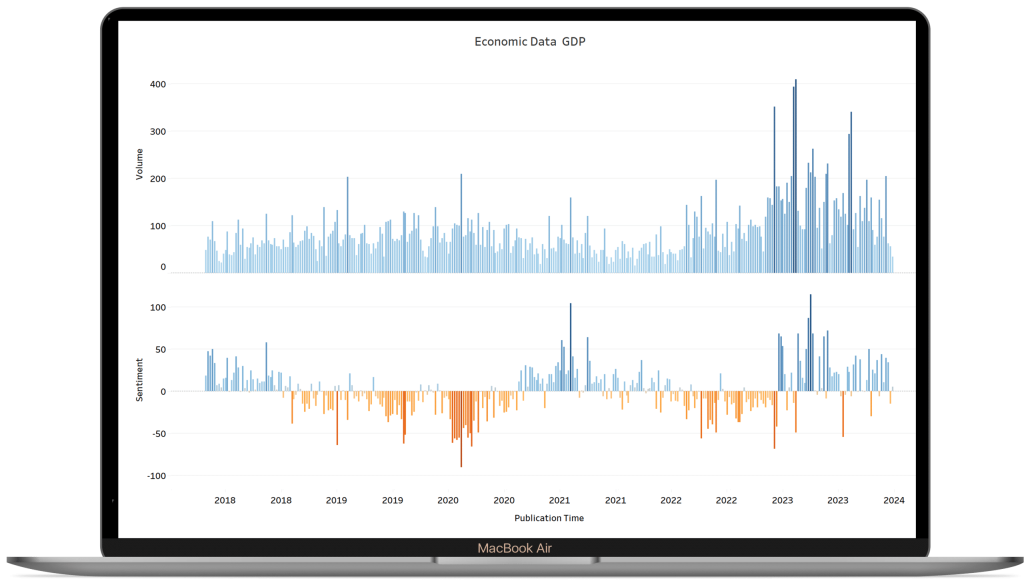
Above: Our economic news sentiment data intelligence
Case studies: Examples of data intelligence in political risk analysis
To understand the practical application of data intelligence in political risk analysis, let’s explore some case studies:
-
Brexit: The referendum on the United Kingdom’s membership in the European Union was a significant political event with far-reaching implications. Data intelligence helped analysts track public sentiment, media coverage, and economic indicators to assess the potential risks and outcomes of Brexit. This enabled businesses to develop contingency plans and adapt to the changing political landscape.
-
US Presidential Election: Data intelligence played a crucial role in analysing and predicting the outcome of the US Presidential Election. By analysing news articles, polling data, and social media conversations data intelligence providers accurately predicted the election results. This information helped businesses and investors anticipate potential policy changes and their impact on the economy.
These case studies demonstrate the power of data intelligence in political risk analysis and its ability to provide valuable insights for decision-making.
Challenges and limitations of using data intelligence for political risk assessment
While data intelligence offers significant advantages in political risk assessment, it is not without its challenges and limitations. Some of the key challenges include:
-
Data quality and reliability: The accuracy and reliability of data are crucial for meaningful analysis. Data from various sources may vary in quality, relevance, and bias. Ensuring data quality and addressing biases are essential for obtaining accurate insights.
-
Data privacy and security: Data intelligence involves collecting and analysing vast amounts of data, raising concerns about privacy and security. Safeguarding sensitive information and complying with data protection regulations are essential to maintain trust and credibility.
-
Complexity and interpretation: Analysing large volumes of data can be complex and challenging. Interpreting the results and extracting meaningful insights require expertise in data analysis and domain knowledge. Ensuring the right skills and expertise are available is crucial for effective data intelligence.
-
Unforeseen events and black swans: Data intelligence relies on historical data and patterns to predict future outcomes. However, unforeseen events and black swan events, such as natural disasters or political crises, can significantly impact political risks. Accounting for these uncertainties is a challenge in data-driven political risk assessment.
Despite these challenges, data intelligence continues to evolve and improve, offering valuable insights for political risk assessment.
The future of data intelligence in political risk analysis
The future of data intelligence in political risk analysis looks promising. With advancements in technology, such as artificial intelligence and machine learning, data intelligence platforms are becoming more sophisticated and powerful. These platforms can process larger volumes of data, analyze complex patterns, and provide more accurate predictions.
Furthermore, the integration of various data sources, such as satellite imagery, internet of things (IoT) data, and financial data, will enhance the capabilities of data intelligence in political risk analysis. This integration will provide a more holistic view of political risks and enable decision-makers to make more informed and proactive decisions.
As data intelligence continues to evolve, it will become an indispensable tool for businesses, investors, and policymakers in navigating the complex and uncertain world of politics.
Permutable’s political data intelligence: Tracking global sentiment
Permutable AI’s data feeds provide a deep understanding of global political dynamics by providing real-time insights into sentiment around elections and tensions in every country worldwide. Our innovative data feed aggregates and analyses data from diverse sources across 5000 sources and 500,000 articles across 120 countries daily to offer a comprehensive and unbiased view of the political landscape.
Election monitoring
Our data feeds provide a real-time overview of elections across the globe, offering valuable insights into public sentiment, voter behaviour, information on key electoral issues, and potential outcomes. This enables stakeholders, including businesses, investors, and policymakers, to anticipate political shifts and adapt their strategies accordingly.
Global tensions analysis
In addition to election monitoring, our data intelligence tracks geopolitical tensions in every country, helping stakeholders navigate complex international relations, identifying emerging conflicts, evaluating their severity, and assessing their potential impact on global stability. This allows decision-makers to proactively address geopolitical risks and safeguard their interests.
Unbiased insights
One of the key strengths of Permutable’s data intelligence is its commitment to providing unbiased insights. By leveraging advanced algorithms and machine learning techniques, the platform analyses vast amounts of data without bias or prejudice. This ensures that stakeholders receive accurate, objective information, free from subjective interpretation or manipulation. As a result, decision-makers can make informed choices based on reliable data, enhancing their ability to navigate the complex and rapidly evolving political landscape.
Complete view of global politics
By combining election monitoring and global tensions analysis, Permutable’s data intelligence feeds offer a comprehensive view of global politics. Whether it’s tracking electoral campaigns in emerging democracies or monitoring diplomatic tensions between major powers, the platform provides stakeholders with the information they need to understand and respond to political developments worldwide. This holistic approach enables businesses, investors, and policymakers to make strategic decisions with confidence, even in the face of uncertainty and volatility.
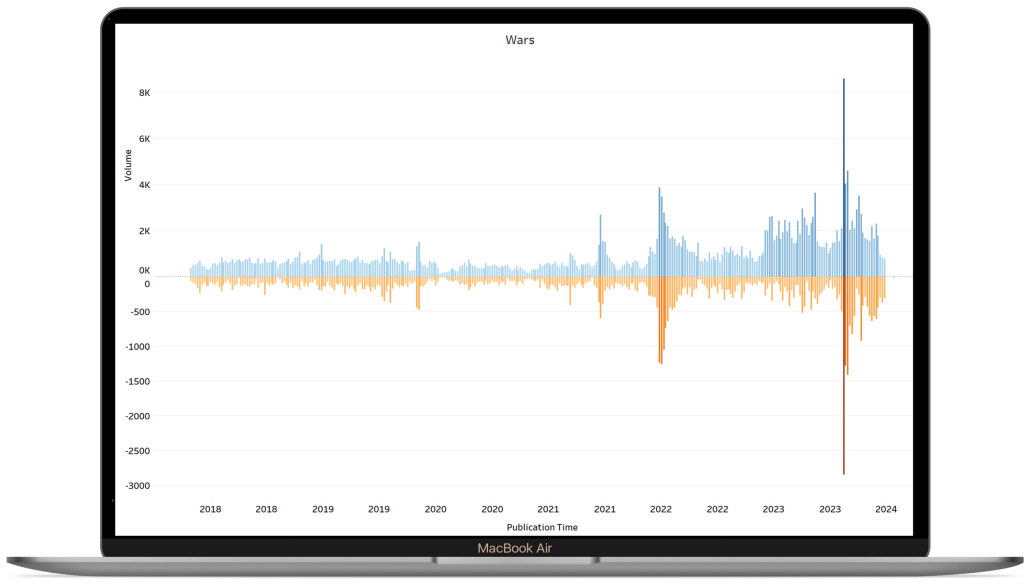
Above: Our Global Conflict news sentiment dataset
Data intelligence as a political risk barometer: Final thoughts
Data intelligence has emerged as a powerful tool in political risk assessment, providing valuable insights into the complex and volatile world of politics. By analysing vast amounts of data, data intelligence platforms enable decision-makers to assess, monitor, and predict political risks. Despite its challenges and limitations, data intelligence continues to evolve and improve, offering more accurate and comprehensive insights for political risk analysis.
As businesses, investors, and policymakers navigate the global landscape, harnessing the power of data intelligence will be crucial for making informed decisions and managing political risks effectively. By unlocking the insights hidden in data, data intelligence serves as a powerful political risk barometer, enabling proactive risk management and safeguarding interests.
Find out more
Ready to harness the power of Permutable’s data intelligence for determining political risk? Whether you’re seeking real-time insights into global sentiment around elections, tracking geopolitical tensions, or exploring our comprehensive data feeds, we’re here to help. To find out more about our data intelligence feeds and how it can benefit your organisation visit our dedicated data intelligence hub or request a free trial below.
Join our Political Intelligence BETA Testing Program

.Unlock unparalleled insights into global political trends and developments with Permutable AI’s Political Intelligence BETA Program. Gain complimentary access to our state-of-the-art REAL TIME political data sentiment analysis tool and stay ahead of the competition. Join now to explore unbiased data, influence strategic initiatives, and gain a competitive advantage in today’s complex geopolitical landscape. Sign up today for early access and be among the first to leverage the power of our advanced analytics. Don’t miss this exclusive opportunity to shape the future of political intelligence.