10 ways to leverage our market intelligence tools for strategic business advantage

In the dynamic world of business, staying ahead of the curve is not just an advantage but a necessity. At Permutable AI, our market intelligence tools provide unparalleled insights, guiding enterprises through the complexities of market trends, competitive landscapes, and regulatory environments. In this article we’ll look into the multifaceted applications of our intelligence platform, illustrating how it can underpin strategic decisions and lead to sustainable, competitive, and compliant operations.

1. Trend analysis and forecasting

The ability to identify and anticipate market trends is invaluable. Market trend analysis and forecasting, powered by advanced data intelligence, enables businesses to discern emerging patterns within specific industries, providing a foundation upon which to align strategies with future developments. By leveraging our market intelligence to forecast trends, companies can pivot their offerings, marketing strategies, and operational focuses to meet the future head-on, ensuring relevance and resilience in a rapidly evolving marketplace.

2. Competitive intelligence

Understanding the competitive landscape is crucial for any business aiming to maintain or capture market share. Our market intelligence provides an easy way to track competitors and competitor activities through the systematic gathering and analysis of information regarding competitors’ strategies, strengths, weaknesses, and market positioning and even competitor products and customer service. Using this intelligence for market research and market segmentation can create a distinct competitive advantage,  informing strategic planning. Thus, helping businesses to differentiate themselves, exploit competitors’ vulnerabilities, and reinforce their market positioning, thereby maintaining a competitive edge.

3. Identifying supply chain risks

The efficiency and sustainability of the supply chain are pivotal to operational success and risk mitigation. Our market intelligence tools have the ability to play a critical role in assessing risks within the supply chain, encompassing supplier performance, environmental, social, and geo-location-based risks. This comprehensive analysis aids in refining the supply chain to enhance sustainability and mitigate risks, ensuring smooth operations and adherence to ethical practices.

4. Investment and M&A opportunities

The strategic expansion of a business often involves investments and mergers and acquisitions. Our market intelligence can provide a panoramic view of the market landscape, identifying high-potential investment or M&A opportunities through comprehensive analysis and predictive analytics. This enables businesses to make informed decisions, capitalising on opportunities that align with their growth strategies and long-term objectives.

5. Risk management

In an environment fraught with uncertainties, risk management is indispensable. Our data intelligence tools can the identification and assessment of market risks, including regulatory changes, competitive threats, and economic fluctuations. This proactive approach allows businesses to devise strategies to mitigate potential impacts, ensuring operational continuity and financial stability.

6. Regulatory compliance and impact analysis

Staying compliant in a landscape of ever-evolving regulations is a challenge. Permutable’s market intelligence tools support businesses by monitoring regulatory changes and assessing their potential impact on industry practices, market access, and business models. This vigilance ensures compliance, mitigates the risk of penalties, and aligns business strategies with regulatory expectations, safeguarding the company’s reputation and operational integrity.

7. Brand and reputation monitoring

A company’s brand is one of its most valuable assets. Permutable’s market intelligence tools facilitate the tracking of brand perception and reputation across various channels and demographics. This real-time monitoring allows companies to manage their brand health proactively, addressing potential issues before they escalate and ensuring that their brand resonates positively with their target audience.

8. Sustainability and ESG initiatives

In today’s world, sustainability is not just a buzzword but a business imperative. Our market intelligence is instrumental in understanding sustainability trends, regulatory expectations, and consumer preferences related to ESG factors. This insight enables businesses to integrate sustainable practices into their operations, product development, and corporate ethos, aligning with societal values and regulatory mandates.

9. Market entry and expansion strategies

Expanding into new markets or increasing presence in existing ones requires a nuanced understanding of market attractiveness, entry barriers, and the competitive landscape. Our market intelligence tools provide the data and analysis necessary to inform these strategies, identifying the most viable markets and the optimal approaches for entry or expansion. This strategic planning ensures that businesses maximise their chances of success in new ventures, leveraging opportunities while mitigating risks.

10. Improving trading strategies

Perhaps the application where our market intelligence is most sought after –  enhancing trading strategies. By leveraging real-time data, historical analysis, and predictive analytics, traders and investors can gain a nuanced understanding of market dynamics, sentiment analysis, and financial trends. This intelligence informs the development of sophisticated trading strategies, enabling market participants to identify lucrative trading opportunities, optimise entry and exit points, and manage portfolio risk more effectively.

Market intelligence is the lifeblood of strategic business decision-making. At Permutable AI, we offer deep insights into trends, competition, regulatory landscapes, and market opportunities,  empowering businesses to navigate the complexities of the modern economic environment. Whether it’s enhancing supply chain sustainability and conducting related supply chain due diligence, managing risks, ensuring regulatory compliance, or exploring new markets, our market intelligence equips businesses with the knowledge and tools needed to make informed decisions, drive sustainable growth, and maintain a competitive edge. In the quest for success in an ever-changing world, market intelligence is an indispensable ally, guiding businesses towards strategic excellence and operational.

Advanced capabilities and technological Edge

At Permutable AI, we’re not just providing market intelligence; we’re revolutionizing how businesses interact with and utilize data. Our suite of tools represents the cutting edge of AI and data analytics, offering unparalleled insights and predictive power across industries. Let’s delve deeper into what sets our platform apart.

Cutting-edge technology stack

Our market intelligence is built on a robust foundation of advanced technologies. At the core of our platform lies a sophisticated AI engine that employs various machine learning algorithms, including deep learning neural networks, random forests, and gradient boosting machines. These algorithms continuously learn from new data, improving their accuracy and predictive capabilities over time. Our advanced Natural Language Processing (NLP) capabilities allow us to analyze unstructured text data from diverse sources such as news articles, social media posts, and customer reviews. We use techniques like sentiment analysis, entity recognition, and topic modeling to extract meaningful insights from textual data.

Seamless integration and customization

We understand that market intelligence is most valuable when it’s seamlessly integrated into your existing workflows. That’s why we’ve designed our platform with interoperability in mind. Our robust API allows for easy integration with a wide range of business intelligence tools, and data visualization platforms. We offer fully customizable dashboards that can be tailored to your specific KPIs and metrics, ensuring that the most relevant information is always at your fingertips.

You can set up automated reports delivered directly to key stakeholders, ensuring that critical insights are always communicated promptly. Whether you’re a startup or a multinational corporation, our platform scales effortlessly to meet your needs, from handling increased data volumes to supporting a growing user base.

Comprehensive and high-quality data sources

The quality of insights depends on the quality and breadth of data. At Permutable AI, we leave no stone unturned. We have exclusive partnerships with industry leaders, giving our clients access to unique and valuable data sets not available elsewhere. Our advanced web crawlers continuously scour the internet for relevant information, ensuring our data is always up-to-date.  All data undergoes rigorous cleaning and validation processes, including anomaly detection and cross-referencing, to ensure accuracy and reliability.

Advanced predictive analytics

Our predictive analytics capabilities go beyond simple forecasting. Using advanced algorithms, we can accurately predict future trends and values based on historical data. Our platform allows you to model different scenarios and their potential outcomes, helping you prepare for various market conditions.

We employ sophisticated anomaly detection algorithms to identify unusual patterns or events that could signify emerging trends or potential risks. Beyond correlation, our tools can help identify causal relationships between different factors, providing deeper insights into market dynamics.

By leveraging these advanced capabilities, our market intelligence can provide a level of insight and predictive power that is unmatched in the industry. Whether you’re looking to optimize your current operations, explore new markets, or stay ahead of emerging trends, our platform equips you with the intelligence you need to make informed, data-driven decisions.

Find out more

Discover how our market intelligence can transform your business strategy and decision-making processes. For a deeper dive into our solutions and to explore how we can tailor our expertise to your unique needs, we invite you to get in touch. Reach out to us at enquiries@permutable.ai or fill in the form below. Our team is ready to provide you with the insights and support you need to navigate the complexities of the modern market. Let’s unlock the full potential of your business together.

Get in touch


Permutable AI releases 2023 company labour standards rankings

Permutable AI, at the forefront of data analytics, unveils its highly anticipated 2023 ranking of company labour standards, shedding light on  perceived corporate labour standards. As the world anticipates Human Rights Day on December 10, this groundbreaking analysis, based on Permutable’s cutting-edge news sentiment analysis, explores the commendable practices of industry leaders like Microsoft and the challenges faced by companies like Starbucks, Amazon.com, and Tesla.

company labour standards

Commendable Company Labour Standards: Microsoft, SAP, and Micron Technology Lead the Way

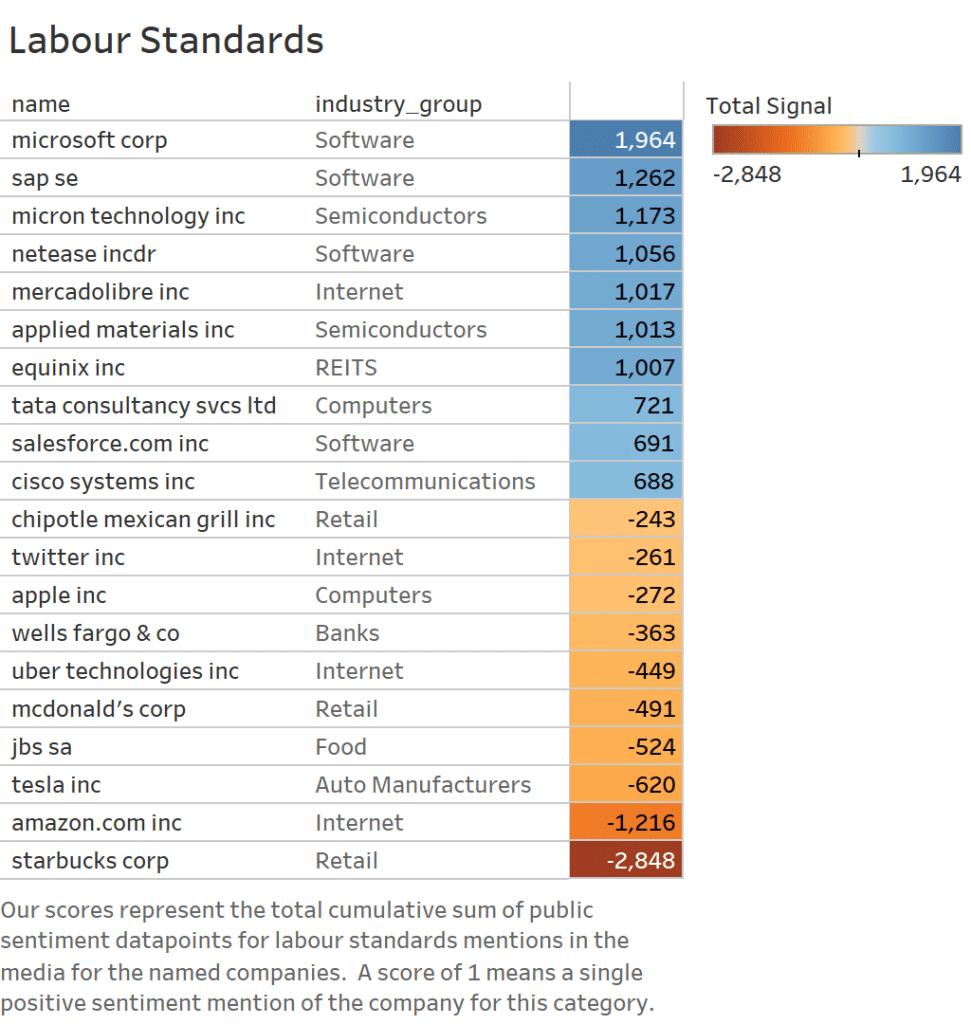
Topping the ranking is Microsoft, setting an exemplary standard with an impressive sentiment score of 1964.19. Microsoft’s commitment to fair and ethical employment practices is evident, positioning it as an industry leader in positive perceptions regarding labour practices. Closely following, SAP secures the second position with a noteworthy sentiment score of 1261.61. SAP’s dedication to high labour standards contributes significantly to its positive industry reputation, reflecting a commitment to fostering an ethical work environment. 

In the third position is Micron Technology, showcasing a commitment to excellence, not only in technology but also in labour standards, earning a sentiment score of 1172.88. Micron Technology’s emphasis on maintaining high standards aligns with the evolving expectations of the workforce and stakeholders.

These companies stand out for their robust corporate policies prioritising employee well-being, development, and diversity. Microsoft’s continuous training and diversity and inclusion initiatives, SAP’s focus on mentorship and career advancement, and Micron Technology’s investments in education collectively contribute to a positive workplace culture.

Moreover, these industry leaders actively engage in corporate social responsibility initiatives, aligning with broader ethical business practices. This comprehensive approach positions them as champions in fostering fair, inclusive, and ethical working conditions, earning positive perceptions in the realm of company labour standards.

Challenges and Opportunities: Starbucks, Amazon, and Tesla Under Scrutiny

On the flip side, companies such as Starbucks, Amazon.com, and Tesla find themselves facing scrutiny for their labour standards.

Starbucks Corp, positioned at the bottom of the list, faces significant negative sentiment with a score of -2847.98. The renowned coffee chain must address concerns about its labour practices to improve its standing within the industry. The e-commerce giant, Amazon.com, faces ongoing challenges in its labour standards perception, earning a sentiment score of -1216.36. This is attributed to reported concerns about workplace conditions, employee treatment, and the company’s resistance to unionization efforts.

Despite its prominence in the auto industry, Tesla Inc lags in perceived labour standards, earning a sentiment score of -619.79. The company has been under scrutiny for workplace safety concerns, reports of employee dissatisfaction, and its stance on unionization. These challenges collectively contribute to the negative public perception of their labour standards, prompting calls for improved working conditions and ethical employment practices within these companies.

Permutable AI’s Vision for Positive Change

Wilson Chan, CEO of Permutable AI, shares his vision:

“At Permutable AI, we believe that data has the power to drive positive change. Our latest sentiment analysis on company labour standards serves as a catalyst for important conversations about the ethical responsibilities companies bear towards their workforce. As we approach Human Rights Day, we aim to contribute to a dialogue that prompts reflection and meaningful action.”

Manuela Moollan, Sustainability Lead at Permutable AI, emphasises the broader implications for sustainability:

“Sustainability extends beyond environmental considerations; it encompasses the ethical treatment of workers. Our analysis shines a light on the vital role companies play in fostering fair and ethical labour practices. By identifying industry leaders and those with room for improvement, we seek to inspire positive change and promote a business environment aligned with global human rights standards.”

Permutable AI’s sentiment analysis provides valuable insights for investors, consumers, and stakeholders seeking to align themselves with socially responsible corporations. As Human Rights Day approaches, this data prompts reflection on the importance of ethical labour practices within the global business community. In a rapidly changing corporate landscape, the call for ethical leadership and responsible business practices becomes more pronounced than ever before.

Find Out More

As we unveil the 2023 ranking of company labour standards, we invite you to delve deeper into the intricate world of corporate ethics and practices. To gain a comprehensive understanding of the landscape, we encourage you to get in touch by filling in the form below to request additional data.

Get In Touch


See our other rankings below

– Company deforestation impact rankings

– Software companies data security rankings 

– Clean and affordable energy company rankings

– Corporate behaviour rankings 

– Company consumer protection rankings

– Worst pharmaceutical companies perceived for governance

What are scope 4 emissions? A comprehensive guide

In today’s increasingly eco-conscious world, businesses must continually adapt and innovate to reduce their environmental impact. While most companies are familiar with scope 1, 2, and 3 emissions, the lesser-known scope 4 emissions hold significant potential for driving sustainability efforts. This article discusses scope 4 emissions, their importance in carbon accounting, and how businesses can calculate and leverage avoided emissions for a more sustainable future.

What Are Scope 4 Emissions?

Scope 4 emissions, also known as “avoided emissions,” were first introduced by the World Resources Institute in 2013 as part of the Greenhouse Gas (GHG) Protocol. Unlike scope 1, 2, and 3 emissions, which refer to direct and indirect emissions produced by a company’s operations, scope 4 emissions represent the emission reductions that occur outside of a product’s lifecycle or value chain due to the use of that product.

For example, scope 4 emissions can be attributed to products and services that help reduce emissions, such as energy-efficient appliances, low-temperature detergents, fuel-saving tires, and teleconferencing services. These emissions are not subject to mandatory reporting requirements and are not currently included in standard carbon accounting practices.

The Importance of Avoided Emissions in Carbon Accounting

While scope 4 emissions may not be mandatory to report, their inclusion in carbon accounting can provide valuable insights into a company’s overall environmental impact. By understanding and reporting scope 4 emissions, businesses can:

  1. Identify and seize emission reduction opportunities.
  2. Make informed decisions about investing in sustainable projects.
  3. Enhance the accuracy of scope 1, 2, and 3 emission calculations.
  4. Develop comprehensive sustainability strategies that address all aspects of their operations.

Moreover, incorporating scope 4 emissions into carbon accounting can help businesses choose suppliers with lower carbon emissions and adopt equipment and technology solutions that actively reduce greenhouse gas emissions.

The Role of Avoided Emissions in Sustainability Strategies

When developing a sustainability strategy, understanding the concept of avoided emissions is crucial. By recognizing the potential emission reductions associated with scope 4 emissions, businesses can make more informed decisions about how to minimize their environmental footprint effectively.

Furthermore, reporting on scope 4 emissions creates opportunities for companies to develop emission reduction scenarios and strategies to act upon them. This not only helps businesses meet their sustainability goals but also enhances their credibility and reputation among stakeholders, consumers, and investors.

Why Scope 4 Emissions Matter

Reducing indirect emissions is a vital component of minimizing a company’s overall environmental footprint. Because avoided emissions are indirect, they can be challenging to measure, making it essential for companies to understand and address them.

By acknowledging avoided emissions, businesses can develop strategies to reduce their impact, such as working with low-carbon suppliers or adopting renewable energy sources. This not only helps companies reduce their environmental impact but also allows them to stay competitive in an increasingly eco-conscious marketplace.

Reporting Avoided Emissions

As the global community strives to combat climate change and limit global temperature increases below 1.5°C compared to pre-industrial levels, accurate reporting of emissions is essential. The Paris Agreement encourages countries to stay well below a 2°C increase, but businesses must go beyond net-zero emissions and become carbon negative to achieve this goal.

In this context, reporting avoided emissions is crucial for companies that want to remain competitive and meet the demands of conscious consumers and investors seeking ESG reporting data.

Designing Products with Avoided Emissions in Mind

One way businesses can reduce their environmental impact is by optimizing products during the design stage to emit less CO2 throughout their lifecycle. This involves considering every aspect of a product’s value chain, from manufacturing and logistics to end-use and disposal.

By optimizing products for reduced emissions and accurately reporting the avoided emissions, businesses can demonstrate their commitment to sustainability and gain a competitive edge in the marketplace.

Benefits of Reporting Avoided Emissions

Reporting avoided emissions offers several benefits for businesses looking to improve their sustainability efforts and reduce their environmental impact:

  1. Enhancing transparency and credibility by openly sharing emission data and reduction initiatives.
  2. Attracting conscious consumers who make environmentally friendly purchasing decisions based on accurate data.
  3. Demonstrating a commitment to minimizing carbon footprints and appealing to eco-conscious investors.
  4. Identifying risk factors and providing valuable data for ESG reporting.
  5. Guiding future product development and innovation toward low-carbon or carbon-free solutions.
  6. Ensuring transparency and responding to changing consumer behavior and demands for carbon-free products and services.

Calculating Avoided Emissions

Though calculating avoided emissions can be more challenging than direct emissions, it is possible with the right approach and tools. Net0’s carbon accounting platform, for example, simplifies the process by categorizing and itemizing emissions, allowing businesses to analyze their carbon footprint by scopes.

By inputting data from utility bills, invoices, and other activity-based sources, the platform automatically calculates emissions and provides real-time reports that compare avoided emissions data with competitors and track progress over time.

Identifying Opportunities for Emission Reductions

There are numerous ways businesses can increase the number of saved and avoided emissions, including:

  1. Adopting energy-efficient appliances and lightbulbs.
  2. Conserving energy by turning off lights and electronics when not in use.
  3. Recycling and composting waste materials.
  4. Encouraging employees to use public transportation or bike to work.
  5. Sourcing products from sustainable or green companies.
  6. Partnering with green vendors and suppliers that actively help reduce emissions.

In Conclusion

Understanding and reporting scope 4 emissions can significantly impact a company’s environmental strategy and overall sustainability. By embracing the concept of avoided emissions, businesses can improve transparency, make more informed decisions, and contribute to a healthier planet.

Find Out More

Are you passionate about corporate transparency and combating climate change? Get in touch with us to learn more about our work in providing transparency around corporate carbon emissions data. Together, we can drive sustainability, empower informed decision-making, and create a greener future. Contact us today to join the movement towards a more transparent and sustainable business landscape.

[wpforms id=”16023″ title=”false” description=”false”]

Lithium mining environmental impact: Exploring the hidden costs of lithium

Lithium mining has become a hot topic in recent years as the demand for electric vehicles and renewable energy solutions continues to rise. Just last week The Sunday Times ran a deep dive on the white gold rush that lithium has become.  While lithium has been touted as a key component in the fight against climate change, one area of increasing concern is the lithium mining environmental impact. 

From land degradation to water pollution, lithium mining can have a significant impact on surrounding ecosystems and local communities. It’s important to understand the full scope of these impacts and explore ways to mitigate/remediate/compensate them. In this article, we’ll take a closer look at the environmental impact of lithium mining and what you need to know about this critical industry. 

Lithium Mining Environmental Impact, Risks and Concerns

Lithium mining is a complex process that involves the extraction of lithium from underground brine deposits or hard rock deposits. While the process of extracting lithium is relatively straightforward, it can have significant environmental impacts. One of the major concerns associated with lithium mining is the impact on water resources.

Effects on Water Resources

Lithium mining requires large amounts of water, which can put a strain on local water supplies. In addition, the process of extracting lithium can result in the contamination of water sources, which can have serious consequences for both the environment and human health. The chemicals used in the mining process can also seep into groundwater and surface water, leading to pollution and ecosystem damage.

To mitigate these risks, some mining companies are exploring ways to reduce water usage and recycle wastewater. For example, some companies are using brine extraction methods that require less water than traditional mining methods. Others are investing in water treatment technologies to ensure that wastewater is properly treated before being discharged.

Air Pollution and Greenhouse Gas Emissions

Another concern associated with lithium mining is the release of air pollutants and greenhouse gases. The mining process requires the use of heavy machinery and equipment, which can emit pollutants into the air. In addition, the transportation of lithium products can also contribute to air pollution and greenhouse gas emissions.

To address these concerns, some mining companies are exploring ways to reduce their carbon footprint. This includes investing in renewable energy sources, using electric vehicles in mining operations, and improving the efficiency of equipment and machinery.

Impact on Local Ecosystems and Wildlife

Lithium mining can also have a significant impact on local ecosystems and wildlife. The disturbance of soil and vegetation can lead to habitat loss and fragmentation, which can have serious consequences for biodiversity. In addition, the use of chemicals and heavy machinery can also impact the health and survival of local wildlife.

To mitigate these risks, some mining companies are working to minimize their impact on local ecosystems. This includes implementing reclamation and restoration programs, protecting critical habitat areas, and investing in biodiversity conservation initiatives.

Lithium Mining and Indigenous Communities

In addition to environmental concerns, lithium mining can also have a significant impact on Indigenous communities. Many lithium deposits are located on traditional Indigenous lands, which can lead to conflicts over land rights and resource use. In addition, mining activities can disrupt cultural practices and traditional ways of life.

Conflicts over mineral extraction, especially in poor or developing countries,  have a long history. Large foreign corporations have been accused of making enormous profits while providing few benefits to the countries and local communities in the region. These conflicts have often led to violence and social unrest.

To address these concerns, some mining companies are working to engage with Indigenous communities and incorporate their perspectives into mining operations. This includes the development of partnerships and consultation processes, as well as the implementation of Indigenous-led land management practices.

Lithium Mining Companies 

The top 10 lithium mining companies can be found below:

  1. Albemarle Corporation
  2. SQM (Sociedad Química y Minera de Chile)
  3. Ganfeng Lithium
  4. Tianqi Lithium
  5. Livent Corporation
  6. Lithium Americas Corp.
  7. Galaxy Resources Limited
  8. Pilbara Minerals Limited
  9. Orocobre Limited
  10. Nemaska Lithium Inc.

Greenwashing in the Lithium Mining Industry

According to our data, the majority of lithium mining companies score high on environmental scoring, which seems extremely unlikely at this juncture. This in part will be due to the various announcements put out with regards to commitments to addressing their environmental impacts. While there is some progress being made in climate-positive mining practices there are still huge challenges yet to be overcome.

It is important to recognise the concerns and criticisms that have been raised regarding the greenwashing practices of certain lithium mining companies. Greenwashing refers to the act of conveying a false or misleading impression of environmental responsibility. In the context of lithium mining, some companies have faced scrutiny for overstating their sustainability practices (the idea that lithium mining in itself can be a sustainable practice is also highly questionable, climate-positive is a more realistic goal) or downplaying the potential environmental impacts associated with lithium extraction.

When reviewing scores, it is important to evaluate each company individually and consider factors such as their environmental track record, transparency in reporting, adherence to regulations, and participation in sustainability or climate-positive initiatives. Engaging in responsible and climate-positive mining practices, implementing robust environmental management systems, and supporting the development of a climate lithium supply chain are crucial steps for companies to counter any accusations of greenwashing and truly contribute to the transition to clean energy.

As the demand for lithium continues to grow, it is essential for stakeholders to hold mining companies accountable and ensure that their operations align with climate-positive practices and genuine environmental stewardship.

Climate-Positive Mining Practices

Climate-positive mining demands a holistic approach that combines technological advancements, strict environmental regulations, and strong social engagement. It involves minimizing the ecological footprint of lithium extraction through climate-positive practices, including efficient water usage, energy management, and waste reduction. Additionally, it necessitates transparent supply chains, ensuring that the extracted lithium meets stringent environmental and ethical standards.

To achieve climate-positive mining, collaboration among governments, mining companies, and environmental organizations is crucial. Governments should establish comprehensive regulatory frameworks that prioritize sustainability and enforce rigorous monitoring and reporting of mining activities. Mining companies must adopt responsible practices, investing in advanced technologies and engaging in community dialogue to address local concerns. Environmental organizations play a critical role in advocating for climate-positive practices and monitoring compliance, ensuring that mining operations align with climate-positive goals.

At Permutable AI, we have been supporting the work of NGO Green Cross United Kingdom with our data and insights, and their commendable work around advancing the climate-positive agenda.  Said Ruy Campos Dugone, Executive Director of Green Cross United Kingdom, “Lithium has emerged as one of the metals that best represents the energy transition progress, particularly for those who are betting on electric vehicles (EVs). Therefore, it should come as no surprise that lithium has gained international attention, even provoking geopolitical discussions in which the western axis loses significant strategic advantages in comparison to the eastern axis – led by China.”

He continued, “Despite these subjects, responsible and secure lithium extraction must be practised, giving socio-environmental issues precedence over commercial ones in order to accomplish climate-positive mining with minimal risks. Since metals and minerals are non-renewable resources, their traceability is crucial if they are to be incorporated into the circular economy model in the future. There are not many cases of extracting mining having a positive impact on the environment, thus at Green Cross UK, we advise at least going well beyond the existing legal frameworks in the countries where lithium extraction is practised.”

By prioritizing responsible and secure lithium extraction, we can pave the way for a climate-positive and equitable energy transition. Embracing climate-positive mining not only contributes to reducing carbon emissions but also protects ecosystems, respects local communities, and supports the circular economy. As we work towards a greener future, let us collectively strive for the highest environmental and social standards in the mining industry.

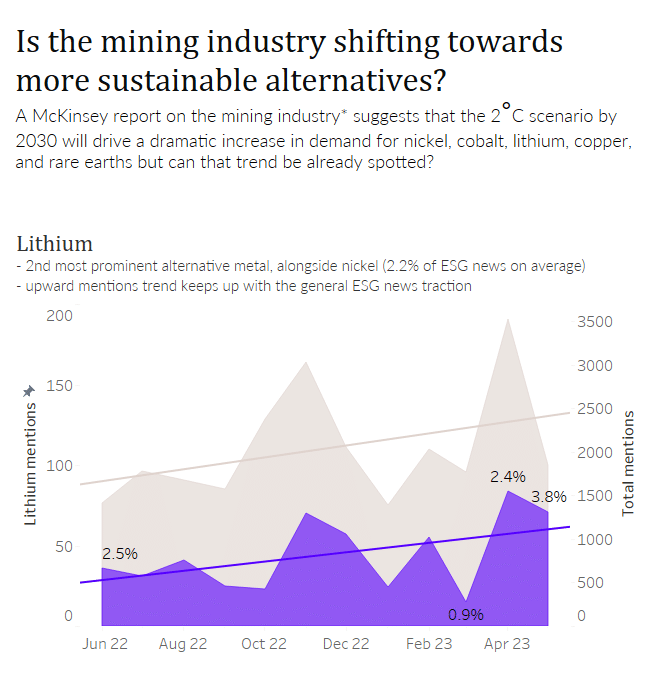
lithium mining environmental impact and shifts towards more sustainable alternatives vs mining industry
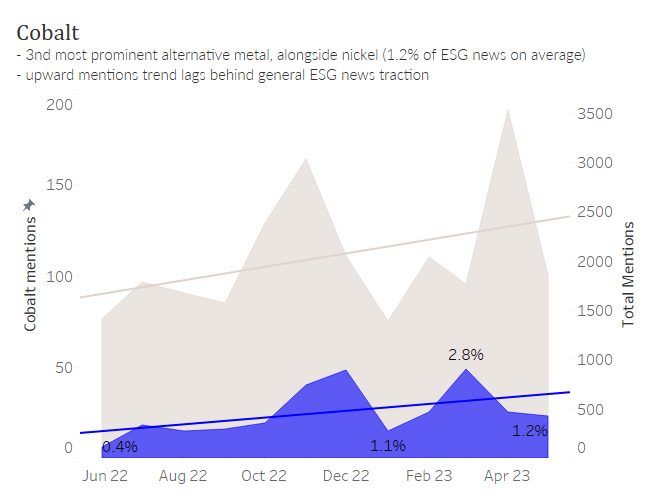
colbalt mining environmental impact and shifts towards more sustainable alternatives vs mining industry
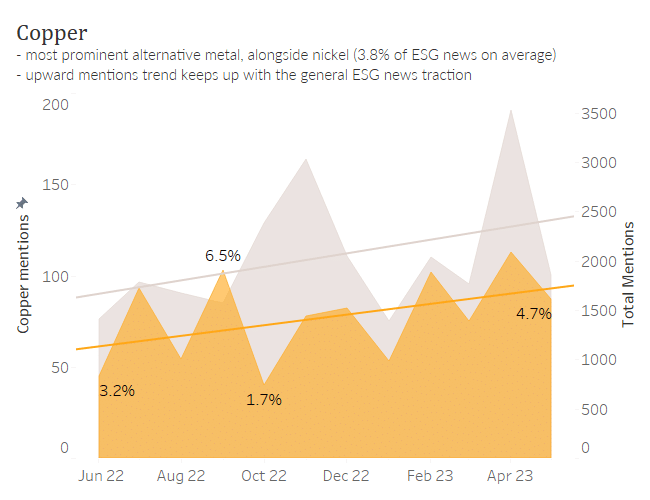
copper mining environmental impact and shifts towards more sustainable alternatives vs mining industry
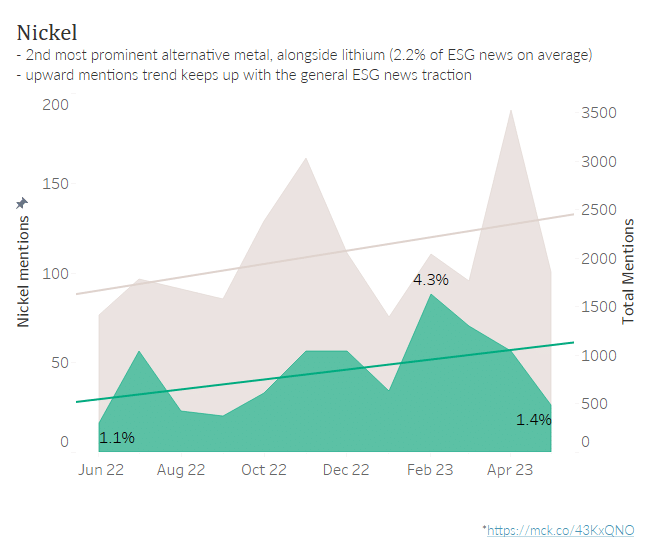
nickel mining environmental impact and shifts towards more sustainable alternatives vs mining industry

Alternatives to Lithium Batteries

While lithium batteries are currently the most widely used type of battery in electric vehicles and renewable energy systems, there are also alternatives that are being developed. For example, some companies are exploring the use of solid-state batteries, which can offer higher energy densities and longer lifetimes than lithium batteries. Other companies are exploring the use of other materials, such as sodium or magnesium, in battery production.

While these alternatives are still in the early stages of development, they offer potential opportunities to reduce the environmental impact of battery production and mining.

The Future of the Lithium Industry

The future of the lithium industry will depend on a range of factors, including the demand for electric vehicles and renewable energy solutions, as well as advances in climate-positive mining practices. While there are challenges associated with lithium mining, there are also opportunities to develop climate-positive and responsible mining practices.

As the demand for renewable energy solutions continues to grow, it will be important to ensure that the environmental and social impacts of lithium mining are carefully considered and addressed. By working together, mining companies, governments, and communities can develop solutions that balance the need for lithium with environmental responsibility.

Conclusion: Balancing the Need for Lithium with Environmental Responsibility

Lithium mining is a critical industry that plays an important role in the transition to a low-carbon economy. However, it is also an industry that can have significant environmental and social impacts. It is important to understand these impacts and explore ways to mitigate them.

By investing in climate-positive mining practices, engaging with Indigenous communities, and exploring alternatives to lithium batteries, we can help to reduce the environmental impact of lithium mining and ensure that it is done in a responsible and climate-positive way.

Next Steps

Are you interested in learning more about the environmental impact of lithium mining? Take action today and request more data from Permutable AI to deepen your understanding of this critical issue.

By accessing additional information from Permutable AI, you can gain valuable insights into the sustainability challenges and opportunities within the lithium mining industry. This data will empower you to make informed decisions, drive meaningful conversations, and contribute to the global effort of creating a more sustainable future.

Don’t miss out on this opportunity to expand your knowledge and explore the groundbreaking work being done by Permutable AI. Contact us now to request more data on lithium mining and discover how our expertise can support your sustainability initiatives. Together, we can pave the way for responsible and environmentally conscious practices in the mining sector.

[wpforms id=”16023″ title=”false” description=”false”]

Sustainable insurance: How environmental social governance is transforming the insurance industry

In today’s rapidly changing world, the insurance industry is adapting to meet the demands of a more environmentally conscious society. As the effects of climate change become increasingly evident, insuring against environmental risks is no longer just an option, but a necessity. This is where sustainable insurance comes into play. With a focus on Environmental Social Governance (ESG), insurance companies are taking proactive steps to integrate sustainability practices into their business models. From offering coverage for renewable energy projects to incentivizing policyholders to adopt eco-friendly behaviors, sustainable insurance is transforming the industry as we know it. In this article, we will explore the key ways in which ESG is reshaping the insurance landscape and why it is crucial for both insurers and policyholders to embrace this shift. Join us as we delve into the world of sustainable insurance and discover how it is paving the way towards a greener and more resilient future.

Understanding Environmental, Social, and Governance (ESG) Factors in Insurance

Before diving into the impact of ESG on the insurance industry, it’s important to understand what environmental social governance factors actually entail. Environmental factors refer to the impact of an organization’s activities on the natural environment, such as its carbon footprint or waste management practices. Social factors encompass the company’s interactions with its employees, customers, and the broader community, including issues like diversity, labor practices, and community engagement. Lastly, governance factors pertain to the organization’s internal structures and processes, including its transparency, accountability, and ethical practices.

In the context of insurance, ESG factors play a crucial role in assessing and managing risks. Insurers are increasingly recognizing the importance of considering environmental, social, and governance risks when underwriting policies. For example, they may need to evaluate the potential impact of climate change on property insurance, or the social and governance practices of a company before providing liability coverage. By incorporating ESG factors into their risk assessment models, insurers can better understand and manage the risks associated with their policies, ultimately leading to more sustainable and resilient outcomes.

The Impact of ESG on the Insurance Industry

The integration of ESG into the insurance industry has had a profound impact on various aspects of the sector. Firstly, it has influenced product development and innovation. Insurers are introducing new policies and coverage options that specifically address environmental risks. For instance, renewable energy insurance has emerged as a specialized area, providing coverage for wind farms, solar power installations, and other clean energy projects. This not only enables the growth of the renewable energy sector but also helps mitigate the risks associated with such ventures.

Additionally, environmental social governance considerations have prompted insurers to evaluate their investment portfolios more closely. Insurance companies typically have significant investment assets, and by aligning their investments with sustainable principles, they can contribute to positive environmental and social outcomes. This involves divesting from industries with high carbon emissions or unethical practices, and instead investing in companies that promote sustainability and social responsibility. By doing so, insurers can demonstrate their commitment to sustainable practices while also potentially achieving better long-term financial returns.

Furthermore, the integration of ESG into insurance practices has led to enhanced risk management. Insurers are increasingly aware of the potential financial implications of climate change and other environmental risks. By incorporating ESG factors into their risk models, insurers can better understand the potential impact of these risks on their portfolios and take appropriate measures to mitigate them. This includes investing in technologies and strategies that promote climate resilience, as well as collaborating with other stakeholders to develop comprehensive risk management solutions.

Benefits of Sustainable Insurance for Businesses and Consumers

The adoption of sustainable insurance practices offers numerous benefits for both businesses and consumers. For businesses, embracing sustainable insurance can enhance their reputation and brand value. In today’s socially conscious marketplace, consumers are increasingly drawn to companies that demonstrate a commitment to sustainability and social responsibility. By incorporating ESG practices into their operations, businesses can differentiate themselves from their competitors and attract environmentally conscious customers.

Moreover, sustainable insurance can also result in cost savings for businesses. By implementing risk management strategies that address environmental and social risks, companies can reduce the likelihood and severity of losses. For example, a manufacturing company that invests in energy-efficient technologies and practices may benefit from lower insurance premiums due to reduced fire and pollution risks. Sustainable insurance thus becomes not just an ethical choice, but also a financially prudent one for businesses.

On the consumer side, sustainable insurance provides individuals with the peace of mind that their policies are aligned with their values. Policyholders can have confidence that their insurance coverage supports environmentally and socially responsible practices. Furthermore, some insurers offer incentives for policyholders to adopt eco-friendly behaviors, such as lower premiums for hybrid car owners or discounts for sustainable home upgrades. This not only benefits the environment but also encourages individuals to make more sustainable choices in their daily lives.

The Role of InsurTech

Insurtech, a term that combines insurance and technology, is revolutionizing the insurance industry in various ways. One significant aspect is its potential to facilitate ESG practices within the industry. Insurtech companies are leveraging technology to drive sustainable and socially responsible initiatives, transforming the way insurance is conducted through:

Enhanced Data Collection and Analysis

Insurtech companies utilize advanced data collection and analysis tools to gather and analyze vast amounts of information. This enables them to assess and understand the environmental and social risks associated with insurable assets, evaluate the social impact of insurance products, and identify governance-related issues within the industry. By harnessing the power of data and analytics such as those provided by our data and reporting capabilities at Permutable, insurers are able to access valuable insights to support their ESG decision-making processes.

Innovative Insurance Products and Services

Insurtech enables the development of innovative insurance products and services that align with ESG principles. For example, they may offer parametric insurance solutions that cover climate-related risks, such as extreme weather events or natural disasters. These products provide coverage based on predefined triggers rather than traditional loss assessment, enabling faster claims settlement and greater financial resilience for policyholders. Insurtech companies are also exploring microinsurance and inclusive insurance models to extend insurance coverage to underprivileged and underserved populations, promoting financial inclusion and social equity.

Risk Mitigation and Prevention

Insurtech leverages technology to enhance risk mitigation and prevention measures. IoT devices, such as sensors and wearables, enable real-time monitoring and data collection, allowing insurers to assess and manage risks more effectively. This technology can be utilized in various contexts, such as monitoring the environmental impact of insured assets, incentivizing policyholders for adopting sustainable practices, or encouraging healthier lifestyles through wellness programs. By focusing on risk prevention and mitigation, insurtech contributes to environmental conservation, social well-being, and sustainable business practices.

Streamlined Operations and Efficiency

Insurtech enables the optimization and streamline insurance operations through automation and digitalization. This leads to improved efficiency and cost savings, which can be redirected towards ESG initiatives. By automating underwriting processes, claims management, and customer service, insurtech enables insurers to operate more sustainably and allocate resources towards ESG-focused activities. Additionally, digitized operations reduce paper waste, enhance transparency, and facilitate better governance practices, aligning with ESG goals.


Case Studies of Insurance Companies Implementing ESG Practices

Several insurance companies have already embraced sustainable insurance practices and integrated environmental social governance considerations into their operations. One notable example is AXA, a global insurance leader. AXA has committed to divesting from coal and increasing its investments in renewable energy. The company has also developed various insurance products to support the transition to a low-carbon economy, such as green bonds insurance and climate risk coverage. AXA’s efforts demonstrate how insurers can actively contribute to sustainability while aligning their business with the changing needs of society.

Another case study is the insurance company Zurich. Zurich has made significant progress in incorporating ESG factors into its underwriting processes. The company has developed a framework to assess climate-related risks and offers tools and guidance to help clients manage and mitigate these risks. Zurich’s commitment to ESG practices has not only enabled it to better understand the risks associated with climate change but also positioned it as a trusted partner for clients looking to navigate the challenges of a changing climate.

These case studies highlight the transformative potential of sustainable insurance. By integrating ESG considerations into their operations, insurance companies can not only mitigate risks but also contribute to positive environmental and social outcomes. Through innovative product offerings and responsible investment practices, insurers can play a vital role in building a more sustainable and resilient future.

Peer Comparison

Access our ESG data on the top insurance providers within the industry below:

How to Incorporate Sustainable Insurance into Your Business

If you’re a business owner or decision-maker interested in embracing sustainable insurance practices, there are several steps you can take to incorporate ESG considerations into your operations. Start by assessing your current insurance policies and identifying any gaps or opportunities for improvement. Consider reaching out to your insurance provider to discuss their approach to ESG and whether they offer any sustainable insurance options.

Additionally, evaluate your own business practices and identify areas where you can enhance sustainability. This may include implementing energy-efficient technologies, reducing waste, or promoting diversity and inclusion within your organization. By demonstrating a commitment to sustainability, you can not only attract environmentally conscious customers but also contribute to a more resilient and sustainable future.

Furthermore, consider collaborating with insurance brokers or consultants who specialize in sustainable insurance. These experts can provide guidance and support in identifying the most suitable insurance solutions for your business and help you navigate the complexities of ESG considerations. By leveraging their expertise, you can ensure that your insurance practices align with your sustainability goals and contribute to positive environmental and social outcomes.

Challenges and Obstacles in Adopting Sustainable Insurance Practices

While the adoption of sustainable insurance practices is gaining momentum, there are still challenges and obstacles that need to be addressed. One of the main challenges is the lack of standardized ESG metrics and reporting frameworks. Without consistent and comparable data, it becomes difficult for insurers and businesses to assess and compare the sustainability performance of different companies. Efforts are being made to develop global standards, such as the Task Force on Climate-related Financial Disclosures (TCFD), but more work is needed to ensure widespread adoption and consistency.

Another challenge is the perception that sustainable insurance practices may lead to higher costs. Some businesses may be hesitant to embrace sustainable insurance due to concerns about increased premiums or upfront investments in sustainability measures. However, studies have shown that sustainable practices can lead to long-term cost savings through reduced losses and improved risk management. It is important to communicate the financial benefits of sustainable insurance to overcome this perception and encourage broader adoption.

Furthermore, there is a need for increased awareness and education around sustainable insurance practices. Many businesses and individuals may not be aware of the options available or the potential benefits of embracing sustainable insurance. Insurers, industry associations, and governments can play a crucial role in raising awareness and providing resources to support the transition to sustainable insurance practices. By promoting knowledge sharing and collaboration, we can overcome the barriers to adoption and foster a more sustainable insurance industry.

The Future of Sustainable Insurance

The future of sustainable insurance looks promising. As the impacts of climate change continue to escalate, the importance of ESG considerations in the insurance industry will only grow. Insurers will need to adapt to the changing risk landscape and develop innovative solutions to address emerging environmental and social risks. This may involve collaborating with other stakeholders, leveraging technology, and actively contributing to sustainability efforts.

Additionally, the demand for sustainable insurance products and services is expected to increase. Consumers are becoming more conscious of the environmental and social impacts of their actions and are seeking insurance options that align with their values. Insurers that can effectively communicate their commitment to sustainability and offer tailored products and incentives will be well-positioned to capture this growing market.

Furthermore, regulatory frameworks are evolving to incentivize and enforce sustainable practices in the insurance industry. Governments and regulatory bodies are increasingly recognizing the importance of environmental social governance considerations and are introducing policies and regulations to encourage sustainable insurance practices. This includes initiatives such as mandatory climate risk reporting and incentives for insurers to invest in green technologies. By creating a supportive regulatory environment, governments can accelerate the adoption of sustainable insurance and drive positive change.

Resources and Organizations Promoting Sustainable Insurance

For businesses and individuals interested in learning more about sustainable insurance or seeking support in adopting sustainable practices, there are several resources and organizations available. The Principles for Sustainable Insurance (PSI), developed by the United Nations Environment Programme Finance Initiative (UNEP FI), provides a framework for insurers to integrate sustainability into their operations. The PSI offers guidance, tools, and case studies to help insurers navigate the challenges and opportunities of sustainable insurance.

Moreover, industry associations and networks, such as the Sustainable Insurance Forum (SIF) and the Sustainable Insurance and Investment Network (SIIN), bring together insurers, regulators, and other stakeholders to promote sustainable insurance practices. These platforms facilitate knowledge sharing, collaboration, and advocacy for sustainable insurance at a global level.

Additionally, sustainability-focused organizations, such as Ceres and the World Wildlife Fund (WWF), provide valuable resources and insights on sustainable insurance and related topics. These organizations conduct research, publish reports, and engage with stakeholders to drive positive change in the insurance industry.

Conclusion

As the world grapples with the challenges of climate change and social inequality, the insurance industry has a critical role to play in promoting sustainability and resilience. Sustainable insurance, with its focus on Environmental Social Governance (ESG) factors, is transforming the sector and driving positive change. By integrating ESG considerations into their operations, insurers can better understand and manage risks, develop innovative products, and contribute to positive environmental and social outcomes.

For businesses and consumers, embracing sustainable insurance practices offers a range of benefits, from cost savings to enhanced reputation and peace of mind. By aligning insurance coverage with their values and promoting sustainable behaviors, individuals can contribute to a more sustainable future.

While challenges and obstacles remain, the future of sustainable insurance is promising. With the support of standardized metrics, increased awareness, and supportive regulatory frameworks, the insurance industry can continue to evolve and drive positive change towards a greener and more resilient future. It is essential for insurers, businesses, and individuals to embrace sustainable insurance practices and collectively work towards building a more sustainable and resilient world.

Find Out More

Are you ready to make a meaningful impact on the insurance industry’s sustainability journey? Harness the power of Permutable’s comprehensive ESG data solutions to drive positive change and propel your organization towards a more sustainable future.

Discover the transformative potential of Permutable’s ESG data in shaping sustainable insurance practices:

  1. Gain Insights for Informed Decision-Making: Leverage Permutable’s extensive ESG data to make informed decisions regarding environmental impact, social responsibility, and governance practices. Access valuable insights and metrics that enable you to align your insurance offerings with sustainability goals.

  2. Mitigate Risk and Enhance Resilience: Identify and mitigate ESG risks in your insurance operations with Permutable’s data-driven approach. Uncover potential vulnerabilities and take proactive measures to build resilience against environmental and social challenges.

  3. Enhance Stakeholder Engagement: Engage your stakeholders, including clients, investors, and regulatory bodies, with transparent and measurable ESG data. Showcase your commitment to sustainable insurance practices and build trust by providing evidence of your environmental and social impact.

  4. Drive Innovation and Product Development: Leverage Permutable’s environmental social governance data to drive innovation and develop insurance products that address emerging sustainability trends and customer demands. Stay ahead of the curve and meet the evolving needs of socially conscious policyholders.

  5. Align with Regulatory Requirements: Ensure compliance with evolving ESG regulations and reporting standards by leveraging Permutable’s data solutions. Stay up to date with industry best practices and demonstrate your commitment to responsible and sustainable insurance practices.

Take the first step towards driving forward sustainable insurance by partnering with Permutable. Contact us today to explore how our ESG data solutions can empower your organization to make a positive difference and thrive in the era of sustainability.

Together, let’s shape the future of insurance, one sustainable decision at a time.

[wpforms id=”16023″ title=”false” description=”false”]
Founder update: How Permutable AI is driving sustainable transformation

Permutable AI is at the forefront of revolutionizing supply chains through the use of sustainable artificial intelligence technology. With a focus on creating a greener future and sustainable transformation, Permutable AI is leveraging cutting-edge solutions to drive sustainability in supply chain operations. This interview with Wilson Chan, the founder of Permutable AI, will delve into the company’s vision, its role in transforming supply chains, and the impact of AI on the business landscape.

Can you share with our readers the inspiration behind Permutable AI and its mission in the sustainable transformation space?

The inspiration for Permutable AI stemmed from recognizing the immense environmental challenges our world faces and the pivotal role supply chains play in addressing them. Our mission at Permutable AI is to empower businesses with AI solutions that promote responsible practices across the supply chain. We believe that by harnessing the power of AI, we can create a significant positive impact on the environment while driving business success.

How does Permutable AI’s technology contribute to the sustainable transformation of supply chains?

At Permutable AI, we have developed advanced algorithms and machine learning models that analyze supply chain data to identify ESG risks. By leveraging our AI solutions, companies gain access to powerful data-driven insights that empower them to make informed decisions with sustainability at the forefront. This integration of technology enables businesses to strike a balance between sustainability goals and operational efficiency, ensuring that sustainability efforts do not compromise productivity or profitability.

Through comprehensive analysis of supply chain data, Permutable AI helps businesses identify areas where significant improvements can be made. This includes reducing waste generation, optimizing energy consumption, and minimizing carbon emissions. By pinpointing these key areas, companies can implement targeted strategies and initiatives to drive sustainable practices throughout their supply chains.

Furthermore, our technology provides real-time monitoring and predictive analytics capabilities, allowing businesses to proactively identify potential risks and mitigate them promptly. This proactive approach enhances the resilience of supply chains, making them better prepared to tackle sustainability challenges and adapt to changing environmental conditions.

By harnessing the power of Permutable AI’s technology, businesses can not only achieve their sustainability goals but also create a positive ripple effect throughout the entire supply chain ecosystem. Suppliers, partners, and stakeholders are encouraged to align their practices with sustainable principles, fostering a collaborative approach towards a more sustainable and resilient future.

Could you provide some examples of how Permutable AI has helped businesses achieve sustainable transformation?

Certainly! Let me provide you with a concrete example of how Permutable AI has successfully assisted businesses in achieving sustainable transformation within their supply chains. One notable collaboration involved a multinational company with a strong commitment to reducing its carbon footprint and enhancing overall sustainability. This organization recognized the potential of our AI-powered solutions to drive meaningful change and approached us for assistance.

Working closely with the company, we conducted a thorough analysis of their supply chain data using our advanced algorithms and machine learning models. Through this analysis, we identified specific areas within their supply chain that presented opportunities for improvement in terms of sustainability.

Our findings highlighted potential inefficiencies and areas where carbon emissions could be reduced. Armed with these valuable insights, the company implemented targeted strategies and initiatives to address the identified issues. By optimizing their supply chain operations based on our recommendations, they were able to achieve remarkable results.

The implementation of Permutable AI’s technology enabled the company to achieve a substantial reduction in their carbon emissions. This reduction not only aligned with their sustainability goals but also resulted in significant cost savings through improved operational efficiency. By streamlining processes and identifying areas of waste and inefficiency, the company not only reduced its environmental impact but also enhanced its overall sustainability profile.

Moreover, the collaborative efforts with Permutable AI had a positive impact on the company’s supply chain resilience. By proactively addressing sustainability challenges, the company improved its ability to adapt to changing market dynamics, regulations, and consumer expectations. This, in turn, positioned the company as a leader in sustainable practices within their industry.

How does Permutable AI ensure the ethical and responsible use of AI technology in supply chain operations?

At Permutable AI, we place utmost importance on ethical and responsible use of AI technology in supply chain operations. We have implemented robust protocols and measures to ensure that our AI solutions adhere to the highest ethical standards. Here’s how we ensure ethical and responsible use of AI technology:

– Strict Protocols: We have established rigorous protocols that govern the development and deployment of our AI algorithms. These protocols are designed to promote transparency, fairness, and accountability in all aspects of our technology. By following these protocols, we ensure that our AI solutions are unbiased, reliable, and trustworthy.

– Transparency and Fairness: Our algorithms are built with a strong emphasis on transparency and fairness. We strive to make the decision-making processes of our AI models understandable and explainable. By providing transparency, we enable businesses to comprehend the basis of AI-driven recommendations and ensure that they align with ethical principles and industry best practices.

– Privacy Protection: Data privacy and security are of paramount importance to us. We adhere to strict data protection regulations and industry standards to safeguard the privacy and confidentiality of the data we handle. Our data management practices prioritize privacy protection, ensuring that sensitive information is handled securely and with the utmost care.

– Ethical Guidelines and Regulatory Compliance: Permutable AI strictly adheres to ethical guidelines and regulatory requirements governing AI technology and data usage. We stay updated with the latest developments in the field of AI ethics and actively incorporate ethical principles into our processes. By complying with relevant regulations and guidelines, we ensure that our AI solutions meet the highest ethical standards.

– Client Engagement: We actively engage with our clients to ensure that our AI solutions align with their sustainability goals and values. Through close collaboration, we gain a deep understanding of their specific ethical requirements and concerns. This allows us to tailor our AI technology to their unique needs, promoting responsible practices across their supply chains.

– Stakeholder Well-being: We are committed to respecting the rights and well-being of all stakeholders involved in the supply chain. Our AI solutions are designed to minimize any negative social or environmental impacts. By prioritizing sustainability and responsible practices, we aim to create a positive and inclusive business ecosystem that benefits all stakeholders.

By upholding ethical principles, promoting transparency, safeguarding privacy, and engaging with our clients and stakeholders, Permutable AI ensures that our AI technology is used ethically and responsibly in supply chain operations. We are dedicated to maintaining the highest standards of integrity and accountability as we drive sustainable transformation in the industry.

In your opinion, what role will AI play in shaping the future of business and supply chains?

AI will play a pivotal role in the future of business and supply chains. As the world’s focus on sustainability continues to intensify, businesses that embrace AI solutions will gain a significant competitive advantage. Here’s how AI will shape the future:

– Enhanced Resource Efficiency: AI empowers companies to optimize their resource usage throughout the supply chain. By leveraging AI algorithms, businesses can identify inefficiencies, reduce waste, and streamline operations. This leads to improved resource efficiency, where fewer resources are required to achieve the same output. Ultimately, this results in cost savings and a reduced ecological footprint.

– Mitigation of Environmental Impact: AI enables companies to proactively address their environmental impact by identifying and addressing areas of concern. AI algorithms can analyze vast amounts of data to identify opportunities for reducing carbon emissions, energy consumption, and other environmental pollutants. By making data-driven decisions, businesses can implement targeted strategies to mitigate their environmental impact and contribute to a greener future.

– Profitability and Business Success: AI is not just about environmental benefits; it also drives profitability and business success. By optimizing resource allocation, reducing waste, and improving efficiency, companies can cut costs and improve their bottom line. Sustainable practices are increasingly attractive to consumers, investors, and other stakeholders, leading to increased brand reputation, customer loyalty, and market competitiveness.

– Transparency and Accountability: AI promotes transparency and accountability throughout the supply chain. By leveraging AI technology, companies can track and trace their products, ensuring that they meet sustainability standards and ethical guidelines. This transparency fosters trust among consumers, who are increasingly conscious of the environmental and social impact of the products they purchase. AI enables businesses to provide verifiable information and data to support their claims of sustainability.

– Collaboration and Collective Impact: The adoption of AI by organizations across various industries creates opportunities for collaboration and collective impact. Sharing best practices, data, and insights among businesses can drive innovation and accelerate sustainable transformations. By working together, companies can tackle complex sustainability challenges more effectively and create a positive ripple effect throughout the entire business ecosystem.

By embracing AI, businesses can optimize their operations, reduce their environmental footprint, and contribute to a more sustainable future. It is not only a matter of fulfilling corporate social responsibility but also a strategic imperative for long-term success. As more organizations recognize the benefits of AI and commit to its implementation, we can collectively work towards a greener, more sustainable, and prosperous future for business and supply chains.

What are the future plans and aspirations for Permutable AI?

At Permutable AI, we have exciting future plans and aspirations to drive sustainable transformations in businesses. Here’s a glimpse into our future goals:

– Continued Innovation: We are committed to ongoing innovation in the field of AI and its application within sustainability. Our dedicated team of experts will continue to push the boundaries of AI technology, developing advanced algorithms and machine learning models. By staying at the forefront of AI advancements, we aim to provide cutting-edge solutions that address the evolving sustainability challenges faced by businesses.

– Expanding AI Solutions: We will expand our range of AI solutions to cater to a wider spectrum of industries and supply chain complexities. By tailoring our AI technology to specific sectors, we can address unique sustainability needs and deliver targeted results. Whether it’s manufacturing, logistics, retail, or any other industry, we aspire to provide effective AI-driven solutions that drive sustainable practices across diverse supply chains.

– Forge Partnerships: Collaboration is key to driving widespread sustainable transformations. We aspire to forge partnerships with more organizations that share our vision of creating sustainable supply chains. By working closely with businesses, we can understand their specific challenges and co-create solutions that align with their sustainability goals. Through these partnerships, we aim to support organizations in their journey towards integrating sustainable practices into their core operations.

– Thought Leadership: We strive to be thought leaders in the field of AI. We will actively engage with industry experts, participate in conferences and events, and share our insights and expertise through publications and whitepapers. By contributing to the knowledge and understanding of AI, we aim to inspire and educate businesses and stakeholders about the transformative potential of AI in driving sustainability.

– Continuous Improvement: At Permutable AI, we believe in continuous improvement. We will consistently gather feedback from our clients, assess the effectiveness of our solutions, and refine our AI technology to ensure optimal performance and maximum impact. By listening to our clients’ needs and staying adaptive, we can provide the most relevant and impactful AI solutions for sustainable supply chains.

Watch this space for updates on our progress, new partnerships, and innovative solutions. At Permutable AI, we are dedicated to making a meaningful and lasting contribution to the sustainable transformation of businesses and supply chains. Together, we can build a more sustainable future.

Let’s talk!

Ready to transform your supply chain with AI solutions? Get in touch with Permutable AI today! Discover how our cutting-edge technology can drive sustainability and efficiency in your operations. Contact us now to schedule a consultation and learn how we can tailor our AI solutions to meet your specific needs.

[wpforms id=”16023″ title=”false” description=”false”]
How Permutable is empowering sustainable business practices with cutting-edge technology: Founder interview

Welcome to an exclusive interview with Wilson Chan, the Founder and CEO of Permutable AI, where we explore the transformative power of cutting-edge technology in empowering sustainable business practices to mark World Environment Day. In this interview, we dive into the vision behind Permutable AI and how our advanced technology solutions are driving the adoption of sustainable practices across industries.

Wilson Chan’s passion for providing transparency around sustainable business claims led him to establish Permutable AI with the goal of making a tangible impact in the business world. With a deep understanding of the urgent need for sustainable practices and the role that AI and data analytics can play in this, Wilson and the team at Permutable AI  have developed AI-driven solutions that optimize resources, foster innovation, and enable businesses to make data-driven decisions that align with their sustainability goals.

Throughout this interview, we will gain valuable insights into Permutable AI’s groundbreaking technology, its real-world applications, and the success stories that demonstrate the transformative outcomes for businesses embracing sustainability. Wilson will also shed light on the future of sustainable business practices and how Permutable AI plans to stay at the forefront of this important movement.

Join us as we delve into the world of sustainable innovation and learn how Permutable AI is empowering businesses to embrace a greener and more sustainable future.

Could you provide some insights into how Permutable.ai’s cutting-edge technology enables businesses to embrace sustainable practices?

Certainly. Permutable.ai’s technology is designed to optimize resources, drive innovation, and foster collaboration across the entire supply chain. Through our AI-powered platform, businesses gain valuable insights into their operations and can make data-driven decisions that reduce waste, minimize environmental impact, and enhance overall sustainability. We provide tools for resource optimization, predictive analytics, and supply chain due diligence, enabling businesses to identify areas for improvement and implement sustainable practices seamlessly.

Can you share any success stories or real-world examples of how Permutable.ai has helped businesses adopt sustainable practices?

Absolutely. One global manufacturing client, was concerned about potential environmental risks within its supply chain. By leveraging Permutable AI’s advanced analytics and real-time monitoring capabilities, they gained deep visibility into its supplier network. The platform identified suppliers with unsustainable practices and high environmental impact. Armed with this information, our client was able to engage with these suppliers and collaborate on implementing sustainable alternatives. 

This led to the adoption of greener sourcing options, such as utilizing suppliers with eco-friendly manufacturing processes and sourcing materials from sustainable sources. Through Permutable AI’s supply chain risk monitoring, successfully reduced its environmental footprint and improved its overall sustainability performance. This example highlights how Permutable AI empowers companies to proactively identify environmental risks within their supply chain, enabling them to take decisive action and embrace more sustainable practices.

As we look ahead, what do you envision for the future of sustainable business practices, and how does Permutable.ai plan to stay at the forefront of this movement?

The future of sustainable business practices is incredibly promising. More and more companies are recognizing the importance of integrating sustainability into their core strategies, driven by customer demand, regulatory requirements, and the need to address global environmental challenges. 

At Permutable.ai, we aim to continue leading the way by constantly innovating and refining our technology. We strive to stay at the forefront of sustainable business practices by expanding our capabilities, partnering with like-minded organizations, and staying agile to adapt to the evolving needs of businesses. Our ultimate goal is to create a world where sustainability is ingrained in every aspect of business operations.

Before we conclude, is there any final message you would like to share with those reading this interview?

At Permutable AI, we believe that technology plays a pivotal role in driving sustainable change. By leveraging cutting-edge AI and data analytics, businesses can uncover valuable insights, optimize processes, and make informed decisions that minimize their ecological footprint while maximizing efficiency and profitability.

I want to encourage business leaders and decision-makers to embrace the power of sustainable innovation. Take the first step towards integrating sustainable practices into your business model, whether it’s through resource optimization, waste reduction, renewable energy adoption, or supply chain transparency. Small changes can make a big difference.

Remember, sustainability is a journey, and it requires collaboration and continuous improvement. Seek partnerships with like-minded organizations, share best practices, and learn from each other’s successes and challenges. Together, we can create a more sustainable and prosperous future.

Thank you for joining us today, and I hope our conversation has inspired you to take action and join us on this exciting journey towards a greener and more sustainable world. If you would like to explore in more detail how our capabilities can support you in your sustainable business practices please don’t hesitate to get in touch.

[wpforms id=”16023″ title=”false” description=”false”]
Voices of biodiversity: Perspectives of experts and activists on World Biodiversity Day

As the world grapples with the pressing need to conserve and protect our planet’s rich biodiversity, World Biodiversity Day serves as a poignant reminder of the interconnectedness between human society and the natural world. This annual celebration, observed on May 22nd, offers a platform for experts and activists from around the globe to raise their voices and shed light on the critical issues facing our ecosystems. By exploring the diverse perspectives of these individuals, we gain valuable insights into the urgent challenges and potential solutions that lie ahead in the realm of biodiversity conservation.

In this article, we delve into the thoughts and experiences of prominent experts and passionate activists who are dedicated to preserving and restoring Earth’s precious biodiversity. Their collective wisdom and unwavering commitment provide us with a glimpse into the magnitude of the crisis at hand and the need for immediate action.

Through their voices, we will explore the profound impact that biodiversity loss has on our lives, economies, and the delicate balance of ecosystems. From the destruction of habitats to the extinction of species, these experts and activists illuminate the consequences that arise from the unsustainable practices that have dominated our relationship with the natural world.

However, it is not all doom and gloom. The voices we encounter also offer a glimmer of hope and inspiration. They share stories of successful conservation efforts, innovative approaches, and community-led initiatives that are making a tangible difference in protecting and restoring biodiversity and the role of data and AI in supporting this progress. These individuals remind us that, despite the challenges we face, it is within our collective power to enact change and forge a sustainable future for generations to come.

As we commemorate World Biodiversity Day, let us lend an ear to these voices of biodiversity. Through their insights and experiences, we can gain a deeper appreciation for the interconnectedness of all life on Earth and realize our collective responsibility to preserve the astonishing diversity that makes our planet thrive.

Lisa Chilton, Chief Executive of National Biodiversity Network Trust

From woodlands to sea caves, and from butterflies to beavers, there’s one thing that all conservation strategies depend upon: good data. As the saying goes, ‘What gets measured, gets done’. We need robust data to understand the current state of nature, to set ambitious but achievable targets, and to measure progress. To get nature’s recovery done. The National Biodiversity Network Trust is the UK charity dedicated to biodiversity data. Our mission is ‘making data work for nature’ and we manage a network of more than 200 organisations that share and use wildlife data. Our data portal, the NBN Atlas, is the UK’s largest publicly accessible source of biodiversity data and provides access to the evidence needed for nature’s recovery. Our role might not be as appealing as those on the frontline, planting trees or reintroducing bison, but it’s every bit as critical. 

The Biodiversity Credit Alliance Secretariat

Total investment in nature of USD 8.1 trillion is required between now and 2050 – while annual investment should reach USD 536 billion annually by 2050 – to successfully tackle the interlinked climate, biodiversity, and land degradation crises, according to the State of Finance for Nature report 2022. It is therefore critical that both public and private institutions work together, innovating to create mutually beneficial change that is aligned with what the world requires. The Kunming-Montreal Global Biodiversity Framework (GBF) calls on actors across society and our economies – including institutions in the public and private sectors – to work together to transform our relationship with nature. The Biodiversity Credit Alliance works to facilitate the transition to a nature positive economy aided by a high-integrity, efficient and scaled biodiversity credit market.

Kaz Bishop, Founder, Green Up Britain

Biodiversity is key to maintaining the healthy ecosystems that provide food, medicine, clean air and water, as well as a stable climate. Without it, the entire support system for life on Earth will collapse. This is why nature restoration and conservation is urgently needed. Without pollinators, invertebrates and microbes, which maintain the health of the soil crops grow in, we won’t be able to feed ourselves. Likewise, the loss of forest, wetland, grassland, soil organism and ocean-ecosystems (which lock away atmospheric carbon) will cause more frequent climate disasters. If we work together, we can help biodiversity return on land, in seas, rivers and lakes, but the window of opportunity is closing.

Stefanie Kaiser, Sector Head, Carbon Markets, Nature Based Solutions & Biodiversity at NatureMetrics

In the last year, the penny has definitely dropped that private finance needs to flow into nature restoration and conservation, and there is huge appetite from investors and corporations to invest in emerging environmental markets. Figuring out market mechanisms for ‘nature as an asset class’ are still causing a lot of headaches, as concepts like biodiversity cannot easily be encapsulated into tradable units, as is the case for carbon. One key challenge for making biodiversity investible is the need for robust methods for measuring biodiversity baselines and change over time to define biodiversity uplift or maintenance and then attach a monetary value to that positive impact on nature. This is where technologies such as eDNA can provide consistent, robust and auditable data on animal species and soil biodiversity across different ecosystems and countries. Today, we have a range of technologies – Earth observation, eDNA, digital field monitoring methods – that can work together to provide strong biodiversity datasets. A range of companies looking to use AI to aggregate these data layers have been emerging recently. 

Zakia Rashid, Founder, MotherOceanBlue

Ecosystem resilience can be maintained by understanding the function and value of that system. The network of Marine Protected Areas in Raja Ampat is a wonderful success story where indigenous wisdom emerged triumphant over years of destructive, unregulated commercial fishing. The people of Raja Ampat have practiced conservation for centuries as part of their culture. By 1990 modern, destructive, fisheries decimated the area with dynamite fishing, shark finning, cyanide fishing and turtle hunting. With support, education and policy change the area saw a fish biomass increase of 600% in just 10 years. A conservation success story which proves real change is possible – driven by people, supported by government. Anything is possible for us as a species if we put our hearts and minds to it.

Wilson Chan, Founder, Permutable AI

Investing in biodiversity is not only crucial for the health of our planet but also integral to the success of ESG initiatives.  I strongly believe that protecting and preserving biodiversity is a fundamental responsibility that organizations must embrace. Biodiversity loss poses significant risks to ecosystems, economies, and communities worldwide. It disrupts natural systems, threatens food security, and undermines the stability of our planet. That’s where the power of AI and data analytics comes in. AI and data analytics enable organizations to harness the immense potential of data to understand, monitor, and address biodiversity-related challenges. These technologies provide valuable insights into species conservation, habitat preservation, and ecosystem restoration. By leveraging AI and data analytics, companies can make informed decisions, prioritize biodiversity initiatives, and implement effective strategies for positive change.

The urgent need to protect and conserve biodiversity has become undeniable. World Biodiversity Day serves as a reminder of the interconnectedness between human society and the natural world. Through the diverse perspectives of experts and activists, we gain valuable insights into the challenges and potential solutions for biodiversity conservation. However, it is crucial to translate these insights into action. We must invest in biodiversity, adopt sustainable business practices, and leverage the power of AI and data analytics to monitor and address environmental risks within supply chains. Together, we can forge a sustainable future, preserve Earth’s biodiversity, and ensure a thriving planet for future generations. Let this World Biodiversity Day be the catalyst for what is so urgently needed.

Get in touch to discuss how we can take action together now

 [wpforms id=”16023″ title=”false” description=”false”]