US Federal Reserve Chairman Jerome Powell’s announcement about upcoming interest rate cuts signals a key shift in the world’s economic scene. The Fed now aims to boost economic growth by lowering borrowing costs, after years of sharp rate increases to control inflation. This change comes as inflation in the United States seems to be moving towards the central bank’s 2% goal. Yet, this choice affects more than just the US. Countries worldwide are keeping a close eye on these changes and the United States inflation rate.
Jerome Powell’s speech at the Jackson Hole meeting points to a big shift in US monetary policy. The Fed, which had been hiking interest rates fast to fight the worst inflation in years now plans to cut these rates. US inflation hit 9.1% in June 2022 but fell to 2.9% in July 2024, so the central bank thinks it has a handle on price growth and can start to loosen its money stance. Powell also noted “downside risks” to jobs, with unemployment up a bit. This shows the Fed worries about the economy slowing down if tight money rules stay too long.
People expect the Fed to cut rates to keep the US economy from falling into a recession. When the Fed lowers interest rates, it tries to make borrowing cheaper for companies and consumers, which should boost economic activity. This is part of a bigger plan to achieve a “soft landing,” where inflation returns to normal without causing a major economic slump. But when and how fast these cuts happen will be key and will depend on ongoing economic numbers and risks.
The US, as the world’s biggest economy, has a big influence on global financial markets. When it changes its monetary policy, like adjusting interest rates, this has widespread effects. The way different parts of the world see the United States inflation rate, based on our news sentiment analysis data taken from our Country Bias Matrix, part of our Geopolitical Dataset, gives us a good feel of how various regions view the situation.
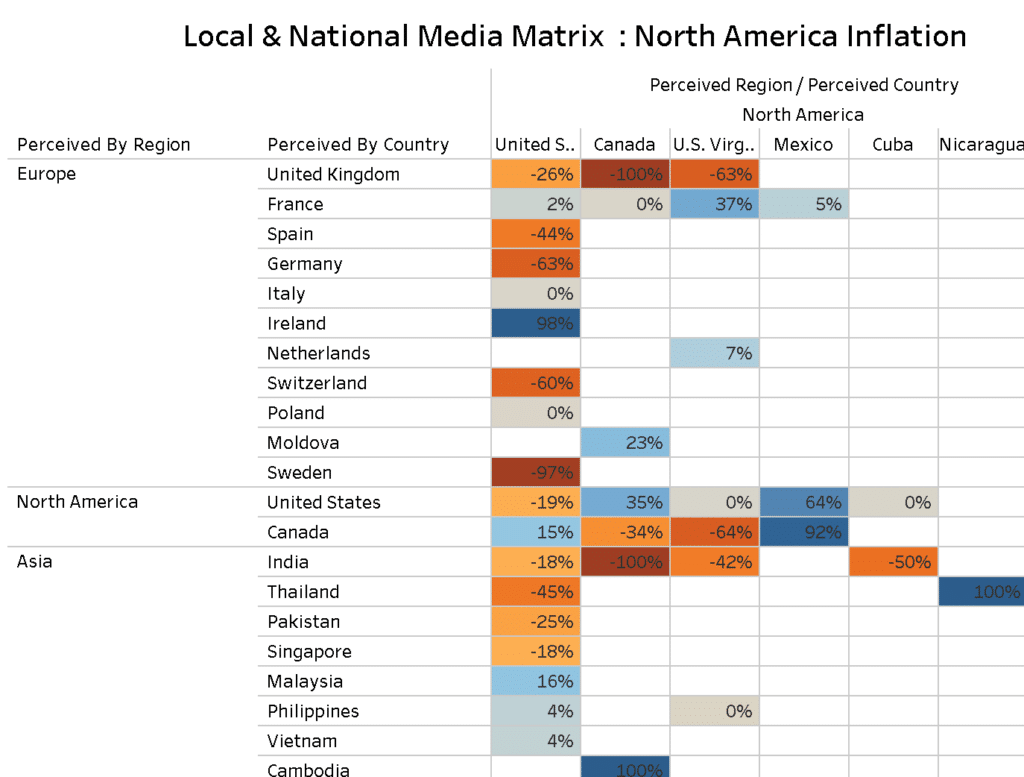
In Europe, perceptions of US inflation vary significantly. Big economies like Germany and Spain mostly view the United States inflation rate negatively . They worry about how US economic policies might affect their own economies. Take Germany, for example. It relies heavily on international trade. It might be afraid that US inflation and high interest rates could make fewer people buy its goods. Spain has a similarly negative perception, suggesting it’s concerned about keeping its economy stable and how US inflation might impact the Eurozone.
Still, nations like Ireland stand out with a positive outlook maybe showing a more upbeat view of economic bounce-back and gains from trade across the Atlantic. This split in views within Europe highlights the ins and outs of the region’s economic scene where different countries feel the effects of US money policies in different ways and to different degrees.
Asian countries have different views on United States inflation rate. India and Thailand have a negative outlook because they worry about how the United States inflation rate and interest rates might affect money flows and exchange rates in their economies. A stronger US dollar backed by high interest rates, can cause money to leave emerging markets. This makes their currencies weaker and increases the cost of imports key products like oil.
Vietnam however, sees US inflation in a positive light. This suggests they feel good about their economic ties with the US and might see chances for trade and investment. These different views across Asia show how various economies think about and get ready for the effects of US policies. Their unique economic links and dependencies shape these outlooks.
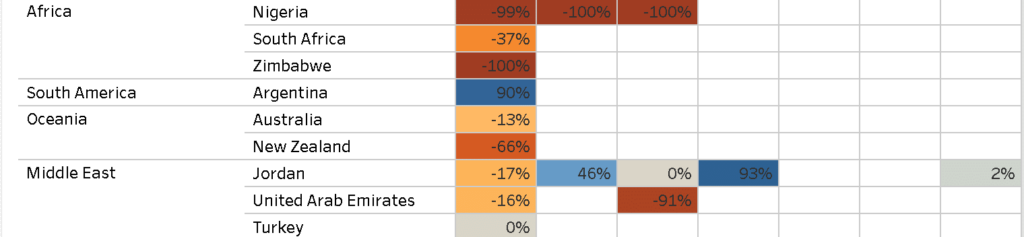
In Africa, people see US inflation as bad news in countries like Nigeria and Zimbabwe. These countries already face significant money problems. They think the US inflation and the interest rates that come with it make their economic troubles worse, making it harder for them to handle debt and get new investments.
Oceania, including Australia and New Zealand also has a negative view. These countries depend a lot on global trade. They worry that US economic choices will affect global demand and the prices of raw materials. This matters a lot to their economies, which rely on selling goods to other countries.
North America shows a split in views. The US has a mixed outlook, with both good and bad sentiment about inflation. This divide shows the wider argument in the US about how inflation and Fed policies affect different parts of the economy.
Canada also has a mix of bad and good views. This is likely because it’s so tied to the US economy. Changes in US inflation and interest rates shape Canadian economic factors, from trade balance to how strong the currency is.
The US Federal Reserve’s choice to reduce interest rates is set to have a big impact on world money markets. Countries that don’t see US inflation in a good light, like those in Africa and some parts of Europe and Asia, might worry about ups and downs in money flows, currency rates, and economic steadiness. These countries may need to take steps to protect their economies from possible shocks.
On the flip side, countries with a brighter view such as Ireland and Vietnam, might see the Fed’s moves as a chance to build stronger economic bonds with the US. They could take advantage of cheaper loans and the better economic outlook in the world’s biggest economy.
As the US Federal Reserve prepares to lower interest rates, the world economy keeps a close eye feeling both excited and worried. The different views shown by our Country Bias Matrix show how complex and linked today’s global economy is. For leaders and companies around the world, it’s key to understand these views to handle the ups and downs that will come as the Fed starts this new phase in how it manages money. Ultimately, the US’s chance to pull off a “soft landing” will not test its own economy but also signal how stable the world economy might be in the coming years.
If you’re interested in understanding more about how global perceptions of inflation or other market factors can influence geopolitical dynamics, or if you want to explore our comprehensive geopolitical intelligence offerings, reach out to us. To discover how our cutting-edge data insights can help your business stay ahead of global trends and make informed decisions in an ever-changing economic landscape simply email us at enquiries@permutable.ai or fill out the form below.

Have you been wondering recently how the UK is perceived in Europe? As the long shadow of Brexit continues to linger on, years on how do our European neighbours perceive the UK’s economy? The results may just surprise you, according to our AI-driven news sentiment analysis.
In this article, we’ll delve into the views of our continental cousins about the financial health of Britain as we take a closer look at how the UK is perceived in Europe, specifically through the lens of economic data.
First let us all breathe a huge sigh of relief. Regardless of what happened with Brexit, perhaps remarkably, most of Europe still considers Great Britain to be an economically stable country. Like being voted “Most Likely to Succeed” in Europe’s economic world yearbook – it’s flattering if a bit perplexing given our recent performance and erratic behaviour over the years.
Interestingly, Bulgaria in particular seems to be head over heels for us with an astonishing 91% positive rating. And then there is Hungary and Finland not very far behind in terms of how they view the UK and it’s economic prowess.
While this is certainly positive news with regards to how the UK is perceived in Europe, it’s not completely smooth sailing – unsurprisingly. The negative end of the spectrum finds Ukraine not singing our praises at all with -20% bias. Perhaps a little harsh?
When you look closer home, Ireland and Portugal portray a certain frostiness level, which is best characterized as a lukewarm handshake– not an outright rejection but perhaps there’s space for improving attitudes towards us here.
Ah, France. Our dear neighbours across the channel view us with a modest 10% positive bias. It is an economic shrug, a Gallic shrug – not bad, yet no popping of champagne corks either. Meanwhile, Germany is right in the middle, without being biased. It is their way of saying “We are watching you, UK but we’ll keep our opinions to ourselves at the moment”. Very diplomatic indeed!
Here’s where it gets interesting in terms of the UK is perceived in Europe. Surprisingly enough, Russia seems to think that our economy isn’t too shabby after all, boasting of a 33% positive bias. It’s like unexpected praise from your colleague you constantly disagree with smiling back at you – sweetly puzzling as hell.
So in terms of how the UK is perceived in Europe with regards to its economic standing, what do all these varied opinions mean? It is clear that Britain’s economy has a reputation as diverse as the weather in England – mostly sunny but with some showers. For policy makers and business leaders, these perceptions according to our LLM-driven news sentiment analysis are more than just trivia. They can affect everything from trade deals to investment decisions mentioned above.
When exploring how the UK is perceived in Europe through the lens of economic performance, understanding these attitudes may be crucial for navigating the stormy waters of global economics as we embark on our new post-EU reset. Sadly, we have a knack for souring relationships with our immediate neighbours; and things may even get more interesting yet. At present, we should strive to keep the ship afloat; maybe win over those who remain unconvinced while cherishing those in which we are already doing well. It is like throwing a dinner party where some of your guests are known to you since childhood, others are new acquaintances while the remaining are weighing up whether they really like what you cooked or not.
From all indications, the UK remains one of the most significant players in the EU economic space, a notion which is bolstered by the IMF’s recent prediction that the Britain is to be Europe’s fastest major growing economy. Everyone has an opinion on Britain’s economy – and those opinions of course tend to vary as our news sentiment analysis demonstrates. It’s complicated; just as international economics has always been. It would be prudent for us to keep an eye on these perceptions as we march ahead under a new government. In view of this, the United Kingdom still plays a leading role in Europe’s economic drama, attracting much attention towards itself.
Want to gain a deeper understanding of how countries perceive each other? Try our Geopolitical Risk Intelligence Dashboard and explore our interactive Country Bias Matrix. Uncover hidden trends and insights that can inform your strategic decisions by contacting us.
Looking for more insights? Why not explore our analysis on US regional concerns or explore what wars are happening now.
Looking for more global insights? Why not read our articles on:
How countries of Europe view each other’s economy according to GDP
How the UK’s economy is perceived in Europe
How France’s political situation is viewed
An analysis of sentiment around the UK property market recovery
How the world views Russia in terms of wars, politics and the economy
An analysis of global perceptions towards the Germany economy
To say the world has become an increasingly volatile place to do business is no exaggeration. With that being the case, it’s absolutely no wonder that geopolitical risk data has become the unsung hero of many of today’s critical decisions. From assessing the stability of a country to predicting the impact of social unrest, geopolitical risk data provides a treasure trove of insights for businesses, investors, and policymakers. The fact is that thanks to the advancements in technology such a LLM transformers – which is the foundation of what we use at Permutable AI – this data revolution means that the provision of real-time in-depth geopolitical risk sentiment analysis can make or break strategic decisions.
One thing above all is certain. understanding geopolitical risks isn’t just an option in the current business climate; it’s a necessity. Imagine you’re a business executive eyeing an expansion into a new market. Geopolitical risk data can shed light on the political, economic, and social dynamics at play, helping you make informed decisions. It’s like having a crystal ball that highlights potential pitfalls and opportunities.
Take, for example, Permutable AI’s geopolitical risk sentiment analysis. By tapping analysing vast amount of news data related to geopolitical risk in real-time data, we’re able to provide businesses with actionable insights that can guide everything from market entry strategies to supply chain adjustments. The point is, this isn’t just about avoiding risks; it’s about seizing opportunities that others might miss.
Business is harder than ever and competition is fierce. But geopolitical risk data can give decision-makers competitive edge in several ways. For instance, our geopolitical analysis digs into the political and economic factors that could impact operations, giving businesses a clearer picture of the landscape.
Needless to say, identifying potential risks is half the battle. Armed with this knowledge, companies can develop strategies to manage and mitigate these risks. Whether it’s diversifying supply chains or adjusting market entry plans, geopolitical risk data is invaluable. Additionally, in the fast-paced business world, staying ahead of the curve is crucial. Companies that effectively leverage geopolitical risk data can anticipate market changes and identify new opportunities before their competitors.
When it comes to businesses operating internationally, geopolitical risk data is a game-changer. It can help to identify potential risks and develop strategies to manage them. For instance, our data and analysis can highlight political instability or economic downturns in specific regions, allowing companies to adjust their strategies accordingly. The key here is a proactive approach, which not only ensures business continuity but also protects investments and assets.
We know from our clients that investors rely heavily on geopolitical risk data to make informed decisions. By evaluating the stability and growth potential of different markets, they can allocate their capital more wisely. Our sentiment analysis helps investors makes strides when assessing the risks and rewards associated with various opportunities, leading to higher risk-adjusted returns. Not only that, it also enables companies to stay ahead of regulatory changes and adapt to evolving geopolitical landscapes.
There’s no question that in today’s global supply chain network, understanding geopolitical risks is crucial. First and foremost, geopolitical risk data can map and assess risks associated with supply chains, such as trade disputes or natural disasters. Ultimately, geopolitical risk insights provide organizations with valuable information to help diversify and optimize supply chains, ensuring resilience and continuity. Additionally, this data helps companies identify potential bottlenecks and develop contingency plans to mitigate disruptions effectively.
For insurers, accurately pricing risks is vital. So where does geopolitical risk data come into play? This type of data allows them to understand the risks associated with different regions and industries. In this case, geopolitical risk data helps insurers develop tailored products and enhance their overall risk management strategies, ensuring they are well-prepared for any eventuality. It also enables insurers to improve their portfolio diversification and make more informed decisions about reinsurance arrangements.
Increasingly, governments and policymakers are also benefitting from geopolitical risk data, aiding in national security assessments, economic policy formulation, and disaster preparedness. That means governments can develop more effective policies and allocate resources more efficiently. It also supports international cooperation and diplomacy efforts by providing a clearer understanding of global dynamics and potential threats.
There’s no question that geopolitical risk data can significantly impact how companies design and implement their CSR initiatives. First and foremost, understanding the social and political dynamics of a region allows companies to tailor their CSR efforts to address local needs more effectively. For example, our data can highlight areas where environmental or social issues are particularly pressing, enabling businesses to focus their resources where they can make the most significant impact. This not only benefits the community but also enhances the company’s reputation and stakeholder relations.
In an era where crises can bubble up unexpectedly – from political upheavals to natural disasters – having robust emergency response plans is essential. Geopolitical risk data provides critical insights into potential crisis hotspots and helps organizations prepare for various scenarios. As a result, companies using this data can develop comprehensive crisis management strategies, ensuring they are ready to respond swiftly and effectively when a crisis occurs. Case in point – our real-time geopolitical data and analysis can be particularly valuable in monitoring developing situations and providing up-to-date information to guide response efforts.
While the benefits of geopolitical risk data are clear, it’s crucial to use this data judiciously. First and foremost, ensure the data is sourced from reputable and credible providers like Permutable AI, known for their accurate and insightful analysis. It’s also vital that the data is regularly updated to reflect the latest developments and changes in the global landscape.
Interpreting geopolitical risk data within the broader context of the relevant region, industry, or organization is essential. This means considering historical trends, cultural nuances, and socio-political factors that might influence the data. A holistic approach to interpretation leads to more accurate assessments and strategic decisions. Combining quantitative data, such as economic indicators and political stability indexes, with qualitative insights like expert analysis and on-the-ground intelligence provides a more comprehensive understanding of geopolitical risks. This mixed-methods approach can uncover deeper insights and nuances that numbers alone might miss.
Transparency and objectivity in the data are also crucial. Look for providers that offer clear and unbiased assessments, as data influenced by biases or political agendas can skew analysis. An objective provider ensures that the data is presented without undue bias, offering a clear and accurate picture of the risks. Additionally, regular monitoring and updating of geopolitical risk assessments are vital because geopolitical landscapes can change rapidly. This ensures that decisions and strategies remain relevant and effective, allowing for adaptation to new information and trends, which is key to maintaining a proactive stance in risk management.
Finally, integrating geopolitical risk data into broader strategic planning processes ensures that it informs all aspects of decision-making. This integration helps align risk management strategies with overall business or policy objectives, maximizing the value of the data and making it a powerful tool for navigating the complexities of the global landscape.
In today’s complex world, effectively managing geopolitical risks is crucial. The bottom line is this: by leveraging geopolitical risk data, organizations, investors, and policymakers can make strategic decisions that mitigate threats and capitalize on opportunities. Companies like Permutable AI are leading the way, developing the tools needed to surface geopolitical insights in real-time in the ever-changing global landscape.
Ready to see how AI-driven geopolitical risk intelligence can transform your decision-making? Contact us for a demo of our AI-driven news sentiment analysis which is available through our Trading Co-Pilot subscription, or to request a free trial. You can also access top-line geopolitical insights through our Real-Time Geopolitical Insights & AI Market Sentiment Analysis Dashboard which is publicly available to view.
Biden may vow to fight on and beat Trump after the recent embarrassment of the Biden vs Trump debate, but is the rest of the world convinced?
As Biden works to try and convince campaign donors that he can still win the election, our recent AI-driven analysis of sentiment around Joe Biden following the U.S. presidential debate suggests that his attempts may be futile.
Our analysis reveals a startling and significant drop. Just take a look at the image above which shows that Biden’s sentiment scores have plunged to below 40%, which is largely due to critical media coverage and public reactions to his performance during the Biden vs. Trump debate.
To add insult to injury, this freefall of sentiment has been made all the more worse by the recent suggestion from the New York Times that Biden should step down from the presidential race to serve his country. Ouch.
Ever since this hit the world, it’s without question that this has heavily influenced public opinion further against Biden, and further contributed to the demise of Biden’s sentiment. It is absolutely irrefutable that the Biden vs Trump debate dynamics have been heavily influenced by these media narratives. Now the question on everyone’s lips is this: Could this be make or break for Biden?
This sentiment analysis conducted by our team using our proprietary algorithms was undertaken by analysing public news data over the period March to July 2024. Our machine learning model sifted through over 1 million articles across more than 3,700 sources to gauge the overall sentiment and identify shifts in public opinion. Here’s what we found….

We thought it would be interesting to look at how sentiment towards the two candidates was shaping up on a state-by-state basis. Let’s take a look at how things are looking through this lens:
So what is actually going on here? There’s no doubt that the fateful political debate of June 28 had a intense knock-on effect on both candidates’ sentiment scores. What this shows us is that Biden has been kicked while down, signified by the sharp decline in sentiment post-debate. But while the misery piles on Biden, Trump is understandably enjoying the gains with a peak in sentiment here.
Additionally, it is absolutely irrefutable that the New York Times’ recent statement suggesting that Biden should leave the presidential race to serve his country further compounded the negative sentiment around Biden. Look at how powerful media commentary is in shaping public perception here.
Our sentiment analysis highlights the ultra sensitive nature of public opinion, especially around pivotal events like political debates such as these. Prior to the debate, Biden’s sentiment scores were generally higher than Trump’s in several key states, indicating stronger public support in those regions. However, that all changed after the debate and subsequent media coverage rubbed salt into the wound and significantly impacted Biden’s public perception, leading to a glaringly obvious drop in sentiment. As with most things in politics, perception is everything in the Biden vs Trump debate.
So what about Trump? His sentiment showed resilience and peaked post-debate, reflecting a relatively positive reception from the public during this critical period (no wonder, it wasn’t hard for him to look good in front of a faltering Biden!). Suffice to say, these findings show just how important the media’s influence can be in the rapidly changing world of political sentiment. The world will be watching and waiting to see what’s next.
Wilson Chan, CEO of Permutable AI, commented on our findings: “It is evident from our data set, how such pivotal moments as this debate and related press releases can shift public sentiment by a huge margin Such a negative sentiment shift post the debate again pointed towards the role of media and public opinion in fanning the flames.
In the intense political environment exploring technologies such as our AI-based real-time sentiment analysis tools serve as a a convenient short-cut to the constantly shifting course of the political rollercoaster. To get more details about this, stay tuned for more insights or request a free trial through enquiries@permutable.ai.
The ability to track and analyze news coverage in real-time is invaluable for businesses, policymakers, and analysts alike. Understanding how different events influence news volume can offer deep insights into public sentiment, economic impacts, and strategic decision-making. Permutable AI’s Global Regime Tracking system, as illustrated in the heatmap above, provides a comprehensive visualization of how various events have driven news attention from 2018 to 2023. This article explores the importance and implications of such real-time monitoring, with a specific focus on the insights gleaned from our news shocks and uncertainty heatmap.
The heatmap titled above tracks news shocks and uncertainty across several categories over a period of six years. The categories include economic data (such as consumer spending, employment, and GDP), extreme weather events (cold, drought, heat), fiscal and monetary policies, natural disasters, oil spills, pandemics, political events, terrorist attacks, and wars. The intensity of news coverage is represented by different shades of blue, with darker shades indicating higher news volume.
Economic indicators often serve as primary drivers of news coverage, especially during times of crisis or significant change. For instance, the heatmap highlights:
These spikes in news coverage underscore the public’s heightened interest in economic conditions, especially during periods of instability.
Climate change and extreme weather events are becoming increasingly prominent in news coverage. The news shocks and uncertainty heatmap captures:
Certain global events have caused substantial news volume shocks, reflecting their widespread impact:
Natural disasters and crises often lead to spikes in news volume due to their immediate and dramatic impact on communities and economies:
Real-time monitoring of news shocks and uncertainty is crucial for several reasons. Here’s an in-depth look at how it impacts proactive crisis management, informed decision-making, public sentiment analysis, and strategic planning.
Understanding news coverage trends allows organizations to respond promptly to crises. In today’s fast-paced media environment, a delay in addressing negative news can result in significant reputational damage. By identifying spikes in news attention early, companies can deploy strategic communication plans to manage public perception effectively. This involves quickly disseminating accurate information, addressing misinformation, and demonstrating the organization’s commitment to resolving the issue. For example, if a company detects a sudden surge in negative coverage related to a product recall, it can immediately issue statements, engage with affected customers, and outline the steps being taken to rectify the problem. This proactive approach not only helps in mitigating immediate damage but also strengthens the company’s long-term reputation for transparency and accountability.
Real-time data provides insights that are critical for decision-makers. When there is a surge in news coverage around economic indicators, such as an unexpected rise in unemployment rates or a sudden spike in inflation, it signals to businesses and policymakers the need for timely intervention or strategic adjustments. For instance, a central bank might decide to alter interest rates in response to real-time data showing increased news coverage of economic instability. Similarly, a company might shift its investment strategy or operational focus if it notices a significant rise in news discussing industry-specific risks or opportunities. Having access to real-time news monitoring enables decision-makers to base their strategies on the most current information available, reducing the lag between recognizing a trend and responding to it.
News volume shocks often reflect broader public sentiment. By analyzing these trends, organizations can gain a deeper understanding of public concerns and priorities. This is particularly important for businesses and governments aiming to engage with their audiences in a meaningful and empathetic way. For instance, a sudden increase in news coverage about climate change might indicate growing public concern over environmental issues. Companies can respond by highlighting their sustainability initiatives, while governments might accelerate policy measures to address climate-related challenges. By staying attuned to the nuances of public sentiment through real-time news monitoring, organizations can tailor their messaging and actions to better align with the values and expectations of their stakeholders.
Anticipating news trends based on historical data can significantly enhance strategic planning. Organizations that recognize patterns in news coverage can prepare more effectively for future media engagement and operational responses. For example, certain seasons or events might consistently attract heightened attention to specific issues, such as extreme weather events during hurricane season or increased political coverage during election cycles. By understanding these patterns, companies can develop strategic plans that anticipate media coverage spikes and prepare appropriate responses in advance. This might involve ramping up customer service support, preparing detailed communication plans, or adjusting marketing strategies to better align with expected public interest. Strategic planning informed by real-time news monitoring ensures that organizations are not caught off guard by predictable news shocks and can respond more efficiently and effectively.
As AI technology evolves, its applications in monitoring news shocks and uncertainty will become even more sophisticated. At Permutable AI, we are committed to advancing our capabilities to provide more comprehensive and actionable insights. Here’s what we envision for the future of AI in this field:
In the future, AI will not only track current news volume but also predict future news shocks by analyzing patterns and historical data. In fact, this is something our team is already working on. We are currently working to leverage our advanced machine learning algorithms to identify early indicators of potential news shocks. This capability will enable organizations to prepare proactively for upcoming trends and potential crises. For example, by analyzing historical data on market reactions to economic announcements, our system could forecast how similar future events might impact market sentiment and investor behaviour. This predictive power will allow businesses to strategize and mitigate risks well in advance, ensuring they remain agile and responsive in a rapidly changing news landscape.
Transparency is key to building trust with stakeholders. We are currently working to finetune our real-time insights into a company’s news coverage and public perception. These enhanced transparency tools will enable organizations to share detailed, real-time reports with their investors, customers, and regulatory bodies, showcasing their commitment to openness and accountability. For instance, companies will be able to generate dynamic dashboards that track their media presence and public sentiment in real-time, allowing stakeholders to monitor how news events are influencing public perception. This level of transparency will foster greater trust and confidence in the organization’s ability to manage its reputation and respond to emerging issues effectively.
We are continuously refining our advanced AI models to detect nuances in sentiment, offering deeper insights into public reactions and concerns. Current sentiment analysis techniques can identify whether news coverage is positive, negative, or neutral, but future models will delve even deeper into the subtleties of language. By understanding emotions such as anger, joy, fear, and surprise, our AI will provide a more comprehensive view of public discourse. This will help businesses and policymakers understand the underlying emotions driving news coverage and public sentiment, allowing for more empathetic and targeted responses. For example, if a sudden spike in negative sentiment is detected around a particular issue, companies can quickly address the concerns with tailored communications that resonate emotionally with their audience.
To provide a holistic view of the factors influencing public opinion and market movements, we plans to integrate news monitoring with other data sources such as social media and other data streams. By combining diverse data streams, our AI systems will offer a more comprehensive analysis of how various factors interact to shape public sentiment and market behaviour. For example, a significant event might be discussed not only in news articles but also across social media platforms, influencing market trends and public opinion simultaneously. Our integrated approach will enable organizations to see the bigger picture, understanding the interconnectedness of different data sources and making more informed decisions based on a complete view of the information landscape.
At Permutable AI, our Global Regime Tracking system, with its real-time monitoring of news shocks and uncertainty, represents a significant advancement in the field of business intelligence and ethical monitoring. By providing a clear visualization of how various events influence news coverage, this tool empowers businesses, policymakers, and analysts to navigate the complexities of the modern media landscape proactively and effectively. This not only protects corporate reputation but also fosters a culture of integrity and accountability.
For more information on how Permutable AI can help your business with real-time news monitoring and ethical practices, get in touch to arrange an exploratory call.
Given the complexities and fast-moving nature of the modern business environment, staying informed about media coverage and public sentiment is crucial for businesses and organizations. With the advent of large language models (LLMs) and advanced natural language processing (NLP), Permutable AI is revolutionizing media tracking operations. This article explores how the team at Permutable AI leverages these cutting-edge technologies to provide comprehensive, real-time insights that empower businesses to make informed decisions and stay ahead of the curve. A prime example of a large language models use case is the transformative impact on media monitoring and analysis.
At the heart of our AI’s media tracking capabilities lies sophisticated NLP techniques. These techniques allow the system to understand and interpret diverse media content, ranging from news articles and blog posts to company reports and other publicly available data sources. By processing and analyzing vast amounts of text data, we can extract meaningful insights that are critical for understanding the media landscape. This demonstrates another large language models use case where NLP enhances the accuracy and relevance of insights, going beyond simple keyword matching to comprehend context and nuances.
In the digital age, the speed at which information spreads is unprecedented. Our media tracking system is designed to process media content in real-time, enabling immediate identification of relevant information and trends. This real-time capability is a game-changer for businesses that need to respond quickly to emerging issues or opportunities. This large language models use case exemplifies how real-time processing can keep decision-makers informed about the latest developments, ensuring that businesses can react promptly to protect their reputation and seize new opportunities.
Understanding public sentiment is crucial for businesses aiming to maintain a positive image and engage effectively with their audience. Permutable AI employs sentiment analysis to gauge public opinion and sentiment around specific topics or entities. This analysis helps businesses understand the tone and emotional context of media coverage, providing valuable insights for reputation management and strategic communication. Sentiment analysis is a critical large language models use case, enabling businesses to proactively address any negative sentiment and understand how they are perceived by the public.
One of the standout features of our media tracking system is its ability to track a wide range of media sources globally. By ensuring comprehensive monitoring of public discourse across different regions and languages, we are able to provides businesses with the data intelligence to create a holistic view of the media landscape. This broad coverage is another large language models use case that is essential for businesses operating in multiple markets or regions, allowing them to stay informed about local developments and public sentiment.
Context is key when it comes to interpreting media content accurately. At Permutable AI, we use contextual understanding to distinguish between different meanings and nuances in media content. This capability enhances the accuracy of insights by considering the broader context of words and phrases. For example, the word “apple” could refer to the fruit or the technology company, depending on the context. This large language models use case ensures that businesses receive precise and relevant insights, avoiding potential misunderstandings or misinterpretations.
In the ever-changing media landscape, identifying emerging trends and patterns is crucial for businesses to stay ahead. At Permutable AI, we specialize in detecting trends and patterns in media coverage, helping businesses anticipate public sentiment and market shifts. By analyzing historical data and current media trends, we are able to provide predictive insights that empower businesses to make proactive decisions. Whether it’s spotting a new market opportunity or preparing for a potential crisis, these insights exemplify yet another large language models use case that is invaluable for strategic planning and risk management.
Every business has unique needs and priorities when it comes to media monitoring. At Permutable AI, we recognize this and offers customizable reports and real-time alerts based on specific keywords, topics, or entities of interest. This customization ensures that businesses focus on the most relevant information for their needs. Tailored reports provide concise and actionable summaries, making it easier for decision-makers to understand key points and take appropriate action. Real-time alerts keep businesses informed about critical developments as they happen, enabling timely responses and strategic adjustments. This customizable approach is a crucial large language models use case, allowing businesses to receive the most pertinent information efficiently.
Handling and analysing large datasets efficiently is a hallmark of our proprietary media tracking system. The system processes and analyzes vast amounts of data without compromising accuracy, ensuring quick and reliable insights. Efficient data management supports decision-making by providing timely and relevant data insights. This capability is essential for businesses that need to process large volumes of information and derive actionable intelligence from it. Efficient data management is another significant large language models use case that highlights the system’s capacity to handle and analyze big data effectively.
Ultimately, the goal of our work and our media tracking system is to empower businesses to make informed decisions. By providing deep insights into media narratives and public opinion, the system supports strategic planning, crisis management, and marketing strategies. Accurate and timely media intelligence enables businesses to navigate uncertainties confidently and capitalize on global opportunities. Whether it’s understanding market trends, managing reputational risks, or engaging with stakeholders, the use of large language models plays a pivotal role in enhancing business resilience and success.
We are at an exciting time at Permutable AI, where the use of large language models in our media tracking operations is transforming the way businesses monitor and respond to media coverage. With advanced NLP, real-time processing, sentiment analysis, and comprehensive coverage, we are able to provide invaluable, real-time insights that drive informed decision-making and strategic advantage. As businesses continue to navigate a complex media landscape, the practical applications and benefits of large language models use case in media tracking are becoming increasingly indispensable.
Data has never been more crucial for understanding public sentiment across regions, and vital for shaping effective political and communication strategies. This is particularly true when we look at U.S. election state sentiments. Recently, at Permutable AI, we have unveiled our sentiment analysis derived from news headlines across the United States, focusing specifically on the topic of elections. This analysis of U.S. election state sentiments not only highlights the varied emotions and opinions held by the populace but also showcases our advanced capabilities in parsing large-scale data.
Our world events sentiment analysis offers a granular look at how different states perceive their electoral processes. By analyzing thousands of news headlines and categorizing them into U.S. election state sentiments, we are able to paint a vivid picture of the national mood surrounding elections. This analysis is particularly relevant today, as the political climate in the United States remains highly polarized.
Our analysis reveals intriguing patterns. States such as Pennsylvania, North Carolina, and Missouri exhibit positive sentiments towards the U.S. election, with scores of 25%, 7%, and an impressive 68% respectively. These positive scores suggest a general approval of the electoral proceedings and could indicate satisfaction with local governance or candidate selections.
Conversely, states like Nevada, Connecticut, and Arizona showed neutral to negative U.S. election state sentiments, with Nevada at -17%, Connecticut at -3%, and Arizona at a flat 0%. These figures imply varying degrees of dissatisfaction or controversy surrounding the elections within these states, potentially pointing to contentious local issues and/or divisive political environments. Of course, this is no surprise considering that Nevada and Arizona both swing states.
The volume of election-related headlines also provide insights into public engagement and media focus. California and Florida dominate in terms of headline counts, with 1,501 and 469 headlines respectively, highlighting intense public and media interest in U.S. election state sentiments. This high level of engagement suggests that elections in these states are unsurprisingly highly newsworthy and of significant public concern. This is undoubtedly due to their political weight and impact on national politics.
In contrast, and perhaps surprisingly, smaller or less populated states such as Montana, despite having fewer headlines (53), still showed significant public interest relative to their size. This indicates that local elections are closely followed and are of great importance to the residents across the country, regardless of the national spotlight.
The Northeast and Midwest regions of the United States display a mixture of U.S. election state sentiments, reflecting the diverse political climates across these areas. For example, Michigan showed a significantly positive sentiment at 41%, suggesting a favourable reception to electoral outcomes and processes. However, neighbouring states like Ohio and Indiana display much more reserved or even negative sentiments, once again signalling political discontent and/ or divisive issues at play.
A key aspect of this analysis is the role of media in shaping U.S. election state sentiments.
. In states with extensive media coverage but neutral or negative sentiments, such as Florida, it is possible that the coverage may have focused on contentious or controversial aspects of the elections, thereby influencing public perception negatively. Consequently, this highlights the power of media narratives in shaping political opinions and underscores the need for a nuanced understanding of how news coverage correlates with public sentiment.
Our AI-driven sentiment analysis presents a clear cut way of understanding the complex landscape of U.S. election state sentiments across the United States. By providing a detailed, data-driven snapshot of regional sentiments, it not only highlights the diversity of political opinions across the country but also showcases the critical role of advanced analytics in cutting through information overload and deciphering the public discourse surrounding key democratic processes. Suffice to say, this analysis is a testament to the power of our data analysis in crafting a more informed and responsive political dialogue.
Want to know how U.S. election sentiment is changing in the final sprint? Get our latest findings in our newly released Trump or Harris news sentiment analysis.
Consumer spending trends have always been a key indicator of economic health and societal preferences. However, the year 2020 brought about unprecedented changes in consumer behaviour due to the COVID-19 pandemic. Here, we explore the evolution of consumer spending trends post-2020 era to 2024. Understanding these trends is crucial for businesses to adapt and thrive in the new normal.
The COVID-19 pandemic has had a profound impact on consumer spending habits. Lockdowns, social distancing measures, and economic uncertainties forced consumers to rethink their priorities and alter their spending patterns. In the initial stages of the pandemic, panic buying of essential goods was witnessed as consumers stocked up on supplies amid fears of shortages. However, as the situation stabilized, consumer spending shifted towards health and hygiene products, as well as home entertainment and exercise equipment.
One of the most significant changes in consumer spending trends post-2020 is the rapid shift towards online shopping and e-commerce. With brick-and-mortar stores temporarily closing or operating under limited capacity, consumers turned to the convenience and safety of online shopping. This shift has not only impacted traditional retailers but has also created opportunities for businesses to establish or expand their online presence. The rise of contactless payments and doorstep deliveries has further accelerated the growth of e-commerce.
Consumer preferences and priorities have undergone a transformation in the wake of the pandemic. Health and safety have become top priorities for consumers, leading to increased demand for products and services that promote well-being. Organic and sustainable products, as well as home-based fitness solutions, have witnessed a surge in popularity. Additionally, consumers have become more conscious of supporting local businesses and brands that align with their values. As a result, businesses need to adapt their offerings to cater to these changing preferences.
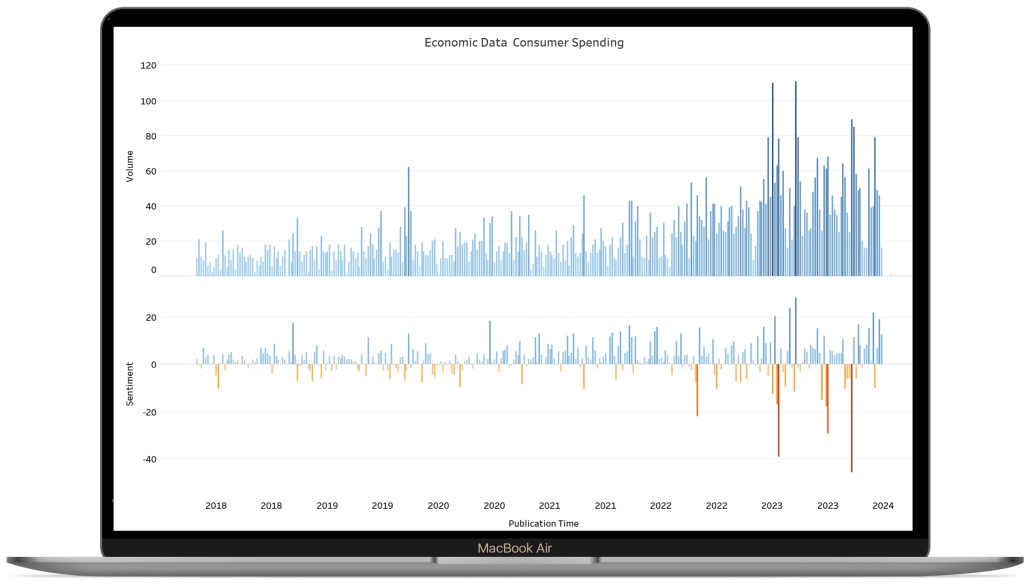
Above: Permutable AI’s consumer spending dataset
REQUEST FREE TRIAL OF CONSUMER SPENDING INTELLIGENCE
Looking ahead, several predictions can be made for consumer spending. Firstly, the shift towards online shopping and e-commerce is expected to continue, even as physical stores reopen. Consumers have become accustomed to the convenience and wider product selection offered by online platforms. Secondly, there will likely be a sustained focus on health and wellness, with increased spending on products and services related to personal well-being. Finally, consumers are likely to prioritize experiences over material possessions, leading to increased spending on travel, dining out, and entertainment.
Technology plays a pivotal role in shaping consumer spending trends. From personalized marketing campaigns to AI-powered chatbots, businesses are leveraging technology to understand consumer needs and provide tailored experiences. The use of data analytics and artificial intelligence enables businesses to gain insights into consumer behaviour and make informed decisions. Additionally, emerging technologies such as virtual reality and augmented reality have the potential to revolutionize the way consumers shop and interact with brands.
To adapt to the new normal, businesses need to embrace certain strategies. Firstly, they must invest in their online presence and optimize the user experience of their websites and mobile apps. This includes ensuring fast loading times, intuitive navigation, and secure payment options. Secondly, businesses should focus on building trust and transparency with consumers by clearly communicating safety measures and social responsibility initiatives. Lastly, businesses need to be agile and responsive to changing consumer preferences, constantly innovating their products and services to meet evolving needs.
Several businesses have successfully adapted to the new consumer spending trends including:
Amazon: Amazon‘s e-commerce platform remains one of the most popular online marketplaces, with a vast selection of products and fast shipping options. Its Prime membership program, which offers benefits such as free two-day shipping and streaming services, continues to attract millions of subscribers.
Netflix: As a leading streaming service, Netflix continues to dominate the entertainment industry with its extensive library of movies, TV shows, and original content. Its subscription-based model and personalized recommendations keep users engaged and coming back for more.
Walmart: As one of the largest retailers in the world, Walmart has successfully adapted to changing consumer preferences by expanding its omnichannel offerings and investing in e-commerce capabilities. Its online grocery pickup and delivery services, along with initiatives like Walmart+, cater to the evolving needs of today’s shoppers.
Boohoo: Despite facing controversies related to labour practices and sustainability, Boohoo remains a prominent player in the UK’s online fashion retail sector. Its affordable clothing lines and frequent product launches appeal to budget-conscious shoppers looking for trendy styles and fast turnaround times. Boohoo’s strong digital presence and social media marketing strategies have helped it maintain its popularity among young consumers.
Tesco: The leading UK supermarket chain, has successfully navigated the shifting consumer landscape post-COVID-19 by adapting its strategies to meet evolving consumer needs. Embracing the surge in online shopping, Tesco expanded its online grocery services, offering home delivery and Click & Collect options, while also increasing delivery slot availability to accommodate high demand and diversifying its product offerings to include essential items and health-related products, aligning with changing consumer priorities.
Apple: The global technology giant has adapted to new consumer spending trends by leveraging its digital ecosystem and emphasizing product innovation. With the acceleration of remote work and digital connectivity, Apple capitalized on the increased demand for its devices, including iPhones, iPads, and MacBooks, which became essential tools for remote communication and productivity. The company also focused on enhancing its online retail experience, offering convenient purchasing options and virtual customer support.
Understanding consumer spending trends is essential for businesses to gauge market demand, anticipate changes, and tailor their strategies accordingly. Consumer spending intelligence serves as a barometer of economic health and societal preferences, providing valuable insights into consumer behaviour and market dynamics. By analyzing consumer spending patterns, businesses can identify emerging trends, assess competitive threats, and capitalize on new opportunities. Ultimately, consumer spending intelligence empowers businesses to make informed decisions and stay ahead in today’s rapidly evolving marketplace.
The COVID-19 pandemic brought about significant changes in consumer spending trends – the effects of which can still be keenly felt today. The shift towards online shopping, changes in consumer preferences, and the role of technology have reshaped the way businesses operate. To thrive in the new normal, businesses must adapt their strategies and offerings to cater to these evolving trends. By embracing technology, analyzing consumer data, and prioritizing safety and well-being, businesses can position themselves for success in the post-2020 era. It is essential for businesses to stay agile and responsive to consumer needs and embrace the evolution of consumer spending trends to secure their place in the future.
Unlock the power of economic data intelligence with Permutable AI’s comprehensive data feeds offering insights into consumer spending trends from 2018 to the present. Our data intelligence provides in-depth insights into the dynamics behind consumer spending patterns worldwide, enabling you to stay ahead of the curve. By staying informed about shifts in consumer preferences, economic drivers, and sentiment analysis, businesses can make data-driven decisions to foster growth and success in an ever-evolving marketplace.