Seeking the truth in all things: Permutable AI CEO discusses innovative data intelligence on Disruptive LIVE

This month, our Founder and CEO Wilson Chan was down at the Disruptive LIVE studios , home of the latest tech content, where he discussed the innovative work of our company in the realm of data intelligence and our mission of seeking the truth in all things. In the interview, he highlighted Permutable AI’s unique approach seeking the truth in all things by tracking truth events around the world and our pioneering use of transformer models for text summarization and labelling.

During the interview, he talked through our company’s mission to provide accurate and comprehensive data intelligence. “It was great to be able to share our mission at Permutable AI over on Disruptive LIVE, and our dedication to seeking the truth in events from around the globe,” Chan stated. “We discussed how our technology enables us to analyze and verify information across a wide range of themes, including politics, war, weather, and the economic climate.”

Seeking the truth in all things: Truth events and data intelligence

During the interview, Chan explained the concept of “truth events,” which are critical incidents or themes that Permutable AI monitors across different countries. These themes encompass a broad spectrum, from political upheavals and conflicts to extreme weather events and economic shifts. By focusing on these truth events, we aim to offer a clearer, unbiased view of global occurrences in our relentless pursuit of seeking the truth in all things.

“We track country-specific themes to provide our users with the most accurate and relevant information,” he explains. “Whether it’s political crisis in one country or an economic downturn in another, our technology helps ensure that the data we present is both comprehensive and precise, and this is something we explored in more detail during the interview.”

Early adoption of transformer models

One of the standout points of the interview was Permutable AI’s early adoption of transformer models for text summarization and labeling. These models, which have revolutionized natural language processing (NLP), allow us to process vast amounts of text data efficiently and accurately.

“We explored how we were among the early adopters of transformer models, which has given us a significant advantage in the field of data intelligence,” Chan noted. “These models enable us to summarize large volumes of text and accurately label content, making it easier for our users to find the information they need.”

Public access to ESG reports

You may not know this, but as part of our commitment to our impact work, at Permutable AI, we provide publicly accessible and free ESG reports. These reports offer valuable insights into the ESG performance of various companies, helping stakeholders make informed decisions but can be very costly to access for the most part. However, at Permutable, our dedication to transparency and accessibility in this area has earned us a high ranking, with the many our ESG reports ranking on the first page of Google searches.  

“We talked about why we decided to put out our ESG reports for free to the public and how it’s a crucial part of our mission to promote transparency and accountability,” Chan shared. “We believe that making this information readily available helps drive positive change and encourages companies to improve their ESG performance.”

Preserving digital data integrity

Another critical aspect of our work at Permutable AI was discussed by Chan – the tracking and retention of historical digital human content from tens of thousands of global websites. This effort is aimed at preserving digital data integrity for future generations, ensuring that valuable information remains accessible and accurate over time.

“We talked about the importance of  preserving digital data integrity and how by retaining historical content from a vast array of sources, we help ensure that this information remains intact and reliable, even as the digital landscape continues to evolve and articles are being constantly removed from the internet.”

Our CEO and Founder’s appearance on Disruptive LIVE highlights how as a small yet mighty start up, we are recognised for our commitment to innovation and vision for the future of data intelligence. By leveraging advanced technologies and focusing on truth events we will continue to set new standards in the industry.

Stay tuned for the release of the interview over on Disruptive LIVE LinkedIn page this summer.


The new normal: The evolution of consumer spending trends post-2020 to 2024

Consumer spending trends have always been a key indicator of economic health and societal preferences. However, the year 2020 brought about unprecedented changes in consumer behaviour due to the COVID-19 pandemic. Here, we explore the evolution of consumer spending trends post-2020 era to 2024. Understanding these trends is crucial for businesses to adapt and thrive in the new normal.

The impact of the COVID-19 pandemic on consumer spending

The COVID-19 pandemic has had a profound impact on consumer spending habits. Lockdowns, social distancing measures, and economic uncertainties forced consumers to rethink their priorities and alter their spending patterns. In the initial stages of the pandemic, panic buying of essential goods was witnessed as consumers stocked up on supplies amid fears of shortages. However, as the situation stabilized, consumer spending shifted towards health and hygiene products, as well as home entertainment and exercise equipment.

The shift to online shopping and e-commerce

One of the most significant changes in consumer spending trends post-2020 is the rapid shift towards online shopping and e-commerce. With brick-and-mortar stores temporarily closing or operating under limited capacity, consumers turned to the convenience and safety of online shopping. This shift has not only impacted traditional retailers but has also created opportunities for businesses to establish or expand their online presence. The rise of contactless payments and doorstep deliveries has further accelerated the growth of e-commerce.

Changes in consumer preferences and priorities

Consumer preferences and priorities have undergone a transformation in the wake of the pandemic. Health and safety have become top priorities for consumers, leading to increased demand for products and services that promote well-being. Organic and sustainable products, as well as home-based fitness solutions, have witnessed a surge in popularity. Additionally, consumers have become more conscious of supporting local businesses and brands that align with their values. As a result, businesses need to adapt their offerings to cater to these changing preferences.
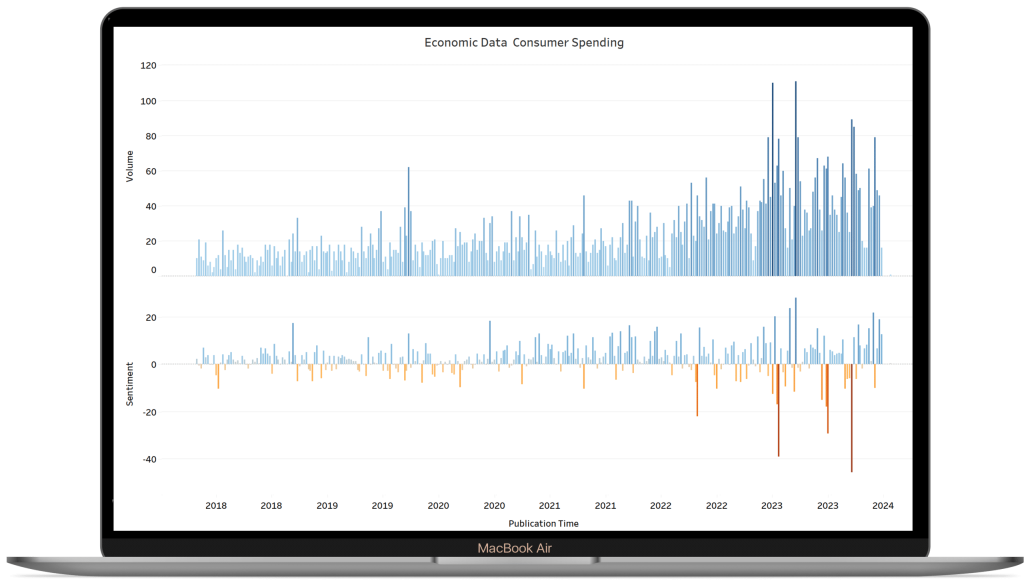
Consumer spending intelligence

Above: Permutable AI’s consumer spending dataset 


REQUEST FREE TRIAL OF CONSUMER SPENDING INTELLIGENCE

Predictions for consumer spending 

Looking ahead, several predictions can be made for consumer spending.  Firstly, the shift towards online shopping and e-commerce is expected to continue, even as physical stores reopen. Consumers have become accustomed to the convenience and wider product selection offered by online platforms. Secondly, there will likely be a sustained focus on health and wellness, with increased spending on products and services related to personal well-being. Finally, consumers are likely to prioritize experiences over material possessions, leading to increased spending on travel, dining out, and entertainment.

The role of technology in shaping consumer spending trends

Technology plays a pivotal role in shaping consumer spending trends. From personalized marketing campaigns to AI-powered chatbots, businesses are leveraging technology to understand consumer needs and provide tailored experiences. The use of data analytics and artificial intelligence enables businesses to gain insights into consumer behaviour and make informed decisions. Additionally, emerging technologies such as virtual reality and augmented reality have the potential to revolutionize the way consumers shop and interact with brands.

Strategies for businesses to adapt to the new normal

To adapt to the new normal, businesses need to embrace certain strategies. Firstly, they must invest in their online presence and optimize the user experience of their websites and mobile apps. This includes ensuring fast loading times, intuitive navigation, and secure payment options. Secondly, businesses should focus on building trust and transparency with consumers by clearly communicating safety measures and social responsibility initiatives. Lastly, businesses need to be agile and responsive to changing consumer preferences, constantly innovating their products and services to meet evolving needs.

Case studies of successful businesses that have embraced the new consumer spending trends

Several businesses have successfully adapted to the new consumer spending trends including:

AmazonAmazon‘s e-commerce platform remains one of the most popular online marketplaces, with a vast selection of products and fast shipping options. Its Prime membership program, which offers benefits such as free two-day shipping and streaming services, continues to attract millions of subscribers.

Netflix: As a leading streaming service, Netflix continues to dominate the entertainment industry with its extensive library of movies, TV shows, and original content. Its subscription-based model and personalized recommendations keep users engaged and coming back for more.

Walmart: As one of the largest retailers in the world, Walmart has successfully adapted to changing consumer preferences by expanding its omnichannel offerings and investing in e-commerce capabilities. Its online grocery pickup and delivery services, along with initiatives like Walmart+, cater to the evolving needs of today’s shoppers.

Boohoo: Despite facing controversies related to labour practices and sustainability, Boohoo remains a prominent player in the UK’s online fashion retail sector. Its affordable clothing lines and frequent product launches appeal to budget-conscious shoppers looking for trendy styles and fast turnaround times. Boohoo’s strong digital presence and social media marketing strategies have helped it maintain its popularity among young consumers.

Tesco: The leading UK supermarket chain, has successfully navigated the shifting consumer landscape post-COVID-19 by adapting its strategies to meet evolving consumer needs. Embracing the surge in online shopping, Tesco expanded its online grocery services, offering home delivery and Click & Collect options, while also increasing delivery slot availability to accommodate high demand and diversifying its product offerings to include essential items and health-related products, aligning with changing consumer priorities. 

Apple: The global technology giant has adapted to new consumer spending trends by leveraging its digital ecosystem and emphasizing product innovation. With the acceleration of remote work and digital connectivity, Apple capitalized on the increased demand for its devices, including iPhones, iPads, and MacBooks, which became essential tools for remote communication and productivity. The company also focused on enhancing its online retail experience, offering convenient purchasing options and virtual customer support. 

The importance of consumer spending intelligence as a barometer 

Understanding consumer spending trends is essential for businesses to gauge market demand, anticipate changes, and tailor their strategies accordingly. Consumer spending intelligence serves as a barometer of economic health and societal preferences, providing valuable insights into consumer behaviour and market dynamics. By analyzing consumer spending patterns, businesses can identify emerging trends, assess competitive threats, and capitalize on new opportunities. Ultimately, consumer spending intelligence empowers businesses to make informed decisions and stay ahead in today’s rapidly evolving marketplace.

Embracing the evolution of consumer spending trends

The COVID-19 pandemic brought about significant changes in consumer spending trends – the effects of which can still be keenly felt today. The shift towards online shopping, changes in consumer preferences, and the role of technology have reshaped the way businesses operate. To thrive in the new normal, businesses must adapt their strategies and offerings to cater to these evolving trends. By embracing technology, analyzing consumer data, and prioritizing safety and well-being, businesses can position themselves for success in the post-2020 era. It is essential for businesses to stay agile and responsive to consumer needs and embrace the evolution of consumer spending trends to secure their place in the future.

Navigating consumer spending trends with Permutable AI’s economic data intelligence

Unlock the power of economic data intelligence with Permutable AI’s comprehensive data feeds offering insights into consumer spending trends from 2018 to the present. Our data intelligence provides in-depth insights into the dynamics behind consumer spending patterns worldwide, enabling you to stay ahead of the curve. By staying informed about shifts in consumer preferences, economic drivers, and sentiment analysis, businesses can make data-driven decisions to foster growth and success in an ever-evolving marketplace.
REQUEST FREE TRIAL OF CONSUMER SPENDING INTELLIGENCE

Permutable AI launches political data intelligence BETA program 2024

Permutable AI is thrilled to announce the launch of our Political Intelligence BETA testing program, marking a significant step towards redefining the landscape of political data intelligence analysis. With a mission to harness the transformative power of AI for positive global change, we are paving the way for cutting-edge innovations in political data intelligence.

An exclusive opportunity 

Our Political Intelligence BETA Program offers an exclusive opportunity for participants to gain complimentary access to our state-of-the-art REAL TIME political data sentiment analysis tool. This two-week testing phase, slated to commence towards the end of May, promises to provide participants with unparalleled insights into global political trends and developments.

As we embark on this journey, we, as a team at Permutable AI, are delighted to express our enthusiasm for the launch of the BETA program. Wilson Chan, Permutable AI CEO comments, “At Permutable AI, we are committed to leveraging advanced AI technology to drive meaningful impact in the field of political data intelligence. “Our Political Intelligence BETA Program represents a significant milestone in our journey towards providing actionable insights for decision-makers worldwide.”

What you can gain

What you gain from joining our Political Data Intelligence BETA Program:

Access to unparalleled unbiased data

Explore real-time sentiment analysis covering economic factors, global elections, conflicts, political tensions, terrorism and national security —all through an impartial and unbiased lens.

Influence and shape strategy

Leverage our objective data to refine and enhance your strategic initiatives with actionable insights, equipping you with invaluable resources for your clients and stakeholders.

Gain competitive advantage

Stay ahead with early access to cutting-edge technology that provides a neutral perspective on critical issues. Gain the strategic advantage by leveraging timely and unbiased insights into global trends and developments.

Early access

Be among the first to experience the advantages of our advanced analytics. Early participants in our BETA Program gain unique insights that are not yet available to the broader market, providing an early mover advantage in strategic decision-making.

First mover advantage in political data intelligence 

Talya Stone, our CMO, emphasizes the value of the program for participants, stating, “By participating in our BETA Program, individuals and organizations will have early access to cutting-edge technology that offers a neutral perspective on critical political issues. This early mover advantage can significantly enhance strategic decision-making and provide a competitive edge in today’s complex geopolitical landscape.”

Participants in the Political Intelligence BETA Program will gain access to unbiased real-time sentiment analysis covering economic factors, global elections, conflicts, political tensions, terrorism and national security. Our aim, as a team, is to empower participants to influence and shape strategic initiatives with actionable insights, ultimately equipping them with invaluable resources for their clients and stakeholders.

Learn more about our Political Intelligence BETA Program and sign up for early access.


FIND OUR MORE

Governance in pharmaceutical industry: Permutable AI reveals worst perceived pharmaceutical companies for governance in 2024

The pharmaceutical sector is currently navigating through some of its most challenging times, exacerbated recently by a tragic incident involving a young patient and Pfizer’s experimental therapy. As regulators tighten their oversight, we at Permutable AI are here to shed light on the governance challenges within the industry, emphasizing the importance of governance in the pharmaceutical industry.

Our analysis perceptions around of governance in pharmaceutical industry

Using state-of-the-art sentiment analysis, we’ve pinpointed which pharmaceutical companies face the greatest challenges in governance in the pharmaceutical industry, as perceived by the public. Here, we take a closer look at what our data intelligence reveals.

Key insights from our analysis:

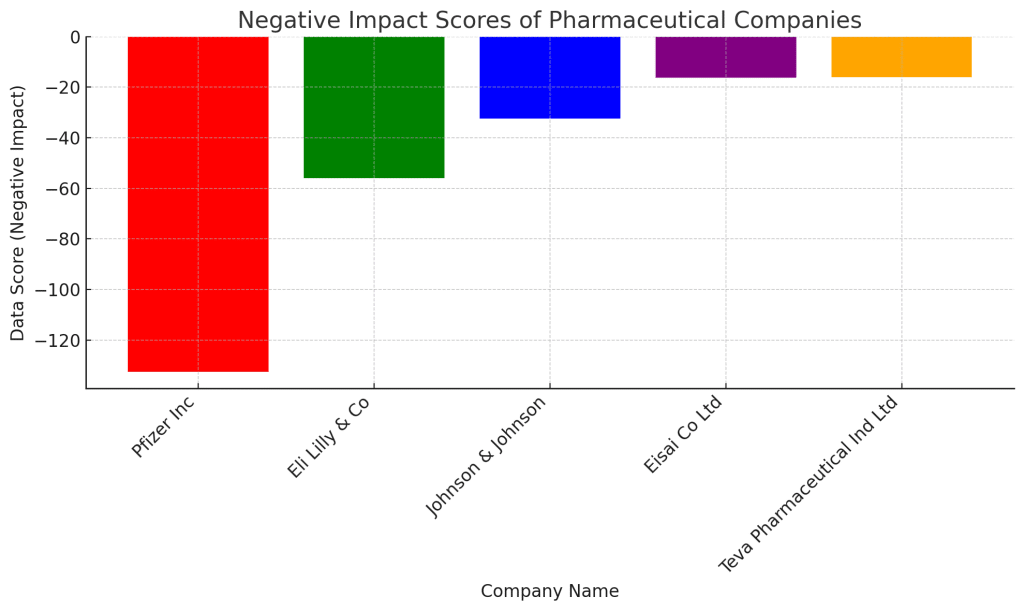
  • Pfizer: Demonstrates the most significant negative perception with an overall score of -132.54, highlighting issues related to governance in the pharmaceutical industry.
  • Eli Lilly: Faces serious challenges, reflected in a score of -56.01, underscoring its struggles with governance in the pharmaceutical industry.
  • Johnson & Johnson: Also struggles with issues, evident from a score of -32.47, which points to significant governance concerns.

Detailed sentiment analysis results:

Here’s a deeper dive into the specifics of our findings, highlighting the sentiment across different companies and how it relates to governance in the pharmaceutical industry.

Rank Company Name Average Sentiment Positive Datapoints Negative Datapoints Overall Score
1 Pfizer -0.18 308 445 -132.54
2 Eli Lilly -0.29 70 126 -56.01
3 Johnson & Johnson -0.22 56 89 -32.47
4 Eisai -0.35 19 31 -16.16
5 Teva Pharmaceuticals -0.13 53 69 -15.94

Governance in pharmaceutical industry: Worst perceived companies Pfizer, Eli Lilly, Johnson & Johnson, Eisai and Teva Pharmaceuticals

PURCHASE DATASET/REQUEST CUSTOM REPORT

The role of data in navigating market sentiment

In an era where data is king, our daily analysis of over half a million sources enables us to capture the pulse of global sentiment. This data is crucial for companies to anticipate changes, manage risks, and strategize proactively, particularly in this case – understanding governance in the pharmaceutical industry.

Insights from our leadership

Wilson Chan, CEO: “These recent developments highlight the significant governance challenges within the pharmaceutical industry. Our technology is crucial for understanding and reacting to public sentiment effectively, especially concerning governance in the pharmaceutical industry.”

Talya Stone, CMO: “The current environment demands transparency and ethical conduct. Our data is a powerful ally for industry leaders looking to foster trust and uphold high standards, particularly in governance in the pharmaceutical industry. At Permutable AI, we are committed to equipping our clients with the insights needed for sound decision-making.”

Explore deeper insights with our custom reports and data sets

Are you ready to dive deeper into governance in the pharmaceutical industry? At Permutable AI, we offer comprehensive custom reports and detailed data sets tailored to meet your specific needs. Enhance your strategic decisions with precise, data-driven insights that position you ahead in a competitive market. To purchase our data sets or request a custom report, please contact us today and let us empower your decisions with unmatched clarity and foresight.


PURCHASE DATASET/REQUEST CUSTOM REPORT

How data intelligence serves as a powerful political risk barometer

In today’s fast-paced and interconnected world, politics plays a crucial role in shaping the global landscape. Understanding and assessing political risk has become essential for businesses, investors, and policymakers alike. This is where data intelligence and the collection, analysis and interpreting of vast amounts of data – provide invaluable insights for informed decision-making. In the realm of politics, data intelligence serves as a powerful tool for assessing and predicting political risks.

Political risk assessment involves evaluating the potential impact of political factors on various aspects such as investments, operations, and market conditions. It helps businesses and investors identify and mitigate potential risks, thereby safeguarding their interests. Traditionally, political risk assessment relied on subjective analysis and expert opinions. However, with the advent of geopolitical data intelligence, a more data-driven and objective approach has emerged.

The importance of political risk assessment

Political risk assessment is crucial for businesses and investors operating in today’s globalized economy. Political factors such as changes in government policies, social unrest, and geopolitical tensions can significantly impact business operations and investments. Failing to anticipate and mitigate these risks can lead to financial losses and reputational damage. Therefore, a comprehensive understanding of political risks is vital for making informed decisions and developing effective risk management strategies.

Data intelligence plays a pivotal role in political risk assessment by providing a wealth of information and insights. By analysing various data sources such as news articles, social media posts, economic indicators, and historical data, data intelligence enables analysts to identify trends, patterns, and potential risks. It empowers decision-makers with actionable intelligence, helping them navigate the complex and volatile political landscape.

How data intelligence serves as a powerful political risk barometer

Data intelligence serves as a powerful political risk barometer by providing real-time and comprehensive insights into political dynamics. It enables analysts to monitor and assess political risks on an ongoing basis, allowing for timely responses and proactive risk management. By collecting and analysing vast amounts of data, data intelligence platforms can identify emerging risks, track political developments, and predict potential outcomes.

One of the key advantages of data intelligence in political risk assessment is its ability to provide a holistic view of the political landscape. It aggregates data from various sources and analyzes it using advanced algorithms and machine learning techniques. This multidimensional approach helps in uncovering hidden patterns, correlations, and interdependencies that may not be apparent through traditional analysis methods. As a result, decision-makers can gain a more nuanced understanding of political risks and make informed decisions based on data-driven insights.

The use of big data in political risk analysis

The use of big data has revolutionized political risk analysis. Big data refers to the vast volume, velocity, and variety of data generated from various sources such as social media, news articles, government reports, and financial data. Analysing big data allows for a more comprehensive and dynamic assessment of political risks.

Big data analysis in political risk assessment involves collecting and processing massive amounts of data in real-time or near real-time. Advanced technologies such as natural language processing, sentiment analysis, and network analysis are used to extract valuable insights from unstructured data sources. These insights can then be used to identify emerging risks, assess public sentiment, and predict political outcomes.

Key indicators and metrics for political risk assessment

When it comes to political risk assessment, identifying key indicators and metrics is crucial. These indicators help in monitoring and evaluating the political landscape, enabling analysts to assess the potential risks and their impact. Some of the key indicators and metrics used in political risk assessment include:

  1. Economic indicators: Economic factors such as GDP growth, inflation rates, and unemployment rates can provide insights into the stability and performance of a country’s economy. Changes in these indicators can indicate potential political risks.

  2. Social indicators: Social factors such as social unrest, protests, and public sentiment can signal underlying political tensions. Monitoring social indicators helps in assessing the level of political stability and the potential for social upheaval.

  3. Regulatory indicators: Regulatory factors such as changes in government policies, regulations, and legal frameworks can have a significant impact on businesses and investments. Tracking regulatory indicators helps in identifying potential risks and adapting to changing political environments.

  4. Geopolitical indicators: Geopolitical factors such as international conflicts, diplomatic relations, and trade policies can affect the political stability of a country. Analysing geopolitical indicators helps in understanding the potential risks arising from global events and their impact on the local political landscape.

By monitoring and analysing these key indicators and metrics, analysts can assess the political risks and their potential impact on businesses and investments.

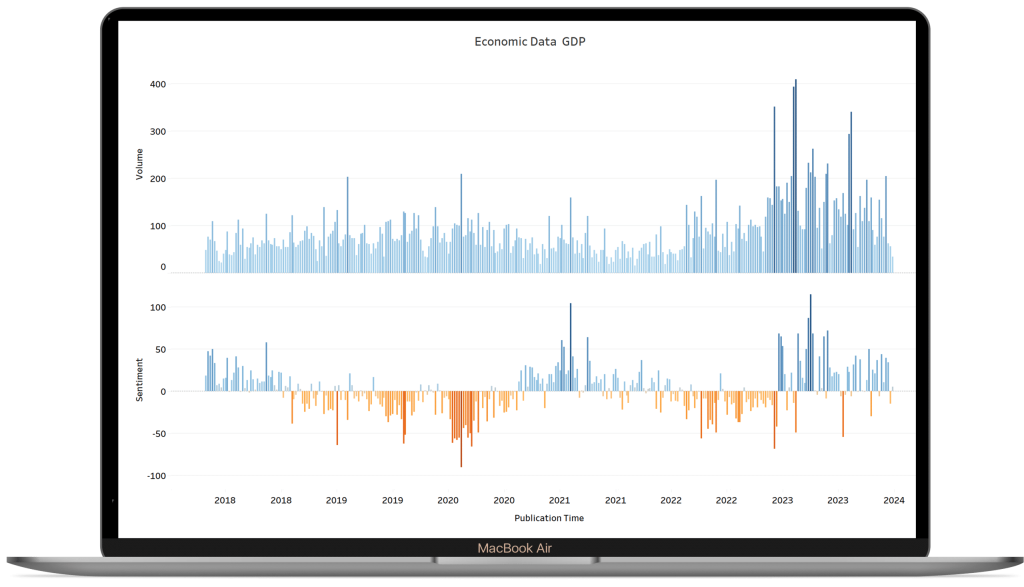
GDP data intelligence

Above: Our economic news sentiment data intelligence


REQUEST FREE TRIAL

Case studies: Examples of data intelligence in political risk analysis

To understand the practical application of data intelligence in political risk analysis, let’s explore some case studies:

  1. Brexit: The referendum on the United Kingdom’s membership in the European Union was a significant political event with far-reaching implications. Data intelligence helped analysts track public sentiment, media coverage, and economic indicators to assess the potential risks and outcomes of Brexit. This enabled businesses to develop contingency plans and adapt to the changing political landscape.

  2. US Presidential Election: Data intelligence played a crucial role in analysing and predicting the outcome of the US Presidential Election. By analysing news articles, polling data, and social media conversations data intelligence providers accurately predicted the election results. This information helped businesses and investors anticipate potential policy changes and their impact on the economy.

These case studies demonstrate the power of data intelligence in political risk analysis and its ability to provide valuable insights for decision-making.

Challenges and limitations of using data intelligence for political risk assessment

While data intelligence offers significant advantages in political risk assessment, it is not without its challenges and limitations. Some of the key challenges include:

  1. Data quality and reliability: The accuracy and reliability of data are crucial for meaningful analysis. Data from various sources may vary in quality, relevance, and bias. Ensuring data quality and addressing biases are essential for obtaining accurate insights.

  2. Data privacy and security: Data intelligence involves collecting and analysing vast amounts of data, raising concerns about privacy and security. Safeguarding sensitive information and complying with data protection regulations are essential to maintain trust and credibility.

  3. Complexity and interpretation: Analysing large volumes of data can be complex and challenging. Interpreting the results and extracting meaningful insights require expertise in data analysis and domain knowledge. Ensuring the right skills and expertise are available is crucial for effective data intelligence.

  4. Unforeseen events and black swans: Data intelligence relies on historical data and patterns to predict future outcomes. However, unforeseen events and black swan events, such as natural disasters or political crises, can significantly impact political risks. Accounting for these uncertainties is a challenge in data-driven political risk assessment.

Despite these challenges, data intelligence continues to evolve and improve, offering valuable insights for political risk assessment.

The future of data intelligence in political risk analysis

The future of data intelligence in political risk analysis looks promising. With advancements in technology, such as artificial intelligence and machine learning, data intelligence platforms are becoming more sophisticated and powerful. These platforms can process larger volumes of data, analyze complex patterns, and provide more accurate predictions.

Furthermore, the integration of various data sources, such as satellite imagery, internet of things (IoT) data, and financial data, will enhance the capabilities of data intelligence in political risk analysis. This integration will provide a more holistic view of political risks and enable decision-makers to make more informed and proactive decisions.

As data intelligence continues to evolve, it will become an indispensable tool for businesses, investors, and policymakers in navigating the complex and uncertain world of politics.

Permutable’s political data intelligence: Tracking global sentiment

Permutable AI’s data feeds provide a deep understanding of global political dynamics by providing real-time insights into sentiment around elections and tensions in every country worldwide. Our innovative data feed aggregates and analyses data from diverse sources across 5000 sources and 500,000 articles across 120 countries daily to offer a comprehensive and unbiased view of the political landscape.

Election monitoring

Our data feeds provide a real-time overview of elections across the globe, offering valuable insights into public sentiment, voter behaviour, information on key electoral issues, and potential outcomes. This enables stakeholders, including businesses, investors, and policymakers, to anticipate political shifts and adapt their strategies accordingly.

Global tensions analysis

In addition to election monitoring, our data intelligence tracks geopolitical tensions in every country, helping stakeholders navigate complex international relations, identifying emerging conflicts, evaluating their severity, and assessing their potential impact on global stability. This allows decision-makers to proactively address geopolitical risks and safeguard their interests.

Unbiased insights

One of the key strengths of Permutable’s data intelligence is its commitment to providing unbiased insights. By leveraging advanced algorithms and machine learning techniques, the platform analyses vast amounts of data without bias or prejudice. This ensures that stakeholders receive accurate, objective information, free from subjective interpretation or manipulation. As a result, decision-makers can make informed choices based on reliable data, enhancing their ability to navigate the complex and rapidly evolving political landscape.

Complete view of global politics

By combining election monitoring and global tensions analysis, Permutable’s data intelligence feeds offer a comprehensive view of global politics. Whether it’s tracking electoral campaigns in emerging democracies or monitoring diplomatic tensions between major powers, the platform provides stakeholders with the information they need to understand and respond to political developments worldwide. This holistic approach enables businesses, investors, and policymakers to make strategic decisions with confidence, even in the face of uncertainty and volatility.

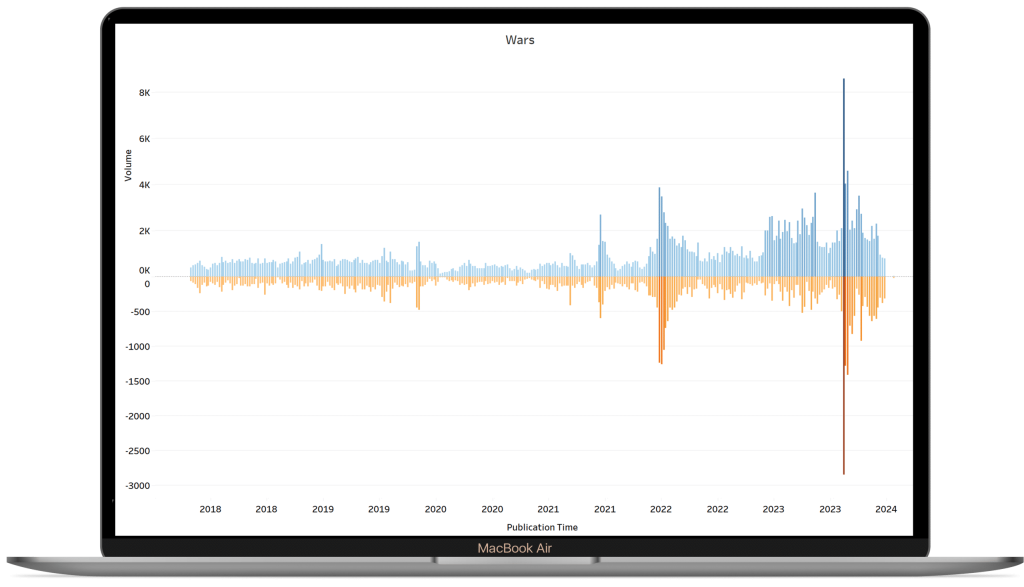
global wars data intelligence

REQUEST FREE TRIAL

Above: Our Global Conflict news sentiment dataset

Data intelligence as a political risk barometer: Final thoughts

Data intelligence has emerged as a powerful tool in political risk assessment, providing valuable insights into the complex and volatile world of politics. By analysing vast amounts of data, data intelligence platforms enable decision-makers to assess, monitor, and predict political risks. Despite its challenges and limitations, data intelligence continues to evolve and improve, offering more accurate and comprehensive insights for political risk analysis.

As businesses, investors, and policymakers navigate the global landscape, harnessing the power of data intelligence will be crucial for making informed decisions and managing political risks effectively. By unlocking the insights hidden in data, data intelligence serves as a powerful political risk barometer, enabling proactive risk management and safeguarding interests.

Find out more

Ready to harness the power of Permutable’s data intelligence for determining political risk? Whether you’re seeking real-time insights into global sentiment around elections, tracking geopolitical tensions, or exploring our comprehensive data feeds, we’re here to help. To find out more about our data intelligence feeds and how it can benefit your organisation visit our dedicated data intelligence hub or request a free trial below.


REQUEST FREE TRIAL

Join our Political Intelligence BETA Testing Program

political data intelligence

.Unlock unparalleled insights into global political trends and developments with Permutable AI’s Political Intelligence BETA Program. Gain complimentary access to our state-of-the-art REAL TIME political data sentiment analysis tool and stay ahead of the competition. Join now to explore unbiased data, influence strategic initiatives, and gain a competitive advantage in today’s complex geopolitical landscape. Sign up today for early access and be among the first to leverage the power of our advanced analytics. Don’t miss this exclusive opportunity to shape the future of political intelligence. 


FIND OUR MORE

Revolutionizing corporate strategy: Harnessing AI and data intelligence for competitive advantage

In an era defined by rapid technological advancements, the landscape of business strategy is undergoing a profound transformation. Companies are no longer relying solely on traditional methods of decision-making, but are turning to the power of AI and data intelligence to gain a competitive edge. This shift marks a pivotal moment in the evolution of corporate strategy, as organizations embrace data-driven insights to steer their direction and seize opportunities like never before.

The Dawn of Data-Driven Strategy 

Historically, corporate strategies were often formulated based on gut feelings, historical trends, and limited market analysis. However, the arrival of AI has disrupted this approach by enabling companies to tap into a wealth of data intelligence – structured and unstructured – and derive actionable insights from it. By utilizing AI algorithms, businesses can process vast amounts of information in real time, identify hidden patterns, and predict future trends with unprecedented accuracy.

At the core of this transformation lies company intelligence – the amalgamation of internal and external data that paints a comprehensive picture of an organization’s performance, market trends, customer preferences, and competitors’ movements. This wealth of information empowers decision-makers to make informed choices, optimize operations, and adjust strategies swiftly in response to changing circumstances.

AI’s Role in Strategic Formulation

AI’s role in revolutionizing corporate strategy extends beyond data intelligence and analysis. It has the capacity to process complex scenarios, simulate potential outcomes, and recommend strategies based on historical data and predictive models. This iterative process allows organizations to explore various what-if scenarios before committing resources, thus minimizing risks and maximizing returns.

Consider the example of a retail company such as Walmart aiming to expand its footprint. By leveraging AI and company intelligence, it can analyze demographic data, local market conditions, and consumer behavior to identify optimal locations for new stores. Furthermore, AI can predict potential obstacles and recommend strategies to mitigate them, fostering a more agile and adaptive approach to expansion.

Real-Time Insights for Proactive Decision-Making

One of the most significant advantages of integrating AI and data intelligence into corporate strategy lies in the ability to make decisions in real time. Traditionally, strategic decisions were based on historical data and periodic reports, which often resulted in delayed responses to market shifts. AI-driven insights, on the other hand, provide an up-to-the-minute view of an organization’s performance, allowing leaders to pivot quickly in response to emerging opportunities or threats.

For instance, a technology company introducing a new product can use AI to monitor social media sentiment, customer reviews, and competitor activities in real time. If negative feedback begins to surface, the company can swiftly adjust its marketing strategy or product features to address concerns before they escalate.

Competitive Advantage Through Personalization

In today’s highly competitive business landscape, customer experience is a key differentiator. AI and data intelligence enable organizations to personalize their strategies by gaining a deep understanding of individual customer preferences and behaviours. By analyzing past interactions, purchase history, and online activities, companies can tailor their offerings, marketing messages, and customer service to create a seamless and engaging experience.

E-commerce giants like Amazon and Netflix have been at the forefront of this approach. These companies leverage AI algorithms to recommend products and content based on users’ past behaviors, effectively increasing cross-selling opportunities and customer satisfaction.

Ethical Considerations and Human Oversight

While the potential benefits of AI and data intelligence for corporate strategy are undeniable, ethical considerations are paramount. As AI algorithms become more complex and autonomous, there is a need to ensure that decisions align with the organization’s values and adhere to regulatory guidelines. Human oversight remains essential to validate AI-generated insights, prevent biases, and make ethical judgments when necessary.

Permutable AI’s Work in This Area

Permutable AI stands at the forefront of the AI revolution, bringing cutting-edge technology to the heart of corporate strategy formulation. By amalgamating AI algorithms, machine learning techniques, and advanced data analytics, Permutable AI unlocks the potential of vast datasets to provide organizations with actionable market insights.

At the core of Permutable AI’s offering is the ability to sift through enormous volumes of data, both structured and unstructured, to extract meaningful patterns and trends. Through our intelligent algorithms, we can synthesize complex market data, consumer behaviour patterns, and industry trends, distilling them into actionable intelligence that decision-makers can use to fine-tune their strategies.

By aggregating real-time data from diverse sources, such as social media, industry reports, and economic indicators, we are able to paint a comprehensive picture of the business landscape. This data-driven approach empowers decision-makers to spot emerging trends, identify untapped market opportunities, and predict shifts in consumer preferences with an unprecedented level of accuracy.

The Path Forward: Embracing the AI-Driven Future

The convergence of AI and company intelligence is rapidly reshaping the landscape of corporate strategy. As organizations strive for competitive advantage, they must be prepared to adapt and evolve. To harness the full potential of AI, companies should focus on the following:

Invest in Robust Data Infrastructure

Establishing a sturdy data infrastructure is the cornerstone of effective AI integration. This infrastructure should facilitate the seamless collection, storage, and analysis of both internal and external data sources. A well-structured data ecosystem not only ensures data quality but also enables AI algorithms to extract meaningful insights that can drive strategic decisions.

Develop AI Expertise

Building a team of AI experts is essential. These experts should possess the skills and knowledge required to develop and deploy advanced AI algorithms tailored to the organization’s unique requirements. This team should continuously keep abreast of the latest AI advancements and be capable of translating technical AI concepts into actionable strategies.

Embrace a Culture of Change

In the AI-driven corporate world, change is constant. Companies should nurture a culture of innovation and adaptability. Employees should be encouraged to embrace AI-driven insights and be open to making strategic adjustments based on data-driven recommendations. A culture that values experimentation and learning from failures is essential to staying competitive in the evolving landscape.

Implement Ethical Frameworks

With great power comes great responsibility. As AI becomes increasingly integrated into corporate strategy, ethical considerations are paramount. Organizations should establish clear ethical frameworks that guide the use of AI technology. These frameworks should ensure responsible decision-making, prevent biases in AI algorithms, and address potential societal implications of AI deployment.

Strategic Alignment

AI should be aligned with the broader strategic goals of the organization. It’s crucial to identify areas where AI can add value, whether it’s in enhancing customer experiences, optimizing operations, or driving innovation. Ensuring that AI initiatives are closely tied to the company’s vision and objectives is vital for success.

Data Privacy and Security

As companies collect and process vast amounts of data for AI, they must also prioritize data privacy and security. Compliance with data protection regulations, robust cybersecurity measures, and responsible data handling practices are essential to build trust with customers and stakeholders.

Continuous Learning and Adaptation

The AI landscape is in constant flux. To stay competitive, companies should invest in ongoing training and development for their AI teams and the broader workforce. This enables them to stay at the forefront of AI advancements and adapt to changing market conditions.

Collaboration and Partnerships:

Collaboration with external partners, such as AI technology vendors like Permutable, research institutions, and industry peers, can provide valuable insights and resources. These collaborations can help organizations leverage AI technologies more effectively and stay informed about industry trends.

The integration of AI and data intelligence into corporate strategy represents a pivotal moment in business history. By harnessing the power of data-driven insights, organizations can make informed decisions, adapt swiftly to changing market dynamics, and gain a competitive advantage that propels them into the future. As we stand on the brink of a new era, it is clear that the companies that embrace AI’s potential will be the ones to define the next chapter in the evolution of corporate strategy. With a strategic blend of AI and human expertise, businesses can navigate the complexities of the modern landscape and emerge as trailblazers in their respective industries.

Join Permutable AI on the Path to Data-Driven Excellence

Seize the opportunity to shape the future of your organization’s strategy. Join Permutable AI in embracing the AI-driven future and redefine what’s possible in your industry. Contact us today to learn more about how we can help you achieve unparalleled success in the evolving landscape of corporate strategy. The future is data-driven, and Permutable AI is your key to unlocking its full potential. Get in touch below.