Why is trading hard? We reveal the reasons

Here’s a hard truth: trading, in our view, represents one of the most challenging activities in the financial sector. Initially, the uninitiated among us may view trading as a straightforward path to wealth. But while the mechanics of placing trades might seem simple, the reality is that trading is hard in ways that most never anticipate. Why is trading hard? Here, we lay down the reasons warts and all in this article:

Why is trading hard? The information overload challenge

In stark contrast to popular belief, trading isn’t just about following price charts. So what is it actually about then? Each day, traders must process information from a seemingly endless number of news sources. To put this in context, our Trading Co-Pilot processes over 120,000 sources, across 20,000 news articles EVERY HOUR – something that only a team of analysts working 24/7 could possibly dream of achieving. The crisis in information management means that answering the question “why is trading hard” starts with understanding this overwhelming data deluge and the challenges it presents. 

Why is trading hard: Real-time complexity

All of which suggests a deeper challenge: at any given moment, there could be in the region of 20-50 significant events affecting an asset’s price. As with most things in markets, context is crucial. For example, interpreting whether geopolitical events like Israel’s response to Iran will impact Crude prices requires deep understanding of multiple factors. This method applies across all asset classes, demonstrating why trading is hard even for seasoned professionals.

Why is trading hard: The human element

And so then, what about a trader’s potential to beat the market? Here’s another inconvenient truth – the majority of traders fail to outperform market indices. Much of that is due to the cognitive demands of processing vast quantities of information while managing emotional responses to market movements. This isn’t just because of psychological factors – it’s the same story on dealing with conflicting data points and market narratives.

The data processing paradox

The loss of trust in traditional trading methods isn’t surprising when you consider the scale of modern market complexity. Today, even the most experienced traders can face what we call the “analysis paralysis paradox” – where more information often leads to poorer decision-making. You get a sense that something’s fundamentally broken when entire teams of analysts and economists struggle to process market events effectively. 

As with most things in trading, the solution isn’t necessarily more data – it’s better data processing. What we’ve found is that successful traders don’t just need access to information; they need intelligent systems that can contextualise and prioritise it. This means understanding which 20-50 events truly matter among the thousands that don’t and are just noise, all in real-time.

Beyond traditional analysis

Just as notably, the evolving nature of market dynamics has transformed what effective trading looks like. Initially, technical and fundamental analysis seemed sufficient. But look how markets have changed – in this scenario of interconnected global events, traditional approaches often fall short. For now, the most successful traders are those who can harness both human insight and technological capabilities. The concern for people relying solely on conventional methods is that they’re fighting yesterday’s battles with outdated tools. 

All of these points highlight why modern trading requires a fundamentally different approach. That sounds daunting, but it’s precisely why we’ve developed our Trading Co-Pilot to bridge this gap, transforming vast datasets into actionable insights. These remarkable patterns we’ve observed in successful trading operations all point to one conclusion: the future belongs to those who can effectively combine human expertise with AI-powered analysis.

The solution 

And so, despite this complexity, there’s hope. The keys to managing these challenges lie in combining human expertise with advanced technology. And yet perhaps the most exciting development is how AI can now surface critical events as they happen, providing contextual insights into potential price impacts. What we’ve found is that unlocking the potential means leveraging AI to process billions of historical events and real-time data points. The result of this is our Trading Co-Pilot which scans:

  • 120,000 sources daily
  • 1.2 billion historical events
  • 10 years of complete news archives

As long as we rely on human analysis alone, the fundamental reasons why trading is hard will persist. Which brings us the solution: our Trading Co-Pilot, which provides comprehensive, real-time market analysis through an intuitive interface, transforming complex data into actionable insights. The loss of trust in traditional analysis methods has created an opportunity for innovation. As markets grow more complex, the question isn’t whether to embrace AI-powered solutions – it’s how quickly you can integrate them into your trading strategy.

Want to transform your trading process? Discover how our AI-powered Trading Co-Pilot and newly release API for commodities trading can help you navigate market complexity with confidence:

  • Email enquiries@permutable.ai for immediate access
  • Complete the form below for a personalised demo
  • Experience the power of real-time, contextual market insights

Request a demo


Decoding the DNA of S&P Global stock in 2024/2025: Market-moving factors

First, let’s get the obvious point out of of the way as we start this article. For the uninitiated among us, when we refer to S&P Global stock we’re referring to the S&P Global 100 Index not as a single stock, but a measure of the performance of multinational, blue chip companies of major importance in the global equity markets. Now that we’ve established that, the next important point is that there is no doubting that understanding the factors affecting this index is crucial for investors and analysts alike. You could even go so far as to make the argument that this index serves as a barometer for the health of the global economy and the performance of leading international corporations.

In this article, using recent insights from our Trading Co-Pilot, we take a look at the myriad of factors affecting S&P Global stock. So let’s get started. 

Factors impacting S&P Global stock

Factors affecting S&P Global stock

How monetary policy affects S&P Global stock

The hardest part is disentangling the complex web of monetary policy influences on the S&P Global 100 Index. Our Trading Co-Pilot data reveals a striking pattern of index fluctuations corresponding to Federal Reserve actions and speculations in recent times. There are things that can be done to anticipate these movements, such as closely monitoring central bank statements and economic indicators across major economies. But the game changer will be the ability to accurately predict policy shifts before they occur in multiple jurisdictions.

For the avoidance of doubt, let’s examine the cluster of events in mid-September, where we observe multiple instances of “Fed Rate Cut Anticipation” and “Fed Meeting Anticipation”, as highlighted in our chart. These periods often led to increased volatility in the index. And at least let’s debate it: does this hypersensibility to monetary policy make the S&P Global 100 Index more predictable or more volatile?

Then there is the challenge of global monetary policies. The question is: how do rate decisions in Europe, Asia, and emerging markets impact the performance of these multinational corporations? As for the “Global Rate Cuts” event highlighted in our data, you can’t argue with the fact that it preceded a noticeable uptick in the index.

How geopolitical turbulence impacts S&P Global stock

Everywhere you look, geopolitical events are shaping market dynamics. In a way, the S&P Global 100 Index serves as a barometer for global stability, given the international exposure of its constituent companies. It’s true that incidents like the “Iran missile attack on Israel” and subsequent “Middle East tensions” coincided with dips in the index. We can be reasonably confident that such events will continue to influence the index’s performance, given the global nature of the businesses it tracks.

The present outlook for geopolitical stability remains troublesome to say the least. If experience tells us anything, it’s that we must reject the argument being made that geopolitical risks can be easily predicted or mitigated. To reclaim strength in this area, investors must continue to refine their risk assessment models and global intelligence capabilities when analysing the S&P Global 100 Index.

How economic indicators affect S&P Global stock

And we must acknowledge that economic indicators play a pivotal role in the S&P Global 100 Index movements. This is not to say that all indicators carry equal weight. The truth is more complicated, with certain data points like the U.S. jobs report having outsized impacts due to the significant presence of American multinationals in the index. In addition, there are several areas where regional economic performance, particularly in emerging markets, can sway the index’s trajectory.

What is needed is a nuanced understanding of how these indicators interact with various sectors represented in the S&P Global 100 Index. Last but not least, we must consider the dual role of some index constituents as both market participants and market influencers, and how this affects overall index performance.

How technological advances influence S&P Global stock

Imagine too the impact of technological disruption on the future of the S&P Global 100 Index constituents. If narratives shape politics, then technology shapes markets. We live in an age of highly volatile geopolitics and rapid technological advancement. It is our strong belief that the ability of these blue-chip companies to innovate will be a key factor affecting the index’s performance in the coming years.

There are many kinds of technological challenges facing the companies in the index, from AI-driven analytics to blockchain-based financial systems. Some good examples are the rise of alternative data sources and the increasing sophistication of algorithmic trading. The reality of these technological shifts means that the companies in the S&P Global 100 Index must continually evolve to maintain their market positions.

Navigating regulatory waters

There are many very significant challenges in the regulatory landscape for the big hitter companies in the S&P Global 100 Index. But the motivation to overcome these challenges is very strong, given the potential rewards of operating on a global scale. For those that succeed in navigating these complex waters, the benefits can be substantial.

And you’ll hear lots of talk about potential regulatory changes, especially in the wake of financial crises or market disruptions. Everything starts and ends with trust and transparency in global markets. At this point, you might recognise that the role of S&P Global 100 Index constituents in shaping global business practices places them at the heart of these regulatory concerns. But here’s the inconvenient truth: increased regulation can sometimes benefit established players in the index by raising barriers to entry for potential competitors.

Competitive landscape and market trends

It’s a similar story with market trends and sector performance within the S&P Global 100 Index. The biggest flaw in many analyses is focusing solely on broad market movements without considering sector-specific trends. The key principle is to understand how different sectors within the index interact and influence overall performance.

It’s no surprise that events highlighted in our chart like “Retail sell-off September” can have ripple effects on the index, particularly for consumer-focused multinationals. But it’s critical that we also consider long-term trends in various industries, data analytics, and global markets when assessing the factors affecting the S&P Global 100 Index.

Ultimately, the factors affecting the S&P Global stock form a complex ecosystem of monetary policy, geopolitical events, economic indicators, technological disruption, regulatory pressures, and market trends. By closely monitoring these factors and understanding their interplay, investors and analysts can gain not just insights into a single index, but a deeper comprehension of the global financial landscape and the performance of the world’s leading multinational corporations.


Register interest for our Trading Co-Pilot 

Are you ready to embrace the future of trading? Permutable AI’s Trading Co-Pilot, powered by advanced machine learning, provides real-time insights and context-aware strategies. Harness AI to analyse global sentiment and market events, giving your firm the edge with more precise, risk-aware trading decisions. Contact us at enquiries@permutable.ai or via the form below to explore how our Trading Co-Pilot can transform your trading approach.

Your trading is about to take off

Get in touch to register your interest to see how our Trading Co-Pilot can help you make smarter trading decisions, faster. 


Register interest

Disclaimer: The information provided by Permutable AI is for informational purposes only and does not constitute financial advice, investment advice, or a recommendation to buy, sell, or hold any securities. While we strive to provide accurate and up-to-date information, we do not guarantee the completeness, accuracy, or reliability of the data. All investments involve risks, including the loss of principal. Past performance is not indicative of future results. Users are advised to conduct their own independent research and consult with a licensed financial advisor before making any investment decisions. Permutable AI, its affiliates, or its employees shall not be held liable for any losses or damages resulting from reliance on the information provided.

Why is Tesla stock dropping? A lookback at Q4 events

Why is Tesla stock dropping? Let’s start with the obvious: Tesla’s stock has been on a wild ride of late. Our Trading Co-Pilot chart paints a vivid picture of over the past month, with several dramatic dips and recoveries. This striking difference hints at a complex interplay of factors influencing investor sentiment. But what’s really driving these fluctuations? Get our latest thinking in this article with insights from our Trading Co-Pilot.

Why is event Tesla stock dropping – insights from our Trading Co-Pilot

Tesla stock dropping

Geopolitical tensions and market jitters

For starters, the chart highlights a significant sell-off in late September, coinciding with an escalation in geopolitical tensions. The Iran-Israel conflict escalation spooked investors, leading to a broader market tumble. You might say that Tesla, being a high-profile and volatile stock, often amplifies broader market movements. Yet here’s the rub: while geopolitical events certainly play a role, they don’t tell the whole story of Tesla stock dropping. There is also evidence that company-specific factors are at play, which we’ll get into in more detail below.

Product launches and market reception

One thing is clear, the problem isn’t a lack of innovation at Tesla including developments in energy storage and of course, the recent Robotaxi unveiling which failed to impress investors. But we must remember the bigger picture here, which is that Tesla is consistently pushing the boundaries of electric vehicle technology and energy solutions. Nonetheless, the market’s reaction to these announcements has been mixed at best with Tesla stock dropping continues to be the prevailing trend at the moment. This suggests that the market believes that these innovations may not translate into immediate revenue growth or profitability  

Corporate shake-ups and internal challenges

Another bone of contention is the recent resignation of Tesla executives – indicated on our Trading Co-Pilot chart as “Tesla Execs Resign” as a significant event. This internal turbulence could be contributing to investor unease. There is broad consensus that leadership stability is crucial for a company as innovative and disruptive as Tesla. The expectation that top talent might be leaving the company could be weighing heavily on investor confidence.

Macroeconomic factors

Again and again, you can see the same pattern: macroeconomic events having a significant impact on Tesla’s stock price. The US Jobs Report exceeding expectations and a potential Fed Rate Cut initially gave the stock a boost. However, this was followed by concerns about a China slowdown, which likely contributed to Tesla stock dropping once more.

It has now emerged that Tesla’s fortunes are closely tied to both US and Chinese economic health. The catalyst for many of the stock’s movements can be traced back to these broader economic indicators.


Permutable AI Trading Co-Pilot

Competition and market saturation

Little wonder that investors are keeping a close eye on Tesla’s market position. The present state of play in the electric vehicle market is one of increasing competition. While our Trading Co-Pilot chart doesn’t explicitly mention competitors, the overall downward trend in Tesla stock dropping could reflect growing concerns about market saturation and rivalry from both established automakers and new EV startups.

Supply chain and delivery challenges

Now look to where our Trading Co-Pilot highlights “Deliveries Miss Estimates” as a significant event. This is at the core of Tesla’s recent struggles. Achieving its ambitious production and delivery goals is crucial for maintaining investor confidence. This requires a finely tuned supply chain and manufacturing process.

By leveraging its world-class production capabilities, Tesla has historically been able to ramp up deliveries quarter after quarter. However, the recent miss suggests that the company may be facing headwinds in this area.

Investor sentiment and future outlook

So much of the past, what of the future? Insights from our Trading Co-Pilot chart shows several events related to future products and innovations, such as the Robotaxi. These announcements are clearly aimed at shaping investor perceptions of Tesla’s long-term potential, despite investors being less than impressed by the recent unveiling.

However, the continued pattern of Tesla stock dropping suggests that investors may be adopting a “show me” attitude. They’re looking for concrete results rather than future promises. In fact, some say the expectation that Tesla can maintain its astronomical growth rates indefinitely may be waning. Nonetheless, it’s important to note that the company still enjoys a significant market cap and brand loyalty that many competitors envy.

Why is Tesla stock dropping: Final thoughts 

Much has changed since Tesla’s early days as an EV pioneer. The company now faces the challenges of being an industry leader in a rapidly evolving market. The good news is there’s a big wheel moving in the right direction in terms of global EV adoption, but Tesla must navigate carefully to maintain its pole position in face of competition that is fiercely hotting up.

In a bizarre twist, the very success that Tesla has had in popularising electric vehicles has created a more competitive landscape that now challenges its market dominance. This trend has ramped up significantly in recent years with the likes of Nio and Lucid hot on Tesla’s heels.

Beyond the fanfare of product launches and ambitious goals, Tesla must grapple with the realities of production scaling, market competition, and delivering on its promises to maintain investor confidence.

Over the past month, Tesla stock dropping has been the prevailing narrative. But in the fast-paced world of tech and automotive innovation, fortunes can change quickly and it is likely this trend will reverse at any given time. For investors and industry observers alike, Tesla remains a company to watch closely, as its trajectory could well indicate the future direction of the entire electric vehicle market.


AI-driven daily market insights: The powerful role of sentiment analysis in daily market predictions

Today’s fast financial markets need more than standard analysis to stay competitive. AI in financial services is causing a revolution in how investors, analysts, and companies interpret market shifts. Sentiment analysis stands out as one of the most effective tools in this new age—an AI-driven method to analyze text data from different sources to measure public opinion and forecast market trends. This article looks at how sentiment analysis is changing daily market predictions giving investors a big advantage as they navigate the complex world of global finance.

What is sentiment analysis?

Sentiment analysis also known as opinion mining, uses natural language processing (NLP), text analysis, and computational linguistics to find and extract subjective information from text. In financial markets, sentiment analysis looks at news articles social media posts, analyst reports, and other relevant texts to figure out the sentiment or emotional tone—positive, negative, or neutral—toward a specific stock, sector, or market.

This tech lets investors tap into the market’s overall mood giving them a deeper understanding of how different factors might shape market behaviour. By examining huge amounts of unstructured data in real-time, sentiment analysis can provide insights that traditional financial models often miss.

The impact of sentiment analysis on daily market predictions

Daily market movements have many influences such as economic data, corporate earnings, geopolitical events, and investor sentiment. In the past, investors used fundamental and technical analysis to predict these movements. Now, sentiment analysis brings a new angle by capturing the market’s mood, which can signal where the market might go.

Take this example: sentiment analysis spots a jump in negative feelings about a company because of bad news. This could predict a fall in the company’s stock price even before the whole market reacts. On the flip side positive sentiment detected in news stories might point to a possible rise in a stock or sector.

A major benefit of sentiment analysis is its speed in processing data outpacing human capabilities. Markets shift in response to news, and the ability to grasp the mood behind this information can give investors a crucial edge. This matters a lot in today’s market environment where there’s a ton of information and often little time to act on it.

Case studies: How sentiment analysis works in the real world daily market

A few noteworthy examples show how sentiment analysis helps predict markets daily:

  1. The 2020 COVID-19 pandemic: When COVID-19 first hit, sentiment analysis tools spotted growing fear and doubt on social media and news sites. This negative mood lined up with big drops in global markets letting some investors see the downturn coming before regular signs showed up.
  2. Tesla and social media influence: Tesla, with Elon Musk at the helm, has a stock price that reacts to public opinion. Looking at how people feel on social media platforms like Twitter where Musk posts a lot, can hint at short-term changes in Tesla’s stock price. The market often responds to the good or bad reactions to Musk’s tweets.
  3. Brexit and the UK financial markets: The Brexit vote in 2016 caused a lot of doubt in UK markets. Tools that analyze feelings by looking at news and social media chats caught changes in how people and investors felt before the vote. This gave useful insights into how markets might react when they announced the results of the vote.

Why capital markets teams need external intelligence

Traditional risk and trading systems were built for a world where prices reflected information gradually. That world no longer exists. Today, markets react to headlines, policy shifts and geopolitical developments within minutes, often before analysts or risk models have time to respond. By the time volatility rises or correlations break down, the opportunity to act early has already passed.

For market risk teams, this creates a persistent blind spot. VaR, stress testing and scenario models are inherently backward-looking, built on historical relationships that assume the future will resemble the past. But the most material risks facing portfolios today – energy supply shocks, elections, central bank rhetoric, sanctions, regulatory action and corporate events – originate outside the market itself. They start as information, narratives and signals in the real world before they ever show up in prices.

This is why forward-looking intelligence has become essential. Institutions increasingly require a continuous view of what is forming globally, not just what has already happened. External intelligence bridges that gap, transforming the world’s information flow into early warnings that risk and trading teams can act on with confidence.
From dashboards to decision infrastructure

Many sentiment providers stop at visual dashboards or generic scores. While useful for exploration, these tools rarely fit naturally into institutional workflows. Risk and trading teams do not need another screen to monitor; they need signals that integrate directly into the systems they already use.

At Permutable AI our sentiment intelligence is designed as infrastructure rather than software. Our intelligence is delivered as structured, machine-readable data that can feed directly into risk engines, internal models and trading systems. Instead of manually interpreting headlines, teams receive quantifiable indicators that can be incorporated into VaR overlays, stress scenarios, exposure monitoring and systematic strategies.

This shift from qualitative insight to model-ready data is critical. It means intelligence becomes operational, not observational. Signals are no longer something you look at – they are something your systems can act on automatically or flag in real time. For institutions operating at scale, this difference determines whether information is interesting or truly actionable.

How we’re leading the way in daily market sentiment analysis

At Permutable, we’re a leading provider bringing sentiment analysis to daily market forecasts. Our platform uses cutting-edge AI and machine learning systems to examine huge amounts of text data as it comes in giving investors and companies useful insights they can act on. As intelligence can be tailored to your needs letting you zero in on specific sectors, companies, or regions. This personalized approach makes sure the insights you get are spot-on for what you’re after boosting the power of your investment game plan.

On top of real-time sentiment tracking, we provide a look at how sentiment has changed over time. This helps you spot patterns and see how sentiment and market shifts line up. This big-picture view makes our data intelligence a must-have to keep you one step ahead in the always-changing world of finance.
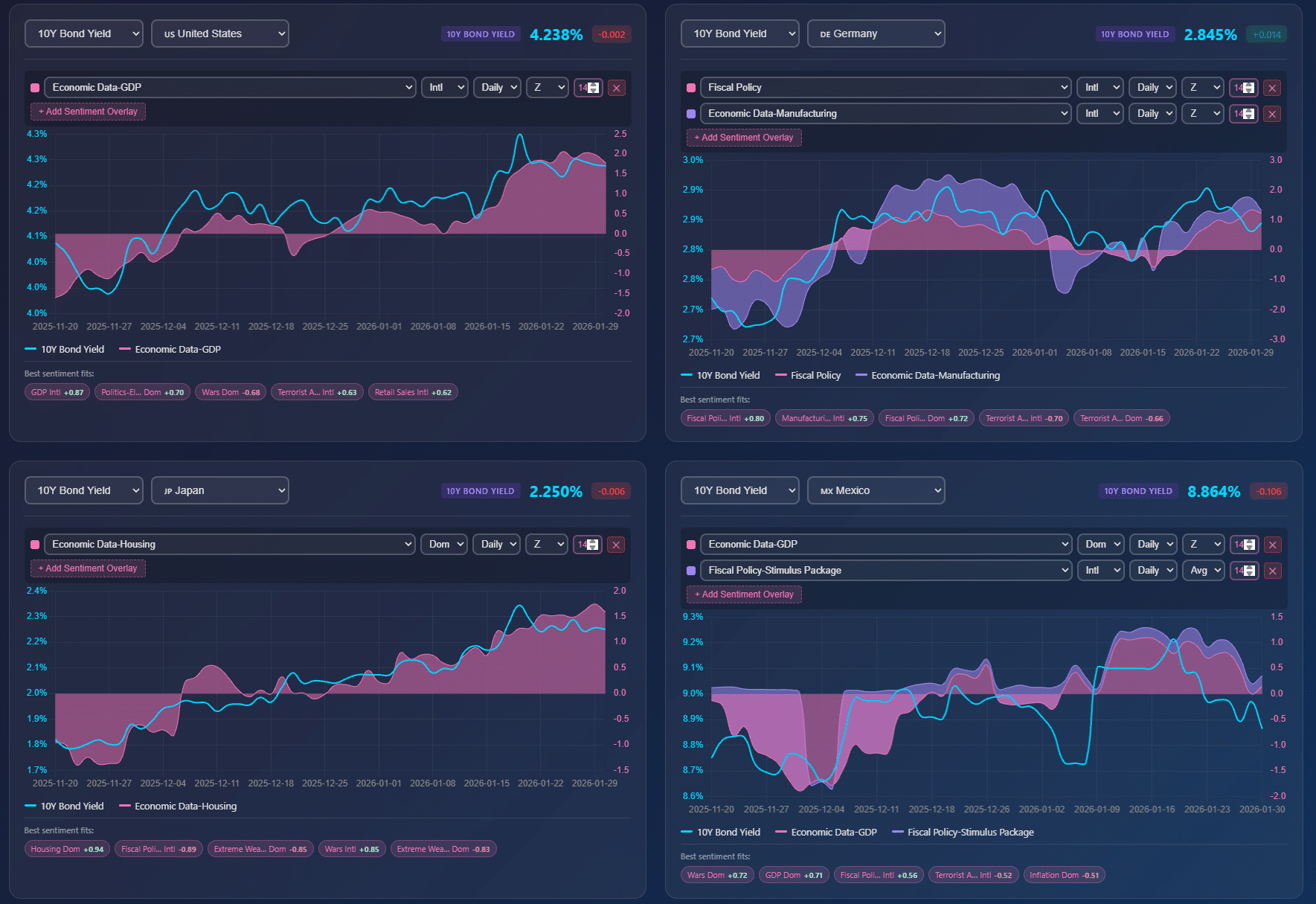
Dashboard showing Permutable AI country-level macro signals and sentiment signals overlaid on 10-year government bond yields across the United States, Germany, Japan, and Mexico, highlighting how real-time economic and policy sentiment anticipates rate moves and regime shifts before traditional indicators.

The future of sentiment analysis in the daily market 

As AI tech keeps getting better, sentiment analysis will play a bigger part in daily markets. With more data popping up every day, the need to and accurately make sense of this info will become even more crucial.

Looking ahead, we can expect sentiment analysis tools to get smarter grasping more complex language and context. This will lead to even more accurate predictions narrowing the gap between what people feel about the market and how it moves.

Also, as sentiment analysis becomes a bigger part of trading algorithms and financial models, it might have a larger impact on automated trading strategies. These changes could make markets more efficient, as predictions based on sentiment help smooth out some of the irrational behaviour that can happen when investors react to news.

Using sentiment analysis for staying ahead of the daily market

Sentiment analysis is causing a revolution in how investors approach the daily market and related predictions. This AI-driven technology gives real-time insights into market sentiment offering a powerful tool to navigate the complexities of global finance. As the daily market becomes more data-driven, those who use sentiment analysis will be better prepared to anticipate and respond to market movements.

At Permutable AI, we want to help our clients get ahead. Our cutting-edge sentiment analysis gives you the insights you need to make smart choices in today’s fast-moving daily market. If you’re an institutional investor, a financial analyst, or a business leader, we can help you use AI to boost your investment strategies.
The power of AI-driven insights in intelligent investing in 2024 and beyond

Artificial Intelligence has rapidly transformed various industries, and the stock market is no exception. Through AI-driven insights, investors can now harness the power of advanced algorithms to make informed decisions and achieve higher returns. AI algorithms, such as those that we use to facilitate our work at Permutable AI, equipped with vast amounts of historical and real-time data, are revolutionizing stock market analysis by identifying patterns, forecasting market movements, and providing predictive stock market analysis.

How AI algorithms are revolutionizing stock market analysis

AI algorithms have proven to be a game-changer in stock market analysis, as exemplified by the work we have been doing here at Permutable harnessing the power of our market intelligence. Traditional methods rely heavily on human analysis, which can be limited by biases and emotions. AI-driven insights, on the other hand, provide a data-driven approach that removes human subjectivity. Algorithms are able to analyze massive amounts of financial data, news articles, social media sentiment, and other relevant data sources to identify patterns that humans might miss.

By leveraging machine learning and deep learning techniques, AI algorithms continuously improve their performance over time. They can identify complex relationships and correlations that humans may not even be aware of. In light of these capabilities, AI-driven insights can enable investors to make more accurate predictions about stock market trends and make well-informed investment decisions in an era of data overload.

Benefits of using AI-driven insights for investing

The use of AI-driven insights in investing offers several significant benefits. It allows investors to save time and effort by automating the analysis process. Algorithms can quickly analyze vast amounts of data, providing insights and recommendations in a fraction of the time it would take for a human analyst.

Our AI-driven insights also reduce the impact of human emotions and biases on investment decisions. Emotions like fear and greed can often cloud judgment and lead to poor investment choices. AI algorithms, being devoid of emotions, provide a rational and unbiased analysis, increasing the likelihood of making profitable investment decisions.

Building on this, our AI-driven insights enable investors to uncover hidden patterns and correlations in the stock market. For instance, these insights can help identify emerging trends, predict market movements, and discover undervalued stocks. By leveraging these patterns, investors can gain a competitive edge and seize investment opportunities that may have gone unnoticed by traditional analysis methods.

Understanding predictive stock market analysis

Predictive stock market analysis is a crucial aspect of AI-driven insights in investing. By analyzing historical data, market trends, and various other factors, our AI algorithms can make predictions about future stock market movements. As such, predictive analysis helps investors identify potential investment opportunities and make more informed decisions. 

Our algorithms use advanced machine learning techniques to analyze historical data and identify patterns. By recognizing recurring patterns and trends, these algorithms can predict the future direction of the market with a certain level of accuracy. 

The role of identifying patterns in AI-driven investing

Identifying patterns is a cornerstone of AI-driven investing. AI algorithms are designed to recognize patterns and trends in vast amounts of data. By identifying these patterns, investors can gain insights into potential market movements and make more informed investment decisions.

Patterns in stock market data can take various forms, such as price trends, volume patterns, or correlations between different stocks or sectors. AI algorithms excel at uncovering these patterns and can provide investors with valuable insights. For example, our algorithm might identify that whenever a certain economic indicator reaches a certain level, it is followed by a significant increase in stock prices. Armed with this knowledge, investors can adjust their investment strategies accordingly.

Identifying patterns also helps in risk management. By recognizing patterns associated with market downturns or stock price volatility, investors can take proactive measures to protect their investments. Consequently, this could involve adjusting portfolio allocations, implementing stop-loss orders, or diversifying holdings.

Forecasting market movements using AI algorithms

One of the key benefits of our AI-driven insights is the ability to forecast market movements. Our AI algorithms analyze vast amounts of historical data and market indicators to predict the future direction of the stock market. This forecasting capability enables investors to make timely investment decisions and potentially capitalize on market trends.

Forecasting market movements involves analyzing various factors, such as historical price data, economic indicators, news sentiment, and market trends. Our AI algorithms can identify correlations and patterns within these factors to predict the likelihood of future market movements. For example, if our algorithm detects a strong correlation between a particular economic indicator and stock prices, it can predict the potential impact of future changes in that indicator on the market.

Challenges and limitations of AI-driven insights in investing

However, while AI-driven insights offer numerous advantages, it is equally important to consider the limitations of AI-driven insights in investing. One challenge is the need for high-quality data. At Permutable AI, our algorithms heavily rely on high quality data to make accurate predictions and insights. If the data used is incomplete, inaccurate, or biased, it can negatively impact the performance of the algorithms. Therefore, ensuring data quality and reliability is crucial for successful AI-driven investing.

In tandem with this, it is important to acknowledge and address the potential lack of interpretability. AI algorithms often provide recommendations or predictions without clear explanations of the underlying rationale. To that end, At Permutable, we are constantly working to ensure the explainability of our algorithms – an fundamental consideration in the space. A lack of transparency can make it difficult for investors to fully understand and trust the insights provided. Bearing this in mind, investors may be hesitant to rely solely on AI-driven insights and may prefer a combination of human analysis and AI-driven recommendations.

It is also vital to acknowledge that AI algorithms are not immune to market volatility and unexpected events. On the one hand, algorithms can identify patterns and make predictions based on historical data. Conversely, they may struggle to accurately predict the impact of unforeseen events, such as economic crises or geopolitical developments. At Permutable, our systems are designed with the capability to adjust and learn from new, unexpected scenarios in real-time, thereby improving their predictive accuracy over time even when faced with novel or unforeseen circumstances.

By leveraging advanced machine learning techniques, such as reinforcement learning and adaptive neural networks, we continuously evolve our algorithms. This means that instead of relying solely on historical data, our systems can dynamically adjust the models based on new information, allowing them to better anticipate and react to sudden changes in the market or global political landscape.

We also incorporate elements of scenario analysis and simulation,  testing and learn from a vast array of possible outcomes, including those that have never occurred before. By simulating different scenarios, our AI systems can develop a more nuanced understanding of potential future events and their impacts, thereby enhancing their predictive capabilities.

The future of intelligent investing with AI-driven insights

Looking forward, the future of intelligent investing lies in the continued development and use  of AI-driven insights. As technology advances and algorithms become more sophisticated, the capabilities of AI-driven insights will only improve. Investors can expect AI algorithms to become even more accurate in predicting market movements and identifying investment opportunities.

Furthermore, advancements in natural language processing and sentiment analysis will enable AI algorithms to extract insights from news articles, social media, and other unstructured data sources. This will undoubtedly provide investors with a more comprehensive understanding of market sentiment and potential impacts on stock prices.

Expect the integration of AI-driven insights into investment strategies will become increasingly commonplace. By the same token, investors will increasingly rely on these insights to supplement their own analysis and decision-making process. However, it’s important to recognize that human judgment and expertise will still play a crucial role. In essence, AI-driven insights should be viewed as a tool to empower investors rather than a replacement for human intelligence.

Harnessing the power of AI for successful stock market investments

In summary, AI-driven insights have the potential to revolutionize the way investors approach the stock market. By leveraging AI algorithms, investors can gain valuable insights, identify patterns, and make more informed investment decisions. The benefits of using AI-driven insights include time-saving, reduced emotional bias, and the ability to uncover hidden trends and correlations.

However, it’s important to understand the limitations and challenges of AI-driven insights. Ensuring data quality, interpreting insights, and accounting for market volatility are crucial considerations. One thing is certain, the future of intelligent investing will involve the continued integration of AI-driven insights into investment strategies, with human judgment and expertise playing a vital role.

Find out more

Ready to unlock the full potential of the stock market through the power of advanced AI-driven insights? At Permutable AI, we’re at the cutting edge of transforming how investors approach the market, leveraging sophisticated algorithms to navigate through vast amounts of data, identify emerging trends, and provide predictive analysis that stands apart.

Whether you’re an individual investor seeking to maximise returns or a financial professional aiming to refine investment strategies, our tailored AI solutions are designed to meet your unique needs. Navigate the future of investing with insights that offer clarity in an era of information overload and enable decisions made with confidence and precision.

Get in touch with us today at enquiries@permutableai.com or fill in the form below to discover how we can assist in achieving higher returns and smarter investment strategies. 

Get in touch


Loading

Permutable AI announces vision for pioneering level 4/5 artificial intelligence trading system by 2025

As the financial markets evolve at a breakneck pace, the integration of advanced technologies is not just advantageous—it’s imperative. At Permutable AI we are at the forefront of innovation, with a bold mission to develop a Level 4/5 artificial intelligence trading system by 2025. This initiative is set to redefine how traders interact with the markets, offering unprecedented levels of automation and insight. In this article, we share our vision for transforming the landscape of financial trading through cutting-edge artificial intelligence. We’ll explore the core technologies and innovative features that underpin our system, discuss how these advancements can significantly enhance decision-making and operational efficiency, and look at the broader implications of AI in shaping the future of the trading world.

Core technologies and innovative features of our artificial intelligence trading platform

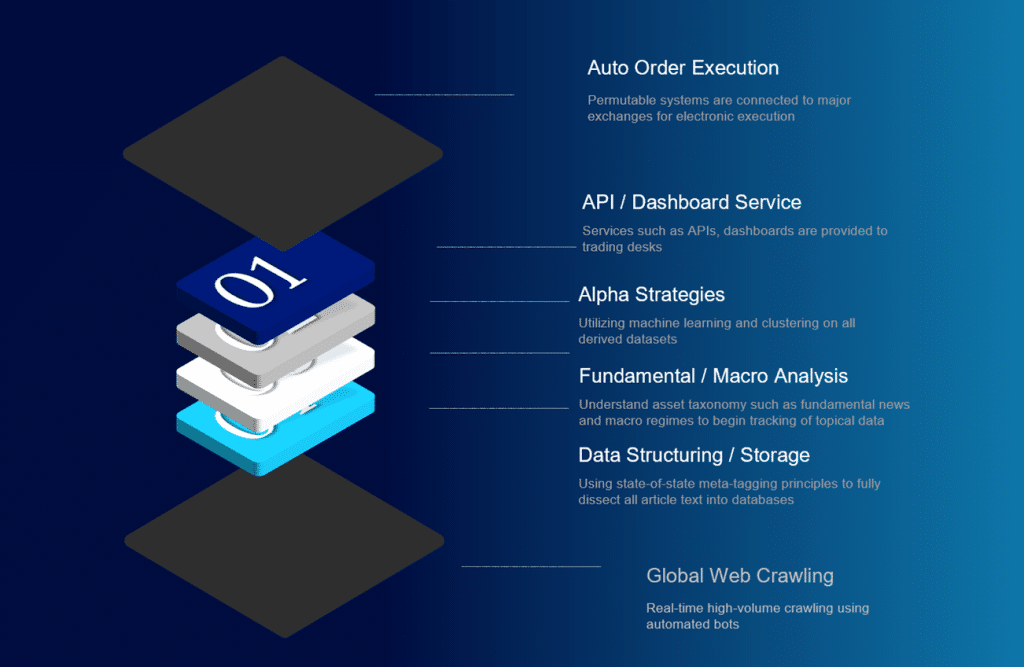
At the core of our automated trading platform is the Alpha Strategies component, utilising machine learning techniques to sift through vast quantities of data. This tool is designed to identify undervalued assets and market opportunities, providing traders with actionable insights to capitalise on. Our aim is to transform raw data into real wealth,” says Wilson Chan, Founder and CEO of Permutable AI. “By leveraging cutting-edge AI, we can uncover patterns and opportunities hidden in massive datasets that are otherwise invisible to human analysts.”

Complementing this, our Fundamental/Macro Analysis tool empowers users to decipher complex asset classifications and macroeconomic trends, thereby enhancing their decision-making capabilities with a deepened understanding of market dynamics. “It’s about providing our users with a crystal-clear lens into the mechanics of markets,” Chan elaborates. “This tool doesn’t just show data; it tells you what it means in the context of broader economic movements.”

Artificial Intelligence Trading

Optimising data management for enhanced trading performance

Data is the lifeblood of any advanced trading system, and at Permutable AI, we ensure it’s handled with utmost efficiency. Our “Data Structuring/Storage” system organises and stores text data meticulously, making data retrieval straightforward and reliable. This organisation is critical in supporting the high-speed analysis and accessibility that our artificial intelligence trading platform demands.

Further expanding our data acquisition capabilities, the Global Web Crawling feature deploys automated bots to scour the internet for high-volume data. This function guarantees a holistic view of the market landscape, ensuring that our trading strategies are informed by the most comprehensive and up-to-date information available.

trading decisions

Seamless trading and user-centric functionalities

Operational efficiency is vital in trading, and our Auto Order Execution service integrates directly with major exchanges to facilitate rapid and accurate electronic trade execution. This feature streamlines the entire trading process, from decision to action, allowing for high-speed transactions that capitalise on the fleeting opportunities in volatile markets.

Supporting all these functionalities is our robust API/dashboard service which offers customised APIs and intuitive dashboards. These tools are crucial for trading desks, providing them with the essential data and control mechanisms needed to manage operations effectively and respond to market changes swiftly.

Visionary leadership and future outlook

Wilson Chan’s vision for Permutable AI goes beyond mere technological innovation. “Our goal is to create an ecosystem where advanced AI not only drives trading efficiency but also fosters a new era of financial intelligence and accessibility,” he asserts. This vision encapsulates a future where artificial intelligence trading systems provide a level of depth and speed unattainable with traditional methods.

Chan is particularly excited about the implications of AI for risk management and predictive analytics. “Imagine a system that not only executes trades but anticipates market shifts before they occur, reducing risks and enhancing potential returns,” he suggests. Such capabilities could revolutionise trading strategies and risk assessment, providing traders with a powerful tool to navigate complex markets.

Commitment to innovation and excellence

As we progress towards 2025, our team remains dedicated to pushing the boundaries of what is possible, ensuring that our clients and partners are at the cutting edge of trading technology. “We are committed to relentless innovation and excellence. Every feature we develop is a step towards a more transparent, efficient, and accessible trading environment,” Chan concludes.

By harnessing these advanced components, Permutable AI is not just creating a trading system; we’re crafting a comprehensive ecosystem that will set new standards in the realm of artificial intelligence trading. Our commitment to this vision is driven by a desire to equip traders with a level of automation and analysis capability that transforms how they interact with the financial markets.

Permutable AI’s journey is guided by the principle that technology should serve to enhance trading decision-making and efficiency. With a relentless focus on innovation and user-centric design, we are paving the way for a future where artificial intelligence and machine learning not only support but lead in the creation of market opportunities.

Step into the future of trading technology with our artificial intelligence trading platform

Are you ready to join us as an early adopter of our artificial intelligence trading platform? Your chance to embrace the future of finance by exploring our groundbreaking Level 4/5 artificial intelligence system, designed to enhance decision-making and maximise market opportunities starts here. Dive into our vision now—because when it comes to the evolution of trading, staying ahead isn’t just an option; it’s a necessity. Discover how we’re transforming the trading landscape and how you can be a part of this change by reaching out to us at enquiries@permutable.ai or by filling in the form below.


Examining the impact of recency bias on investment strategies

Recency bias is a psychological phenomenon that affects the decision-making process of investors. It refers to the tendency of individuals to place more importance on recent events or information when making investment decisions, rather than considering the long-term historical data. This bias can have a significant impact on investment strategies and can lead to suboptimal outcomes.

Investors often fall into the trap of recency bias because of a natural human tendency to give more weight to recent experiences. When faced with a choice between investing in a stock that has performed well in the past few weeks or one that has shown consistent growth over several years, many investors tend to choose the former. This bias can be detrimental, as it may cause investors to overlook valuable opportunities or make impulsive decisions based on short-term fluctuations.

The psychology behind recency bias

Recency bias stems from the way our brains process and interpret information. The human mind is wired to give more attention to recent events due to their perceived relevance and immediacy. This bias is reinforced by the availability heuristic, where individuals rely on easily accessible information rather than conducting a comprehensive analysis. As a result, investors tend to focus on recent market trends or news stories, which may not necessarily reflect the long-term performance of an investment.

Additionally, recency bias is amplified by emotional factors such as fear and greed. When markets are experiencing volatility, investors may be more inclined to sell their holdings based on recent losses rather than considering the overall performance of their portfolio. Similarly, during periods of market euphoria, investors may be tempted to chase after recent high-performing stocks, disregarding the potential risks involved.

Examples of recency bias in the investment world

Recency bias can be observed in various aspects of the investment world. For instance, investors often flock to sectors or asset classes that have recently outperformed others, hoping to ride the wave of success. This behavior can lead to overcrowding in certain areas of the market, which may eventually result in a bubble and subsequent market correction.

Recency bias can influence investment decisions on an individual stock level. If a company has recently released positive earnings results or announced a groundbreaking product, investors may become overly optimistic and overlook potential red flags in the company’s financials or industry trends.

The impact of recency bias on investment decision-making

The impact of recency bias on investment decision-making can be far-reaching. By focusing solely on recent events or trends, investors may miss out on long-term investment opportunities. This bias can lead to a short-term mindset that hinders the ability to build a well-diversified and resilient portfolio.

Furthermore, recency bias can contribute to increased market volatility. As more investors make decisions based on short-term movements, the market becomes prone to exaggerated price swings. This can create a self-reinforcing cycle, where investors react to short-term fluctuations, causing further market instability.

Proximity bias and its relationship to recency bias

Proximity bias is closely related to recency bias and refers to the tendency to give more weight to information or events that are geographically or temporally closer to us. In the context of investment strategies, this bias can lead investors to favor local or recent investment opportunities, disregarding potentially more lucrative options elsewhere.

Investors who succumb to proximity bias may miss out on international investment opportunities or fail to diversify their portfolio across different regions. To overcome proximity bias, it is essential to consider a global perspective and conduct thorough research on investment opportunities beyond one’s immediate surroundings.

Strategies to mitigate the impact of recency bias on investment decisions

There are several strategies investors can employ to mitigate the impact of recency bias on their investment decisions. Firstly, maintaining a disciplined investment approach based on a well-defined investment plan can help counteract the temptation to make impulsive decisions based on recent events. This involves setting clear investment goals, diversifying the portfolio, and adhering to a long-term strategy.

Secondly, conducting thorough research and analysis is crucial to overcome recency bias. By examining historical data, fundamental analysis, and macroeconomic factors, investors can gain a comprehensive understanding of the investment landscape and make informed decisions based on long-term trends rather than short-term noise.

Examples of successful investment strategies that avoid recency bias

Several successful investment strategies have managed to avoid the pitfalls of recency bias. One notable example is the value investing approach employed by legendary investor Warren Buffett. By focusing on the intrinsic value of companies rather than short-term market fluctuations, Buffett has been able to identify undervalued stocks with long-term growth potential.

Another example is the approach taken by index fund investors. These investors aim to replicate the performance of a specific market index rather than trying to beat it. By diversifying across a broad range of stocks and sectors, index fund investors mitigate the impact of recency bias and focus on long-term market trends.

Overcoming recency bias in investment strategies with AI

Recognizing and overcoming recency bias is crucial for successful investment strategies.  At Permutable we have trained our AI model to provide an accurate representation of the prominence of events in the media. The inherent biases of recency and proximity that affect human perception are mitigated through the meticulous analysis conducted by our model. By delving into historically stored news data, our model identifies patterns and trends, allowing for a more nuanced and objective assessment of media coverage.

Our carefully trained AI model addresses these biases by harnessing the power of historical data. Unlike humans who might be swayed by what is trending in the present moment, our model delves into vast reservoirs of archived news. By analysing patterns over time, the model identifies trends in media coverage that might not align with immediate perceptions influenced by recency and proximity biases.

One of the key strengths of our model lies in its ability to provide historical context. By considering the ebb and flow of media attention over an extended period, the model discerns underlying patterns that might be obscured by short-term biases. This historical context is invaluable in offering a more balanced and accurate portrayal of events, allowing users to make informed decisions without being unduly influenced by the latest media frenzy.

The applications of our model extend across various industries where an unbiased understanding of media coverage is crucial. In finance, for instance, where market sentiment is often influenced by media reports, our model can provide investors with a more objective view of events, free from the distortions of recency and proximity biases.

Similarly, in public relations and crisis management, understanding the historical context of media coverage allows for more strategic decision-making. By comprehending how events have been portrayed in the media over time, organisations can tailor their responses to align with broader narratives, steering clear of knee-jerk reactions driven by short-term biases, charting a course towards a more nuanced understanding of events, unburdened by the limitations of recency and proximity biases.

The importance of recognizing and addressing recency bias in investment strategies

Recency bias can have a profound impact on investment strategies, leading to suboptimal decisions and increased market volatility. By understanding the psychology behind this bias, recognizing its presence in investment decision-making, and implementing strategies to mitigate its influence, investors can improve their long-term investment outcomes.

Adopting a long-term perspective, diversifying investments, conducting thorough research, and seeking guidance from financial advisors are key steps in addressing recency bias. By doing so, investors can build resilient portfolios that are better positioned to weather short-term market fluctuations and capitalize on long-term growth opportunities.

Recognizing and addressing recency bias is not only crucial for individual investors but also for financial institutions and policymakers. By promoting investor education and awareness of biases, the investment industry can foster a more informed and rational approach to decision-making, ultimately benefiting both investors and the broader economy.

Find out more

Are you ready to elevate your corporate investment or trading strategy? At Permutable, we understand the challenges posed by recency bias in investment decision-making. Our AI-driven solutions are meticulously designed to offer a balanced and accurate analysis, free from the distortions of recency and proximity biases. By leveraging historical data and identifying long-term trends, our model helps investors make informed decisions, ensuring a well-diversified and resilient portfolio.

Want to secure a more stable and profitable future? We’re here to guide you every step of the way. Contact us at enquiries@permutable.ai or complete the form below to explore further.


Loading

Harnessing AI to mitigate geopolitical risks 2024 and maximize investments

In today’s interconnected world, understanding and managing geopolitical risks is crucial for investors looking to maximize returns. Geopolitical risks, such as political instability, trade disputes, and regulatory changes, can have a significant impact on financial markets and investment opportunities. This is where strategic intelligence comes into play. Strategic intelligence involves gathering and analyzing information about geopolitical risks and using that information to make informed investment decisions. With advances in artificial intelligence, investors now have powerful tools at their disposal to harness the power of strategic intelligence and mitigate geopolitical risks.

Understanding geopolitical risks and their impact on investments

Geopolitical risks can disrupt financial markets and create uncertainties for investors. Political instability, such as regime changes or civil unrest, can lead to economic instability and market volatility. Trade disputes between countries can result in tariffs and barriers to trade, affecting companies’ profitability and market performance. Regulatory changes and policies can also impact specific industries or sectors, creating investment opportunities or risks. It is essential for investors to understand these risks and their potential impact on their investment portfolios.

The role of market intelligence in mitigating risks

Market intelligence plays a vital role in identifying and mitigating geopolitical risks. Market intelligence involves gathering and analyzing information about market trends, economic indicators, and competitor analysis. By monitoring global market trends and economic indicators, investors can identify potential risks and opportunities in different regions and sectors. Competitor analysis helps investors understand the competitive landscape and make informed investment decisions. With the help of AI-powered market intelligence tools, investors can process vast amounts of data and gain insights into market trends, giving them a competitive edge in mitigating risks.

Leveraging AI in trading and investment decision-making

Artificial intelligence has revolutionized trading and investment decision-making. AI algorithms can analyze massive amounts of data, including historical market data, news articles, and social media sentiment, to identify patterns and make predictions. This predictive analytics enables investors to identify profitable investment opportunities and make informed trading decisions. AI-powered trading platforms can execute trades automatically based on predefined strategies, reducing human error and emotional biases. By leveraging AI in trading and investment decision-making, investors can improve their chances of maximizing returns and mitigating risks.

The benefits of strategic intelligence in financial markets

Strategic intelligence, powered by AI, brings several benefits to financial markets. Firstly, it enables investors to make data-driven decisions based on comprehensive market analysis and predictive analytics. This reduces the reliance on gut feelings and emotions, leading to more informed and objective decision-making. Secondly, strategic intelligence helps investors identify investment opportunities in different regions and sectors, diversifying their portfolios and reducing risk. Thirdly, it provides investors with a competitive advantage by enabling them to stay ahead of market trends and make timely investment decisions. Overall, strategic intelligence enhances investors’ ability to navigate complex financial markets and maximize their investments.

AI-driven investment strategies for maximizing returns

AI-driven investment strategies are becoming increasingly popular among investors. These strategies utilize AI algorithms to analyze market data, identify patterns, and execute trades automatically. One such strategy is trend following, where AI algorithms identify trends in market data and invest in assets that are expected to continue rising in value. Another strategy is mean reversion, where AI algorithms identify assets that have deviated from their historical average and invest in them, expecting them to revert to the mean. These AI-driven investment strategies aim to maximize returns by taking advantage of market trends and inefficiencies.

Predictive analytics and its role in identifying profitable investments

Predictive analytics, powered by AI, plays a crucial role in identifying profitable investments. By analyzing historical market data and identifying patterns, AI algorithms can make predictions about future market movements. These predictions help investors identify investment opportunities and make informed decisions. For example, predictive analytics can identify undervalued stocks or sectors that are expected to outperform in the future. It can also predict market trends and identify assets that are likely to experience significant price movements. By incorporating predictive analytics into their investment strategies, investors can increase their chances of making profitable investments.

Using AI to manage market volatility and risk

Market volatility and risk are inherent in financial markets. However, AI can help investors manage these risks more effectively. AI algorithms can analyze market data in real-time and make automatic adjustments to investment portfolios based on predefined risk management strategies. For example, if market volatility exceeds a certain threshold, AI algorithms can automatically reduce exposure to high-risk assets and increase exposure to low-risk assets. This dynamic risk management helps investors protect their portfolios during volatile market conditions and minimize potential losses.

Incorporating economic indicators and market analysis into strategic decision-making

Economic indicators and market analysis are essential components of strategic decision-making. Economic indicators, such as GDP growth rates, inflation rates, and interest rates, provide insights into the overall health of an economy and its potential impact on financial markets. Market analysis involves analyzing market trends, competitor analysis, and industry analysis to identify investment opportunities and risks. By incorporating economic indicators and market analysis into strategic decision-making, investors can make informed decisions and adapt their investment strategies to changing market conditions.

Global investment strategies with AI-enhanced trading

AI-enhanced trading enables investors to implement global investment strategies more effectively. AI algorithms can analyze market data from different regions and identify investment opportunities across the globe. This allows investors to diversify their portfolios and take advantage of global market trends. For example, AI algorithms can identify emerging markets or sectors that are expected to experience significant growth and invest in them. By leveraging AI-enhanced trading, investors can access global investment opportunities and maximize their returns.

The competitive advantage of AI in finance

AI provides a competitive advantage in finance by enabling investors to process vast amounts of data and gain insights that were previously inaccessible. AI algorithms can analyze market data, news articles, social media sentiment, and other relevant information to identify patterns and make predictions. This gives investors a competitive edge by enabling them to make informed decisions based on comprehensive analysis. Additionally, AI-powered trading platforms can execute trades automatically, reducing response times and minimizing human error. The competitive advantage of AI in finance is evident in its ability to improve decision-making, enhance trading strategies, and maximize returns.

AI-driven risk mitigation techniques

AI-driven risk mitigation techniques help investors manage and mitigate risks effectively. AI algorithms can analyze market data, news articles, and social media sentiment to identify potential risks and alert investors in real-time. For example, AI algorithms can detect sudden changes in market sentiment or news that may impact specific stocks or sectors. By receiving timely alerts, investors can take proactive measures to mitigate risks and protect their portfolios. Additionally, AI algorithms can provide insights into portfolio diversification and risk management strategies, helping investors optimize their risk-return profile.

Harnessing the power of strategic intelligence for profitable investments

As our clients are already experiencing, strategic intelligence, powered by AI, has the potential to revolutionize the way investors navigate financial markets and manage geopolitical risks. By leveraging AI tools and techniques, investors can gather and analyze vast amounts of data, identify investment opportunities, and make informed decisions. Strategic intelligence helps investors understand geopolitical risks, manage market volatility, and optimize their risk-return profiles. With AI-driven investment strategies, investors can maximize their returns and gain a competitive advantage in financial markets – even in the most volatile times by mitigating geopolitical risks and achieving profitable investments.

Unlock the power of strategic intelligence with Permutable AI

Ready to see how AI-driven geopolitical risk intelligence can transform your decision-making? Contact us for a demo of our AI-driven news sentiment analysis which is available through our Trading Co-Pilot subscription, or to request a free trial. You can also access top-line geopolitical insights through our Real-Time Geopolitical Insights & AI Market Sentiment Analysis Dashboard which is publicly available to view. 

Request demo


Stock market insights: 7 key factors driving Advanced Micro Devices stock price performance

Advanced Micro Devices (AMD) is a leading global semiconductor company known for its innovative processors and graphics technologies. With a strong presence in the technology industry, AMD has gained significant attention from investors and analysts alike. This article will delve into the key factors that have been driving Advanced Micro Devices stock price performance. 

Is AMD a good stock to buy? AMD target price and investment outlook

AMD presents a compelling buying opportunity, with many analysts rating it as a stock to buy due to its strong financial performance, innovative product lineup, and market share gains. The company’s data center segment has shown significant growth, contributing to AMD’s ability to surpass Wall Street expectations in revenue and earnings per share. Analyst ratings have been largely positive, with firms like Morgan Stanley and Citi Research upgrading their AMD target price to $130 and $140 respectively. 

The company’s success in the competitive semiconductor industry, driven by products like the Ryzen 7000 Series, has led to impressive yearly growth, with client segment revenue alone growing by 42% year-over-year. While investors should consider risks such as macroeconomic factors and intense competition, AMD’s strong position in key markets and positive analyst sentiment suggest it could be a valuable addition to a diversified investment portfolio, with some analysts projecting potential yearly gains of up to 80%.

Factors influencing Advanced Micro Devices stock price performance

Financial performance and revenue growth of AMD

One of the primary factors that influences Advanced Micro Devices stock price is its financial performance. Investors closely monitor the company’s revenue growth, profitability, and overall financial health. In recent years, AMD has experienced remarkable growth, driven by its successful product launches and expanded customer base. The company’s revenue has consistently increased, reflecting its ability to capture market share in the highly competitive semiconductor industry. This impressive financial performance has undoubtedly contributed to the positive stock price performance of Advanced Micro Devices.

When AMD’s client segment revenue grew 42 percent year-over-year and 46 percent sequentially to $1.5 billion, mainly due to an increase in Ryzen 7000 CPU sales, this allowed the chip designer to beat Wall Street’s expectations on revenue by $110 million, and its earnings per share of 70 cents also exceeded analyst estimates, by 2 cents.

Product innovation and technological advancements

Another critical factor driving Advanced Micro Devices stock price is its commitment to product innovation and technological advancements. AMD has consistently pushed the boundaries of semiconductor technology, introducing cutting-edge processors and graphics solutions that have gained significant market traction. The company’s ability to develop products that meet the evolving demands of consumers and businesses has resulted in increased adoption and market share. Investors recognize the importance of product innovation in the technology industry and often reward companies like AMD with higher stock prices.

With the launch of the Ryzen 7000 Series Processors – the first desktop processors built on 5nm process technology, offering significant performance and efficiency gains over previous generations –  positive reviews for their performance and value, captured significant market share from competitor Intel. Strong demand led to supply shortages in the initial months, further showcasing industry enthusiasm. Meanwhile, adoption by major PC manufacturers like Dell and HP fueled mainstream user adoption causing AMD’s stock price to rise.  Continued positive reviews and strong sales sustained the positive sentiment, with the stock reaching a 52-week high shortly after. This launch cemented AMD’s position as a major player in the CPU market and highlighted its ability to innovate and deliver competitive products.

Competitor analysis and market share

The competitive landscape plays a crucial role in determining the stock price performance of Advanced Micro Devices. As a major player in the semiconductor industry, AMD faces intense competition from other industry giants such as Intel and NVIDIA. Investors closely monitor AMD’s ability to gain market share and compete effectively against its rivals in the data centre chips battle. Any significant changes in market share or competitive advantages can have a direct impact on the stock price. By closely monitoring and analyzing the competition, investors can gauge the potential future performance of Advanced Micro Devices.

Analyst recommendations and investor sentiment

Analyst recommendations and investor sentiment also have a significant influence on the stock price performance of Advanced Micro Devices. Positive recommendations from analysts and optimistic investor sentiment can drive up the stock price, while negative sentiment can lead to a decline. Analysts often assess various factors such as financial performance, product innovation, and market trends and sentiment to provide recommendations to investors. The collective sentiment of investors, as reflected in the buying and selling patterns of the stock, can also impact Advanced Micro Devices stock price.

Several major analysts in the banking sector upgraded their ratings on AMD following the earnings release. Key examples include:

  • Morgan Stanley: Upgraded from “Equal Weight” to “Overweight” with a $130 price target, citing AMD’s continued market share gains and strong data center momentum.
  • Citi Research: Upgraded from “Neutral” to “Buy” with a $140 price target, impressed by AMD’s execution and product roadmap.
  • Goldman Sachs: Maintained its “Buy” rating and raised its price target to $150, emphasizing AMD’s long-term growth potential.

Macroeconomic factors affecting Advanced Micro Devices stock price

Macroeconomic factors, such as economic growth, interest rates, and geopolitical events, can have a profound impact on the stock price of Advanced Micro Devices. A strong economy and positive market conditions tend to boost investor confidence and drive up stock prices. On the other hand, economic downturns or geopolitical uncertainties can lead to a decline in stock prices. Investors closely monitor these macroeconomic indicators to assess the potential impact on Advanced Micro Devices and adjust their investment decisions accordingly. 

For example, the global chip shortage (2020-2022) disrupted production and supply chains, impacting AMD’s ability to meet demand. While initially causing short-term price pressures, the increased demand for semiconductors due to the shortage ultimately benefited AMD in the long run. AMD stock price initially declined due to production constraints, but later recovered strongly as AMD secured production capacity and capitalized on the heightened demand for its products. Other examples include rising interest rates in 2023 and trade tensions between US and China.

Slide 2 HeadingLorem ipsum dolor sit amet consectetur adipiscing elit dolorClick HereSlide 2 HeadingLorem ipsum dolor sit amet consectetur adipiscing elit dolorClick HereSlide 3 HeadingLorem ipsum dolor sit amet consectetur adipiscing elit dolorClick HereSlide HeadingLorem ipsum dolor sit amet, consectetur adipiscing elit. Ut elit tellus, luctus nec ullamcorper mattis, pulvinar dapibus leo.Click Here
Previous slide
Next slide

Above: Permutable AI’s economic datasets used by investors to track macroeconomic sentiment


EXPLORE DATASETS

Regulatory and legal considerations

Regulatory and legal considerations can also influence the stock price performance of Advanced Micro Devices. Changes in regulations, such as trade policies or intellectual property laws, can have a direct impact on the company’s operations and potential revenue streams. Legal disputes or litigation can also create uncertainty and negatively affect investor sentiment. Investors closely follow any regulatory or legal developments that could impact Advanced Micro Devices and make informed decisions based on the potential risks and opportunities.

When the US Department of Commerce imposed new export restrictions on high-performance AI chips and manufacturing equipment to China, a crucial market for AMD’s data center business, AMD’s stock price dipped following the announcement, reflecting investor concerns about potential revenue losses in China.

Short-term vs. long-term stock price performance

Investors often evaluate the short-term and long-term stock price performance of Advanced Micro Devices. Short-term price fluctuations can be influenced by factors such as market sentiment, earnings reports, or industry trends. However, long-term performance relies on the company’s ability to sustain growth, innovate, and remain competitive in the market. Investors consider both short-term and long-term factors when assessing the potential for Advanced Micro Devices stock price appreciation.

Conclusion and future outlook for AMD stock

In conclusion, the stock price performance of Advanced Micro Devices is influenced by various factors. These factors include financial performance, product innovation, competition, analyst recommendations, investor sentiment, macroeconomic conditions, regulatory considerations, and short-term versus long-term performance. As AMD continues to innovate and capture market share in the semiconductor industry, investors and analysts will closely monitor these key factors to assess the future outlook for Advanced Micro Devices stock.

Considering the robust financial performance, consistent product innovation, and positive market sentiment surrounding Advanced Micro Devices, the future outlook for AMD stock appears promising. However, investors should remain vigilant and continue to monitor the dynamic nature of the technology industry and its potential impact on Advanced Micro Devices stock price performance.

Looking for more stock market insights? See our articles on the factors that determine Spotify stock priceLucid stock priceTencent Holdings stock priceBerkshire Hathaway stock priceNvidia stock price,  Apple stock priceGoogle stock priceWalmart stock priceTesla stock priceMicrosoft stock priceAmazon stock pricePalantir stock price and Alibaba stock price with more added weekly.

Revolutionize your investment strategies with Permutable’s data intelligence

Unlock the power of data-driven investment strategy with Permutable’s cutting-edge data intelligence. Try our macroeconomic data feeds for free and gain valuable insights into global trends shaping investment decisions.


REQUEST FREE TRIAL

Disclaimer: The information provided by Permutable AI is for informational purposes only and does not constitute financial advice, investment advice, or a recommendation to buy, sell, or hold any securities. While we strive to provide accurate and up-to-date information, we do not guarantee the completeness, accuracy, or reliability of the data. All investments involve risks, including the loss of principal. Past performance is not indicative of future results. Users are advised to conduct their own independent research and consult with a licensed financial advisor before making any investment decisions. Permutable AI, its affiliates, or its employees shall not be held liable for any losses or damages resulting from reliance on the information provided.

Stock market insights: Understanding the dynamics of Tencent Holdings stock

Tencent Holdings is a Chinese multinational conglomerate that specializes in various internet-related services and products. Founded in 1998, Tencent has grown to become one of the largest and most valuable technology companies in the world. With a diverse portfolio that includes social media, online gaming, e-commerce, and digital payments, Tencent has established a significant presence in the global market.

Overview of Tencent Holdings Stock and Tencent Hong Kong Stock Price 

Tencent Holdings stock which was founded in 1998,  headquartered in Shenzhen and listed on the Hong Kong Stock Exchange – is widely regarded as one of the most attractive investment opportunities in the technology sector. The stock ticker symbol is 0700.HK. As of Monday, December 2023, Tencent Holdings has a market capitalization of over  $381.89 Billion, making it one of the largest publicly traded companies in the world.

Investing in Tencent Holdings stock provides investors with exposure to a well-diversified company that operates across various sectors of the internet industry. The stock has historically demonstrated strong growth potential and has been a preferred choice for long-term investors seeking exposure to the Chinese market.

Factors Influencing Stock Price of Tencent Holdings Stock

Several factors influence the dynamics of Tencent Holdings limited, making it essential for investors to understand the key drivers behind its performance.

1. Chinese Economy and Government Regulations

As a Chinese company, Tencent Holdings’ stock performance is closely tied to the overall health of the Chinese economy. Economic indicators such as GDP growth, consumer spending, and government policies can have a significant impact on the stock’s performance. Additionally, government regulations pertaining to the internet industry, cybersecurity, and data privacy can influence Tencent’s operations and, consequently, its stock price.

2. User Engagement and Monetization

Tencent’s success is largely driven by its ability to engage and monetize its massive user base. The company’s social media platform, WeChat, boasts over 1.33 billion monthly active users, providing a fertile ground for advertising and e-commerce opportunities. This makes it one of the most popular social media platforms in the world, with a larger user base than Facebook, Instagram, and Twitter combined. WeChat is particularly popular in China, where it is used by over 1.2 billion people. Investors should closely monitor user engagement metrics and Tencent’s strategies for monetizing its platforms to assess the company’s growth prospects and potential impact on the stock price.

3. Technological Innovations and Competitive Landscape

The technology sector is highly competitive, and Tencent Holdings faces competition from both domestic and international players. Keeping abreast of the latest technological innovations, product launches, and market trends is crucial for understanding Tencent’s competitive position. Investors should also evaluate Tencent’s ability to innovate and adapt to changing market dynamics to assess its long-term growth potential.

Tencent Holdings Company Stock Price History

Tencent Holdings stock has exhibited impressive growth over the years, with notable fluctuations influenced by various external factors. In 2018, Tencent’s stock price experienced a significant surge, driven by the success of its mobile gaming division and the rising popularity of WeChat. 

However, in 2022, concerns over the Chinese government’s tightening regulations on the gaming industry and potential economic slowdown led to a decline in Tencent’s stock price.  From their peak in early 2021, Tencent’s shares have dropped by more than 55%. Despite these fluctuations, Tencent Holdings stock has demonstrated resilience, recovering from market downturns and continuing to deliver long-term value to investors.

Analyzing Tencent Holdings’ Financial Performance

Understanding Tencent Holdings’ financial performance is crucial for investors seeking to make informed decisions regarding the company’s stock. In the third quarter of 2023, the Chinese tech giant reported a net profit of 45 billion yuan, indicating a year-on-year increase of about 39 percent.  During this period, the revenue from fintech and business services reached 52 billion yuan and revenue from online advertising amounted to about 26 billion yuan.

Understanding Tencent Holdings’ Competitive Landscape

Tencent Holdings operates in a highly competitive market, both domestically and internationally. Understanding the company’s competitive landscape is crucial for assessing its long-term growth potential.

In the social media and messaging sector, Tencent faces competition from companies such as ByteDance and Meta. These companies offer similar services and are constantly innovating to attract and retain users. Tencent’s ability to differentiate itself through unique features, user experience, and strategic partnerships will play a crucial role in maintaining its competitive edge

In the online gaming industry, Tencent faces competition from both domestic and international game developers and publishers. The company’s ability to secure exclusive partnerships, develop popular game titles, and leverage its massive user base will determine its success in this highly lucrative sector. Investors should closely monitor Tencent’s competitive positioning and evaluate its strategies for staying ahead of the competition to make informed investment decisions.

Expert Opinions and Forecasts on Tencent Holdings Stock

Analysts are generally bullish on Tencent Holdings’ future prospects. The company has a strong track record of growth and is positioned to benefit from the continued growth of the Chinese internet market. However, analysts also note that the company faces some challenges, such as regulatory risks and its dependence on the gaming industry. Overall, Tencent Holdings is a well-managed company with a strong track record of innovation. However, investors should carefully consider the company’s risks and challenges before making any investment decisions.

Risks and Challenges Associated with Investing in Tencent Holdings Stock

Investing in Tencent Holdings stock carries certain risks and challenges that investors should be aware of.

1. Regulatory Uncertainty

As a Chinese company, Tencent is subject to government regulations that can impact its operations and profitability. Changes in regulations related to the internet industry, cybersecurity, and data privacy can pose risks to Tencent’s business model and, consequently, its stock price.

2. Competitive Landscape

Tencent operates in highly competitive markets, and its success depends on its ability to stay ahead of competitors. Increased competition can impact user engagement, monetization, and market share, potentially affecting Tencent’s stock performance.

3. Macroeconomic Factors

Tencent’s stock price is influenced by macroeconomic factors, particularly those affecting the Chinese economy. Economic downturns, changes in consumer spending patterns, and geopolitical tensions can all have an impact on Tencent’s financial performance and stock price. Investors should carefully assess these risks and challenges and consider their risk tolerance before investing in Tencent Holdings stock.

Mid-Year 2024 Tencent Stock Price Update

Tencent Holdings, a Chinese multinational conglomerate, continues to be a dominant force in the global tech industry. The company, primarily engaged in internet-related services and products, operates through four segments: Value-Added Services (VAS), Online Advertising, Fintech and Business Services, and Others. As an investment holding company primarily focused on expanding its digital ecosystem, Tencent’s diverse portfolio and strategic investments have played a critical role in its market positioning.

Segment Performance and Strategic Initiatives

Tencent’s Value-Added Services (VAS) segment is its largest revenue generator, mainly engaged in providing online games, social networks, and digital content. The VAS segment remains strong, with online games and videos continuing to drive substantial revenue, supported by Tencent’s extensive user base and innovative content offerings. The company primarily operates its VAS segment through platforms like WeChat and QQ, leveraging these social networks to enhance user engagement and monetization.

The Online Advertising segment has shown resilience, despite global economic headwinds. Tencent’s services in VAS and online advertising benefit from its ability to target vast audiences through its social media platforms and cloud services. The online advertising segment remains a crucial growth area, with significant contributions from media advertising and performance-based ads on Tencent’s social networks.

Tencent’s Fintech and Business Services segment has also seen growth, driven by its cloud services and payment solutions. This segment is a critical component of Tencent’s long-term strategy, aiming to diversify its revenue streams beyond gaming and social media. The company’s investment holding company structure has allowed it to integrate and scale its cloud offerings, contributing positively to its overall cash flow.

Financial Performance and Cash Flow

Tencent’s financial performance in the first half of 2024 reflects a balanced approach to growth and investment. The company’s cash flow has been bolstered by strong performances in its VAS and fintech segments, with consistent contributions from its online advertising segment. This diversified revenue base has allowed Tencent to navigate market fluctuations effectively, maintaining a stable financial outlook.

Challenges and Competitive Landscape

Despite its robust performance, Tencent faces challenges in a highly competitive market. The company’s engagement in media, particularly through its online platforms, continues to face regulatory scrutiny. Moreover, the competitive landscape in sectors such as social networks and online gaming remains intense, with rivals both domestic and international vying for market share.

Tencent’s ability to innovate and adapt to regulatory changes, while expanding its cloud services and fintech offerings, will be key to sustaining its growth trajectory in the latter half of 2024.

Outlook For The Remainder of 2024

As an investment holding company with a vast digital ecosystem, Tencent is well-positioned to continue its leadership in the tech industry. The company’s focus on expanding its cloud services, enhancing its social networks, and leveraging its VAS segment will be critical in driving future growth. Investors should monitor Tencent’s strategic initiatives and regulatory environment closely as these factors will significantly influence the company’s stock performance in the coming months.

Tencent’s diversified operations across its four segments provide a strong foundation for continued success, making it a compelling option for investors seeking exposure to the Chinese technology sector.

Conclusion

Understanding the dynamics of Tencent Holdings stock is crucial for investors seeking exposure to the technology sector and the Chinese market. Factors such as the Chinese economy, user engagement, technological innovations, and competitive landscape significantly influence the stock’s performance

By analyzing Tencent’s financial performance, keeping informed about expert opinions and forecasts, and being aware of the associated risks and challenges, investors can make informed decisions when considering investing in Tencent Holdings stock. It is important to conduct thorough research, diversify portfolios, and maintain a long-term perspective to maximize potential returns.

Looking for more stock market insights? See our articles on the factors that determine Spotify stock priceAdvanced Micro Devices stock priceLucid stock price, Berkshire Hathaway stock priceApple stock priceNvidia stock price,  Google stock priceWalmart stock priceTesla stock priceMicrosoft stock price and Amazon stock price with more added weekly.

Revolutionize Your Trading Strategy 

At Permutable AI, our expertise powers your strategy, facilitating human-to-AI knowledge transfer and offering a unique edge in discerning investor sentiment, from global macro trends to corporate happenings. With over 1.1 million companies tracked across 120 countries and natural language processing inspired by GPT-4, our real-time insights transform trading. Plus, our state-of-the-art machine learning trading platform, R2, systematically pinpoints entry points for various securities. Join us on the journey to reimagine your trading. Get in touch below to find out more.

Get In Touch