Predicting market movements through advanced sentiment analysis

This article explores how advanced narrative intelligence and real-time AI-driven sentiment analysis are transforming the way professional traders and systematic investors approach predicting market movements.

When Brent crude spiked from $69 to $74 in June 2025, traditional analysts were still parsing Middle Eastern headlines whilst our War Sentiment Index had already flagged the narrative shift hours earlier. This isn’t an isolated incident – story signals have fundamentally changed the game, enabling systematic traders to position ahead of market consensus rather than react to price action that’s already occurred.

Understanding story signals

Story signals essentially capture the narrative momentum that drives market behaviour through our sophisticated proprietary algorithms that process vast amounts of unstructured data across thousands of media sources simultaneously. Unlike traditional analysis that relies on historical price data, our story signals identify the underlying narrative forces that eventually translate into trading decisions by market participants.

The power of our approach lies in capturing the informational edge that exists in the temporal gap between when news breaks and when markets fully digest its implications. Our systematic framework processes linguistic patterns, source credibility, and cross-reference validation at speeds impossible for human analysts, transforming market prediction from reactive analysis to proactive strategy implementation.

The four pillars of our story signal detection for predicting market movements

Effective market prediction through story signals relies on understanding four distinct signal categories that our algorithms continuously monitor across global media sources.

Breakout Signals occur when previously dormant stories suddenly capture widespread media attention, often indicating the beginning of significant price movements as market awareness shifts dramatically. The recent platinum surge above $1,268 in June 2025 exemplifies this pattern perfectly. Our Trading Co-Pilot detected unusual narrative momentum building around platinum supply constraints and geopolitical risks hours before the metal broke through resistance at $1,089.50. Our system issued a “strong bullish” sentiment alert during early Asian trading, providing our subscribers with critical positioning advantages before prices accelerated from $1,127.20 to $1,222.50.

Volume Build-up Signals represent the gradual accumulation of narrative momentum around particular themes or asset classes. Unlike sudden breakout spikes, volume build-up creates sustained pressure that enables long-term trend prediction. The euro’s strengthening trend demonstrated this signal type in action. As ECB officials maintained hawkish tones while the Federal Reserve showed dovish tendencies, our Trading Co-Pilot systems tracked the building narrative around monetary policy divergence. This volume build-up preceded EUR/USD’s surge above $1.1570 to levels not seen since late 2021, with the single currency benefiting from systematic capital flows as investors repositioned for central bank policy differences.
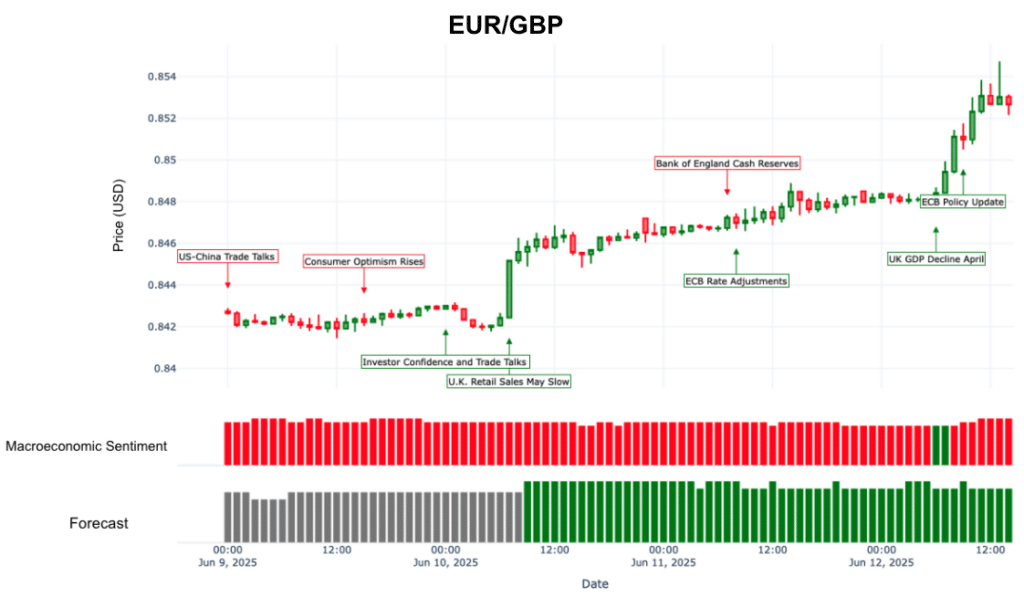
EUR/GBP Surge: Sterling Weakness Drives Euro to Multi-Month Highs

Above: Tracking macroeconomic sentiment: The EUR/GBP rally in June 2025 was preceded by sustained positive sentiment and narrative signals – enabling traders to anticipate the euro’s climb amid UK economic weakness and ECB policy updates.

Direction Shift Signals identify when established narratives begin changing course, providing critical intelligence for anticipating price reversals before technical indicators suggest trend changes. The recent shift in oil market sentiment surrounding Middle Eastern tensions illustrates this pattern. Initially, markets had become somewhat complacent about regional risks, but our War Sentiment Index detected early signals of changing narrative tone. On June 12th, our algorithms began detecting unusual patterns in media coverage of Iran-Israel tensions, with sentiment scores showing significant negative spikes hours before Brent crude moved from $69 to $74 following escalating strike warnings.

Persistence Signals measure the staying power of existing narratives, helping traders distinguish between temporary noise and stories with genuine long-term market impact. The sustained euro strength against sterling demonstrates our persistence signal effectiveness. EUR/GBP’s ascent to 0.85 was driven by persistent negative narratives around UK economic performance, with our Trading Co-Pilot tracking consistent bearish sentiment following Britain’s -0.3% GDP contraction in April 2025. The persistence of negative UK economic stories, combined with eurozone resilience narratives, created sustained pressure that traditional technical analysis struggled to quantify.

Real-world performance: Our systematic advantages in action

The effectiveness of our story signal technology extends across multiple asset classes and market conditions, with documented success providing systematic traders with measurable competitive advantages.

Precious Metals Intelligence: The platinum market surge in June 2025 showcases our story signals’ precision in commodity markets. Our Trading Co-Pilot identified the two-stage rally before price action confirmed the moves, capturing demand surge narratives in May and squeeze dynamics in June. When platinum opened sharply higher at $1,268.90 following intensified Russian drone attacks on Kyiv, our system had already signalled bullish sentiment shifts, enabling our subscribers to position ahead of safe-haven buying flows.

Currency Market Prediction: The euro’s remarkable strength against major currencies demonstrates our story signals’ effectiveness in foreign exchange markets. Our Trading Co-Pilot‘s sentiment analysis captured the shift from bearish to bullish conditions across EUR/USD and EUR/GBP, identifying macro data impacts and central bank rhetoric changes before markets moved. Our system correctly anticipated EUR/USD’s sustained upward trajectory past 1.16, whilst simultaneously tracking the narrative divergence that drove EUR/GBP higher as UK growth fears intensified.

Energy Market Intelligence: Oil markets provided perhaps the most dramatic demonstration of our story signals’ predictive power. Our War Sentiment Index, one of 22 proprietary macro indices we’ve developed, detected escalating Middle Eastern tensions hours before Brent crude spiked from $69 to $74. Our system processed thousands of articles in real-time, assigning sentiment scores and evaluating source credibility to create high-confidence signals that traditional geopolitical analysis could never match for speed and accuracy.
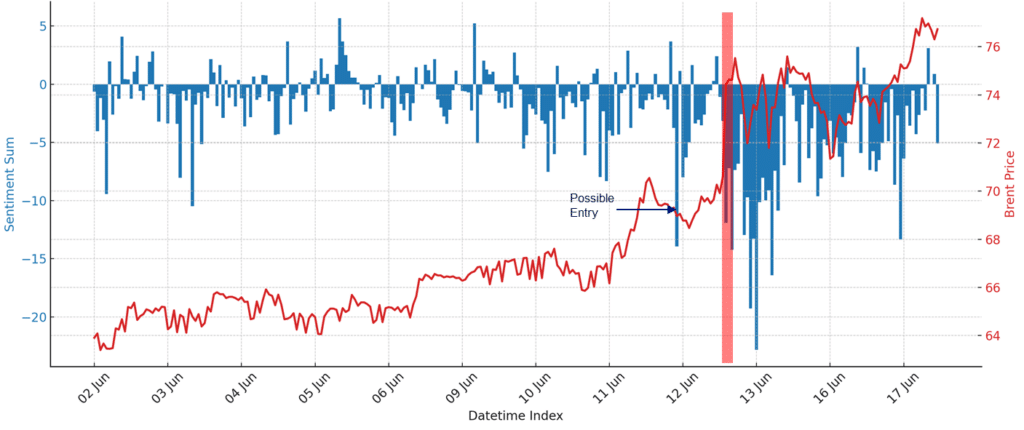
Iran oil price surge war sentiment

Above: Early warning in action: Our War Sentiment Index flagged negative sentiment spikes hours before Brent crude surged from $69 to over $74 on June 13, 2025 – providing a clear possible entry point well ahead of market consensus.

Integration with systematic trading strategies

The competitive advantage in modern systematic trading increasingly depends on information processing speed and accuracy, precisely where our story signals excel. Our algorithms can detect narrative shifts within minutes of emergence, providing systematic traders with significantly improved entry and exit timing capabilities.

The quantitative nature of our signals integrates seamlessly with existing algorithmic trading systems, providing an additional intelligence layer that enhances rather than replaces traditional technical and fundamental analysis approaches. This allows for positioning ahead of market consensus rather than following it, providing edge in trading operations

During volatile periods, such as the recent Iran-Israel escalation, our story signals provided our clients with actionable intelligence hours before markets fully priced in geopolitical risks. Traditional analysis would have required manual processing of news flows, expert interpretation, and risk assessment – processes that consume valuable time whilst opportunities disappear.

Macro strategy applications

Macro strategists face unique challenges in connecting global narratives with specific asset class implications across interconnected markets. Our story signals excel in this environment through multi-asset correlation analysis that helps strategists understand how geopolitical tensions, central bank communications, or economic policy shifts create ripple effects across different instruments and regions.

The recent convergence of multiple macro themes demonstrates this capability. European monetary policy divergence, Middle Eastern geopolitical tensions, and commodity supply constraints created complex cross-asset relationships that traditional analysis struggled to quantify systematically. Our story signals provide the framework for identifying which narratives deserved immediate attention versus those representing temporary noise, enabling more efficient allocation of analytical resources.

Meanwhile, the correlation between our War Sentiment Index and Brent crude over the past year reveals patterns impossible to detect through manual analysis, with major sentiment spikes consistently preceding significant oil price movements. 

The evolving competitive landscape

Financial markets have fundamentally changed, with information velocity and complexity reaching levels that traditional analysis cannot adequately address. Our story signals represent the natural evolution of market intelligence, combining artificial intelligence capabilities with deep understanding of market psychology and behaviour patterns.

What we are seeing is that this transformation is becoming indispensable to our clients as markets grow increasingly efficient and competitive, with early adopters of our story signal technology are already seeing significant advantages.

The question facing professional traders and institutions is not whether AI-driven sentiment analysis will become standard practice, but how quickly these capabilities can be integrated before competitors gain systematic advantages. Every day, commodity and currency markets experience inflection points that separate profitable positions from missed opportunities, and without real-time sentiment detection, significant alpha potential remains uncaptured.

Looking forward

As the sophistication of modern markets continues evolving, the demand for equally sophisticated analytical tools grows correspondingly. At Permutable, we’re building tools for today’s markets – are preparing traders for tomorrow’s complexity. We believe that the integration of real-time narrative intelligence with systematic trading strategies represents the next evolutionary step in professional market analysis.

Discover how our narrative intelligence and Sentiment Analysis API can enhance your ability to predict market movements and gain the competitive edge that separates successful systematic traders from the rest. Email us at enquiries@permutable.ai to request a demo.

Why is the euro strengthening?

This article provides an analysis of the current euro strengthening trend against major currencies, examining the monetary policy divergences and economic fundamentals driving euro strength. It is aimed at professional FX traders, institutional investors, and financial market analysts seeking actionable insights into European currency movements and central bank policy impacts.

The euro’s strength persists, buoyed by a more hawkish ECB stance and improving eurozone economic signals. As global central banks policy paths diverge, capital is flowing into the single currency, with euro strengthening against major trading partners.

EUR/USD: Surging despite geopolitical and trade tensions

EUR/USD surged above $1.1570, reaching its highest level since late 2021 and nearing $1.16. This strength persists despite safe-haven demand bolstering the dollar following Israeli strikes on Iranian military sites and cautious Fed commentary. However, softer-than-expected U.S. inflation data (both PPI and CPI) have led markets to price in Fed rate cuts in upcoming meetings. This weakened the Dollar Index as investors pivoted away from U.S. markets, with the euro strengthening as a direct beneficiary of dollar weakness.

Concurrently, the euro’s resilience and improving investor sentiment across the Eurozone, particularly in Germany, further supported EUR/USD. The euro strengthening trend has been reinforced by ECB officials maintaining a hawkish tone, suggesting recent cuts were front-loaded to anchor inflation expectations, and that any further easing will be limited.

Elevated trade and geopolitical tensions continue to offer little market relief. Trump reaffirmed broad tariff plans, indicating limited willingness to negotiate in good faith with key trade partners (EU, Japan, and South Korea). Despite these headwinds, strengthening momentum continues as the single currency benefits from relative economic stability. Additionally, sluggish U.S.–China trade talks have added uncertainty, reinforcing cautious investor risk appetite while euro strengthening against the backdrop of Fed dovishness.

UR/USD Breaks Above 1.16: Dollar Weakness Fuels Euro Rally

Above: EUR/USD climbed past 1.16, reaching levels not seen since late 2021, as softer US inflation data sparked expectations of Federal Reserve rate cuts. Our Trading Co-Pilot’s sentiment analysis captured the shift from bearish to bullish conditions, with key events including US-China trade tensions and ECB rate adjustments driving the euro strengthening momentum. Our forecast models accurately predicted the sustained upward trajectory.

EUR/GBP: Pound weighed down by growth fears

EUR/GBP ascended to $0.85, propelled by eurozone resilience and escalating concerns over the UK economy. The euro strengthening against sterling has been particularly pronounced following weak UK economic data. The UK’s April GDP contracted by -0.3% (m-o-m), marking its steepest decline since 2020 and falling well short of expectations following a robust Q1 performance. This broad-based contraction spanned services, manufacturing, and retail, while a notable drop in HMRC payrolls show clear signs of labour market deterioration.

EUR/GBP Surge: Sterling Weakness Drives Euro to Multi-Month Highs

Above: EUR/GBP rallied to 0.853 following disappointing UK GDP data showing a -0.3% monthly contraction in April. The chart displays key sentiment drivers including Bank of England cash reserve concerns and ECB policy updates, with macroeconomic sentiment shifting bullish (green) after sustained bearish conditions. Our AI-powered forecast indicators correctly anticipated the euro strengthening trajectory against sterling.

The euro strengthening trajectory versus the pound reflects growing divergence in economic fundamentals between the eurozone and UK. This weak string of macro-data raises fresh doubts over the growth and inflation outlook, leading markets to factor in the risk of an earlier or more aggressive monetary policy pivot from the Bank of England, further supporting euro strengthening against the pound.

How our Trading Co-Pilot spots bullish moves early 

Our Trading Co-Pilot flagged early bullish signals in both EUR/USD and EUR/GBP, identifying shifts in sentiment, macro data, and central bank rhetoric before markets moved. In fast-moving FX markets, staying ahead of the curve is crucial. As trade risks rise and rate paths diverge, staying on top of macro shifts is more important than ever, particularly when euro strengthening trends are driven by complex monetary policy divergences. 

Discover how our integrated intelligence can transform your FX trading performance. Contact enquiries@permutable.ai to unlock these market-moving insights in real-time.

When the US dollar dropped, here’s how our AI tracked market sentiment through the Moody’s downgrade

In the fast-paced world of financial markets, capturing real-time sentiment shifts represents perhaps the most coveted advantage in trading. On May 16, 2025, when Moody’s downgraded the United States’ credit rating from AAA to AA1, our sentiment engine was actively monitoring the market’s emotional response, tracking the complex interplay between news, market psychology, and price action.

Our advanced sentiment engine meticulously tracked evolving patterns in market discourse as the US dollar dropped in response to the credit downgrade. This article analyses how our systems captured these sentiment shifts in real-time and what it means for financial institutions seeking to understand market sentiment as a leading indicator, particularly in increasingly volatile conditions.

Capturing the narrative as the US dollar dropped

While it’s true that conventional wisdom suggests that credit rating announcements drive market movements, our sentiment engine tracked the evolving market narrative surrounding US fiscal stability, capturing the sentiment trajectory throughout the entire episode on a more granular level.

By continuously monitoring over 120,000 global news sources in the crucial week surrounding the downgrade, the sentiment patterns surfaced revealed a complex landscape. Crucially, this wasn’t merely tracking general market pessimism. Our multi-agent LLM architecture specifically mapped shifting sentiment in response to concerns around US government debt sustainability and fiscal policy direction – the precise factors Moody’s cited in their downgrade rationale.

US dollar downgrade sentiment change

Above: Permutable’s sentiment indicators accurately tracked the US Dollar’s downward movement (May 16-20, 2025), showing intensifying negative sentiment following the US credit rating downgrade, tornado events, and emerging tariff concerns. Our macroeconomic sentiment tracker (bottom panel) displays predominantly red signals that perfectly align with each price decline, demonstrating how our system effectively captured market psychology through this critical period.

The twin deficit narrative emerges

Here, our sentiment engine doesn’t simply detect positive or negative sentiment – it contextualises information within complex economic frameworks. As the US dollar dropped from its May 13th opening position of 101.40 to close at 100.82, our systems tracked the emergence of the twin deficit narrative in market discourse, with specific concerns about both budget and trade deficits gaining momentum.

When many attributed this movement to the temporary US-China trade war truce, our sentiment analysis painted a more sophisticated picture, tracking fiscal concerns as a dominant driver within market conversations.

Our system weighed up discussions about US debt sustainability, noting a 47% increase compared to the previous month, with particular concentration among institutional investors and policy analysts, providing important context for understanding market psychology as events unfolded.

Sentiment deterioration accelerates as the US dollar dropped further

As May 16th approached, our sentiment indicators tracked critical threshold breaches across multiple metrics. While the US dollar dropped only marginally on May 15th – from an opening of 100.76 to a close of 100.67 – our systems captured a qualitative shift in sentiment that mere price action couldn’t reveal.

Our sentiment engine’s natural language understanding capabilities tracked specific warnings about credit rating pressures in financial commentary that traditional sentiment tools, reliant on basic positive/negative classification, simply missed. By processing nuanced linguistic signals that referenced historical precedents from previous downgrades, our system provided a comprehensive assessment of market psychology in real-time.

When Moody’s announced the downgrade on May 16th, the US dollar had previously been gaining ground but our sentiment engine tracked the shifting sentiment as it unfolded.

Severe weather events compound sentiment impact

The following days revealed the advantage of complex sentiment analysis incorporating multiple information streams simultaneously. When the US dollar dropped significantly on May 19th our sentiment engine tracked the compound effect of tornado outbreaks across central US states on market psychology.

By correlating sentiment patterns across seemingly disparate narratives -severe weather events, credit rating pressures, and trade tensions – our system provided a holistic view of how these factors collectively influenced market sentiment as the US dollar dropped.

This contextual understanding represents a fundamental advantage over traditional sentiment tools that treat information streams as isolated factors rather than interconnected narrative elements that collectively shape market psychology.

G7 concerns accelerate pressure 

By May 20th, when the US dollar dropped to 100.08, our sentiment engine tracked emerging concerns among G7 finance leaders regarding US fiscal policy and tariff impacts, capturing narratives indicating diplomatic unease, perhaps typically classify as political rather than market-relevant.

This capability to bridge the gap between political discourse and market implications represents a core advantage of our approach. As the US dollar dropped to its lowest point in the week, our clients gained insight into the complex sentiment landscape driving this movement in real-time.

Beyond basic sentiment

What distinguishes our approach is our focus on causal understanding rather than mere correlation. As the US dollar dropped following Moody’s announcement, many systems will have detected the negative sentiment – however ours tracked and delayered the underlying reasons behind this sentiment and how it evolved throughout the event.

Our multi-agent LLM architecture doesn’t simply identify sentiment; it tracks the interconnected implications across complex economic relationships. This capability enabled our systems to monitor not just that the US dollar dropped, but how specific market segments responded to the downgrade based on their exposure to US government debt and fiscal policy changes.

Above: Our detailed US Dollar sentiment visualisation reveals our granular indicators precisely tracking sentiment shifts across multiple dimensions from 13-20 May 2025. Particularly telling is the rapid transition from positive (green) to negative (red) macroeconomic sentiment coinciding with the dollar’s decline, whilst our categorical breakdown shows deepening concerns in fiscal policy and government spending preceding major price movements. This visual proof of our sentiment engine’s capability demonstrates why leading financial institutions trust our technology to decode market psychology whilst others rely on outdated metrics.

Securing the sentiment advantage

As markets grow increasingly complex and information velocity accelerates, the ability to track and contextualise sentiment shifts before they present in price action represents perhaps the most sustainable competitive advantage in modern trading.

The above case study illustrates perfectly how sophisticated sentiment analysis can provide powerful market insights and how the ability to delayer sentiment drivers can deliver significant value. Here, our systems have once again demonstrated that in modern markets, genuine alpha generation comes from understanding sentiment as it manifests in conventional metrics.

Harness the power of real-time sentiment analysis before your competitors

Contact enquiries@permutable.ai to arrange an initial discussion about how our advanced language models can give your firm deep understanding of market sentiment drivers during major market movements.

GBP market sentiment 14 May 2025: Key factors affecting the sterling this week

This analysis examines the key factors affecting the pound during the week of May 6-13, 2025, focusing on how currency movements, trade negotiations, and labour market challenges shaped GBP market sentiment. It is written for
professional forex traders, institutional investors, and financial analysts seeking data-driven insights into the critical factors affecting the pound and their impact on weekly GBP market sentiment.

As we enter mid-May 2025, multiple factors affecting the pound have converged to create a particularly complex trading environment for sterling. The past week has presented a challenging landscape where traditional market correlations have been tested by conflicting economic forces. Against the backdrop of evolving US-UK relations and persistent labour market uncertainties, understanding the key factors affecting the pound has become essential for navigating GBP market sentiment in this pivotal year.

These insights into the factors affecting the pound and their impact on GBP market sentiment are derived from our Trading Co-Pilot feeds, the culmination of vast amounts of headlines and data sources which have been processed by our advanced proprietary LLMs to deliver institutional-grade forex intelligence, providing traders with real-time sentiment analysis and predictive market indicators.

Our data-driven approach combines natural language processing and sentiment analysis to identify the primary factors affecting the pound. This week’s analysis showcases how our technology tracked the intricate balance between positive trade developments and concerning employment data, offering actionable insights for currency traders and financial professionals navigating GBP market sentiment.

Sterling’s balancing act

The factors affecting the pound have displayed complexity throughout the trading week, as revealed by our Trading Co-Pilot’s continuous monitoring of market dynamics. For starters, the British Pound demonstrated stability despite mounting pressures from the UK labour market, with unemployment rising to 4.5% – its highest level in nearly four years – a critical factor affecting the pound.

Last week, the currency maintained its position primarily within the 1.32-1.34 range against the US dollar, showcasing how multiple factors affecting the pound balanced each other out. The results was particularly interesting as our sentiment analysis tracked traders weighing optimistic trade negotiations against deteriorating employment conditions, both significant factors shaping GBP market sentiment.


GBP market sentiment weekly performance May 2025

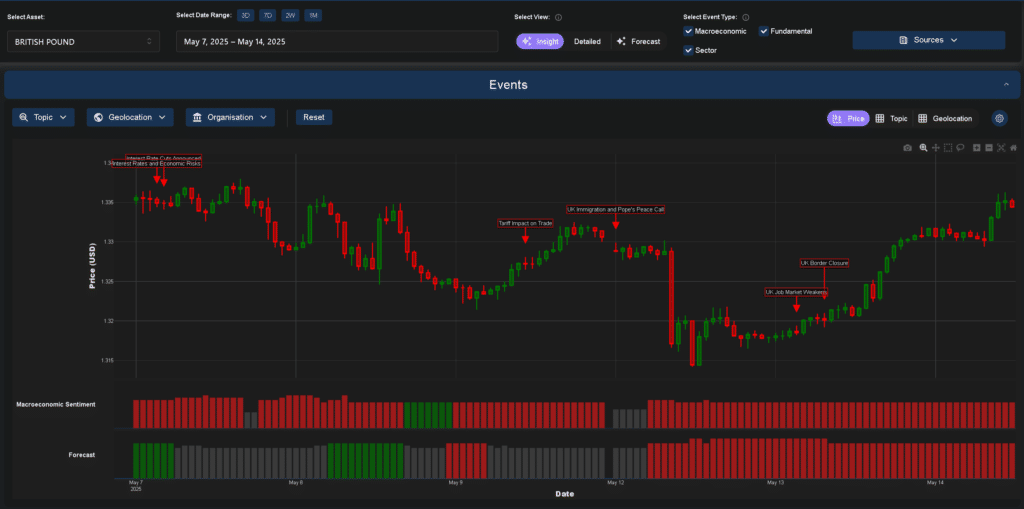
Above: GBP/USD weekly performance captured by Permutable AI’s Trading Co-Pilot data feeds showing the pound’s complex trajectory from May 7-14, 2025. The chart highlights key market events including interest rate cuts, UK immigration announcements, and pivotal US-UK trade negotiations.

Trade breakthrough

Our Trading Co-Pilot data feeds identified the announcement of a breakthrough US-UK trade agreement as one of the most positive factors affecting the pound this week. This development temporarily lifted GBP market sentiment, with sterling reaching 1.34 on Tuesday according to our price tracking data. More recently, however, our analysis reveals that concerns about the domestic employment situation have tempered initial enthusiasm, demonstrating how competing factors affecting the pound can offset each other.

So, the week began with trade negotiations emerging as a key factor affecting the pound, detected by our sentiment indicators. On Tuesday, May 6, progress in US-UK trade negotiations sparked hopes for a beneficial trade pact, pushing sterling slightly higher. And then came the formal announcement on Thursday, May 8, of a significant trade agreement between the two nations, including tariff reductions for UK goods – a development our Co-Pilot flagged as a major factor affecting GBP market sentiment.

Monetary policy pressures 

Of course, not all factors affecting the pound supported positive GBP market sentiment. Much of this is due to persistent concerns about monetary policy direction, identified by our algorithmic tracking as a crucial factor affecting the pound. The Bank of England faces mounting pressure to consider further rate cuts in response to economic challenges, particularly those stemming from international trade tensions.

And this is why the pound’s trading pattern throughout the week reflected these competing factors, as our insights demonstrates. In other words, while trade developments emerged as positive factors affecting the pound, employment data created resistance at higher levels. Indeed, our Trading Co-Pilot’s analysis confirms that the unemployment rate’s rise to 4.5% represents one of the most significant negative factors affecting GBP market sentiment.

Employment challenges

This dynamic among factors affecting the pound could change, however, as market participants await further clarity on the implementation of the new trade agreement – a factor our predictive models are closely monitoring. The tariff situation remains a particular bête noire for UK businesses when selling British goods – another negative factor affecting the pound.

Assuming that the Bank of England maintains its current stance, the interplay of factors affecting the pound may stabilise GBP market sentiment according to our forward-looking indicators. For instance, the central bank must carefully balance supporting economic growth whilst managing inflationary pressures. But, in reality, our analysis suggests the multiple factors affecting the pound have made the decision-making process increasingly complex.

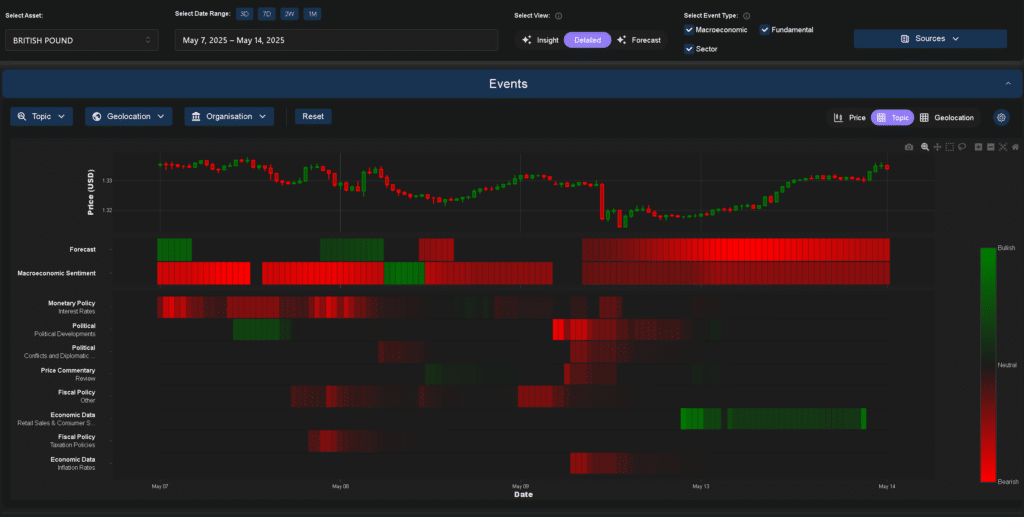
Above: Comprehensive breakdown of factors affecting the pound captured by our Trading Co-Pilot data feeds from May 7-14, 2025. Our detailed analysis reveals how macroeconomic sentiment and key policy areas influenced GBP market sentiment throughout the week. The chart displays sterling’s price action alongside our proprietary sentiment indicators across multiple domains including monetary policy, political developments, fiscal policy, and economic data. Red signals indicate negative pressure on the pound, whilst green shows supportive factors. This multi-dimensional view demonstrates how our market sentiment engine analyses the complex interplay of forces shaping forex markets, providing traders with institutional-grade insights into what’s driving currency movements.

Technical levels supporting market psychology

Most important, our Trading Co-Pilot’s correlation analysis shows how technical factors affecting the pound interact with fundamental drivers to shape sterling’s trajectory. That’s what’s made this week particularly significant for currency traders monitoring GBP market sentiment. It may be that positive factors affecting the pound from trade negotiations provide sufficient support to offset labour market concerns.

In other words, our sentiment analysis indicates the market appears to be weighing various factors affecting the pound differently. This assumption is being tested as new economic data emerges through our real-time feeds. Interestingly, our technical analysis shows the pound’s resilience at the 1.32 level suggests strong technical support – itself a factor affecting GBP market sentiment.

Policy changes and emerging factors

There is also the question of how UK businesses will adapt to the new trade environment, an evolving factor affecting the pound. And that’s what seems to be happening as companies reassess their strategies in light of both opportunities and challenges, according to our corporate sentiment analysis. This is all the more relevant given the UK government’s announcement of significant immigration policy changes, which our system flagged as an emerging factor affecting GBP market sentiment.

This pattern identified in our data highlights how traders must closely monitoring how these various factors affecting the pound interact. Similarly, our analysis shows attention remains focused on Bank of England communications regarding future monetary policy direction. Meanwhile, the broader implications of the UK’s border closure announcement continue to unfold as a developing factor affecting the pound in our newsflow tracking.

Market expectations

The idea that GBP market sentiment can remain positive despite negative factors affecting the pound reflects the complex nature of currency valuation, as our multi-factor models demonstrate. For example, whilst employment concerns represent a significant negative factor affecting the pound – with one in four employers planning redundancies over the next three months according to our data aggregation – the trade agreement’s benefits may offset these concerns.

Of course, the relative importance of factors affecting the pound can shift rapidly. But it is expected to be more likely that sterling will continue trading within its established range over the next few weeks, unless new factors affecting the pound emerge that are detected by our early warning systems. That said, our analysis recommends traders remain vigilant for changes in how the market weights different factors affecting GBP market sentiment.

Understanding the factors through data

In short, this week’s analysis of factors affecting the pound, as captured by our Trading Co-Pilot data feeds, demonstrate sterling’s ability to balance multiple economic forces. The various factors affecting GBP market sentiment have created a complex but navigable trading environment, with our comprehensive data analysis providing the clarity needed to understand and indeed, delayer, how trade negotiations, labour market developments, and policy considerations shaped the pound’s performance.

Stay ahead with our Trading Co-Pilot data feeds 

Stay ahead of factors affecting the pound with our Trading Co-Pilot data feeds. Access institutional-grade analysis of GBP market sentiment powered by real-time data processing and advanced analytics direct through out API and integration services. Simply reach out to our team at enquiries@permutable.ai or fill in the form below to discuss a trial or integration opportunities. 

Enquire about trial/integrations


Market intelligence insights: Energy and currency trends – April 2025

This market sentiment intelligence report provides professional traders, financial analysts and institutional investors with AI-powered insights into the current factors driving energy and currency markets. Our analysis is designed to support strategic decision-making in volatile global markets.

As global markets continue to navigate complex economic terrain, our AI-powered analytics have identified several significant energy and currency trends shaping markets over the past month. By analysing data from over 200 major sources, our Trading Co-Pilot has distilled the key factors driving market sentiment and price action during April 2025. This comprehensive overview of energy and currency trends offers valuable insights for traders, analysts, and financial professionals seeking to understand current market dynamics and anticipate future movements.

Energy and currency trends April 2025

Energy markets: Divergent fundamentals

Energy and currency trends April 2025

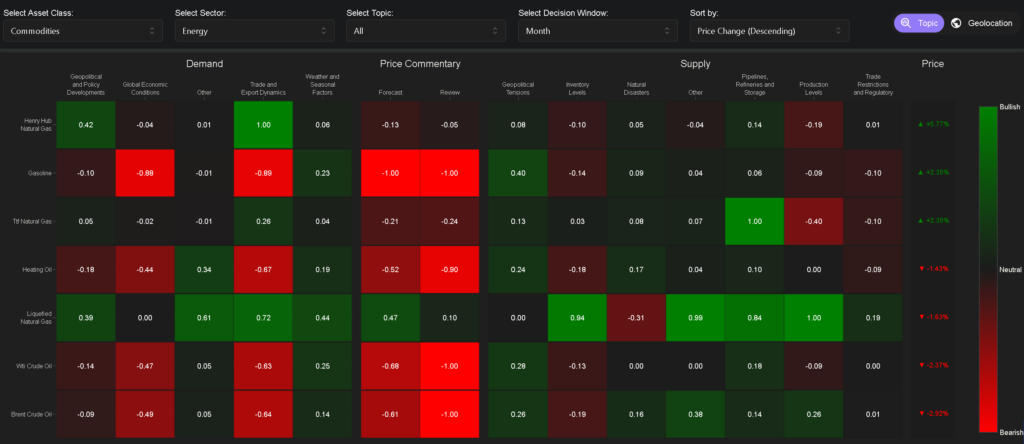
Above: Price drivers across energy markets in April 2025- taken from our Trading Co-Pilot Sector Analysis feature

Natural gas resilience

Fortunately, April has witnessed remarkable resilience in natural gas markets despite challenging conditions across the broader energy spectrum. Our analysis of energy trends indicates that strong export flows and robust “other” demand factors have underpinned US gas prices, effectively offsetting weaker macroeconomic indicators that might otherwise have depressed values.

The closing week of April was particularly noteworthy, as a sharp cold snap boosted US winter-heating demand, lifting Henry Hub prices and supporting strong pipeline and storage dynamics. This weather-driven strength demonstrates how seasonal temperature variations continue to exert significant influence on short-term market movements, even as structural factors evolve.

In European gas markets, maintenance-related supply constraints have provided support for gas prices, tempering potential losses at TTF. This highlights the ongoing importance of infrastructure reliability in determining regional price differentials within current energy and currency trends.

LNG market dynamics

The LNG sector has maintained a delicate balance throughout April. Our sentiment analysis of energy trends reveals that robust export flows and healthy global economic indicators have helped LNG weather softer oil prices. However, mild seasonal demand in key consumption regions has limited upside potential, creating a market in equilibrium but with heightened sensitivity to supply disruptions or demand shocks.

Oil market headwinds

In notable contrast to natural gas, crude oil and refined products have faced persistent headwinds throughout April. Our comprehensive monitoring of energy trends identified weak global growth forecasts and stubbornly high inventory levels as primary factors exerting downward pressure on prices.

There is also the fact that production levels have remained elevated despite occasional efforts to constrain output, reinforcing bearish sentiment across petroleum products. While periodic geopolitical tensions have offered temporary price support, these episodes have proved insufficient to counteract the broader oversupply narrative dominating market psychology.

Supply disruptions and inventory dynamics

Natural disasters have had a pronounced impact on European gas inventories during April, while pipeline outages and maintenance have created uneven effects across regional markets. Our analysis shows that these disruptions have amplified volatility in gas markets, creating both challenges and opportunities for traders positioned to anticipate supply constraints.

Oil inventories, meanwhile, have remained stubbornly high, further reinforcing bearish sentiment across petroleum products and limiting the effectiveness of production adjustments in stabilising prices.

Currency markets: Policy Divergence and risk flows

currency market trends April 2025

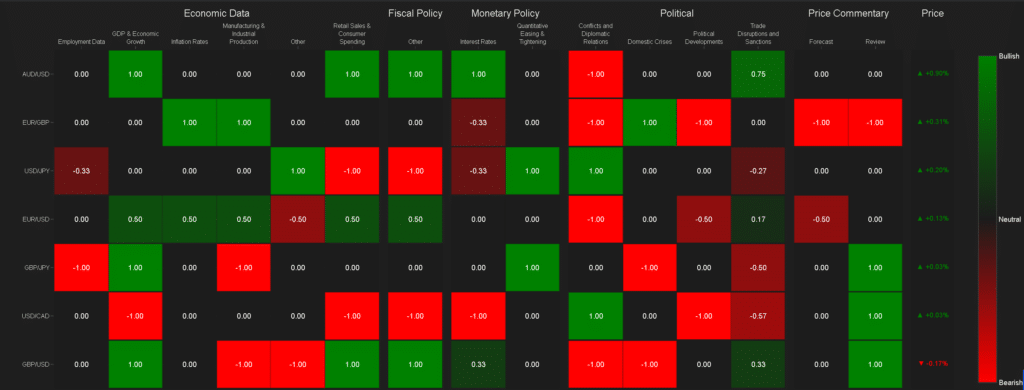
Above: Price drivers across currency markets in April 2025- taken from our Trading Co-Pilot Sector Analysis feature

Trade policy and fiscal developments

A significant reduction in trade-policy uncertainty drove synchronised strength in EUR/USD and GBP/USD during April, lifting both crosses to multi-month highs. Our sentiment analysis tracked this easing of trade-sanctions risk across multiple data sources, confirming its central role in these energy and currency trends.

Fiscal policy developments have also played a key role, with increased Eurozone government spending and a dovish tax outlook bolstering EUR/GBP, outweighing tighter Bank of England expectations that might otherwise have supported sterling.

Monetary policy divergence

Central bank policy divergence has continued to shape currency markets throughout April. Our analysis surfaced hawkish signals from the Federal Reserve and European Central Bank that effectively capped upside in dollar pairs, while the Bank of Japan’s continued easing stance underpinned JPY crosses – particularly evident in GBP/JPY movements.

Risk-off episodes and weak oil prices have periodically drawn flows into the Japanese yen, dragging USD/JPY lower. Meanwhile, sluggish energy markets have weighed on commodity currencies, particularly the Canadian dollar, highlighting the ongoing interconnection between energy and currency trends.

Regional factors

Finally, beyond global drivers, regional influences have also shaped specific currency pairs. Our sentiment tracking identified positive Australian domestic news providing additional support to AUD/USD, though the pair remained sensitive to local headline risks throughout the month.

Implications for market participants

These divergent energy and currency trends in April 2025 highlight the importance of sophisticated, multi-factor analysis for effective trading and risk management. In the past month, natural gas markets have demonstrated notable resilience amid challenging conditions for oil, highlighting the value of sector-specific intelligence rather than broad-brush approaches to energy commodities.

In currency markets, the recent interplay between trade policy, central bank actions, and risk sentiment continues to create opportunities for well-informed traders. Our AI-powered Trading Co-Pilot has successfully identified these key energy and currency trends by processing millions of data points, enabling our clients to navigate market complexity with confidence.

As we move into May, we will continue monitoring these evolving energy and currency trends, providing real-time intelligence on the factors driving global market sentiment and price action. For customised insights tailored to your specific trading requirements, please contact our team to learn how our advanced AI solutions can enhance your decision-making processes.

Take your trading to the next level

Ready to harness the advantage of our AI-driven market intelligence? Subscribe to our Trading Co-Pilot today and gain immediate access to real-time insights that can transform your trading strategy. Our solution helps you cut through market noise, identify emerging opportunities, and make data-backed decisions with confidence.

For enterprise users and institutional investors, our robust API offers seamless integration with your existing systems, delivering our intelligence directly to your trading platform. Experience how our advanced analytics can give you the competitive edge in today’s complex markets. Get in touch with us at enquiries@permutable.ai or fill in the form to request a demo.

Request demo


Key macroeconomic factors affecting currencies: A global perspective

*This article examines the key macroeconomic factors affecting currencies in today’s global markets, aimed at forex traders and financial professionals seeking to understand the complex interplay of trade relations, monetary policies, and economic indicators that drive currency valuations in 2025.

Tensions have been rising across global financial markets with a complex web of macroeconomic factors affecting currencies in early 2025. From monetary policy divergence to inflation concerns and geopolitical tensions, this year has so far been one of cross currents, uncertainty and risk.

Yet even now, amidst this uncertainty, patterns are emerging that savvy currency traders can leverage. The interplay between central bank policies, inflation trajectories, and political developments continues to create both challenges and opportunities in currency markets. In this article, we’ll explore key macroeconomic factors affecting currencies with insights taken from our Trading Co-Pilot and macroeconomic data feeds.

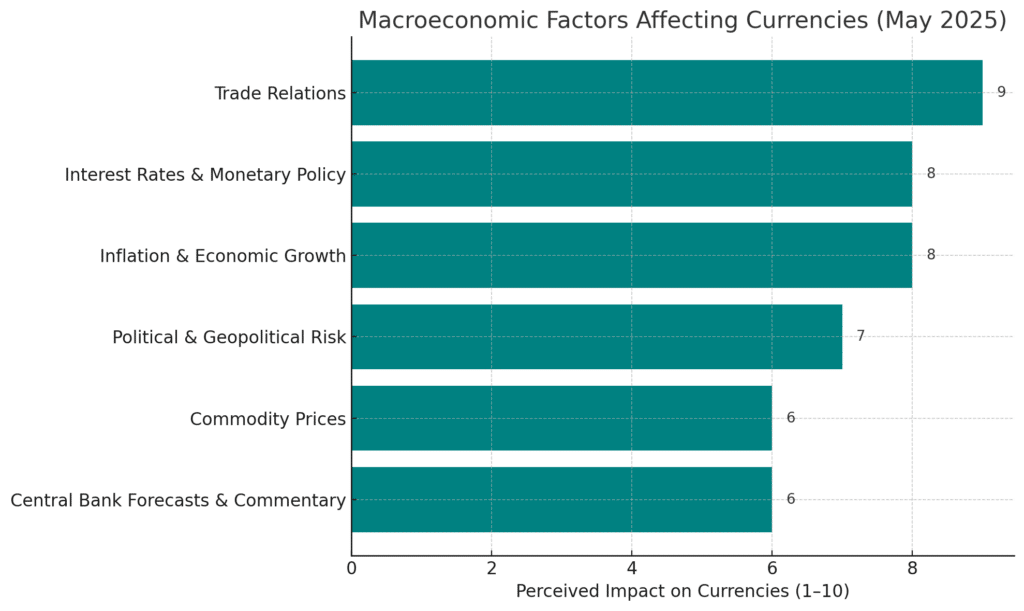
Macroeconomic Factors Affecting Currencies

Key macroeconomic forces shaping global currency markets in May 2025 according to our market sentiment data, with trade relations and monetary policy emerging as the most influential drivers amid ongoing economic uncertainty.

Trade relations: The dominant force in currency movements

Let us rattle through the current state of global trade relations and their impact on currencies. The ongoing US-China trade tensions have continued to cast a long shadow over the yuan, though the currency has been maintaining stability despite escalating rhetoric. According to sources within financial markets, China has indicated a willingness to engage in trade discussions with the United States, potentially providing optimism for traders amid ongoing economic challenges.

The same applies to the euro, which has remained relatively stable despite warnings from ECB President Christine Lagarde that US tariffs could slow Eurozone growth. The point here is that trade relations have become the primary driver of currency movements, often overshadowing traditional macroeconomic factors affecting currencies like interest rate differentials.

Interest rate dynamics and monetary policy divergence

For when you look again at recent central bank actions, a clear picture emerges of diverging monetary policies. The ECB has signalled potential rate cuts, while the Bank of Japan has maintained its policy rate unchanged at around 0.5% and downgraded its growth forecasts.

Not long ago, these policy divergences would have created more dramatic currency movements. Yet as central banks increasingly align their concerns around global trade tensions, we’re seeing a dampening effect on what would typically be significant drivers of forex markets.

The trouble is, this new reality creates unpredictable correlations between macroeconomic data releases and currency responses. Almost everyone we speak to in the industry confirms that traditional models for currency forecasting are becoming less reliable in this environment.

Inflation concerns and economic growth

Let’s briefly look at how inflation is affecting major currencies. Tokyo’s Consumer Price Index inflation increased to 3.5% year-over-year, yet this didn’t translate into price movement for the Yen. The US economy contracted by 0.3% in the first quarter, attributed to the impacts of trade policies, while the dollar has experienced what some analysts term as its worst first 100 days of a presidency since Nixon.

There’s a sense of foreboding in markets about how these inflationary pressures might evolve. This concern has three components: first, the potential for stagflation in major economies; second, the diverging inflation trajectories between developed and emerging markets; and third, the uncertain response from central banks caught between fighting inflation and supporting growth.

And the bad news is that all of this is likely to continue in currency markets throughout 2025.

Political developments and their currency impact

The other element in the mix? Political developments have taken centre stage in driving currency movements. So when it emerged that Mark Carney’s election victory in Canada on an anti-Trump platform led to a positive market reaction for the Canadian Dollar, traders took notice. The currency has shown continued strength, remaining stable at 0.73 and strengthening against most major currencies.

Except that political stability doesn’t always translate to currency strength. The British Pound, despite a relatively stable government, decreased to 1.33, influenced by a significant drop in UK house prices marking the fastest decline in two years. There’s plenty of evidence that macroeconomic factors affecting currencies sometimes override political considerations.

Commodity prices and resource-dependent currencies

The Australian Dollar – a commodity currency – presents an interesting case study in how commodity prices affect currency valuations. The AUD showed signs of strength following positive trade balance data, with Australia’s trade surplus climbing to 6,900M MoM in March, significantly exceeding expectations.

Yet the World Bank reported that commodity prices are expected to fall to pre-COVID levels, raising concerns about the impact on the Australian economy. It is claimed that these projections could significantly weigh on the AUD in coming months, particularly if China’s demand for resources continues to moderate.

The interplay of multiple factors

So there it is – a complex web of macroeconomic factors affecting currencies that traders must navigate daily. Of course, no single factor dominates currency movements consistently. Instead, it’s the interaction between trade relations, monetary policy, inflation trends, political developments, and commodity prices that determines currency trajectories.

And if it is the case that trade tensions continue to escalate, we could see traditional correlations between economic data and currency movements further break down. In this light, traders must adapt their strategies to account for this new reality.

The good news is that adaptive trading strategies focusing on multiple macroeconomic factors affecting currencies can still yield results. To address this complexity, traders should consider employing more sophisticated multi-factor models that weigh various inputs dynamically based on market conditions, such as those we offer through our market sentiment data feeds.

Looking ahead: Currency trends for the remainder of 2025

If we don’t make progress on resolving global trade tensions, currency markets will likely remain uncertain throughout 2025. There’s a sense that markets are waiting for clarity on US trade policy, with significant implications for all major currency pairs.

And this is why monitoring developments in US-China relations, ECB policy decisions, and commodity price trends will be crucial for currency traders in the coming months. These macroeconomic factors affecting currencies will continue to interact in complex ways, creating both risks and opportunities for market participants.

Stay ahead of currency markets with real-time insights

Ready to leverage our real-time market sentiment insights for your trading strategy? Access our comprehensive data feeds through our Trading Co-Pilot terminal or integrate directly with our API for real-time analysis of macroeconomic factors affecting currencies. Our advanced trading intelligence delivers the powerful information you need, precisely when you need it – ensuring you make informed decisions in today’s uncertain currency markets. Simply email us at enquiries@permutable.ai to request a demo or fill in form below.

Request demo


Why is the euro rising against the dollar? Trade tensions spark currency shift

This article provides professional traders, institutional investors and financial analysts with an in-depth analysis of the euro’s recent appreciation against the dollar amid global trade tensions and shifting monetary policy expectations.

In the volatile world of currency trading, the euro rising against the dollar has become one of the most significant market trends of 2025. Since Trump’s “Liberation Day” tariff announcements on April 2nd, the euro has gained an impressive 5.3% against the greenback, marking its largest two-month decline in over two decades. What actually is going on here? The currency shift reflects a fundamental reorientation of global investor sentiment, with profound implications for both economies. In this article, we’ll explore the key drivers behind the euro rising against the dollar, with insights taken from our Trading Co-Pilot terminal.

Trade tensions driving currency movements

We’re now all well versed in the fact that the crisis in US-China trade relations has spilled over into broader global markets. Trump’s sweeping tariffs, including a 25% levy on all foreign-made cars and a 10% universal tariff, have sparked concerns about global trade tensions and their economic impact. All of which suggests investors are seeking safer havens for their capital, increasingly viewing Europe as more stable than the US in the current climate.

ECB President Christine Lagarde stated that tariffs imposed by Trump are likely to slow growth in the eurozone. Despite this, inflation in the euro area is expected to hover around the 2% target. The keys to understanding the euro rising against the dollar lie in how markets are interpreting these divergent economic signals.

Shifting monetary policy expectations

With many betting on significant interest rate cuts by the Federal Reserve, and expectations for five more cuts throughout 2025, the shift in monetary policy expectations has been a major driver behind the euro rising against the dollar.

Again and again, data releases have reinforced these expectations. US consumer confidence has dropped to its lowest level in five years, driven by concerns over tariffs. In addition, US economic output likely experienced its worst quarter since the onset of Covid, with growth occurring at the weakest rate in nearly three years.

We can be reasonably confident that these economic indicators are prompting the Federal Reserve to consider more aggressive rate cuts than previously anticipated. At least this is what market pricing suggests, with traders increasingly positioning for a more dovish Fed.

European economic resilience

Just as notably, despite a generally gloomy global economic outlook, Germany’s corporate sector exhibits a sense of optimism. This resilience in Europe’s largest economy is contributing to the euro rising against the dollar as investors reassess regional economic strength.

The present outlook for the Eurozone shows some surprising bright spots. What about bank lending? Eurozone loans to the private sector have increased at a faster pace, with ECB data indicating continued growth in bank lending prior to tariffs. ECB’s Kazaks expressed optimism about potential step-by-step rate cuts, while maintaining a cautious approach.

This age old method applies to understanding currency markets right now: follow the money. Investor capital is flowing toward European assets, boosting the euro rising against the dollar as markets digest the changing economic landscape.

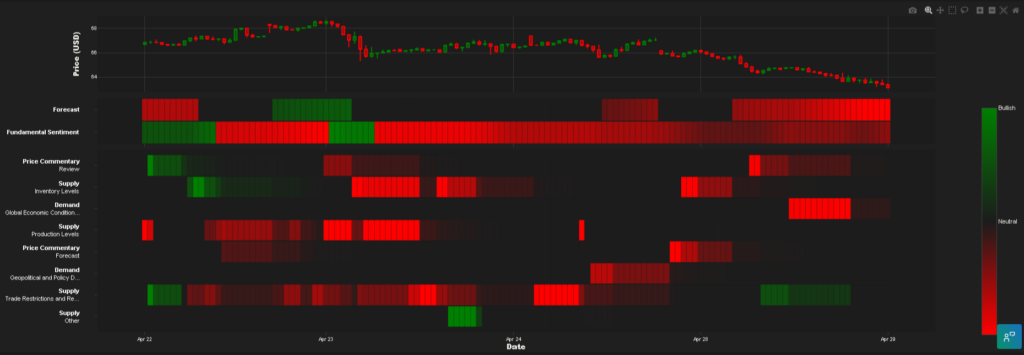
euro rising against the dollar

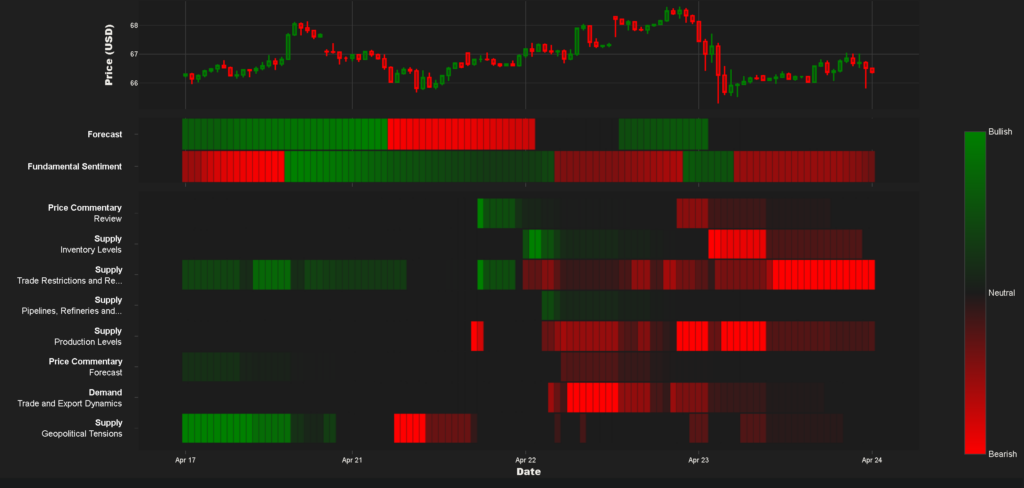
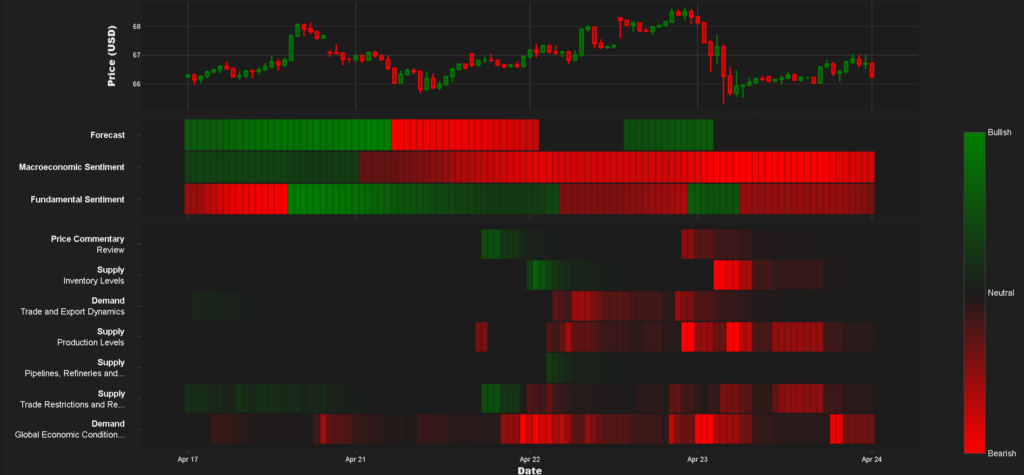
Above: The above sentiment heatmap from our Trading Co-Pilot displays increasingly negative sentiment drivers for the US dollar (shown in red) across multiple economic factors from April 22-29, 2025, particularly in fundamental sentiment and trade policy areas, visually explaining the EUR/USD price decline from 67 to 63 as the euro strengthens against a weakening dollar.

Rebalancing European economics

If experience tells us anything it’s that currency shifts of this kind have significant economic implications. The fall in yields and appreciation of the euro is a tailwind for the eurozone’s domestic economy. For export producers, however, the euro strength is a headwind.

You can make the argument that if the current trend continues, it could accelerate the eurozone’s rebalancing away from external demand towards domestic demand. The hardest part is managing this transition without disrupting economic growth.

Increasingly, European policymakers will be viewing the current complex as an opportunity rather than a challenge. That said, the truth is more complicated than simple currency appreciation. As the euro rising against the dollar changes trade dynamics, it also helps for reducing import costs, particularly energy, which benefits European consumers and businesses.

Global trade reconfiguration

As we are already becoming accustomed to, we live in an age of highly volatile geopolitics. The US-China trade war is impacting global markets, with reports of the US merchandise trade deficit reaching a record high of $162 billion in March. There are several areas where this is creating ripple effects across the global economy.

What is needed is a clear understanding of how these trade tensions are reshaping global commerce. However, as long as we rely on traditional frameworks for understanding trade relationships, we may miss the fundamental restructuring taking place.

And we must acknowledge that China’s decision to reduce the 125% tariff on a major US export following predictions from the White House suggests Beijing may be seeking to de-escalate tensions. This is not to say that trade relations will normalise any time soon, but it perhaps indicates some flexibility if we are to be optimistic.

Market outlook and investment implications

We can expect continued volatility in currency markets as these trade and monetary policy dynamics play out. The question is whether the euro rising against the dollar represents a temporary adjustment or a more fundamental shift in currency valuations.

As for investment implications, this currency trend has significant consequences for multinational corporations and investors with exposure to both regions. Defining what is classed as appropriate currency hedging strategies becomes increasingly important in this environment.

Last but not least, it’s worth considering the psychological aspects of market movements and sentiment. If narratives shape politics, they also shape markets, and the narrative around the euro rising against the dollar has gained considerable momentum.

While it’s true that currency markets can reverse quickly, the underlying factors driving the euro rising against the dollar suggest this trend may have staying power as long as the fundamental drivers remain in place. To reclaim strength in this area, the dollar would need either a shift in US trade policy or more hawkish Fed positioning than markets currently expect.

Stay ahead of currency market movements

To gain deeper insights into these currency trends and make more informed trading decisions, access our comprehensive market analysis through the Trading Co-Pilot terminal or API. Our real-time sentiment analysis and expert commentary provide the edge you need in today’s volatile market conditions. Explore our currency market sentiment here or contact our team at enquiries@permutable.ai today to unlock premium currency insights that go beyond traditional market data.

subscribe to our newsletter

USD/CAD market sentiment amid trade wars and Canadian elections April 2025

The combination of global trade wars with geopolitical tensions along with commodity market fluctuations and evolving macroeconomic conditions together with shifting domestic policies draws investor attention towards the USD/CAD currency pair. In particular, the unfolding trade tariff disputes which remind traders of President Trump’s initial term have unsurprisingly prompted asset managers and FX traders to react.

In response to such uncertainty, our Trading Co-Pilot delivers instant and predictive market sentiment analytics with risk assessment, offering investors strategic advantages in unstable markets. Investors use both historical and real-time sentiment data to forecast significant currency movements. Our Trading Co-Pilot helps identify early indicators of volatility in pairs like USD/CAD, alerting users not only to potential risk events but also to quantifying sentiment shifts, enabling a deeper understanding of market direction. As a result, asset managers and FX traders gain a powerful edge in navigating the complex interplay of global forces impacting currency performance.

In this analysis, we examine insights on USD/CAD movements through the lens of our Trading Co-Pilot’s global sentiment signals alongside macroeconomic developments, and geopolitical risk factors. By analysing real-time data across thousands of global media sources, policy updates, and commodity trends, this enables institutional investors to identify and act on shifts in market psychology and policy direction before they are priced in. The resulting analysis combines sentiment forecasting with macroeconomic context to deliver a dynamic, data-driven framework for trading and risk management in a highly volatile FX environment.

Global risk sentiment and trade tensions

Given that 75% of Canada’s exports heading to the United States, the Canadian dollar (CAD) remains obviously vulnerable to changes in U.S. trade policies. Trump introduced harsh tariffs at the beginning of his term this year of a 25% tax on most Canadian imports and a 10% tax on Canadian oil and potash based on national security and immigration and drug trafficking issues, eventually walking some parts back. The implementation of tariffs during his 2018 presidency produced unstable USD/CAD currency movements while deteriorating bilateral relations.

In retaliation, Canada implemented a 25% tariff on $30 billion in U.S. exports including steel, aluminum, and consumer goods as retaliation. This has also led to a significant decrease, of over 20% in boarder crossings in the Golden Horse Shoe region, one of the busiest international boarder crossing areas. The Bank of Canada calls the situation a “once-in-a-century economic shock,” keeping its benchmark interest rate at 2.75%. 

Taken together, these events highlight how susceptible the CAD is to protectionist moves by the U.S. Our sentiment analysis and policy monitoring tools ensure investors remain alert to such developments, offering early visibility into potential disruptions in USD/CAD exchange rate stability.

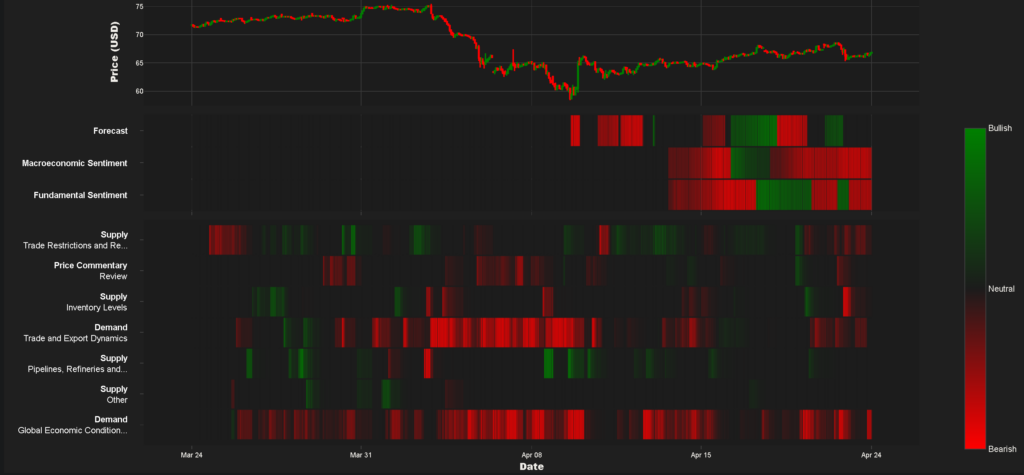
Above: Canadian dollar sentiment indicators were a leading indicator over the last month

Above: Canadian dollar sentiment indicators were a leading indicator over the last month

Elections, economic agendas, and domestic policy uncertainty

The future direction of the CAD will also be heavily influenced by domestic political developments, particularly in the lead-up to the 2025 federal election. Under Mark Carney’s leadership, the Liberal Party has proposed modest tax cuts – reducing the income tax rate from 15% to 14% – and has already eliminated the consumer carbon tax, resulting in a 20-cent per litre drop in petrol prices.

By contrast, Conservative leader Pierre Poilievre is advocating for more aggressive tax cuts, aiming to reduce rates to 12.75%. While these proposals could spur higher GDP growth, they are also expected to double the annual cost compared to the Liberal plan – raising concerns over budget deficits and inflation.

These contrasting fiscal agendas reflect broader policy divisions. The Conservatives favour deregulation and increased resource exports, potentially benefiting the CAD in commodity-driven scenarios. However, their softer stance on climate policy could strain international trade relationships. Meanwhile, the Liberals remain committed to climate objectives and plan to push back against U.S. protectionism. While Carney’s strong fiscal track record has lent credibility to his leadership, his willingness to confront U.S. trade policy has introduced some market apprehension.

According to Ipsos polling, the Liberals currently lead the Conservatives 44% to 38%, with support growing daily. A clear parliamentary majority by either party would help reduce policy uncertainty, stabilising CAD sentiment. Conversely, a hung parliament could increase the risk of political deadlock and currency depreciation. In this context, macro investors are already using USD/CAD strangles to hedge electoral volatility, supported by Co-Pilot’s real-time tracking of sentiment and polling dynamics.

Commodities, rates, and domestic economic divergence

Oil prices – and commodity markets more broadly – continue to play a crucial role in shaping the CAD. Historically, the USD/CAD exchange rate has maintained a strong inverse relationship with oil prices, with a correlation near -93% between 2000 and 2016. This highlights Canada’s heavy reliance on natural resources, and traders often treat CAD as a “petro-currency.” While this correlation can vary in the short term, the current outlook for OPEC supply cuts has improved market sentiment toward CAD.

Our Co-Pilot system continuously monitors live commodity sentiment indicators, including OPEC actions and regional supply disruptions. A rise in oil sentiment typically presents an opportunity to go long on CAD before prices adjust accordingly.

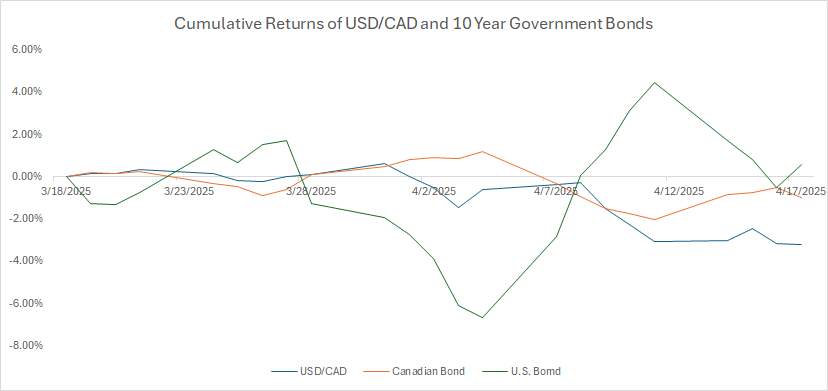
Interest rate differentials between the Bank of Canada (BoC) and the U.S. Federal Reserve also significantly influence the currency. After a series of coordinated rate hikes, the BoC turned dovish in 2024 due to weak GDP growth, a struggling housing sector, and ongoing trade concerns. In contrast, the Fed adopted a more cautious stance, noting steady U.S. employment and falling inflation. As the rate gap widens, investors increasingly favour USD-based assets, reducing CAD’s appeal.

Cumulative Return of USD/CAD and 10-year Government Bonds from April 18, 2018

Above: Cumulative Return of USD/CAD and 10-year Government Bonds from April 18, 2018

Market sentiment can shift rapidly when central banks make unexpected announcements. Our Trading Co-Pilot’s macroeconomic feed detects these shifts early, helping traders realign their CAD exposure before consensus expectations catch up.

Domestically, vulnerabilities remain post-election. Should economic conditions worsen, the BoC may opt for further easing, likely putting additional pressure on the CAD – particularly given housing market constraints and household debt burdens. Meanwhile, increased fiscal spending linked to wage growth and labour unrest could fuel inflationary risks. However, robust commodity revenues may help balance the budget while strengthening CAD.

Through our thematic filters, our Trading Co-Pilot keeps users informed on changes in budget balance, credit ratings, and debt outlooks. This level of real-time insight is crucial for formulating effective CAD strategies amid political and economic uncertainty.

Implementable trade ideas and positioning

Institutional investors can manage CAD exposure through tactical strategies, leveraging real-time analytics provided by our Trading Co-Pilot:

1. Trade-war hedge: Long USD/CAD or CAD puts

Position for potential CAD depreciation if U.S. tariffs escalate. Enter long USD/CAD positions via futures or buy CAD put options. Here, you can use our Trading Co-Pilot’s red sentiment alerts to time entries ahead of broader market reactions.

2. Election volatility: USD/CAD options straddle

Straddle options can profit from large swings regardless of outcome. Open positions weeks before the election while implied volatility remains moderate. Adjust based on polling sentiment shifts detected by our Trading Co-Pilot.

3. Interest rate divergence: Tactical USD/CAD positions

React to central bank tone. Go long USD/CAD during dovish BoC messaging, or short on unexpected dovishness from the Fed. Our Trading Co-Pilot’s real-time tracking of official communications supports agile positioning.

4. CAD vs. oil-sensitive peers

Pair CAD longs against currencies less affected by oil (e.g., EUR). Reinforce trade with positive oil sentiment signals from our TradingCo-Pilot.

5. Risk-off protection: Short CAD vs. safe-haven currencies

During global instability, short CAD vs. USD or CHF to protect portfolios. Use early risk-aversion alerts from Co-Pilot to scale hedges appropriately.

6. Relative value & cross-asset opportunities

Pair CAD with AUD when oil sentiment is strong, reflecting differing commodity exposures. Alternatively, hedge long Canadian equities with short CAD to isolate equity upside.

Short-term and long-term strategies

Short-term (Intraday to weeks):

Focus on immediate catalysts like central bank updates, trade headlines, and campaign events. Co-Pilot’s high-frequency sentiment tracking helps detect market-moving developments quickly. Breaks in technical levels combined with negative sentiment often precede sharp price moves.

Long-term (6–12+ months):

Incorporate political outcomes, trade balances, global growth projections, and macro valuation models. Long-term investors monitor housing market weakness, government debt, and broader economic resilience through Co-Pilot’s continuous mood signals.

Institutional portfolios typically maintain core long or short CAD positions, supplementing with tactical hedges to respond to evolving sentiment. Option overlays and cross-asset correlations are used to reduce exposure to shocks and improve portfolio stability.

Ongoing trade tensions, fluctuating commodity markets, diverging central bank policies, and Canada’s evolving political landscape ensure continued volatility in the USD/CAD exchange rate. In this environment, real-time sentiment intelligence tools like Permutable AI’s Trading Co-Pilot offer a critical edge.

By anticipating shifts before they ripple through markets, our Trading Co-Pilot helps investors turn macroeconomic uncertainty into strategic opportunity. Through disciplined execution and adaptive positioning, institutional investors can better manage risk and capitalise on dislocations—whether driven by tariffs, elections, or commodity cycles.

To learn more about how our Trading Co-Pilot can enhance your FX strategy with real-time macro and sentiment intelligence, get in touch with our team today.

This article has been written by our in-house market analyst at Permutable AI and reflects our ongoing research into macroeconomic trends and currency dynamics. It is intended for institutional investors, asset managers, and FX professionals seeking data-driven insights into the factors influencing USD/CAD volatility. The content is for informational purposes only and does not constitute financial advice. Permutable AI accepts no liability for any loss arising from reliance on the information provided.

Navigating geopolitical risk on FX markets: Current trends and insights

*This article examines how geopolitical tensions are reshaping currency markets in 2025 with insights taken from our Trading Co-Pilot, specifically designed for forex traders, institutional investors, and financial professionals seeking to navigate today’s volatile trading environment.

In light of recent geopolitical developments, currency markets have experienced heightened volatility as traders navigate an increasingly complex global landscape. Geopolitical risk on FX markets has emerged as a dominant theme in 2025, reshaping traditional trading patterns and challenging conventional market wisdom. Our analysis of major currency pairs through our Trading Co-Pilot reveals how political tensions, trade negotiations, and economic policy shifts are fundamentally altering market dynamics in ways that demand sophisticated understanding and nimble strategy adjustment.

How geopolitical risk on FX markets manifests across major currency pairs

The impact of geopolitical events varies significantly across different currency pairs. With growing uncertainty in global politics, there are distinct patterns of volatility and resilience which have been emerging.

USD/JPY: Volatility amid trade tensions

The USD/JPY pair exemplifies how geopolitical risk on FX markets can create dramatic price swings. Initially facing downward pressure as the IMF warned about global growth concerns, the pair declined from 142.78 to 140.56. Notably, FX markets reacted swiftly to these announcements, demonstrating the sensitivity of this pair to macroeconomic outlook shifts.

However, the subsequent rally from April 22 to April 23 – climbing from 140.21 to 143.48 – reflects a strong market reaction to positive developments in US-China trade talks. This has led to heightened volatility in currency markets, particularly for the yen, which typically serves as a safe-haven during periods of uncertainty.

USDJPY market sentiment: Geopolitical Risk on FX Markets

Above: USD/JPY market sentiment amid geopolitical uncertainty 

GBP pairs: The Brexit legacy continues

Despite temporary relief from positive earnings reports, the pound has shown persistent vulnerability across multiple pairs. As a direct consequence of political instability and economic concerns, GBP/USD has declined to 1.33 after briefly touching 1.34. Although historically stable, the pound now faces significant challenges due to contracting private sector activity and a substantial budget deficit.

In contrast to earlier expectations, EUR/GBP has strengthened to 0.86, demonstrating the euro’s relative resilience against the backdrop of British economic concerns. This geopolitical event significantly altered investor sentiment, reinforcing the notion that geopolitical risk on FX markets often manifests through regional economic disparities.

GBPUSD market sentiment heatmap: Geopolitical Risk on FX Markets

Above: GBP/USD market sentiment heatmap amid geopolitical uncertainty

EUR/USD: Bearish sentiment amid global recalibration

While some currencies have remained resilient, others have faltered. The EUR/USD pair has displayed a clear bearish trend, moving from 1.15 to 1.13 as investors processed the IMF’s downgraded global growth forecast. Amid escalating tensions surrounding European corporate profits, the common currency has struggled to maintain its position against the dollar.

What’s more, the ripple effects were felt across emerging markets, which often take cues from EUR/USD movements. Consequently, central banks have adjusted their strategies, particularly in light of differing monetary policy trajectories between the Federal Reserve and the European Central Bank.

The neutral territory: When geopolitical forces balance

Unlike previous cycles where clear trends could be identified, certain currency pairs now exist in a state of balanced tension. Against this backdrop, the USD/CAD and AUD/USD pairs demonstrate how competing geopolitical factors can create extended periods of price stability.

The USD/CAD has exhibited a series of fluctuations influenced by a mix of economic sentiments, yet consistently returned to the 1.38 level. Due to shifting alliances and sanctions, particularly regarding US tariff policies and their impact on Canadian exports, neither currency has gained decisive momentum.

Similarly, the AUD/USD pair has shown a notable lack of volatility, consistently trading around the 0.64 mark. Building on this trend of stability, traders appear to be balancing concerns over US tariffs with optimism surrounding trade negotiations, creating a neutral sentiment that has persisted throughout April.

Strategic implications 

Regional tensions can amplify currency pressure in ways that traditional economic indicators might not fully capture. To illustrate this further, consider the reaction to the IMF’s warnings about global growth and trade tensions  – while economic data suggested modest impact, currency markets demonstrated heightened sensitivity to these geopolitical risk factors.

Despite short-term fluctuations, the underlying impact of geopolitical risk on FX markets reveals deeper structural shifts in the global financial system. Significantly, safe-haven currencies gained immediate traction during periods of heightened tension, with the Japanese yen strengthening against most major currencies except the dollar, which benefited from positive US-China trade developments.

Adapting to the new normal of geopolitical influence

With the increasing prominence of geopolitical risk on FX markets, traders and investors must develop more sophisticated frameworks for analysis and decision-making. The traditional focus on interest rate differentials and economic fundamentals, while still relevant, must now be supplemented with a deeper understanding of geopolitical dynamics. The interplay between trade tensions, political instability, and monetary policy divergence creates a complex landscape that requires detailed analysis and strategic patience.

Gain the market sentiment edge with our market intelligence  

Don’t let geopolitical uncertainty derail your trading strategy. Our AI-powered Trading Co-Pilot provides real-time analysis of how political events are impacting major currency pairs, helping you stay ahead of market movements before they happen. Request a demo today to see firsthand how our sentiment analysis can transform your approach to geopolitical risk on FX markets. Simply email us at enquiries@permutable.ai or fill in the form below to speak to one of our team.

Request demo


Chinese Yuan sentiment: Navigating the complexities of trade tensions and market reactions

*This article explores the nuanced dynamics of Chinese yuan sentiment amid evolving trade tensions and economic indicators, designed for institutional investors, currency traders, and financial professionals seeking deeper insights into market-moving factors beyond traditional analysis.

In this new world order of global finance, Chinese yuan sentiment has emerged as a critical barometer for understanding broader market dynamics. The blur of the last few weeks has shown how currency sentiment can provide early signals about economic trajectories, geopolitical shifts, and investor confidence. What has become clear is that monitoring Chinese yuan sentiment has become essential for investors navigating the increasingly complex global marketplace.

Chinese yuan sentiment: The complex interplay of stability and pressure

When you consider recent market movements, the Chinese yuan has demonstrated remarkable stability, maintaining a rate of approximately 0.14 against major currencies. However, this apparent calm masks underlying tensions. The most challenging and obvious prospect facing the yuan is the ongoing pressure stemming from trade disputes and tariff threats between the world’s two largest economies.

As we stand in front of the revolving doors of time, it’s worth noting that the People’s Bank of China (PBOC) recently set the USD/CNY reference rate at 7.2085, a calculated decrease from previous rates. This adjustment draws a clear line between official policy and market expectations, potentially signaling a shifting Chinese yuan sentiment among central bankers.

Chinese Yuan sentiment

Above: Chinese Yuan sentiment taken from our Trading Co-Pilot sentiment heatmap

Economic resilience: A counterbalance to bearish pressures

Let us not forget that despite external pressures, China’s economy has shown remarkable resilience. Recent data indicates stronger-than-expected domestic demand, with retail sales rising by 1.4% in March. This is a difficult truth that many bearish analysts have had to confront – Chinese consumers continue to spend, even as they anticipate higher prices due to potential tariffs.

The danger of this shift is that market participants may underestimate the economy’s ability to weather trade tensions. Chinese yuan sentiment often reflects this duality – concern about external pressures balanced against confidence in domestic economic fundamentals.

Trade war escalation: The new regime of uncertainty

What has been unfolding before our eyes is a progressive escalation in trade tensions. This rightly causes worries about Chinese yuan sentiment, as each new development introduces fresh volatility. China’s recent suspension of Boeing jet deliveries represents a significant escalation, moving beyond tariffs to target specific American businesses.

It’s hard to keep up with the firehose of trade-related announcements, but this is inevitably becoming the focus for major financial institutions. Most recently, KPMG executives have reported that their clients are now heavily focused on trade war implications, signaling a shift in business priorities that could further impact Chinese yuan sentiment.

Mixed signals and market interpretation

Reaching even deeper into recent market dynamics and sentiment indicators, we find contradictory signals that complicate Chinese yuan sentiment analysis. On one hand, China reported a surge in exports despite U.S. tariff threats, showcasing remarkable trade resilience. On the other hand, U.S. Treasury Secretary Bessent’s comments suggesting that decoupling from China remains on the table created countervailing pressure.

This is why the question of Chinese yuan sentiment requires nuanced analysis. The Trumpian backlash against Chinese trade practices continues to create uncertainty, yet the data sometimes tells a different story of economic strength and adaptability.

Tariff threats and official responses

Moving on from purely technical analysis, we see that political rhetoric significantly influences Chinese yuan sentiment. Trump’s administration implemented a striking 245% tariff level for certain Chinese goods, a move that sent shockwaves through currency markets. China’s subsequent dismissal of these tariffs as “ineffective” represents an interesting counterpoint in this narrative battle.

The future is in the balance as markets attempt to price in these competing narratives. Meanwhile, Chinese yuan sentiment often serves as the first responder to these developments, making it an invaluable leading indicator for broader market movements.

Global implications of yuan sentiment shifts

In this era of market volatility and market interconnectedness, the reality is that Chinese yuan sentiment reverberates far beyond China’s borders. Here, the WTO’s warnings about potential global trade decline highlight the stakes. When the yuan weakens or strengthens, emerging market currencies like India’s rupee experience corresponding pressures – a pattern we’ve observed in recent market action through our Sector Analysis feature.

All of which draws a clear line between isolated currency analysis and the broader ecosystem approach required to fully understand market dynamics. Chinese yuan sentiment doesn’t exist in isolation; it both influences and is influenced by global economic currents.

Markets in suspension

Of course, traders have adopted a cautious stance amid these crosscurrents, and the evidence supports this view. The relative stability of the yuan price suggests a wait-and-see approach from market participants, who are carefully monitoring developments in trade negotiations before taking decisive positions.

Experts say this market hesitation itself becomes a factor in Chinese yuan sentiment, as periods of low volatility often precede significant price movements. With the hosepipe of information continuing to flow, translation into market action currently appears restrained.

Our perspective on Chinese yuan sentiment

As we analyse Chinese yuan sentiment through our Trading Co-pilot lens, what is constant is the complexity of factors at play. From central bank policy decisions to geopolitical brinkmanship, from economic data releases to market psychology – all these elements combine to create the mosaic of yuan sentiment.

What becomes increasingly clear is that traditional analysis alone isn’t sufficient. Chinese yuan sentiment responds to nuances that conventional measures might miss – the tone of diplomatic communications, the specific targeting of tariffs, the reaction of consumer confidence to trade headlines. Our approach integrates these multidimensional factors to provide a more comprehensive view of sentiment dynamics.

Discover how our Trading Co-Pilot and data feeds can help you navigate Chinese yuan sentiment with greater precision and foresight. Book your personalised demonstration today by emailing our team at enquiries@permutable.ai or fill in the form below to learn how our advanced sentiment analysis could transform your trading strategy.

Request demo/trial

.