Analysis: Our US data today reveals diverse regional concerns and economic uncertainty

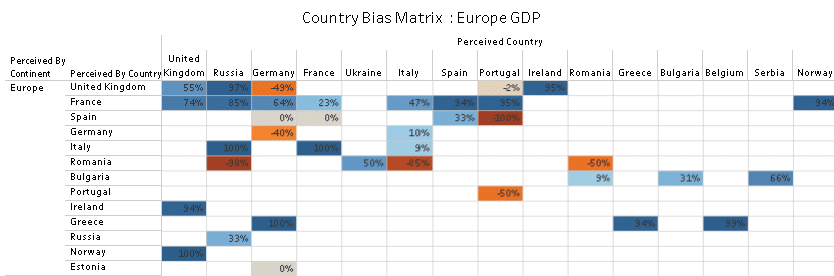
In an era defined by its relentless news cycle, the diversity and volume of our news sentiment US data today is an interesting reflection of the day-to-day happenings. It also gives a fascinating glimpse into the regional and national psyche. This sentiment analysis chart from our United States data shows a detailed breakdown of news coverage across various states and topics, revealing patterns that highlight both shared concerns and distinct regional issues. Let’s take a closer look at what’s going on here.

California, Texas and Florida dominate 

First, the data shows an unsurprisingly high volume of news in major states such as California, Texas, and Florida. These states, known for their large populations and significant economic influence, dominate media coverage, especially in areas relating to the economy and politics. The breadth of coverage in these regions reflects their crucial role in shaping national policy and economic trends.

But while economic topics like consumer spending, employment, and housing feature prominently across several states, with both positive and negative sentiments attached, in California and Texas, for instance, our US data today is substantial across these categories. This isn’t just because of ongoing public and media interest in the economic health of these states; the mixed sentiments may suggest varying degrees of recovery or distress related to ongoing economic challenges such as inflation, interest rates, and the housing market’s stability.

A closer look at variation in sentiment

The reality is that this variation in sentiment could be indicative of the broader national economic uncertainty. While some regions show signs of robust economic activity and optimism, others continue to struggle with job losses and a sluggish housing market. Our US data today is particularly interesting to observe as the U.S. attempts to navigate post-pandemic economic waters, where the pace of recovery has been anything but uniform.

In stark contrast, politics, as expected, remains a hotbed of engagement and, often, contention. The coverage of elections and political tensions is intense in politically pivotal states. The sentiment analysis underscores the divided nature of current American political discourse, evidenced by the volume of news and the mixed sentiments it engenders. States like California and Texas are not just political battlegrounds but also barometers of national political mood, where every policy change or political event can generate significant media buzz.

As for environmental concerns, particularly drought and heat, they are prominently featured in states known for their susceptibility to these challenges. California’s coverage under drought conditions, marked by a preponderance of negative sentiment, points to the ongoing concerns over climate change effects and water scarcity. These concerns also shape the policy frameworks and local economies of these regions.

But look how news related to stimulus packages generally carries a positive sentiment, reflecting public approval or optimism towards governmental economic interventions. This positive reception can be seen as a testament to the crucial role these packages play in sustaining households and businesses through economic disruptions. Our US data today highlights the importance of these policies in public and media narratives during economic recovery phases.

More than just numbers and charts

Today, this sentiment analysis provided our insights is a lot more than just numbers and charts; it’s also gives a snapshot of the narrative of American life in its various shades. From economic struggles and successes to political unrest and environmental crises, our US data today reflects the pulse of a nation grappling with numerous challenges and opportunities. Understanding these patterns is helpful for businesses and policymakers alike. But what about the general public, whose perceptions and realities are shaped significantly by what the news chooses to highlight and how it is presented?

For now, our analysis is reminder of the ever-evolving nature of news and its impact on public perception and policy. It is a tool for understanding not just where America stands today, but also where it may be heading in the turbulent times ahead. As we continue to track and analyse our US data today and everyday, one thing remains clear: the path to a more informed and engaged public discourse goes through understanding these diverse and complex media narratives.

All this means that as we delve deeper into the nuances of regional news sentiment, we are in a position to gain valuable insights into the collective American experience—insights that are essential for anyone involved in shaping the future of this vibrant and diverse land of opportunity. 

Explore more US data 

This glimpse into our US data today paints a vivid picture, but it’s just the beginning. Imagine the power of exploring these regional narratives in real-time, with interactive maps and customizable dashboards. That’s we can help with.  Request your free trial today of our US data and see how our comprehensive platform empowers you to track sentiment shifts across all 50 states, allowing you to identify emerging trends and understand public opinion on critical issues, as well as being able to drill down by region, industry or topic to gain granular insights that inform your business or investment decisions. Explore how our data can help you uncover hidden patterns and correlations and make data-driven predictions by getting in touch below. 


EXPLORE NOW

War Index: What wars are happening now 2025 update

Geopolitics has never been more deeply intertwined with global markets. Wars and conflicts are not only humanitarian crises but also key forces shaping commodity prices, energy markets, supply chains, and investor sentiment. In 2025, understanding what wars are happening now is no longer the remit of policymakers alone – it has become a strategic imperative for traders, investors, and business leaders.

At Permutable, our geopolitical feeds and Trading Co-Pilot are designed to decode these dynamics in real time. By combining sentiment analysis across global news flows with our proprietary War Index, we provide clarity on where risks are rising, how markets are likely to react, and where opportunities may lie amid volatility.


Using AI as a global conflict tracker

Our methodology remains rooted in large-scale data analysis. We track millions of news articles and reports daily to detect sentiment shifts and geopolitical signals. The outputs are visualised in our Trading Co-Pilot and indexed in our geopolitical risk feeds – turning a vast stream of unstructured data into clear, actionable intelligence.

For traders, this means our geopolitical data doesn’t just show where conflict is happening but also how markets are responding. When tensions escalate in the Middle East or Ukraine, for instance, our Trading Co-Pilot correlates this news sentiment with commodities such as crude oil, natural gas, wheat, and metals – highlighting potential breaks from current ranges before the wider market prices them in.

LNG trade Chart

Above: Our Trading Co-Pilot detected how bullish LNG sentiment, fuelled by geopolitical tensions and policy shifts, translated into sustained price momentum – – signalling a regime change well before the market caught up.

What wars are happening now: 2025 conflict overview

Our latest geopolitical feed highlights several persistent flashpoints:

  • Middle East:

    • Israel-Palestine: The Gaza conflict continues to drive instability across the region, with knock-on effects for energy markets and shipping lanes.

    • Yemen: Ongoing conflict involving regional powers continues to threaten Red Sea trade routes.

  • Eastern Europe:

    • Ukraine: Now into its second decade, the war remains a major driver of global grain and energy market volatility, amplified by sanctions and NATO policy.

  • Africa:

    • Sudan: The fragile political transition remains overshadowed by active conflict in multiple regions.

    • Ethiopia: While the Tigray war has eased, unrest continues to threaten stability across the Horn of Africa.

    • Libya: Rival factions maintain a precarious stalemate, with oil output vulnerable to disruption.


The link between geopolitical risks and markets

Our War Index and Political Tension Index has shown particular value in recent months. For example:

  • In energy markets, our index captured spikes in sentiment following drone attacks on Russian export hubs and Houthi activity in the Red Sea. Our Trading Co-Pilot flagged these signals as short-term bullish for crude oil and LNG, even as structural oversupply capped medium-term rallies.

  • In agriculture, heightened tensions in Ukraine drove sentiment around “export bans” and “grain corridor risks.” Our geopolitical feeds linked these directly to wheat futures volatility, helping desks adjust positioning.

  • In FX markets, rising conflict sentiment around tariffs and sanctions shifted flows into the US dollar and Japanese yen. Our clients used these insights to refine forex sentiment models and hedge exposure.

This integration of geopolitical intelligence into market analysis is where we provide our clients with real value. We don’t just report on what wars are happening now – we map how sentiment from these conflicts flows into asset classes in real time. Here, our Trading Co-Pilot translates geopolitical signals into trading scenarios.

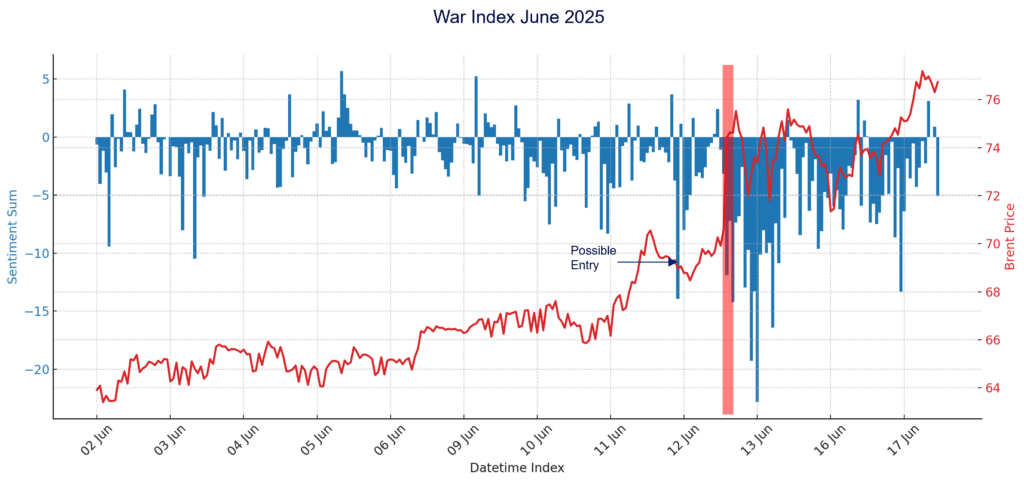
Above: Our War Index revealed how geopolitical tensions in June 2025 drove Brent crude higher, pinpointing possible entry opportunities as conflict-related sentiment translated directly into market volatility.

The future of AI-driven geopolitical analysis

Looking forward, we are expanding our world events datasets and continually refining our macro models to act as early warning systems. By training on historical patterns of sentiment escalation and policy responses, we are building predictive capabilities that help clients prepare for volatility before it hits the headlines. In 2025, and on into 2026. conflicts will remain central to global market dynamics. Understanding what wars are happening now is only the first step. The real advantage lies in anticipating how these conflicts shape commodities, currencies, equities, and investor sentiment.

At Permutable, our geopolitical feeds and Trading Co-Pilot give institutional traders, asset managers, and corporates the clarity they need to navigate volatility with confidence. 

Contact us at enquiries@permutable.ai to see how our intelligence platform can support your strategy.

FAQ

Q: Why are wars and conflicts important to financial markets?

A: Wars and conflicts disrupt supply chains, drive energy and commodity price volatility, and shift investor sentiment. In 2025, conflicts in regions such as the Middle East, Eastern Europe, and Africa remain central to market risk, influencing energy markets, agricultural and metal commodities.

Q: How does Permutable AI track wars and geopolitical risks?

A: We use large-scale AI-driven sentiment analysis to process millions of global news articles daily. The data is distilled into our War Index and Political Tension Index, which track sentiment intensity and link geopolitical risks directly to asset classes.

Q: What is the Permutable AI’s Trading Co-Pilot?

A: The Trading Co-Pilot is our real-time intelligence platform that translates geopolitical sentiment into trading scenarios. It provides base, bullish, and bearish cases across multiple time horizons, helping traders anticipate volatility before it impacts markets.

Q: Can AI predict geopolitical risk?

A: While no model can forecast conflicts with certainty, our AI identifies early signals of sentiment escalation and policy shifts. By learning from historical patterns, our models act as an early warning system for institutional traders and risk managers.

Q: Who uses Permutable AI’s geopolitical feeds?

A: Institutional quantitative and systematic traders, asset managers, investment banks, and corporates use our geopolitical feeds to understand how wars and political tensions affect commodities, currencies, equities, and investor sentiment.

People Also Ask

How do wars affect commodity prices and energy markets?

Wars create supply disruptions, increase risk premiums, and drive volatility in commodities such as crude oil, natural gas, wheat, and metals. For example, drone strikes or shipping blockages can trigger sharp moves in oil and LNG, even when underlying supply remains strong.

What is a geopolitical risk index?

A geopolitical risk index measures sentiment and risk signals from news and data relating to wars, sanctions, and political instability. Permutable AI’s War Index and Political Tension Index capture these signals in real time, linking them directly to market outcomes.

Why is geopolitical sentiment analysis important for traders?

Geopolitical sentiment analysis allows traders to anticipate how conflicts will influence asset classes. By mapping war-related sentiment into trading signals, Permutable AI’s Trading Co-Pilot helps identify bullish or bearish scenarios for commodities, FX, and equities before markets fully price them in.

How economic data tracking enhances stock market predictions

The ever-unpredictable stock market is dependent on vast swathes of information. As such, this information which is the backbone of market predictions needs to be as accurate and up-to-date as possible to open doors to attractive investment opportunities. These predictions are particularly based on economic data which is a vital source of information about the state of any given nation’s economy. This article discusses how economic data analysis helps in improving stock market predictions for investors and businesses.

Economic indicators: The building blocks

Let’s look at the stock market as a complex machine. Gross Domestic Product (GDP) growth, unemployment rates, inflation rates and other economic indicators are factors that influence the stock market. On the other hand, leading indicators, such as the yield curve, point to the future trends of the economy. Additionally, lagging indicators, such as the unemployment rate, reflect established trends. Coincident indicators, such as retail sales, give information about the current state of the economy. Through the analysis of these indicators, investors can be able to foresee these changes in the market.

Data sources: Supporting decision-making

Government reports, surveys, and financial statements of organizations are the primary sources of economic data. For instance, the US Bureau of Labour Statistics releases the nonfarm payroll figure which gives information on employment rates. Also, using the financial reports of the companies (10-Q and 10-K), the financial state of the company can be analyzed for fundamental analysis.

Tracking the numbers: Automated versus manual processes

Advancements in technology have made data tracking much more easier. Our tools which scan market and provide half hourly economic data tracking is a powerful and accurate way to secure a competitive edge in the markets. Conversely, manual data analysis is a process  full of mistakes and inconsistencies, limiting the effectiveness and timeliness of the analysis.

APIs: The data bridge

APIs such as those that we offer at Permutable, are tools that allow for easy data retrieval from various platforms. For example, our financial and economic data API makes a broad variety of real-time information instantly accessible, including real-time market data and historical economic trends. APIs are crucial to make decisions at the right time and based on accurate data.

Beyond the numbers: Qualitative insights

Economic data analysis is not about numbers alone. News articles, information from experts and financial reports provide qualitative data that reveals market sentiments which can influence stock prices. We employ Language Processing (NLP) models and Large Language Models (LLMs) are employed to analyze financial news and measure market sentiments.

Economic data: A blessing for businesses

With the help of economic data, one can not only predict the stock markets but also empower businesses. Studying factors such as GDP growth and consumer behaviour identifies market trends that can be aligned with business strategies to meet customer needs. This extensive market analysis results in robust strategic decisions and a strong competitive advantage.

Challenges and solutions: Dealing with data

A significant problem here is data overload. The overwhelming amount of information tends to result in ‘information overload’, which hampers the identification of valuable patterns. This may cause decisions to be based on the narrative, possibly influenced by biases, further resulting in distorted interpretations and investment errors. Additionally, data accuracy is also a huge problem. Since trend analyses are distorted with incomplete or inaccurate data, there must be a strategic approach to data analysis. Businesses must keep data accurate and employ high levels of verification to avoid biases in the decision-making process of investments.

It is however crucial to identify the nature of data issues and their origin. There are two main approaches to handling missing data. This could either be through imputation, which involves estimating the likely values of the missing data, or deletion, which involves removing records that contain missing data. However, each method affects the analysis outcomes and requires a careful selection to maintain accurate backtesting results.

Conclusion

Economic data tracking is an essential tool to identify trends in the stock market and make decisions on investments and businesses. Hence, through the analysis of quantitative and qualitative data, investors can have better market insights and therefore manage market risks and fluctuations in the market. Advanced data gathering and analysis methods eliminate problems such as data overload and excessive information, giving businesses a competitive advantage. In the end, the intelligent use of economic data not only improves the accuracy of stock market prediction but also contributes to efficient investment and business innovation. Since research and data analysis methods are developing at breakneck speed , the predictive potential not only in the sphere of stock market investments but also in other fields will, undoubtedly, rise even higher.

Find out more

Ready to transform your investment strategy with cutting-edge insights? Experience the power of our economic data and news sentiment analysis. Get ahead of market trends and make informed decisions with unparalleled accuracy. Get in touch to request a free trial today and see how our real-time AI can transform your approach to stock market predictions and business strategy.


REQUEST FREE TRIAL

Disclaimer: The information provided by Permutable AI is for informational purposes only and does not constitute financial advice, investment advice, or a recommendation to buy, sell, or hold any securities. While we strive to provide accurate and up-to-date information, we do not guarantee the completeness, accuracy, or reliability of the data. All investments involve risks, including the loss of principal. Past performance is not indicative of future results. Users are advised to conduct their own independent research and consult with a licensed financial advisor before making any investment decisions. Permutable AI, its affiliates, or its employees shall not be held liable for any losses or damages resulting from reliance on the information provided.

Permutable AI releases ranking of worst companies facing political risk in 2024

Our latest AI-driven sentiment analysis of companies facing political risk shows what a turbulent world now means for businesses. For corporations, the world is intricate. Consequently; negotiating through the ever moving parts of politics can be tough for enterprises. This is because sometimes political events happen unexpectedly and they usually affect everything from procurement processes right up to how consumers feel about products and services provided by organizations.

An insight into some of the companies facing political risk is given by our AI-driven news sentiment analysis. Our analysis relies on artificial intelligence to find out organizations that stand out due to negative sentiment driven by political uncertainties. It does so by examining huge amounts of information looking at more than half a million articles each day across up to 12,000 sources so as to measure what public perception looks like in relation to this particular concern. 

Worst companies facing political risk: Our findings from news sentiment analysis 

Let’s take a closer look at the findings. Gazprom tops the list because, ultimately, it used gas as part of its political strategies while  engaged in Ukraine conflicts. At the same time, despite its popularity level; Apples reputation has fallen due to ongoing privacy issues and the the associated politics of privacy policies. Our findings also unearth financial scandals an lack of controls characterised by Credit Suisse’s operations.

Our analysis also singles out major tech companies. Google’s parent company, Alphabet is perceived to be quite monopolistic in its operations and has faced various criticisms on how it handles data. Such is also the case with Facebook/Meta whose privacy breaches keep attracting much criticism including allegations surrounding their alleged political bias.

Ranking


Company Name

Sector

Data Sources

Average Sentiment

Positive Data Points

Negative Data Points

Negative Score

1

Gazprom

Oil & Gas

262

-0.35

982

2109

-1075.70

2

Apple 

Computers

225

-0.60

321

1403

-1038.71

3

Credit Suisse 

Banks

120

-0.68

109

621

-499.97

4

Alphabet

Internet

135

-0.61

114

505

-376.53

5

Nvidia 

Semiconductors

112

-0.52

143

472

-321.01

6

Moody’s 

Commercial Services

84

-0.49

112

351

-226.73

7

McDonald’s 

Retail

181

-0.30

233

447

-204.37

8

Facebook 

Internet

100

-0.68

43

239

-191.33

9

British American Tobacco 

Agriculture

66

-0.47

93

261

-165.58

10

Uniper 

Electric

68

-0.38

124

284

-154.78

Politics and profits 

According to Wilson Chan, our CEO: “These findings underline an important aspect within which organisations must conduct their political interactions.” He further emphasizes that, “Being politically savvy in today’s global economy is not just about following the rules; it also involves defining paths consistent with both corporate principles and societal demands”. These findings are important for businesses of various sizes, allowing them to understand how their interaction with politics impacts public perception. In terms of reputation risk management, companies can leverage these insights to proactively mitigate potential reputational damage.

It’s a reasonable argument that businesses should take this sentiment analysis into account when interpreting public opinion on political matters and do the following:

  • Introduce policies that are in tandem with the community’s beliefs: Even amid political turmoil, organisations that highly regard environmental consciousness, fair employment treatments, and moral data handling are likely to receive positive reception.
  • Employ straightforward running strategies that involve consistent talking: Honesty in matters related to political participation results in credibility as well as enabling them to keep potential negative assumptions under control.
  • Do away with any unforeseen issues: By taking a more proactive approach to risk mitigation – for example, by using our real-time sentiment analysis tracking tools – they can be alerted to and respond to any reputational risks before, putting measures in place before they become too significant to handle. 
  • Determine the impact of political campaigns impact: Frequent monitoring of the popular mood enables such companies to know  how effective their political policies are and tweak where necessary.

The facts are clear enough. Our analysis of the worst companies facing political risk using our AI-driven new sentiment analysis highlights the significance of adopting a strategic view on political engagement. To avoid political and reputational risks, global market players should –  particularly in today’s turbulent world economy –  be politically savvy and forward-looking.

Find out more about our company political risk data sets, available as part of our ESG intelligence data, or request more granular data by contacting us at enquiries@permutable.ai

Permutable AI releases global election risks 2024 data using news sentiment analysis

Recent geopolitical data from our news sentiment analysis sheds light on the global landscape of election-related risks and media coverage. Our data provides a look at regions of concern and stability, with significant variations in election risks apparent across countries. This is all underpinned by our innovative technology which facilitates extensive media coverage and sentiment analysis.

Mapping global election risks 2024

First, let’s take a look at the world map above visualizing countries based on their election risk levels. How do we interpret this data? The risk levels are indicated by colour codes: so red for high risk and blue for low risk. 

So what did we find? Uganda, Fiji, Syria, and Ukraine are marked as red, signaling potential instability or significant issues related to the election process. Much of that is due to political unrest, allegations of election fraud, or violence related to the electoral process.

For instance, Uganda’s sentiment score is an -0.998 which shows highly critical media coverage. In Fiji, a sentiment score of -0.994 is a nod towards the tense and potentially volatile election atmosphere. The United States, India, and South Korea are marked in blue, indicating low election risk. While the United States has a high volume of election-related headlines, it doesn’t feature high on the negative sentiment list, implying a relatively balanced or even positive media tone.

Global election risks 2024: Volume of news coverage

The United States leads with 20,752 headlines, followed by India with 11,030, and the United Kingdom with 1,280. This high level of media attention indicates the significant global interest in the electoral processes of these nations on the global stage.

In obvious contrast, countries with fewer headlines, such as New Caledonia and American Samoa, indicate lower media focus. It’s important to note here that this isn’t just because of smaller electorates or less contentious political climates. It is also likely due to quieter election periods. At the end of the day, lower coverage does not necessarily correlate with the level of election risk, as some countries with lower coverage still exhibit high-risk scores.

Global elections risks sentiment analysis: A mixed bag

Now let’s take a look at the sentiment analysis. Sentiment scores range from highly negative to positive with higher negative values indicating more critical or concerning news coverage. Uganda (-0.998) and Fiji (-0.994) top the list of negative sentiment, suggesting significant issues or unrest.

It’s no surprise that Ukraine (-0.498) and Gaza Strip (-0.476) also feature prominently in the negative sentiment list. You would expect that  the ongoing conflicts and political instability overshadow their electoral processes. And yet perhaps, despite high news coverage, countries like the United States and the United Kingdom do not show up in the most negative sentiment list. This indicates a relatively balanced media tone, with a mix of positive and negative coverage. 

Geographical distribution of global election risks

So what does this all mean for the geographical distribution of election risks and sentiments? Quite simply, it reveals a complex global landscape. There are high-risk areas are scattered across different continents, including Africa, South America, and parts of Asia. This means election risks are not confined to a particular region but are a global concern. The crisis in Uganda and Tanzania reflects political tensions and electoral challenges in Africa. Meanwhile, South America, Brazil and Colombia are marked as high-risk areas, indicating potential instability in their electoral processes. As for low-risk areas, these are primarily found in North America, parts of Europe, and select countries in Asia. These regions, including the United States, United Kingdom, and South Korea, exhibit relatively stable electoral processes of course. 

Global elections risks: Implications for stakeholders

As we’ve discussed in previous articles, understanding election risks and sentiments is a non-negotiable for a number of stakeholders, including policymakers, investors, and journalists. For policymakers, identifying high-risk areas can help in allocating resources to ensure fair and safe elections. This is where the importance of international monitoring, support for democratic institutions, and conflict prevention initiatives comes in. 

For investors and businesses, we know that insights into election risks are essential for strategic decision-making. Of course, there’s a reason why high-risk elections can lead to political instability, affecting market conditions and investment climates. But by understanding the risk landscape, investors can make informed decisions about where to focus or avoid during election periods. This method applies to both local and international investments. Another interesting use case here is journalists and analysts.  Using sentiment analysis to gauge public perception and media tone can be a secret weapon in reporting and strategic planning in a fiercely competitive landscape where share of readership is hotly fought for.

It’s easier than ever to get a comprehensive view of global election risks and sentiments with our AI-driven news sentiment analysis. By mapping risk levels and analyzing media coverage, we can easily identify areas of concern and stability. The potential for this for stakeholders seeking to navigate the complex landscape of global elections more effectively is huge. 


ENQUIRE NOW

Seeking the truth in all things: Permutable AI CEO discusses innovative data intelligence on Disruptive LIVE

This month, our Founder and CEO Wilson Chan was down at the Disruptive LIVE studios , home of the latest tech content, where he discussed the innovative work of our company in the realm of data intelligence and our mission of seeking the truth in all things. In the interview, he highlighted Permutable AI’s unique approach seeking the truth in all things by tracking truth events around the world and our pioneering use of transformer models for text summarization and labelling.

During the interview, he talked through our company’s mission to provide accurate and comprehensive data intelligence. “It was great to be able to share our mission at Permutable AI over on Disruptive LIVE, and our dedication to seeking the truth in events from around the globe,” Chan stated. “We discussed how our technology enables us to analyze and verify information across a wide range of themes, including politics, war, weather, and the economic climate.”

Seeking the truth in all things: Truth events and data intelligence

During the interview, Chan explained the concept of “truth events,” which are critical incidents or themes that Permutable AI monitors across different countries. These themes encompass a broad spectrum, from political upheavals and conflicts to extreme weather events and economic shifts. By focusing on these truth events, we aim to offer a clearer, unbiased view of global occurrences in our relentless pursuit of seeking the truth in all things.

“We track country-specific themes to provide our users with the most accurate and relevant information,” he explains. “Whether it’s political crisis in one country or an economic downturn in another, our technology helps ensure that the data we present is both comprehensive and precise, and this is something we explored in more detail during the interview.”

Early adoption of transformer models

One of the standout points of the interview was Permutable AI’s early adoption of transformer models for text summarization and labeling. These models, which have revolutionized natural language processing (NLP), allow us to process vast amounts of text data efficiently and accurately.

“We explored how we were among the early adopters of transformer models, which has given us a significant advantage in the field of data intelligence,” Chan noted. “These models enable us to summarize large volumes of text and accurately label content, making it easier for our users to find the information they need.”

Public access to ESG reports

You may not know this, but as part of our commitment to our impact work, at Permutable AI, we provide publicly accessible and free ESG reports. These reports offer valuable insights into the ESG performance of various companies, helping stakeholders make informed decisions but can be very costly to access for the most part. However, at Permutable, our dedication to transparency and accessibility in this area has earned us a high ranking, with the many our ESG reports ranking on the first page of Google searches.  

“We talked about why we decided to put out our ESG reports for free to the public and how it’s a crucial part of our mission to promote transparency and accountability,” Chan shared. “We believe that making this information readily available helps drive positive change and encourages companies to improve their ESG performance.”

Preserving digital data integrity

Another critical aspect of our work at Permutable AI was discussed by Chan – the tracking and retention of historical digital human content from tens of thousands of global websites. This effort is aimed at preserving digital data integrity for future generations, ensuring that valuable information remains accessible and accurate over time.

“We talked about the importance of  preserving digital data integrity and how by retaining historical content from a vast array of sources, we help ensure that this information remains intact and reliable, even as the digital landscape continues to evolve and articles are being constantly removed from the internet.”

Our CEO and Founder’s appearance on Disruptive LIVE highlights how as a small yet mighty start up, we are recognised for our commitment to innovation and vision for the future of data intelligence. By leveraging advanced technologies and focusing on truth events we will continue to set new standards in the industry.

Stay tuned for the release of the interview over on Disruptive LIVE LinkedIn page this summer.


How to track news shocks and uncertainty in real-time and their impact on the markets in 2024 & beyond

The ability to track and analyze news coverage in real-time is invaluable for businesses, policymakers, and analysts alike. Understanding how different events influence news volume can offer deep insights into public sentiment, economic impacts, and strategic decision-making. Permutable AI’s Global Regime Tracking system, as illustrated in the heatmap above, provides a comprehensive visualization of how various events have driven news attention from 2018 to 2023. This article explores the importance and implications of such real-time monitoring, with a specific focus on the insights gleaned from our news shocks and uncertainty heatmap.

Understanding our news shocks and uncertainty heatmap: An overview

The heatmap titled above tracks news shocks and uncertainty across several categories over a period of six years. The categories include economic data (such as consumer spending, employment, and GDP), extreme weather events (cold, drought, heat), fiscal and monetary policies, natural disasters, oil spills, pandemics, political events, terrorist attacks, and wars. The intensity of news coverage is represented by different shades of blue, with darker shades indicating higher news volume.

Key insights from our news shocks and uncertainty heatmap

Economic data

Economic indicators often serve as primary drivers of news coverage, especially during times of crisis or significant change. For instance, the heatmap highlights:

  • US unemployment hits 40-year high (Q1 2020): During this period, there was a significant spike in news coverage related to employment data, coinciding with the onset of the COVID-19 pandemic, which led to unprecedented job losses.
  • US CPI hits 40-year high (Q1 2022): The spike in news attention around consumer price index data reflects growing concerns over inflation, which was exacerbated by supply chain disruptions and economic recovery post-pandemic.

These spikes in news coverage underscore the public’s heightened interest in economic conditions, especially during periods of instability.

Extreme weather events

Climate change and extreme weather events are becoming increasingly prominent in news coverage. The news shocks and uncertainty heatmap captures:

  • Seasonal North American winter (Q4 2020) and the hottest summer on record globally (Q2 2023): These periods saw significant news attention due to extreme weather conditions, highlighting the growing concern and impact of climate change on daily life and economic activities.

Significant global events

Certain global events have caused substantial news volume shocks, reflecting their widespread impact:

  • COVID-19 pandemic (Q1 2020): The pandemic led to a massive surge in news coverage across various categories, including health, economic data, and political responses. The unprecedented nature of the pandemic and its global impact made it a focal point of news attention.
  • Russian Ukraine invasion (Q1 2022): This event triggered extensive news coverage, reflecting the geopolitical tensions and global ramifications of the conflict. The invasion not only dominated political news but also impacted economic and security discussions worldwide.

Natural disasters and crises

Natural disasters and crises often lead to spikes in news volume due to their immediate and dramatic impact on communities and economies:

  • Turkish Earthquake (Q1 2023): The earthquake in Turkey garnered significant news attention, highlighting the immediate human and economic toll of natural disasters.
  • Colonial Pipeline spill (Q2 2020): This event caused a notable spike in news coverage related to environmental issues and the energy sector, underscoring the environmental and economic implications of such incidents.

The importance of real-time news monitoring

Real-time monitoring of news shocks and uncertainty is crucial for several reasons. Here’s an in-depth look at how it impacts proactive crisis management, informed decision-making, public sentiment analysis, and strategic planning.

Proactive crisis management

Understanding news coverage trends allows organizations to respond promptly to crises. In today’s fast-paced media environment, a delay in addressing negative news can result in significant reputational damage. By identifying spikes in news attention early, companies can deploy strategic communication plans to manage public perception effectively. This involves quickly disseminating accurate information, addressing misinformation, and demonstrating the organization’s commitment to resolving the issue. For example, if a company detects a sudden surge in negative coverage related to a product recall, it can immediately issue statements, engage with affected customers, and outline the steps being taken to rectify the problem. This proactive approach not only helps in mitigating immediate damage but also strengthens the company’s long-term reputation for transparency and accountability.

Informed decision-making

Real-time data provides insights that are critical for decision-makers. When there is a surge in news coverage around economic indicators, such as an unexpected rise in unemployment rates or a sudden spike in inflation, it signals to businesses and policymakers the need for timely intervention or strategic adjustments. For instance, a central bank might decide to alter interest rates in response to real-time data showing increased news coverage of economic instability. Similarly, a company might shift its investment strategy or operational focus if it notices a significant rise in news discussing industry-specific risks or opportunities. Having access to real-time news monitoring enables decision-makers to base their strategies on the most current information available, reducing the lag between recognizing a trend and responding to it.

Public sentiment analysis

News volume shocks often reflect broader public sentiment. By analyzing these trends, organizations can gain a deeper understanding of public concerns and priorities. This is particularly important for businesses and governments aiming to engage with their audiences in a meaningful and empathetic way. For instance, a sudden increase in news coverage about climate change might indicate growing public concern over environmental issues. Companies can respond by highlighting their sustainability initiatives, while governments might accelerate policy measures to address climate-related challenges. By staying attuned to the nuances of public sentiment through real-time news monitoring, organizations can tailor their messaging and actions to better align with the values and expectations of their stakeholders.

Strategic planning

Anticipating news trends based on historical data can significantly enhance strategic planning. Organizations that recognize patterns in news coverage can prepare more effectively for future media engagement and operational responses. For example, certain seasons or events might consistently attract heightened attention to specific issues, such as extreme weather events during hurricane season or increased political coverage during election cycles. By understanding these patterns, companies can develop strategic plans that anticipate media coverage spikes and prepare appropriate responses in advance. This might involve ramping up customer service support, preparing detailed communication plans, or adjusting marketing strategies to better align with expected public interest. Strategic planning informed by real-time news monitoring ensures that organizations are not caught off guard by predictable news shocks and can respond more efficiently and effectively.

Future developments in AI for monitoring news shocks and uncertainty

As AI technology evolves, its applications in monitoring news shocks and uncertainty will become even more sophisticated. At Permutable AI, we are committed to advancing our capabilities to provide more comprehensive and actionable insights. Here’s what we envision for the future of AI in this field:

Predictive Analytics

In the future, AI will not only track current news volume but also predict future news shocks by analyzing patterns and historical data. In fact, this is something our team is already working on.  We are currently working to leverage our advanced machine learning algorithms to identify early indicators of potential news shocks. This capability will enable organizations to prepare proactively for upcoming trends and potential crises. For example, by analyzing historical data on market reactions to economic announcements, our system could forecast how similar future events might impact market sentiment and investor behaviour. This predictive power will allow businesses to strategize and mitigate risks well in advance, ensuring they remain agile and responsive in a rapidly changing news landscape.

Enhanced transparency tools

Transparency is key to building trust with stakeholders. We are currently working to finetune our real-time insights into a company’s news coverage and public perception. These enhanced transparency tools will enable organizations to share detailed, real-time reports with their investors, customers, and regulatory bodies, showcasing their commitment to openness and accountability. For instance, companies will be able to generate dynamic dashboards that track their media presence and public sentiment in real-time, allowing stakeholders to monitor how news events are influencing public perception. This level of transparency will foster greater trust and confidence in the organization’s ability to manage its reputation and respond to emerging issues effectively.

Deep sentiment analysis

We are continuously refining our advanced AI models to detect nuances in sentiment, offering deeper insights into public reactions and concerns. Current sentiment analysis techniques can identify whether news coverage is positive, negative, or neutral, but future models will delve even deeper into the subtleties of language. By understanding emotions such as anger, joy, fear, and surprise, our AI will provide a more comprehensive view of public discourse. This will help businesses and policymakers understand the underlying emotions driving news coverage and public sentiment, allowing for more empathetic and targeted responses. For example, if a sudden spike in negative sentiment is detected around a particular issue, companies can quickly address the concerns with tailored communications that resonate emotionally with their audience.

Integration with other data sources

To provide a holistic view of the factors influencing public opinion and market movements, we plans to integrate news monitoring with other data sources such as social media and other data streams. By combining diverse data streams, our AI systems will offer a more comprehensive analysis of how various factors interact to shape public sentiment and market behaviour. For example, a significant event might be discussed not only in news articles but also across social media platforms, influencing market trends and public opinion simultaneously. Our integrated approach will enable organizations to see the bigger picture, understanding the interconnectedness of different data sources and making more informed decisions based on a complete view of the information landscape.

Monitoring news shocks and uncertainty: Final thoughts 

At Permutable AI, our Global Regime Tracking system, with its real-time monitoring of news shocks and uncertainty, represents a significant advancement in the field of business intelligence and ethical monitoring. By providing a clear visualization of how various events influence news coverage, this tool empowers businesses, policymakers, and analysts to navigate the complexities of the modern media landscape proactively and effectively. This not only protects corporate reputation but also fosters a culture of integrity and accountability.

For more information on how Permutable AI can help your business with real-time news monitoring and ethical practices, get in touch to arrange an exploratory call. 


GET IN TOUCH

Large language models use case: How Permutable AI harnesses the power of LLMs in media tracking

Given the complexities and fast-moving nature of the modern business environment, staying informed about media coverage and public sentiment is crucial for businesses and organizations. With the advent of large language models (LLMs) and advanced natural language processing (NLP), Permutable AI is revolutionizing media tracking operations. This article explores  how the team at Permutable AI leverages these cutting-edge technologies to provide comprehensive, real-time insights that empower businesses to make informed decisions and stay ahead of the curve. A prime example of a large language models use case is the transformative impact on media monitoring and analysis.

Advanced Natural Language Processing (NLP)

At the heart of our AI’s media tracking capabilities lies sophisticated NLP techniques. These techniques allow the system to understand and interpret diverse media content, ranging from news articles and blog posts to company reports and other publicly available data sources. By processing and analyzing vast amounts of text data, we can extract meaningful insights that are critical for understanding the media landscape. This demonstrates another large language models use case where NLP enhances the accuracy and relevance of insights, going beyond simple keyword matching to comprehend context and nuances.

Real-time data processing

In the digital age, the speed at which information spreads is unprecedented. Our media tracking system is designed to process media content in real-time, enabling immediate identification of relevant information and trends. This real-time capability is a game-changer for businesses that need to respond quickly to emerging issues or opportunities. This large language models use case exemplifies how real-time processing can keep decision-makers informed about the latest developments, ensuring that businesses can react promptly to protect their reputation and seize new opportunities.

Sentiment analysis

Understanding public sentiment is crucial for businesses aiming to maintain a positive image and engage effectively with their audience. Permutable AI employs sentiment analysis to gauge public opinion and sentiment around specific topics or entities. This analysis helps businesses understand the tone and emotional context of media coverage, providing valuable insights for reputation management and strategic communication. Sentiment analysis is a critical large language models use case, enabling businesses to proactively address any negative sentiment and understand how they are perceived by the public.

Comprehensive coverage

One of the standout features of our media tracking system is its ability to track a wide range of media sources globally. By ensuring comprehensive monitoring of public discourse across different regions and languages, we are able to provides businesses with the data intelligence to create a holistic view of the media landscape. This broad coverage is another large language models use case that is essential for businesses operating in multiple markets or regions, allowing them to stay informed about local developments and public sentiment.

Contextual understanding

Context is key when it comes to interpreting media content accurately. At Permutable AI, we use contextual understanding to distinguish between different meanings and nuances in media content. This capability enhances the accuracy of insights by considering the broader context of words and phrases. For example, the word “apple” could refer to the fruit or the technology company, depending on the context. This large language models use case ensures that businesses receive precise and relevant insights, avoiding potential misunderstandings or misinterpretations.

Trend and pattern detection

In the ever-changing media landscape, identifying emerging trends and patterns is crucial for businesses to stay ahead. At Permutable AI, we specialize in detecting trends and patterns in media coverage, helping businesses anticipate public sentiment and market shifts. By analyzing historical data and current media trends, we are able to provide predictive insights that empower businesses to make proactive decisions. Whether it’s spotting a new market opportunity or preparing for a potential crisis, these insights exemplify yet another large language models use case that is invaluable for strategic planning and risk management.

Customizable reports and alerts

Every business has unique needs and priorities when it comes to media monitoring. At Permutable AI, we recognize this and offers customizable reports and real-time alerts based on specific keywords, topics, or entities of interest. This customization ensures that businesses focus on the most relevant information for their needs. Tailored reports provide concise and actionable summaries, making it easier for decision-makers to understand key points and take appropriate action. Real-time alerts keep businesses informed about critical developments as they happen, enabling timely responses and strategic adjustments. This customizable approach is a crucial large language models use case, allowing businesses to receive the most pertinent information efficiently.

Efficient data management

Handling and analysing large datasets efficiently is a hallmark of our proprietary media tracking system. The system processes and analyzes vast amounts of data without compromising accuracy, ensuring quick and reliable insights. Efficient data management supports decision-making by providing timely and relevant data insights. This capability is essential for businesses that need to process large volumes of information and derive actionable intelligence from it. Efficient data management is another significant large language models use case that highlights the system’s capacity to handle and analyze big data effectively.

Enhanced decision-making

Ultimately, the goal of our work and our media tracking system is to empower businesses to make informed decisions. By providing deep insights into media narratives and public opinion, the system supports strategic planning, crisis management, and marketing strategies. Accurate and timely media intelligence enables businesses to navigate uncertainties confidently and capitalize on global opportunities. Whether it’s understanding market trends, managing reputational risks, or engaging with stakeholders, the use of large language models plays a pivotal role in enhancing business resilience and success.

We are at an exciting time at Permutable AI, where the use of large language models in our media tracking operations is transforming the way businesses monitor and respond to media coverage. With advanced NLP, real-time processing, sentiment analysis, and comprehensive coverage, we are able to provide invaluable, real-time insights that drive informed decision-making and strategic advantage. As businesses continue to navigate a complex media landscape, the practical applications and benefits of large language models use case in media tracking are becoming increasingly indispensable.

Political trends in Latin America 2024: Insights from Permutable AI’s news sentiment analysis

In today’s rapidly changing political landscape, understanding the undercurrents of public sentiment and media portrayal is crucial for grasping the full scope of political dynamics in any region. At Permutable AI’s, our innovative analysis of news headlines provides an in-depth look into the political trends in Latin America, offering valuable insights that are particularly relevant given the region’s complex socio-political environment.

Harnessing the power of AI in political analysis

At Permutable AI, we leverage advanced algorithms to analyze thousands of news articles, extracting sentiment and frequency data that reflect broader public mood and media narratives. This approach allows for a nuanced understanding of political events, highlighting how certain issues are perceived across different nations within Latin America. Our recent study focused on countries such as Argentina, Brazil, Colombia, and Ecuador, covering a critical period from February to May 2024, providing a snapshot of the political trends in Latin America.

Findings from our sentiment analysis

The data revealed significant variations in the number of headlines related to political tensions and elections, providing insights into the political volatility and engagement within each country, crucial for understanding the political trends in Latin America:

  • Argentina showed a sharp peak in political tension-related headlines in early March, reflective of a period of intense political activity and the country’s struggle for political stability, which gradually declined yet remained significant through May.
  • Brazil exhibited a consistent stream of political tension headlines, indicating ongoing issues experienced by a country riddled with political problems that kept the political atmosphere active and possibly turbulent.
  • Colombia and Ecuador displayed sporadic spikes in political headlines, corresponding with key political events and developments, particularly around election times.

These findings are particularly telling of the political pulse in each country, with media coverage serving as a barometer for national stability and public interest, crucial elements for understanding the political trends in Latin America.

Electoral insights

Election-related headlines provide additional layers of understanding. Notably, Ecuador experienced a surge in election-related coverage in late April, coinciding with its electoral cycle. This was closely mirrored by Colombia in early May. These spikes are critical for analysts and policymakers as they highlight moments of heightened public and media focus, potentially impacting national and international perceptions of political trends in Latin America.

Media sentiment and public opinion

One of the most striking aspects of our analysis is the sentiment score associated with the headlines. With scores ranging from -0.993 to 0.499, the data predominantly showed a blanket negative sentiment. This suggests that the media coverage was largely critical of the political situations, reflecting public discontent or skepticism towards political developments and leaders, an important indicator of the political trends in Latin America.

Implications and applications of AI-driven insights

AI-driven tools like those developed by our team at Permutable AI are reshaping political analysis by providing sophisticated real-time monitoring and predictive analytics. These tools enable organizations, governments, and analysts to detect underlying patterns and sentiments in political data, enhancing predictive accuracy for election outcomes and potential political unrest. With real-time data processing, stakeholders can proactively address emerging public opinions, tailor communication strategies to diverse demographic groups, and effectively manage crises through timely interventions.

Additionally, AI insights can be a powerful way of supporting strategic policymaking and international diplomacy by analyzing political stability and sentiments across regions, aiding in risk management and foreign policy decisions. These technologies also foster the development of customized policy initiatives likely to receive public support and provide simulation environments for training political strategists. As AI in political analysis advances, it promises not only more precise and efficient operations but also deeper insights into global political dynamics, revolutionizing how strategic decisions are made in complex political landscapes.

Political trends in Latin America: Final thoughts

Our detailed sentiment analysis of news headlines concerning political tension and elections in Latin America not only sheds light on the region’s ever-volatile political climate but also demonstrates the power of AI in enhancing our understanding of global events. As political landscapes continue to evolve, the ability to quickly and accurately analyze vast amounts of data will be indispensable in crafting informed, strategic responses that anticipate shifts in public opinion and media narratives concerning political trends in Latin America.

This comprehensive analysis not only aids in immediate strategic adjustments but also helps in long-term planning and policy-making, ensuring that responses are not merely reactive but are also proactive and well-informed. At Permutable AI, we are continuing to refine our analytical tools to provide potential for deeper insights into global political trends promises to reshape how we view and interact with the world of politics. 

Get more insights and analysis

Take your strategic insight to the next level. Join us as an early user of Permutable AI’s cutting-edge geopolitical intelligence tools. Harness the power of advanced data analytics and real-time political analysis to navigate complex international landscapes more effectively. Sign up today to gain access to exclusive tools that transform vast data into actionable intelligence, empowering your decisions with precision. Sign up now and start shaping the future with informed, data-driven strategies. 

Real-time monitoring of corporate unethical practices in 2024 using advanced AI and sentiment analysis

As we navigate the complex and rapidly shifting business landscape, maintaining ethical standards is not only a matter of compliance but also a crucial component of corporate reputation and long-term success. However, the sheer volume of information available and the speed at which it spreads can make it challenging for businesses to monitor and manage their ethical practices and detect corporate unethical practices effectively. At Permutable AI, we use artificial intelligence and machine learning, with an innovative approach to facilitate real-time monitoring of corporate unethical practices. In this article, we’ll discuss the challenges of monitoring corporate ethics and corporate unethical behaviour, how we leverage Large Language Models (LLMs) to facilitate ethical monitoring and take a look at how this works in practice. 

The challenge of monitoring corporate ethics

Corporations today operate in a globalized market, where actions and decisions are constantly under scrutiny. The digital age has amplified the reach and speed of information dissemination, making it easier for unethical practices to be exposed but also more challenging to manage and rectify. Traditional methods of monitoring, which often rely on periodic reviews and reactive measures, are no longer sufficient.

The challenge lies in the ability to monitor corporate activities in real-time, identify potential ethical breaches, and respond proactively. This requires sophisticated technology that can sift through vast amounts of data, understand the context, and provide actionable insights. This is where Permutable AI’s corporate ethical monitoring capabilities come into play.

Leveraging Large Language Models for ethical monitoring

At Permutable, we use Large Language Models (LLMs) to enhance its monitoring capabilities. LLMs are advanced AI systems that understand and process human language with remarkable accuracy. They are capable of analyzing vast datasets, identifying patterns, and interpreting the context and sentiment of the information. Here we take a closer look at how we leverage LLMs for real-time monitoring of corporate unethical practices:

Data collection and integration

The first step in effective monitoring is comprehensive data collection. We integrates data from a wide range of high quality publicly available sources (read about our methodology here). This extensive data collection ensures that no relevant information is missed.

Contextual analysis

Unlike traditional keyword-based monitoring systems, LLMs can understand the context in which information is presented. This means that the AI can distinguish between different meanings of the same word or phrase based on the context, reducing false positives and improving accuracy.

Sentiment analysis

Understanding the sentiment behind the data is crucial in identifying unethical practices. LLMs can detect nuances in language, such as sarcasm, irony, and emotional tone, providing deeper insights into the true nature of the information. For instance, a seemingly benign comment could be flagged if it is detected to have a negative connotation in a specific context.

Real-time processing

One of the most significant advantages of our technology is its ability to process information in real-time. This enables businesses to detect potential ethical breaches as they happen, rather than after the fact. Real-time processing allows for immediate action, which can mitigate the impact of unethical practices.

Identifying and mitigating corporate practices

To illustrate the effectiveness of this approach, let’s consider a case study of a multinational corporation facing allegations of labour rights violations in its supply chain. Let’s say that the corporation is being accused of using child labour in one of its overseas factories. The allegations might first surface on social media and quickly gain traction, threatening the company’s reputation and market position.

In this use case, our aggregated data would be able to identify the specific factory and the nature of the allegations. Our AI would then conduct a sentiment analysis to understand the public’s reaction and used contextual analysis to verify the validity of the allegations. It would consequently be able to distinguish between genuine concerns and unfounded rumours.

As the sentiment around the issue grows increasingly negative – which it undoubtedly would – our system would sent real-time alerts to the company’s compliance and public relations teams, providing actionable insights to help pave the way for immediate steps to address the issue. This might, for example, include initiating an internal audit, engaging with local NGOs, and communicating transparently with the public.

In this case of early detection,  the corporation would be in a position to respond swiftly and effectively. By addressing the issue proactively, they would have been able to quickly mitigate reputational damage and demonstrate a commitment to ethical practices to their stakeholders. This type of use case effectively demonstrates how real-time monitoring and actionable insights provided by our technology would be instrumental in navigating such a crisis.

The future of ethical monitoring with AI

Our approach to real-time monitoring of corporate unethical practices represents a significant advancement in the field. As AI technology continues to evolve, its applications in ethical monitoring will become even more sophisticated. Future developments will include predictive analytics, where AI can anticipate potential ethical breaches before they occur, and enhanced transparency tools that provide stakeholders with real-time insights into a company’s ethical practices.

At Permutable AI, we are at the forefront of leveraging AI and machine learning to ensure that corporations uphold the highest ethical standards. By providing real-time monitoring, contextual understanding, and actionable insights, we can empower businesses to navigate the complexities of the modern ethical landscape proactively and effectively. This not only protects corporate reputation but also fosters a culture of integrity and accountability.

Find out more

Join us in use the power of technology to monitor corporate unethical practices. At Permutable AI, we are dedicated to helping businesses uphold the highest ethical standards through cutting-edge technology and actionable insights. Our advanced AI-driven sentiment analysis empower organizations to proactively manage ethical practices, safeguard their reputation, and foster a culture of integrity. Ready to take your ethical monitoring to the next level? Contact us today to schedule a demo and discover the power of AI in promoting ethical business practices.


BOOK A DEMO