Navigating the Great Power Competition: Geopolitical risk and corporate strategy

You can also access top-line geopolitical insights through our Real-Time Geopolitical Insights & AI Market Sentiment Analysis Dashboard which is publicly available to view. One of the biggest developments in today’s global economy is the challenges companies face from geopolitical shifts and growing rivalry among major world powers like the US, China, and Russia. The Great Power Competition goes beyond military strength and affects key areas such as trade, tech, and investment. As these countries compete for strategic control, businesses must create strong risk management plans to handle this tricky situation. This article looks at how great power competition affects corporate strategy and how advanced analytics like our geopolitical data can help companies stay on top of these global changes.

How the Great Power Competition affects business strategy

It’s inevitable that the Great Power Competition has become a key feature of the 21st-century geopolitical scene. As countries like the US, China, and Russia fight for global influence, their actions shake up the global economy. Trade wars, tariffs, sanctions, and rule changes are just some of the ways these powers try to assert control often causing big problems in international trade and investment.

The problem is, for big companies working in many countries, these dynamics create big risks. Let’s start with the issue of tariffs between the US and China, which have raised costs for businesses that rely on cross-border supply chains. Then there is are the sanctions against Russia which have made Western companies working there rethink their plans often leading them to sell off assets or change how they operate.

In this environment, the obvious point here is that companies can’t just sit back. They need to manage the risks that come with geopolitical instability. With that in mind, they need to understand the immediate effects of policy changes and also predict future developments. As a result, a well-planned risk management strategy will help businesses reduce potential losses and, in some cases even use geopolitical shifts to gain an edge over competitors.

Navigating the Great Power Competition: Key risk management strategies

At Permutable, we are lucky to work with a collection of seasoned geopolitical analysts. Their advice on how to navigate the risks presented by the Great Power Competition is summarised below.

Spreading out supply chains

One of the best ways to handle geopolitical risk is to spread out supply chains. Companies that depend on making or buying from one country in unstable regions, face big risks. By getting supplies from different places around the world, businesses can reduce their risk of problems caused by tariffs, trade limits, or political instability.

Planning for different scenarios

Planning for different scenarios is a crucial tool in managing geopolitical risk. It involves coming up with several possible ways geopolitical events might unfold and figuring out how they could affect business operations. By getting ready for a range of outcomes, companies can better position themselves to respond and to unexpected events.

Insurance against political risk

For companies working in high-risk areas, insurance against political risk can provide protection against losses caused by political instability such as property seizure, currency problems, or violent conflict. While this insurance can be expensive, it’s often worth it for businesses facing big geopolitical risks.

Getting involved in public policy

Companies can reduce geopolitical risks by taking part in public policy discussions and pushing for rules that support stable and predictable business environments. This involvement can include lobbying, joining industry groups, or teaming up with other businesses to influence policy decisions that affect the global market.

Being able to adapt and change

A fast-changing geopolitical scene calls for quick changes. Companies must stay nimble ready to shift their plans as new events unfold. This might mean moving investments breaking into new markets, or even changing how they do business to fit the new geopolitical reality.

The Great Power Competition and how our geopolitical data can help you manage political risks 

In today’s digital age, companies can access seemingly infinite amounts of data to shape their risk plans. But the sheer amount of info can be too much, and finding useful insights is tough. This is where our AI-driven geopolitical data solutions step in. We use top-notch artificial intelligence to analyse geopolitical events and trends in real-time. By crunching vast amounts of data from news, social media, and government sources, we’re able to spots patterns and predicts risks with high accuracy.

Here’s how our geopolitical data is a game-changer in boosting a company’s risk management:

Real-time monitoring

In a world where geopolitical changes happen fast and without warning, staying informed is key. Permutable AI keeps a constant eye on geopolitical events letting companies know right away about changes that could affect their work. Whether it’s new tariffs, a sudden flare-up in a regional conflict, or a major policy change, businesses get instant alerts and can act .

Future forecasting

Beyond just reporting current events, our algorithms can predict future geopolitical trends. By looking at past data and current signs, the AI can forecast potential risks and chances giving businesses a leg up. For example, if the AI thinks trade tensions between two countries might get worse, companies can change their supply chains or protect themselves against possible money losses.

Risk checking and planning

Our tools can also fit into a company’s planning process. By giving detailed risk checks based on many factors, from economic signs to political feelings, the AI can help businesses create more accurate and complete plans. This leads to better-informed choices and stronger strategies.

Custom insights

Every business has its own risk factors based on its industry where it operates, and how it works. We offers insights tailored to each company’s specific needs. This ensures the info provided is useful and actionable letting businesses focus on the risks that matter most to them.

Better decision-making

By giving a clear, data-driven view of the geopolitical scene, we are able to support our clients to make smart decisions. This is valuable in high-stakes situations where delays or wrong calls can lead to big losses.

In a time of big power rivalries, businesses need strong risk management plans to navigate the complex and ever-changing geopolitical scene. The stakes are high, and the risks are real, but with the right tools and strategies, companies can not protect themselves from possible losses but also grab chances that come from geopolitical shifts.  Our geopolitical data solutions mark a big step forward in risk management. By providing real-time monitoring, future forecasting, and custom insights, this technology gives businesses the edge they need to navigate the complexities of the Great Power Competition. 

Secure your business future with Permutable AI’s data intelligence

Don’t let geopolitical risks catch your business off guard. Equip your team with the tools and insights needed to navigate the complexities of the Great Power Competition. Discover how Permutable AI’s cutting-edge geopolitical data solutions can help you stay ahead of global shifts and turn risks into opportunities. Take the first step towards stronger risk management today. Simply send an email to enquiries@permutable.ai to learn more, or fill in the form below. You can also access top-line geopolitical insights through our Real-Time Geopolitical Insights & AI Market Sentiment Analysis Dashboard which is publicly available to view. 

Get in touch


Navigating geopolitical risk in investment in 2024

It is worth remembering that today’s complex global economy, geopolitical risk in investments is a crucial factor for investors to consider in order to gain competitive advantage. Let’s explore how world events can impact your portfolio and what you can do to manage geopolitical risk in investments.

The global financial web

Gone are the days when domestic markets operated in isolation. Now, a political decision in Washington or Beijing can send ripples through stock exchanges worldwide. As investors, we must broaden our horizons and consider how geopolitical risk in investments might affect our financial decisions.

Why geopolitical risk in investments matters 

Recent events, from trade disputes to regional conflicts, have demonstrated how geopolitical tensions can swiftly impact markets. Take the ongoing situation in Ukraine, for instance. Its effects on energy prices and supply chains have been felt far beyond Eastern Europe, influencing portfolios and highlighting the importance of considering geopolitical risk in investments.

Developing awareness of geopolitical risk in investments

So, how can investors navigate this complex landscape? It starts with staying informed about geopolitical risk in investments. While you needn’t become an expert in international relations, a basic understanding of global affairs and their potential impact on investments can prove invaluable. Pay attention to major economic indicators, political developments, and international agreements that could affect markets.

The art of assessing geopolitical risk in investments

Evaluating geopolitical risk in investments involves considering various factors:

  1. Political stability
  2. Economic conditions
  3. Regulatory environments
  4. Social and cultural trends
  5. International relations

By evaluating these elements, investors can better understand potential risks and opportunities in different markets.

Diversification: your shield against geopolitical risk in investments

One of the most effective strategies for managing geopolitical risk in investments is diversification. By spreading investments across different regions, sectors, and asset classes, you can potentially mitigate the impact of localized geopolitical events on your overall portfolio.

Sector sensitivities

Some sectors are particularly vulnerable to geopolitical shifts. Energy stocks, for example, often react strongly to events in oil-producing regions. Technology companies can be caught in the crossfire of trade disputes. Understanding these sensitivities can help you anticipate potential market movements and manage geopolitical risk in investments more effectively.

Crisis and opportunity

While geopolitical events can create market turbulence, they can also present opportunities for astute investors. During periods of uncertainty, quality assets may become undervalued, offering potential for long-term gains. However, timing such moves requires careful consideration of geopolitical risk in investments and a strong stomach for risk.

The long view

In the face of geopolitical uncertainty, it’s crucial to maintain a long-term perspective. While short-term volatility can be unnerving, history shows that markets tend to recover and grow over time. Avoid knee-jerk reactions to headlines and focus on your long-term investment goals, always keeping an eye on geopolitical risk in investments.

Risk management strategies

Consider employing risk management tools such as stop-loss orders or options to protect your portfolio. These can help limit potential losses if geopolitical events cause sudden market shifts, providing another layer of protection against geopolitical risk in investments.

Permutable AI’s real-time geopolitical data analysis

At Permutable, our AI-driven geopolitical data data analysis, offers unparalleled access to real-time, unbiased data. Our platform conducts meticulous sentiment analysis that spans a wide array of critical dimensions—global elections, conflicts, political tensions, terrorism, and national security—all through an impartial lens. This robust framework ensures that our clients receive a clear, unfiltered view of global dynamics, enabling them to make informed decisions without the cloud of bias.

Leveraging our geopolitical data analysis can significantly influence and shape your strategic investment strategies. Our actionable insights serve as invaluable resources, empowering you to refine and enhance strategies for your clients and stakeholders. By integrating our data into your decision-making processes, you can ensure that your strategies are informed by the most current and comprehensive intelligence available.

Embracing the global perspective

While geopolitical risk in investments adds a layer of complexity to investing, it needn’t be a source of paralysis. By staying informed, diversifying your portfolio, and maintaining a long-term perspective, you can navigate the choppy waters of global finance with greater confidence.

Remember, in the world of investing, knowledge truly is power. Keep abreast of global developments, understand their potential impact, and position your portfolio accordingly. With careful consideration and strategic planning, you can turn awareness of geopolitical risk in investments into a valuable tool in your investment arsenal.

Ready to see how AI-driven geopolitical risk intelligence can transform your decision-making? Contact us for a personalized demo of our AI-driven news sentiment analysis which is available through our Trading Co-Pilot subscription, or to request a free trial. You can also access top-line geopolitical insights through our Real-Time Geopolitical Insights & AI Market Sentiment Analysis Dashboard which is publicly available to view. 

Request demo


Permutable reveals global sentiment around United States inflation rate 2024

US Federal Reserve Chairman Jerome Powell’s announcement about upcoming interest rate cuts signals a key shift in the world’s economic scene. The Fed now aims to boost economic growth by lowering borrowing costs, after years of sharp rate increases to control inflation. This change comes as inflation in the United States seems to be moving towards the central bank’s 2% goal. Yet, this choice affects more than just the US. Countries worldwide are keeping a close eye on these changes and the United States inflation rate.

The Fed’s decision around the United States inflation rate 

Jerome Powell’s speech at the Jackson Hole meeting points to a big shift in US monetary policy. The Fed, which had been hiking interest rates fast to fight the worst inflation in years now plans to cut these rates. US inflation hit 9.1% in June 2022 but fell to 2.9% in July 2024, so the central bank thinks it has a handle on price growth and can start to loosen its money stance. Powell also noted “downside risks” to jobs, with unemployment up a bit. This shows the Fed worries about the economy slowing down if tight money rules stay too long.

People expect the Fed to cut rates to keep the US economy from falling into a recession. When the Fed lowers interest rates, it tries to make borrowing cheaper for companies and consumers, which should boost economic activity. This is part of a bigger plan to achieve a “soft landing,” where inflation returns to normal without causing a major economic slump. But when and how fast these cuts happen will be key and will depend on ongoing economic numbers and risks.

How the world sees and responds to United States inflation rate and interest rates

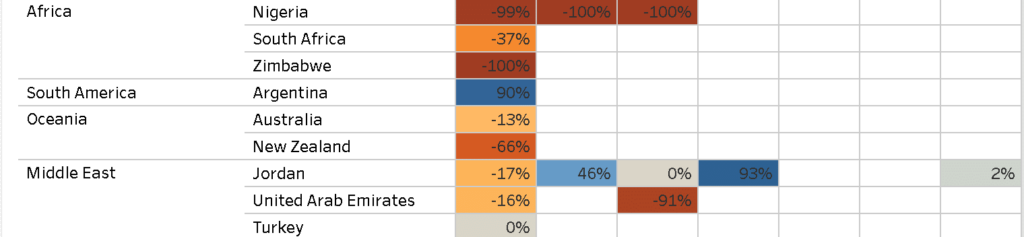
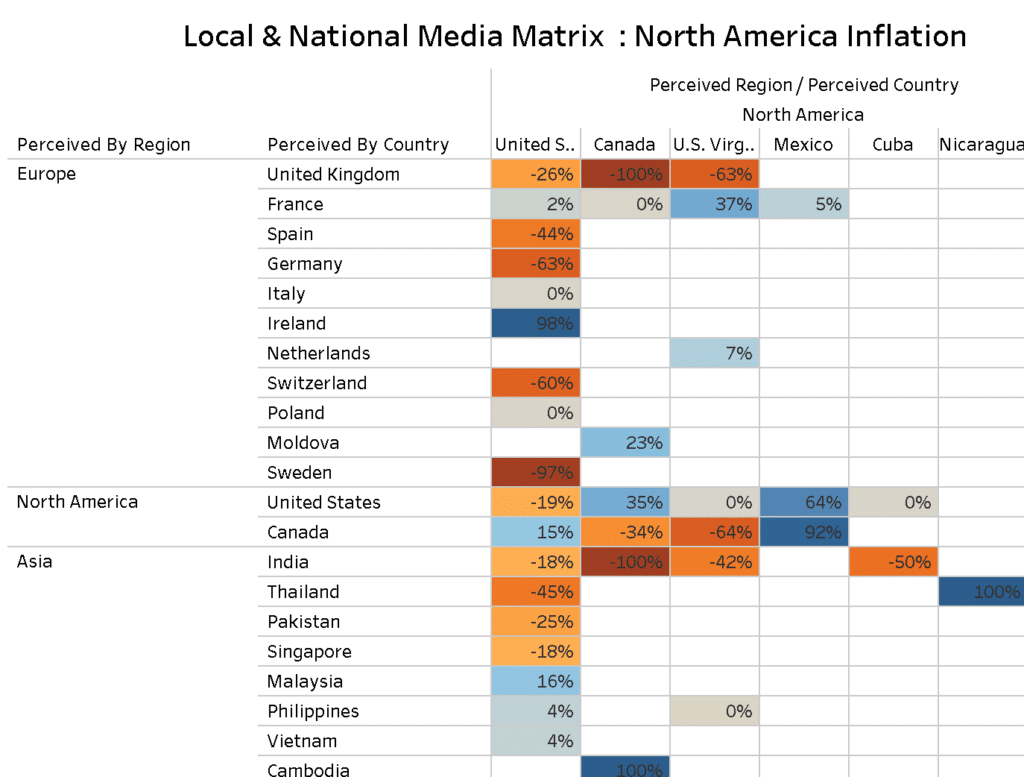
The US, as the world’s biggest economy, has a big influence on global financial markets. When it changes its monetary policy, like adjusting interest rates, this has widespread effects. The way different parts of the world see the United States inflation rate, based on our news sentiment analysis data taken from our Country Bias Matrix, part of our Geopolitical Dataset, gives us a good feel of how various regions view the situation.


United states inflation - how it is perceived by Europe and Asia

How Europe perceives the United States inflation rate

In Europe, perceptions of US inflation vary significantly. Big economies like Germany and Spain mostly view the United States inflation rate negatively . They worry about how US economic policies might affect their own economies. Take Germany, for example. It relies heavily on international trade. It might be afraid that US inflation and high interest rates could make fewer people buy its goods. Spain has a similarly negative perception, suggesting it’s concerned about keeping its economy stable and how US inflation might impact the Eurozone.

Still, nations like Ireland stand out with a positive outlook maybe showing a more upbeat view of economic bounce-back and gains from trade across the Atlantic. This split in views within Europe highlights the ins and outs of the region’s economic scene where different countries feel the effects of US money policies in different ways and to different degrees.

How Asia views the United States inflation rate

Asian countries have different views on United States inflation rate. India and Thailand have a negative outlook because they worry about how the United States inflation rate and interest rates might affect money flows and exchange rates in their economies. A stronger US dollar backed by high interest rates, can cause money to leave emerging markets. This makes their currencies weaker and increases the cost of imports key products like oil.

Vietnam however, sees US inflation in a positive light. This suggests they feel good about their economic ties with the US and might see chances for trade and investment. These different views across Asia show how various economies think about and get ready for the effects of US policies. Their unique economic links and dependencies shape these outlooks.

United states inflation - how it is perceived by Africa, North America and Oceania

Africa and Oceania’s concerns 

In Africa, people see US inflation as bad news in countries like Nigeria and Zimbabwe. These countries already face significant money problems. They think the US inflation and the interest rates that come with it make their economic troubles worse, making it harder for them to handle debt and get new investments. 

Oceania, including Australia and New Zealand also has a negative view. These countries depend a lot on global trade. They worry that US economic choices will affect global demand and the prices of raw materials. This matters a lot to their economies, which rely on selling goods to other countries.

How does North America perceive itself?

North America shows a split in views. The US has a mixed outlook, with both good and bad sentiment about inflation. This divide shows the wider argument in the US about how inflation and Fed policies affect different parts of the economy.

Canada also has a mix of bad and good views. This is likely because it’s so tied to the US economy. Changes in US inflation and interest rates shape Canadian economic factors, from trade balance to how strong the currency is.

The wider effects of the Fed’s rate cut

The US Federal Reserve’s choice to reduce interest rates is set to have a big impact on world money markets. Countries that don’t see US inflation in a good light, like those in Africa and some parts of Europe and Asia, might worry about ups and downs in money flows, currency rates, and economic steadiness. These countries may need to take steps to protect their economies from possible shocks.

On the flip side, countries with a brighter view such as Ireland and Vietnam, might see the Fed’s moves as a chance to build stronger economic bonds with the US. They could take advantage of cheaper loans and the better economic outlook in the world’s biggest economy.

Addressing global economic sentiment: Final thoughts 

As the US Federal Reserve prepares to lower interest rates, the world economy keeps a close eye feeling both excited and worried. The different views shown by our Country Bias Matrix show how complex and linked today’s global economy is. For leaders and companies around the world, it’s key to understand these views to handle the ups and downs that will come as the Fed starts this new phase in how it manages money. Ultimately, the US’s chance to pull off a “soft landing” will not test its own economy but also signal how stable the world economy might be in the coming years.

Find out more

If you’re interested in understanding more about how global perceptions of inflation or other market factors can influence geopolitical dynamics, or if you want to explore our comprehensive geopolitical intelligence offerings, reach out to us. To discover how our cutting-edge data insights can help your business stay ahead of global trends and make informed decisions in an ever-changing economic landscape simply email us at enquiries@permutable.ai or fill out the form below.


UK data sets: Exploring news sentiment on key economic and political issues in 2024

The pulse of news sentiment can shift rapidly, understanding these changes is crucial for policymakers, business leaders, and community advocates. Our recent comprehensive analysis of our UK data sets sheds light on the intricacies of public mood across various sectors in the United Kingdom, revealing how employment, housing, political tension, and concerns over violence influence collective sentiment. Let’s take a closer look at what we have uncovered. 

Employment sentiment: A rollercoaster ride

Let’s start by looking at employment sentiment. The employment landscape in the UK during the selected period of late March to June 2024 has been marked by significant volatility, as indicated by our UK data sets. Over the past few months, news sentiment has experienced sharp peaks and deep troughs, reflecting the complex realities of the job market. Take late April – for example – where there was a notable spike in positive sentiment, suggesting a temporary boost in public confidence. This is likely to be due to the announcement of new legislation expanding rights for employees around flexible working, paid and unpaid leave, and protection from redundancy during parental leave around that time. Sad to say that this resulting optimism was sadly short-lived as sentiment quickly plummeted thereafter. But look how the fluctuating sentiment can be linked to a series of impactful headlines. 

Housing market: A beacon of relative stability

In contrast to the employment sector, the housing market sentiment has been relatively stable in recent months, albeit with its own set of challenges which we are all well versed on. Here, the overall trend is that of a slight positive sentiment, which suggests that despite periodic setbacks, the public maintains a generally optimistic view of the housing sector. This stability is occasionally disrupted by minor peaks and valleys, often triggered by specific news events. For example, a headline like “UK’s cheapest seaside town to buy a house where properties cost less than £83,000” in early June unsurprisingly brought a wave of positive sentiment. This would have provided a glimmer of hope for potential homeowners, reflecting affordability and accessibility in certain areas while so many continue to struggle to get a foot on the ladder. However, the housing market remains susceptible to broader economic trends and policy changes, so continuous monitoring and adaptive strategies are the order of the day, as reflected in the UK data sets.

Political tensions: A persistent cloud

Next, let’s look at political sentiment. Political sentiment in the UK remains predominantly negative, reflecting widespread public dissatisfaction with the current political landscape. Our UK data sets reveal significant dips in sentiment, particularly in late March and mid-April. These periods of heightened tension are often driven by contentious political developments and policy decisions, and in this case most likely linked to when speculation around a general election date began to mount. As so often happens, headlines like “Brexit betrayal: Leave voters turn against UK government over broken promises” capture the essence of public discontent. The ongoing Brexit saga, coupled with perceived governmental failures, continues to erode public trust. This sustained negativity calls for a more transparent and accountable political process to rebuild confidence and address the root causes of dissatisfaction, as suggested by the trends in the UK data sets.

Concerns over violence: A consistent worry

Now let’s talk violence. News sentiment regarding violence has remained consistently low, highlighting a deep-seated concern among the populace. Although there are brief periods of stabilisation, the overall mood is marked by apprehension and unease. The persistent negative sentiment around violence highlights a need for comprehensive strategies to address underlying causes and improve public safety to mitigate these concerns. The reality is that this low sentiment is reflective of widespread fear and anxiety about crime and violence, which can have far-reaching impacts on community well-being and cohesion that must be addressed by policymakers and community leaders alike.

Insights and implications

So what does this all mean? All of these points taken from our UK data sets highlight the varying sentiments across different sectors, illustrating the complexities of news sentiment. For policymakers, this data provides critical insights into areas requiring immediate attention, such as employment stability and political transparency. For businesses, understanding these trends is vital for tailoring strategies that resonate with consumer sentiment and address their concerns effectively. Ultimately, the data highlights the importance of staying connected to news sentiment. By keeping a finger on the pulse of public opinion through our UK data sets, decision makers can better navigate the challenges and opportunities that lie ahead. For community leaders and advocates, this means leveraging these insights to drive positive change and foster resilience within communities.

UK data sets: How we conduct news sentiment analysis

Now let’s get to the part where we explain how we do this. We use advanced machine learning algorithms to analyse extensive news data from various reputable sources. This comprehensive process begins with data collection, where news articles, reports, and headlines related to key sectors such as employment, housing, political tension, and violence are aggregated. Next, sentiment analysis is conducted using natural language processing (NLP) techniques to evaluate the tone of each news piece, categorising it as positive, negative, or neutral and assigning a sentiment score to quantify its intensity.

But that’s not all. The analysis also includes trend identification, tracking sentiment trends over time to detect significant fluctuations and patterns, thereby understanding how specific events and headlines influence public sentiment daily. Finally, significant sentiment changes are correlated with impactful headlines and news events, providing context and insight into the underlying factors driving public mood.

Our data-driven analysis of news sentiment in the United Kingdom, based on our UK data sets, offers a nuanced understanding of the current mood across various sectors. The fluctuating sentiments around employment, the relative stability in housing, the persistent negativity in political tensions, and the consistent concerns over violence all paint a complex picture of public opinion.

Find out more

There are so many use cases for our UK data sets. If you’d like to experience firsthand how our comprehensive news sentiment analysis can inform your decisions and strategies, get in touch to request a free by emailing enquiries@permutable.ai or fill in the form below.


Exploring the road to economic growth 2024

As the world emerges from the economic challenges of the past few years, the focus shifts towards unlocking the potential for sustained economic growth 2024. This article aims to provide a comprehensive analysis of the factors influencing economic growth, the global economic outlook, and the strategies for achieving progress in the coming year.

Understanding the concept of economic growth

Economic growth refers to the increase in the productive capacity of an economy, leading to a rise in the country’s Gross Domestic Product (GDP) over time. This growth can be measured in various ways, including GDP per capita, which reflects the standard of living, and the overall GDP growth rate, which indicates the pace of economic expansion.

Factors influencing economic growth

Numerous factors contribute to the economic growth of a nation, including:

Investments in capital

Investments in capital, both physical and human, play a fundamental role in driving economic growth. Physical capital includes infrastructure, machinery, and equipment, which enhance productivity and efficiency in production processes. Human capital refers to the skills, knowledge, and expertise of the workforce, acquired through education, training, and experience. By investing in both forms of capital, countries can improve their productive capacity, stimulate innovation, and foster long-term economic growth.

Technological advancements and innovation:

Technological advancements and innovation are catalysts for economic growth, driving productivity gains, efficiency improvements, and the creation of new industries and markets. Innovations in fields such as information technology, biotechnology, and renewable energy have transformative effects on economies, leading to increased competitiveness, higher living standards, and enhanced economic resilience. Governments, businesses, and research institutions play critical roles in fostering a culture of innovation and supporting the development and adoption of new technologies.

Efficient allocation of resources

Efficient allocation of resources is essential for maximizing economic output and promoting sustainable growth. This involves directing resources—such as labour, capital, and land—towards their most productive uses based on market signals and incentives. Policies that promote competition, remove barriers to entry, and facilitate market-driven allocation of resources can enhance efficiency, encourage entrepreneurship, and stimulate investment and innovation across sectors.

Favourable government policies and regulations

Favourable government policies and regulations create an enabling environment for economic growth by fostering stability, predictability, and confidence in the business environment. Pro-growth policies may include tax incentives for investment, deregulation to reduce bureaucratic hurdles, and measures to promote trade and international competitiveness. Additionally, sound monetary and fiscal policies aimed at maintaining price stability, controlling inflation, and managing public finances are crucial for creating conditions conducive to sustainable economic growth.

Demographic changes

Demographic changes, such as population growth, age distribution, and labour force participation rates, can significantly impact economic growth trajectories. A growing population can stimulate demand for goods and services, drive investment in infrastructure and housing, and expand the labour force, contributing to economic expansion. Conversely, aging populations may pose challenges related to labour shortages, rising healthcare costs, and reduced consumer spending. Understanding demographic trends and implementing policies to address associated challenges and opportunities are essential for sustaining economic growth over the long term.

Stable political and social environments

Political stability and social cohesion are fundamental prerequisites for economic growth and development. Stable political environments reduce uncertainty and risk for businesses and investors, encouraging long-term investment and fostering economic resilience. Similarly, social stability, characterized by strong institutions, rule of law, and social cohesion, enhances trust, cooperation, and productivity within societies, laying the foundation for sustainable economic progress. Policies that promote inclusivity, equality, and social mobility contribute to building resilient and dynamic economies capable of weathering challenges and seizing opportunities in an ever-changing global landscape.

International trade and integration

International trade and integration with the global economy are potent drivers of economic growth, enabling countries to capitalize on comparative advantages, access new markets, and foster innovation and specialization. Trade liberalization, removal of trade barriers, and participation in regional and international trade agreements facilitate the flow of goods, services, and capital across borders, promoting efficiency, competitiveness, and economic diversification. Moreover, international trade fosters technological transfer, knowledge exchange, and cultural diffusion, enriching societies and stimulating economic dynamism on a global scale.

Key indicators of economic growth

Economists and policymakers rely on a range of key indicators to assess the health and trajectory of an economy, providing insights into its performance and potential challenges. These indicators serve as vital barometers, reflecting various aspects of economic activity and sentiment. Here’s a closer look at some of the most closely monitored indicators:

Gross Domestic Product (GDP)

GDP stands as one of the most fundamental measures of economic health. It serves as a comprehensive gauge of economic output, encompassing consumption, investment, government spending, and net exports. Changes in GDP growth rates can indicate shifts in economic momentum, expansion, or contraction, guiding policymakers in formulating appropriate fiscal and monetary policies.

Unemployment rate

The unemployment rate provides insights into labour market dynamics, reflecting both cyclical and structural factors influencing job creation and workforce participation. High unemployment rates may signify economic weakness, underutilization of human capital, and decreased consumer spending, while low unemployment rates may indicate robust economic activity and potential inflationary pressures.

Inflation rate

Policymakers closely monitor inflation rates to ensure price stability and guard against deflationary or inflationary pressures. Moderate inflation is generally considered conducive to economic growth, as it incentivizes spending and investment, whereas high inflation can erode savings, disrupt business planning, and undermine consumer confidence.

Productivity levels

Productivity measures the efficiency with which inputs, such as labour and capital, are utilized to produce goods and services. Improvements in productivity drive economic growth by increasing output per unit of input, boosting competitiveness, and raising living standards. Policymakers focus on enhancing productivity through investments in education, infrastructure, technology, and innovation, as higher productivity levels contribute to sustainable economic expansion and prosperity.

Consumer spending and confidence

Consumer spending represents the expenditure on goods and services by households, constituting a significant component of GDP. Consumer confidence, on the other hand, reflects sentiment regarding current and future economic conditions, influencing spending decisions and economic activity. Rising consumer spending and confidence indicate optimism, stimulating demand, investment, and job creation, while declining levels may signal economic uncertainty and dampened growth prospects.

Foreign Direct Investment (FDI):

FDI refers to investments made by foreign entities in domestic businesses or assets, contributing to capital formation, technology transfer, and economic development. Policymakers monitor FDI inflows and outflows to assess a country’s attractiveness as an investment destination, its competitiveness, and its integration into the global economy. Robust FDI inflows can bolster economic growth, enhance productivity, and facilitate technology diffusion, while outflows may indicate capital flight or investment diversification.

International trade balances

International trade balances reflect the difference between a country’s exports and imports of goods and services, influencing its external accounts and overall economic performance. Trade surpluses occur when exports exceed imports, contributing to positive net exports and boosting GDP growth. Conversely, trade deficits arise when imports surpass exports, potentially straining domestic industries, currency valuations, and fiscal balances. Policymakers aim to maintain sustainable trade balances through trade policies, exchange rate management, and structural reforms to support economic stability and competitiveness.

Global economic growth 2024 outlook 

The global economic outlook for 2024 is characterized by a nuanced landscape, with divergent trends and prospects across different regions and economies. While certain areas are poised for robust growth and economic expansion, others may encounter persistent challenges and uncertainties. The International Monetary Fund (IMF), along with other prominent economic institutions and research organizations, plays a pivotal role in monitoring and analyzing these trends, offering valuable insights and projections to inform policymaking and business strategies.

Regional disparities

The economic outlook varies significantly across regions, reflecting disparities in growth trajectories, policy responses, and structural vulnerabilities. Developed economies, particularly in North America and parts of Europe, are projected to sustain moderate growth, supported by resilient consumer spending, robust labour markets, and accommodative monetary policies. In contrast, emerging markets and developing economies face a more complex landscape, with divergent growth prospects influenced by factors such as geopolitical tensions, commodity price fluctuations, and structural reforms.

Growth drivers and challenges

Key drivers of global economic growth 2024 include continued technological innovation, digital transformation, and infrastructure investments, which contribute to productivity gains and competitiveness. However, challenges such as supply chain disruptions, inflationary pressures, and geopolitical uncertainties pose significant headwinds to growth, particularly for export-oriented economies and industries heavily reliant on global trade.

Policy responses and macroeconomic management

Against this backdrop, policymakers are tasked with navigating a complex set of policy challenges to support economic recovery and resilience. Central banks are expected to maintain accommodative monetary policies to support liquidity and financial stability, while fiscal authorities may implement targeted stimulus measures and investment initiatives to bolster growth and employment. Additionally, policymakers must address structural imbalances, enhance regulatory frameworks, and promote sustainable development to address long-term economic challenges effectively.

Opportunities for innovation and adaptation

Amidst the challenges, the global economic landscape also presents opportunities for innovation, adaptation, and strategic realignment. Businesses that embrace digitalization, sustainability, and resilience-building strategies are better positioned to thrive in the evolving economic environment. Moreover, collaborative efforts among governments, businesses, and international organizations are essential to address shared challenges, foster inclusive growth, and build a more resilient and sustainable global economy.

Economic growth 2024: The largest economies in the world 

The ranking of the world’s largest economies is expected to undergo some shifts in the coming years. According to current projections, the top economies in 2024 are:

United States:

The United States maintains its position as the world’s largest economy, driven by a combination of factors including its massive consumer market, technological innovation, and robust financial sector. With a diverse range of industries spanning from technology and healthcare to finance and entertainment, the U.S. economy remains a global powerhouse, attracting investments and fostering entrepreneurship.

China:

China’s economic ascent continues unabated, propelled by ongoing economic reforms, infrastructure development, and a shift towards domestic consumption-driven growth. The country’s vast manufacturing capabilities, coupled with its burgeoning middle class and expanding digital economy, position it as a key driver of global economic growth and trade.

India:

India emerges as a significant player on the global economic stage, fueled by a young and dynamic population, a rapidly expanding digital economy, and ambitious infrastructure projects. With a focus on initiatives such as “Make in India” and “Digital India,” India aims to leverage its demographic dividend and technological advancements to drive inclusive growth and development.

Japan:

Japan maintains its status as one of the world’s largest economies, renowned for its advanced manufacturing, technological innovation, and strong export-oriented industries. Despite demographic challenges, Japan continues to lead in sectors such as automotive, electronics, and robotics, contributing to global supply chains and technological advancements.

Germany:

Germany’s robust industrial base, engineering excellence, and export-oriented economy solidify its position among the top global economies. Known for its strong manufacturing sector, particularly in automotive, machinery, and chemicals, Germany remains a key player in driving European economic growth and competitiveness.

United Kingdom:

Despite uncertainties surrounding Brexit, the United Kingdom retains its status as one of the largest economies, supported by a diverse range of industries including financial services, technology, and pharmaceuticals. While navigating post-Brexit trade arrangements, the UK continues to attract investments and foster innovation across various sectors.

France:

France‘s economy boasts strengths in luxury goods, aerospace, and technology, contributing to its position as one of the world’s leading economies. With a focus on innovation, sustainability, and entrepreneurship, France remains a key player in driving European economic growth and competitiveness.

Italy:

Italy’s economy is characterized by a rich cultural heritage, vibrant tourism industry, and strong manufacturing sector. Despite facing challenges such as high public debt and political instability, Italy continues to leverage its strengths in industries such as fashion, automotive, and design to drive economic growth and innovation.

Brazil:

Brazil’s abundant natural resources, diverse agricultural sector, and growing consumer market position it as a significant player in the global economy. With a focus on infrastructure development, environmental sustainability, and technological innovation, Brazil aims to capitalize on its economic potential and enhance its competitiveness on the world stage.

Canada:

Canada’s resource-rich economy, stable financial system, and skilled workforce contribute to its position among the world’s largest economies. With strengths in sectors such as energy, mining, and technology, Canada remains an attractive destination for investment and innovation, driving economic growth and prosperity.

These economies will play a crucial role in shaping the global economic landscape and influencing the overall growth trajectory.

Predictions for GDP growth in 2024

In 2024, global GDP growth is forecasted to hover around 3.2%, marking a modest uptick from the previous year, according to projections by major economic institutions. However, this growth trajectory is anticipated to vary significantly across regions, with developed economies experiencing slower expansion at approximately 1.7%, while emerging markets are poised for more robust growth at around 4.2%.

Delving into specific regions, the Eurozone is anticipated to undergo a sluggish recovery, with GDP growth projected at a modest 0.7% for the year . Meanwhile, China, despite its status as an emerging market powerhouse, is expected to witness a moderation in growth, with forecasts pegging it at 4.9% for 2024.

It’s crucial to acknowledge that these predictions are subject to a multitude of factors and uncertainties, and actual GDP growth figures may deviate from these forecasts. Nonetheless, these projections offer valuable insights into the economic trajectories of different regions and provide stakeholders with a basis for informed decision-making and strategic planning.

Strategies, policies, challenges and opportunities in achieving economic growth

Strategies for achieving economic growth encompass a range of initiatives adopted by governments, businesses, and policymakers. These strategies include investing in infrastructure development, fostering innovation and technological advancements, encouraging entrepreneurship and small business growth, improving the quality of education and skills development, promoting international trade and investment, implementing sound fiscal and monetary policies, addressing income inequality and social disparities, and ensuring environmental sustainability and climate resilience.

Governments play a critical role in shaping the economic landscape through policy interventions. Key policy tools for promoting economic growth include fiscal policies like tax incentives and government spending, monetary policies such as interest rate adjustments and money supply management, regulatory frameworks that encourage competition and investment, investments in research, development, and innovation, policies supporting workforce development and skill-building, trade agreements facilitating international commerce, and initiatives addressing infrastructure gaps and improving connectivity.

While the path to economic growth 2024 presents challenges such as geopolitical tensions, trade disputes, demographic shifts, and the ongoing impact of the COVID-19 pandemic, it also offers opportunities for innovation, adaptation, and strategic policymaking. To navigate these dynamics effectively and unlock the full potential for economic growth, it’s crucial to stay informed on the latest developments and strategies. Subscribe to our newsletter to stay up-to-date with the evolving economic landscape and empower yourself to make informed decisions for your business or personal investments.

Understanding economic growth 2024: Permutable AI’s sentiment-driven data intelligence

At Permutable AI, our economic data intelligence, driven by advanced news sentiment analysis, serves as a powerful barometer for understanding economic growth in 2024 and beyond. By harnessing sophisticated algorithms to analyze sentiment from a plethora of global news sources, we provide nuanced and unbiased insights into economic trends, market sentiments, and emerging opportunities.

In the dynamic landscape of 2024, where economic growth is influenced by multifaceted factors and rapidly evolving market dynamics, traditional economic indicators often fall short in capturing the full spectrum of sentiment-driven influences. This is where Permutable AI’s innovative approach excels. By monitoring sentiment surrounding economic factors such as GDP, inflation, employment, consumer spending, and more, we are able to offer a comprehensive view of the economic landscape, complementing traditional metrics with real-time sentiment analysis.

The significance of sentiment analysis lies in its ability to capture the collective mood and perception of market participants, policymakers, and consumers. Positive sentiment may indicate confidence, optimism, and a favourable outlook for economic expansion, while negative sentiment could signal concerns, uncertainties, or impending challenges. By analyzing sentiment trends over time, our meticulously trained algorithms can identify sentiment shifts, sentiment spikes, or emerging sentiment patterns that may influence economic growth trajectories.

Our economic data intelligence is not confined to a single geographical region. Its global reach enables businesses, investors, and policymakers to gain insights into global economic trends, regional disparities and interdependencies. This holistic perspective empowers decision-makers to anticipate market trends, mitigate risks, capitalize on emerging opportunities, and formulate data-driven strategies for driving economic growth 2024.

EXAMPLE DATASETS

Slide 2 HeadingLorem ipsum dolor sit amet consectetur adipiscing elit dolorClick HereSlide 2 HeadingLorem ipsum dolor sit amet consectetur adipiscing elit dolorClick HereSlide 3 HeadingLorem ipsum dolor sit amet consectetur adipiscing elit dolorClick HereSlide HeadingLorem ipsum dolor sit amet, consectetur adipiscing elit. Ut elit tellus, luctus nec ullamcorper mattis, pulvinar dapibus leo.Click Here
Previous slide
Next slide

Try our economic data intelligence for free

Ready to harness the power of Permutable AI’s economic data intelligence driven by news sentiment analysis? Sign up now for a FREE two-week trial and gain exclusive access to invaluable insights into economic growth trends for 2024. Don’t miss this opportunity to stay ahead of the curve and make informed decisions for your business or investments. Simply get in touch below.


REQUEST FREE TRIAL
Unveiling the link between news sentiment and GDP gross domestic product performance

The relationship between news sentiment and GDP gross domestic product performance has long been a topic of interest for economists and policymakers. Understanding how news sentiment impacts the economy can provide valuable insights into economic forecasting, business decision-making, and policymaking. In this article, we will explore the concept of news sentiment analysis and its connection to GDP performance.

Understanding news sentiment analysis

News sentiment analysis is the process of determining the sentiment or tone of news articles, social media posts, and other textual data. It involves using natural language processing algorithms to classify text as positive, negative, or neutral. By analyzing the sentiment of news, economists and analysts can gain a better understanding of public perception and its potential impact on economic variables such as GDP.

News sentiment analysis relies on advanced machine learning techniques that can accurately identify sentiment from large volumes of text data. These techniques use algorithms to analyze the words, phrases, and context of the text to determine sentiment. By classifying news articles into positive, negative, or neutral categories, analysts can quantify the overall sentiment of the news and its potential influence on the economy.

The impact of positive news sentiment on GDP gross domestic product performance

Positive news sentiment has been shown to have a positive impact on GDP gross domestic product performance. When the news is filled with positive stories and optimistic forecasts, it can boost consumer and investor confidence. This increased confidence often leads to higher spending, investment, and overall economic growth.

For example, during periods of positive news sentiment, consumers may feel more optimistic about their financial situation and be more willing to make purchases. This increase in consumer spending can stimulate economic activity and contribute to GDP gross domestic product growth. Similarly, positive news sentiment can also encourage businesses to invest in expansion, hiring, and research and development, further driving economic growth.

The influence of negative news sentiment on GDP gross domestic product performance

On the other hand, negative news sentiment can have a detrimental effect on GDP performance. When the news is dominated by negative stories, such as economic downturns, political instability, or natural disasters, it can create a sense of uncertainty and fear among consumers and investors. This increased uncertainty often leads to reduced spending, investment, and economic activity.

During periods of negative news sentiment, consumers may become more cautious about their spending, fearing potential economic hardships. This decrease in consumer spending can have a cascading effect on businesses, leading to reduced sales, layoffs, and a contraction in economic activity. Negative news sentiment can also deter investors from making new investments or expanding existing ones, further impacting economic growth.

Case studies: Examining the relationship between news sentiment and GDP in different countries

To better understand the relationship between news sentiment and GDP gross domestic product performance, let’s examine two different case studies.

Nowcasting Euro Area GDP with news sentiment

This study by the European Central Bank (ECB) examined the use of news sentiment analysis for “nowcasting” GDP growth in the Eurozone. Nowcasting refers to predicting economic activity in the very near future, typically within a quarter.

The ECB compared news sentiment metrics derived from newspaper articles to traditional economic indicators like the Purchasing Managers’ Index (PMI). They found that news sentiment offered valuable insights, particularly in the first half of a quarter when other data might be unavailable.

Interestingly, the study also highlighted the importance of considering the specific economic climate. News sentiment analysis proved especially effective during crisis periods like the Great Recession and the COVID-19 lockdowns.

Using news sentiment for economic forecasting: A Malaysian case study

This study by the Bank for International Settlements (BIS) looked at the relationship between news sentiment and economic activity in Malaysia [2]. The researchers used news sentiment analysis to forecast various economic indicators, including private investment growth and GDP growth.

Their findings suggested that news sentiment was a reliable predictor of private investment growth, particularly within a 2-3 quarter timeframe. However, the link between news sentiment and broader measures of GDP growth was less clear.

This case study highlights the potential limitations of news sentiment analysis. While it can provide valuable insights into specific economic sectors, it might not always capture the full picture of a nation’s GDP.

These two case studies demonstrate that news sentiment can be a useful tool for understanding and potentially predicting economic activity. However, it’s important to consider the specific context and limitations of this approach.

Factors affecting the correlation between news sentiment and GDP gross domestic product performance

Several factors can influence the correlation between news sentiment and GDP gross domestic product performance. Firstly, the credibility and reliability of news sources can impact how individuals perceive and react to news sentiment. If news sources are viewed as biased or unreliable, their impact on sentiment and subsequent economic behaviour may be diminished.

Additionally, the timing and intensity of news sentiment can also affect its impact on GDP performance. For example, a short-lived positive news sentiment may not have a significant and lasting effect on economic variables. Conversely, a prolonged period of negative news sentiment can have a more profound and enduring impact on economic behaviour.

Furthermore, the specific economic conditions and structural factors of a country can influence the relationship between news sentiment and GDP performance. For instance, a country with a robust and diversified economy may be less susceptible to the impact of negative news sentiment compared to a country heavily reliant on a specific industry.

Leveraging Permutable AI’s GDP gross domestic product data intelligence

At Permutable AI, we have harnessed the power of cutting-edge natural language processing technologies to develop a robust platform that systematically evaluates the sentiment of global news sources towards GDP gross domestic product performance.  We used state-of-the-art machine learning models to scan, categorize, and analyze large volumes of news data. This process not only identifies the general sentiment of articles—whether they are positive, negative, or neutral—but also captures the nuances and context that could influence economic indicators.

Our technology performs real-time tracking of news sentiment related to GDP trends. This data intelligence allows users to observe how shifts in media tone correlate with economic activity, offering insights into potential GDP movements before traditional economic data is available. Our data feeds offer insights based on sentiment trends. For policymakers, this could assist with adjusting economic policies in anticipation of changes signaled by news sentiment. For businesses, it can provide a basis for strategic planning and risk management, particularly in volatile markets.

GDP Gross Domestic Product data intelligence and sentiment analysis

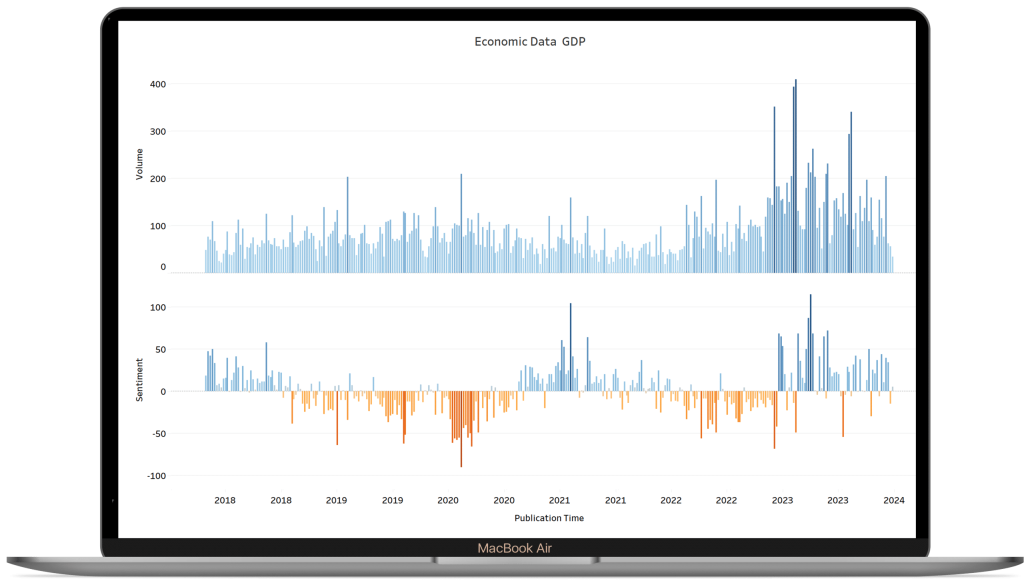
Above: Our economic data GDP gross domestic product data intelligence


REQUEST FREE TRIAL

Using news sentiment analysis for economic forecasting

News sentiment analysis has gained popularity as a valuable tool for economic forecasting. By incorporating news sentiment data into forecasting models, economists and analysts can improve the accuracy of their predictions. News sentiment data provides real-time insights into public perception, which can be used to anticipate changes in consumer behaviour, investment trends, and overall economic performance.

For example, if news sentiment analysis indicates a rising positive sentiment, economists may forecast an increase in consumer spending and subsequent economic growth. Conversely, if news sentiment analysis reveals a declining negative sentiment, economists may forecast a decrease in consumer spending and a potential economic downturn.

By leveraging news sentiment analysis for economic forecasting, policymakers and businesses can make more informed decisions and develop strategies to mitigate potential risks or capitalize on emerging opportunities.

Implications for businesses and policymakers

The link between news sentiment and GDP gross domestic product performance has significant implications for businesses and policymakers. Businesses can benefit from monitoring news sentiment to gauge consumer and investor confidence, identify emerging trends, and adjust their strategies accordingly. By understanding how news sentiment affects consumer behavior and economic activity, businesses can make informed decisions about product development, marketing campaigns, and investment opportunities.

Policymakers can also utilize news sentiment analysis to inform their economic policies and decision-making. By monitoring news sentiment, policymakers can gain valuable insights into public perception and adjust their policies to promote economic growth and stability. For example, during periods of negative news sentiment, policymakers may implement measures to boost consumer and investor confidence, such as tax incentives or stimulus packages.

Leveraging news sentiment analysis for economic growth

The connection between news sentiment and GDP gross domestic product performance provides a fascinating area of study for economists and analysts. By understanding the impact of news sentiment on economic variables, businesses, and policymakers can make better-informed decisions and develop strategies to promote economic growth.

News sentiment analysis offers a powerful tool for analyzing public perception and its influence on economic behaviour. By leveraging advanced techniques and tools, economists and analysts can extract valuable insights from large volumes of textual data. Incorporating news sentiment analysis into economic forecasting models can improve the accuracy of predictions and enable businesses and policymakers to stay ahead of economic trends.

Find out more

Ready to harness the power of Permutable’s data intelligence on GDP gross domestic product? To find out more about our data intelligence feeds and how it can benefit your organisation visit our dedicated data intelligence hub or request a free trial below.


REQUEST FREE TRIAL

How data intelligence serves as a powerful political risk barometer

In today’s fast-paced and interconnected world, politics plays a crucial role in shaping the global landscape. Understanding and assessing political risk has become essential for businesses, investors, and policymakers alike. This is where data intelligence and the collection, analysis and interpreting of vast amounts of data – provide invaluable insights for informed decision-making. In the realm of politics, data intelligence serves as a powerful tool for assessing and predicting political risks.

Political risk assessment involves evaluating the potential impact of political factors on various aspects such as investments, operations, and market conditions. It helps businesses and investors identify and mitigate potential risks, thereby safeguarding their interests. Traditionally, political risk assessment relied on subjective analysis and expert opinions. However, with the advent of geopolitical data intelligence, a more data-driven and objective approach has emerged.

The importance of political risk assessment

Political risk assessment is crucial for businesses and investors operating in today’s globalized economy. Political factors such as changes in government policies, social unrest, and geopolitical tensions can significantly impact business operations and investments. Failing to anticipate and mitigate these risks can lead to financial losses and reputational damage. Therefore, a comprehensive understanding of political risks is vital for making informed decisions and developing effective risk management strategies.

Data intelligence plays a pivotal role in political risk assessment by providing a wealth of information and insights. By analysing various data sources such as news articles, social media posts, economic indicators, and historical data, data intelligence enables analysts to identify trends, patterns, and potential risks. It empowers decision-makers with actionable intelligence, helping them navigate the complex and volatile political landscape.

How data intelligence serves as a powerful political risk barometer

Data intelligence serves as a powerful political risk barometer by providing real-time and comprehensive insights into political dynamics. It enables analysts to monitor and assess political risks on an ongoing basis, allowing for timely responses and proactive risk management. By collecting and analysing vast amounts of data, data intelligence platforms can identify emerging risks, track political developments, and predict potential outcomes.

One of the key advantages of data intelligence in political risk assessment is its ability to provide a holistic view of the political landscape. It aggregates data from various sources and analyzes it using advanced algorithms and machine learning techniques. This multidimensional approach helps in uncovering hidden patterns, correlations, and interdependencies that may not be apparent through traditional analysis methods. As a result, decision-makers can gain a more nuanced understanding of political risks and make informed decisions based on data-driven insights.

The use of big data in political risk analysis

The use of big data has revolutionized political risk analysis. Big data refers to the vast volume, velocity, and variety of data generated from various sources such as social media, news articles, government reports, and financial data. Analysing big data allows for a more comprehensive and dynamic assessment of political risks.

Big data analysis in political risk assessment involves collecting and processing massive amounts of data in real-time or near real-time. Advanced technologies such as natural language processing, sentiment analysis, and network analysis are used to extract valuable insights from unstructured data sources. These insights can then be used to identify emerging risks, assess public sentiment, and predict political outcomes.

Key indicators and metrics for political risk assessment

When it comes to political risk assessment, identifying key indicators and metrics is crucial. These indicators help in monitoring and evaluating the political landscape, enabling analysts to assess the potential risks and their impact. Some of the key indicators and metrics used in political risk assessment include:

  1. Economic indicators: Economic factors such as GDP growth, inflation rates, and unemployment rates can provide insights into the stability and performance of a country’s economy. Changes in these indicators can indicate potential political risks.

  2. Social indicators: Social factors such as social unrest, protests, and public sentiment can signal underlying political tensions. Monitoring social indicators helps in assessing the level of political stability and the potential for social upheaval.

  3. Regulatory indicators: Regulatory factors such as changes in government policies, regulations, and legal frameworks can have a significant impact on businesses and investments. Tracking regulatory indicators helps in identifying potential risks and adapting to changing political environments.

  4. Geopolitical indicators: Geopolitical factors such as international conflicts, diplomatic relations, and trade policies can affect the political stability of a country. Analysing geopolitical indicators helps in understanding the potential risks arising from global events and their impact on the local political landscape.

By monitoring and analysing these key indicators and metrics, analysts can assess the political risks and their potential impact on businesses and investments.

GDP data intelligence

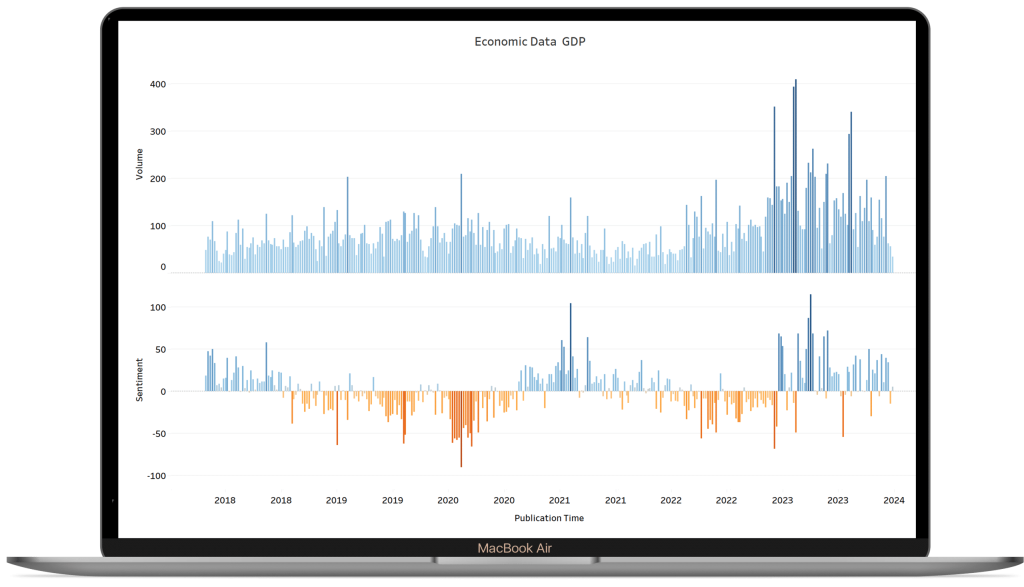
Above: Our economic news sentiment data intelligence


REQUEST FREE TRIAL

Case studies: Examples of data intelligence in political risk analysis

To understand the practical application of data intelligence in political risk analysis, let’s explore some case studies:

  1. Brexit: The referendum on the United Kingdom’s membership in the European Union was a significant political event with far-reaching implications. Data intelligence helped analysts track public sentiment, media coverage, and economic indicators to assess the potential risks and outcomes of Brexit. This enabled businesses to develop contingency plans and adapt to the changing political landscape.

  2. US Presidential Election: Data intelligence played a crucial role in analysing and predicting the outcome of the US Presidential Election. By analysing news articles, polling data, and social media conversations data intelligence providers accurately predicted the election results. This information helped businesses and investors anticipate potential policy changes and their impact on the economy.

These case studies demonstrate the power of data intelligence in political risk analysis and its ability to provide valuable insights for decision-making.

Challenges and limitations of using data intelligence for political risk assessment

While data intelligence offers significant advantages in political risk assessment, it is not without its challenges and limitations. Some of the key challenges include:

  1. Data quality and reliability: The accuracy and reliability of data are crucial for meaningful analysis. Data from various sources may vary in quality, relevance, and bias. Ensuring data quality and addressing biases are essential for obtaining accurate insights.

  2. Data privacy and security: Data intelligence involves collecting and analysing vast amounts of data, raising concerns about privacy and security. Safeguarding sensitive information and complying with data protection regulations are essential to maintain trust and credibility.

  3. Complexity and interpretation: Analysing large volumes of data can be complex and challenging. Interpreting the results and extracting meaningful insights require expertise in data analysis and domain knowledge. Ensuring the right skills and expertise are available is crucial for effective data intelligence.

  4. Unforeseen events and black swans: Data intelligence relies on historical data and patterns to predict future outcomes. However, unforeseen events and black swan events, such as natural disasters or political crises, can significantly impact political risks. Accounting for these uncertainties is a challenge in data-driven political risk assessment.

Despite these challenges, data intelligence continues to evolve and improve, offering valuable insights for political risk assessment.

The future of data intelligence in political risk analysis

The future of data intelligence in political risk analysis looks promising. With advancements in technology, such as artificial intelligence and machine learning, data intelligence platforms are becoming more sophisticated and powerful. These platforms can process larger volumes of data, analyze complex patterns, and provide more accurate predictions.

Furthermore, the integration of various data sources, such as satellite imagery, internet of things (IoT) data, and financial data, will enhance the capabilities of data intelligence in political risk analysis. This integration will provide a more holistic view of political risks and enable decision-makers to make more informed and proactive decisions.

As data intelligence continues to evolve, it will become an indispensable tool for businesses, investors, and policymakers in navigating the complex and uncertain world of politics.

Permutable’s political data intelligence: Tracking global sentiment

Permutable AI’s data feeds provide a deep understanding of global political dynamics by providing real-time insights into sentiment around elections and tensions in every country worldwide. Our innovative data feed aggregates and analyses data from diverse sources across 5000 sources and 500,000 articles across 120 countries daily to offer a comprehensive and unbiased view of the political landscape.

Election monitoring

Our data feeds provide a real-time overview of elections across the globe, offering valuable insights into public sentiment, voter behaviour, information on key electoral issues, and potential outcomes. This enables stakeholders, including businesses, investors, and policymakers, to anticipate political shifts and adapt their strategies accordingly.

Global tensions analysis

In addition to election monitoring, our data intelligence tracks geopolitical tensions in every country, helping stakeholders navigate complex international relations, identifying emerging conflicts, evaluating their severity, and assessing their potential impact on global stability. This allows decision-makers to proactively address geopolitical risks and safeguard their interests.

Unbiased insights

One of the key strengths of Permutable’s data intelligence is its commitment to providing unbiased insights. By leveraging advanced algorithms and machine learning techniques, the platform analyses vast amounts of data without bias or prejudice. This ensures that stakeholders receive accurate, objective information, free from subjective interpretation or manipulation. As a result, decision-makers can make informed choices based on reliable data, enhancing their ability to navigate the complex and rapidly evolving political landscape.

Complete view of global politics

By combining election monitoring and global tensions analysis, Permutable’s data intelligence feeds offer a comprehensive view of global politics. Whether it’s tracking electoral campaigns in emerging democracies or monitoring diplomatic tensions between major powers, the platform provides stakeholders with the information they need to understand and respond to political developments worldwide. This holistic approach enables businesses, investors, and policymakers to make strategic decisions with confidence, even in the face of uncertainty and volatility.

global wars data intelligence

REQUEST FREE TRIAL

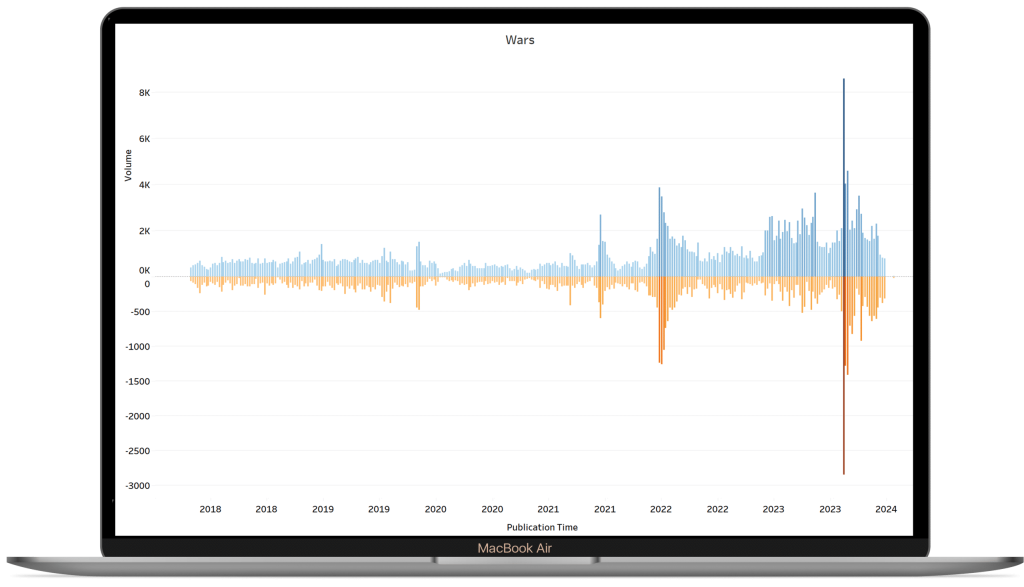
Above: Our Global Conflict news sentiment dataset

Data intelligence as a political risk barometer: Final thoughts

Data intelligence has emerged as a powerful tool in political risk assessment, providing valuable insights into the complex and volatile world of politics. By analysing vast amounts of data, data intelligence platforms enable decision-makers to assess, monitor, and predict political risks. Despite its challenges and limitations, data intelligence continues to evolve and improve, offering more accurate and comprehensive insights for political risk analysis.

As businesses, investors, and policymakers navigate the global landscape, harnessing the power of data intelligence will be crucial for making informed decisions and managing political risks effectively. By unlocking the insights hidden in data, data intelligence serves as a powerful political risk barometer, enabling proactive risk management and safeguarding interests.

Find out more

Ready to harness the power of Permutable’s data intelligence for determining political risk? Whether you’re seeking real-time insights into global sentiment around elections, tracking geopolitical tensions, or exploring our comprehensive data feeds, we’re here to help. To find out more about our data intelligence feeds and how it can benefit your organisation visit our dedicated data intelligence hub or request a free trial below.


REQUEST FREE TRIAL

Join our Political Intelligence BETA Testing Program

political data intelligence

.Unlock unparalleled insights into global political trends and developments with Permutable AI’s Political Intelligence BETA Program. Gain complimentary access to our state-of-the-art REAL TIME political data sentiment analysis tool and stay ahead of the competition. Join now to explore unbiased data, influence strategic initiatives, and gain a competitive advantage in today’s complex geopolitical landscape. Sign up today for early access and be among the first to leverage the power of our advanced analytics. Don’t miss this exclusive opportunity to shape the future of political intelligence. 


FIND OUR MORE

Commodities trading: Navigating the commodity market in 2024 – trends & insights

Navigating the intricate landscape of predicting the commodities trading for 2024 and beyond involves a delicate dance amidst a complex interplay of economic, geopolitical, and environmental factors. The commodities market, known for its volatility and sensitivity to global dynamics, requires a nuanced understanding of current trends and expert insights to gain a glimpse into the potential outlook for various commodity categories.

In this unpredictable terrain, uncertainties cast shadows over the future, demanding a comprehensive analysis that considers not only traditional economic indicators but also the ripple effects of geopolitical events and the ever-evolving environmental landscape. The ability to foresee trends and anticipate shifts in commodity prices has never been more crucial, especially in an era where markets are increasingly interconnected, and the impact of one event can reverberate across the globe.

As we delve into the forecasting of commodities trading for 2024, it becomes evident that traditional approaches must be augmented by insights drawn from diverse sources. The intricate dance of supply and demand, influenced by factors ranging from political decisions and climate change policies to technological advancements, paints a canvas where predicting market trajectories requires a blend of analytical precision and a keen eye for emerging trends.

This exploration will not only unravel the potential trends in traditional commodities trading but will also shed light on how emerging factors, such as advancements in technology, changes in consumer behaviour, and global efforts towards renewable energy, might reshape the landscape. The integration of these elements into the fabric of commodities trading underscores the need for a comprehensive and forward-looking approach to predicting market dynamics in 2024.

Base metals: A mix of challenges and opportunities

Overall perspective: The base metals market presents a mixed bag of challenges and opportunities in 2024. Notably, nickel faces a bearish outlook, primarily due to increased Indonesian production. On the flip side, copper and other industrial metals may experience positive momentum, driven by potential infrastructure spending initiatives.

Key influencing factors: Several key factors will shape the base metals market. Global economic growth, particularly in major industrial nations, will be a significant determinant. The level of construction activity in China, a major consumer of base metals, and the ongoing transition to clean energy will also play crucial roles in shaping the outlook.

Precious metals: Bullish momentum amid economic dynamics

Market outlook: Precious metals, including gold and silver, are poised for a bullish trend in 2024. This optimistic outlook is rooted in expectations of subdued inflation and central banks adopting more accommodative monetary policies. Consequently, gold and silver prices may surge, potentially reaching new highs.

Key drivers: The trajectory of interest rates, investor sentiment towards safe-haven assets, and geopolitical tensions will serve as pivotal factors influencing precious metal markets. As global economic dynamics evolve, these metals are likely to maintain their allure as safe-haven investments.

Energy: Navigating volatility and geopolitical factors

Oil market dynamics: The oil market is expected to face continued volatility in 2024. The potential for both upside and downside movements will be influenced by factors such as economic recovery, recessionary fears, decisions by the OPEC+ alliance on production levels, and ongoing geopolitical concerns.

Natural gas outlook: Natural gas prices are anticipated to remain volatile and elevated, primarily due to supply constraints and the persistent conflict in Ukraine. The war has disrupted energy supplies, contributing to sustained pressures on natural gas prices.

Agriculture: Bullish trends fueled by disruptions and weather

Overall agricultural outlook: The agriculture sector is anticipated to witness bullish trends, particularly in the early months of 2024. Factors such as supply chain disruptions and weather-related concerns are expected to drive price increases in commodities like sugar and grains.

Key agricultural factors: Weather patterns, crop yields, and the dynamics of global trade will be pivotal in determining specific trends within the agriculture sector. As climate conditions evolve, strategic decisions in response to changing agricultural landscapes will be crucial.

Additional considerations: Trends beyond traditional factors

The green transition: Investments in commodities linked to clean energy technologies, such as lithium and cobalt, are projected to experience steady growth. Government policies supporting green initiatives and the increasing demand for electric vehicles contribute to the optimism surrounding these commodities.

Technological advancements: The incorporation of artificial intelligence  and big data in commodities trading and analysis is a noteworthy trend. This integration enhances efficiency and opens new avenues for investment opportunities, reflecting the broader influence of technology on traditional markets.

A cautionary approach: Diversification and research

In navigating the commodities trading landscape of 2024, a cautious approach with a focus on diversification is recommended. Thorough research, an understanding of specific market dynamics, and seeking professional guidance are crucial steps before making any investment decisions. While informed predictions offer valuable insights, unforeseen events can disrupt even the most well-founded expectations. Staying informed and adapting strategies as market conditions evolve will be imperative for investors.

How Permutable AI can empower commodities trading  

In the volatile landscape of 2024, investors are seeking innovative tools to gain a competitive edge. This is where Permutable AI steps in, offering technology-driven solutions that harness the power of artificial intelligence to navigate the erratic nature of the commodities market.

AI unleashing hidden patternsCommodities trading requires a keen understanding of various variables, and AI algorithms excel in processing vast amounts of data to unveil hidden patterns and correlations. Permutable AI’s technology dives deep into historical market trends, global economic indicators, geopolitical events, and environmental factors, extracting valuable insights that might elude traditional analysis. By deciphering complex data sets, the AI can provide a nuanced understanding of commodity movements, enabling investors to make informed decisions.

Real-time analysis for dynamic markets: Commodities trading and the market is known for its rapid changes, influenced by global events and economic shifts. Permutable AI’s real-time analysis capabilities ensure that investors receive up-to-the-minute insights into market fluctuations. This empowers them to make agile decisions, responding promptly to changing conditions and seizing opportunities that may arise amidst the dynamic nature of commodity prices.

Tailored recommendations for diversification: No two commodities are alike, and the factors influencing their prices can vary significantly. Permutable AI employs sophisticated models to personalise recommendations based on an investor’s risk tolerance, financial goals, and unique investment constraints. By tailoring suggestions to individual preferences, the AI ensures that portfolios are diversified strategically, mitigating risks associated with the volatile commodities market.

Proactive risk management: The commodities market is inherently risky, and effective risk management is crucial for investors. Permutable AI’s technology goes beyond providing insights; it actively contributes to risk management strategies. By identifying potential risks and offering proactive solutions, the AI helps investors navigate the market with greater confidence and resilience.

Adaptability in unpredictable environments: One of the standout features of our AI trading provision is its adaptability in unpredictable environments. The commodities market is susceptible to sudden shifts influenced by unforeseen events. Permutable AI’s technology is designed to adapt swiftly, ensuring that investors remain agile and responsive to emerging trends or unexpected developments, thereby minimising the impact of market surprises.

Ethical and transparent AI use: In the responsible deployment of AI, Permutable AI prioritises ethical considerations and transparency. Our technology is designed to provide clear insights into its decision-making processes, fostering trust among investors. This explainability and commitment to ethical AI ensures that investors can confidently leverage technology as a valuable tool in their decision-making processes.

As we navigate the complexities of the commodities trading in 2024, at Permutable AI, we’re here as a strategic partner for investors seeking a data-driven and technology-enabled approach. From unveiling hidden patterns to real-time analysis, tailored recommendations, proactive risk management, and adaptability in unpredictable environments, Permutable AI empowers investors to navigate the volatile commodities market with confidence and foresight. To find out more, why not get in touch with us by filling in the contact form below – we’d love to hear from you. Until then, be sure to keep up to date with our latest summary of commodity trading trends for 2025.

Get in touch